It’s been more than a year since Season 2 of “The White Lotus” concluded on HBO with a certain hot mess of an heiress falling to her death off the side of a yacht while attempting to escape a cabal of murderous, jet-setting gay men.
Fans of Mike White’s anthology series, which blends biting social satire with a good old-fashioned murder mystery set in luxurious hotels around the world, were thrilled when HBO announced a third installment was on the way.
But they have had to wait patiently for further updates on the series for now. Because of the impasse between studios and the Writers Guild of America, and later the Screen Actors Guild-American Federation of Radio and Television Artists, leading to a dual strike, many Hollywood productions were delayed.
For viewers hungry for more murder and lifestyle porn, tracking updates (and speculating wildly) about the show, which is up for 12 awards at the Primetime Emmy Awards on Jan. 15, has become a pastime in its own rite.
Here is everything we know about Season 3 to date.
Advertisement
The cast
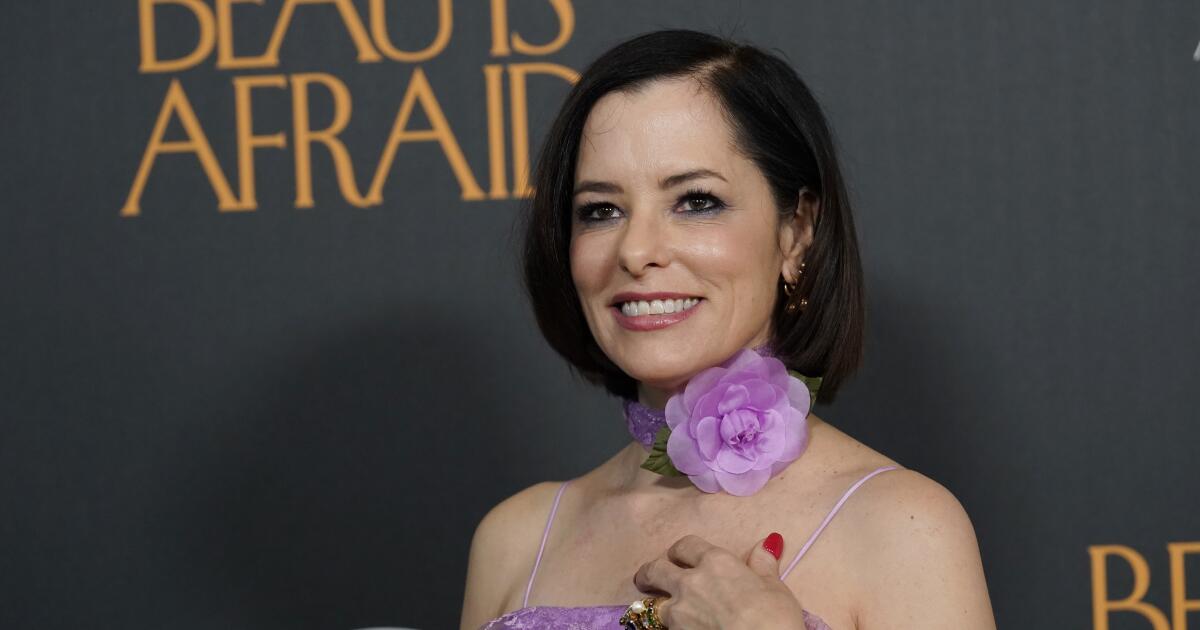
The biggest piece of “White Lotus” news to land in months came Friday: HBO announced that Parker Posey, Jason Isaacs, Leslie Bibb, Dom Hetrakul, Tayme Thapthimthong and Michelle Monaghan would join the cast of Season 3. They will star alongside Natasha Rothwell, who will reprise her role as Belinda, the beleaguered spa manager last seen dreaming of opening her own wellness center in the Maui-set first season. Like many of the actresses White has worked with in “The White Lotus,” including Jennifer Coolidge and Aubrey Plaza, Posey is best known for her comedic roles in films like “Dazed and Confused,” Party Girl” and “Waiting for Guffman.” We look forward to many Posey-centric memes.
Though fans might wish otherwise, it seems highly unlikely that Coolidge will reprise her role as Tanya McQuoid — unless Season 3 turns out to be a prequel or a ghost story.
The setting
After seasons set in Maui and Sicily, Season 3 will move to Thailand, with production to take place in and around Koh Samui, Phuket, and Bangkok. HBO is partnering with the Tourism Authority of Thailand to help produce and promote the series, which — despite all the murder and mayhem — also serves as a glossy travel brochure for high-end destinations around the world. “‘The White Lotus’ project will certainly strengthen the kingdom’s status as a preferred filming destination and a beacon of experience-based tourism, inspiring even more visitors,” said Thapanee Kiatphaibool, governor of the Tourism Authority of Thailand. Seasons 1 and 2 of “The White Lotus” were filmed on location at Four Seasons Resorts in Italy and Hawaii. In case you were wondering, there is a Four Seasons Resort in Koh Samui, where guests can stay in private villas overlooking the Gulf of Siam. Although HBO has not confirmed the series will be filmed at the hotel, it happens to be unavailable for bookings from late January to late March.
As Johnny Knoxville accidentally revealed in an interview with Vulture, Season 3 was originally supposed to film in Japan. But the project was relocated to Thailand because of generous tax incentives provided by the government, according to a report in Deadline.
Premiere date
Production is set to begin in February 2024, according to HBO. A premiere date has not been announced for Season 3. Originally expected to air in 2024, HBO chief executive Casey Bloys said in November that it would most likely be delayed until 2025.
Advertisement
The plot
Very little is known about the plot of Season 3, other than it will follow the guests and staff at a luxurious hotel and will, presumably, involve a dead body or two. The focus of each season has shifted to reflect the location: Season 1 examined race, class and American imperialism; Season 2 was all about sex, money and transactional relationships. Season 3, it seems, may literally be about death.
In a featurette that accompanied the Season 2 finale, White said Season 3 will be “a kind of satirical and funny look at death in Eastern religion and spirituality — it feels like it could be a rich tapestry to do another round at White Lotus.”
Starring: Kansas Bowling, Jessa Jupiter Flux and Julie Kashmanian Directed by: Jason Zink Rated: NR Running Time: 80 minutes
Our Score: 3.5 out of 5 Stars
The found footage serial killer subgenre is surprisingly crowded with films like “Man Bites Dog,” “Maniac,” and the “Creep” franchise. So while it can be difficult to stand out, 2025’s “Looky-loo” and now “looky-loo: PART II” carve out their own identity by trapping us with very little dialogue and a killer who sees the camera as a creative tool rather than a simple recording device.
Advertisement
For the uninitiated (like I was a month ago), “Looky-loo” follows an aspiring filmmaker whose obsession with cameras evolves into voyeurism, stalking, and eventually murder. Not just one murder, either. He begins staging his victims like actors preparing for a scene, finding as much satisfaction in the production as the killing itself. That’s important because “PART II” picks up almost immediately afterward, with the killer seemingly releasing “Looky-loo” to the public like a drive-in snuff film. He even scrawls “PART II” in blood across a refrigerator, as if he’s proudly unveiling the title card for his next masterpiece.
My perspective may be slightly skewed because I watched both films within a 36-hour span. I never really had time to sit with the first film before diving into the sequel. While I think the original is a solid exercise in restraint, “PART II” noticeably improves on many of its quieter shortcomings. The first film feels a bit like “In a Violent Nature.” Instead of marinating in dense forests and ambient sound, “Looky-loo” lingers in sweaty breathing, uncomfortable silence, and victims blissfully unaware that a killer is standing in the closet. I think it works, but I can also understand why some viewers find it painfully slow.
Advertisement
“PART II” replaces much of that restraint with confidence. The killer stomps upstairs without hesitation, casually raids victims’ refrigerators, drinks their beverages, and only occasionally bothers wearing gloves, as if DNA evidence simply stopped existing. None of these moments feel like plot holes. They’re deliberate choices that suggest someone who either no longer fears getting caught or genuinely believes he’s untouchable. It’s difficult to know which because the film still reveals remarkably little about who he actually is.
What we do learn is perhaps the most interesting development of the sequel. I think our killer is creating incel art. The first film hints at it, but “PART II” pushes the idea much further. While he expands his victims to include men, the murders aren’t treated equally. The men often become victims of blunt rage. The women become productions. They’re staged, framed, and lingered upon with a disturbing artistic obsession. Even more revealing is his growing fixation on female artists. It’s almost as if he can’t tolerate the idea that women might be more creative, more fulfilled, or more talented than he is. The murders begin feeling less like random acts of violence and more like warped attempts to prove he’s the only true artist in the room.
That’s ultimately what elevates the “Looky-loo” series. Like “The Poughkeepsie Tapes,” it invites you to revisit it because so much of the story exists between the scenes rather than inside them. Every repeated viewing uncovers another clue about the psychology hiding behind the camera. Unlike charismatic fictional killers like Hannibal Lecter or Dexter Morgan, this murderer isn’t interested in charming us. He wants us to appreciate the process: the stalking, the waiting, the intrusion, and finally the kill. In his mind, we’re his audience. He believes we should admire his work just as much as he does. And if we don’t, we might as well become part of his next production.
Advertisement
“looky loo: PART II” will have its Midwest premiere at Hysteria Fest in St. Louis on Thursday July 9th.
In an era hallmarked by what experts call a “sexrecession,” Six Sex is a symbol of liberation.
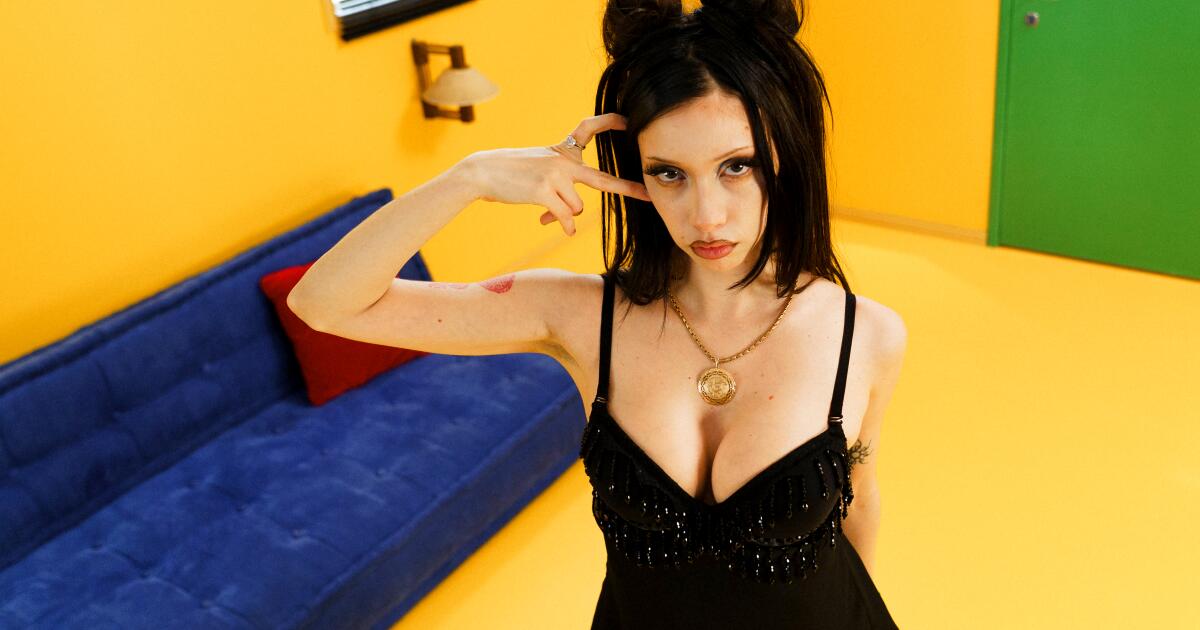
The Argentine baddie fashions herself as a baby-voiced, bikini-clad fembot, beamed in from the clubs of Buenos Aires — and has become known for cheeky, instructive celebrations of desire. Her songs are designed to galvanize like-minded club rats into Dionysian revelry, or, in the case of the song “How to Make Your Ass Bigger,” squats.
To a certain subset of the Latine underground, she represents a pure-hearted hypersexuality. Yet, for the artist behind the persona, Francisca Agustina Cuello, this wasn’t always the intention.
“I don’t know if it was because I still had to keep my innocence or what, but I didn’t envision the project that way,” she said, calling from a hotel room in Barcelona. “That response sort of came about from the people, towards me. So, I said OK, I’m making it my own.”
In doing so, Cuello has churned out six thumping EPs as Six Sex, a campy character that she describes as a “fable” — a mix of “fantasía y hedonismo.”
Advertisement
That dynamic is taken to extremes on her debut album, “Ultra”, released June 6. It’s a dark and propulsive journey through decades of electronic dance music, best described by its own opening words portending “ultra terrorific fantasy.” (The phrase conjures up images of grandeur, but really, it evokes that “Blades of Glory” quote: “no one knows what it means, but it’s provocative.”)
“I feel like nothing I say is all that serious,” she said about her lyrics. “It’s a thing about my personality to be silly and goof around.”
“Ultra” centers Cuello’s winking, suggestive sense of humor. “Not Your Mom” features a conversation with a garbled, omnipotent voice akin to the parents in Charlie Brown; “FUchi!” features schoolyard taunts about “low dickie energy;” the album ends with “No More Porn,” a playful yet powerful subversion of sexual expectations.
Advertisement
“At the same time, for me, that acts as a filter,” she added with a laugh. “Weeding out the people who get scandalized by it, and identifying the people who get it and say: ‘Yas, yo también quiero tener cuatro novios.’”
Earlier this year, Cuello took the stage at Don Quixote, performing in front of a sold-out crowd for her Los Angeles debut. The smell of sweat permeated the air as she ripped through several of her hits — including collaborations with Reysha Rami and German producer MCR-T. Every single one of her signature ponytail flips sent the room into hysterics. The audience screamed every word at the top of their lungs; it was the loudest, most raucous show I’d been to in years.
Cuello took a breather in the middle of her world tour to chat with De Los over Zoom about all things Six Sex: her new record, her writing style and how it feels to connect with fans spun into febrile intensity.
This interview has been condensed for clarity and was translated from Spanish to English.
“[I’m] weeding out the people who get scandalized,” says Six Sex of her provocative music.
(Catalina Jacobo)
Advertisement
I was really taken by the “Ultra” album cover. You’re wearing a white bikini and in this “come to Jesus” pose. What was the goal? [laughs] It was hard, because I wanted the cover to represent what the entire journey of the album meant to me. I was looking for something strong and heavy in visual terms, because with “Ultra”, this is the first time I’ve finished a long, heavy project and I see the start of something. It’s like something new was unlocked. I found a new way to convey feelings, and a new way to create as well. It’s not like I just finished, and it is what it is. Rather, it is the beginning of something bigger.
Is there an element of separation at all between the artistry and you as a person? I think they’re pretty close. It’s as if Six Sex was sort of a fable, or like a hentai or comic [version of] my life. It’s also happened that things I wrote as a joke later became reality. But generally, I draw inspiration from things that actually happened to me.
Is it weird to put those intimate experiences on an album? No, not for me. Because I’m not speaking so seriously, I don’t feel exposed. Even though my persona and my character are very close to one another, I don’t have to prove anything to anyone. I’m not trying to make you believe in something. The songs stop being about me as soon as someone else listens to them. There are certain things we can all see ourselves represented in, and I think my music aims for that, too.
I want to ask about your performance style. I saw you live in Los Angeles and was really taken by the energy exchange between yourself and the crowd. How do you approach live performance? Nowadays, I’m in a balance between performance and being a human being that connects with people and can pause to look in the eyes of the audience to register how they feel. I like being in a showgirl role, and at the same time, knowing when to step out of it.
Advertisement
Sometimes I go up there after having a crappy day, thinking that I’m gonna screw it up. And when I get up there and connect with the people, everything flows in a perfect way.
Does the music transform when it’s performed live, versus on a record? A lot of your music seems designed to be played in the club. I think it’s very personal. For me, I’m a bit autistic; sometimes when I’m at a show, I get different sensations. It really depends on the person. I like seeing people’s reactions live when I start playing these songs for the first time. People were super hyped. They were enjoying them and jumping around a lot. It feels really fresh.
You reference ‘90s club classics all over “Ultra,” including by U.K. band the Prodigy on “Bitch Up.” How did these sounds come into your life? These sounds evoke a special kind of nostalgia for me. Even though I hadn’t been listening to them lately, they sounded like something I wanted to bring back to the table — songs my uncle used to listen to when I was really young. Like a CD [of] pirated songs that somehow ended up at my house, and at the time I was like, “Wow, what is this music?”
There’s an element of Six Sex that gives “fembot,” like a female, sexy robot. I’m curious if you feel that playing out in your work. [laughs] I didn’t know about the fembot thing. I don’t use Twitter. I [keep] a bubble… against some things that I don’t know. But I’ve always liked the idea that people have that perception of me, to some extent.
Advertisement
How do you feel about the rise of AI as a musician, especially considering your persona adopts that perception? I mean… I don’t have a formed opinion on the matter. I do think that, I don’t know, it’s all very relative. For one thing, I obviously feel like it strips away the human value, but at the same time, it’s also a tool for humans. So it’s kind of contradictory. I feel weird about it…. I don’t know.
Zooming out, I’ve noticed Argentina has been having a musical moment over the last few years between yourself, Ca7riel y Paco Amoroso, Juana Rozas… How do you feel Argentina being represented or even challenged in your music? I feel that culturally, Argentina is a very rich country. However, I do feel like, over generations, a paradigm was broken, and new sounds have been created that don’t necessarily abandon the roots of our music, but were created out of counterculture.
That same kind of counterculture is what makes Argentina be in such turmoil. It’s also the context of our country. Economic, political, social. The key Argentinian figures we refer to nowadays are constantly changing. And that allows you to listen to a variety of genres from Argentina, from people doing different things, and at the same time raising the flag and saying: “Yo soy argentino.” And we love that.
A still from ‘Enola Holmes 3’
| Photo Credit: Netflix
Enola Holmes 3sees Philip Barantini (Adolescence) take over direction from Fleabag’s Harry Bradbeer while Jack Thorne (another Adolescence alum) continues as writer from the first two films. The supposed darker take is not very apparent in this tale featuring the consultant detective’s sister.
Based on Nancy Springer’s charming The Enola Holmes Mysteries, Enola Holmes 3 opens with a wedding in Malta. Enola (Millie Bobby Brown), the younger sister of Sherlock (Henry Cavill), and a detective in her own right, as we have seen from the earlier films, is getting married to sweet, idealistic Lord Tewkesbury (Louis Partridge).
Sherlock is in Malta for the wedding which he strongly disapproves, believing Enola will not be able to pursue her career as a detective once she marries and becomes Lady Tewkesbury. Enola has her own doubts about the marriage — not about Tewkesbury but about his world, the people in it and their expectations.
Enola Holmes 3 (English)
Director: Philip Barantini
Cast: Millie Bobby Brown, Louis Partridge, Himesh Patel, Sharon Duncan-Brewster, Henry Cavill, Helena Bonham Carter, Susan Wokoma
Advertisement
Runtime: 105 minutes
Storyline: As Enola prepares to marry Lord Tewkesbury in Malta, her brother goes missing and the game is afoot
When she finally gets into the carriage for her wedding, she realises she is being followed by a masked rider. After a thrilling chase involving the dropping of many bridal veils, the pursuer is revealed to be Dr Watson (Himesh Patel), Sherlock’s flatmate, friend and chronicler (not yet, though). The mask, the good doctor explains, is for allergies.
He was thundering after Enola because Sherlock has vanished, probably kidnapped, as he was working on another case. When Enola’s future mother-in-law, Lady Tewkesbury (Hattie Morahan) also goes missing, the wedding is forgotten as Enola races against time to solve the mystery.
A still from ‘Enola Holmes 3’
| Photo Credit:
Netflix
The pieces of the puzzle include the Battle of Khost in Afghanistan, looted gold, the Maltese fight for independence in the person of Mikiel Mizzi (Joe Azzopardi) from the Partito Anti-Riformista, and the criminal mastermind Moriarty (Sharon Duncan-Brewster).
Advertisement
Enola’s mother, Eudoria (Helena Bonham Carter) and her friend Edith (Susan Wokoma) are skulking around giving Enola invisible support as Eudoria is in trouble with the law for her dynamite-forward ways.
Enola Holmes 3 zips by in a series of frantic action sequences, quips and callbacks. The storybook look is propped up by those amazing pop-ups. Darker themes arrive in lines such as Moriarty saying “There are few British names that are not tarnished with the pain of its empire.”
Brown has created an endearing heroine in her Enola, even if her habit of breaking the fourth wall, while definitely reduced, has gone way beyond twee to be outright annoying. Cavill’s Sherlock is brave and beautiful and just that little bit cross, while Carter’s Eudoria walks the line between gently eccentric and decidedly odd as she dispenses gems of wisdom including “the puzzle is always as devious as the setter.”
Fast, fun and eminently forgettable, this is popcorn entertainment at its most efficient.