World
Will the EU take on three new official languages?


In an interview with Euronews, president of Catalonia Salvador Illa talked about the possibility of Catalan, Galician and Basque becoming official EU languages.
Might Catalan, Galician and Basque become EU official languages? That’s what the president of Catalonia Salvador Illa is advocating in an interview with Euronews featured on today’s Radio Schuman.
Illa visited Brussels last week, where he met with the President of the European Council, António Costa, and the Vice President of the European Commission, Teresa Ribera. A key priority on his agenda was advocating for the inclusion of Catalan, Basque, and Galician as official languages of the European Union.
The proposal requires unanimous approval from all 27 EU member states and is currently under discussion by European Affairs ministers. However, progress has been limited since Spain initially introduced the initiative during its rotating presidency in the summer of 2023.
Radio Schuman also takes you to India, where the European Commissioners are heading today for a high level meeting with Prime Minister Narendra Modi, as well as to European countries that have the most skilled workers.
Today’s Radio Schuman is hosted and produced by Aida Sanchez-Alonso, with journalist and production assistant Eleonora Vasques. Audio editing by Johan Breton. Music by Alexandre Jas.



World
A look at the Hajj pilgrimage and Eid al-Adha and their significance to Muslims around the world

Once a year, large numbers of Muslim pilgrims converge in Saudi Arabia, uniting in religious rituals and acts of worship as they perform the Hajj. While fulfilling a religious obligation, they immerse themselves in what can be a spiritual experience of a lifetime for them and a chance to seek God’s forgiveness and the erasure of past sins.
This year, the Hajj has been approaching against the backdrop of a tenuous ceasefire in the Iran war and related tensions and uncertainty in the Middle East.
Earlier in the year, travel chaos from the war ensnared some of the Muslims who were in Saudi Arabia performing “Umrah,” often referred to as the lesser or minor pilgrimage. Some were stranded and scrambled to find their way home.
Here’s a look at the annual Hajj pilgrimage and its significance to Muslims.
The Hajj is one of the pillars of Islam
The Hajj is the annual Islamic pilgrimage to Mecca in Saudi Arabia and involves a series of religious rituals. It’s required once in a lifetime of every Muslim who can afford it and is physically able to make it. Some Muslims make the journey more than once.
It is one of the Five Pillars of Islam, in addition to the profession of faith, prayer, almsgiving and fasting.
The annual Islamic pilgrimage cycles through the seasons
The Hajj occurs once a year during the lunar month of Dhul-Hijja, the 12th and final month of the Islamic calendar year. This year, the Hajj will officially start on Monday.
When the Hajj falls during the summer months, the intense heat can be especially challenging. Amid extreme high temperatures in 2024, more than 1,300 people died during Hajj, according to Saudi authorities. The country’s health minister said at the time that the vast majority of the fatalities were unauthorized pilgrims who walked long distances under the sun.
A religious obligation and a spiritual experience
For pilgrims, performing the Hajj fulfills a religious obligation and is also a deeply spiritual experience. It’s seen as a chance to seek God’s forgiveness, to grow closer to God and to walk in the footsteps of prophets.
Communally, the Hajj unites Muslims of diverse races, ethnicities, languages and economic classes from around the world. It leaves many feeling unity, connection and humility. Pilgrims also show up with their own personal appeals, wishes and experiences.
Many pilgrims bring with them prayer requests from family and friends that they would like to be said on their behalf.
Some spend years hoping and praying to one day perform the Hajj or saving up money and waiting for a permit to embark on the trip.
Ahead of the journey, preparations may include packing various essentials for the demanding trip, seeking tips from those who’ve performed the pilgrimage before, attending lectures or consulting other educational material to prepare spiritually and physically.
Pilgrims perform a series of religious rituals
Pilgrims make the intention to perform the Hajj and they enter a state of “ihram.” Being in ihram includes abiding by certain rules and prohibitions. For instance, men are not to wear regular sewn or stitched clothes that encircle the body, such as shirts, during ihram. Instead, there are simple ihram cloth garments for men; scholars say the purpose is to discard luxuries and vanity, shed worldly status symbols and immerse the pilgrim in humility and devotion to God.
A spiritual highlight of the Hajj for many is standing on the plain of Arafat, where pilgrims praise God, plead for forgiveness and make supplications. Many raise their hands in worship with tears streaming down their faces.
Other rituals include performing “tawaf,” which involves circling the Kaaba in Mecca counterclockwise seven times. The Kaaba, a cube-shaped structure, is the focal point toward which Muslims face during their daily prayers from anywhere in the world.
Among other rituals, pilgrims retrace the path of Hagar, or Hajar, the wife of Prophet Ibrahim, known as Abraham to Jews and Christians. Muslims believe Hagar ran between two hills seven times searching for water for her son.
The Islamic holiday of Eid al-Adha
Eid al-Adha, or the “Feast of Sacrifice,” is the Islamic holiday that begins during the Hajj, on the 10th day of the Islamic lunar month of Dhul-Hijja.
A joyous occasion celebrated by Muslims around the world, Eid al-Adha marks Ibrahim’s willingness to sacrifice his son as an act of submission to God. During the holiday, Muslims slaughter sheep or cattle and distribute some meat to poor people.
___
Associated Press religion coverage receives support through the AP’s collaboration with The Conversation US, with funding from Lilly Endowment Inc. The AP is solely responsible for this content.

NEWYou can now listen to Fox News articles!
The United States has arrested the sister of the executive president of GAESA, a sprawling conglomerate of military-run businesses in Cuba, due to her alleged ties to the communist regime.
GAESA has been cited for reportedly diverting millions in aid meant for the Cuban people “at the behest of the regime,” Secretary of State Marco Rubio said in a post on X Thursday.
Adys Lastres Morera was taken into ICE custody after the State Department revoked her lawful permanent resident (LPR) status, according to Rubio.
Morera, who was managing real estate assets while living in Florida, reportedly aided Havana’s communist government, officials said.
ALLEGED MEMBER OF CUBA’S MINISTRY OF THE INTERIOR ARRESTED BY ICE AGENTS IN MIAMI
Secretary of State Marco Rubio speaks to reporters in a departure lounge at Robert L. Bradshaw International Airport in Basseterre, Saint Kitts and Nevis, on Feb. 25, 2026. (Jonathan Ernst/Pool/Reuters)
Her status termination was carried out at Rubio’s discretion. Morera entered the United States as a lawful permanent resident in 2023, Reuters reported.
“Today, Adys Lastres Morera, a Cuban national with ties to the communist regime in Havana, was arrested following the Department of State’s termination of her lawful permanent resident (LPR) status, at my direction,” Rubio said.
RUBIO SAYS CUBA NEEDS ‘NEW PEOPLE IN CHARGE’ AS BLACKOUTS, UNREST GRIP ISLAND
Morera is the older sister of Ania Guillermina Lastres Morera, who was sanctioned earlier this month for her role as executive president of GAESA.
GAESA has been described by officials as an exploitative communist entity that siphons resources from the Cuban population.
The State Department announced Thursday that the department has stripped the residency status of Adys Lastres Morera. (J. David Ake/Getty Images)
“While the Cuban people suffer from the collapse of Cuba’s non-functioning communist economy, GAESA functions to allow a small circle of regime elites to plunder all the remaining resources of the island, squirreling away as much as $20 billion in illicit funds away in hidden overseas bank accounts,” Rubio said.
He added that Ania Guillermina Lastres Morera, as a senior executive, is responsible for managing international assets allegedly used to fund the “lavish lifestyles” of the Castro-era elite, as well as supporting efforts tied to broader ideological influence abroad.
A Cuban flag is seen at a U.S. embassy in Havana. (AP)
CLICK HERE TO DOWNLOAD THE FOX NEWS APP
Rubio also pointed to worsening conditions inside Cuba, including widespread blackouts and severe shortages of food, fuel, and medicine, arguing that GAESA is diverting resources away from basic needs under the communist system.
“GAESA’s ill-gotten riches are not spent on repairing the collapsing power grid, stocking empty pharmacies, feeding hungry families, or providing for the most basic and essential needs of the Cuban people. Instead, they are used to enrich Havana’s elites and underwrite their ongoing campaign of espionage, subversion, and revolutionary militancy against the free peoples of this hemisphere,” he said.

Published on •Updated
Also on today’s show:
ADVERTISEMENT

ADVERTISEMENT
Euronews’ Luca Bertuzzi reports on the EU’s economic outlook for 2026 and what European leaders like Italy’s Giorgia Meloni or Hungary’s Péter Magyar are proposing to curb the energy crisis.
Interview with Javi López, Vice-President of the European Parliament (S&D), on the EU-Mexico summit.
Explainer by Jakub Janas: Can Hungary’s new prime minister Péter Magyar revive the Visegrád group?
Euronews’ Sándor Zsíros reports on whether a post-Orbán Visegrád alliance could regain influence in Brussels.
We talk to journalist and writer Jada Yuan live from France about why this year’sCannes Film Festival has become a battleground over politics, ideology and artistic freedom.
When and where to watch Europe Today?
You can join Euronews’ chief anchor Méabh Mc Mahon and our EU editor Maria Tadeo live on TV and Euronews’ website and digital platforms every weekday.
Our new format brings you the day’s key events plus crucial analysis of all the stories shaping the EU and beyond. It’s also available as a newsletter and podcast.
-
 News17 minutes ago
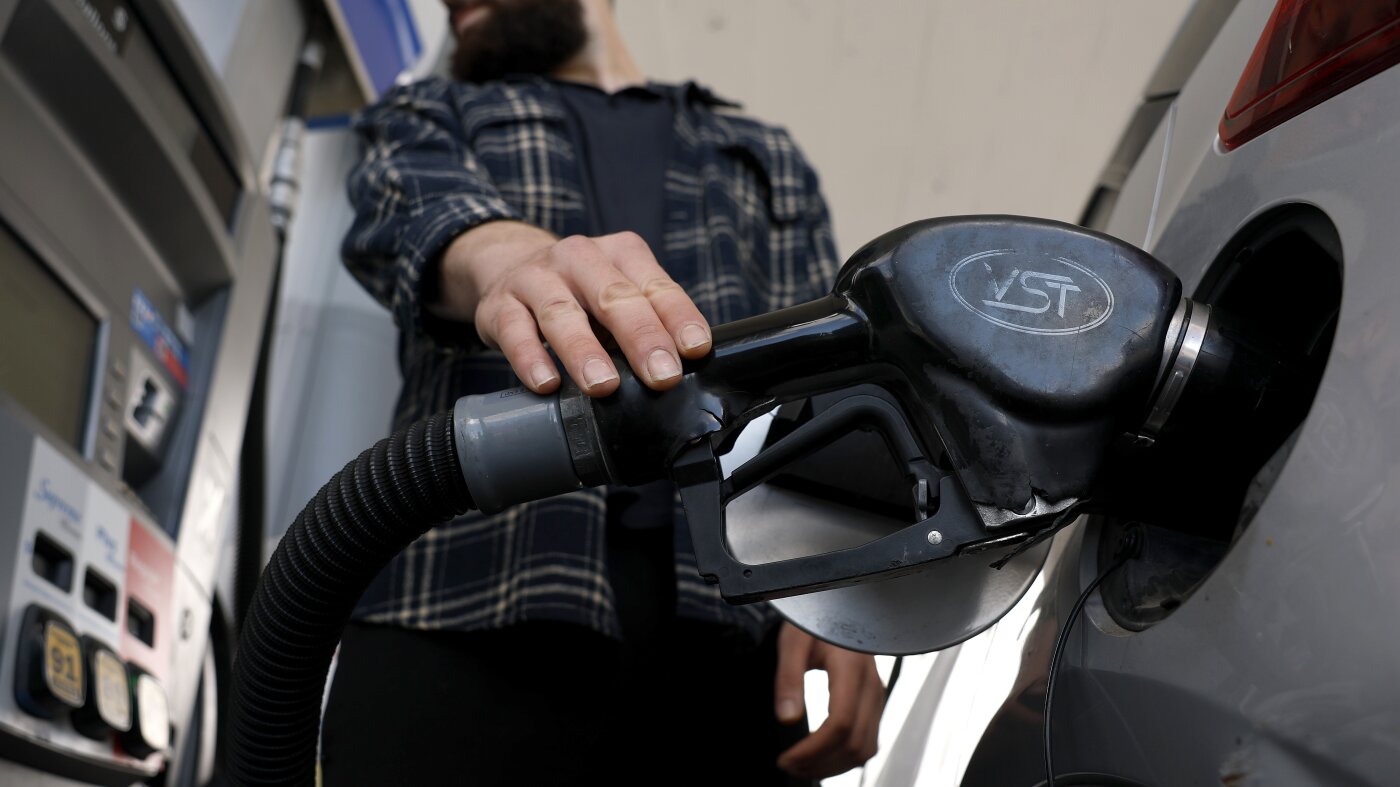
Drive slower, go electric, don’t drive at all? The best options for saving gas
-

 Los Angeles, Ca2 hours ago
Miley Cyrus to receive star on Hollywood Walk of Fame
-

 Detroit, MI2 hours ago
Grading Jack Campbell Detroit Lions Contract Extension
-

 San Francisco, CA2 hours ago
Headlines, May 22 – Streetsblog San Francisco
-

 Dallas, TX3 hours ago
Ranking the top 10 players on the Cowboys’ 2026 roster: #8 Tyler Booker
-

 Miami, FL3 hours ago
Fecal bacteria risk at South Florida beach prompts health warning ahead of busy Memorial Day weekend
-

 Boston, MA3 hours ago
Dorchester shooting leaves young man dead
-

 Denver, CO3 hours ago
Agency releases claim on $5 million of $7.5 million owed for new Broncos stadium

