World
Which Kurdish groups is the US rallying to fight Iran?


Iran has launched operations targeting Iranian and Iraqi Kurdish groups in the semi-autonomous Kurdish region in neighbouring Iraq as the regional war ignited by the United States and Israel entered its sixth day, with more than 1,000 people killed across the country.
State television, Press TV, reported early on Thursday that Tehran was striking “anti-Iran separatist forces”, referring to Iranian and Iraqi Kurdish groups believed to be based in mountainous, hard-to-reach areas near the Iran-Iraq border.
list of 4 itemsend of listRecommended Stories
Iranian missiles hit Sulaimaniyah city in the semi-autonomous Kurdistan region, according to local reports.
“We targeted the headquarters of Kurdish groups opposed to the revolution in Iraqi Kurdistan with three missiles,” Iran’s official IRNA news agency reported on Thursday, quoting a military statement. The Iranian military said earlier on Tuesday it used “30 drones” on Kurdish positions.
The attack comes just days after multiple publications reported that US President Donald Trump was in active talks with Iranian and Iraqi Kurdish groups, and that Washington hopes to use them to spur a popular uprising.
Various Iranian Kurdish groups, which share close ties with Iraqi Kurds, have long opposed Tehran from their bases in northern Iraq and along the Iraq-Iran border. These groups reportedly have thousands of fighters between them.
Here’s what we know so far:
Why are Kurdish groups cooperating with the US?
US officials said the aim is to stretch Iranian forces and take out the remains of the military-dominated Iranian government, according to reporting by CNN.
There is also speculation that the groups could be supported to take control of northern Iran to create a ground buffer for Israeli forces, possibly streaming in from Iraq.
US-Israeli bombings have heavily targeted areas along the Iraq-Iran border since the start of the war on Saturday, possibly to degrade Iranian defences and allow Kurdish opposition groups to cross fully into Iran, according to a briefing by US-based think tank, the Soufan Center.
The US has not ruled out sending ground forces, although analysts told Al Jazeera Iran’s rugged territory would make that very difficult.
If the US does support these groups against Tehran, it would mean that Washington is treating them like armed “players on a board,” Winthrop Rodgers, associate fellow at the UK think tank, Chatham House, told Al Jazeera.

Which Kurdish groups are there?
Neither the US nor Kurdish groups had confirmed any agreements by Thursday.
However, it is known that Trump has spoken to the leaders of two Kurdish groups in Iraq: Masoud Barzani, leader of the Kurdistan Democratic Party, and Bafel Talabani, leader of the Patriotic Union of Kurdistan (PUK), according to US publication, Axios. Talabani confirmed the call on Wednesday.
Trump also spoke to Mustafa Hijri, head of the Democratic Party of Iranian Kurdistan (KDPI), on Tuesday, CNN reported, quoting a Kurdish official.
Meanwhile, Iranian Kurdish rebel groups, which have thousands of fighters along the Iraq-Iran border, formed the Coalition of Political Forces of Iranian Kurdistan (CPFIK) alliance one week before the war broke out.
The group issued statements at the start of the conflict, signalling imminent intervention and urging Iranian military members to defect. According to Israel’s I24News, thousands of its fighters were in Iran by Wednesday.
Here are the different groups:
Kurdistan Democratic Party: The ruling party in the semi-autonomous Kurdistan Regional Government (KRG). The party controls the capital city of Erbil as well as Duhok. It has historical ties with Iranian Kurdish groups.
However, the KRG is not eager to be seen as supporting attacks on Iran, even as Iranian drones have hit US assets in Erbil. On Wednesday, Kurdistan region President Nechirvan Barzani spoke with Iranian Foreign Minister Abbas Araghchi and told him his region “will not be part of conflicts” targeting Tehran.
In 2023, the two countries signed a security deal that saw Iraq promise to disarm and relocate Iranian opposition groups on its territory, although it appears many groups are still based there, reflecting the limited influence the government wields over them.
Iraqi Kurds, who have close ties with both the US and Iran, are in a “difficult position”, said Rodgers.
“They are under tremendous pressure from a wide range of forces, including (pro-Iran) Iraqi militias. They will try to stay out of the conflict as much as they can, but that will likely prove impossible,” he said.
Patriotic Union of Kurdistan (PUK): The PUK is the official opposition in the semi-autonomous Kurdistan region and also nationally relevant as Iraqi President Abdul Latif Rashid is a member. In a statement on Sunday, Rashid urged dialogue and an end to the war. Iraq declared three days of mourning following the killing of Iran’s Ayatollah Ali Khamenei in US-Israeli strikes on Tehran on Saturday.
Coalition of Political Forces of Iranian Kurdistan (CPFIK): Formed on February 22, 2026, the group includes six Iranian Kurdish opposition groups seeking an independent state.
Kurdistan Democratic Party of Iran (KDPI) – Based in the Kurdistan region, the group has about 1,200 members and is proscribed as a “terror” group by Iran.
Kurdistan Freedom Party (PAK) – Also based in Kurdistan, it has an estimated 1,000 members.
Kurdistan Free Life Party (PJAK) – A close ally of the Turkish opposition armed group, Kurdistan Workers’ Party (PKK), PJAK is proscribed as a “terror” group by Ankara. PJAK’s armed wing, the Eastern Kurdistan Units (YRK), is believed to have between 1,000 and 3,000 members, many of them women. It is based in the rugged Qandil Mountains near the Iran-Iraq border and in the semiautonomous Kurdistan region. It has launched numerous attacks on Iranian forces in the past decade. A recent Iranian strike reportedly killed one fighter.
Organisation of Iranian Kurdistan Struggle (Khabat) – It has an unknown number of fighters.
Komala of the Toilers of Kurdistan – Based in Iraq’s KRG, it has an unknown number of fighters.
Komala Party of Iranian Kurdistan (KPIK) – Also headquartered in the Kurdistan region, it has an estimated 1,000 fighters in 2017.
What is the history of US involvement with Kurdish resistance groups in the Middle East?
Kurds are an ethnic minority spread across the Middle East with a shared language and culture. They do not have a state of their own and have historically been marginalised across countries – mainly Iran, Iraq, Syria and Turkiye.
For decades, several armed Kurdish groups have sought self-governance in Turkiye, Syria and Iran.
In Iraq, Kurdish nationalist groups gained some success during the 1991 Gulf War by working with the US, which helped establish the self-governing Kurdistan region of Iraq. The US Central Intelligence Agency (CIA) also trained and armed its army, known as the Peshmerga, after the US invaded Iraq in 2003. In 2005, the semiautonomous region was officially recognised in Iraq’s constitution.
Since 2017, Washington has also armed and trained the People’s Protection Units (YPG), a Syrian Kurdish militia that Turkiye lists as a “terror” group because of its links with the proscribed PKK. The group, which successfully resisted ISIL (ISIS), now forms the main component of the Syrian Democratic Forces (SDF). It controlled Raqqa and other ISIL strongholds.
However, when it began military clashes with Syrian forces under the President Ahmed al-Sharaa-led government last August, Washington turned away from the group and backed Damascus instead. In January this year, the SDF signed an agreement with the Syrian government to integrate into the government forces. In return, the Syrian government recognised Kurdish rights.
In Turkiye, meanwhile, the PKK, whose presence in northern Iraq has long been a source of tension with Ankara, declared a ceasefire in March 2025, after a call from its imprisoned leader, Abdullah Ocalan, to disarm.
How does Kurdish resistance in Iran compare with others?
Iranian Kurds opposed the Iranian government even before the formation of the Islamic Republic in 1979, Rodgers said, and Tehran’s current weakness provides an opportunity for them to advance their political aims in the country.
However, the new coalition of multiple diverse groups is unprecedented, the analyst added, and their internal dynamics will be a key decisive factor in what role Kurdish groups will play in this war.
“Support from the US is helpful, especially in terms of targeting security forces’ infrastructure with air strikes, but they will likely be cautious about relying too much on Washington, especially from an administration as capricious and disorganised as Trump’s,” Rodgers said, noting how Washington abandoned the Kurds in Syria.
Unlike the split Iranian movements, Iraqi Kurds have long united to form a devolved government enshrined in the Iraqi constitution, built an advanced economy, and secured substantive relations with a wide range of foreign countries. That’s something Kurdish groups will also be hoping to establish in a democratic Iran, he said.
“I think it is unlikely that the Trump administration has made any commitments to the Iranian Kurds about supporting their political goals,” Rodgers said, adding that the US’s plan “does not look fully thought through at all”.



President Trump said Iran had agreed to the “highest level” inspections, hours after an Iranian official said there were “no detailed discussions on the nuclear issue,” as the two sides continued to present different narratives of their latest talks.
World
Turkey detains over 200 suspects, including alleged ISIS militants, in sweeping raid ahead of NATO summit
NEWYou can now listen to Fox News articles!
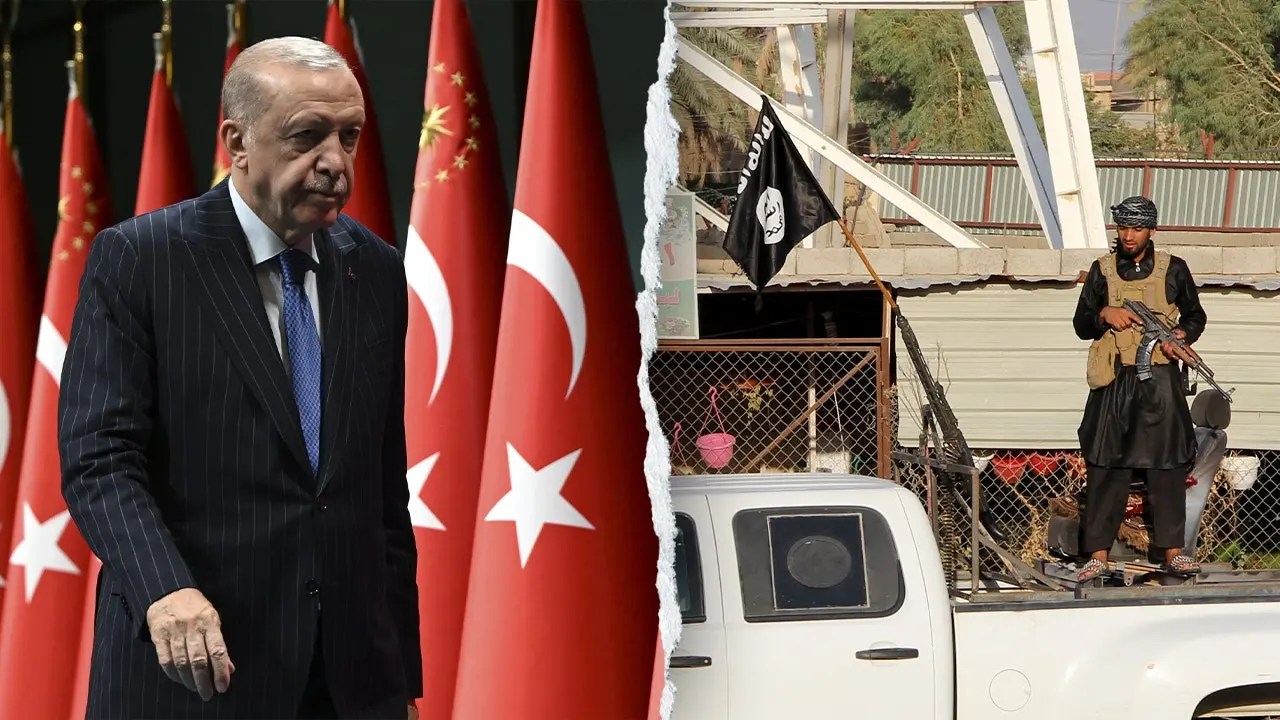
Turkish authorities reportedly detained more than 200 people, including suspected ISIS-linked militants, in a sweeping Tuesday raid in capital Ankara ahead of a July 7-8 NATO summit.
The raid came after Turkish authorities issued detention orders for 241 suspects, 209 of whom were taken into custody, The Associated Press reported, citing a statement from the office of Turkey’s chief prosecutor.
Among the 209 detained, 56 were allegedly ISIS militants, according to the AP. This comes after Turkish authorities said they detained 125 ISIS members in December.
The detention operations occurred just two weeks before a planned NATO summit in Ankara on July 7 that President Donald Trump is expected to attend.
TURKEY’S NATO ROLE UNDER SCRUTINY AMID NEW REPORT ON HAMAS, MUSLIM BROTHERHOOD TIES
President Donald Trump greets Turkey’s President Recep Tayyip Erdogan during a summit in Sharm El Sheikh, Egypt, on Oct. 13, 2025, to support ending the Israel-Hamas war in Gaza after a breakthrough ceasefire deal. (Evan Vucci/AP Photo/Pool)
Other militants scooped up were 35 alleged members of the Revolutionary People’s Liberation Party/Front, which a Turkish statement described as “a far‑left group known for armed attacks and assassinations in Turkey,” according to the AP.
The ISIS-combating operations demonstrate the terrorist group’s ongoing activity in the region, showing the group is still functioning despite the U.S. campaign during Trump’s first term to eliminate the group’s caliphate and its control of large swaths of territory in the Middle East.
Iraqi government forces celebrate while holding an Islamis Sate (IS) group flag after they claimed they have gained complete control of the Diyala province, northeast of Baghdad, on January 26, 2015 near the town of Muqdadiyah. (YOUNIS AL-BAYATI/AFP via Getty Images)
In recent years, ISIS has spread into the African continent, prompting a strong response from the U.S. In May, Trump authorized a series of strikes in Nigeria to combat the group.
PENTAGON SLASHES NATO COMBAT COMMITMENTS AS TRUMP PUSHES EUROPE TO DEFEND ITSELF
A May 16 strike killed ISIS leader Abu-Bilal al-Minuki, who was the group’s second-in-command globally.
U.S. and Nigerian forces conducted kinetic strikes against ISIS fighters in northeastern Nigeria on May 17, 2026, AFRICOM said. (X/U.S. Africa Command)
CLICK HERE TO DOWNLOAD THE FOX NEWS APP
“Abu-Bilal al-Minuki, second in command of ISIS globally, thought he could hide in Africa, but little did he know we had sources who kept us informed on what he was doing,” Trump wrote in a post on Truth Social after the strike. “He will no longer terrorize the people of Africa, or help plan operations to target Americans.”
The group’s renewed activity also includes a call to supporters to make attacks on U.S. soil during the World Cup.
The Associated Press contributed to this report.

By Euronews with AFP
Published on
Two whales were killed off the coast of Iceland overnight Sunday, two days after commercial hunting resumed, local media and animal rights activists reported Monday.
ADVERTISEMENT
ADVERTISEMENT
The kill ends a two-year pause and marks the first catches since 2023.
Icelandic public broadcaster RUV reported that two fin whales were killed. The fin whale is the second largest animal on Earth after the blue whale.
Before the vessels set off on Friday, a protester had attached himself to one of the masts in the port of Reykjavik, but climbed down and was escorted away by police.
Iceland, Norway and Japan are the only three countries that still openly permit whaling, despite international condemnation from the public and animal welfare organisations.
Iceland cancelled its whale hunt over the past two years, partly because economic problems had cut demand and the industry was not deemed profitable enough.
“The first fin whale deaths in Iceland’s hunt this year are devastating,” said Joanna Swabe, European senior public affairs director for animal rights group Humane World for Animals.
“Iceland has killed more than 1,000 fin whales in the past two decades — not only the second largest animal on the planet but also a species classified as globally vulnerable to extinction,” Swabe said in a statement.
Iceland’s government has said it is planning to introduce a bill aimed at banning whaling this autumn.
The International Whaling Commission banned the commercial killing of whales in 1986 amid alarm at the declining stock of the marine mammals.
Iceland’s Marine and Freshwater Research Institute has recommended that no more than 150 fin whales are caught in the 2026 season.
That represents a 28-percent drop on the annual quota it recommended for the period 2018–2025, it said.
The institute has set an annual catch of 168 animals for the minke whale hunt this year, a 23-percent drop on 2018-2025.
-

 Los Angeles, Ca1 hour ago
‘What’s going on with our society?’ Elderly L.A. street vendor violently beaten
-

 Detroit, MI1 hour ago
Trailblaze Detroit: Blazing New Trails while Backpacking Metro Detroit | Visit Detroit | Visit Detroit
-

 San Francisco, CA2 hours ago
Giants open to moving big names before Trade Deadline
-

 Dallas, TX2 hours ago
Reports: Mavericks acquire Sergio De Larrea in four-team Draft night trade
-

 Miami, FL2 hours ago
Miami Gardens police make arrest in cold case murder from 2019
-

 Boston, MA2 hours ago
Woman killed in Mattapan carjacking crash honored at vigil
-

 Denver, CO2 hours ago
Nuggets trade 26th pick in NBA Draft to Spurs, moving out of first round
-

 Seattle, WA2 hours ago
NBA Commissioner says Las Vegas, Seattle remain expansion targets for 2028-29 season

