World
Turkish President makes first official visit to Iraq in over a decade


Turkish President Recep Tayyip Erdoğan arrived in Iraq on Monday for his first official visit in more than a decade as Ankara seeks greater cooperation from Baghdad in its fight against a Kurdish militant group that has a foothold in Iraq.
Other issues also loom large between the two countries, including water supply and exports of oil and gas from northern Iraq to Turkey, halted for more than a year.
TURKEY’S ERDOGAN FACES UNCERTAIN FUTURE AFTER SHOCK ELECTION LOSSES EXPERT SAYS
Erdogan, whose last visit to Baghdad was in 2011, when he was prime minister, met with Iraqi President Abdul Latif Rashid and Prime Minister Mohammed Shia al-Sudani as they inked agreements on water management, security, energy and economic cooperation.
“I believe that my visit and the agreements just signed will constitute a new turning point in Turkey-Iraq relations,” Erdoğan said in a joint news conference with al-Sudani.
Turkey’s President Recep Tayyip Erdoğan, right, and Iraq’s Prime Minister Mohammed Shia al-Sudani shake hands during a welcome ceremony in Ankara, Turkey, Tuesday, March 21, 2023. Erdoğan was set to make his first official visit to Iraq in more than a decade on Monday, April 22, 2024 as his country seeks greater cooperation from Baghdad in its fight against a Kurdish militant group that has a foothold in northern Iraq. (AP Photo/Burhan Ozbilici)
Al-Sudani said they discussed “bilateral security coordination, which will meet the needs of both parties and confront the challenges posed by the presence of armed elements that may cooperate with terrorism and violate the security of the two countries.”
Erdoğan’s visit “comes at a sensitive and dangerous time,” al-Sudani added, citing Israel’s war against the Hamas militant group in Gaza — a war that has had ripple effects across the region.
Erdoğan said the leaders had “consulted on the joint steps we can take against the PKK terrorist organization and its extensions, which target Turkey from Iraqi territory,” referring to the Kurdistan Workers’ Party, or PKK, a Kurdish separatist movement banned in Turkey.
The PKK has maintained bases in northern Iraq’s semiautonomous Kurdish region.
Erdoğan had previously announced a major operation against the PKK during the summer, with the aim of “permanently” eradicating the threat it poses. He did not specify what actions Turkish forces would take in Iraq but Turkish forces have in the past carried out numerous ground offensives against PKK in northern Iraq and Turkish jets frequently target suspected PKK sites.
Ankara now aims to create a 19-25 mile deep security corridor along the joint border with Iraq, Turkish Defense Minister Yasar Guler told journalists last month.
The insurgency — the PKK is fighting for an autonomous Kurdish state in southeast Turkey — has claimed tens of thousands of lives since the 1980s and Turkey and its Western allies have labelled PKK a terrorist organization.
Baghdad has long complained that Turkish actions in Iraq against the PKK violate its sovereignty, but appears to be acquiescing with Ankara’s operations.
In March, after a meeting between the Iraqi and Turkish foreign ministers, Baghdad announced that the Iraqi National Security Council had issued a ban on the PKK, although it stopped short of designating it as a terrorist organization. Erdoğan on Monday praised the ban.
Al-Sudani told journalists during a visit to Washington last week that Iraq and Turkey have “true interests with one another and common projects.” He noted that the PKK has long had a presence in northern Iraq, “but we are not allowing any armed group to be on Iraqi territory and using it as a launchpad for attacks.”
Ankara has argued that PKK’s presence in Iraq threatens the planned construction of a major trade route, the Iraq Development Road, that would connect the port in Basra, southern Iraq, to Turkey and Europe through a network of rail lines and highways.
Baghdad may take a similar approach to the PKK as it has taken to Iranian Kurdish dissident groups based in northern Iraq.
The presence of Iranian dissidents had become a point of tension with Tehran, which periodically launches airstrikes on their bases in Iraq. Last summer, Iran and Iraq reached an agreement to disarm the groups and relocate their members from military bases to displacement camps.
Energy issues and water rights are also key in Iraq-Turkey ties.
An oil pipeline running from the semiautonomous Kurdish region to Turkey has been shut down since March 2023, after an arbitration court ruling ordered Ankara to pay Iraq $1.5 billion for oil exports that bypassed Iraq’s central government in Baghdad. The sharing of oil and gas revenues has long been a contentious issue between Baghdad and Kurdish authorities in Irbil.
In recent years, Iraqi officials have complained that dams built by Turkey are reducing Iraq’s water supply.
The Tigris and Euphrates rivers, which provide most of Iraq’s fresh water, originate in Turkey. Experts fear that climate change is likely to exacerbate existing water shortages in Iraq, with potentially devastating consequences.
Mustafa Hassan, a Baghdad resident, said he hopes that Erdoğan’s visit “will help to solve problems related to water, because Iraq is suffering from a water scarcity crisis, and this affects agriculture.”
Erdoğan said Ankara was aware of the water problems Iraq faces and that the two countries have set up “a joint permanent committee which is going to help through cooperation … taking our shared interests into consideration.”





State media says Israeli attack on girls’ school in the city of Minab in the south of the country kills dozens.
Published On 28 Feb 2026
An Israeli strike has hit an elementary girls’ school in Minab, a city in the Hormozgan province of southern Iran, killing at least 53 people, according to state media, as the immediate civilian cost from Israel and the United States’ huge bombardment of Iran comes into sharper focus.
Workers are continuing to clear wreckage from the site, where 63 others have been injured on Saturday, said Iran’s state-run IRNA news agency. The strike is part of a wave of joint US-Israeli military attacks across Iran that has triggered an outbreak of regional violence.
Recommended Stories
list of 4 itemsend of list
Iranian Foreign Minister Abbas Araghchi shared a photo of the attack, which he said destroyed the girls’ school and killed “innocent children”.
“These crimes against the Iranian People will not go unanswered,” Araghchi wrote in a post on X.
Iran’s Foreign Ministry spokesman Esmail Baqaei also slammed the “blatant crime” and urged action from the United Nations Security Council.
Separately, Iran’s Mehr news agency reported that at least two students were killed by another Israeli attack that hit a school east of the capital, Tehran.
Reporting from Tehran, Al Jazeera’s Mohammed Vall said the attacks call into question US and Israeli claims that “they are targeting only military targets and they are trying to punish the regime, not the people of Iran.”
“President Trump has promised the Iranian people that aid or help is coming their way, but now we are seeing civilian casualties; that’s something that the Iranian government will stress as a case of violation of international law and an aggression against the Iranian people, ” said Vall.
There was no immediate reaction from the US or Israel on Iran’s claims about the school strikes.
The last time the US and Iran waged attacks on Iran in June 2025, sparking the 12-day war, the civilian toll in Iran was also heavy.
According to Iran’s Ministry of Health and Medical Education, thousands of civilians were killed or injured, and public infrastructure was damaged, during that conflict.


NEWYou can now listen to Fox News articles!
The United Nations Human Rights Council (UNHRC) abruptly cut off a video statement after the speaker began criticizing several United Nations officials, including one who has been sanctioned by the Trump administration. The video message was being played during a U.N. session in Geneva, Switzerland, Friday morning.
Anne Bayefsky, director of the Touro Institute on Human Rights and the and president of Human Rights, called out several U.N. officials in her message, including U.N. High Commissioner for Human Rights Volker Türk and special rapporteur Francesca Albanese, who is the subject of U.S. sanctions.
Secretary of State Marco Rubio announced sanctions against Albanese July 9, 2025, saying that she “has spewed unabashed antisemitism, expressed support for terrorism and open contempt for the United States, Israel and the West.”
“That bias has been apparent across the span of her career, including recommending that the ICC, without a legitimate basis, issue arrest warrants targeting Israeli Prime Minister Benjamin Netanyahu and former Defense Minister Yoav Gallant,” Rubio added.
Secretary of State Marco Rubio and Francesca Albanese (Getty Images)
“I was the only American U.N.-accredited NGO with a speaking slot, and I wasn’t allowed even to conclude my 90 seconds of allotted time. Free speech is non-existent at the U.N. so-called ‘Human Rights Council,’” Bayefsky told Fox News Digital.
Bayefsky noted the irony of the council cutting off her video in a proceeding that was said to be an “interactive dialogue,” an event during which experts are allowed to speak to the council about human rights issues.
“I was cut off after naming Francesca Albanese, Navi Pillay and Chris Sidoti for covering up Palestinian use of rape as a weapon of war and trafficking in blatant antisemitism. I named the prosecutor of the International Criminal Court, Karim Khan, who is facing disturbing sexual assault allegations but still unaccountable almost two years later. Those are the people and the facts that the United Nations wants to protect and hide,” Bayefsky told Fox News Digital.
“It is an outrage that I am silenced and singled out for criticism on the basis of naming names.”
Bayefsky’s statement was cut off as she accused Albanese and Navi Pillay, the former chair of the U.N. Independent International Commission of Inquiry on the Occupied Palestinian Territory; and Chris Sidoti, a commissioner of the U.N. Independent International Commission of Inquiry on the Occupied Palestinian Territory. She also slammed Khan, who has faced rape allegations. Khan has denied the sexual misconduct allegations against him.
Had her video message been played in full, Bayefsky would have gone on to criticize Türk’s recent report for not demanding accountability for the “Palestinian policy to pay to kill Jews, including Hamas terror boss Yahya Sinwar who got half a million dollars in blood money.”
When the video was cut short, Human Rights Council President Ambassador Sidharto Reza Suryodipuro characterized Bayefsky’s remarks as “derogatory, insulting and inflammatory” and said that they were “not acceptable.”
“The language used by the speaker cannot be allowed as it has exceeded the limits of tolerance and respect within the framework of the council which we all in this room hold to,” Suryodipuro said.
The Human Rights Council at the United Nations in Geneva, Switzerland, Feb. 26, 2025. (Denis Balibouse/Reuters)
MELANIA TRUMP TO TAKE THE GAVEL AT UN SECURITY COUNCIL IN HISTORIC FIRST
In response to Fox News Digital’s request for comment, Human Rights Council Media Officer Pascal Sim said the council has had long-established rules on what it considers to be acceptable language.
“Rulings regarding the form and language of interventions in the Human Rights Council are established practices that have been in place throughout the existence of the council and used by all council presidents when it comes to ensuring respect, tolerance and dignity inherent to the discussion of human rights issues,” Sim told Fox News Digital.
When asked if the video had been reviewed ahead of time, Sim said it was assessed for length and audio quality to allow for interpretation, but that the speakers are ultimately “responsible for the content of their statement.”
“The video statement by the NGO ‘Touro Law Center, The Institute on Human Rights and The Holocaust’ was interrupted when it was deemed that the language exceeded the limits of tolerance and respect within the framework of the council and could not be tolerated,” Sim said.
“As the presiding officer explained at the time, all speakers are to remain within the appropriate framework and terminology used in the council’s work, which is well known by speakers who routinely participate in council proceedings. Following that ruling, none of the member states of the council have objected to it.”
Flag alley at the United Nations’ European headquarters during the Human Rights Council in Geneva, Switzerland, Sept. 11, 2023. (Denis Balibouse/File Photo/Reuters)
UNRWA OFFICIALS LOBBY CONGRESSIONAL STAFFERS AGAINST TRUMP TERRORIST DESIGNATION THREAT
While Bayefsky’s statement was cut off, other statements accusing Israel of genocide and ethnic cleansing were allowed to be played and read in full.
This is not the first time that Bayefsky was interrupted. Exactly one year ago, on Feb. 27, 2025, her video was cut off when she mentioned the fate of Ariel and Kfir Bibas. Jürg Lauber, president of the U.N. Human Rights Council at the time, stopped the video and declared that Bayefsky had used inappropriate language.
Bayefsky began the speech by saying, “The world now knows Palestinian savages murdered 9-month-old baby Kfir,” and she ws almost immediately cut off by Lauber.
CLICK HERE TO DOWNLOAD THE FOX NEWS APP
“Sorry, I have to interrupt,” Lauber abruptly said as the video of Bayefsky was paused. Lauber briefly objected to the “language” used in the video, but then allowed it to continue. After a few more seconds, the video was shut off entirely.
Lauber reiterated that “the language that’s used by the speaker cannot be tolerated,” adding that it “exceeds clearly the limits of tolerance and respect.”
Last year, when the previous incident occurred, Bayefsky said she believed the whole thing was “stage-managed,” as the council had advanced access to her video and a transcript and knew what she would say.
Related Article

Why Iran resists giving up its nuclear program, even as Trump threatens strikes

Commentary: My toothache led to a painful discovery: The dental care system is full of cavities as you age

Prep talk: Councilmember looking into helping fix fire damage at Encino Franklin Fields

Israel strikes two schools in Iran, killing more than 50 people

Anthropic CEO says he’s sticking to AI “red lines” despite clash with Pentagon

Florida High School Football Rankings: Top 25 teams – Oct. 21

Cleary's 21 help Le Moyne down Central Connecticut State 69-64 in OT

How old is Bo Nix? What to know about Oregon quarterback ahead of 2024 NFL Draft

99th annual Pony Swim held in Virginia

Indiana Members Credit Union announced as new anchor tenant at Bottleworks District
Israel strikes two schools in Iran, killing more than 50 people
Anthropic CEO says he’s sticking to AI “red lines” despite clash with Pentagon

ICE blasts Washington mayor over directive restricting immigration enforcement

Did the EU bypass Hungary’s veto on Ukraine’s €90 billion loan?
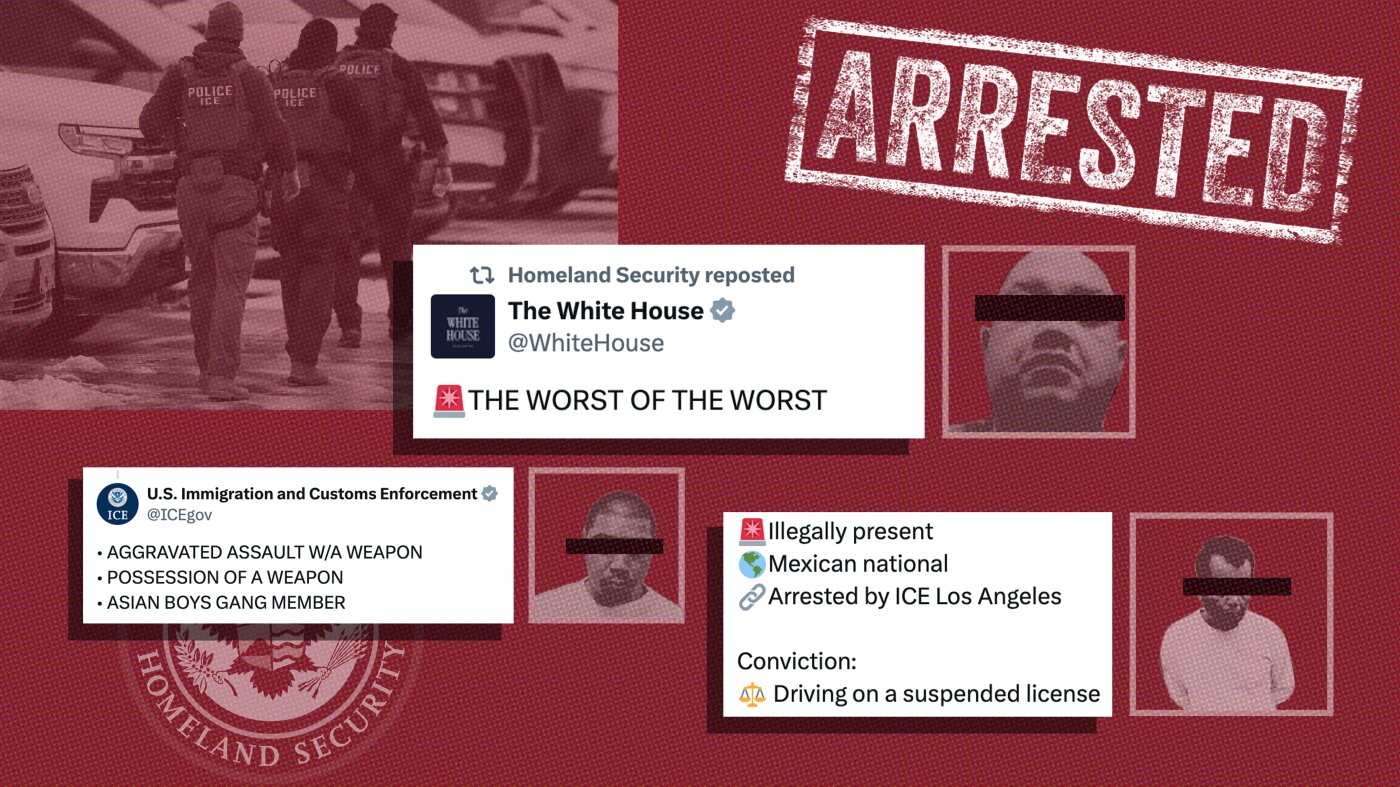
How the federal government is painting immigrants as criminals on social media
-

 World2 days ago
Exclusive: DeepSeek withholds latest AI model from US chipmakers including Nvidia, sources say
-

 Massachusetts3 days ago
Mother and daughter injured in Taunton house explosion
-

 Montana1 week ago
2026 MHSA Montana Wrestling State Championship Brackets And Results – FloWrestling
-

 Louisiana5 days ago
Wildfire near Gum Swamp Road in Livingston Parish now under control; more than 200 acres burned
-

 Denver, CO3 days ago
10 acres charred, 5 injured in Thornton grass fire, evacuation orders lifted
-

 Technology1 week ago
YouTube TV billing scam emails are hitting inboxes
-

 Technology1 week ago
Stellantis is in a crisis of its own making
-

 Politics1 week ago
OpenAI didn’t contact police despite employees flagging mass shooter’s concerning chatbot interactions: REPORT