World
Kemi Badenoch becomes first Black woman to lead UK Conservatives


Kemi Badenoch became the Conservatives’ new leader and the first Black woman to head a major British political party on Saturday, after winning a leadership contest on a promise to return the party to its founding principles.
Badenoch, 44, replaces former Prime Minister Rishi Sunak and has pledged to lead the party through a period of renewal after its resounding defeat at Britain’s July election, saying it had veered towards the political center by “governing from the left”.
UK PM KEIR STARMER IN HOT WATER FOR ACCEPTING FREEBIES, INSISTS HE’S DONE NOTHING WRONG
On the right of the Conservative Party, Badenoch will likely back policies to shrink the state and challenge what she says is institutional left-wing thinking, saying it is time to defend the principles of free speech, free enterprise and free markets.
Badenoch became the Conservatives’ fifth leader since mid-2016 after winning 57% of party members’ votes in the final stage of a months-long contest that saw a field of six whittled down to two. She beat a former immigration minister, Robert Jenrick, who won 43% of the votes.
Labour Prime Minister Keir Starmer welcomed her victory, saying “the first Black leader of a Westminster party is a proud moment for our country”.
Badenoch herself has publicly said she prefers not to focus on her race.
Asked at the Conservative Party conference earlier this year how it would feel to become the first Black woman leader of the party, she said: “I am somebody who wants the color of our skin to be no more significant than the color of our hair or the color of our eyes.”
Robert Jenrick, Kemi Badenoch, London, on Saturday. (REUTERS/Mina Kim)
For some Black voters in London, a city which tends to favor the Labour Party and has a Labour mayor, support for Badenoch will depend on what she does now as leader of the Conservatives.
“They (the Conservative Party) are not more approachable because of the fact that they’ve now got a Black person,” said Imani Samuels, a student. “It will just depend on what she’s doing.”
Asked about Badenoch’s comment on her skin color, Samuels replied: “She should be proud of that, and she should step forward with her Blackness, because to have such a position and to be Black and a woman should be something she’s very proud to say.”
Vaughan Gething became the first Black leader of the Welsh Labour Party earlier this year, but resigned after just four months as the first minister of Wales after a wave of ministerial resignations in protest over his leadership.
Sunak, who is of Indian origin, became Britain’s first prime minister of colour in October 2022 after winning a race to lead the Conservatives that year.
‘Tell the truth’
Badenoch promised on Saturday to tackle problems in the party head-on.
“The time has come to tell the truth,” she told the audience at the final count of the leadership contest, promising to answer the main questions over how the Conservatives lost the July election so badly.
“It is time to get down to business, it is time to renew.”
With forthright views on everything from what she calls identity politics to the value of officials, Badenoch attracts both strong admirers and detractors. She is certain to shake up the Conservatives, who saw their contingent of lawmakers in the 650-seat parliament fall in July to 121 from 365 seats in 2019.
With the Labour government off to a bumpy start, some Conservatives are increasingly optimistic that they could win back power at the next election, which has to be held in 2029.
But some more centrist Conservatives worry Badenoch might alienate not only the more moderate wing of the party but also some voters who were won over by the centrist Liberal Democrats at the last election.
The former trade minister’s time in government was often marked by disputes with the media, celebrities and her own officials. But her no-nonsense approach has also won over many supporters, including the Conservative members who chose her over Jenrick.
“The task that stands before us is tough, but simple, our first responsibility as his majesty’s loyal opposition is to hold this Labour government to account,” she told party members.
“Our second is no less important, it is to prepare over the course of the next few years for government.”







BREAKINGBREAKING,
The Magen David Adom (MDA) emergency service says that 20 others were injured by the impact.
Published On 1 Mar 2026
At least nine people have been killed after an Iranian missile strike on the central Israeli city of Beit Shemesh, as Tehran continued to launch retaliatory attacks a day after Supreme Leader Ayatollah Ali Khamenei was killed in US-Israeli strikes.
The Magen David Adom (MDA) emergency service said on Sunday that nine people were killed and 20 other people were injured by the impact, including two in serious condition.
The Israeli military said in a statement that search and rescue teams, and a helicopter to evacuate those injured are currently operating in Beit Shemesh, with the army’s spokesperson adding that the circumstances of the impact from the Iranian ballistic missile are under review.
More to come …

Sombr was mid-performance at the Brit Awards when a random man bumrushed the stage and pushed the singer off the platform, leaving him stunned — only it was all planned, says his rep.
The singer-songwriter, who was nominated for international artist and international song, was at the end of his smash single “Undressed” when a man joined him on the podium and shoved him hard. Security guards aggressively removed the man from the stage, and Sombr returned to the microphone to segue into his next song.
Shortly after the performance came to a close, Sombr’s rep confirmed to Variety that the whole thing was part of the act. Fans were already split online over whether the incident was staged or real. Naysayers noticed that the offender was wearing a shirt that read “Sombr is a homewrecker” — a nod to his latest single “Homewrecker,” which some claimed was a dead giveaway. But others weren’t necessarily convinced it was a stunt, considering how hard he was pushed and how additional security guards came to his rescue.
Brits host Jack Whitehall remarked on the incident after Sombr’s performance concluded. “Such a shame we didn’t have the security ready,” he said.
The incident took place just days after Britain’s BAFTA Awards last Sunday, when John Davidson, the Scottish Tourette’s syndrome activist and real-life inspiration for the film “I Swear,” disrupted that ceremony with an outburst of racial slurs that occurred as “Sinners” stars Michael B. Jordan and Delroy Lindo were onstage. “I can’t begin to explain how upset and distraught I have been as the impact from Sunday sinks in,” Davidson told Variety earlier this week.
Whitehall made a joking reference to that incident — which was not bleeped from the initial BAFTA broadcast and was audible to viewers — at the top of the Brits, saying “We’ve got the best in the business on the bleep button.”
Sombr is coming off a red-hot year that saw his various singles “Undressed,” “Back to Friends” and “12 to 12” impact the charts. He recently performed at the Grammy Awards, where he was nominated for best new artist alongside Addison Rae, Alex Warren, the Marías, Leon Thomas, Lola Young, Katseye and Olivia Dean, who ended up taking home the award.

NEWYou can now listen to Fox News articles!
Iran was plunged into an internet blackout Saturday after Israel and the U.S. launched military strikes around the country, according to a global internet monitor.
Within hours of the strikes — which officials said targeted infrastructure and killed dozens of senior regime figures at a compound in Tehran— NetBlocks CEO Alp Toker confirmed connectivity started “flatlining.”
“We’re tracking the ongoing blackout, but our assessment is that this is straight out of Iran’s wartime playbook and consistent both technically and strategically with what we saw during the 2025 Twelve-Day War with Israel,” Toker told Fox News Digital.
“Iran’s internet connectivity is now flatlining around the 1% level, so the original blackout the regime imposed during the morning has been consolidated,” he confirmed.
“The blackout was imposed just after 7:00 UTC, not long after the attack on the Iranian regime compound,” Toker clarified, adding that Iran had been largely offline for approximately 12 hours following the attack.
“At 06:10 UTC, there is the main compound strike; at 07:10 UTC, telecoms disruption starts; at 08:00 UTC, the blackout is largely in effect; and by 08:30 UTC, connectivity flatlines.”
“Wartime national blackouts are exceedingly rare around the world, and it’s something we’ve only really seen at this scale in Iran,” he said.
President Donald Trump monitors U.S. military operations in Iran following an Israeli strike in Tehran on Saturday, Feb. 28, 2026. (@WhiteHouse/X)
In the wake of the attack, dubbed Operation Epic Fury, President Donald Trump said on Truth Social that the “heavy and pinpoint” bombing in Iran “will continue uninterrupted throughout the week or as long as necessary to achieve our objective of PEACE THROUGHOUT THE MIDDLE EAST AND, INDEED, THE WORLD!”
He claimed Iranian security forces and members of the regime’s powerful Islamic Revolutionary Guard Corps were already seeking immunity. He urged them to “peacefully merge with the Iranian Patriots.”
“We are hearing that many of their IRGC, Military, and other Security and Police Forces no longer want to fight and are looking for Immunity from us,” Trump said in the post. “As I said last night, ‘Now they can have Immunity; later they only get Death!’”
Toker argued the timing of the blackout suggested it was imposed deliberately as the regime sought to secure communications amid fears of further targeting.
TRUMP TELLS IRANIANS THE ‘HOUR OF YOUR FREEDOM IS AT HAND’ AS US-ISRAEL LAUNCH STRIKES AGAINST IRAN
TEHRAN, IRAN – FEBRUARY 28: Smoke rises over the city center after an Israeli army launches 2nd wave of airstrikes on Iran on February 28, 2026. (Photo by Fatemeh Bahrami/Anadolu via Getty Images) (Fatemeh Bahrami/Anadolu via Getty Images)
“The Iranian regime will have deployed this new blackout to counter potential cyberattacks during their own military operation, but also to avoid leaking the locations of senior regime figures through metadata and user-generated content,” he said.
“Communications would have been limited, and Iran’s leadership would have proceeded with the assumption that all communications, including satellite or whitelisted networks, carry risks,” he said before claiming that “paranoia would be well grounded at this point, with the blackout a belated but direct response to that.”
“Those participating directly would already know to avoid technology that could betray their whereabouts,” Toker said.
“However, the metadata may well have played a part in determining that the meeting of regime leaders was being held at the Tehran compound, who was in attendance, and at what time.”
DID THEY GET HIM? KHAMENEI’S FATE REMAINS UNKNOWN AFTER ISRAEL-US STRIKE LEVELS HIS COMPOUND
In this handout image provided by the Office of the Supreme Leader of Iran, Iranian Supreme Leader Ali Khamenei addresses the nation in a state television broadcast on June 18, 2025 in Tehran, Iran. (Office of the Supreme Leader of Iran via Getty Images)
Toker revealed that the broader network around the regime leaders and around the compound wouldn’t have had the same strict restrictions.
“This kind of adjacent ‘background noise’ can be correlated against other intelligence sources to build an understanding of activity on the ground,” he added.
“Smartphones are a readily available, almost ‘free’ source of intelligence, and even when locked down, they eventually connect to international online services and generate insights that can be used to pinpoint regime figures,” Toker said.
CLICK HERE TO DOWNLOAD THE FOX NEWS APP
“In the aftermath of Saturday’s strike, this concern will have been high on the remaining Iranian leadership’s minds, especially if they didn’t have a clear and specific understanding of how the meeting was compromised.”
Iran has previously imposed sweeping internet shutdowns during periods of domestic unrest, including nationwide protests in January, which saw thousands killed, often seeking to curb the spread of information and restrict coordination.
Related Article


Prep talk: Football student-athletes to be honored at annual banquets

At least nine killed after Iranian strike on Israel’s Beit Shemesh

Mass shooting at Austin, Texas bar leaves at least 3 dead, 14 wounded, authorities say

Newsom’s ‘disgraceful’ call for Dems to be ‘culturally normal’ is ‘dangerous,’ far-left podcaster says

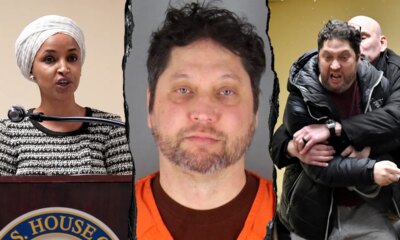
Judge orders Ilhan Omar attack suspect to remain in custody pending trial

Florida High School Football Rankings: Top 25 teams – Oct. 21

Cleary's 21 help Le Moyne down Central Connecticut State 69-64 in OT

How old is Bo Nix? What to know about Oregon quarterback ahead of 2024 NFL Draft

99th annual Pony Swim held in Virginia

Indiana Members Credit Union announced as new anchor tenant at Bottleworks District
At least nine killed after Iranian strike on Israel’s Beit Shemesh
Mass shooting at Austin, Texas bar leaves at least 3 dead, 14 wounded, authorities say

Mamdani’s response to Trump’s Iran strike sparks conservative backlash: ‘Rooting for the ayatollah’

Activists hail ‘historic’ EU’s decision on accessible abortion

A long-buried recording and the Supreme Court of old (CT+) : Consider This from NPR
-

 World3 days ago
Exclusive: DeepSeek withholds latest AI model from US chipmakers including Nvidia, sources say
-

 Massachusetts4 days ago
Mother and daughter injured in Taunton house explosion
-

 Montana1 week ago
2026 MHSA Montana Wrestling State Championship Brackets And Results – FloWrestling
-

 Denver, CO4 days ago
10 acres charred, 5 injured in Thornton grass fire, evacuation orders lifted
-

 Louisiana6 days ago
Wildfire near Gum Swamp Road in Livingston Parish now under control; more than 200 acres burned
-

 Technology1 week ago
YouTube TV billing scam emails are hitting inboxes
-

 Technology1 week ago
Stellantis is in a crisis of its own making
-

 Politics1 week ago
OpenAI didn’t contact police despite employees flagging mass shooter’s concerning chatbot interactions: REPORT