West
Newsom’s ‘disgraceful’ call for Dems to be ‘culturally normal’ is ‘dangerous,’ far-left podcaster says

NEWYou can now listen to Fox News articles!
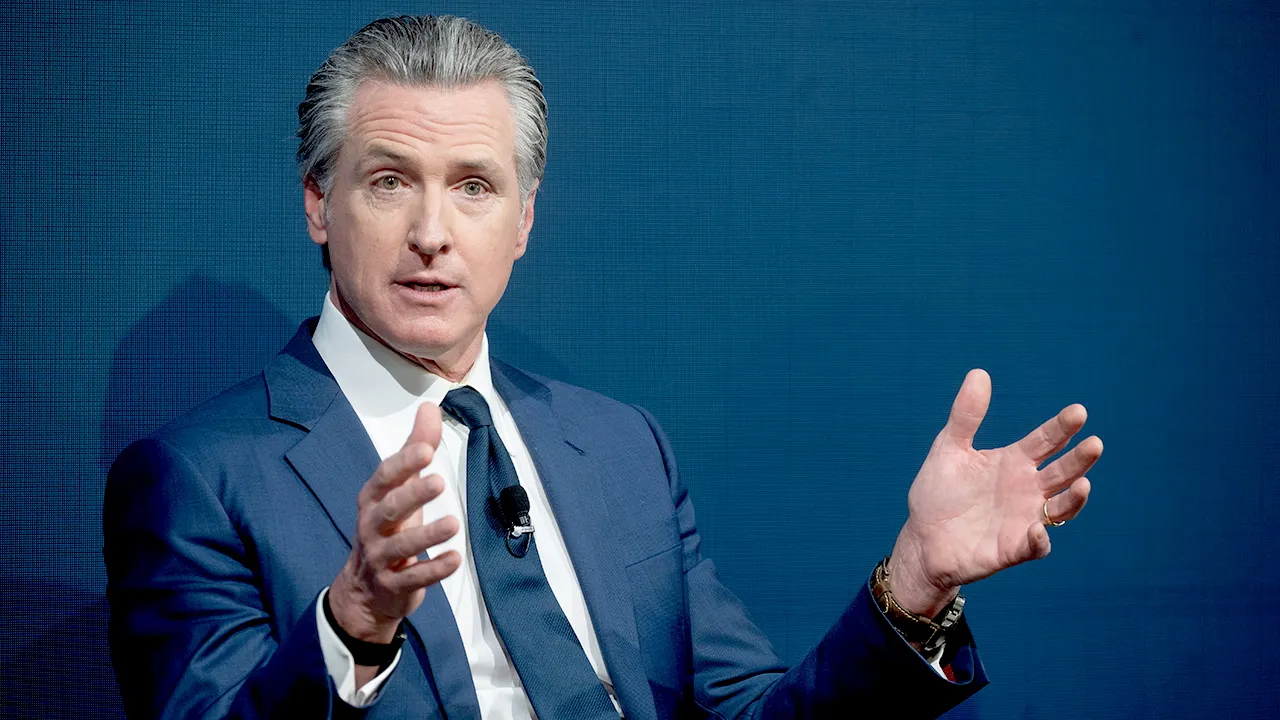
“I’ve Had It” podcast host Jennifer Welch accused Democratic California Gov. Gavin Newsom of committing “political suicide” Wednesday after he called on the Democratic Party to become “more culturally normal” to win elections.
Welch reacted to Newsom’s interview with CNN Monday during which he called on Democrats to be more focused on affordability rather than niche cultural issues.
“From a tactical perspective, from the prism of purely politics, there’s no doubt that the Democratic Party needs to be, dare I say, more culturally normal,” Newsom said.
“I believe that — less prone to spending a disproportionate amount of time on pronouns, identity, politics, more focused on tabletop issues, things that really matter, the stacking of stress in terms of electricity bills and childcare costs and healthcare and, obviously, housing costs and how easily we get trapped in that, how I’ve fallen prey to that.”
Far-left podcast star Jennifer Welch has emerged as a darling of the liberal media and Democratic politicians. (Bryan Bedder/Getty Images for GLAAD)
Welch accused Newsom of “ceding ground” to Republicans with his comments and attempts to appear more moderate.
“What you’re saying, Gov. Newsom, is breathtakingly dangerous,” Welch said. “And you’re ceding ground to the narratives that Republicans try to define free people that mind their own business that stand up for everything. You’re allowing their b—— narratives to define Americans, and it is utterly disgraceful.”
GAVIN NEWSOM SPOX TELLS REPORTER ‘F— OFF’ WHEN ASKED FOR RECORDS OF HIS DYSLEXIA DIAGNOSIS
Welch, whose podcast has become a hub for high-ranking Democratic leaders, also expressed frustration that Newsom appeared to be taking advice from “corporate Democrats” on trying to move to the center of politics.
Gavin Newsom told CNN Democrats need to be “more culturally normal” to win elections. (Marijan Murat/picture alliance via Getty Images)
“He is adamantly against a billionaire tax, which I just think, ‘My god, that’s a layup right now.’ Tax the billionaires. It is not even remotely a liberal thing. It is a moderate position from both parties. But here’s Gavin Newsom as he continues his death march to the center,” Welch said.
STEPHEN A SMITH CALLS ON GAVIN NEWSOM TO ‘ANSWER’ FOR CALIFORNIA’S HOMELESSNESS, CRIME
She pointed to other politicians like New York City Mayor Zohran Mamdani as examples of Democrats who held onto progressive politics and were still elected.
“Gavin Newsom, this is so incredibly disappointing. It’s so devastating that you cede ground to these bigots, and you allow their b—— framework to redefine you. I just think this is political suicide. You don’t have to throw one person under the bus,” Welch said.
Gov. Gavin Newsom has been pushing a more moderate position on transgender issues. (Amy Sussman/Getty Images)
Fox News Digital reached out to Newsom’s office for comment.
CLICK HERE TO DOWNLOAD THE FOX NEWS APP
Newsom faced backlash from members of his own party for his more moderate position on transgender issues. He has nevertheless insisted that he remains a staunch advocate for the transgender community.
Related Article

Read the full article from Here



CHEYENNE, Wyo. — As the Aug. 18 primary election approaches, Cap City News is introducing candidate questionnaires to help voters make informed decisions at the ballot box.
Every candidate in the primary field was sent the same three questions and given a limit of 500 words, which could be distributed among their answers as they saw fit. To ensure a fair and direct line to the community, all responses are published exactly as submitted, without edits or alterations.
Candidates were asked:
- What are the most crucial challenges your constituents are facing?
- If elected, how will you address these challenges?
- What qualities or qualifications do you possess that have prepared you to meet these challenges?
Questionnaires are being published on a rolling basis online through Aug. 11. They will be accessible via the Cap City News Election Tracker.
Jessica Crowder (R), Wyoming House District 43
What are the most crucial challenges your constituents are facing?
Wyoming is built on hard work, strong communities, and the responsible use of our natural resources. The families in House District 43 and Wyoming face real challenges — from the need for a more resilient, diverse economy to the increasing outmigration of young people. Wyoming families also face rising costs of healthcare, housing and more. House District 43 deserves a representative that puts people first and works to strengthen the place we call home through steady and thoughtful leadership.
If elected, how will you address these challenges?
As a legislator, I will use my experience working with landowners, businesses, and local governments to support the industries that define Wyoming while encouraging thoughtful growth and diversification. Our future depends on good jobs, strong schools, and communities where families can put down roots and thrive. We can honor the values that make Wyoming what it is while building something that lasts—an economy that works for working people, an education system that prepares the next generation, and communities that remain resilient and connected.
The rising cost of healthcare and the difficulty of accessing services are real challenges for Wyoming families. We need reforms that reduce costs, expand access—including to mental health resources—and meet people where they are. The 2026 Health Insurance Affordability Task Force is working to address rising costs, and I will work with this group and others to develop effective solutions that deliver the quality care our communities deserve.
Tax and housing reforms must be reviewed for possible refinement so people can afford to buy homes, stay in their homes, and build equity and pride of place. At the same time, every Wyoming county depends on a different mix of revenue, and we all rely on stable, predictable local funding for essential services. I will participate in honest, informed conversations about how to provide relief to those who need it most without jeopardizing essential services.
Wyoming’s economy depends on our core industries and new businesses that invest here. Both need clear, consistent processes and regulations so they have confidence in choosing Wyoming. Economic growth also relies on strong infrastructure and a skilled workforce. When these pieces work together—predictable regulations, reliable infrastructure, workforce readiness, and responsible budgeting—they create a stable environment that encourages growth, provides good jobs, and protects taxpayers.
What qualities/qualifications do you possess that have prepared you to meet these challenges?
I believe we maintain and create opportunity by respecting the people who live here and the land that sustains us. I grew up on a ranch and now raise my family in Laramie County, where we run a ranch and small business, so I understand the challenges facing families, landowners, and employers. With over 20 years of experience in agriculture, land management, and public policy, I’ve supported working lands, defended local interests, and strengthened communities. The values that guide this work—practical problem solving, respect for local knowledge, and a commitment to community—have broad application beyond land management and would serve me well in the legislature.
Related

San Francisco supervisors authorized a resolution Tuesday urging California lawmakers to expand the city’s automated speed camera program, which currently has 33 cameras operating in the city under a state pilot.
The board’s 10-to-1 vote on Tuesday, with District 10 Supervisor Shamann Walton voting against it, will not add cameras immediately, but formally asks the state to explore changes to the program. The San Francisco Municipal Transportation Agency has identified at least 80 additional high-need locations that could benefit from automated enforcement, according to a report filed with the Public Safety and Neighborhood Services Committee.
Richard Zieman, whose son Andrew, a paraeducator, was killed in November 2021 by a speeding driver outside Sherman Elementary School on Franklin Street, told Mission Local that city officials should do more. “They waited for a tragedy,” Zieman said. Parents and school leaders had repeatedly asked the city to slow traffic on Franklin Street, where drivers barreled downhill toward the Marina, said Zieman.
Supervisor Matt Dorsey, who introduced the resolution, has said the city’s first year of automated speed enforcement shows that the technology works. The SFMTA reported nearly an 80 percent reduction in drivers traveling at least 10 miles per hour over the speed limit at camera locations after the program launched in March 2025. San Francisco was the first city to implement the pilot authorized under Assembly Bill 645.
The pilot, however, is capped by state law at 33 camera locations. Tuesday’s resolution asks California lawmakers to consider allowing more, prioritizing corridors on San Francisco’s High Injury Network, including Franklin Street.
Walk San Francisco, a pedestrian advocacy group which spent roughly eight years advocating for the state legislation that created the pilot, called the resolution an important first step toward broader expansion.
“Thirty-three cameras is nowhere near the number of cameras we need for people to realize that San Francisco is a safe-speed city,” said executive director Jodie Medeiros. “This tool is working. People are lowering their speeds.”
District 6, represented by Dorsey, currently has seven of the city’s 33 cameras, most of them in SoMa. The district also records the highest number of crashes involving injuries or fatalities in San Francisco, making it a focal point in the debate over expanding automated enforcement.
The resolution advanced unanimously from the Board of Supervisors’ Public Safety and Neighborhood Services Committee last week, where Dorsey said the cameras have made streets “feel safer” and argued the early results show “why we should have even more of this life-saving technology.”
Zieman, whose son’s death prompted traffic-calming improvements and eventually a speed camera near Sherman Elementary, said the issue is urgent.
“There are probably other Franklin streets out there,” he said. “I just hope they don’t wait for someone else before they expand the program. It’s too late for Andrew.”

DENVER — Dr. Justina Ford’s name adorns plaques and statues across Denver, where she delivered more than 7,000 babies as the city’s first licensed Black woman physician. Now, an affordable housing building in Five Points, the neighborhood where she lived and worked for 50 years, bears her name.
The newly christened Justina at Five Points, formerly Brunetti Lofts, offers a rare commodity in Denver’s housing market: family-sized affordable housing units.The 23-unit building, built in 2005, has 19 three-bedroom units. Rents range from $840 to $1,893 per month. Residents must make between 30% and 60% of Denver’s area median income, and specific income requirements vary depending on the unit.
“I do believe that in the last, five, ten years, maybe a little longer, housing here in Colorado has just gone crazy. I mean, I have a little two-bedroom townhouse, and I can’t afford to move back in the neighborhood I grew up in because of the pricing. And it’s just crazy,” said Daphne Rice-Allen, chair of the board at the Black American West Museum and Heritage Center, which is housed in Ford’s historic home in Five Points.
Rice-Allen grew up in Clayton, which is northeast of Five Points. This cluster of neighborhoods in north Denver — Five Points, Cole, Whittier and Clayton — were among the areas deemed “hazardous” and “definitely declining” on the city’s 1938 “Residential Security Map,” which redlined neighborhoods with Black, Mexican and lower-income residents.
At that time, Five Points flourished as a cultural and entertainment hub, known as “the Harlem of the West” and serving as “the seat of Denver’s African American community.” Black social clubs, such as the Owl Club, emerged. And Ford, who arrived in Denver in 1902 and was not allowed to work in a hospital, continued to provide medical care out of her house and deliver babies at her patients’ homes.
“This was a family neighborhood, Rice-Allen said about Five Points during that period.
“There were a lot of families that lived in the area and lived in the neighborhood.”
But Five Points’ demographics have changed a lot since Ford died in 1952. About 30% of households in the neighborhood were families in 2020. By 2024, that percentage dropped to about 20%.
The neighborhood experienced a drastic shift in racial demographics as well. In 2000, about 27% of the residents were white, 26% Black and 43% Hispanic. The 2020 census told a different story: 64% white, 10% Black and 17% Hispanic.
What was once a Black cultural hub is now a majority-white neighborhood, which raises concerns about gentrification and displacement of long-time residents. Despite the large supply of affordable housing units in the area — 2,796 in 2024 — about half of renters in Five Points are cost-burdened, meaning they spent more than 30% of their income on housing.
-

 Wisconsin9 minutes ago
Flood relief grant applications now open for nonprofits, churches in Northeast Wisconsin
-

 West Virginia15 minutes ago
New law allows employers to provide benefits for independent contractors in West Virginia
-

 Wyoming21 minutes ago
Election Q&A: Jessica Crowder for Wyoming House District 43
-

 Crypto27 minutes ago
Blackrock Becomes World’s First $15 Trillion Asset Manager, Unleashes Tokenization Blitz
-
 Finance33 minutes ago
Big financing steps forward for The 78, Foundry Park projects
-

 Fitness39 minutes ago
More Muscle, Less Fat—Is This High-Tech Workout A New Fitness Answer?
-

 Movie Reviews51 minutes ago
Film Review: “The Odyssey” – MediaMikes
-
World1 hour ago
Movie Review: In Christopher Nolan’s ‘The Odyssey,’ an ancient epic is reborn


