Southwest
RICK PERRY: Where’s the beef? Trump knows and he’s trying to make it affordable

NEWYou can now listen to Fox News articles!
“America First” has been more than a slogan for President Trump. It has become a governing framework and near-mandate for his administration. America First policy decisions have manifested across immigration strategy, energy regulation, and, perhaps most clearly, trade policy.
The beef market has been in desperate need of an America First recalibration after President Joe Biden’s failed policies. Ground beef prices have become astronomical, reaching an average of $6.69 per pound in December, the highest price since tracking began in the 1980s.
These price increases are outpacing those of other food categories due to structural problems within the domestic beef market. Analysis from the American Farm Bureau Federation shows the domestic herd has fallen to a 75-year low and is continuing to shrink as fewer calves are retained for breeding. As a result, the U.S. cattle herd is unlikely to expand until at least 2028.
From my time as governor of Texas and agriculture commissioner for the nation’s leading cattle-producing state, I understand both the gravity of this situation and the need for a deliberate policy response.
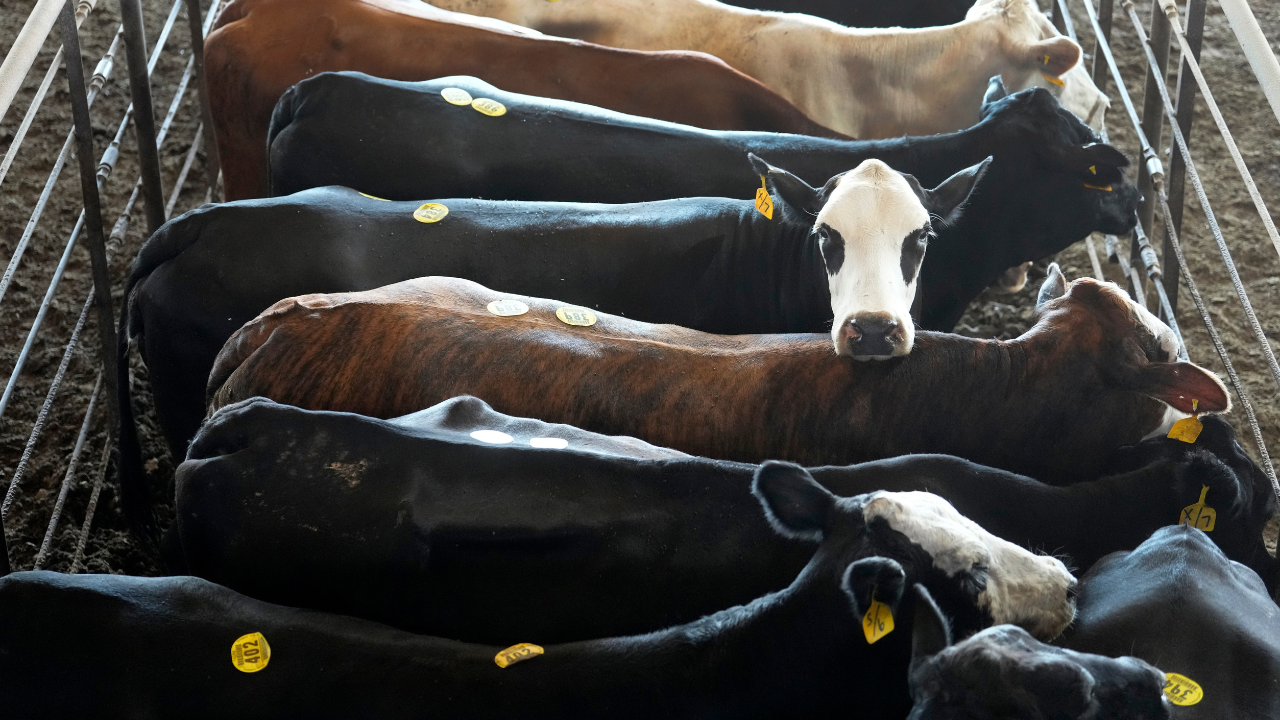
Cattle are shown in pens at the Cattlemen’s Columbus Livestock Auction in Columbus on Wednesday, Oct. 8, 2025. (Melissa Phillip/Houston Chronicle/Getty Images)
In October, President Donald Trump addressed the need for beef affordability measures and signaled plans to increase imports, which he recently finalized through an executive order, opening the U.S. to an additional 80,000 metric tons of lean beef trimmings from Argentina this year.
This step is valuable because the U.S. does not produce enough beef to meet domestic demand, necessitating imports. Argentina is a strategic and well-suited partner to remedy our beef shortage because they specialize in lower-cost, lean beef. These trimmings from Argentina will be blended with fattier domestic beef to produce hamburgers and ground beef products – affordable staples in high demand.
Importing the specific type of affordable beef directly addresses supply and aligns with an America First approach. Expanding lean beef imports will reduce pressures on our beef supply, thus reducing costs for consumers while protecting cattle ranchers’ premium production.
THE SURPRISING REASON WHY AMERICANS COULD FACE HIGH BEEF PRICES FOR YEARS
The impacts of these smart imports are complemented and multiplied by broader efforts to strengthen the cattle sector, including Agriculture Secretary Brooke Rollins’ October plan to fortify the American beef industry and President Trump’s directive for the Department of Justice to crack down on foreign-owned meat packing cartels.
Beyond these efforts, the administration should reassess the existing allocation of tariff-rate quotas (TRQs), which were configured in 1995. Reworking would acknowledge shifts in global production patterns and domestic market needs, putting U.S. ranchers in a better position.
Today, the overwhelming share of tariff-free beef imports are dedicated to Australia and New Zealand. Both countries focus heavily on premium, grass-fed exports – products that compete directly with higher-end U.S. beef in domestic and international markets.
By contrast, lean beef imports from South America primarily serve the lower-cost blended segment. Ranchers and their supporters criticizing the import increase from Argentina, but failing to push back about the near-unlimited market access Australia and New Zealand have are fighting the wrong battles.
The beef market has been in desperate need of an America First recalibration after President Joe Biden’s failed policies.
Some policymakers have raised concerns that imports would sideline American ranchers and that we should focus on cutting red tape, lowering production costs and supporting cattle herd growth. These priorities are valid – but they’re not mutually exclusive with strategic imports.
RFK JR BACKS BEEF, DECLARING ‘WAR ON PROTEIN IS OVER’ AS HE THANKS AMERICA’S CATTLE RANCHERS
The notion that imports should be avoided is misguided and ignores structural supply realities. Strategic imports like lean trimmings can stabilize prices while allowing U.S. producers to concentrate on premium markets, where profitability is strongest. This is how we pave the path for rancher success.
CLICK HERE FOR MORE FOX NEWS OPINION
If U.S. ranchers are forced to simultaneously try and dominate serving both low-margin ground products and high-margin premium markets with higher-end cuts, they may become overwhelmed. From a long-term market perspective, overextension can discourage heifer retention and delay necessary herd rebuilding.
President Trump and his team are on the right path with the Argentina deal. This expansion should be defended unapologetically, incorporated beyond just 2026, and considered as part of a long-term strategy rather than a temporary measure.
CLICK HERE TO DOWNLOAD THE FOX NEWS APP
Permanently expanding Argentina’s tariff-free access to the U.S. market for lean beef trimmings is how we ensure prices stop rising. The administration should also consider opportunities for expanded imports from other South American nations, such as Paraguay and Uruguay, where production aligns with U.S. market gaps.
Building an American First beef market requires precision and long-term thinking. The current policy shifts are moving in the right direction, which will support ranchers, strengthen our market and deliver affordability for American consumers.
CLICK HERE TO READ MORE FROM RICK PERRY
Related Article

Read the full article from Here



An early morning crash involving a big rig scattered cinder blocks across the northbound 101 Freeway, prompting a SigAlert in the San Fernando Valley Tuesday. The incident was reported around 4:10 a.m. when a big rig overturned on the freeway at Tampa Avenue. The crash occurred on a stretch of the northbound 101 that curves […]

The corporation that owns the Langham Huntington Pasadena has settled a civil lawsuit claiming the luxury hotel hiked room rates while more than 200,000 residents evacuated their homes during the pair of deadly and destructive wildfires that devastated the Los Angeles area in January of 2025. The lawsuit, filed by the Los Angeles County District […]

Southern California is bracing for a hot and muggy week ahead, with heat watches in place and a chance of thunderstorms across the mountains and desert regions.
Temperatures are expected to increase each day into midweek, prompting officials to extend a heat advisory until 10 a.m. Tuesday, when it will transition to an extreme heat watch for even warmer conditions through Thursday evening.
Temperatures are expected to peak on Wednesday, with many locations topping 100 degrees and some reaching 110, according to the National Weather Service.
“Monsoonal moisture moving over the area will add to the discomfort, also bringing the potential for showers and thunderstorms each day,” the Weather Service said.
Those thunderstorms are most likely to occur over the mountain and desert areas as subtropical moisture is drawn into the region by a strong ridge of high pressure.
Temperatures along the coast may even reach the 90s by midweek, with very warm temperatures continuing through the night.

“Given the extreme heat and humidity, it’s highly recommended to complete outdoor activities as early as possible,” the Weather Service said.
The high pressure is expected to slowly weaken Thursday, bringing afternoon highs to within a few degrees of normal in most areas by Friday.
-

 Connecticut1 minute ago
Connecticut Sun hold off Portland Fire on Camp Day at Mohegan Sun Arena
-

 Delaware7 minutes ago
Harrington-area man killed after truck hits him after lying on roadway
-

 Florida13 minutes ago
Man, 74, becomes oldest inmate executed in Florida in state’s 10th lethal injection this year
-

 Georgia19 minutes ago
Athlon Sports tabs Florida-Georgia among SEC’s best games in 2026
-

 Hawaii25 minutes ago
4,000 troops lose air conditioning in Hawaii
-

 Idaho31 minutes ago
Idaho is home to the nation's first DarkSky Reserve. Now it's home to the nations first DarkSky Certified Resort
-

 Illinois37 minutes ago
2 teens hospitalized after being rescued by bystanders from Lake Michigan at Illinois Beach State Park near Zion
-

 Indiana43 minutes ago
‘Big Boy’ locomotive returns for overnight stay in northeast Indiana

