World
Hezbollah launches rockets at Israel after overnight airstrikes: 'Open-ended battle'


Hezbollah fired more than 100 rockets into northern Israel on Sunday in response to a series of Israeli airstrikes on southern Lebanon, pushing both sides closer to the brink of full-scale war.
The Israel Defense Forces (IDF) airstrikes targeting Iranian-backed Hezbollah terrorists in Lebanon killed dozens, including one of the group’s top commanders, Ibrahim Akil.
Hezbollah’s deputy leader, Naim Kassem, said Sunday’s rocket attack was just the beginning of what’s now an “open-ended battle” with Israel.
Israeli security forces work at a house hit by a rocket fired from Lebanon, in Kiryat Bialik, northern Israel, on Sunday. (AP Photo/Ariel Schalit)
At Akil’s funeral, Kassem vowed Hezbollah would continue military operations against Israel but also warned of unexpected attacks “from outside the box,” pointing to rockets fired deeper into Israel.
Prime Minister Benjamin Netanyahu said Israel would take whatever action was necessary to restore security in the north and allow people to return to their homes.
“No country can accept the wanton rocketing of its cities. We can’t accept it either,” he said.
Israel’s military chief, Lt. Gen. Herzi Halevi, told reporters the army is prepared to increase pressure on Hezbollah in the coming days, adding, “We have many capabilities that we have not yet activated.”
ISRAELI AIRSTRIKES CONTINUE ON TERRORIST TARGETS, ROCKET LAUNCHERS IN SOUTHERN LEBANON
The Israeli military said it struck about 400 militant sites, including rocket launchers, across southern Lebanon in the past 24 hours, thwarting an even larger attack.
“Last night, hundreds of thousands of Israelis woke up to rocket sirens as Hezbollah launched over 20 rockets towards northern Israel that left communities in ruins,” IDF spokesperson Lt. Col. Nadav Shoshani said. “This attack could have caused much more damage, but we were able to minimize their attack with a preemptive strike on rocket launchers across southern Lebanon.”
The latest tit-for-tat between Israeli forces and Hezbollah comes as Lebanon is still reeling from a wave of explosions that hit pagers and walkie-talkies belonging to Hezbollah members on Tuesday and Wednesday. The explosions killed at least 37 people and wounded about 3,000. The attacks were widely blamed on Israel, which hasn’t confirmed or denied responsibility.
Israeli security and rescue forces work at the site hit by a rocket fired from Lebanon, in Kiryat Bialik, northern Israel, on Sunday. (AP Photo/Gil Nechushtan)
Israeli forces have been trading fire with Hezbollah fighters almost daily since Oct. 8, the day after Hamas militants stormed into Israel, killing nearly 1,200 people and taking another 250 as hostages. Hezbollah leadership has said its attacks on Israel are in solidarity with its ally Hamas in Gaza.
IDF SAYS KEY HAMAS OPERATIVE KILLED IN GAZA, FOLLOWING CRIPPLING STRIKE ON HEZBOLLAH
The low-level fighting has killed dozens in Israel, hundreds in Lebanon and displaced tens of thousands on both sides of the frontier. But the fighting has intensified in recent weeks, with Israel shifting its focus from Gaza to Lebanon. Some have expressed concerns that the fight against Hezbollah will strain resources and complicate prospects for an already elusive cease-fire deal.
Retired Army Brig. Anthony Tata told “Fox & Friends” that the conflict would only grow and chided the Biden administration for what he deemed a lack of “moral clarity.”
Hezbollah members salute near the coffin of Hezbollah commander Ibrahim Akil during the funeral procession in Beirut’s southern suburb Sunday. (AP Photo/Bilal Hussein)
“It’s critical that Netanyahu keeps his eye on the main fight, which is Hamas, and he eliminates Hamas,” Tata said. “The main effort is still Hamas. And I think what they have to do is hold what they’ve got and hold off Hezbollah until they finish up Hamas, and then they can move to the north and … destroy Hezbollah. You can’t do two things at once equally well.”
Asked Sunday if he was worried about rising tensions in the Middle East, President Biden said, “Yes, I am.”
“But we’re going to do everything we can to keep a wider war from breaking out. And we’re still pushing hard,” Biden added.
Hamas is still holding around 100 captives from its attack in southern Israel on Oct. 7, a third of whom are believed to be dead. More than 41,000 Palestinians have been killed, according to Gaza’s Hamas-run Health Ministry, which doesn’t distinguish between civilians and combatants.
Meanwhile, the Israeli military said Sunday it intercepted multiple aerial devices fired from the direction of Iraq after Iran-backed militant groups there claimed to have launched a drone attack on Israel.
The Associated Press contributed to this report.



NEWYou can now listen to Fox News articles!
The United Nations Human Rights Council (UNHRC) abruptly cut off a video statement after the speaker began criticizing several United Nations officials, including one who has been sanctioned by the Trump administration. The video message was being played during a U.N. session in Geneva, Switzerland, Friday morning.
Anne Bayefsky, director of the Touro Institute on Human Rights and the and president of Human Rights, called out several U.N. officials in her message, including U.N. High Commissioner for Human Rights Volker Türk and special rapporteur Francesca Albanese, who is the subject of U.S. sanctions.
Secretary of State Marco Rubio announced sanctions against Albanese July 9, 2025, saying that she “has spewed unabashed antisemitism, expressed support for terrorism and open contempt for the United States, Israel and the West.”
“That bias has been apparent across the span of her career, including recommending that the ICC, without a legitimate basis, issue arrest warrants targeting Israeli Prime Minister Benjamin Netanyahu and former Defense Minister Yoav Gallant,” Rubio added.
Secretary of State Marco Rubio and Francesca Albanese (Getty Images)
“I was the only American U.N.-accredited NGO with a speaking slot, and I wasn’t allowed even to conclude my 90 seconds of allotted time. Free speech is non-existent at the U.N. so-called ‘Human Rights Council,’” Bayefsky told Fox News Digital.
Bayefsky noted the irony of the council cutting off her video in a proceeding that was said to be an “interactive dialogue,” an event during which experts are allowed to speak to the council about human rights issues.
“I was cut off after naming Francesca Albanese, Navi Pillay and Chris Sidoti for covering up Palestinian use of rape as a weapon of war and trafficking in blatant antisemitism. I named the prosecutor of the International Criminal Court, Karim Khan, who is facing disturbing sexual assault allegations but still unaccountable almost two years later. Those are the people and the facts that the United Nations wants to protect and hide,” Bayefsky told Fox News Digital.
“It is an outrage that I am silenced and singled out for criticism on the basis of naming names.”
Bayefsky’s statement was cut off as she accused Albanese and Navi Pillay, the former chair of the U.N. Independent International Commission of Inquiry on the Occupied Palestinian Territory; and Chris Sidoti, a commissioner of the U.N. Independent International Commission of Inquiry on the Occupied Palestinian Territory. She also slammed Khan, who has faced rape allegations. Khan has denied the sexual misconduct allegations against him.
Had her video message been played in full, Bayefsky would have gone on to criticize Türk’s recent report for not demanding accountability for the “Palestinian policy to pay to kill Jews, including Hamas terror boss Yahya Sinwar who got half a million dollars in blood money.”
When the video was cut short, Human Rights Council President Ambassador Sidharto Reza Suryodipuro characterized Bayefsky’s remarks as “derogatory, insulting and inflammatory” and said that they were “not acceptable.”
“The language used by the speaker cannot be allowed as it has exceeded the limits of tolerance and respect within the framework of the council which we all in this room hold to,” Suryodipuro said.
The Human Rights Council at the United Nations in Geneva, Switzerland, Feb. 26, 2025. (Denis Balibouse/Reuters)
MELANIA TRUMP TO TAKE THE GAVEL AT UN SECURITY COUNCIL IN HISTORIC FIRST
In response to Fox News Digital’s request for comment, Human Rights Council Media Officer Pascal Sim said the council has had long-established rules on what it considers to be acceptable language.
“Rulings regarding the form and language of interventions in the Human Rights Council are established practices that have been in place throughout the existence of the council and used by all council presidents when it comes to ensuring respect, tolerance and dignity inherent to the discussion of human rights issues,” Sim told Fox News Digital.
When asked if the video had been reviewed ahead of time, Sim said it was assessed for length and audio quality to allow for interpretation, but that the speakers are ultimately “responsible for the content of their statement.”
“The video statement by the NGO ‘Touro Law Center, The Institute on Human Rights and The Holocaust’ was interrupted when it was deemed that the language exceeded the limits of tolerance and respect within the framework of the council and could not be tolerated,” Sim said.
“As the presiding officer explained at the time, all speakers are to remain within the appropriate framework and terminology used in the council’s work, which is well known by speakers who routinely participate in council proceedings. Following that ruling, none of the member states of the council have objected to it.”
Flag alley at the United Nations’ European headquarters during the Human Rights Council in Geneva, Switzerland, Sept. 11, 2023. (Denis Balibouse/File Photo/Reuters)
UNRWA OFFICIALS LOBBY CONGRESSIONAL STAFFERS AGAINST TRUMP TERRORIST DESIGNATION THREAT
While Bayefsky’s statement was cut off, other statements accusing Israel of genocide and ethnic cleansing were allowed to be played and read in full.
This is not the first time that Bayefsky was interrupted. Exactly one year ago, on Feb. 27, 2025, her video was cut off when she mentioned the fate of Ariel and Kfir Bibas. Jürg Lauber, president of the U.N. Human Rights Council at the time, stopped the video and declared that Bayefsky had used inappropriate language.
Bayefsky began the speech by saying, “The world now knows Palestinian savages murdered 9-month-old baby Kfir,” and she ws almost immediately cut off by Lauber.
CLICK HERE TO DOWNLOAD THE FOX NEWS APP
“Sorry, I have to interrupt,” Lauber abruptly said as the video of Bayefsky was paused. Lauber briefly objected to the “language” used in the video, but then allowed it to continue. After a few more seconds, the video was shut off entirely.
Lauber reiterated that “the language that’s used by the speaker cannot be tolerated,” adding that it “exceeds clearly the limits of tolerance and respect.”
Last year, when the previous incident occurred, Bayefsky said she believed the whole thing was “stage-managed,” as the council had advanced access to her video and a transcript and knew what she would say.
Related Article


A post on X by European Parliament President Roberta Metsola has triggered a wave of misinformation linked to the EU’s €90 billion support loan to Ukraine, which is designed to help Kyiv meet its general budget and defence needs amid Russia’s ongoing invasion.
ADVERTISEMENT
ADVERTISEMENT
Hungary said earlier this week that it would block both the loan — agreed by EU leaders in December — and a new EU sanctions package against Moscow amid a dispute over oil supplies.
Shortly afterwards, Metsola posted on X that she had signed the Ukraine support loan on behalf of the parliament.
She said the funds would be used to maintain essential public services, support Ukraine’s defence, protect shared European security, and anchor Ukraine’s future within Europe.
The announcement triggered a wave of reactions online, with some claiming Hungary’s veto had been ignored, but this is incorrect.
Metsola did sign the loan on behalf of the European Parliament, but that’s only one step in the EU’s legislative process. Her signature does not mean the loan has been definitively implemented.
How the process works
In December, after failing to reach an agreement on using frozen Russian assets to fund Ukraine’s war effort, the European Council agreed in principle to provide €90 billion to help Kyiv meet its budgetary and military needs over the next two years.
On 14 January, the European Commission put forward a package of legislative proposals to ensure continued financial support for Ukraine in 2026 and 2027.
These included a proposal to establish a €90 billion Ukraine support loan, amendments to the Ukraine Facility — the EU instrument used to deliver budgetary assistance — and changes to the EU’s multiannual financial framework so the loan could be backed by any unused budgetary “headroom”.
Under EU law, these proposals must be adopted by both the European Parliament and the European Council. Because the loan requires amendments to EU budgetary rules, it ultimately needs unanimous approval from all member states.
Metsola’s signature therefore does not amount to a final decision, nor does it override Hungary’s veto.
The oil dispute behind Hungary’s opposition
Budapest says its objections are linked to a dispute over the Druzhba pipeline, a Soviet-era route that carries Russian oil via Ukraine to Hungary and Slovakia.
According to the Centre for Research on Energy and Clean Air (CREA), Hungary and Slovakia imported an estimated €137 million worth of Russian crude through the pipeline in January alone, under a temporary EU exemption.
Oil flows reportedly stopped in late January after a Russian air strike that Kyiv says damaged the pipeline’s southern branch in western Ukraine. Hungary disputes this, with Prime Minister Viktor Orbán accusing Ukraine of blocking it from being used.
Speaking in Kyiv alongside European Commission President Ursula von der Leyen and European Council President António Costa, Ukraine’s President Volodymyr Zelenskyy said the pipeline had been damaged by Russia, not Kyiv.
He added that repairs were dangerous and could not be carried out quickly without putting Ukrainian servicemen in danger.
Tensions escalated further after reports that Ukraine struck a Russian pumping station serving the pipeline. Orbán responded by ordering increased security at critical infrastructure sites, claiming Kyiv was attempting to disrupt Hungary’s energy system.

Golf roundup: Austin Smotherman plays ‘boring, simple’ to expand lead in Florida

Ga. lawmakers propose changes to state’s early voting process

No. 3 Rainbow Warriors continue winning ways against No. 6 BYU | Honolulu Star-Advertiser

Town Hall to address future of Medicaid expansion in Idaho – Local News 8

Takeaways: Michigan basketball ends Illinois streak, wins Big Ten

Florida High School Football Rankings: Top 25 teams – Oct. 21

Cleary's 21 help Le Moyne down Central Connecticut State 69-64 in OT

How old is Bo Nix? What to know about Oregon quarterback ahead of 2024 NFL Draft

99th annual Pony Swim held in Virginia

Indiana Members Credit Union announced as new anchor tenant at Bottleworks District

ICE blasts Washington mayor over directive restricting immigration enforcement

Did the EU bypass Hungary’s veto on Ukraine’s €90 billion loan?
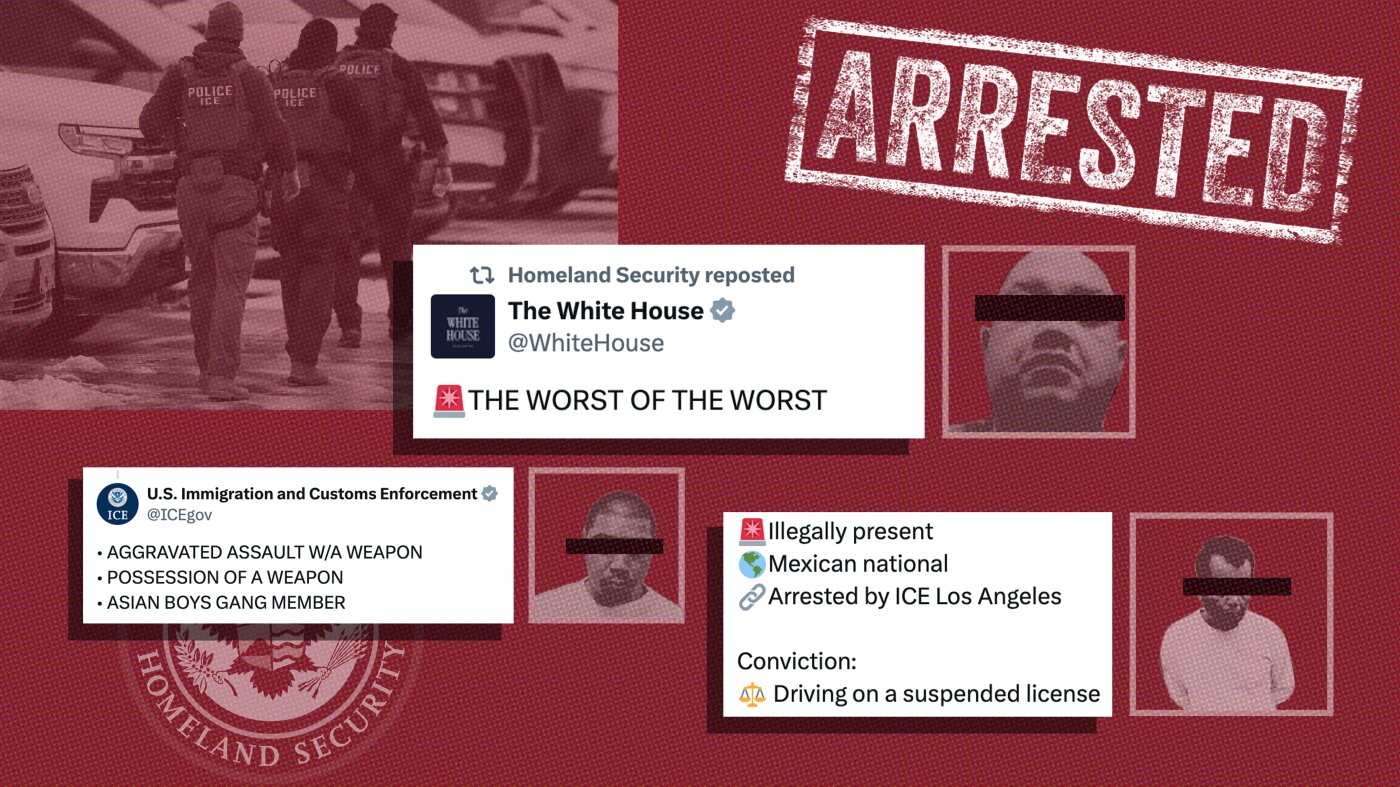
How the federal government is painting immigrants as criminals on social media

Where Iran’s ballistic missiles can reach — and how close they are to the US

Has India’s influence in Afghanistan grown under the Taliban?
-

 World2 days ago
Exclusive: DeepSeek withholds latest AI model from US chipmakers including Nvidia, sources say
-

 Massachusetts3 days ago
Mother and daughter injured in Taunton house explosion
-

 Montana1 week ago
2026 MHSA Montana Wrestling State Championship Brackets And Results – FloWrestling
-

 Louisiana5 days ago
Wildfire near Gum Swamp Road in Livingston Parish now under control; more than 200 acres burned
-

 Denver, CO2 days ago
10 acres charred, 5 injured in Thornton grass fire, evacuation orders lifted
-

 Technology7 days ago
YouTube TV billing scam emails are hitting inboxes
-

 Technology7 days ago
Stellantis is in a crisis of its own making
-

 Politics7 days ago
OpenAI didn’t contact police despite employees flagging mass shooter’s concerning chatbot interactions: REPORT