World
Haley’s campaign a giant step for GOP women, but bigger still for Trump


With polls showing Nikki Haley trailing Donald Trump by a wide margin heading into this weekend’s South Carolina Republican primary, many political analysts characterise the vote as Haley’s last stand in her quixotic bid to win the party’s 2024 presidential nomination.
Regardless of the result, however, scholars have said that Haley’s campaign is a historic one. By outdistancing a field dominated by men to effectively challenge the immensely popular Trump, she has moved women one step closer to political parity in electoral politics.
Polls indicate that Trump is leading Haley by as many as 36 percentage points heading into Saturday’s South Carolina primary, even though Haley is a native and former governor of the Palmetto State. And while winning the South Carolina primary would open the door for Trump to capture the party’s nomination outright when 15 states hold their primaries simultaneously next month, Haley’s campaign has, at least in theory, charted a path to remain in the race until Super Tuesday, which could give the former United Nations ambassador an advantage in the 2028 presidential ballot.
Haley, for her part, has pledged to remain in the race despite the odds. Speaking at her alma mater, Clemson University, on Tuesday, she said, “Some of you — perhaps a few of you in the media — came here today to see if I’m dropping out of the race,” she said. “Well, I’m not. Far from it.”
Haley’s emergence as the last woman standing in what was a crowded race stands in stark contrast to candidates like former New Jersey Governor Chris Christie and ex-Arkansas Governor Asa Hutchinson, who styled themselves as “anti-Trump” candidates. Conversely, Florida Governor Ron DeSantis hewed close to Trump in both style and substance before dropping out in January, after failing to distinguish himself from the frontrunner and presumptive nominee.
Haley, on the other hand, has staked out a middle ground, portraying herself as a would-be “accountant” in the White House, and consequently a calming alternative to Trump’s four years of “chaos”.
Initially circumspect in her criticism, Haley has turned up the heat as the GOP field has narrowed, attacking Trump’s efforts to insert loyalists in the Republican National Convention, highlighting his rising stack of legal troubles, and taking more direct aim at Trump’s “insecurity” and temper tantrums.
Her policy proposals, however, are not substantively different from her former boss, and as recently as this month, Haley told reporters in South Carolina that her campaign is not an “anti-Trump movement”, according to the Washington Post.
Part of Haley’s strategy is to walk a tightrope when it comes to addressing her gender and Indian ancestry in a modern Republican party that is slow to change, Kelly Dittmar, director of research at the Center for American Women and Politics at Rutgers University, told Al Jazeera.
For instance, Dittmar said that Haley has, in many ways, leaned into her role as the rare woman in a Republican presidential race, but she has not necessarily portrayed gender as a “point of merit”, underscoring the conservative “idea that somehow hearing about gender and racial identity is anti-meritocratic … and [Republicans] don’t play into identity politics.”
“If you go back to Hillary Clinton in 2016, she used to say, ‘I’m not asking you to vote for me because I’m a woman, I’m asking you to vote for me on the merits. But one of those merits is I’m a woman,’” Dittmar said.
In contrast, Haley has used gendered imagery to boost “masculine credentials” and an image of male toughness that still resonates in the party, repeatedly referring to her high-heeled shoes as “ammunition”. In the advertisement launching her campaign, she proclaimed, “When you kick back, it hurts them more if you’re wearing heels.”
Moreover, on the issue of race, Haley has tacked to the right, consistent with Trump’s own views, sparking controversy by failing to cite slavery as a reason for the US Civil War. And she has repeated a regular Republican line, most recently in an interview in late January. “I don’t think America’s racist,” she said. “I think we have racism in America.”
A historical benchmark
In turn, Trump’s attacks on Haley suggest that there remains a tolerance – if not appetite – for racism and sexism among his supporters, Dittmar said. In January, Trump referred to Haley as “birdbrained” and “not presidential timber”.
Trump has amplified the conspiracy that Haley, who is of Indian descent, was not born in the US, redolent of a tactic known as “birtherism” which he championed during Barack Obama’s 2008 presidential campaign, falsely alleging that the nation’s first African American president was born in Kenya, and was therefore ineligible to run for president.
The former president has also referred to Haley as “Nimbra”, an apparent debasement of her first name, Nimarata (Nikki, the name she uses, is her middle name).
Many have said that Trump’s remarks are hardly surprising for a candidate who had previously bragged about sexually assaulting women, derided his 2016 Democratic opponent Hillary Clinton as a “nasty woman” who did not look presidential and suggested in 2015 that a female debate moderator had “blood coming out of her whatever”.
While such attacks have come to be seen as part and parcel of a Trump campaign, Dittmar noted that studies have regularly indicated high measures of “hostile sexism” and “racial resentment” among his supporters.
“It is not surprising that Trump would use sexist or racist language or strategies, because that’s actually been beneficial for him to mobilise a lot of these voters,” Dittmar told Al Jazeera. “[Nikki Haley] brings that out, but perhaps to his advantage, at least among his base”.
Haley has fought back, launching the National Women for Nikki Coalition, a 50-state effort that many see as a last-ditch effort to energise the voting bloc.
And while it may ultimately be a matter of too little, too late, Haley’s staying power in the race represents a historical benchmark for a political party that has traditionally been dominated by white men. And both voters, donors and the media appear to hold her in much higher regard than Sarah Palin, the former Alaska governor and self-proclaimed “hockey mom” who was often ridiculed by stand-up comedians and late-night talk show hosts.
“It is notable to recognise and to give Haley credit for pushing the envelope on the Republican side for at least more seriously taking a woman candidate as a potential nominee,” Dittmar said.
“In the modern context, she will have gotten farther than any other Republican woman, and I do think that that’s something worth pointing out, regardless of what happens.”
Electoral vulnerabilities
While a resounding defeat in South Carolina seems likely, Haley’s race has, if nothing else, taken the temperature of the modern Republican Party and the existential crisis represented by Trump’s enduring hold, according to politics watchers.
Perhaps most illuminating during Haley’s run has been just how difficult it has been for Haley – or any of the now departed Republican candidates – to find any purchase in attacks on Trump, a heterodox politician who has continued to polarise members of the party.
In 2020, a movement against Trump largely coalesced under the “Never Trump” banner. While that effort has been less vocal this election cycle, there is a “minority, but a significant kind of disaffected Republican voter still looking for an alternative to Trump,” according to Aaron Kall, an elections expert at the University of Michigan.
“That shows that if Trump is the nominee, which is still likely, that he does have some general election vulnerabilities,” he said.
He pointed to several prominent donors who have continued to provide the funds Haley needs to stay in the race, many hailing from the more traditional conservative old guard of the Republican Party. Haley’s campaign said she raised $16.5m in January – nearly a third of the $42m in campaign cash raised by Trump last month – which Haley described as her largest monthly haul since entering the race.
Before the South Carolina primary, Haley also attended a Texas fundraiser co-hosted by real estate magnate Harlan Crow and oil tycoon Ray Lee Hunt, among others, according to Fortune magazine.
Enduring hold
Some have viewed Haley’s persistence as an effort to position herself as the natural successor to Trump in the event that he is unable to be the party’s nominee.
Trump is the first candidate in US history to face one criminal indictment – let alone four – during his campaign, creating an unprecedented situation that could potentially find the former president behind bars come November, raising the question of electability.
“We have empirical evidence to show that MAGA [Trump’s “Make America Great Again” movement] has been dwindling in size, not growing in influence in the party,” Rina Shah, a political strategist, told Al Jazeera.
She pointed to the 2022 midterm elections in which Trump-endorsed candidates underperformed, resulting in a predicted red wave turning into a ripple.
Shah said she believes Haley’s losses in Iowa and New Hampshire, and recent polls, have not reflected the extent to which Trump has turned off some segments of the Republican Party, particularly suburban women.
“The general election of 2024 is going to be determined by independently minded voters in swing states,” Shah told Al Al Jazeera. “That is who I believe Trump cannot bring in in this election because he lost them in 2020 in a big way.”
Still, the former president has demonstrated an ability to mobilise his enthusiastic base, something that his Democratic opponent, President Joe Biden, has not been able to do so far this election season. The irony, Shah said, is that while Haley’s campaign has raised the bar for women running for high political office, it has paradoxically shown that Trump is a political juggernaut.
Even when Trump is “hardly campaigning, when he’s under all these legal challenges”, Shah pointed out that “his base’s loyalty to him is just so much deeper than we have seen with other candidates”.
In sum, Haley’s run has shown the Republican Party “is still a cult of personality” – for Trump.



President Trump said Iran had agreed to the “highest level” inspections, hours after an Iranian official said there were “no detailed discussions on the nuclear issue,” as the two sides continued to present different narratives of their latest talks.
World
Turkey detains over 200 suspects, including alleged ISIS militants, in sweeping raid ahead of NATO summit
NEWYou can now listen to Fox News articles!
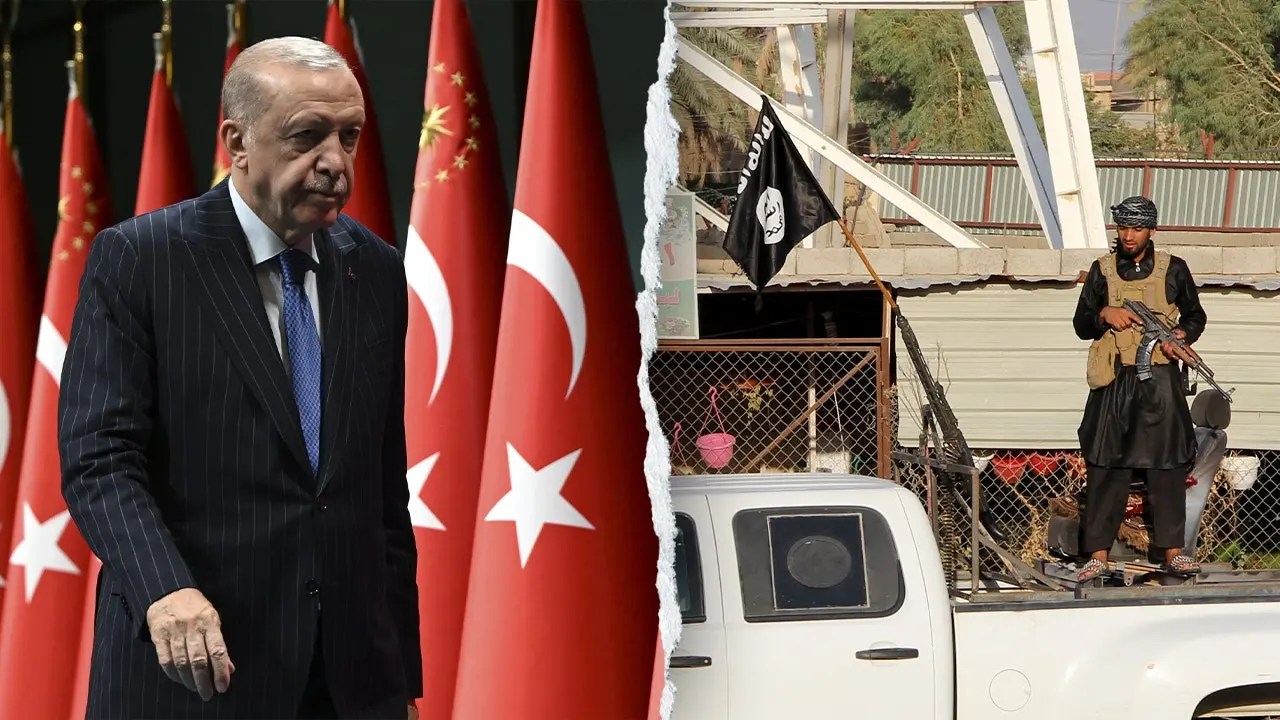
Turkish authorities reportedly detained more than 200 people, including suspected ISIS-linked militants, in a sweeping Tuesday raid in capital Ankara ahead of a July 7-8 NATO summit.
The raid came after Turkish authorities issued detention orders for 241 suspects, 209 of whom were taken into custody, The Associated Press reported, citing a statement from the office of Turkey’s chief prosecutor.
Among the 209 detained, 56 were allegedly ISIS militants, according to the AP. This comes after Turkish authorities said they detained 125 ISIS members in December.
The detention operations occurred just two weeks before a planned NATO summit in Ankara on July 7 that President Donald Trump is expected to attend.
TURKEY’S NATO ROLE UNDER SCRUTINY AMID NEW REPORT ON HAMAS, MUSLIM BROTHERHOOD TIES
President Donald Trump greets Turkey’s President Recep Tayyip Erdogan during a summit in Sharm El Sheikh, Egypt, on Oct. 13, 2025, to support ending the Israel-Hamas war in Gaza after a breakthrough ceasefire deal. (Evan Vucci/AP Photo/Pool)
Other militants scooped up were 35 alleged members of the Revolutionary People’s Liberation Party/Front, which a Turkish statement described as “a far‑left group known for armed attacks and assassinations in Turkey,” according to the AP.
The ISIS-combating operations demonstrate the terrorist group’s ongoing activity in the region, showing the group is still functioning despite the U.S. campaign during Trump’s first term to eliminate the group’s caliphate and its control of large swaths of territory in the Middle East.
Iraqi government forces celebrate while holding an Islamis Sate (IS) group flag after they claimed they have gained complete control of the Diyala province, northeast of Baghdad, on January 26, 2015 near the town of Muqdadiyah. (YOUNIS AL-BAYATI/AFP via Getty Images)
In recent years, ISIS has spread into the African continent, prompting a strong response from the U.S. In May, Trump authorized a series of strikes in Nigeria to combat the group.
PENTAGON SLASHES NATO COMBAT COMMITMENTS AS TRUMP PUSHES EUROPE TO DEFEND ITSELF
A May 16 strike killed ISIS leader Abu-Bilal al-Minuki, who was the group’s second-in-command globally.
U.S. and Nigerian forces conducted kinetic strikes against ISIS fighters in northeastern Nigeria on May 17, 2026, AFRICOM said. (X/U.S. Africa Command)
CLICK HERE TO DOWNLOAD THE FOX NEWS APP
“Abu-Bilal al-Minuki, second in command of ISIS globally, thought he could hide in Africa, but little did he know we had sources who kept us informed on what he was doing,” Trump wrote in a post on Truth Social after the strike. “He will no longer terrorize the people of Africa, or help plan operations to target Americans.”
The group’s renewed activity also includes a call to supporters to make attacks on U.S. soil during the World Cup.
The Associated Press contributed to this report.

By Euronews with AFP
Published on
Two whales were killed off the coast of Iceland overnight Sunday, two days after commercial hunting resumed, local media and animal rights activists reported Monday.
ADVERTISEMENT

ADVERTISEMENT
The kill ends a two-year pause and marks the first catches since 2023.
Icelandic public broadcaster RUV reported that two fin whales were killed. The fin whale is the second largest animal on Earth after the blue whale.
Before the vessels set off on Friday, a protester had attached himself to one of the masts in the port of Reykjavik, but climbed down and was escorted away by police.
Iceland, Norway and Japan are the only three countries that still openly permit whaling, despite international condemnation from the public and animal welfare organisations.
Iceland cancelled its whale hunt over the past two years, partly because economic problems had cut demand and the industry was not deemed profitable enough.
“The first fin whale deaths in Iceland’s hunt this year are devastating,” said Joanna Swabe, European senior public affairs director for animal rights group Humane World for Animals.
“Iceland has killed more than 1,000 fin whales in the past two decades — not only the second largest animal on the planet but also a species classified as globally vulnerable to extinction,” Swabe said in a statement.
Iceland’s government has said it is planning to introduce a bill aimed at banning whaling this autumn.
The International Whaling Commission banned the commercial killing of whales in 1986 amid alarm at the declining stock of the marine mammals.
Iceland’s Marine and Freshwater Research Institute has recommended that no more than 150 fin whales are caught in the 2026 season.
That represents a 28-percent drop on the annual quota it recommended for the period 2018–2025, it said.
The institute has set an annual catch of 168 animals for the minke whale hunt this year, a 23-percent drop on 2018-2025.
-
 Maine6 minutes ago
Saco | Ice Cream Social with Girl Scouts of Maine
-

 Maryland9 minutes ago
Maryland congressional incumbents cruise to primary wins
-

 Michigan14 minutes ago
Michigan basketball champ Yaxel Lendeborg joins Warriors, gets chance to learn from Curry, Draymond Green
-

 Massachusetts21 minutes ago
Massachusetts man indicted on murder charge in child’s 2017 death
-

 Minnesota24 minutes ago
Justin Liles: North-central Minnesota faces hail, gusty winds in Tuesday night storms
-

 Mississippi29 minutes ago
Mississippi non-farm employment reaches record high for May
-

 Missouri36 minutes ago
Missouri lawmaker pushes for more transparency from data center developments
-
Montana39 minutes ago
Montana Lottery Mega Millions, Big Sky Bonus results for June 23, 2026

