World
EU plans to raise €90 billion in joint debt for Ukraine — here’s how


Reparations loan is out, joint debt is in. That is the agreement that the 27 leaders of the European Union reached at their make-or-break summit this week.
With the reparations loan ruled out for good, the bloc turns to common borrowing to raise €90 billion to meet Ukraine’s budgetary and military needs for the next two years.
It is a simpler, faster and more predictable solution compared to the high-risk scheme of using the immbolised Russian assets. But joint debt is expensive, and immediately so.
Here’s what you need to know about the plan.
Back to the markets
Since neither the EU nor its member states have €90 billion at their disposal at the moment, the European Commission will go to the markets and raise the money from scratch by issuing a mix of short-term and long-term bonds.
The €90 billion will be gradually dolled out to ensure a steady flow of assistance to Ukraine, which needs a fresh tranche as early as April. The country will be able to use the funds for both military and budgetary purposes for greater flexibility.
In the meantime, the EU budget will absorb the interest rates to spare Ukraine, already heavily indebted, from any additional burden. The Commission estimates that, under current rates, the interest payments will amount to €3 billion per year. This means the next EU budget (2028-2034) will have to make space for about €20 billion.
Member states will share the interest according to their economic weight. Germany, France, Italy, Spain and Poland will carry the highest costs.
According to Commission officials, the €90 billion will not count towards domestic levels of debt because the issuance will be done exclusively at the EU level.
Forever roll-over
Under a non-recourse loan agreement, Ukraine will be asked to pay back the €90 billion only after Russia ceases its war of aggression and agrees to pay war reparations.
Given that Moscow has emphatically ruled out the possibility of any compensation, the Commission is already prepared to roll out the liability over time so that Ukraine does not have to pay out of pocket, which will be painful after suffering so much devastation.
“The assumption is, today it’s a non-recourse loan to Ukraine that is only paid back when reparations are there, and therefore this debt is going to be rolled over up until then,” a senior Commission official explained.
But will the roll-over continue for eternity?
That seems unlikely. At some point in the future, the EU will have to settle the fate of the €90 billion to stop paying interest rates. The go-to method will be the EU budget, which will act as the ultimate guarantor to ensure investors are always paid back.
The three opt-outs
The reason why joint debt for Ukraine is now possible is that, as first reported by Euronews during the summit, Hungary, Slovakia and the Czech Republic agreed to refrain from vetoing in exchange for being exempted.
This is key because under current rules, the EU budget cannot be used to raise money for a non-EU country. Any changes to that effect will require unanimous approval.
Hungary, Slovakia and the Czech Republic will commit to that unanimity. In return, the bloc will activate the so-called “enhanced cooperation” mechanism to spare them from any costs and responsibilities associated with the €90 billion.
The other 24 countries will take over their share of the interest. But the change will be minimal because the three opt-outs only amount to 3.64% of the bloc’s GNI.
The exemption will also be institutional. Once the budget rules are amended and the “enhanced cooperation” is triggered, the three countries will lose their voting rights to approve the regulation that will establish the new assistance programme.
In practice, they will be strictly removed from the initiative.
Strings attached
The Commission intends to recycle the now-discarded proposal of the reparations loan to set up the €90 billion common borrowing.
As a result, Ukraine will be subject to the same conditions to receive the funds.
One of them is a “no rollback” clause that will link the aid to the anti-corruption measures that Kyiv must implement to advance in its EU accession bid. The country was recently shaken by a corruption scandal in the energy sector that precipitated numerous resignations, including that of Andriy Yermak, President Zelenskyy’s chief of staff.
If Kyiv takes a step back on the fight against corruption, as it briefly did in the summer when it undermined the independence of two anti-corruption agencies and prompted widespread protests, payments will be suspended.
There will also be safeguards to strengthen oversight on how Ukraine allocates defence contracts, which have been a source of controversy in the past.
Additionally, there will be “Made In Europe” criteria to ensure the €90 billion fosters Ukraine’s and Europe’s domestic defence industries. Only when the equipment is not readily available on the continent will purchases outside Europe be allowed.
Assets still on the table
Resorting to joint debt means the cash balances from the Russian assets will not be touched, as was originally planned in the reparations loan.
However, in their conclusions, EU leaders say they reserve “the right” to tap the assets, or at least try, sometime in the future, as a way to repay the €90 billion borrowing.
“For me, it’s very difficult and very premature today to say how this will be translated in actual terms,” a senior Commission official said when asked about the meaning.
“I think the message is pretty political, which is to say that the option to use the cash balance assets of the Russian Central Bank is not off the table.”
The addition of the assets into the final wording is considered a way to placate those countries that were most vocally supportive of the reparations loan, particularly Germany, and had publicly ruled out the idea of common borrowing.
President Zelenskyy hailed the decision as an “important victory” for his country.
“Without these funds, it would be very difficult for us. In any case, this is tied to Russian reparations,” he said. “For us, this is a reinforcement. It is a signal to the Russians that there is no point for them to continue the war because we have financial support, and therefore, we will not collapse on the front line. We will support our army and our people.”



Published on •Updated
Belgium’s three regions announced on Friday that they would introduce a road tax next year that foreign drivers transiting the country would also have to pay.
ADVERTISEMENT

ADVERTISEMENT
The country does not currently charge drivers to use its highways and the issue of introducing some form of payment has been debated for years.
“Everyone who uses our roads must contribute fairly to their maintenance,” said the transport minister for the southern Wallonia region, François Desquesnes.
Starting on 1 May 2027 drivers will need to register their vehicle and pay the road tax, with day passes available for drivers driving across the country.
An annual pass for a zero-emission car will cost €90 and up to €125 for higher polluting vehicles.
Road cameras that catch cars that haven’t paid for a pass will incur a fine of €70.
In Belgium, the individual regions are responsible for maintaining roads and motorways.
Currently, drivers can use almost all highways toll-free but the possibility of an introducing a charge has been under discussion for several years.
The revenue would be used for the operation and maintenance of the road network.
The proposed toll still needs final approval from the regions and European authorities.
According to the chairman of the liberal-conservative MR party, the government intends to offset the new toll by lowering other taxes for Belgians.
Additional sources • AFP

World
With US unleashing attacks, Iranian official threatens that the Islamic Republic will deliver a ‘hard slap’

NEWYou can now listen to Fox News articles!
An Iranian official warned that the Islamic Republic will deliver a “hard slap” while another blatantly threatened the U.S. that “if you strike, you’ll get hit,” according to automatic translations from the two men’s Persian-language posts on X.
Ebrahim Rezaei, whose profile on the social media platform indicates that he is a representative in Iran’s Parliament and the spokesperson for the National Security and Foreign Policy Commission, wrote in a post on X, “The martyred Khamenei taught us not to fear America and showed that ‘falsehood will perish.’ Await the hard slap from the Iranians.”
The speaker of Iran’s Parliament, Mohammad Bagher Ghalibaf, warned, “America still hasn’t learned that bullying and breaking promises are no longer cost-free. Let me put it plainly: if you strike, you’ll get hit. Don’t flail around pointlessly, or you’ll sink even deeper: the Strait of Hormuz will only open with ‘Iranian arrangements,’ not American threats.”
Both of the men issued their posts on Wednesday after U.S. Central Command (CENTCOM) announced more strikes against Iran.
“At the direction of the Commander in Chief, U.S. Central Command forces have started conducting additional strikes against Iran to further degrade their ability to threaten freedom of navigation in the Strait of Hormuz. The United States is holding Iran accountable for recent unjustified aggression against commercial shipping and civilian crews freely navigating a vital international waterway,” CENTCOM had noted in a post on X.
TRUMP SAYS IRAN CEASEFIRE DEAL IS ‘OVER’ AFTER NEW ROUND OF STRIKES
People gather at the Imam Khomeini Grand Mosalla for a farewell ceremony for Iran’s late Ayatollah Ali Khamenei on July 4, 2026, in Tehran, Iran. (Majid Saeedi/Getty Images)
The U.S. military later provided more information about the attacks.
“U.S. Central Command (CENTCOM) forces completed an additional round of strikes against Iran, July 8, to further degrade Iran’s ability to attack commercial shipping and innocent civilian mariners in the Strait of Hormuz,” CENTCOM noted on Wednesday night.
“U.S. forces struck approximately 90 Iranian military targets including air defense systems, coastal surveillance assets, missile and drone storage sites, naval capabilities, and military logistics infrastructure along Iran’s coastline. The latest strikes follow successful execution of offensive strikes in Iran the night before,” the announcement noted. “CENTCOM forces hit approximately 80 Iranian military targets July 7, including more than 60 Islamic Revolutionary Guard Corps small boats, to impose heavy costs for Iran violating the ceasefire by attacking three commercial vessels navigating the Strait of Hormuz.”
TRUMP DEMANDS END TO TRADE WITH KEY US ALLY, CALLS IT A ‘WASTED CAUSE’
President Donald Trump indicated on Wednesday that, as far as he was concerned, the U.S.-Iran Memorandum of Understanding ceasefire was “over.”
Kuwait and Bahrain have both reported coming under attack.
The Kuwait Army noted in a Thursday post on X, which was written in Arabic, “The Official Spokesman for the Ministry of Defense, Major General Saud Abdulaziz Al-Otaibi, stated that the armed forces detected, at dawn today, (3) ballistic missiles, (1) cruise missile, and (10) hostile drones within Kuwaiti airspace, which were successfully intercepted and dealt with.”
TRUMP SAYS ‘IRAN LIES AND CHEATS’ AS IRGC EMERGES AS DOMINANT FORCE IN NEGOTIATIONS WITH US
President Donald Trump speaks as he meets with NATO Secretary General Mark Rutte on the sidelines of the NATO summit in Ankara, on July 8, 2026. (SAUL LOEB / AFP via Getty Images)
CLICK HERE TO DOWNLOAD THE FOX NEWS APP
The Bahrain Defense Force noted in a post that was in Arabic, “The General Command clarifies that, with firm resolve and high combat readiness, the Bahrain Defense Force’s air defense systems confronted, intercepted, and destroyed several treacherous Iranian aerial attacks this morning, Thursday, July 9, 2026 CE.”
-

 Lifestyle4 minutes ago
The BoF Podcast | Decoding Paris Haute Couture: Wonder, Restraint and the Call of the Void
-
 Politics7 minutes ago
Trump ousts bipartisan commission in latest effort to reshape elections before midterm
-
 Science12 minutes ago
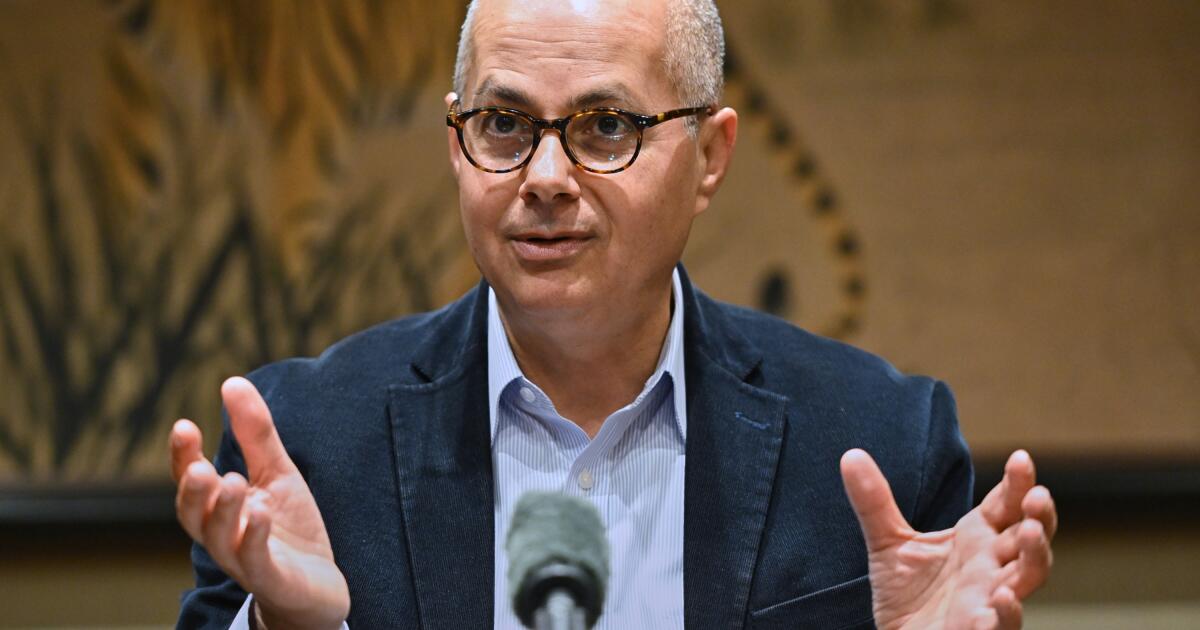
Nobel Prize winner leaving UC Berkeley for new role in China
-
 Sports19 minutes ago
Mikel Merino lifts Spain over Belgium, setting up World Cup showdown with France
-

 World27 minutes ago
Belgium to introduce new road tax in 2027, even for transiting drivers
-
 News52 minutes ago
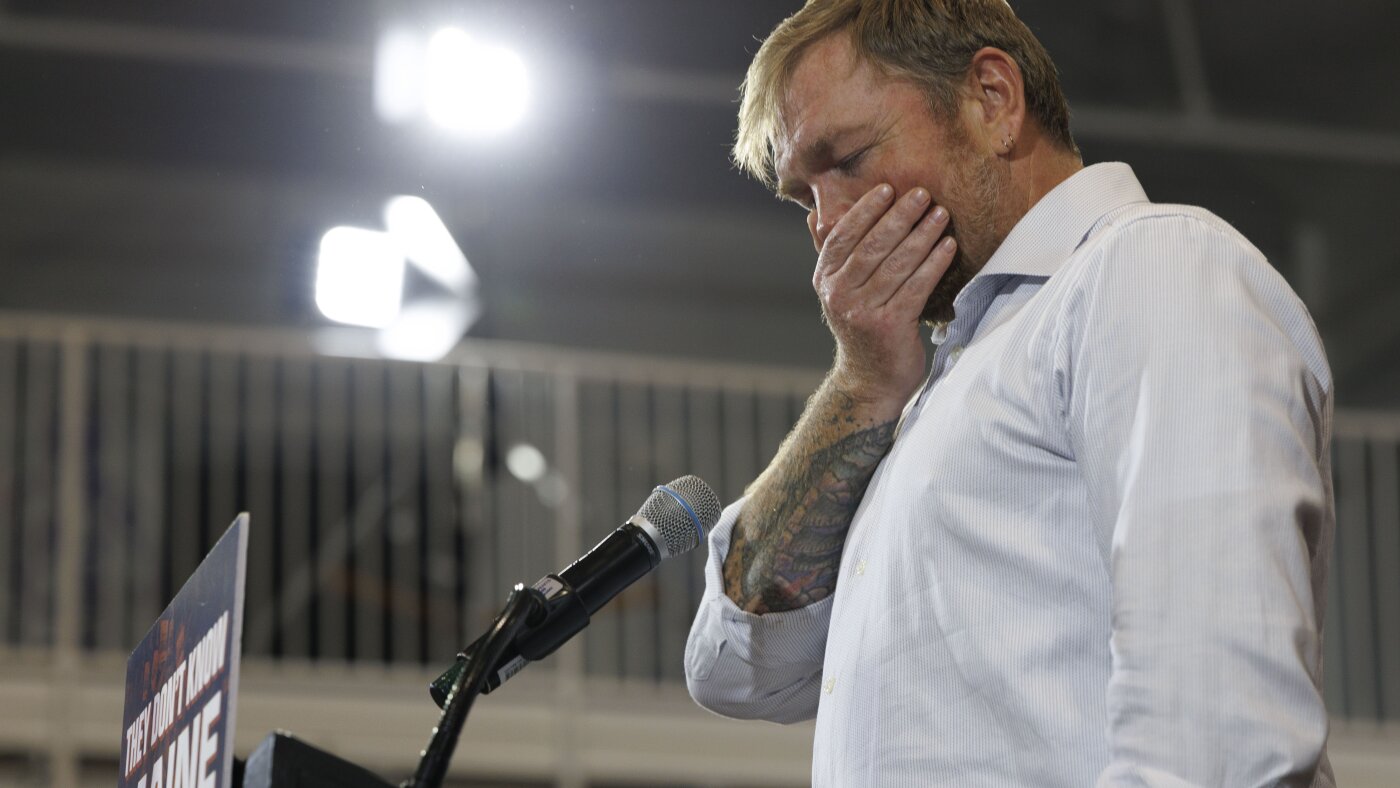
Graham Platner makes it official in Maine, submitting paperwork to leave Senate race
-

 Los Angeles, Ca2 hours ago
Knee irritation forces Shohei Ohtani out of Friday start, All‑Star game
-

 Detroit, MI3 hours ago
Detroit Evening Report: Waymo cars blocking first responders – WDET 101.9 FM

