Wyoming
Educators learn lessons of justice and memory at Heart Mountain workshop in Wyoming


PARK COUNTY, WYO. — The Heart Mountain Wyoming Foundation hosted its first educator workshop through the National Park Service’s Japanese American Confinement Sites Education Program, bringing teachers, scholars, and site leaders together to deepen understanding of the incarceration of Japanese Americans during World War II.
Watch the story below:
Educators learn lessons of justice and memory at Heart Mountain workshop in Wyoming
More than 14,000 Japanese Americans were imprisoned at the Heart Mountain War Relocation Center, located between Cody and Powell, from 1942 to 1945 during World War II. Now, educators are working to make sure that history is no longer forgotten.
For Shirley Ann Higuchi, chair of the foundation and a lawyer from Washington, D.C., that history is deeply personal. Higuchi said she did not learn about her family’s connection to Heart Mountain until her mother revealed it on her deathbed, after years of silence.
Isabel Spartz/MTN News
“On her deathbed, she said she wanted her memorial money to go to Heart Mountain, and that was the first we heard of it,” said Higuchi. “We later found out that she was secretly sending money back to Heart Mountain to dream of something being built here.”
Her parents met while incarcerated at the camp and later married after reuniting at the University of California, Berkeley.
“I wouldn’t be standing here because my parents would have never met each other unless they had their rights and liberties taken away from them,” said Higuchi.
Isabel Spartz/MTN News

Their time at Heart Mountain was an experience, Higuchi said, that shaped generations of families who rarely spoke about what happened.
“I think the incarceration itself was incredibly traumatic, and the only way they could move forward is to put the whole history behind them,” she said.
That silence extended beyond families and into classrooms, she said, where the history was often omitted entirely.
“With the Japanese American story, it’s been hard to tell this because part of the government’s plan was to suppress the information, and to be quite frank, it worked very well,” said Higuchi. “Where this is one of the worst constitutional violations ever, it wasn’t even taught in law school.”
Isabel Spartz/MTN News

The foundation has made significant progress in educating the public about what happened at the site, and Saturday’s workshop at the Heart Mountain Interpretive Center aimed to continue this effort.
Funded in part by a $750,000 federal grant matched by the foundation, the three-year initiative will expand education efforts nationwide. Plans include training K-12 teachers, hosting seminars for graduate students, and launching a digital platform to share stories and research.
The event also brought together representatives from other former incarceration sites across the region, including locations in Colorado, Idaho, Montana, and Utah, to collaborate on how to tell the story more effectively.
University of North Carolina at Chapel Hill law professor Eric Muller was one of the participants. He has studied Japanese American incarceration at the site for decades, and said the history remains widely misunderstood.
Isabel Spartz/MTN News

“This is one of the major historical injustices in this country’s history, and I don’t think that it is well understood enough,” said Muller. “It’s not focused on sufficiently, I think, in educational curricula.”
For educators like brothers Allen and Jason Doty, both Wyoming social studies teachers, the workshop offered a rare opportunity to engage directly with a local historical site.
Allen Doty, who teaches in Meeteetse, said textbooks often present a limited view of the topic.
“I’m a big advocate of place-based education. This is a great local example of me being 60 miles away,” said Allen Doty. “This was more for me to get a better understanding from it from a more multi-person perspective so that when I’m presenting it to students, I’m able to use primary sources and secondary sources that are effective. Basically for me, this is a good refresh for best practices of a local resource.”
Isabel Spartz/MTN News
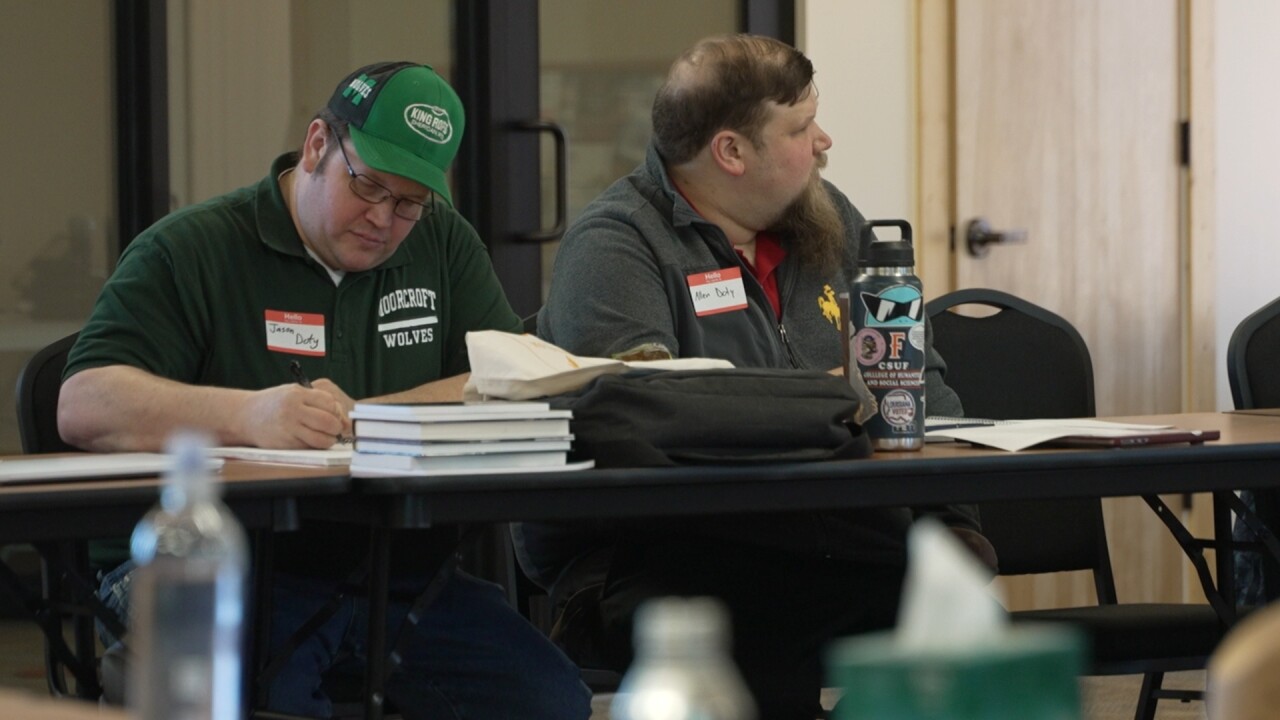
For Jason Doty, a teacher from Moorcroft, it’s a place that has had a profound impact on his life growing up in the Powell area. He said the proximity of Heart Mountain makes the history especially powerful for students, even though it is several hours away.
“For us as teachers in our discipline in social studies, we can go, ‘Here’s what happens when things break down, and people make decisions during wartime without giving people consideration of their rights and protecting their constitutional rights specifically,’” said Jason Doty. “This happened here … There were 10,000 people plus that were interned here against their will. They weren’t convicted of anything. They were just forced into that situation.”
Both educators said the workshop provided tools to help students connect with the human stories behind the history, which is something they believe is essential to teaching it effectively.
“Kids connect on a personal level with this kind of stuff, and you can provide them, like, hey, actual people experience this. Here’s their story,” said Jason Doty. “There’s always more to learn. There’s always more personal stories.”
That personal connection drives Muller’s work as well. As a professor, he has brought law students from across the country to the site, believing that standing on the ground where history unfolded creates an understanding no classroom can replicate.
Isabel Spartz/MTN News
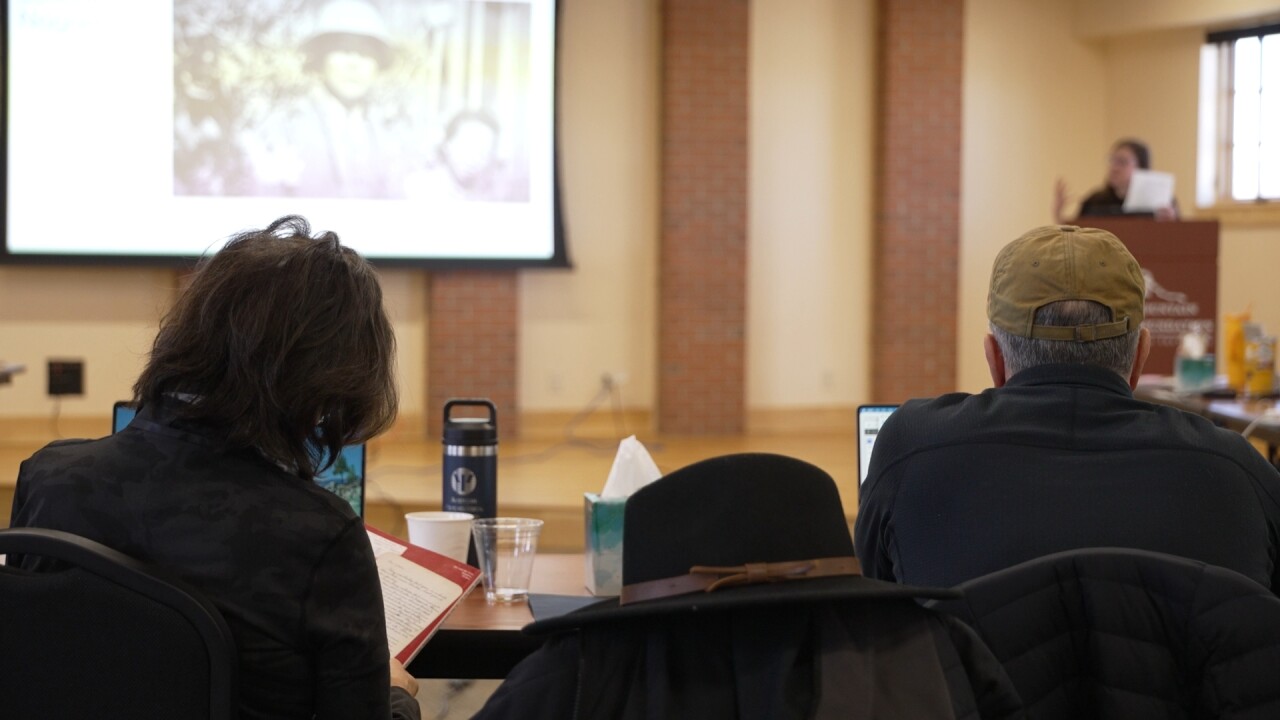
“The students, when they come here, they recognize the enormity of what happened to Japanese Americans. They can feel that Wyoming wind blowing on their own faces that would have blown through the barracks that Japanese Americans lived in,” said Muller. “There is a depth of feeling and thought that happens at this place that just can’t be replicated in a classroom anywhere else.”
Organizers said that impact is exactly the point. By equipping teachers with knowledge and resources, the foundation hopes to reach thousands of students and ensure the lessons of Heart Mountain endure.
“This seems like it was long ago and far away, but it really wasn’t that long ago, and it certainly wasn’t far away. It was right here,” said Muller. “I think that this history reminds us of the speed with which society can transform and the speed with which things, government programs, and policies that would have been unthinkable can become thinkable and actually can come to life in ways that ultimately society will come to regret.”
For Higuchi, preserving this painful chapter of American history is not just a mission, but a responsibility she carries forward with resilience, determined to ensure future generations never forget.
“As an independent museum, we are able to tell the truth, tell the history accurately, and to have objectivity,” said Higuchi. “We want to have a global impact on what happened here because of the significance that this experience has for this country in terms of not doing something like this again.”



Wyoming
Wyoming’s Barrasso, Lummis and Hageman silent on Trump’s threat that a ‘whole civilization will die’ if Iran deal isn’t reached – WyoFile

Wyoming’s federal delegation kept silent Tuesday on President Donald Trump’s threat that a “whole civilization will die tonight” if Iran fails to meet his latest deadline to strike a deal that includes reopening the Strait of Hormuz.
Trump said late Tuesday he’s pulling back on his threats to launch devastating strikes on Iran, swerving to de-escalate the war less than two hours before the deadline he set for Tehran.
Republican Sens. John Barrasso and Cynthia Lummis did not respond to WyoFile’s request for comment, which was made before Trump’s announcement that he was holding off on his threats to attack Iranian bridges, power plants and other civilian targets. Nor did Rep. Harriet Hageman. Additionally, social media accounts for the three lawmakers have not posted any remarks on Trump’s threat that an entire country could be wiped off the map.
A review of the Facebook pages of all three members of Wyoming’s delegation shows they haven’t posted on the war this month, as Trump’s threats escalated.
Wyoming’s congressional delegation has expressed past support for Trump’s decision to attack Iran. Both Barrasso and Lummis voted against an attempt to curb Trump’s war powers. Critics of the war have said the president needed to receive congressional approval before launching operations against Iran.
After the war began, Barrasso lauded the president for “one of the boldest military operations in history.”
“President Trump has the courage to do what is right and what needs to be done,” Barrasso said March 3 on the Senate floor. “Something previous administrations refused to do.”
Hageman also opposed an effort in the House to rein in Trump’s war powers.
“Tehran’s jihadist government is finally faced with the reckoning for hundreds of American casualties killed at the hands of Iran’s savage leadership,” Hageman said in a March 2 statement. “Iran’s history of killing American troops, supporting terrorist networks, and refusal to cooperate in good-faith diplomacy made their nuclear-arms campaign a crusade that must be stopped.”
Iran effectively blocked shipping through the Strait of Hormuz after Israel and the U.S. attacked in February. That, and Iran’s attacks on energy infrastructure of its Gulf Arab neighbors, have sent oil prices skyrocketing, raising the price of gasoline, food and other basics far beyond the Middle East.
Since then, Trump has repeatedly imposed deadlines linked to threats, only to extend them.
Trump said he was holding off on his threatened attacks on Iranian bridges, power plants and other civilian targets, subject to Tehran agreeing to a two-week ceasefire and reopening of the Strait of Hormuz, the pivotal waterway through which a fifth of the world’s oil is transported during peacetime. He also said Iran has proposed a “workable” 10-point peace plan that could help end the war the U.S. and Israel launched on Feb. 28.
Trump has made reopening the strait part of avoiding wider attacks and suggested that the waterway is not as vital to U.S. oil interests as it is to other countries. He has also said he would be willing to deploy ground troops to seize Iranian oil, while maintaining that major combat operations in that country could soon conclude.

Ahead of Tuesday’s deadline, airstrikes hit two bridges and a train station, and the U.S. hit military infrastructure on Kharg Island. It was the second time American forces struck the island, a key hub for Iranian oil production. It was not clear if the latest airstrikes were linked to Trump’s threats to widen the civilian target list. At least two of the targets were connected to Iran’s rail network, and Israeli Prime Minister Benjamin Netanyahu said Israeli warplanes struck bridges and railways in Iran.
Iran’s president said 14 million people, including himself, have volunteered to fight. That’s despite Trump threatening that U.S. forces could wipe out all bridges in Iran in a matter of hours and reduce all power plants to smoking rubble in roughly the same time frame. He also suggested the entire country could be wiped off the map.
Trump has shrugged off concerns about war crime accusations.
“A whole civilization will die tonight, never to be brought back again,” if a deal isn’t reached, Trump said in an online post Tuesday morning. But he also seemed to keep open the possibility of an off-ramp, saying that “maybe something revolutionarily wonderful can happen.”
Earlier, Iranian official Alireza Rahimi issued a video message calling on “all young people, athletes, artists, students and university students and their professors” to form human chains around power plants.
Iranians have formed human chains in the past around nuclear sites at times of heightened tensions with the West. Some images of people surrounding power plants were posted Tuesday by local Iranian media, though how widespread the practice was is unknown.
In Tehran, the mood was bleak. A young teacher said that many opponents of Iran’s Islamic system had hoped Trump’s attacks would quickly topple it.
As the war drags on, she fears U.S. and Israeli strikes will spread chaos.
“If we don’t have the internet, and if we don’t have electricity, water, and gas, we’re really going back to the Stone Age, as Trump said,” she told The Associated Press, speaking on the condition of anonymity for her safety.
More than 1,900 people have been killed in Iran since the war began, but the government has not updated the toll for days.
In Lebanon, where Israel is fighting Iran-backed Hezbollah militants, more than 1,500 people have been killed. and more than 1 million people have been displaced. Eleven Israeli soldiers have died there.
In Gulf Arab states and the occupied West Bank, more than two dozen people have died, while 23 have been reported dead in Israel, and 13 U.S. service members have been killed.
Reporting contributed by The Associated Press. Jon Gambrell reported from Dubai, United Arab Emirates. Mike Corder reported from The Hague, Netherlands, and Sam Magdy reported from Cairo. Associated Press writers David Rising in Bangkok; John Leicester in Paris; Rod McGuirk in Melbourne, Australia; Natalie Melzer in Jerusalem; and Seung Min Kim, Michelle Price and Will Weissert in Washington contributed to this report.

Wyoming has seen a decent amount of snow in the first week of April, but meteorologists says it’s officially too little, too late to save the state’s historically low snowpack, which has been melting for weeks.
The spring storm brought much-needed moisture to several dry spots across the Cowboy State. After a miserable March, the first week of April has been what meteorologists says they’ve have been hoping for since November: a normal week.
“All of the mountains, from the Snowies to the Bighorns, got the equivalent of 1 to 2 inches of water,” said Cowboy State Daily meteorologist Don Day. “There was nearly three-quarters of an inch in the Red Desert. Laramie got over half an inch of moisture. There were some good precipitation totals.”
That improved Wyoming’s snow water equivalent map slightly, but anyone looking for comfort there won’t find it.
Tony Bergantino, the director of the Water Resources Data System and the Wyoming State Climate Office, finally said the word that describes this past winter’s miserable snowpack.
“I guess you could say that it’s ‘unprecedented,’” he said. “We have not seen snowpack this low, across the state, in the 30-plus years that I’ve been here, and it’s historically low even further than that.”
Last Week’s Weather
A surge of cold air and precipitation caused chaos on Wyoming’s highways with this latest blast of snow, a true spring storm that was desperately needed across the state.
The mountains did best, as usual, but even they needed the boost.
“Most of the snowfall amounts were between 10 and 15 inches in the Bighorns, and right around 12 inches for the Tetons and the Wind River Range,” said meteorologist Jason Straub with the National Weather Service (NWS) office in Riverton. “That’s roughly the equivalent of 1 inch of water.”
Millions of people across the Western U.S. would have liked a lot more, but beggars can’t be choosers, he said.
Straub said Wyoming’s mountain ranges are in fairly good shape. It’s the lower elevations that are struggling the most.
“Most of the mountainous areas are sitting pretty close to normal for this time of year, and have been most of the winter,” he said. “The lower elevations are well below average, and we have a significant to severe drought starting to develop across most of the state.”
That wouldn’t be the worst-case scenario going into the wettest months of the year, but March came and went with well-above-average temperatures and well-below-average precipitation, which has had a dramatic impact on Wyoming’s snowpack.
Serious Snowpack Slump
In December, the snowpack wasn’t at its best, but many basins were well above their seasonal averages. Those circumstances changed dramatically in the last three months, meteorologists say.
Most of Wyoming’s snowpacks reach their peaks in early April. The cutoff tends to be April 1, when the snow water equivalent starts to decline as temperatures rise and snow becomes less frequent.
Bergantino said Wyoming is well past its peak.
“We hit peaks anywhere between 12 and 45 days early this season,” he said. “None of those basins, except the Yellowstone Basin in northwest Wyoming, even reached their median snowpack before they peaked.”
According to 50 manual snow measurements submitted to the Wyoming State Climate Office, Bergantino said 28 indicate that 2025-2026 was the lowest snowpack in Wyoming’s recorded history.
An additional seven of those 50 were tied for the lowest snowpack on record, and those records go back a long way.
“We’re talking, 90-plus years of records for some of these places,” Bergantino said. “A lot of areas are either tied to the bottom or have gone below it.”
Prolonging The Agony
Wyoming could cope with a below-average snowpack, assuming temperatures were cold enough to keep it intact for as long as possible, but Bergantino said that the temperature threshold was crossed weeks ago.
“That’s the double-whammy,” he said. “We didn’t get the volume of snow for the peak, and it started melting early.”
The chances of a dramatic rebound in snowpack were slim even before the record-breaking March temperatures. Now in early April, Bergantino is looking and hoping for the bare minimum.
“It’d be nice to get the basins above the historical minimum,” he said. “I don’t see any basin reaching its seasonal peak, but we might get enough to shoot above the minimum line. Even that isn’t a guarantee.”
Even more precipitation could be a double-edged sword for the current state of the snowpack. As it gets warmer, the chance of snow decreases, even at the highest elevations.
“Extended forecasts are showing above-average precipitation for the next eight to 14 days, but temperatures are also above the median,” he said. “If we get more precipitation, you run the risk of what form that precipitation takes.
“Does it come down as snow, or does it come down as rain and chew up even some more of that lower elevation snowpack?”
Bergantino wasn’t complaining about last week’s weather. Something’s always better than nothing, but that something wasn’t enough to change anything.
“I would say it prolonged the agony a little bit,” he said. “It helped. It moved things forward a little bit, but it definitely did not cure anything.”
Will It Get Better?
After reviewing all the current and historical data, even the best-case scenario isn’t looking great. Bergantino cautions Wyomingites to prepare for what’s ahead.
“If things don’t turn around this spring, you’re going to be looking at water supply issues this summer,” he said. “Most of Wyoming’s basins are running below their minimum snowpack, and most of the others are bouncing off the top of their all-time lows.”
Bergantino added that Wyoming could already be primed for a disastrous fire season. Many plants have started to leaf out and flower, either in confusion or desperation.
If those plants don’t get enough moisture, they’ll desiccate. That’ll leave lots of dry branches and dead leaves to feed any fire.
“That’s one of the really concerning things right now,” he said. “If everything greens up and dries out, you’re adding a lot of fuel for fires.”
Straub said the NWS’s short-range outlook is favoring above-average moisture. At this point, any wetness is welcome.
“April and May are when Wyoming gets 25% to 50% of its moisture,” he said. “Right now, the outlooks are looking pretty close to normal. Any of that precipitation will be very beneficial to bring some moisture, keep the reservoirs full, and things like that.”
There’s another storm system anticipated this week. Straub said it’ll arrive late Tuesday, but won’t have the same potency as the systems that stretched across Wyoming last week.
“It’s mainly going to bring around 2 to 4 inches of snowfall to the mountains of northwest Wyoming,” he said. “Most of the lower elevations will see a sprinkle, at best. Accumulation will be minimal, but it’s something.”
Cold Comfort?
Bergantino couldn’t find a modern precedent for what Wyoming’s experiencing in terms of below-average, earlier-melting snowpack. The only comparable year happened long before his tenure at the Wyoming State Climate Office.
“A lot of records still have 1977 as the lowest snowpack,” he said.
That’s somewhat vindicating for Day.
He’s classified the 2025-2026 winter season as a “once-in-a-generation” winter that hasn’t been experienced since the 1970s, with the 1977-1978 season as the lowest point on record.
Day isn’t ready to throw in the towel yet. He’s not anticipating a meteorological Hail Mary that’ll revitalize the state’s snowpack, but there have been some dramatic turnarounds.
“I’ve seen some big comebacks in snowpack before,” he said, adding that, “2011 was one of the years where there was a tremendous amount of mountain snow in April, and last week was great. We have broken the streak.”
Day always finds hope in history. April has done a lot to change Wyoming’s fortunes going into a season of severe drought, and it might do the same this year.
“If you go back and look at some of the bigger snowstorms in Wyoming’s history, a lot of them happened in the last 10 days of April,” he said. “You get these bigger, slower-moving storms that tend to cover more real estate, and that’s what we really need.”
As usual, Day has an analogy for what’s happened and how everything’s shaping up.
“It’s like we haven’t been on the interstate since November,” he said. “We’ve been on side roads, dirt roads, and secondary highways trying to get on track. “
In that analogy, Day said last week’s weather was a possible “exit ramp.”
He’s not promising anything, but that weather was more of what meteorologists would expect in Wyoming for the first week of April, one of Wyoming’s wettest months.
“I don’t think we’re on the interstate yet, but maybe we’re getting on to the entrance ramp, and hopefully we can merge into traffic,” he said.
Andrew Rossi can be reached at arossi@cowboystatedaily.com.

Arizona teen who vanished in 1994 resurfaces decades later as mom of 3 who works for private investigator

Arkansas labor force reaches all-time high in January

Tori Spelling speaks out after California car crash with seven children

Fire crews knock down wildfire that prompted evacuations in northern Colorado

New data shows drop in crime rates across CT, DESPP says

Florida High School Football Rankings: Top 25 teams – Oct. 21

How old is Bo Nix? What to know about Oregon quarterback ahead of 2024 NFL Draft

Cleary's 21 help Le Moyne down Central Connecticut State 69-64 in OT

99th annual Pony Swim held in Virginia

Indiana Members Credit Union announced as new anchor tenant at Bottleworks District

AOC doubles down on call for Trump’s ouster even after ceasefire announcement

EU made ‘no diplomatic effort’ to end Iran war, says MEP Botenga

U.S. and Iran agree to 2-week ceasefire

Democrat swing candidate called Biden’s border handling ‘a huge misstep’ after backing his approach as mayor

‘Policy of abuse’: Women march in Cuba against US energy blockade
-

 Atlanta, GA3 days ago
1 teenage girl killed, another injured in shooting at Piedmont Park, police say
-

 Movie Reviews6 days ago
Vaazha 2 first half review: Hashir anchors a lively, chaos-filled teen tale
-

 Culture1 week ago
Do You Know Where These Famous Authors Are Buried?
-

 Pennsylvania2 days ago
Parents charged after toddler injured by wolf at Pennsylvania zoo
-
 Entertainment6 days ago
Inside Ye’s first comeback show at SoFi Stadium
-

 Georgia1 day ago
Georgia House Special Runoff Election 2026 Live Results
-
 Milwaukee, WI2 days ago
Potawatomi Casino Hotel evacuated after fire breaks out in rooftop HVAC system
-

 Indianapolis, IN6 days ago
Fighting Illini begin Final Four preparations in Indianapolis