Washington
Which music star will join Denzel Washington in Spike Lee’s upcoming feature?


American filmmaker Spike Lee is planning his own version of Akira Kurosawa’s 1963 thriller High and Low. The cast includes Denzel Washington and a new hip-hop star…

Denzel Washington dans Fences (2016) © Bron Studios
Spike Lee’s adaptation of Akira Kurosawa’s thriller “High and Low” starring Ice Spice
Five years after the release of his Netflix production, Da 5 Bloods, starring the late Chadwick Boseman, New York director Spike Lee is tackling a Japanese cinematic monster: Akira Kurosawa.
According to Variety, the filmmaker has convinced his friend Denzel Washington to join his adaptation of High and Low, a 1963 thriller which follows a villain who kidnaps the son of a Japanese industrialist… but ends up abducting the wrong target.
As the shooting of the film produced by A24 and Apple Original Films has already started, Denzel Washington will welcome a famous hip-hop figure as co-star, the rapper Ice Spice, who will be part of the cast of this upcoming feature scheduled for 2025.
Denzel Washington: The Greatest Actor of the 21st Century according to The New York Times
Although The New York Times’ editors debated at length about the ranking of celebrities featured on their “25 Greatest Actors of the 21st Century” list, they admitted that the decision to place Denzel Washington in the first position had been a unanimous choice straight away.
After studying journalism and theater at a private Catholic university, whose campuses bordered Harlem in New York where he grew up, Denzel Washington landed his first major role in the film Carbon Copy (1981), playing the role of a young teenager from a working-class neighborhood who tries to make his way among the Californian middle-class.
A strange prologue for Denzel Washington, who today rules over Hollywood with imposing, testosterone-filled roles (Training Day, Inside Man, Flight) in the tradition of his predecessors John Wayne and Clint Eastwood. Following in Sidney Poitier’s footsteps, the actor also regularly puts his talent to good use in politically committed films (Malcolm X, Hurricane Carter, Fences), making him one of the most listened-to voices in American cinema.
Bande-annonce – “Glory” (1989) de Edward Zwick
1. Denzel Washington as a Civil War martyr in “Glory” by Edward Zwick (1989)
To fill in the blank pages of an American history that forgot the essential role played by the black community during the Civil War, Glory uses one type of ink – the blood of the 200,000 African American soldiers who lost their lives. Shot in 1989 by Edward Zwick (Blood Diamond, The Last Samurai), the feature awakens old demons of a country plagued by racism.
The violence is extreme, especially in the harrowing scene showing the character embodied by Denzel Washington being whipped bloody with a leather strip: “Denzel was ready for anything, and got right into the character’s skin. I sensed an embarrassment he didn’t want to explore, a deep humiliation, the theft of his dignity. I told the cinematographer not to stop, and let the camera roll until Denzel could play the scene. What he discovered was the loss of control. It was one of the most powerful cinematic moments I’ve ever witnessed,” the director recalled during the press tour of the film, which earned Denzel Washington the Oscar for Best Supporting Actor in 1990.
Bande-annonce – “Mo’ Better Blues” (1990) de Spike Lee
2. Denzel Washington as an egocentric trumpet player in “Mo’ Better Blue” by Spike Lee (1990)
Spike Lee didn’t wait for The New York Times to place Denzel Washington as “the greatest actor in the world”. First project of a long cinematic collaboration between the two New Yorkers (Malcolm X, He Got Game, Inside Man), Mo’ Better Blues (1990) stages Denzel Washington as an egocentric jazz trumpet player, whose all-consuming passion for music makes him forget his relatives. While being overall disappointed by the incessant bickering and a plot deemed too flabby, the critics hailed the actor’s performance nonetheless, who carefully learned how to mimic the trumpeter’s movements to perfection, giving the film a real breath of fresh air.
Bande-annonce – “Training Day” (2001) d’Antoine Fuqua
3. Oscar winner as a dirty cop in “Training Day” by Antoine Fuqua (2001)
Denzel Washington made a resounding entry into the 21st century by winning the Oscar for Best Actor for Training Day (2001), a frantic 24-hour race against the misery, violence, drug dealers and crooked cops of the red-light district of Los Angeles. Following the advice of a former member of the LAPD, Denzel Washington shines as an ambiguous anti-drug veteran, alongside Ethan Hawke, rappers Dr. Dre and Snoop Dogg, and a handful of extras casted among the locals.
Bande-annonce – “Antwone Fisher” (2002) de Denzel Washington
4. Denzel Washington’s first steps behind the camera with “Antwone Fisher” (2002)
When producer Todd Black discovered the unique story of a security guard working at Sony Pictures Studios in Los Angeles, he convinced the latter to write an autobiographical screenplay. Indeed, the man grew up in an extremely tense environment – his mother killed his own father, so he decided to enlist in the navy before consulting a psychiatrist who rescued him from his fate, making him a man of admirable integrity… Denzel Washington was chosen to handle the film adaptation, the actor’s debut feature as a director. Antwone Fisher (2002) is full of coarse lines and melodramatic situations that might have led us to guess this unlikely anecdote: a few years after the release, Denzel Washington would direct episode 9 of season 12 of Grey’s Anatomy…
Bande-annonce – “Fences” (2016) de Denzel Washington
5. “Fences”, a feature film made for the Oscars (2016)
Adapted from a famous play written by August Wilson in 1983, Fences recounts the painful story of a working-class black family struggling to live in America during segregation in the 1950s. If the honors were reserved for the charismatic Viola Davis, who won the Oscar for Best Supporting Actress, the third film directed by Denzel Washington gives us an understanding of why his name appears at the top of The New York Times’ list. Both behind and in front of the camera, Denzel Washington films himself as he knows best – performing authority, anger, remorse… So many flamboyant emotions that, while lacking any form of nuance or subtlety, work wonders when it comes to building characters designed for the mainstream and Hollywood cinema.
The release date of Spike Lee’s new feature film, starring Ice Spice and Denzel Washington, is unknown yet.
Traduction by Emma Naroumbo Armaing.



WASHINGTON (Gray DC) – The Supreme Court has one week remaining to release decisions before the end of its term, with seven cases still pending — including a major ruling on birthright citizenship.
Justices face a traditional July 1 deadline to wrap up the term. Among the remaining cases is the birthright citizenship case Trump v. Barbara, argued in April, which is one of several cases involving President Donald Trump that will test the limits of executive branch power.
Meanwhile, the president is set to travel to North Dakota for the dedication of the Theodore Roosevelt Library, the first of multiple events and speeches planned during the week of America’s 250th birthday.
On the eve of Independence Day, Trump will then visit Mount Rushmore before returning to Washington, D.C., for the nation’s semiquincentennial celebrations.
Festivities in the nation’s capital include a fireworks display on the National Mall that organizers say will attempt to break the world record. Views of the display will be available from across Washington, D.C.
Copyright 2026 Gray DC. All rights reserved.
The Washington Lottery offers several draw games for those aiming to win big.
Here’s a look at June 27, 2026, results for each game:
Winning Powerball numbers from June 27 drawing
03-16-28-30-59, Powerball: 11, Power Play: 2
Check Powerball payouts and previous drawings here.
Winning Cash Pop numbers from June 27 drawing
01
Check Cash Pop payouts and previous drawings here.
Winning Pick 3 numbers from June 27 drawing
5-4-1
Check Pick 3 payouts and previous drawings here.
Winning Match 4 numbers from June 27 drawing
02-06-11-12
Check Match 4 payouts and previous drawings here.
Winning Hit 5 numbers from June 27 drawing
12-22-26-28-42
Check Hit 5 payouts and previous drawings here.
Winning Keno numbers from June 27 drawing
02-05-08-10-11-13-14-21-22-26-30-34-37-38-42-48-56-60-61-74
Check Keno payouts and previous drawings here.
Winning Lotto numbers from June 27 drawing
05-10-14-22-23-25
Check Lotto payouts and previous drawings here.
Winning Powerball Double Play numbers from June 27 drawing
02-26-34-43-45, Powerball: 15
Check Powerball Double Play payouts and previous drawings here.
Feeling lucky? Explore the latest lottery news & results
Are you a winner? Here’s how to claim your lottery prize
All Washington Lottery retailers can redeem prizes up to $600. For prizes over $600, winners have the option to submit their claim by mail or in person at one of Washington Lottery’s regional offices.
To claim by mail, complete a winner claim form and the information on the back of the ticket, making sure you have signed it, and mail it to:
Washington Lottery Headquarters
PO Box 43050
Olympia, WA 98504-3050
For in-person claims, visit a Washington Lottery regional office and bring a winning ticket, photo ID, Social Security card and a voided check (optional).
Olympia Headquarters
Everett Regional Office
Federal Way Office
Spokane Department of Imagination
Vancouver Office
Tri-Cities Regional Office
For additional instructions or to download the claim form, visit the Washington Lottery prize claim page.
When are the Washington Lottery drawings held?
- Powerball: 7:59 p.m. PT Monday, Wednesday and Saturday.
- Mega Millions: 8 p.m. PT Tuesday and Friday.
- Cash Pop: 8 p.m. PT daily.
- Pick 3: 8 p.m. PT daily.
- Match 4: 8 p.m. PT daily.
- Hit 5: 8 p.m. PT daily.
- Daily Keno: 8 p.m. PT daily.
- Lotto: 8 p.m. PT Monday, Wednesday, and Saturday.
- Powerball Double Play: 8:30 p.m. PT Monday, Wednesday and Saturday.
This results page was generated automatically using information from TinBu and a template written and reviewed by a Washington editor. You can send feedback using this form.
-
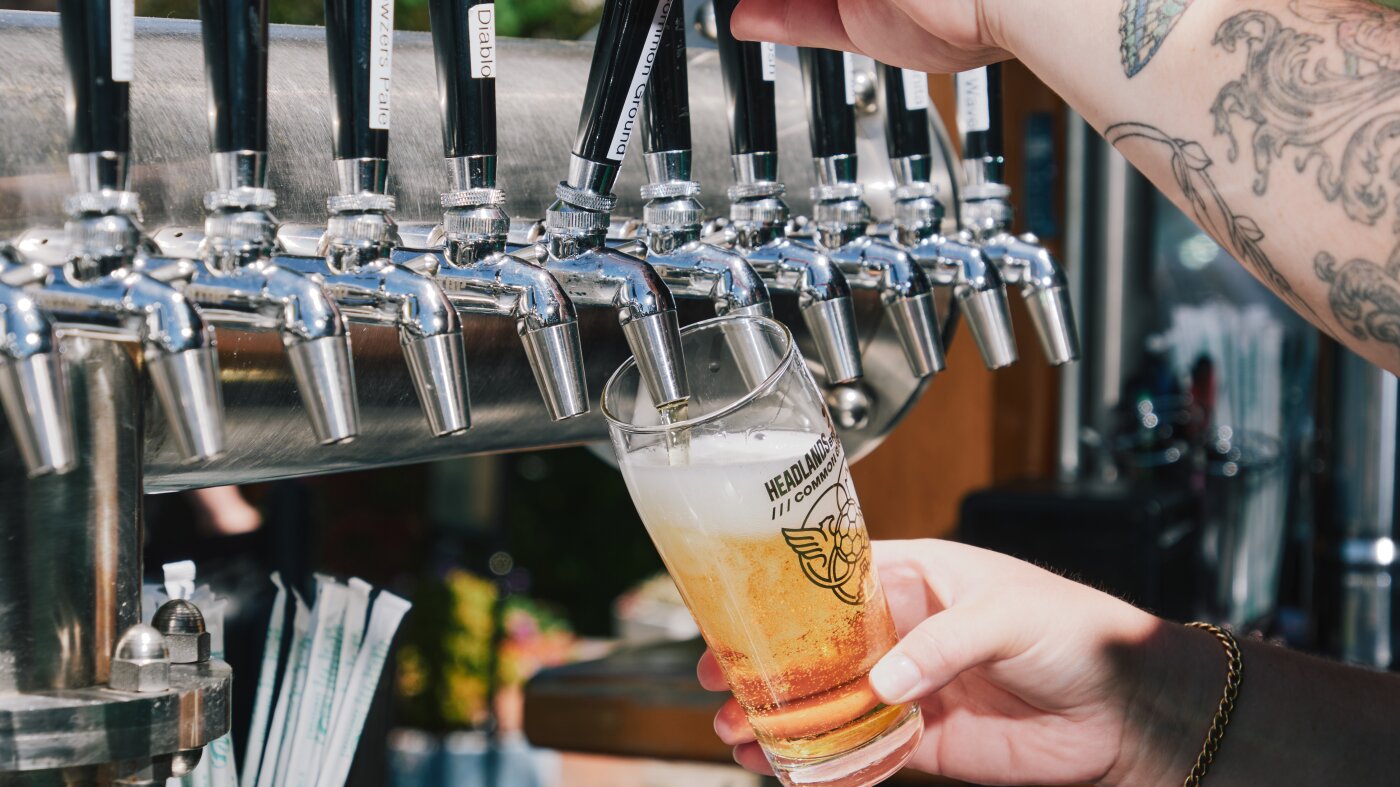 Lifestyle16 minutes ago
3 World Cup rivals find ‘Common Ground’ in a cross-border beer
-

 Technology28 minutes ago
The Flipper Zero creators’ Busy Bar productivity display will go on sale next month
-

 World31 minutes ago
Families watch in horror as skydiving plane crashes in France, killing all 11 aboard
-

 Politics36 minutes ago
DOJ launches grand jury probe into Marxist mogul Neville Roy Singham’s funding of leftist groups
-

 Health43 minutes ago
America’s lifespan has doubled since 1776 — experts reveal what changed
-

 Sports46 minutes ago
Thekla embarrasses Stardom’s Starlight Kid after retaining AEW World Women’s Championship at Forbidden Door
-

 Technology51 minutes ago
AI may spot deadly heart risk in a routine ECG
-
 Business58 minutes ago
SpaceX IPO sparks race for luxury housing in Southern California

