NEW YORK — Donald Trump’s 2016 presidential campaign was repeatedly aided by the National Enquirer, which squelched potentially damaging stories about him and pumped out articles pummeling his rivals, the former boss of the supermarket tabloid testified Tuesday during the ex-president’s trial on charges of falsifying business records.
Washington
A secret pact at Trump Tower helped kill bad stories in 2016


On both fronts, prosecutors seemed to inflict significant damage. At one point, New York Supreme Court Justice Juan Merchan warned Trump lawyer Todd Blanche that he was “losing all credibility.” At another, Trump grimaced and shook his head as Pecker described how he helped kill an allegation — ultimately found to be false — that Trump had a child with a maid at his building.
The busy court day was punctuated by prosecutors detailing the full factual and legal foundation of their case against Trump, one built around a misdemeanor state charge of trying to illegally influence an election.
Pecker, the former CEO of American Media Inc., the company that once ran the Enquirer and other celebrity gossip publications, said he met with Trump and Trump’s then-lawyer Michael Cohen in 2015 to discuss how the tabloid, which had a long relationship with the real estate mogul and reality TV star, could help Trump’s bid for president.
“I said what I would do is I would run or publish positive stories about Mr. Trump, and I would publish negative stories about his opponents,” Pecker testified.
That wasn’t all he pledged to do.
Pecker said he told Trump: “I would be your eyes and ears. … If I hear anything negative about yourself, or if I hear anything about women selling stories, I would notify Michael Cohen as I did over the last several years.”
The deal Pecker described was a mutual back-scratching arrangement in which Cohen would feed stories to the tabloid about Republican rivals like Ted Cruz, and the paper would publish glowing stories about Trump. Pecker said he had a “great relationship” with Trump dating to the late 1980s, but that didn’t seem to be his primary motivation. Stories about the brash celebrity businessman helped sell copies of the tabloid.
“I needed the help,” Pecker said.
Prosecutors used the testimony by Pecker — who appeared cheerful and relaxed, and occasionally laughed as he testified — as a kind of guide into the world of celebrity gossip, backroom dealmaking and Trump’s secret fear that stories about his private life could damage his presidential bid.
Prosecutors say the 34 criminal counts at issue in the case — falsifying business records — grew out of the original idea of the Trump Tower meeting with Pecker: that Trump and his allies would find a way to “catch and kill” bad stories about him to protect him and his campaign.
Trump defense lawyer Emil Bove objected to some of Pecker’s testimony, arguing that the Manhattan district attorney’s office was trying to make legal conduct — meetings and discussions of celebrity gossip stories — sound like a criminal conspiracy, when Trump was not charged with any such conspiracy, and that the events described in testimony so far were not crimes.
Assistant District Attorney Joshua Steinglass said the prosecution’s entire theory “is predicated on the idea that there was a conspiracy to influence the election in 2016,” adding, “Mr. Bove may interpret some of the evidence in a way that’s different from the way that we interpret it.”
Under New York state law, falsifying business records is a misdemeanor, unless it is done to further or conceal another crime. Then it can be charged, as it was in Trump’s case, as a felony. Since indicting Trump, prosecutors have often been vague about what, exactly, was the underlying crime that was allegedly being concealed or furthered.
In court Tuesday, Steinglass said the statute in question is state election law 17-152 — conspiracy to promote or prevent an election. That law makes it a misdemeanor when two or more people “conspire to promote or prevent the election of any person to a public office by unlawful means.”
The defense and the prosecution did agree on one thing: Both sides expect continued disputes at trial over how much testimony about political figures, and political activity, should be presented to the jury. Trump is the likely Republican nominee in the November presidential election.
Manhattan District Attorney Alvin Bragg has charged that Trump falsified business records to conceal a $130,000 payment made ahead of the 2016 presidential election to adult-film actress Stormy Daniels, to prevent her from saying publicly that she had a sexual encounter with Trump years earlier.
Cohen later pleaded guilty in federal court to a campaign finance violation for arranging that payment and later getting reimbursed by Trump. Trump’s lawyers say their client was unaware of the particulars of how Cohen made the payment and was not part of any criminal pact.
Throughout most of the trial Tuesday, Trump was attentive as Pecker described their relationship.
Pecker recalled buying the rights to a doorman’s claim that Trump had a child outside his marriage — a claim that Pecker said was untrue but nevertheless could have damaged Trump’s campaign. The Enquirer paid $30,000 for the tale and kept it quiet until two months after the election, Pecker said.
Pecker is scheduled to be back on the witness stand Thursday — the trial is not in session on Wednesdays — and is expected to describe discussions with Cohen about other potentially scandalous stories involving Trump and women that they tried to keep from becoming public.
Cohen, a disbarred, convicted lawyer and admitted perjurer, is expected to testify in the case, and Trump has spent much of his time out of court publicly denouncing him — despite a gag order issued by Merchan barring him from making comments about witnesses in the case.
The trial resumed Tuesday with a hearing on the prosecutor’s request that Trump be found in contempt for at least 10 violations of the gag order.
Prosecutor Christopher Conroy asked the judge to remind Trump that “incarceration is an option” if he continues to violate the order. Some of the alleged violations occurred in the hallway just steps outside the courtroom.
“His disobedience,” the prosecutor said, “is willful, it is intentional.”
Trump has previously declared that he would be willing to go to jail over the issue of the gag order.
Trump “says whatever he needs to say to get the results that he wants,” Conroy said. “He’s doing everything he can to undermine this process. It has to stop.”
Prosecutors have asked the judge to impose a $1,000-per-violation fine for the statements.
Blanche, Trump’s lawyer, argued against punishing his client, saying he is a presidential candidate who has to be allowed to respond to political attacks, even if those attacks come from Cohen. He also said social media posts that repost what others say are not a violation of the gag order.
Unimpressed, the judge asked what legal precedent he could cite for that argument.
“We don’t have any case law to support that, but it’s just common sense, your honor,” Blanche replied.
As the hearing wore on, Merchan grew more impatient with what he said were Blanche’s vague and nonresponsive answers.
“You’ve presented nothing. I’ve asked you eight or nine times, show me the exact post he is responding to. You’ve been unable to do that even once,” Merchan said.
“Mr. Blanche, you are losing all credibility,” the judge said. “You’re losing all credibility with the court.”


There are some movies you admire. There are others that surprise you.
“Young Washington” grazes the first category while falling into the second.
I wasn’t expecting to be swept away by a relatively modest historical drama about George Washington before he became the father of a nation. And for a while, I wasn’t.
The film takes its time introducing the future president, and that deliberate pace occasionally borders on sluggish. The first half struggles to find its rhythm, and there are moments when the story feels more interested in checking historical boxes than pulling us into the drama.
But somewhere along the way, something changed.
I stopped watching a history lesson and started watching a young man trying to figure out who he wanted to become.
By the end, I found myself surprisingly invested. Not because “Young Washington” is a perfect movie. Because it reminded me why stories about imperfect people often make for the best history.
A surprisingly ambitious production
One of the first things that stood out was just how good this movie looks.
This isn’t a blockbuster with the budget of films like “The Patriot” or “The Last of the Mohicans.” In fact, when you consider what those productions cost – and adjust for inflation – the difference is enormous.
That’s what makes this film’s production value so impressive.
The costumes, locations, and battle sequences all feel authentic enough to transport you back to colonial America. There are moments where it’s clear the filmmakers had to be creative with their resources, but more often than not they make those limitations disappear.
It’s a reminder that good filmmaking isn’t always about having the biggest budget.
Sometimes it’s about knowing exactly where to spend the money you do have.
An uneven cast, but strong performances where it matters
The acting is a bit of a mixed bag.
There are performances that occasionally feel stiff and a few scenes where the dialogue doesn’t land with the emotional weight it’s reaching for.
Fortunately, those moments never completely pulled me out of the movie.
Ben Kingsley brings a welcome sense of gravitas whenever he appears, and Andy Serkis continues his remarkable ability to disappear into whatever role he’s given. Their performances help ground the film and elevate several key moments.
More importantly, the actor portraying the young Washington succeeds where it matters most.
He made me curious.
Rather than presenting Washington as the flawless hero we’ve seen in countless paintings and history books, the film allows him to be uncertain, ambitious and, at times, deeply conflicted.
That humanity gives the story life.
The best history asks bigger questions
What I appreciated most wasn’t simply learning facts about George Washington’s early life. It was watching the experiences that slowly shaped the leader he would become.
The movie explores questions that feel surprisingly relevant today.
Why do we chase success? Is ambition about building our own legacy? Seeking recognition? Or is it about leaving the world a little better than we found it?
Washington makes mistakes, he learns hard lessons and his failures become just as important as his victories.
Whether every conversation happened exactly as portrayed is almost beside the point. The film captures something emotionally true about leadership – wisdom is usually earned, not inherited.
That’s where “Young Washington” found its strongest footing.
A finale worth waiting for
For much of its runtime, I’d describe “Young Washington” as good. Not great.
The pacing continues to wobble, and I occasionally found myself wishing the story would move with a little more urgency.
Then came the final act.
Without spoiling anything, the emotional payoff finally arrives.
The themes the movie has been quietly building suddenly click into place, and what felt like a slow burn becomes something genuinely moving.
I left the theater feeling more invested than I expected, and that ending elevated the entire experience.
Sometimes a great conclusion doesn’t erase a movie’s flaws. It simply reminds you why the journey mattered.
What parents should know
“Young Washington” is PG-13, and that seems appropriate. There is no vulgar language, no sexual content, but it is a war movie, and it can get violent. It’s not gruesome or graphic, but there are battle scenes, deaths, and some blood. Young viewers may find it unsettling, and some older viewers may cover their eyes a time or two.
The violence is not romanticized but rather shown to depict the horrors of war.
Conclusion
“Young Washington” isn’t the definitive Revolutionary War epic.
It has pacing issues, some performances are uneven, and the script occasionally struggles to maintain momentum.
But I also found myself thinking about it long after the credits rolled.
In an era when so many historical films try to overwhelm audiences with spectacle, “Young Washington” focuses on something much simpler: the formation of character.
It asks how ordinary choices become extraordinary leadership. How failure shapes conviction. How service ultimately matters more than personal glory.
Watching it on the eve of the Fourth of July felt especially fitting.
As America celebrates 250 years, this movie serves as a reminder that the nation’s founding wasn’t accomplished by mythical figures who always knew the right answer. It was shaped by real people who stumbled, learned, and ultimately chose something bigger than themselves.
That’s a story worth telling.
And despite its imperfections, “Young Washington” tells it well enough that I walked away feeling just a little more grateful, and a little more excited, to celebrate this great country I have the opportunity to call home.

July 4 weekend is a quiet one for new indie releases, leaving the field to Angel Studios’ PG-13 wide release Young Washington on 2,700 screens.
From Angel and Wonder Project, the film, timed to the 250th anniversary of the founding of the U.S., stars British actor William Franklyn-Miller as the young man who would go on to become the nation’s first president.
Directed by Jon Erwin (I Can Only Imagine, Jesus Revolution), with Mary-Louise Parker as George’s mother, Ben Kingsley as Virginia Gov. Robert Dinwiddie, and Kelsey Grammer as wealthy nobleman Lord Fairfax. See Deadline review.
Synopsis: “Before he was the Father of a Nation, he was a soldier fighting to survive. A single misstep thrusts young George Washington into the center of a global conflict, testing his honor, loyalty, and courage. As alliances crumble and the frontier erupts into war, he must confront not only his enemies but the man he’s becoming.”
The action is set in the 1750s with Washington as a young man eager to fight, initially as a British officer in a period of complex loyalties. He enlists at 23 and leads a disastrous campaign against the French in Ohio but fights brilliantly and his career takes off.
Elsewhere this frame, Music Box Films is out with a 4K restoration of Ross McElwee’s Sherman’s March July 3-9 at Film Forum. It will lead into Venice award-winning Remake, McElwee’s new documentary, which premieres at the NYC art house July 10.
Sherman’s March, which won the Grand Jury prize at the 1986 Sundance Film Festival, was ranked as one of the highest-grossing documentary films of all time until the mid-1990s. In it, McElwee sets out to make a movie about Union Gen. William Tecumseh Sherman’s March to the Sea towards the end of the American Civil War, but keeps getting sidetracked by his own love life. He’ll appear in-person for post-screening Q&As on July 8-9.
Kino Lorber opens Sasha Waters’ Mary Oliver: Saved By the Beauty of the World, on the Pulitzer Prize-winning poet, at the IFC Center in New York today, expanding to select theaters nationwide in the coming weeks. The documentary includes new recitations of her work by fans as varied as Stephen Colbert, Lucy Dacus, Steve Buscemi and Oprah Winfrey and Helena Bonham Carter alongside stories from longtime friends like John Waters.
World premiered in March at the True/False festival in Columbia, MO, screened at DOC NYC Spring Selects, the Martha’s Vineyard Film Festival and the Miami Film Festival. Waters gained access to Oliver’s personal archives to make the film.
Citizen Kane is also back via Fathom Entertainment at about 900 theaters on July 5 and July 8. It’s for the 85th anniversary of the 1941 classic directed by and starring Orson Welles as publishing tycoon Charles Foster Kane. The rerelease includes exclusive insight from Leonard Maltin.

-
 Lifestyle42 minutes ago
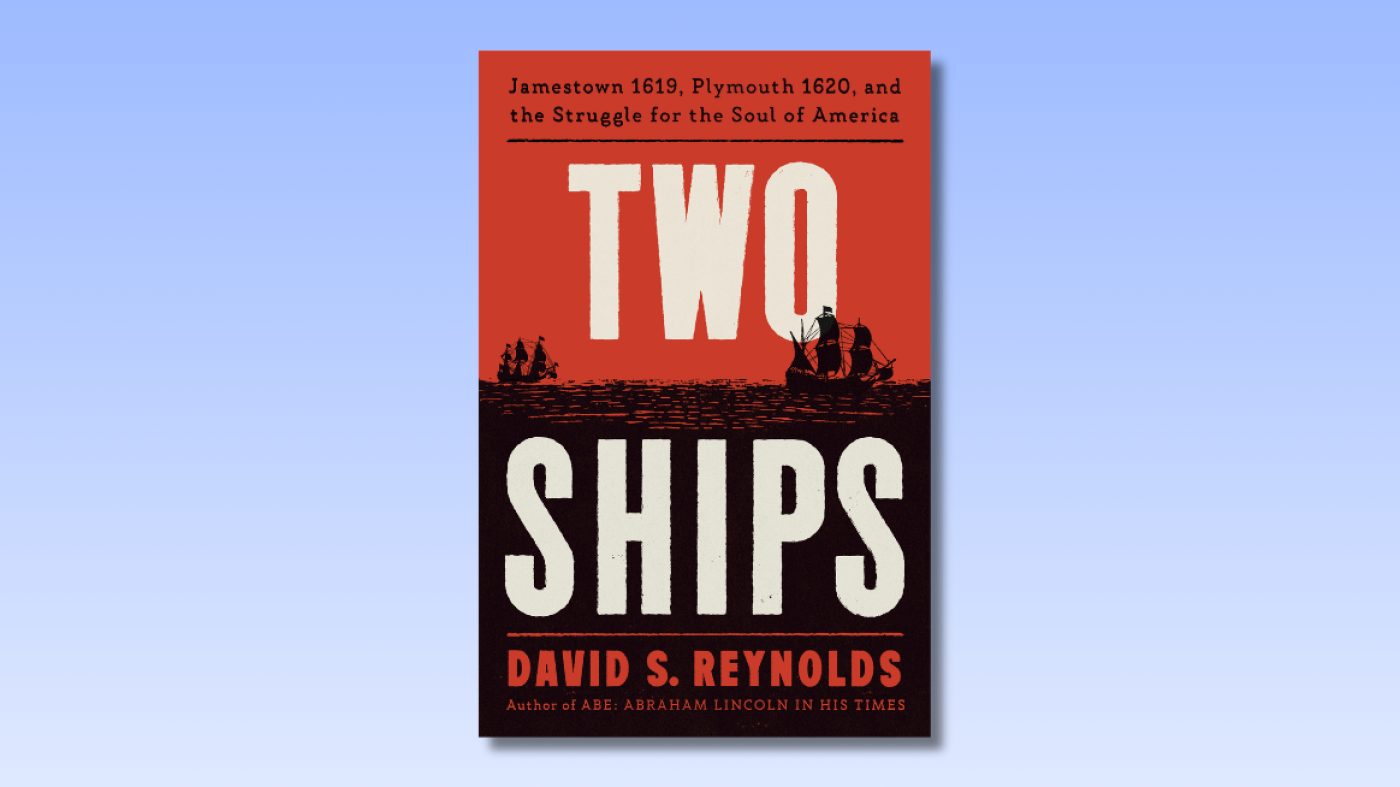
You know the Mayflower. What about the White Lion? Here’s the story of ‘Two Ships’
-

 Technology50 minutes ago
Flatbush Zombies’ Erick the Architect misses his BlackBerry keyboard
-

 World57 minutes ago
Waltz calls out Iranian diplomat at UN following drone strikes on Bahrain and Kuwait
-

 Politics1 hour ago
Top Trump official touts how DC makeover is proof America is rejecting ‘decline by choice’
-

 Health1 hour ago
Fourth of July fireworks pose hidden health risk for certain Americans, experts warn
-

 Sports1 hour ago
Chris Johnson’s former teammate reflects on ex-star’s surprise ALS diagnosis, tight-knit bond after milestone
-
 Business1 hour ago
Want an AI-proof job? New research says you may be safer at companies embracing the technology
-
 Entertainment1 hour ago
Taylor Swift and Travis Kelce: Revisit the roots of their love story ahead of MSG wedding bash

