West
Washington state travel guide: Breathtaking national parks, the bustling city of Seattle and beyond

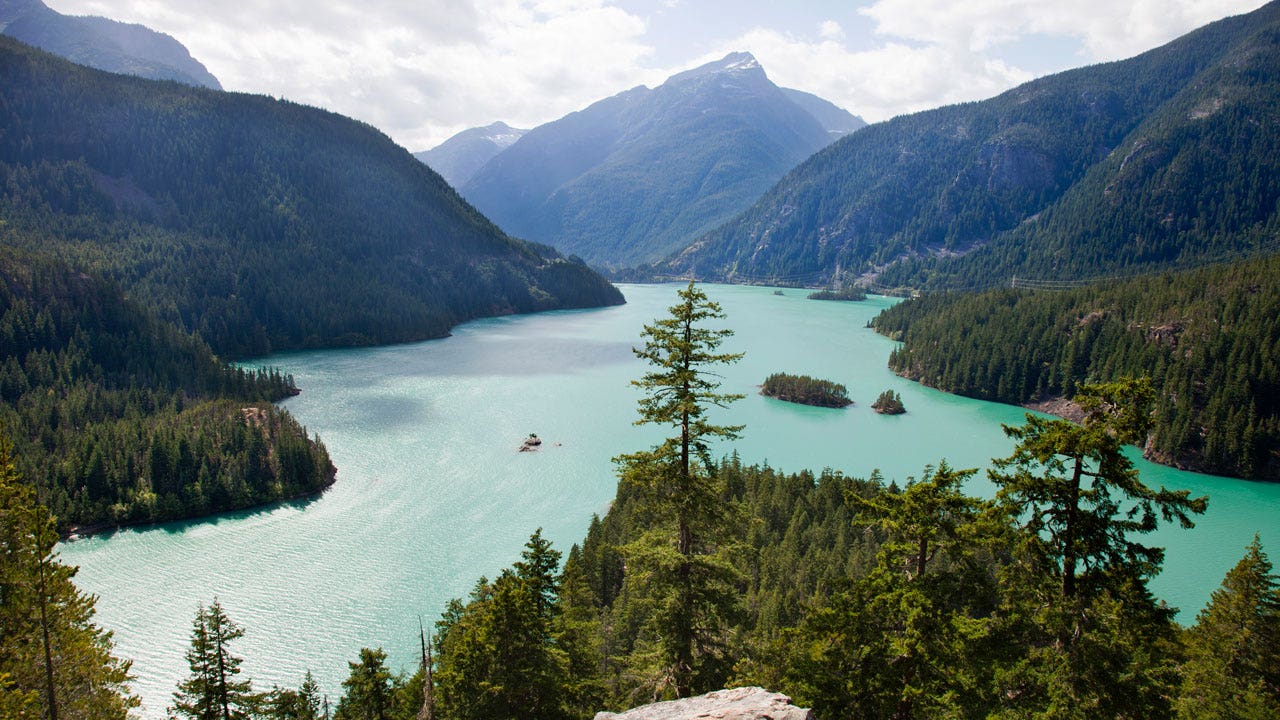
Washington state is known for its wide range of stunning natural landscapes, from rugged coastlines to snow-capped mountain peaks to vibrant rainforests.
Cities like Seattle and Spokane offer their own array of cultural and culinary attractions.
Whether you are interested in outdoor adventure or simply taking in the scenery, the Evergreen State has something for every type of traveler.
AMERICA THE BEAUTIFUL: 50 MUST-SEE LANDMARKS THAT TELL OUR NATIONAL STORY
Here’s a deep dive.
National Parks in Washington
Olympic National Park
Olympic National Park spans 70 miles of coastline and almost 1 million acres. This World Heritage Site and International Biosphere Reserve offers anything you could want from a national park, like hiking, boating and the opportunity to see wild animals in their natural habitat in the temperate Hoh Rain Forest.
“It’s one of those places that really embodies what you would consider the Evergreen State,” Jennifer Coleman, publisher of the Scenic Washington road trip guidebook and the road map for Washington state, told Fox News Digital during a phone interview. “The beaches along the Pacific there are pretty wild. So, I always tell people, bring a raincoat and plan for wind. You know, it’s not like going to the beach even in Oregon, where you can really lay out in the sun.”
“I mean, OK, we do get sunny days, but it’s just not the same as a little further south,” Coleman added.
Visitors can observe ecosystems in miniature in the tide pools of Olympic National Park’s beaches. And while there might not be many sunbathers, the park is a well-known destination for stargazers. About 95% of the park is designated as wilderness and is devoid of human-caused light, making for a spectacular view of the night sky.
Diablo Lake is one element of Washington state’s North Cascades National Park that draws tens of thousands of visitors each year. Park-goers can take canoes or kayaks out on the water to experience the lake’s beauty up close. (Giulio Andreini/UCG/Universal Images Group via Getty Images)
North Cascades National Park
This park is named for the many waterfalls along its hundreds of miles of trails. The clear, blue mountain waters of Lake Diablo and the park’s other lakes and rivers offer opportunities for boat tours and fishing and make North Cascades Coleman’s favorite of the state’s three national parks.
She pointed out that although the park is remote, its beauty is accessible to those not up for a hike, since a driving trip along the North Cascades Scenic Highway still affords gorgeous views of mountain peaks, verdant trees and rushing waterfalls.
And for those who want a hands-on experience, North Cascades National Park is known for its climbing opportunities.
SPRINGTIME TRAVEL: 5 FLOWER GARDENS ACROSS 5 TIME ZONES SHOWCASING AMERICAN BEAUTY
Naturalists can keep their eyes peeled for the gray wolves, wolverines and more than 200 species of birds that call one of Earth’s most diverse ecosystems home.
Mount Rainier National Park
“It’s sort of the iconic Washington thing, to go to Mount Rainier National Park,” Coleman said. The mountain lies along several officially designated scenic byways for the road trippers out there, and it is the highest peak in the Evergreen State, rising 14,410 above sea level.
Since the park is so highly attended, a timed entry system will be implemented during the busiest months, from May to September, beginning in 2024. Reservations open 90 days in advance.
NATIONAL PARK WEEK: 15 SURPRISING FACTS ABOUT AMERICA’S PARKS YOU MAY NOT KNOW
This is the most popular state park for mountain climbing and skiing, with more than 20 climbing routes and ski descents. With its wilderness backpacking campsites and more than 260 miles of maintained trails, including some that are paved, hikers of all stripes can find the perfect trek.
Winter sports are popular in Mount Rainier National Park, but it is also known for its hundreds of species of wildflowers that bloom spectacularly over the summer.
Seattle, Washington
Washington’s largest city is also one of its main travel destinations and serves as the origin point for many of the road trips in Scenic Washington’s guides. The city itself offers plenty to do.
Seattle is known for shellfish and coffee
The Emerald City is known for its food and drink scene: Japanese cuisine, craft beer, wine and especially coffee and seafood.
Starbucks is based in Seattle, so naturally, the Starbucks Reserve Roastery is located there, too. Think Willy Wonka’s chocolate factory but for coffee, complete with a coffee bean library. Numerous smaller cafés are spread across the city as well for those who want a more unique espresso experience.
Tea houses and bakeries are in no short supply, either, in case you need to cool it on the caffeine.
Seattle sits on Puget Sound, where shellfish are readily available. The city is known for its oysters.
Seattle’s waterfront is seen here, including the Great Wheel and the Space Needle. Seattle’s name is derived from the Native American name “Sealth,” who was a chief of the Suquamish tribe at the time the first White settlers arrived in 1851. (Mark Boster/Los Angeles Times via Getty Images)
Iconic Seattle attractions
Visitors to Seattle can stop at one of its many museums, like the Museum of Pop Culture, or look for the Fremont Troll, a giant sculpture under the George Washington Memorial Bridge. The colorful, if a bit gross, Gum Wall near Pike Place Market is worth seeing, and the market is itself well-known for its craftspeople, restaurants and fishmongers.
But few Emerald City attractions are more iconic than the Space Needle. The Space Needle was originally built for the 1962 World’s Fair and has become perhaps the most recognizable element of the city skyline. In just 43 seconds, you can ride the elevator all the way to the observation deck, where you can see far and wide over the rest of Seattle.
Few Emerald City attractions are more iconic than the Space Needle.
Across the street from the Space Needle is Chihuly Garden and Glass, home to the works of renowned glass artist Dale Chihuly. The breathtaking installations make this TripAdvisor’s top-rated Seattle attraction.
If the Space Needle is the most iconic component of Seattle’s Skyline, the Great Wheel is No. 2. This Ferris wheel was built in 2012 and offers a different way to get a bird’s eye view of the city and the surrounding mountains.
The Amazon Spheres provide an unexpected break from the hustle and bustle of the city with their four-story jungle-like interior, containing more than 40,000 plants. Another Washington-based company, Amazon, constructed the spheres to afford employees the tranquility of the rainforest without leaving the city. The Spheres are open to the public for free during the first and third Saturday of each month.
Kerry Park offers an extraordinary vista of the city skyline, Space Needle and all. On a clear day, Mount Rainier can be seen in the background. Photographers can often be found here as the sun goes down.
More from Washington state
Washington’s national parks and Seattle might be its most famous attractions, but you could see them all without even leaving the western half of the state — and even then, you would be missing other attractions in the west.
Mount St. Helens
In the southwest of Washington, visitors can find the Mount St. Helens National Volcanic Monument, just south of Mount Rainier. “And that’s a really cool place to go visit,” Coleman said, “Because you can actually drive right up into the blast zone.” The total devastation wrought by the volcano’s 1980 eruption contrasts with the new growth that has regenerated in the area, making for a thought-provoking trip to a natural wonder that could easily be overshadowed by Mount Rainier.
The Columbia River Gorge isn’t far away: “The Gorge is really a fantastic place. It’s basically along the Columbia River, which is the river that separates us from Oregon. That whole gorge region … both the Washington and Oregon sides, is kind of like waterfall central,” said Coleman.
Whale watching
Orcas, gray whales and humpback whales can be spotted in Washington’s Puget Sound all year round, and whale-watching boat tours are available at multiple locations along the coast. Most boats won’t get too close to the whales, as some are endangered and have been killed in collisions with ships. Make sure to dress warmly and bring your binoculars.
Eastern Washington
The eastern portion of the state is totally different from what many think of as the wet environs of the Pacific Northwest. On the other side of the Cascade mountain range, it gets dry and hot. The city of Spokane provides an urban hub for excursions eastward and, though smaller than Seattle, offers arts and culture, craft beer and wine, and other trappings of an urban center.
South of Spokane lies Pullman, where Washington State University is located. Further south still is Hells Canyon, the deepest river gorge in North America. Though it lies mostly in Oregon and Idaho, a portion of it does fall in southeastern Washington. This gorge is popular for high-speed jet-boating during the hot summers.
Rolling wheat fields of Washington’s Palouse region are seen from Steptoe Butte. The Palouse region experiences short, warm, dry summers and cold, snowy, cloudy winters. The region is also home to Palouse Falls, the official state waterfall of Washington, located in Palouse Falls State Park. The falls cascade down 198 feet to the Snake River. (Bernard Friel/Education Images/Universal Images Group via Getty Images)
The warm, sunny weather makes the region great for agriculture. “Wine country” is in the center of the southern portion of the state. The region, as you might be able to guess, is known for its more than 300 vineyards and wineries.
Road trips
There are many reasons to visit Washington state, but many visitors tend to fit within a certain profile, Coleman told Fox News Digital: “Everybody has their different thing that they’re wanting to accomplish when they visit, but overall … if they’ve chosen Washington as their destination, chances are they’re looking for outdoor recreation or, you know, scenic views, seafood or national parks.”
US NATIONAL PARK ATTENDANCE SOARED IN 2023 AS MILLIONS OF AMERICANS CONTINUE TO HEAD OUTDOORS
That is why Scenic Washington offers pre-planned road trip itineraries. The popular Cascade Loop begins from Seattle and circles the northern half of the state. The Palouse Scenic Byway explores Washington’s east, from its central desert lands to lakes and waterfalls to the rolling wheat fields of the Palouse region, which holds the largest concentration of wheat per acre in the world.
For more Lifestyle articles, visit www.foxnews.com/lifestyle.
Read the full article from Here

Nevada
Voting rights advocates score three legal victories but remain on alert against election threats


Did the Drug Enforcement Agency break the law and gamble with public safety when it permitted large quantities of fentanyl pills to be trafficked in New Mexico in the hopes of getting a larger drug-trafficking bust?
That is the question at the heart of an explosive story published in the Associated Press, based on information provided by a former DEA agent turned whistleblower; the whistleblower filed a complaint in 2023 that claimed agents had allowed hundreds of thousands of fentanyl pills into Albuquerque – a city still reeling from the opioid crisis while many others across the country are seeing overdose rates decline.
“We poisoned our community to make cases,” DEA special agent David Howell told the outlet. “Through our own willful blindness, we get to say, ‘We don’t really know what happened to the drugs.’ But we 100% got people killed.”
Howell told the AP that, in some cases, the DEA had detailed intelligence about drug deliveries, including precise pill counts in shipments to Albuquerque.
DEA agents deciphered coded chatter over cellphones and closely surveilled a transaction of 74,000 fentanyl pills at a mobile home park in Albuquerque in June 2023, according to documents reviewed by AP. Days earlier, another shipment had also gone without seizure.
“We did nothing but sit back and watch,” Howell said.
One kilogram of fentanyl, which equates to thousands of pills, has the potential to kill 500,000 people, per the DEA’s own reporting.
The DEA has since challenged the AP’s reporting, saying in a statement to the Guardian that “public descriptions suggesting that DEA knowingly permitted fentanyl to reach communities are false and fundamentally mischaracterize the facts”.
“The cases in question involved complex, court-authorized Title III investigations in which agents and prosecutors conducted real-time surveillance, intelligence gathering, and operational analysis targeting larger drug trafficking organizations,” it added.
The agency further said that in “operational decisions in investigations like this, DEA is mandated to coordinate investigative decisions with USAO (offices of US attorneys) leadership to ensure investigative steps are carefully coordinated to prevent harm to the public” and the decisions it had made “were lawful, reasonable under the circumstances, and consistent with department guidance”.
Nonetheless, in a subsequent statement, the DEA asked the US justice department’s internal watchdog – the office of inspector general – to investigate Howell’s complaint.
Meanwhile, New Mexico attorney general Raúl Torrez announced Friday the opening of a formal investigation into allegations.
“If those allegations are accurate, the consequences for New Mexicans were not abstract. They were fatal,” Torrez wrote in his letter to governor Michelle Lujan Grisham. “New Mexico already ranks among the states hardest hit by fentanyl overdose deaths, and the families who have lost children, siblings, and parents to this crisis deserve a full accounting of what the federal government knew, what it did, and what it failed to do.”
Torrez said he was “committed to pursuing every appropriate legal avenue to hold the responsible parties accountable” but warned while federal agents “are not above the law, the supremacy clause of the United States constitution provides substantial protections for federal employees acting within the scope of their authority”.
But the report has raised question about whether the US’s premiere drug enforcement agency underplayed the threat of fentanyl.
Additionally, there are questions about whether they have focused too much on largely Mexican criminal groups behind the trade instead of local or retail distribution and the tens of thousands of overdose deaths attributed to it.
While drug fatalities have fallen by 24% from roughly 105,000 in 2023 to 79,384 in 2024, the downward trend has not been seen in all regions – including in New Mexico, particularly along the Rio Grande valley, with its long history as a trans-shipment route for Mexican black tar and brown heroin. For decades, the Los Alamos dormitory town of Española, 80 miles north of Albuquerque, was known as the heroin-addiction capital of America.
But the issue was largely localized. Addiction soared in the area with the relaxation of the opiate prescription practices in the late 1990s. When those gates were closed 15 years later, Mexican cartels switched from costly heroin production to the cheap, synthetic and more unpredictable fentanyl.
Overdose deaths in New Mexico increased 23% over the past year, marking the second consecutive year the state led the nation in overdose mortality. During the first half of 2025, three north-east counties, Rio Arriba, Santa Fe, and Taos, saw drug-related emergency room visits increase by as much as 204%, according to the New Mexico department of health.
Howell was uncovered as the author of the complaint to the justice department’s office of professional responsibility after reporters noticed the redactions had missed the last letter of his name; they contacted DEA agents who had worked in Albuquerque on LinkedIn. He reportedly paid a price for making the complaint – getting relegated to desk duty and getting docked in his performance evaluations.
Internal records also show prosecutors barred him from testifying in federal court, citing his “pattern of refusing to heed” admonitions to allow drugs to go without seizure during long-term investigations.
Alex Uballez, who served as US attorney in New Mexico from 2022 through 2025, told the AP that drug shipments had been allowed to go through without seizure as part of a broader effort to gather intelligence and build cases against major drug traffickers.
“The bigger fish are worth catching,” he said, “And that will save more lives.”
The finding that federal agents allowed hundred of thousands of pills to be distributed in Albuquerque has sent political shockwaves through the state.
Governor Lujan Grisham called the DEA’s actions “reckless and dangerous” and urged the New Mexico attorney general’s office to prosecute anyone responsible, “regardless of whether they are a federal agent or not.” Grisham also told the Albuquerque Journal that the result of this influx of pills was “hundreds of New Mexican parents burying their kids. Hundreds of New Mexican kids growing up without stable parents. All while the federal government stood by.”
A Democrat who is facing a re-election contest with former interior secretary Deb Haaland, Grisham said she repeatedly petitioned Joe Biden’s administration and federal officials for help with the fentanyl crisis.
“While my administration was doing everything we could to stem the tide of fentanyl coming into our state, the federal government deliberately allowed it to flood in,” she said. “I plan to hold the federal government accountable for this disaster and will explore every possible avenue of action to right these wrongs.”
Albuquerque Mayor Tim Keller said on X that the fentanyl epidemic has “torn through our streets” and “it is disgusting to think that federal authorities may have allowed hundreds of thousands of these deadly pills to move into our community and possibly killed people through their actions.”
Keller said at a news conference on Thursday that DEA had made an “immoral decision” and called it “a huge slap in the face to all of us as New Mexicans”.
Bernalillo county sheriff John Allen, which incorporates Albuquerque, told the Albuquerque Journal that the DEA had been allowed “to feed poison to our community for a bigger case”.
“I agree with getting the big fish and everything, but not when people are dying while we’re doing these investigations,” he added.
In 2017, the Department of Justice issued an internal “fentanyl protocols” guidance that directed federal agents to “seize or otherwise prevent the distribution” of fentanyl “as soon as practicable” and said that “protecting public safety is paramount” irrespective of larger investigations.
But two years ago, the DoJ revised that guidance to give agents more discretion, saying investigators “may exercise discretion in determining whether to take action to prevent the trafficking of fentanyl”, balancing public safety risks against “the benefits to be achieved through preserving the investigation.”
In December last year, Donald Trump issued an executive order designating fentanyl a “weapon of mass destruction” and gave defense secretary Pete Hegseth and then attorney general Pam Bondi broad latitude to use the resources of both departments to combat the scourge.
Empower Oversight, whistleblower organization that now represents Howell, says DEA routinely “walked” fentanyl shipments from at least 2023 to March 2025. As the DEA did, it called on the justice department’s office of inspector general and congressional oversight committees to investigate.
“The same agency that warns the public, ‘one pill can kill’, should not intentionally allow hundreds of thousands of fentanyl pills to hit the streets,” the organization said. “It’s outrageous to put that many lives at risk in hopes of making a big case.”

Baker County was 1st official jurisdiction in Eastern Oregon
Published 9:00 pm Monday, June 29, 2026
Although Native Americans had lived in what became Northeastern Oregon for millennia, when the Declaration of Independence was signed on July 4, 1776, the better part of a century would pass before settlers began to start towns in the region.
Tens of thousands of immigrants rolled through the area, following the Oregon Trail, starting in the 1840s.
Although their destination was the trail’s end at Oregon City, and ultimately a farm in the Willamette Valley, eventually some retraced the ruts to the northeast corner of Oregon, which became the nation’s 33rd state on Feb. 14, 1859, while others halted their wagons in the valley of the Powder or Grande Ronde river, or in the Columbia Basin on the west side of the Blue Mountains.
The first post office in Eastern Oregon actually predates the state. The Umatilla post office was established on Sept. 26, 1851, although it was closer to present-day Echo than to the city of Umatilla. The post office closed just a year later.
The region’s first official jurisdiction was Baker County, which the Oregon Legislature carved out of Wasco County on Sept. 22, 1862.
That was prompted by the region’s first gold rush, which followed Henry Griffin’s discovery of gold in a gulch, a few miles southwest of what would become Baker City, on Oct. 23, 1861.
Just five days after designating Baker County, on Sept. 27, 1862, lawmakers shrunk Wasco County even more by creating Umatilla County.
Two years later, on Oct. 14, 1864 — apparently a busy day in Salem — the legislature added two more counties in Grant and Union.
Grant County was made of parts of Umatilla and Wasco counties, while Union County was originally part of Baker County.
On Oct. 14, 1887 — it’s not clear why Oct. 14 seems to have been 19th century lawmakers’ favorite day to create counties — the legislature designated a chunk of eastern Union County as Wallowa County.
In many cases, such as Umatilla, post offices were started before towns were incorporated.
And most cities in the region were settled years, or even decades, before they were incorporated.
People were living in what became Baker City, for instance, in 1863, but the city was platted in 1865 and incorporated in 1874, eight years after the post office was established.
La Grande was already a town when it was incorporated in 1865.
And two cities — Umatilla and Canyon City — were incorporated even earlier, in 1864.
Incorporation dates for other cities in the region:
Pendleton: 1880
Hermiston: 1907
Heppner: 1887
Boardman: 1921
Milton-Freewater: 1950 (Milton, 1873; Freewater, 1890)
Enterprise: 1889
Elgin: 1891
Echo: 1904
Haines: 1909
Halfway: 1909
Huntington: 1891
Imbler: 1922
Ione: 1903
Irrigon: 1957
Island City: 1904
John Day: 1901
Joseph: 1887
La Grande: 1865
Lexington: 1903
Long Creek: 1891
Mount Vernon: 1948
North Powder: 1903
Pilot Rock: 1911
Prairie City: 1891
Richland: 1917
Stanfield: 1910
Sumpter: 1901
Summerville: 1885
Union: 1878
Unity: 1972
Wallowa: 1899
Weston: 1878
Athena: 1904
-

 Nebraska40 seconds ago
49 states allow nurse midwives to deliver your baby inside your home. Not Nebraska.
-

 Nevada4 minutes ago
Voting rights advocates score three legal victories but remain on alert against election threats
-

 New Hampshire9 minutes ago
Declassified Pentagon UFO files detail mysterious 1947 incident in New Hampshire
-

 New Jersey16 minutes ago
NYC Gridlock Alert for France-Sweden World Cup match in New Jersey. Here’s what to know.
-

 New Mexico19 minutes ago
Did US drug agents allow lethal fentanyl to hit New Mexico’s streets?
-

 North Carolina24 minutes ago
North Carolina budget nears completion with focus on pay raises
-

 North Dakota31 minutes ago
North Dakota water damage expert trains mold detection dog
-

 Ohio34 minutes ago
Central Ohio under extreme heat warning as heat index over 105 expected

