- Sen. Mike Lee said Utah bill that requires proof of citizenship to vote is an example of the state leading the way.
- A review by the Utah Lieutenant Governor’s Office has so far found one confirmed noncitizen on Utah voter rolls.
- Lt. Gov. Deidre Henderson said these efforts must be careful not to accidentally kick citizens off of the voter rolls.
Utah
Utah leading nation to prevent noncitizens from voting, Sen. Lee says


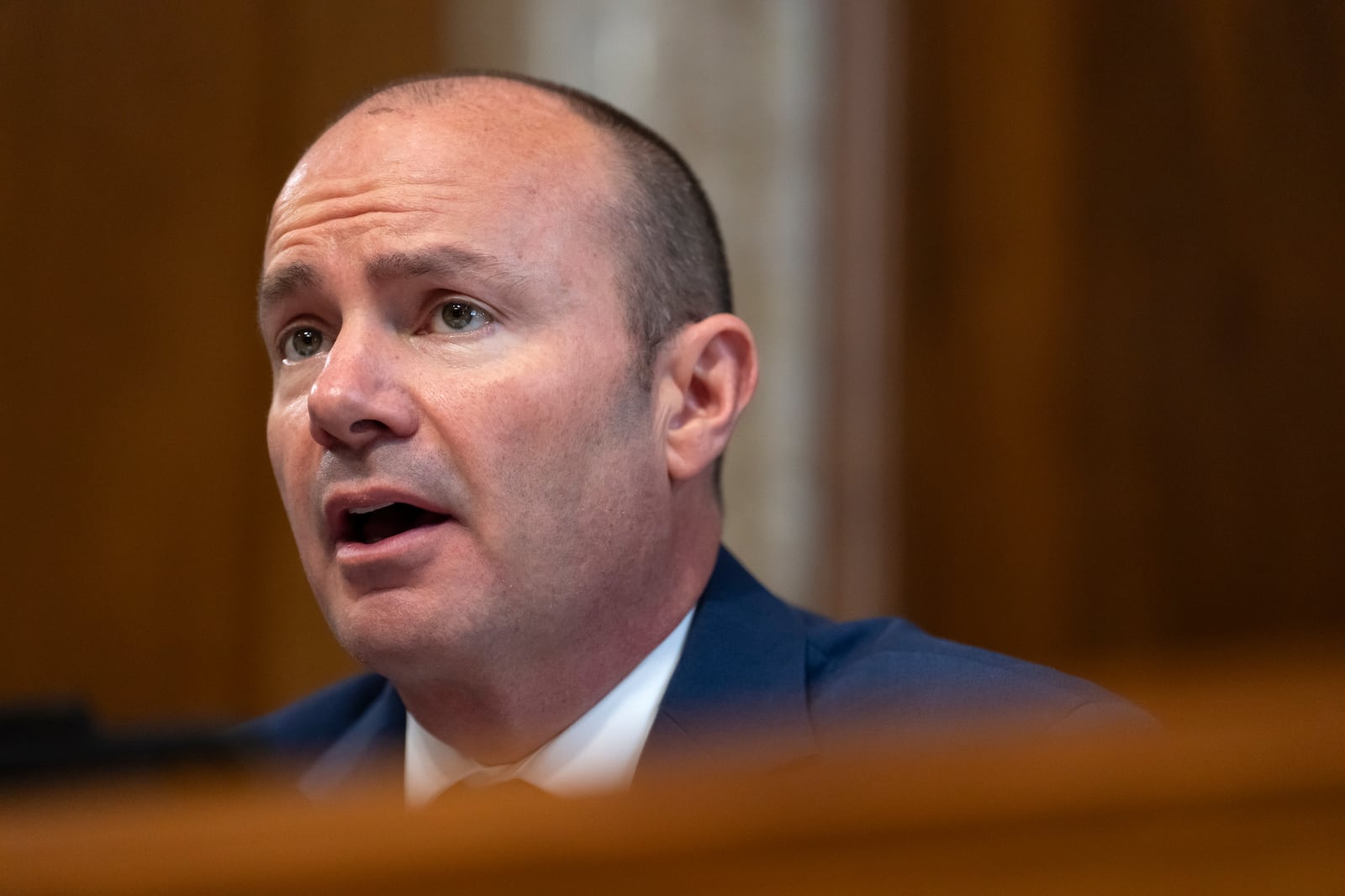
U.S. Sen. Mike Lee said Utah is an example to follow for its efforts to verify voter citizenship as the senator comes closer to passing his voter ID law in Congress.
More than a year after it was first introduced, Lee’s Safeguard American Voter Eligibility Act appears to be gaining traction as Republicans seek to make good on President Donald Trump’s campaign promises.
Meanwhile, Utah GOP legislators are backing a bill, HB209, that would create a process for county clerks to verify documentary proof of U.S. citizenship during voter registration, in line with the Utah Constitution.
“While we fight to pass the SAVE Act in the Senate, state-level citizenship requirements for voting and registration will be a vital tool to secure American elections and ensure citizen-only voting,” Lee said. “As ever, Utah leads the way.”
The Utah legislation would mirror that in a handful of Republican-leaning states that empower clerks to independently determine whether a registered voter is not a citizen and to bar participation in state elections.
As Lee, in Washington, D.C., and lawmakers in Utah clamp down on loopholes that may allow for noncitizens to vote, Utah’s chief election officer is also concluding an unprecedented citizenship review of Utah’s voter rolls.
What has the citizenship review found?
On Friday, the Utah Lieutenant Governor’s Office, which oversees elections in the state, provided an update on its review of noncitizens who are registered to vote.
After analyzing over 2 million records, election officials have so far identified just one noncitizen who was actively registered on voter rolls, but who never voted.
The individual checked the “noncitizen” box on the voter registration form but was still registered by the county clerk in a “clerical error” likely committed out of “some sort of confusion,” Lt. Gov. Deidre Henderson said.
Before the review began in April, the office identified four noncitizens who registered online to vote. The four were removed from voter rolls and are under investigation. It is unclear whether they voted, according to Henderson.
After confirming the citizenship of more than 99.9% of Utah voters, Henderson’s team is still working through roughly 7,000 records that could not be verified by using state drivers license information or federal databases.
Meanwhile, the office has updated the online voter registration process to prevent noncitizens from completing an application and Henderson is collaborating on HB209 to clarify when clerks can request proof of citizenship.
A problem of federal data?
One of Henderson’s takeaways from the comprehensive citizenship review, which she believes is the first in Utah history, is that federal databases are not a foolproof way to identify noncitizens on voter rolls, she said.
“There is no centralized federal database with a list of U.S. citizens,” Henderson told the Deseret News. “The states need to do further checks to find out. The federal government does not have good data.”
More than 95% of the 2,069,640 voters registered in August could be immediately confirmed as citizens by the Lieutenant Governor’s Office when comparing the state’s voter database with Driver License Division records.
The office then entered a memorandum of understanding with the Department of Homeland Security to use its SAVE program — which compiles Social Security, change of address and death records to determine welfare eligibility.
The program confirmed the citizenship of all but 8,836 of the remaining registered voters. But the database cannot “confirm noncitizenship,” Henderson said. So the Lieutenant Governor’s Office has begun manually inspecting each of the records.
The office found that 77% of the 2,119 active voters born outside the U.S. were citizens. On Jan. 13, the office asked the final 486 actively registered voters who could not be confirmed as citizens to complete a new registration form before Feb. 1.
The office will also inspect the roughly 6,700 records of inactive voters and those with incomplete information who said they were born within the U.S. The review will be published “as soon as we can track down as many of these voters as possible,” Henderson said.
Utah brings Sen. Lee’s SAVE Act to the state level
HB209 outlines what steps clerks can take if they cannot confirm citizenship, according to Henderson, who pointed out that, due to an election law passed last year, all Utah voters will soon be required to have state ID.

HB209, which is sponsored by Rep. Cory Maloy, R-Lehi, sailed through its first committee hearing on Wednesday with the blessing of House Speaker Mike Schultz, and the endorsement of the state’s top election administrators.
The bill would create a “bifurcated ballot system,” similar to that used for military service members in the state, that would provide voters a federal-only ballot if they refuse to provide documentary proof of U.S. citizenship.
If a registered voter has not provided proof of citizenship — with a drivers license, birth certificate, passport, tribal card or naturalization document — then clerks are instructed to notify the individual they cannot vote in state elections.
Schultz, R-Hooper, and Senate President Stuart Adams, R-Layton, both called the bill “common sense” this week, with Adams predicting on Friday that the desire to prevent noncitizens from voting is “probably unanimous up here.”
Over in the U.S. House, GOP leaders have signaled that Lee’s SAVE Act is a priority. The bill would amend the National Voter Registration Act to allow states to require REAL ID identification in order to vote in federal elections.
In addition to adding penalties for knowingly registering a noncitizen, the bill would provide alternate ways of proving citizenship to ensure citizens aren’t prevented from voting if they do not have certain forms of identification.
Any federal reform must actually accomplish “the intended goal,” Henderson said. In 2022, she was removed from voter rolls when her county clerk interpreted her birth on a foreign military base to mean she was not a U.S. citizen.
“We have worked in our state to balance accessibility and security,” Henderson said. “We want to make sure that only eligible voters are registered. We also want to make sure that we don’t erroneously kick off the voter rolls any eligible voters.”



That consistent belief and confidence in this team will keep the Mammoth in tight games and help them pick up points not only this season, but in the future as well. It also speaks to the pride and identity this team has.
“It’s important,” Guenther said. “I think showing that drive throughout the full 60 (minutes) is huge and it speaks to our character. You can’t win them all, but it was a solid game.”
Guenther’s goal opened the scoring in the first two minutes of the game. It was the result of hard work and making quick plays. After Guenther couldn’t connect with Peterka’s shot for a tip-in, the forward went to the weak side. Durzi recovered the puck and quickly passed to Guenther, whose one-timer soared to the back of the net. The tally was Guenther’s 34th of the year.
“It was a nice play, even in his own end,” Guenther said of Durzi. “I think he got the puck out, we got a three-on-two, and Durzi is really good with the puck. He is really smart, and he is always looking for other guys. I was over there on the weak side, and he made a good, hard pass. It is good to start the game that way.”
The Mammoth will have an opportunity to rest and recover after a tough back-to-back against the two of the top teams in the Pacific Division. On Sunday, Utah will play its third game in four nights against a team chasing them in the standings, the Los Angeles Kings. In addition to bringing the effort and fight Utah did tonight, the Mammoth will look to finish on more of their chances after the team scored one goal on 30 shots.
“I think our push was great; we just didn’t finish,” Sergachev explained. “We had a lot of chances, a couple of breakaways, a couple going against the goal in front of the net, and we didn’t finish. That was the difference in the game.”
“Solid effort, back-to-back, they had a good push, we had a good push, and we just got to bear down a little bit more on some plays,” Guenther shared. “I mean, it’s right there, so I think there’s some positives.”
Additional Notes from Tonight (per Mammoth PR)
- Guenther has scored six goals in his last eight games. He has also tallied 22 points over his last 22 contests (13G, 9A).
- Jack McBain continued to bring a high level of physicality tonight. He dropped the gloves with Jeffrey Viel in the second period, earning his sixth fighting major of the season and 22nd of his NHL career.
- The Mammoth closed the 10th of their 11 back-to-back sets in 2025-26. They have now earned a 4-4-2 record in the first game and a 3-6-1 record in the second game of back-to-backs this season.
- Utah’s penalty kill went 5-for-5 and are now 172-for-218 this season which is a 78.9% success rate.
The Mammoth continue their four-game homestand with a game against the Los Angeles Kings on Sunday. Tickets are available here!
Upcoming Schedule

CEDAR CITY — The discovery of child sex dolls in a southern Utah landfill led to the arrest of a man police say had more of the illegal dolls in his home.
Shane Alexander Larson, 54, of Cedar City, was arrested Thursday and charged Friday in 5th District Court with six counts of distributing or purchasing a child sex doll, a third-degree felony; and six counts of possession of a child sex doll, a class A misdemeanor.
The investigation began a week ago when Iron County sheriff’s deputies were called to the county landfill, where an employee, while conducting “routine checks of the dumpsters for anything that is not supposed to be put in the dumpster to prevent fire hazards,” found two such dolls, according to a police booking affidavit.
“The box that the sex dolls were in had the shipping label on it, an attempt to black out the label with a Sharpie marker, but the shipping label was still legible,” the affidavit states.
The box and shipping label were traced back to Larson’s home and investigators obtained a search warrant for the residence. At the home, detectives found additional dolls, the affidavit states.
When questioned, Larson admitted that those found at the landfill were his and that he discarded them “because they appeared to look too young,” according to the arrest report.
Larson was arrested at the conclusion of the interview.
In 2023, HB108, which bans the possession, distribution or purchase of sex dolls made to look like children, and was sponsored by Rep. Matthew Gwynn, R-Farr West — who is also chief of the Roy Police Department — sailed through both chambers of the Legislature without a single lawmaker opposing it. The bill was then signed into law by the governor.

“I just tried to help the team to get points as much as I can, and it’s a big team win tonight,” Vejmelka shared. “We need every point now. It’s a huge two points.”
After Vegas opened the game with five shots in the first 1:45, Captain Clayton Keller’s goal a minute later shifted momentum to the visitors. 3:18 after his first goal, Keller added his second of the game and doubled the Mammoth’s lead. Keller has found the scoresheet in six of the team’s last seven road games in March (3G, 5A).
“He was ready, his line played really good, especially in the first period,” Tourigny said of Keller. “I’m not saying they fade down after, I’m just saying they were more dynamic in the first. I think it was great to have that offensive production and like I said, three great goals in the first that give us a good lead.”
“Just being around the net,” Keller said of his goals. “Heck of a play by (John Marino) on one, and (a) fortunate bounce. I think when you’re around the net, (the) puck’s going to find you eventually. I think I’ve had a lot of chances lately and just bearing down and it’s good to see them go in.”
Two minutes after the Captain put Utah up 2-0, Jack McBain scored his eighth of the season and increased the Mammoth’s lead to 3-0. McBain has scored in two straight games and continued to bring a high level of physicality with a team-leading seven hits. Tourigny complimented McBain’s line with Barrett Hayton and Michael Carcone.
“I think that line is playing rock solid,” Tourigny shared. “I think it’s night after night. They grind, they compete, they play both sides of the puck. They make plays with the puck, but they make safe plays as well. Really like what they bring.”
The Mammoth picked up all four possible points on this two-game road trip and will continue to push for a post-season berth. However, it’s a quick turnaround as the team travels back to Salt Lake City to host the Anaheim Ducks Friday night.
“We know the schedule, so every game matters now,” Vejmelka said. “We have another big challenge tomorrow. We need to reset pretty quick and get ready for tomorrow.”
Additional Notes from Tonight (per Mammoth PR)
- This marks Utah’s second straight shutout win at T-Mobile Arena, after earning a 6-0 victory in the second road matchup with Vegas in 2024-25.
- Mikhail Sergachev has now earned points in four of his last five games (1G, 3A).
- Keller’s two goals came over the opening 6:05 of regulation, marking the second-fastest two goals by any player from the start of a game in franchise history.

Connecticut1 minute ago
CT Agency Picked To Lead Federal Career Training Grant Expansion

Delaware7 minutes ago
Delaware County uses AI traffic cameras to ease congestion on Lancaster Avenue

Florida13 minutes ago
Rocket launch from Florida this weekend. Best places, beaches to watch

Georgia19 minutes ago
Georgia Tech gives chef Jose Andres $100K prize; more from Atlanta’s food scene

Hawaii25 minutes ago
After devastating floods, Hawaii braces for more rain this weekend | Honolulu Star-Advertiser

Florida1 year ago
Florida High School Football Rankings: Top 25 teams – Oct. 21

Oregon2 years ago
How old is Bo Nix? What to know about Oregon quarterback ahead of 2024 NFL Draft

Connecticut2 years ago
Cleary's 21 help Le Moyne down Central Connecticut State 69-64 in OT

Virginia2 years ago
99th annual Pony Swim held in Virginia

Indiana2 years ago
Indiana Members Credit Union announced as new anchor tenant at Bottleworks District

News5 hours ago
Read the Ruling in The Times’s Lawsuit Against the Pentagon

Politics6 hours ago
NYC Mayor Mamdani’s wife glorified terrorists in online posts, criticized US military: report

World7 hours ago
Curro Rodríguez: from bankruptcy to global water empire

News8 hours ago
Jury finds Elon Musk misled investors during Twitter purchase

Politics18 hours ago
Pritzker pushes prosecutions of Trump officials as part of Dem ‘Project 2029’ agenda
-

 Detroit, MI2 days ago
Drummer Brian Pastoria, longtime Detroit music advocate, dies at 68
-

 Oklahoma7 days ago
Family rallies around Oklahoma father after head-on crash
-

 Nebraska1 week ago
Wildfire forces immediate evacuation order for Farnam residents
-

 Georgia5 days ago
How ICE plans for a detention warehouse pushed a Georgia town to fight back | CNN Politics
-

 Massachusetts1 week ago
Massachusetts community colleges to launch apprenticeship degree programs – The Boston Globe
-

 Alaska6 days ago
Police looking for man considered ‘armed and dangerous’
-

 Southwest1 week ago
Talarico reportedly knew Colbert interview wouldn’t air on TV before he left to film it
-

 Michigan1 week ago
Michigan-based Stryker hit with cyberattack