Utah
Judge hears arguments in case alleging Utah’s ‘school choice’ program is unconstitutional • Utah News Dispatch


Should Utah’s “school choice” program be allowed to stay put — or is it unconstitutional?
That’s the question that a judge is now weighing after spending several hours listening to oral arguments Thursday.
In the hearing, 3rd District Court Judge Laura Scott grilled attorneys for both the state and for Utah’s largest teacher union, the Utah Education Association, on the complex constitutional questions she must now unravel before issuing a ruling in the case — which she said she expects to hand down sometime in mid-to-late January.
Earlier this year, the Utah Education Association filed a lawsuit challenging the constitutionality of the Utah Fits All “scholarship program,” which the 2023 Utah Legislature created as an effort to offer “school choice” options by setting up a fund from which eligible K-12 students can receive up to $8,000 for education expenses including private school tuition and fees, homeschooling, tutoring services, testing fees, materials and other expenses.
Utah’s largest teacher union files lawsuit against Utah Fits All school choice voucher program
In 2023, lawmakers appropriated about $42.5 million in ongoing income tax revenue to the program. Then this year they nearly doubled that ongoing funding by adding an additional $40 million. In total, the program uses about $82.5 million in taxpayer funding a year.
That is, if the courts allow it to continue to exist.
In its lawsuit, the Utah Education Association alleges it’s an unconstitutional “voucher” program that diverts money from Utah’s public school system — using income tax dollars that they contend are earmarked under the Utah Constitution for the public education system and should not be funneled to private schools or homeschooling in the form of the Utah Fits All scholarship program.
The Utah Constitution has historically required the state’s income tax revenue be used only for public education, though that constitutional earmark has been loosened twice — once in 1996 to allow income tax revenue to be spent on public higher education, and once in 2020 with voter-approved Amendment G, which opened income tax revenue to be used to “support children and to support individuals with a disability.”
This year the Utah Legislature tried to remove that education earmark completely by putting Amendment A on the Nov. 5 ballot — but that effort failed after a judge voided the question because lawmakers failed to properly publish the proposed constitutional amendment in newspapers across the state.
Attorneys representing state officials, the Alliance for Choice in Education (a group that the Utah State Board of Education chose to administer the program), and parents of students benefiting from the program urged the judge to dismiss the lawsuit.
They argued the Utah Legislature acted within its constitutional constraints when it created the program. They contended that when Amendment G added to the Utah Constitution the word “children” as an allowable use for income tax dollars, that created a “broad” yet “not ambiguous” category that allowed Utah lawmakers to use the revenue for the Utah Fits All scholarship fund.
Attorneys for the Utah Education Association, however, argued that when legislators put Amendment G on the ballot and pitched it to voters, their stated intentions did not include using the funding for private school vouchers. Rather, they argued it was characterized as an effort to narrowly open the revenue up to “social services” for children and people with disabilities.

The judge repeatedly questioned state attorneys about their position, asking for clarity on the state’s interpretation of the Utah Constitution and whether it would allow Utah lawmakers the power to create a “shadow” or “parallel” education system that could funnel public dollars to private schools, which can select students based on religion, political beliefs, family makeup or other criteria. In contrast, Utah’s public school system must be free and open to all.
Arif Panju, an attorney representing parents who intervened in the case to argue in favor of protecting the Utah Fits All program, argued parents have a “fundamental right” to exercise their “school choice” options.
“The mere fact that they can use a private scholarship … does not transform those options into a shadow system,” Panju argued.
But to Scott, that still didn’t answer her question.
“I’m getting a little frustrated,” Scott said, adding that she wasn’t trying to debate school choice but rather she was trying to conduct a constitutional analysis.
Ultimately, state attorneys conceded their position could open the door to a “parallel” or “shadow” system — however, they argued that’s not what is being debated in this case. They argued the Utah Fits All program was funded only after the Utah Legislature appropriately funded its education system, as required by the Utah Constitution (which does not set a specific threshold).
When the hearing’s time ran out at about 4:30 p.m., Scott said she would take the issue under advisement, and she would not be ruling from the bench.
“I’m hopeful for mid-to-late January,” she said, “but I’m not making any promises I won’t take the entirety of the 60 days” that she has to make a decision.
YOU MAKE OUR WORK POSSIBLE.



FLAGSTAFF, AZ (AZFamily) — The Rock Canyon Fire, burning in northern Arizona near the border with Utah, doubled in size overnight to 4,512 acres and was 5% contained.
The fire has caused firefighters to evacuate hikers and campers in the area, and some roads in the Kaibab National Forest are closed.
People in Jacob Lake — less than 20 miles from the Rock Canyon Fire — say the new fire is stirring up anxiety after last year’s devastating fire season. They say they’re confident in firefighters, but after the trauma, they’re still holding their breath.
Memories of last year’s fires
For over 100 years, Jacob Lake Inn has been serving cookies to guests who want to visit the North Rim of the Grand Canyon or explore the Kaibab National Forest. Melinda Rich Marshall’s family has owned the inn since 1923.
Last year, they were evacuated during the White Sage Fire that burned close to 60,000 acres, and then the Dragon Bravo Fire, which destroyed nearly 150,000 acres, shut down the North Rim.
Now the Rock Canyon Fire has already burned thousands of acres north of the inn.
“I mean, honestly, our reaction was not again,” Rich Marshall said. “I mean, that’s really what it was.”
Rich Marshall said last year was hard enough, so once they heard about this new fire, it brought back bad memories.
“I’d say we have a little PTSD from it, seeing smoke and smelling smoke and all those things,” she said.
Fire burning in old burn scar
The Rock Canyon Fire was sparked over the weekend by a lightning strike.
Parts of it are burning in the White Sage burn scar. Bureau of Land Management spokesperson Dolores Garcia said old burn scars will usually slow down a new fire, but this time it’s actually fueling the flames.
“In some of those areas, we’re seeing quite a bit of fuels,” Garcia said. “We’re not seeing that the burn scar is helping much, especially with the winds as strong as they’ve been in some days and as dry as it’s been, those fuels are just tender and cured and really flammable.”
She said firefighters are attacking it from the ground and the air, but the high winds are limiting their ability to make water drops.
Hikers and campers were evacuated from the area. Garcia said she knows how stressful this must be to the surrounding communities after last year’s fires.
“We still understand that, it’s still a very fresh wound to many of the people who live up there, who’ve recreated up there for years,” she said. “That’s definitely at the forefront of our minds.”
Rich Marshall said while it’s scary, they have full trust in the firefighters.
“We’re really just grateful to see them and know the work that they are doing,” she said.
Rich Marshall said this is usually their peak season, but they’ve seen a bit of a slowdown even after the North rim reopened. She said people can support them by staying there or even just stopping in and getting some of their famous cookies.
See a spelling or grammatical error in our story? Please click here to report it.
Do you have a photo or video of a breaking news story? Send it to us here with a brief description.
Copyright 2026 KTVK/KPHO. All rights reserved.

The NBA Draft is less than a week away, and the Utah Jazz have a big decision to make. What’s difficult for the Jazz is that there isn’t an obvious choice between some incredible prospects at the top of the draft: AJ Dybantsa, Darryn Peterson, and Cam Boozer. Obviously, everything depends on what the Washington Wizards decide to do with their pick. But with all the smoke screens we’ve seen, it’s not clear who will be available to the Jazz.
That’s where you come in. If you were the Utah Jazz and you had the chance to choose between AJ Dybantsa, Darryn Peterson, and Cam Boozer, who would you choose?
Welcome to SB Nation Reacts, a survey of fans across the NBA. Throughout the year we ask questions of the most plugged-in Jazz fans and fans across the country. Sign up here to participate in the weekly emailed surveys.

SALT LAKE CITY — Utah is no stranger to discourse surrounding early child literacy.
While the Beehive State generally performs higher than other states in terms of proficiency measures, its leaders still recognize — especially post-COVID — that it’s a real issue that demands serious solutions.
A legislative audit released Tuesday said Utah school teachers and administrators should focus enhanced attention not only on third-graders, the traditional benchmark for early literacy, but also on first-graders, where data starts spotting early literacy challenges in young students.
Then, Utah first lady Abby Cox on Wednesday added to that discussion, speaking with Utah education and policy leaders about the need to meet the literacy crisis head-on and ways Utah has worked to do just that.
“We’re not in the best place that we can be, and we’re a little ahead of the national average; we always have been, but that still isn’t great. We’re in a moment where everybody’s starting to realize this … business community, educators, all of us coming together to realize there’s an issue here,” Cox said.
She mentioned the passage of SB241 during the 2026 legislative session, which committed $25.6 million to literacy coaching, increased the statewide goal to have 80% of third-graders reading at grade-level by 2030 and includes an intervention measure requiring struggling third-graders to repeat the grade — “except in cases of certain good cause exemption.”
“I know we can get 97-plus percent of our kiddos reading on grade level by third grade. We can do this,” Cox said.
She also emphasized the need to get “attention-sucking machines,” AKA cellphones, out of classrooms — something top lawmakers in the state have made strides to emphasize.
July 1 will mark the start of a new Utah law ushered in with the passage of SB69 that essentially places a bell-to-bell ban on cellphones at Utah’s K-12 public schools, unless a school or district opts for a looser policy.
The latest piece of legislation was built upon a similar bill passed during the 2025 session that set a default policy barring students from using their phones during class time.
Despite those restrictions, many lawmakers and educators argued they didn’t go far enough, which led to SB69.
“I don’t think we all know enough about how wonderful this is going to be,” Cox said, adding that data has shown library book checkouts have skyrocketed in schools that have instituted daylong cellphone ban policies.
“I talked to a principal who, after the first day of going bell-to-bell, walked into his high school lunch room, thinking there was a fight, because there was all this chaos and noise … and it was just (students) communicating with each other, playing cards, bringing little games,” Cox said. “It was just beautiful to see, and I think we’re going to see an incredible resurgence as we implement this statewide.”
The Key Takeaways for this article were generated with the assistance of large language models and reviewed by our editorial team. The article, itself, is solely human-written.
-

 Technology5 minutes ago
Barret Zoph is out at OpenAI again after just five months
-

 World10 minutes ago
Iran hardliner behind US deal warns Tehran won’t honor agreement if Trump fails to deliver
-

 Politics17 minutes ago
Top GOP lawmaker rallies around conservative school board member facing calls to resign
-

 Sports25 minutes ago
2026 World Cup Odds: How Far Can Mexico Go After Winning Group A?
-

 Technology32 minutes ago
6 in 10 identity crimes now begin with a new account
-
 Business35 minutes ago
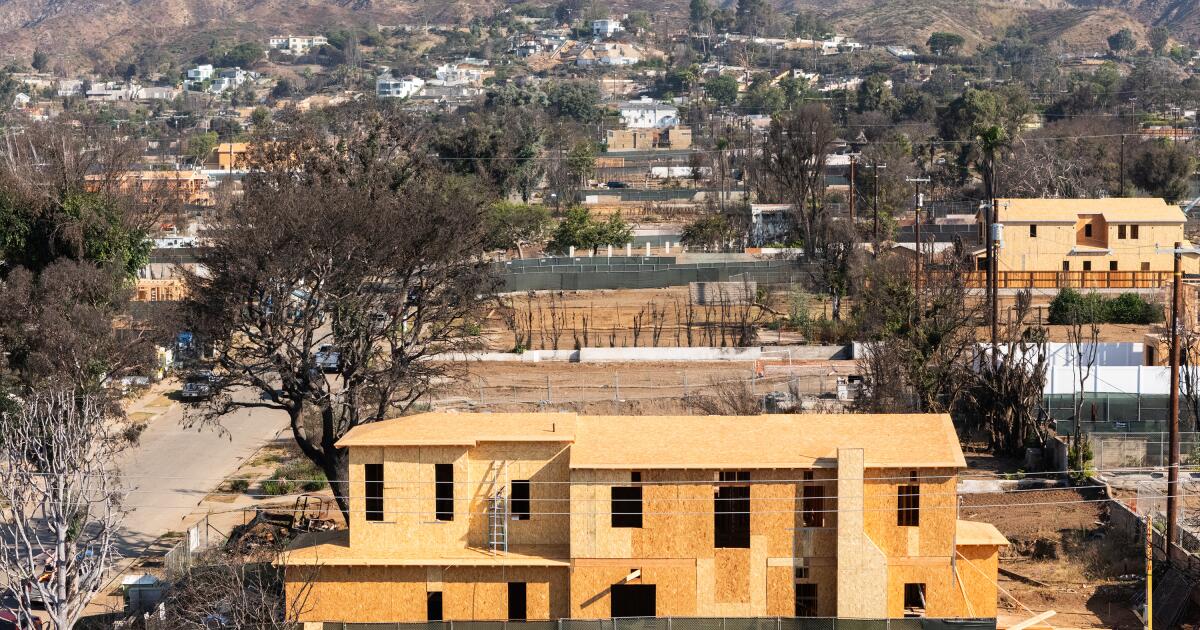
January 2025 wildfire victims seek tougher penalties against State Farm over claims handling
-
 Entertainment40 minutes ago
Review: ‘Sugar,’ with Colin Farrell as an alien private eye, gets a new and improved second season
-
 Politics50 minutes ago
Political watchdog fines Newsom for failing to report $5.5M in solicited donations on time

