Utah
Jazz Insider Dumps Cold Water on Bronny James Draft Buzz


Buzz continues to surround the Utah Jazz as we stand just over a month from the kick off the 2024 NBA Draft.
And while the Jazz hold two first-rounders to start the draft at pick 10 and 28, a large chunk of the rumors revolving around Utah have been based on their use of their 32nd pick in the second. USC guard and son of LeBron James, Bronny James, was the most recent guard mentioned to have potential interest from the Jazz, effectively generating some hype surrounding the 19-year-old in coming to SLC.
The report inevitably made for some fun discussions of what possibilities next season could hold for the Jazz, but newly uncovered developments have seemingly brought the Bronny to Utah train to a halt.
Despite some chatter linking the Jazz with James heating up at the combine earlier this week, Sarah Todd of Deseret News reports that those rumors might be a whole lot of nothing.
“I looked into this as much as possible and although James impressed during the combine, it doesn’t seem like the Jazz are interested,” Todd said. “A number of team sources seemed confused about where the Yahoo Sports report had come from, with one source telling the Deseret News that the name Bronny James has never come up in any draft conversations among Jazz decision makers.”
Instead of looking towards the direction of Bronny towards the top of the first, the Jazz will likely turn their direction elsewhere. The USC product came out with a nice combine performance to boost his stock deeper into the second round, but Utah might not be his eventual landing spot.
In the event the Jazz don’t end up finding a prospect that they love at the top of the second, keep an eye out for a trade involving the pick. Danny Ainge remained confident that the team would remain aggressive this summer in a pursuit to improve this squad for next season, and the right move surrounding some picks down the board can effectively bring that.
All draft answers will be delivered for the Jazz when the big night officially arrives on June 26th.
Follow Inside The Jazz on Facebook and X.
Subscribe to YouTube for breaking Jazz news videos and live streams!





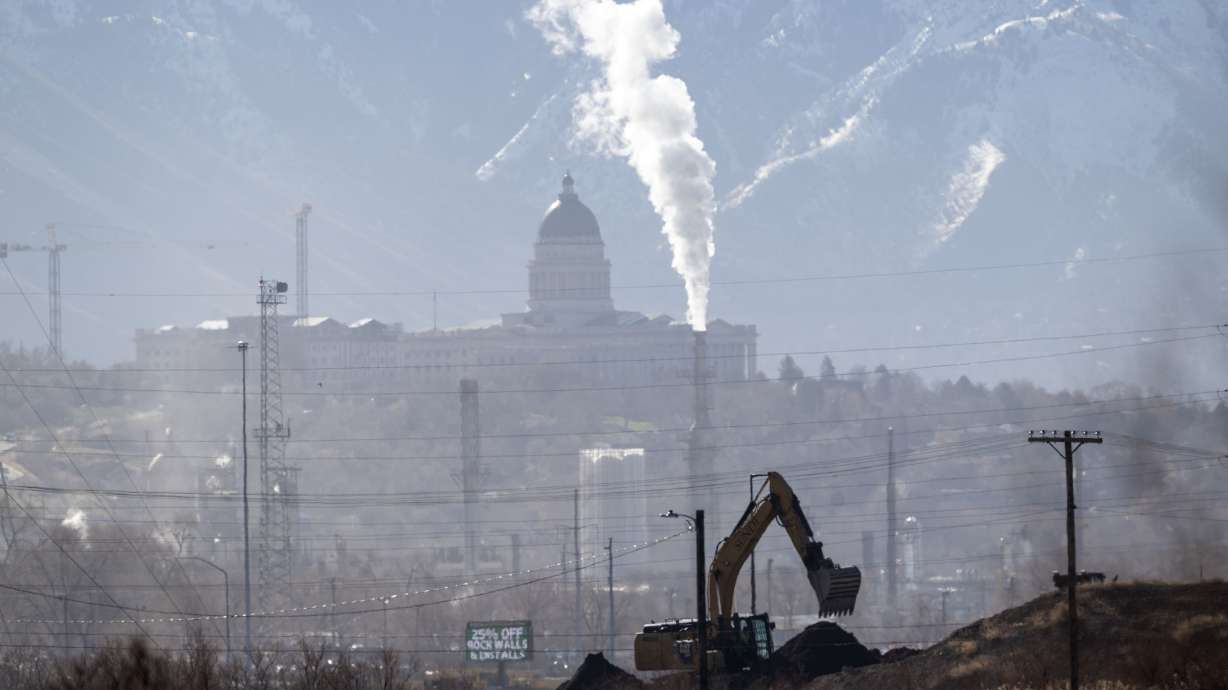
SALT LAKE CITY — State leaders announced a partnership with the petroleum industry that they said will increase fuel supply, lower gas prices and resolve an ongoing feud with Idaho.
The announcement comes after weeks of tension between Utah and Idaho leaders over a plan floated by Utah lawmakers to tax fuel exports. Officials in Idaho said that could have raised gas prices there.
Instead of taxing exports, the Legislature plans to cut the state gas tax by 15% while working with the oil and gas industry to increase the supply of fuel at Utah’s refineries, House Speaker Mike Schultz, R-Hooper, announced Monday.
“If you want lower prices, you have to increase supply. It’s that simple,” Schultz said. “This agreement will bring in nearly 800,000 additional gallons of fuel into the market every single day, boosting competition and putting real downward pressure on prices at the pump.”
At the same time, leaders in Idaho have tentatively agreed to work to increase water supply on the Bear River system, which runs through Idaho, Wyoming and Utah. Gov. Spencer Cox signed a memorandum of understanding about that during a press conference at the state Capitol. Idaho Gov. Brad Little was expected to sign it soon, a spokesperson said.
“We are at a critical crossroads in Utah’s energy and water future and we are choosing an abundance mindset over managing scarcity,” the governor said. “This partnership not only benefits Utahns, but it will benefit the entire Intermountain region.”
He said industry leaders have committed to increase refinery production in Utah by 23,500 barrels of oil per day within the next five years. The state is also investing in fuel storage to help meet seasonal demand and infrastructure to aid production and delivery of fuel, Cox added.
The agreement with Idaho won’t secure any new water rights in the Bear River system, but will let both states work together on managing excess flows and water sustainability.
“We have so much in common — probably more in common with Idaho than any other neighbor out there — and so I’m grateful that the relationship is coming out even stronger,” Cox told reporters.
Meanwhile, the proposal to cut the gas tax, HB575, is moving through the Legislature in the final weeks of the session. Besides slashing the tax, the bill also requires refineries to report to the state how many barrels of oil and other petroleum products they produce. It also aims to make it easier to build pipelines in the state that would increase the supply of gasoline.
The bill, sponsored by Rep. Cal Roberts, R-Draper, was unanimously approved by a House committee last week and is awaiting a vote in the full House of Representatives.
Rikki Hrenko-Browning, the president of the Utah Petroleum Association, said “tightening supplies” in the fuel market has led to some higher prices.
“We stand together with state leadership to reaffirm our commitment to the state, to our neighbors and to our customers,” she said. “We look forward to working together to grow Utah to become an energy leader across the Intermountain West.”

Thousands of Israelis have already used an option offered by the U.S. state of Utah to marry via Zoom and register as legally wed. Israelis who did not want, or were unable, to marry through Israel’s Chief Rabbinate, the only authority through which Jews can marry and be registered as married in Israel, found a solution in the arrangement. Now, an internal legislative move in the U.S. state threatens that possibility.
In recent weeks, a bill introduced in the Utah Senate seeks to bar marriages conducted entirely remotely, without physical presence in the state, unless they were recognized before a certain date. The proposed legislation would require at least one of the spouses to be physically present in Utah during the wedding ceremony.
2 View gallery

Will the option for Jews to marry outside the rabbinate and register as married in Israel be revoked?
(Photo: Alexander Dyachenko / Shutterstock)
According to data from the Hiddush religious freedom advocacy group, about 3,000 couples in 2024, in which at least one spouse is Israeli, were married in “Utah weddings” via Zoom or another video platform. Information from Utah County indicates that roughly 30% of all couples marrying through the remote procedure there are Israelis.
During the COVID pandemic, Utah authorized marriage ceremonies to be conducted via Zoom, enabling couples, including non-U.S. citizens, to marry and have their unions legally registered. After Utah residents, Israelis make up the largest national group to use the option.
In a landmark 2022 ruling, Israel’s Administrative Court instructed the Population and Immigration Authority and the Interior Ministry to recognize all couples married under the “Utah wedding” framework and register them as married. The decision effectively validated the registration of civil marriages conducted in Israel by remote means. Now, that option could be curtailed.
2 View gallery
Zoom app. About 30% of Utah weddings are of Israelis
(Photo: Thaspol Sangsee / Shutterstock)
“‘Utah weddings’ are a very common ‘bandage’ for the distorted reality in which the State of Israel does not allow many citizens to marry at all or to marry in accordance with their worldview,” said Rabbi Dr. Seth Farber, founder and chairman of the ITIM advocacy organization, which helps people navigate Israel’s religious bureaucracy
“Our assistance center at ITIM uses Utah weddings as a solution for many couples who seek to marry according to Jewish law but refuse to do so through the Chief Rabbinate,” he added.
“Israeli lawmakers must advance an arrangement that allows citizens to choose how to conduct their wedding ceremony. More and more couples would then choose a Jewish wedding.”
Utah
Most Americans don’t know Utah is hosting another Olympics. But they have thoughts about the 2034 Winter Games name

As Italy’s Milan Cortina Olympics came to a close Sunday with a ceremonial hand off to the French Alps as the site of the next Winter Games in four years, everyone was looking ahead to Utah hosting in 2034, right?
Maybe not.
Sure, a new Deseret News-Hinckley Institute of Politics poll found 88% of Utahns know their state is where the “next next” Winter Games will be held eight years from now, a decision made by the International Olympic Committee in July 2024.
But a national poll for the Salt Lake City-based newspaper and the University of Utah institute showed pretty much the opposite. Nearly three-quarters of Americans, 72%, said they weren’t aware that Utah had been selected to host the 2034 Winter Games.
Both polls were conducted by Morning Consult, which polled 769 registered voters in Utah Feb. 11-14 and 2,002 registered voters nationwide Feb. 10-13. The Utah poll has a margin of error of plus or minus 4% and the national poll, plus or minus 2%.
The lack of national awareness doesn’t seem to worry the leader of Utah’s Winter Games.
“It’s understandable,” said Fraser Bullock, president and executive chair of the Organizing Committee for the 2034 Olympic and Paralympic Winter Games, given that the state’s second hosting gig is so far away.
“Over time, we will close the gap on that number and get to a majority,” he said. “Particularly after the French Alps Games, when we’re the next Games, we should see a steady rise over the years.”
Bullock said Utah also can expect “a fair amount of attention” when Los Angeles holds the 2028 Summer Games as the next Olympics and Paralympics for athletes with disabilities being held in the United States.
Utah won’t be able to start selling sponsorships and making other moves in the marketplace until after the LA Games. That’s also when NBC, which holds the U.S. broadcast rights to the Olympics through 2036, is likely to start promoting Utah’s Winter Games.
Building national recognition will take time, said Bullock, who served as chief operating officer for the 2002 Winter Games in Utah. But just how organizers will try to raise the state’s profile as the host of the 2034 Games is yet to be determined.
“Let me put it this way, we’re planning to plan that,” Bullock said. “We know its something we need to do.”
Recognition of Utah at the Milan Cortina Olympics
Utah’s still-small organizing committee did have a presence at Italy’s 2026 Winter Games, including their first formal presentation to the IOC and a news conference where many questions from the international news media were about U.S. President Donald Trump.
Even so, there wasn’t much talk in Milan about the 2034 host, said Robert Livingstone, producer of GamesBids.com, a Toronto-based website that follows the competition to host future Olympics and Paralympics.
“More people were aware of Switzerland (bidding) for 2038 than that Utah had won for 2034,” Livingstone said. “People were talking French Alps and they were like, ‘Who’s after that … oh, right, Switzerland.’ I heard that a number of times.”
He said in conversations about future Winter Games, people were focused on Switzerland, which was granted a unique status as the sole bidder for 2038 by the IOC, and would “just skip over Utah because they haven’t heard anything about Utah.”
And while the French Alps had the chance to showcase the 2030 Winter Games during Sunday’s Closing Ceremonies in an ancient Roman amphitheater in Verona, the Utah Games won’t have the opportunity to do the same until the end of France’s Olympics four years from now.
One of the few hints that an American city was the site of an upcoming Winter Games came during the Feb. 6 Opening Ceremonies, when Team USA marched third from last in the Parade of Nations, ahead of athletes from France and then Italy, to signify the order of future hosts.
That same order was in place for each country’s flag bearers during the Closing Ceremonies.
Matthew Burbank, a University of Utah political science professor who’s authored two books about the Olympics, said Utah organizers were in effect limited in what they could do in Italy to promote the 2034 Games.
“I don’t think it was the time and place,” he said, noting the IOC’s “script” for future hosts calls for them to “wait your turn, stand in line, do what you’re supposed to do, show up at our meetings … but don’t call undue attention to yourself.”
The professor wasn’t surprised that Utah’s status isn’t widely known nationwide.
The Winter Games already attracts less attention than the much larger Summer Games that feature more popular sports, Burbank said. So with Los Angeles hosting those in 2028, he said if Americans “are thinking about the Olympics at all, that’s what they’re thinking.”
That’s no doubt the case globally, as well, Burbank said.
“I don’t think most people could name the French Alps as the next Winter Olympics after Milan. So with the one after that, it gets even farther away,” he said, although there’s a possibility that “because Salt Lake has held the Games before, there might be some recognition of that.”
Should 2034 be the Utah Games? Or the Salt Lake City Games?
When attention does shift to 2034, it will be on what’s been renamed the Utah Games.
In 2002, it was Salt Lake City that hosted because the IOC only awarded Games to a city. Now, cities, regions or countries can host, even joining up — as the cities of Milan and Cortina did this year.
Polling found that Utahns are split over what to call the 2034 Olympics, with 47% backing the organizing committee’s announcement late last year that they would be the Utah Games, and 32% behind the Salt Lake City Games name. Another 21% didn’t know which they preferred.
Nationally, the poll results were more clear-cut, with 50% saying the 2034 Olympics should be called the Salt Lake City Games and only 14% supporting the Utah Games name. Those who didn’t know was higher than in Utah, at 36%.
The 2034 Games organizers believe Utahns and the rest of the country will come to accept the switch from the Salt Lake City-Utah tag used throughout the Olympic bid process, which lasted more than a decade.
“The change is fairly recent and it will take some time for people to become familiar with that and accustomed to it,” Bullock said. “It will evolve over time. But remember this is a transition period where we can’t do a full launch of a brand until after the LA Games.”
Announced just before last Thanksgiving along with a new and controversial logo at the unveiling of a massive new installation at the Salt Lake City International Airport, the new “Utah 2034″ name is here to stay even though a different logo is expected in 2029.
“The name element is established,” Bullock said, promising that the 2034 Games will “have a much more comprehensive identity after the LA Games,” thanks to the ability to establish a stronger brand.
That may be a little easier in Utah, where unlike the rest of the country, the population is already overwhelmingly aware that the state is hosting in 2034. Bullock is convinced all Utahns will eventually know they’re going to welcome the world again.
“I’m thrilled that it’s 88%,” he said. “We’ll continue to spread our message, so we’ll get the other 12% that aren’t aware the Games are coming. We’re excited our citizens of Utah are paying attention to our Olympic and Paralympic future.”
What Utah organizers did in Italy during the Olympics
For Bullock, the Milan Cortina Games weren’t about increasing awareness for 2034.
He and the more than 100 other Utahns, including Utah Gov. Spencer Cox, who traveled to Italy for the Olympics largely stayed behind the scenes to get a firsthand look at putting on a Winter Games.
“It’s not our turn on the stage. We respect very much that it’s Milano Cortina’s time to shine in front of the world, as they are doing a great job,” Bullock said. “And that the baton will be handed to the French Alps.”
That meant long days of meetings about topics like technology and hospitality as well as participating in the IOC’s observer program that provides access to the back-of-the-house at Games venues as well as to operations, security, transportation and other functions.
All of it was “incredibly valuable,” Bullock said. “It’s always enjoyable to see the fulfillment of the dreams of a host … how things come together, how proud they are of the work that they’re doing, how they’re welcoming the world in their unique way, reflecting their people and their culture.”
That will happen for Utah 2034, too, he said.
“We’re just biding our time,” Bullock said. “Because we know our time will come.”

Southeast3 minutes ago
NASA likely to delay Artemis II moon mission launch again due to helium flow problem

Northeast10 minutes ago
Colombian nationals allegedly ran fake law firm, impersonated federal judges to defraud migrants out of $100K

San Francisco, CA2 hours ago
The F1 sideshow that went sideways: Peeing, roof-climbing, and a mayor along for the ride

Dallas, TX2 hours ago
A targeted approach to dredging White Rock Lake

Miami, FL2 hours ago
MLS Power Rankings: LAFC No. 1 after win over Miami, Messi

Florida1 year ago
Florida High School Football Rankings: Top 25 teams – Oct. 21

Connecticut2 years ago
Cleary's 21 help Le Moyne down Central Connecticut State 69-64 in OT

Oregon2 years ago
How old is Bo Nix? What to know about Oregon quarterback ahead of 2024 NFL Draft

Virginia2 years ago
99th annual Pony Swim held in Virginia

Indiana1 year ago
Indiana Members Credit Union announced as new anchor tenant at Bottleworks District

Politics10 hours ago
House Dem compares Trump’s illegal immigration crackdown to ‘terrorism,’ vows to abolish ICE
World11 hours ago
Exclusive: European Parliament rejects minute of silence for French nationalist student
News12 hours ago
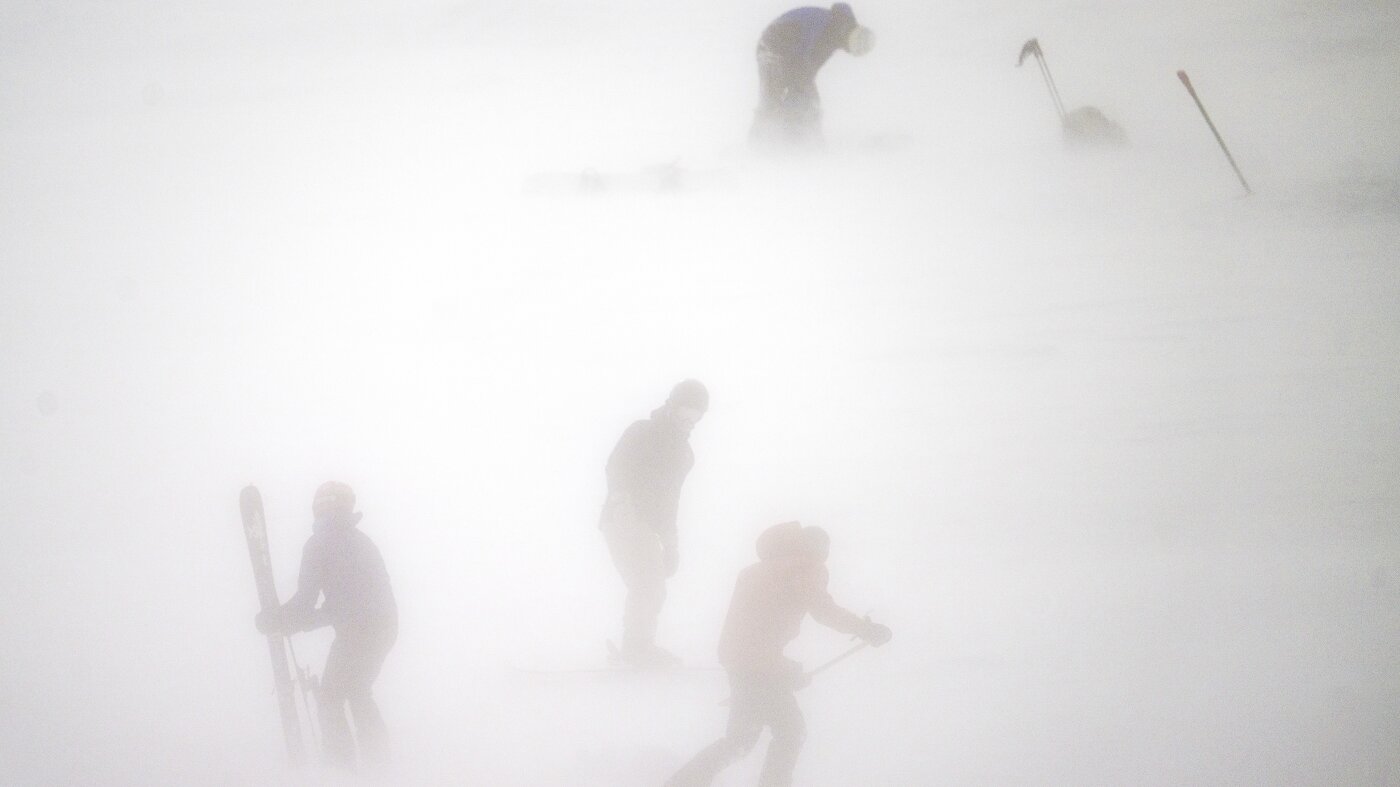
In pictures: Winter storm slams the east coast

News21 hours ago
Video: Why the Supreme Court Struck Down Trump’s Tariffs

Politics22 hours ago
Trump envoy rebukes Greenland leader for rejecting hospital ship proposal
-

 Montana4 days ago
2026 MHSA Montana Wrestling State Championship Brackets And Results – FloWrestling
-

 Science1 week ago
What a Speech Reveals About Trump’s Plans for Nuclear Weapons
-

 Oklahoma6 days ago
Wildfires rage in Oklahoma as thousands urged to evacuate a small city
-

 Technology1 week ago
The DJI Romo robovac had security so poor, this man remotely accessed thousands of them
-

 Technology3 days ago
YouTube TV billing scam emails are hitting inboxes
-

 Education1 week ago
Video: Secret New York City Passage Linked to Underground Railroad
-

 Politics1 week ago
Chicago-area teacher breaks silence after losing job over 2-word Facebook post supporting ICE: ‘Devastating’
-

 Technology3 days ago
Stellantis is in a crisis of its own making