Utah
How did Utah fare in the transfer portal?


On the heels of a 5-7 season and an offseason offensive renovation with the hire of new offensive coordinator Jason Beck, the University of Utah had an extremely busy December in the transfer portal.
The fall transfer portal window officially closed on late Saturday night for Utah players, bringing a 20-day college football free agency blitz to an end, at least until the spring.
The tally, as of Monday morning? Twenty-four players entered the transfer portal from Utah, with the Utes picking up 15 players. That’s right on target, as coach Kyle Whittingham said in November that the Utes were expecting to add around 10-15 players through the portal, though the Utes might not be done yet.
Though the transfer portal has closed for most teams — teams playing in the postseason get a five-day extension for their players to enter following the conclusion of their seasons — programs can still pick up those in the portal at any time (the deadline is only for players to enter their names), so Utah can still add players to their team as the calendar turns to January.
That said, the majority of transfer portal action has concluded, so here’s an overview of how the Utes fared.
Quarterback
This was by far the biggest need in the transfer portal for Utah after two seasons of dismal play at the position. Shortly after the school hired New Mexico’s Beck as the schools offensive coordinator, his quarterback announced that he was coming along for the ride.
New Mexico quarterback Devon Dampier, a sophomore, was the perfect fit for Beck’s quarterback-run-heavy offensive scheme, helping the Lobos generate 484.2 yards per game and become the fourth-most-productive offense in the country last season.
Dampier was one of the most productive quarterbacks in the nation, accounting for 3,934 yards of offense in 2024 (2,768 passing and 1,166 rushing). While there are some accuracy issues he’ll need to clean up as he makes the move to the Big 12 — he threw 12 touchdowns and 12 interceptions and competed just 57.9% of his passes — there’s one thing that’s almost guaranteed: Utah’s offense is going to be a lot more exciting to watch than the last two years.
Dampier has a lot of upside and raises the ceiling of Utah’s offense. As long as he can be more accurate in 2025, the Utes will be in a much better position under center.
Behind Dampier, the presumed 2025 starter, the Utes have Oklahoma freshman transfer Brendan Zurbrugg, a 6-foot-2, 207-pound freshman that redshirted last season, and Isaac Wilson, who removed his name from the portal and returned to Utah.
Running back
If quarterback was priority No. 1, running back was definitely priority No. 2 for the Utes in the transfer portal. Every scholarship running back — Micah Bernard, Jaylon Glover, Mike Mitchell, Anthony Woods, Dijon Stanley and John Randle Jr. — either ran out of eligibility or entered the transfer portal.
A complete revamp of the room was necessary, and that started with the addition of Washington State’s Mark Atuaia, who was brought in by Beck to be Utah’s new running backs coach.
Washington State freshman Wayshawn Parker, who rushed for 735 yards and four touchdowns on 137 carries in his true freshman season in Pullman, was perhaps Utah’s biggest transfer portal pickup. The 6-foot, 199-pound running back was ranked by 247Sports as the No. 2 running back, and 40th overall player, in this year’s transfer portal.
Behind Parker is New Mexico junior NaQuari Rogers (74 carries for 382 yards and five touchdowns) and UNLV freshman Devin Green (29 carries for 123 yards and one touchdown). Utah had a commitment from New Mexico State’s Mike Washington (725 yards and eight scores on 157 carries), but he flipped to Arkansas.
Overall, Utah met its needs here, though keeping Mitchell, who played injured most of the year and was a candidate for a better 2025 season, would have been nice.
Wide receiver
Utah initially landed a coveted wide receiver transfer in Tulsa’s Joseph Williams, who was named the American Athletic Conference Freshman of the Year. Williams, who had 30 receptions for 588 yards and five touchdowns, had offers from numerous Power Four teams, including Michigan, USC and Colorado.
Williams never signed with Utah after committing, however, and a visit to Colorado sealed the deal for the Buffaloes. Williams’ flip was a blow to Utah’s transfer portal receiving class, as the Utes lost their premier pickup.
Utah still brought in three receivers — Mississippi State’s Creed Whittemore, who chose to redshirt after four games (four receptions for 65 yards, 41 rushing yards); New Mexico’s Ryan Davis (54 receptions for 747 yards and three touchdowns) and Utah State’s Otto Tia (44 receptions for 434 yards and seven touchdowns).
Whittemore could see time in the slot for Utah, while Davis brings chemistry and time with Dampier. Tia is perhaps the most intriguing player, bringing size (6-foot-4, 220 pounds) and experience as a senior to the room.
Having Joseph Williams would have really completed the room, but Utah picked up some promising pieces.
It remains to be seen if one of these transfers breaks out as a WR1 for the Utes, or if it will be one of the returning players like Zacharyus Williams (who came on strong during the last four games and finished with 10 catches for 101 yards) and Dadrien Zipperer (eight catches for 122 yards).
Cornerback
One of the more surprising portal entries this cycle was from Ute cornerback Cameron Calhoun, who couldn’t turn down an offer from Alabama and transferred to Tuscaloosa.
With Calhoun’s transfer, plus the transfers of CJ Blocker and Randle Jr., who spent time at cornerback this season, and the graduation of Zemaiah Vaughn, Utah went after three players in the portal to fill the room back up.
Utah is an easy sell to a cornerback transfer and as a result, the Utes snagged Blake Cotton, a UC Davis junior who was ranked the No. 20 cornerback in the transfer portal by 247Sports, and Jeremiah Caldwell, a Garden City Community College product who is ranked the No. 5 junior college cornerback by 247Sports.
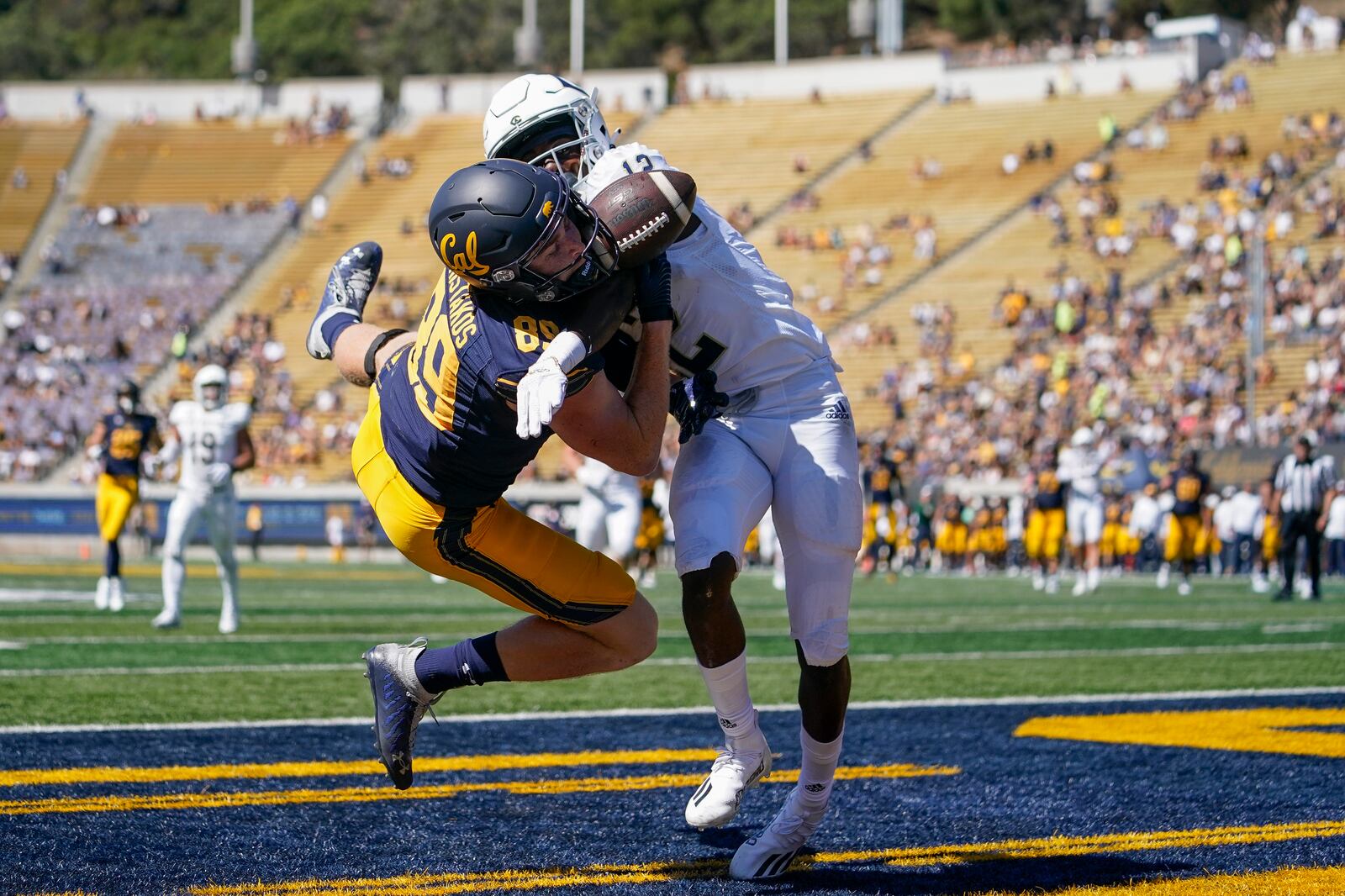
The Utes also added Texas A&M junior Donovan Saunders, who played 33 snaps over two games with the Aggies.
Elijah Davis returns and could be slotted in a starting spot, Smith Snowden returns at nickel and Kenan Johnson was trending toward a return to Utah, Whittingham said in November. That’s a solid starting group, though the loss of Calhoun, who seemed to be poised to be a starter next year, definitely hurts.
Overall, despite the loss of Calhoun, the Utes did a great job regrouping and bolstering the cornerback position.
Defensive tackle
Utah knew it was already going to have to replace one starter at the defensive tackle position after Junior Tafuna graduated, but the Utes didn’t expect to have to replace another.
Keanu Tanuvasa threw his name into the transfer portal in a very surprising portal entry that came weeks after he seemingly reaffirmed his commitment to the Utes on social media. On Monday morning, he reportedly transferred to rival BYU, dealing a blow to Utah’s defense.
Throw in the transfer of Simote Pepa and the graduation of Tevita Fotu, and the defensive tackles room is going to look a lot different in 2025.
Aliki Vimahi and Dallas Vakalahi both started in 2024 when Tafuna and Tanuvasa were injured, and should compete for the starting roles, but a transfer portal addition to the room is needed.




WEST VALLEY CITY, Utah (KUTV) — A woman was killed in a crash after running a red light on Mountain View Corridor in West Valley City.
Police said the collision was reported just before 1:30 p.m. at the intersection of 4100 South.
Officers said a northbound tow truck entered the intersection on a green light when an eastbound SUV ran a red light and was T-boned.
Both vehicles reportedly caught fire after the impact.
The SUV driver was taken to a hospital, where she later died. Authorities are working to identify her.
The tow truck driver suffered non-life-threatening injuries.
Northbound lanes at 4100 South will remain closed for several hours while crews clear the scene and investigate the crash.
BE THE FIRST TO COMMENT
_____

SALT LAKE CITY (KUTV) — A little mid-level moisture will drift across Utah this weekend, but most areas will stay dry.
A few very isolated mountain showers are possible, mainly in the afternoons, but nothing widespread.
The big story is the heat. High pressure will build in, pushing temperatures 15–20 degrees above normal.
It will feel more like late spring, with many areas nearing or breaking March records, especially across central and southern Utah.
Overall, expect a warm, mostly dry weekend, with just a small chance for a quick mountain shower. Rain chances increase significantly later next week.
_______
Utah
Case dismissed for Wyoming man charged with allegedly kidnapping missing Utah girl – East Idaho News

POCATELLO — After a search for a missing Utah girl resulted in the arrest of a Wyoming man last November, a motion was accepted to dismiss the man’s case.
Anthony Holm of Star Valley, Wyoming, was originally charged on Nov. 17 with one felony count of second-degree kidnapping, but these charges were dismissed on March 17 during his preliminary hearing.
According to court documents, Bannock County Prosecutor Alan Boehme filed a motion to dismiss the case against Holm, as Utah will bring charges against him.
The motion was granted by Magistrate Judge Carol Tippi Jarman.
EastIdahoNews.com checked Utah court records, and no charges have been filed at the time of publication.
RELATED | Man arrested on kidnapping charges; missing Utah juvenile located safely
RELATED | Wyoming man charged with kidnapping thought teenager was 18, court documents say
The original incident occurred on Nov. 14, when Bannock County Sheriff’s deputies were contacted by the Box Elder County Sheriff’s Office in Utah, which requested assistance in locating a missing juvenile.
The juvenile was believed to be with Holm, who was driving a 2024 Ford Bronco, and was suspected to be in the Lava Hot Springs area.
Court documents state that the vehicle was spotted at a hotel in Lava Hot Springs; however, the license plate did not match the reported one. Bannock County Dispatch reported that the vehicle belonged to Holm, and later confirmed that he was staying at the hotel.
Deputies spoke with Holm and the 16-year-old girl outside of a hotel room.
When asked by deputies how he knew the girl, he said they met on the app Ashley Madison the day before, and that the girl told him she was 18.
RELATED | Ashley Madison isn’t the only place to cheat. Infidelity thrives on social media
Deputies spoke with the 16-year-old, who confirmed that she had told Holm she was 18, but did not want the man to go to jail. She later told deputies the plan was for them to stay in Lava Hot Springs to swim and spend the night there.
Documents state that in Willard, Utah, Holm had picked up the juvenile and traveled to Salt Lake City, where the two stayed at a hotel, before traveling to Idaho.
=htmlentities(get_the_title())?>%0D%0A%0D%0A=get_permalink()?>%0D%0A%0D%0A=htmlentities(‘For more stories like this one, be sure to visit https://www.eastidahonews.com/ for all of the latest news, community events and more.’)?>&subject=Check%20out%20this%20story%20from%20EastIdahoNews” class=”fa-stack jDialog”>

Minneapolis, MN29 seconds ago
Man found dead in south Minneapolis house fire

Indianapolis, IN6 minutes ago
Mt. Vernon boys basketball wins program’s first state title

Pittsburg, PA12 minutes ago
Written off in Pittsburgh: 5 former Steelers looking for redemption in UFL

Augusta, GA18 minutes ago
One dead following a shooting in Richmond County

Washington, D.C24 minutes ago
Thousands turn out – again – as third 'No Kings' rallies take over Maryland streets

Florida1 year ago
Florida High School Football Rankings: Top 25 teams – Oct. 21

Oregon2 years ago
How old is Bo Nix? What to know about Oregon quarterback ahead of 2024 NFL Draft

Connecticut2 years ago
Cleary's 21 help Le Moyne down Central Connecticut State 69-64 in OT

Virginia2 years ago
99th annual Pony Swim held in Virginia

Indiana2 years ago
Indiana Members Credit Union announced as new anchor tenant at Bottleworks District

Politics7 hours ago
Jeffries declines to break with indicted Democrat after ethics panel’s guilty verdict

World9 hours ago
Hundreds of thousands march through London in stand against the far right

News9 hours ago
2 students killed, 7 other people injured in Tennessee bus crash during school field trip

Politics20 hours ago
Dem senators dodge crucial question on illegal alien accused of killing Chicago college student

World21 hours ago
EU Parliament unblocks key political hurdle in digital euro talks
-

 Movie Reviews1 week ago
‘Youth’ Twitter review: Ken Karunaas impresses audiences; Suraj Venjaramoodu adds charm; music wins praise | – The Times of India
-

 Sports1 week ago
IOC addresses execution of 19-year-old Iranian wrestler Saleh Mohammadi
-

 New Mexico6 days ago
Clovis shooting leaves one dead, four injured
-
 Business1 week ago
Disney’s new CEO says his focus is on storytelling and creativity
-

 Tennessee5 days ago
Tennessee Police Investigating Alleged Assault Involving ‘Reacher’ Star Alan Ritchson
-

 Technology6 days ago
YouTube job scam text: How to spot it fast
-

 Minneapolis, MN3 days ago
Boy who shielded classmate during school shooting receives Medal of Honor
-

 Texas1 week ago
How to buy Houston vs. Texas A&M 2026 March Madness tickets