Connect with us

West

Utah mom shot missing National Guard husband in his sleep, suggested lover ‘take it to the grave’: police

Published

on

Utah mom shot missing National Guard husband in his sleep, suggested lover ‘take it to the grave’: police

Join Fox News for access to this content

You have reached your maximum number of articles. Log in or create an account FREE of charge to continue reading.

By entering your email and pushing continue, you are agreeing to Fox News’ Terms of Use and Privacy Policy, which includes our Notice of Financial Incentive.

Please enter a valid email address.

Having trouble? Click here.

A Utah mom allegedly shot her missing husband to death in their bed in September and tried to cover up the evidence, according to Cottonwood Heights police.

Salt Lake County authorities have charged Jennifer Gledhill with first-degree murder, five counts of obstruction of justice, possession of a controlled substance with intent to distribute, abuse of a human body and tampering with a witness.

Advertisement

A Salt Lake County judge also ordered Gledhill be held without bail after prosecutors alleged in court documents obtained by Fox News Digital that she was “very calculating in her crimes in that she arranged for the children to stay with her parents during the evening Matthew was killed.”

Gledhill’s husband, Matthew Johnson, was initially considered missing for days when a member of the Utah National Guard contacted the Cottonwood Heights Police Department on Sept. 25 asking for a wellness check on Johnson, stating he had not come into work, “which was very unusual,” a probable cause affidavit states.

FOLLOW THE FOX TRUE CRIME TEAM ON X

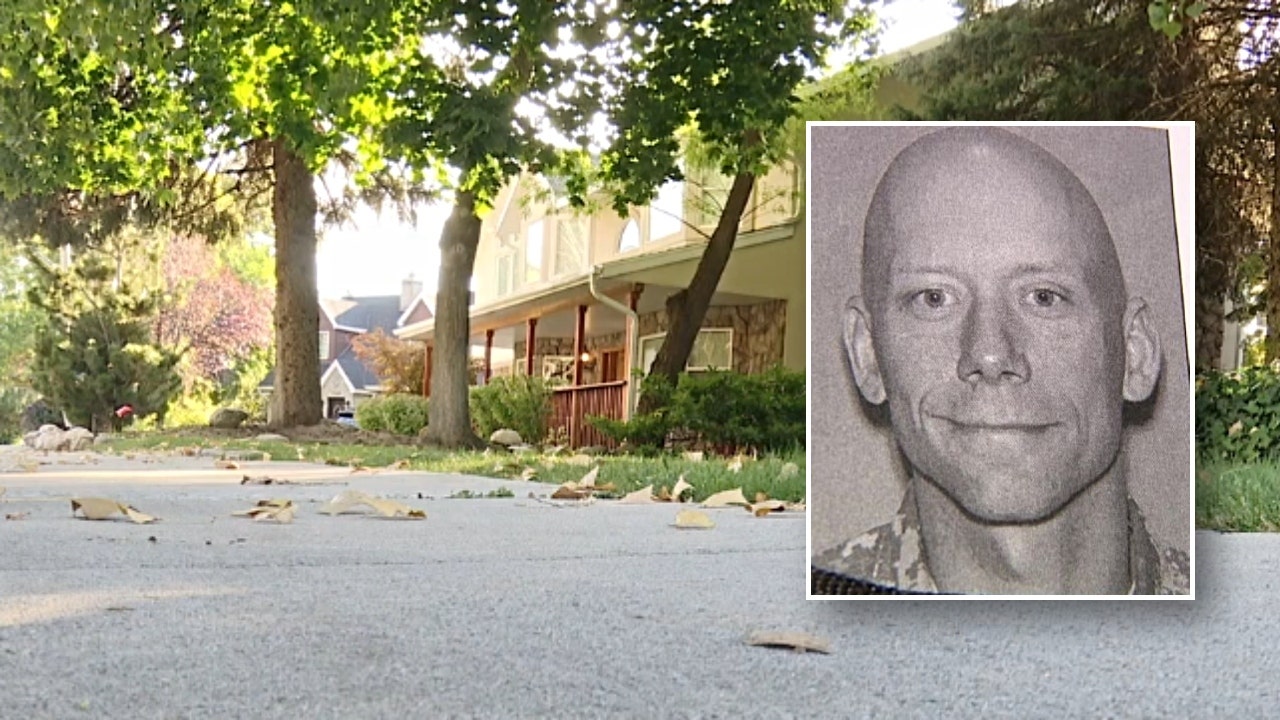
Matthew Johnson’s friends and family last heard from him on Sept. 21, though he is now presumed dead. (Cottonwood Heights PD)

On Sept. 28, Gledhill reported her husband missing to police, saying she had not heard from him since Sept. 20. She also claimed “Matthew told her that he was going to be gone for a week and not to call him.” She seemed “distracted and at times nervous” during the call, according to the court documents.

Advertisement

An informant then came forward to police with information about Gledhill, saying he was having an extramarital affair with her. The informant told Cottonwood Heights police that on Sunday, Sept. 22, Gledhill came over to his house and told him that she was “likely going away for a long time.”

SIGN UP TO GET TRUE CRIME NEWSLETTER

She apparently told the informant that she and Johnson had gotten in a fight on Sept. 20 “because he knew she had been sleeping with someone else,” and allegedly went on to admit to the informant that on the evening of Sept. 21, she shot her husband in the head with his 9 mm Glock “as he slept in their shared bed.”

She further told the informant “that she loaded Matthew’s body into a rooftop storage container, slid him down the stairs by herself, and loaded him into the back of her minivan.”

Gledhill said she transported Johnson’s body “north, dug a hole, and buried him in a shallow grave,” court documents state.

Advertisement

UTAH MOM KEPT MISSING DAUGHTER, 5, HIDDEN IN CULT ‘COMPOUND’ FOR MONTHS WITH HELP FROM ADULT SONS: DOCS

Jennifer Gledhill apparently told her lover that she shot her husband in the head, according to police. (FOX 13 Salt Lake City)

Johnson’s body has yet to be recovered, though detectives found his truck located 0.3 miles from his home with his cellphone inside the vehicle.

In text and WhatsApp messages, Gledhill allegedly told the informant that if she were told a story like the one she told him, “she would take it to the grave,” the probable cause affidavit says.

“I washed everything & vacuumed & its not an issue anymore.”

— Alleged message from Jennifer Gledhill

Advertisement

A neighbor told police that on Sept. 24, she saw Gledhill’s parents inside the home “cleaning” the garage and “moving things around.” 

UTAH CHILDREN’S BOOK AUTHOR SENT DAMNING TEXT TO LOVER BEFORE HUBBY POISON PLOT: DOCS

While serving a search warrant at Gledhill’s residence, detectives noticed that the mattress in the master bedroom “appeared to be brand new.”

Gledhill allegedly told the informant “that she loaded Matthew’s body into a rooftop storage container, slid him down the stairs by herself, and loaded him into the back of her minivan.” Gledhill said she transported Johnson’s body “north, dug a hole, and buried him in a shallow grave,” court documents state. (FOX 13 Salt Lake City)

CLICK HERE FOR MORE TRUE CRIME FROM FOX NEWS

Advertisement

“Additionally, the entire wall behind the master bed appeared to have fresh wipe marks from cleaning. Several reddish-brown spots were located on the walls, bed frame, and blinds of the master bedroom. Detectives noted that the wall behind the master bed was covered in bleach,” court documents states.

Investigators also noted “a strong smell of chlorine in the basement” and bleach stains on “several stairs” with black carpeting.

MOM OF UTAH AUTHOR ACCUSED OF POISONING HUSBAND POSSIBLY ‘INVOLVED IN PLANNING’ HIS DEATH, POLICE SAY

During a search of the suspect’s vehicle, detectives located bags of what appeared to be drugs that were packaged “for individual sale” and about $200 in cash.

Police also served a search warrant at Gledhill’s parents’ home, where they located a tote bag by the room she would sleep in containing “a Glock 19X gun box (green/tan in color) with one of the handles broken,” which was “wrapped in a child’s onesie.”

Advertisement

Jennifer Gledhill had previously, and unsuccessfully, tried to get a restraining order against Matthew Johnson. (FOX 13 Salt Lake City)

Gledhill’s cellphone records show that “at no point” after Sept. 21, when her husband last communicated with friends and family, “did she ever attempt to contact” Johnson, prosecutors said.

Gledhill’s mother told detectives she went to her daughter’s home on Sept. 24 and admitted to purchasing a new mattress from Amazon at Gledhill’s request. 

911 CALL REVEALS SHOCK OF UTAH MOMMY BLOGGER’S ALLEGED CHILD ABUSE: ‘SHE’S A BAD LADY’

When police asked the suspect’s father if he entered the master bedroom, he responded, “I did not go in where the incident happened.”

Advertisement

Gledhill previously made “unsuccessful attempts to secure a protective order against Matthew during the course of their marriage and was found by the Court to be an instigator and one to goad Matthew into a response in order to get him in trouble,” according to records obtained by prosecutors. 

“The evidence is significant that defendant obstructed the investigation by removing the mattress she admitted to Informant that she shot Matthew on while he was sleeping and replaced days later with a new mattress,” prosecutors said.

CLICK TO GET THE FOX NEWS APP

Investigators have collected samples of carpet that tested positive for human blood spatter and are awaiting the results of DNA testing. Fox News Digital has reached out to Gledhill’s attorney’s office.

“Our hearts go out to the loved ones of Mr. Matthew Johnson, not only a father and son but a member of the Utah National Guard. Our office will continue to work closely with investigators as we seek justice for Mr. Johnson,” Salt Lake County District Attorney Sim Gill said in an Oct. 15 statement. “We appreciate Cottonwood Heights Police Department detectives working with our prosecutors as they worked to collect the evidence necessary to file these charges. All persons accused of wrongdoing are presumed innocent unless and until proven guilty in a court of law.”

Advertisement


Read the full article from Here

Continue Reading
Click to comment

Leave a Reply

Your email address will not be published. Required fields are marked *

This site uses Akismet to reduce spam. Learn how your comment data is processed.

Oregon

Oregon’s 1,500-Acre Dog Park Paradise Just Outside Portland Offers Off-Leash Terrain, Trails, And River – Islands

Published

on

Oregon’s 1,500-Acre Dog Park Paradise Just Outside Portland Offers Off-Leash Terrain, Trails, And River – Islands


For many dogs, a perfect day involves playing catch in a giant field, sniffing around a dense forest, and topping it all off with a swim. Just outside of Portland, Oregon, which Forbes calls one of the best cities in the U.S. for dogs, lies the Sandy River Delta, where dogs can have their perfect day. The park offers close to 1,500 acres of pure, off-leash dog bliss where the Sandy River meets the mighty Columbia. This land was once a part of the Watlala Nation and was visited by Lewis and Clark, whose team camped on the shores of the Columbia here. 

Almost the entirety of the park is off-leash. The park has five trails where dogs can be off-leash, beaches, rivers, and fields that are all open to sniffing, running free, and playing catch. You’re able to hike the trails with your dog roaming along at their own pace. The trails allowing dogs off-leash range from 0.25 to 2 miles long and showcase different ecological zones in the delta. The forests are full of interesting smells for your pup, and the meadows are wide and open — perfect spots to play with other dogs that are also having their best day ever.

Advertisement

The Sandy River Delta is located in Troutdale, Oregon’s “Gateway to the Columbia River Gorge.” Standing in the middle of the park, looking at the views of the gorge, you’d never know that downtown Portland is 17 miles to the west.

There’s so much for you and your dog to do at the Sandy River Delta Park

The areas a dog must remain on-leash are: the parking lot, bathrooms, picnic areas, and within 100 feet of one of the park’s main treks, the Confluence Trail. If you take a route that crosses the Confluence Trail, your dog is allowed to be off-leash, as long as they don’t disturb hikers. A fenced section on the park’s eastern edge is closed to people and pets to give wildlife some peace and quiet. Other than those specified areas, your dog has plenty of acreage to explore. Just make sure your dog doesn’t dig, and please pack out their waste!

Advertisement

Humans have something to look forward to here, as well. The Confluence Trail runs 1.25 miles along ADA-compliant gravel leading to a bird blind designed by architect and sculptor Maya Lin. The elliptical bird blind is made of wooden slats inscribed with the name and current conservation status of the 134 different species Lewis and Clark encountered. Lin is a renowned artist whose work appears at places like Storm King Art Center, one of the largest outdoor sculpture parks in the U.S.

How to get to the Sandy River Delta Park and what’s nearby

One practical note: bring a towel for your pup. The park offers a lot of water for your dog to swim in, and the shore gets pretty muddy. The cool water is a refreshing treat for your dog in the middle of summer. You can hike to the Sandy River and a side channel of the Columbia easily. Don’t worry — the nearby forest provides free sticks to toss into the water for your dog to fetch. To get to the Sandy River Delta from wherever you are in Portland, take I-84 East. The parking lot will get full on the weekends, so get there early or go late. If the parking is full, you can park down the street at a free lot across from the river and enter through a trail. 

After all this running around and sniffing, you deserve a treat, too. Portland is one of the top five foodie cities in the U.S., and that love of good food doesn’t stop at the city borders. A mile down the street from the park is the Sugarpine Drive-In, a restored gas station casually serving gourmet food and ice cream sundaes. The New York Times said the Cherries Jubilee Sundae was one of the best dishes in 2024. On the way home, stop at McMenamins’ Edgefield location — a former farm that is now home to a pet-friendly hotel, multiple bars and restaurants, a spa, a brewery, distillery, winery, golf course, and an outdoor concert venue that consistently brings in nationally touring acts.

Advertisement


Source link

Advertisement
Continue Reading

Utah

What’s Up With Mr. Wonderful’s Utah Data Center?

Published

on

What’s Up With Mr. Wonderful’s Utah Data Center?


Earlier this month, Republican county commissioners fast-tracked approval for a 40,000-acre data center in northwest Utah, blocking public comment from hundreds of furious locals. The Stratos project, as the venture is known, is backed by Shark Tank entrepreneur Kevin O’Leary through his investment company O’Leary Digital. It’s designed to reach a 9-gigawatt power capacity, making it one of the largest “hyperscale” data centers in the world; at its projected $100 billion buildout, the center would generate and consume twice as much power as the entire state of Utah currently uses.

Despite a massive public outcry, Box Elder County commissioners unanimously approved the project after facing a contentious crowd in a May 4 meeting at the county fairgrounds. Commissioner Boyd Bingham threatened to have protestors removed by law enforcement, telling them, “For hell’s sake, grow up.” He and his fellow commissioners then left the room and finished the meeting in a closed session, livestreaming their final unanimous vote of 3-0. O’Leary, who did not attend the meeting, claimed on social media that the protestors were “professional… paid, and bused in.” Environmental advocate and former U.S. Senate candidate Caroline Gleich fired back, saying, “Utahns don’t want an out-of-state billionaire controlling our land.”

The controversy around data centers in the U.S. continues to grow; 67 percent of new data center construction is planned for rural areas, according to a recent Pew Research Center report. Last year, Rolling Stone reported on Amazon data centers in Eastern Oregon that siphoned tens of millions of gallons of water from state aquifers, worsening a water pollution problem linked to cancer and miscarriages. A $20.5 million class-action settlement agreement reached between Amazon and a group of Oregon residents in March marked the first time a Big Tech company committed to paying damages for public health threats allegedly exacerbated by its data centers.

Senator Bernie Sanders recently introduced a bill aimed at putting a federal moratorium on data center construction. “We cannot sit back and allow a handful of billionaire Big Tech oligarchs to make decisions that will reshape our economy, our democracy and the future of humanity,” Sanders previously said in a statement to Rolling Stone. “We need serious public debate and democratic oversight over this enormously consequential issue.”

Environmental fears, ancestral lands

Utah is facing a critical water shortage driven by the warmest winter in over a century, with snowpack levels at the lowest ever recorded. Scientists say that heat and emissions generated by a colossal data center like the Stratos project would wreak havoc on an area already severely impacted by climate change. There’s concern that the amount of water needed to cool Stratos facilities could further drain the Great Salt Lake, intensifying exposure to toxic sediments in the rapidly shrinking watershed. Wildlife biologists say the heat generated by the center could also disrupt the movement of migratory birds, deer, and antelope.

Patrick Belmont, professor of watershed sciences at Utah State University, says there are serious technical concerns with building a data center of this scale: “It’s like putting a hairdryer that has the energy consumption of New York City in the middle of a fragile desert ecosystem on the shores of one of the most imperiled lakes in the world.” Belmont says the facility would generate enough heat to raise nighttime temperatures by eight to 12 degrees, irrevocably shifting the dew point, the temperature at which water condenses. “It would desiccate the land, and increase evaporation rates in the whole region,” Belmont says, warning that it could affect the landscape and surrounding communities for generations to come. (Belmont’s views are his own, and do not necessarily reflect those of his employer.​

Carbon emissions from the data center would also have a significant environmental impact, with an estimated output of 30 million tons of CO2 per year exceeding emissions from Utah’s entire transportation sector. “It’s 50 percent more than every vehicle in Utah currently,” Belmont says. “I think a lot of people haven’t wrapped their heads around that.”

O’Leary, known as Mr. Wonderful on the ABC reality show Shark Tank, cites the environmental studies degree he received from the University of Waterloo in 1977 when dismissing concerns about the Stratos project, also known as “Wonder Valley.” (He’s also backing a controversial $70 million data center development under the Wonder Valley name in Alberta, Canada.) O’Leary, who is from Canada, tells Rolling Stone that water cooling won’t be an issue at the Utah facility. “There’s plenty of turbine technology now that uses air cooling, very, very efficiently,” he says, “and there are many examples across the country where they’re building out power from a combination of wind, battery, solar, and natural gas.”

But Stratos wasn’t designed to use a combination of energy sources; as a state official remarked at an April 22 meeting of the Box Elder County Commission, the project will be powered 100 percent off the Ruby Pipeline, a natural gas line that crosses northern Utah from Wyoming en route to Oregon. MIDA Executive Director Paul Morris told the meeting that proximity to the pipeline was the main reason O’Leary selected the site. MIDA spokesperson Kristin Kenney Williams said in a statement to Rolling Stone that “exploring any and all energy sources as Mr. O’Leary highlighted is absolutely a goal throughout the lifetime of the project and as technology advances.”

Robert Davies, a physics professor at Utah State University, estimates that, due to the inefficiency of natural gas, the facility would actually consume closer to 16 gigawatts at full capacity, an equivalent to “the energy footprint of 40,000 Walmart supercenters.” He noted that his results derive from a preliminary analysis, which “clearly indicate a full-scale analysis is warranted.”

Darren Parry is a former chairman of the Shoshone Nation, a Native American tribe that has inhabited the Great Plains for over 10,000 years. He recently visited the site in northwest Utah’s Hansel Valley, where, he says, “there are burial grounds about a quarter-mile away from the proposed map — close enough to be within the footprint of the ecological area [of the site].” Parry, who teaches Native American history at Utah State University, is calling for a responsible slowdown of the Stratos project. “There are too many unanswered questions,” he says, “especially if we’re going to have a footprint of something that’s bigger than two cities.” (A note on the Shoshone Nation website says Parry’s comments regarding Stratos “do not represent the official voice or position” of the tribe.)

Regulation runaround?

The Box Elder County commissioners’ May 4 vote gave Utah’s Military Installation Development Authority (MIDA) the green light to create the project area for the Stratos data center on unincorporated land. According to a plan released by MIDA officials, the area comprises 40,000 acres of privately-owned land and 1,200 acres of military and state-owned land — over 62 square miles in total.

Advertisement

Activists have raised questions about a taxpayer-funded state agency championing privately owned facilities in Utah. MIDA was created in 2007, ostensibly to strengthen national defense missions and support military initiatives, but in recent years, the group has backed a range of developments, including a luxury ski resort and a hotel. Project areas under MIDA oversight can offer a variety of incentivizing tax breaks and financing deals to developers. 

The group approved a series of resolutions to move O’Leary’s project forward last month, agreeing to charge lower taxes in a bid to help “lure the hyperscalers” to Utah. O’Leary appeared via video at the meeting, where, according to The Salt Lake Tribune, he lauded the speed at which MIDA officials had moved to greenlight the venture, telling them, “I heard about this opportunity just five months ago. No one has pulled this off this fast, ever.” Speaking on behalf of MIDA, Williams told Rolling Stone that while the “competitive nature” of the project meant that the group needed to move fast to create the project area, “per state regulation, environmental studies and approvals must be achieved — these will take time, and will be very transparent.” 

MIDA officials say the Stratos project is a matter of national security; Utah Gov. Spencer Cox defended building data center facilities at an April news conference, saying the state has an obligation to allow the U.S. to stay competitive as a world power. “We have to do this,” Cox said. “We can’t just say ‘no’ and shut the doors and go home and let China win this, this technology race.”

Environmental advocate Caroline Gleich says MIDA’s backing is simply a way to fast-track building the data center without environmental review. “This is one of the largest developments in northern Utah since the transcontinental railroad,” Gleich says. “People are concerned about its potential impacts and the lack of transparency in the approval process.” She spearheaded an online petition to stop the transfer of water rights from ranching to the Stratos project; following a deluge of nearly 4,000 formal protests filed with Utah’s Division of Water Rights, the application was withdrawn. Developers say that they intend to apply again at a later date. “Utah residents spent almost $60,000 filing these protests,” a frustrated Gleich says. “It costs $15 to lodge a complaint. There’s no refund — and no law that says [the developers] can’t just apply and withdraw as many times as they want.”

Gov. Cox’s calls for Utah residents to “pray for rain” to relieve the state from drought are especially galling to Gleich since the Stratos project is projected to require 16.6 billion gallons of water every year — the equivalent of 25,000 Olympic-size swimming pools. “It’s a hard pill to swallow when people are not watering their lawns, taking baths, or having gardens,” Gleich says.

Advertisement

Trending Stories

AI-fueled opposition?

After news of the Stratos data center made headlines, O’Leary went on the offensive, claiming the criticism of his project was the result of foreign interference. “The Chinese are hell-bent on shutting down every attempt to enhance [U.S.] computing power,” he tells Rolling Stone. “I don’t believe that the majority of the people that live in Box Elder — the ranchers and the people on the land — are against this project.”  O’Leary accused China of paying protesters and riling up environmentalists on The Tucker Carlson Show, saying that they want to shut down “every single proposal” for U.S. data centers. In a Fox News appearance on May 12, O’Leary accused Gabi Finlayson, a founding partner of the Utah political consulting firm Elevate Strategies, of being a proxy for the Chinese government. Finlayson issued a sardonic reply, saying, “If we were Chinese operatives, we would be the worst operatives in the entire world. Someone alert Beijing that the payment portal to [our] Amex bills is somehow broken.”

Shoshone leader Darren Parry also dismisses O’Leary’s claims that online protestors are being paid, or that out-of-state residents were somehow summoned to oppose the county commission meeting. “People are awake now,” Parry says. “They’re tired of business as usual. They want their values reflected. What makes Utah so beautiful is the environment that we live in; let’s not destroy it.”


Source link

Advertisement
Continue Reading

Washington

Video shows rescuers treating injured hiker who fell 50 feet on Washington mountain

Published

on

Video shows rescuers treating injured hiker who fell 50 feet on Washington mountain


An emergency crew rescued an injured hiker who fell 50 feet from the summit of a mountain in Washington state on Saturday, video shows. 

The footage, released by local law enforcement, captured the challenging search and rescue operation as members of the King County Sheriff Air Support team scanned the vast wilderness surrounding Mount Si by helicopter. Located about 35 miles east of Seattle, the mountain’s popular hiking trail ascends more than 3,000 feet over the course of just a handful of miles, according to the Washington Trails Association. 

At the summit of Mount Si is Haystack Rock, where the hiker fell and may have suffered a head injury, law enforcement said. Cloud cover originally prevented rescuers from reaching him, in addition to wind and snow as the elevation climbed to 4,100 feet.

Advertisement

“Once we had a break in the weather, we successfully rescued him and flew him to Harborview,” the air support team said in a statement. Harborview Medical Center is a hospital in Seattle.

Video shows the rescue team hovering above the mountain while thick clouds obscured the view of the landscape below. Eventually, several crew members descended downward from the helicopter on ropes, retrieved the hiker and hoisted him back up.


Mt Si, May 16th 2026 by
King County Sheriff Air Support on
YouTube

More than 100,000 people hike Mount Si every year, the Washington Trails Association says, noting that the trail covers 8 miles roundtrip and includes an elevation gain of 3,150 feet. 

The organization describes the trail as “a kind of sweet spot for experienced and novice hikers alike,” because it’s difficulty level provides “enough of a test for bragging rights” without being “so tough as to scare people away.” Experienced climbers often hike the mountain with weighted packs in early spring, as they prepare to climb Washington’s tallest peak at Mount Rainier, it says, noting that “switchbacks and climbing begin almost as soon as you leave the trailhead.”

Advertisement


Source link

Continue Reading
Advertisement

Trending

