
Connect with us

West

Trump pushes Texas Republicans to redraw congressional maps to help defend GOP's House majority

Published

on

Trump pushes Texas Republicans to redraw congressional maps to help defend GOP's House majority

NEWYou can now listen to Fox News articles!

In the 2026 midterm elections battle for control of the House, when Republicans will be defending their razor-thin majority, it seems nothing’s out of bounds.

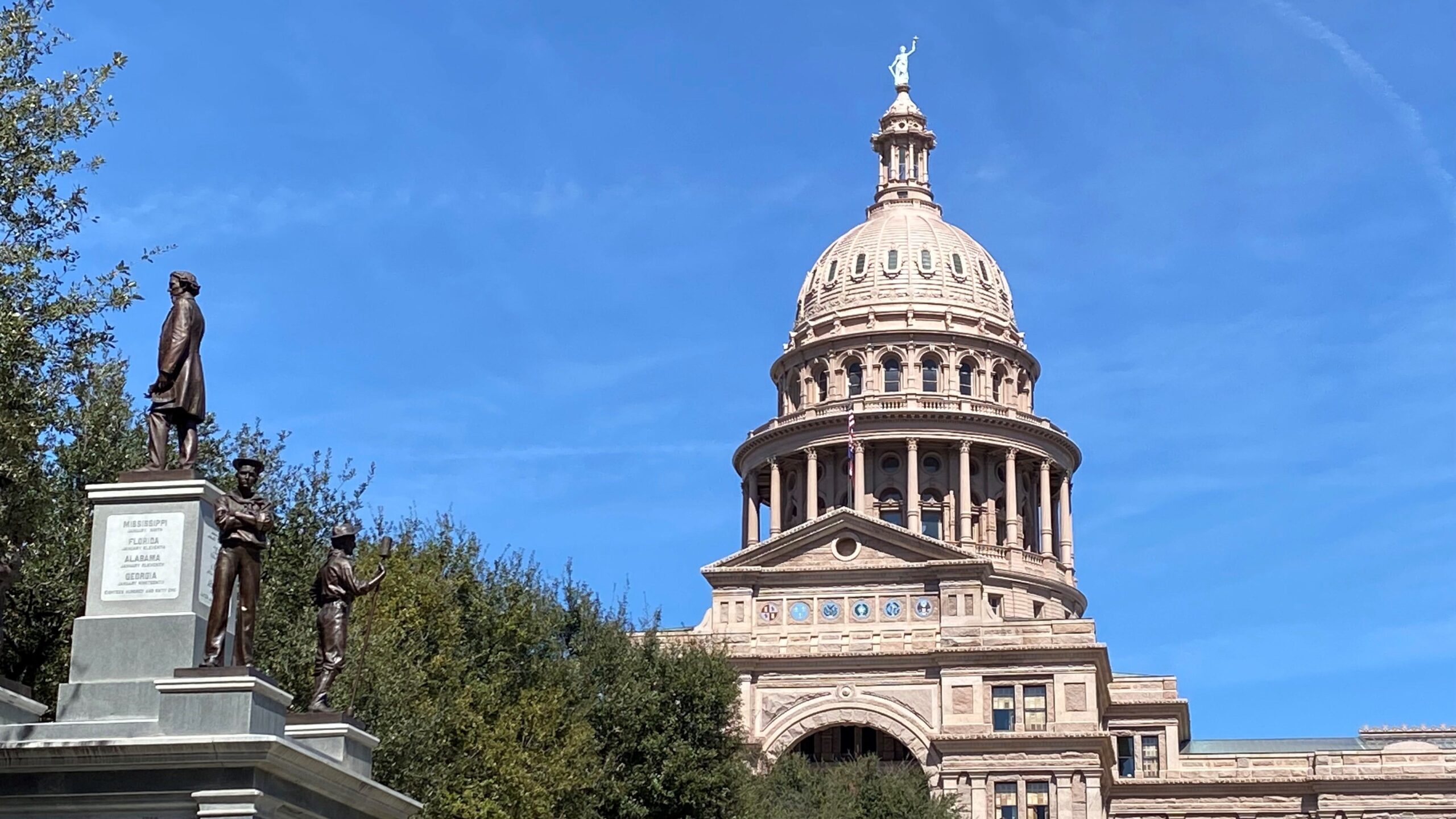
The GOP-controlled state legislature in Texas meets in special session next week, as top Republicans in the red state push to redraw the current congressional maps to reduce the number of districts controlled by already marginalized Democrats.

It’s part of a broader effort by the GOP across the country to keep control of the chamber, and cushion losses elsewhere in the country, as the party in power traditionally faces political headwinds and loses seats.

And President Donald Trump is aiming to prevent what happened during his first term, when Democrats stormed back to grab the House majority in the 2018 midterms.

Advertisement

RNC CHAIR SAYS ‘BIG BEAUTIFUL BILL’ KEY PART OF MIDTERM MESSAGING

President Donald Trump, with White House press secretary Karoline Leavitt, speaks to the media as he leaves the White House, Tuesday, July 15, 2025. (AP Photo/Manuel Balce Ceneta)

“Texas will be the biggest one,” the president told reporters earlier this week, as he predicted the number of GOP-friendly seats that could be added through redistricting in the Lone Star State. “Just a simple redrawing, we pick up five seats.”

Hours earlier, Trump held a call with Texas’ Republican congressional delegation and sources confirmed to Fox News that the president told the lawmakers that he was aiming to redraw the maps to create five new winnable seats.

‘BIG BEAUTIFUL BILL’ IMMEDIATELY HITS CAMPAIGN TRAIL IN MIDTERMS BATTLE 

Advertisement

Democrats control just 12 of the state’s 38 congressional districts, with a blue-leaning seat vacant after the death in March of Rep. Sylvester Turner.

The idea is to relocate Democratic voters from competitive seats into nearby GOP-leaning districts, and move Republican voters into neighboring districts the Democrats currently control.

Republican Gov. Greg Abbott of Texas called for a special session of his state’s GOP-dominated legislature to draw new congressional maps. (Fox News – Paul Steinhauser)

Gov. Greg Abbott and Lt. Gov. Dan Patrick, both conservative Republicans and Trump allies, said they needed to redistrict because of constitutional concerns raised by the Justice Department over a handful of minority-dominated districts. 

But the move is potentially risky.

Advertisement

“There is some risk of making safe Republican seats more competitive, and I think that the incumbents are certainly worried about that,” veteran Texas-based Republican strategist Brendan Steinhauser told Fox News. “If you talk to Republican members of Congress, they’re going to be worried about their own seats. They don’t want to be in a seat that’s more competitive.”

Steinhauser noted “that’s the tradeoff for Republicans, if you want to grow the majority.”

But he added that “the people drawing the maps… they don’t want to make any seat too competitive because that will defeat the purpose.”

Redistricting typically takes place at the start of each decade, based on the latest U.S. Census data. Mid-decade redistricting is uncommon – but not without precedent.

Democrats are slamming Trump and Texas Republicans for what they describe as a power grab, and vowing to take legal action to prevent any shift in the current congressional maps.

Advertisement

The Texas state Capitol in Austin, Texas. The GOP-controlled state legislature meets in special session next week, as top Republicans push to redraw the congressional maps. (Fox News – Paul Steinhauser)

“Democrats are going to push back aggressively because it’s the right thing to do,” House Minority Leader Hakeem Jeffries, D-N.Y., told reporters this week.

Democrats in blue-dominated states are now considering similar tactics.

“Two can play this game,” California Gov. Gavin Newsom wrote on social media this week.

COURT SIDETRACKS REDISTRICTING FIGHT IN KEY BATTLEGROUND STATE

Advertisement

The next day, after a meeting, Democrats in California’s congressional delegation said they were on board with an ambitious plan to try and gain at least five seats through redistricting. Democrats currently control 43 of the Golden State’s 52 congressional districts.

But it won’t be easy to enact the change, because in California, congressional maps are drawn by an independent commission that is not supposed to let partisanship influence their work.

Democratic Gov. Gavin Newsom of California is floating a move to redraw the congressional maps in his blue state, to blunt a push by President Donald Trump and Texas Republicans to redistrict up to five House Democrats out of power in Texas. (Fox News – Paul Steinhauser)

Newsom this week suggested that the state’s Democratic-controlled legislature move forward with a mid-decade redrawing of the maps, arguing that it might not be forbidden by the 17-year-old ballot initiative that created the independent commission.

The governor also proposed quickly holding a special election to repeal the commission ahead of the 2026 midterm elections.

Advertisement

Both plans are considered long shots, as they would face plenty of legislative, legal and financial hurdles.

Democrats are also hoping to alter congressional maps in battleground Wisconsin, but the new liberal majority on the state Supreme Court recently declined to hear the case. Democrats and their allies are now in the midst of a second legal push for redistricting in Wisconsin.

Democrats have also filed redistricting litigation in Utah and Florida, which are both red states.

Meanwhile, Ohio is required by law to redistrict this year, and a redrawing of the maps in the red-leaning state could provide the GOP with up to three more congressional seats.

Advertisement

Read the full article from Here

San Francisco, CA

‘It was a scene from the Titanic’: Fishermen recall rescuing passengers from sinking boat in SF Bay

Published

on

‘It was a scene from the Titanic’: Fishermen recall rescuing passengers from sinking boat in SF Bay


SAN FRANCISCO (KGO) — Two commercial fishermen described the desperate rescue efforts they undertook after a three-level vessel sank in San Francisco Bay with 20 people on board, leaving several people trapped and others struggling in the water.

Mike Montoya and Justin Marceline said they had not planned to be on the water Tuesday but made a last-minute decision to go fishing.

While out on the bay, they noticed what they described as smoke or steam about two miles away and headed toward it. When they arrived, they found a vessel rapidly sinking and passengers fighting to survive.

“Moments of chaos” unfolded as people jumped into the freezing water, clung to the side of the boat and yelled for help, according to the fishermen.

Advertisement

“She didn’t have a lifejacket, and she was flailing, and I grabbed her by the arm and pulled her up. The imagine is etched in my mind. She had bright blue eyes and she looked up at me and said help, and I was like, ‘You look like my mom. I’m not going to let you go. I promise you.’ She told me she didn’t want to die, and I told her ‘I’m not going to let you die,’” Marceline said.

Crews will suspend search for 3 missing in deadly SF Bay boat sinking Wednesday evening

Montoya and Marceline said they were the first to arrive at the scene and rescued eight or nine people from the water before first responders reached the area.

“The boat was already sinking. It was about halfway in the water. I say they were on their knees in the second deck in the gally. Within a minute they were up to their shoulders,” Marceline said.

Montoya said getting close enough to rescue victims was difficult because of the debris scattered across the water.

Advertisement

“Yes, there was so much debris on the water and people and stuff everywhere. I couldn’t tell what was a person and what wasn’t, and I was maneuvering the boat in and out, and we would grab a person and back up and see who the next person to grab was,” Montoya said.

Within minutes, they said, first responders from across the Bay Area arrived with divers and rescue crews, joining the effort to save those on board. But both men said the most haunting images were of people they could not reach in time.

“There was one window open and when we pulled on the scene, Mike said, ‘There are people in there banging. The window — break the window!’ and like I said, there were mostly older people, and they couldn’t break the window. It was a helpless feeling,” Marceline said.

“Can’t even imagine. We were throwing weights at the window and handed a guy a weight here break the window or kick the window and he looked at us like, ‘I’m exhausted. Can’t do anything,’” Montoya said.

Marceline compared the scene to a maritime disaster.

Advertisement

“It was a scene from the Titanic in real life. Like people banging on the window trying to get out. It’s probably something I will never forget,” he said.

Sudden immersion in water under 60 degrees Fahrenheit (15 degrees Celsius) can lead to cold water shock, a condition where people lose dexterity in minutes. That can be dangerous or deadly when trying to escape a sinking watercraft.

As of Wednesday, dive teams continued searching for three people who remained missing following the sinking.

U.S. Coast Guard crews combed cold, choppy waters in and around San Francisco Bay on Wednesday for the three people missing nearly a day after the boat capsized with 20 family members and friends aboard to scatter the ashes of a loved one.

Ralph Boisa said his extended family and a few close friends were on his younger brother’s boat Tuesday afternoon to celebrate the life of his daughter who died at age 33 in 2016 and loved to surf.

Advertisement

His older brother, Clifford, died shortly after being pulled out of the water. Sixteen others were rescued as the cabin cruiser took on water, listed heavily to one side and rolled over before sinking. Clifford’s dog also died.

The three people missing are his sister Carol, Clifford’s wife Jackie, and his daughter’s friend, he said.

“We’ve gone through a lot of tragedy over the years,” said Boisa, who lost his other daughter in 1995. He lives in Washington and couldn’t make it for the excursion.

The Associated Press contributed to this report.

Copyright © 2026 KGO-TV. All Rights Reserved.

Advertisement


Source link

Continue Reading

Denver, CO

RTD considers ending Denver’s 16th Street FreeRide shuttle due to budget issues

Published

on

RTD considers ending Denver’s 16th Street FreeRide shuttle due to budget issues


Downtown Denver’s 16th Street FreeRide service is a staple. In fact, more than 2 million people hop on every year. Now, the service could be in jeopardy as RTD tries to figure out ways to fix its $200 million budget deficit. 

“The demand for the FreeRide is at the highest level it’s been since the pandemic, and it’s the cheapest service that we run in terms of per passenger cost,” RTD board member Chris Nicholson said. 

Advertisement

CBS


Nicholson was shocked when staff made budget suggestions that would end the FreeRide service, one of the highest ridership lines in the system. 

Not to mention, 70% of RTD’s budget comes from sales tax, and downtown Denver is one of the biggest economic engines in the district.

“We are so caught up in the conversation about cuts across the entire region that that opportunity for conversation with the downtown community really didn’t get the chance to happen, and a lot of people were surprised to see that in there,” Nicholson added.

For him, the proposal is personal. Nicholson says he uses the service daily. 

Advertisement

“When I need to go up to Union Station, when I need to go to meet somebody for coffee, when I need to get groceries,” Nicholson said. 

CBS Colorado took a trip using FreeRide to hear from passengers. 

“Gone out drinking, out eating, back and forth from the hotels,” said one passenger visiting downtown for a work conference. “So yeah, it’s been useful for that.”

While some riders use it for leisure, others say they depend on it. 

“I use it for transportation to Union Station to get to and from doctor’s appointments to and from work is actually one of the reasons why I chose to live downtown,” downtown resident Jovelle Brown said. 

Advertisement

And with millions of riders, the numbers speak for themselves.

“I’ll be at City Hall fighting against the proposal,” Brown added.

“We need to look at this from the perspective of the communities we operate in, and I think that those communities made their voices heard on this one,” Nicholson said. 

A spokesperson for Mayor Mike Johnston’s office told CBS Colorado, “We are deeply sympathetic to RTD’s budget situation, but cutting a popular service used hundreds of thousands of times a month and millions of times a year isn’t the answer. As RTD itself noted recently, the 16th Street FreeRide is vital to supporting downtown and fills a crucial need in helping people navigate between Civic Center Station and Union Station at no cost. It’s the kind of thing we need more of if we want people to use public transportation, not less. 

“We know RTD shares in our affection for this service as well as our belief that Denverites and visitors alike deserve cost-efficient and safe public transportation, and we look forward to working together as this process unfolds.”

Advertisement


Source link

Advertisement
Continue Reading

Seattle, WA

Trump immediately fires the new court-appointed top prosecutor in Seattle | CNN Politics

Published

on

Trump immediately fires the new court-appointed top prosecutor in Seattle | CNN Politics


SeattleAP — 

President Donald Trump fired the new top US prosecutor in Seattle on Wednesday less than an hour after the attorney was unanimously appointed by the federal judges in the district, highlighting tensions between the courts and the president over the powerful positions.

Roger Rogoff, a former judge and veteran state and federal prosecutor, was sworn in as US attorney before 8 a.m. at the courthouse in downtown Seattle. In a phone interview, he said he then went to the US Attorney’s Office and asked to meet with Charles Neil Floyd, whose 120-day interim term in the position ended in February.

As he waited in a lobby, Rogoff said, he received an email from the Trump administration informing him he’d been removed. He is consulting with other lawyers about suing over his firing, he said.

Advertisement

Presidents normally appoint US attorneys, the top federal prosecutor in each judicial district. The positions require Senate confirmation, except in temporary appointments. When temporary appointments expire before a nominee is confirmed, the judges in a judicial district can name a US attorney.

But under Trump, the Justice Department has sought to leave unconfirmed prosecutors in their positions indefinitely, often through novel personnel maneuvers.

“District court judges can appoint a temporary U.S. Attorney, and POTUS can fire them,” Acting US Attorney General Todd Blanche said in a social media post Wednesday. He added that the judges who appointed Rogoff “abandoned the time-honored process of consultation with the administration so that the selected U.S. Attorney is qualified to serve in the administration.”

Trump named Floyd, who previously served as an immigration judge, interim US attorney last October but never forwarded his nomination to the Senate. When Floyd’s time as interim US attorney expired, Trump simply shifted his title, a tactic the administration has also tried in other federal judicial districts: It named him first assistant US attorney, while leaving the top post empty.

In May, a US appeals court panel expressed skepticism that the maneuver was legal. The federal judges in the city decided to take applications for the position, and it appointed a bipartisan panel to review the applications.

Advertisement

On Wednesday morning the court — comprising 17 active and senior judges appointed by five presidents — issued its unanimous order naming Rogoff the US attorney for western Washington.

Democratic Washington Sen. Patty Murray, who had opposed Floyd for the US attorney job, blasted Rogoff’s quick firing.

“Throughout his career, he has demonstrated an outstanding commitment to public service, and he was appointed legally by the federal judges in the Western District of Washington,” the senator said in a written statement. “This administration doesn’t want to deal with advice and consent—they just want to install cronies to carry out a corrupt political agenda.”

In December, Alina Habba resigned as the top federal prosecutor for New Jersey after an appeals court said she had been serving in the post unlawfully.

Lindsey Halligan, who pursued indictments against a pair of Trump’s adversaries, left her position as an acting US attorney in Virginia after a judge concluded her appointment was unlawful and that indictments she brought against James and former FBI Director James Comey must be dismissed.

Advertisement

The judges there named James Hundley, who had handled criminal and civil cases for more than 30 years, but the administration fired him. It also fired a court-appointed US attorney in northern New York.

Rogoff, who spent 20 years as a state prosecutor and six as a federal prosecutor before becoming a state judge, said he knew the administration might fire him immediately. But he said he had no qualms about the potential conflict he was walking into. Being US attorney is “the best job there is” for a prosecutor, he said.

“I’m really proud of my career,” Rogoff said. “The fact that the judges of this district — most of whom I’ve spent my career appearing in front of, or trying cases against, or working with — believed that I was the right person to do this work is just really humbling and amazing.”


Source link

Advertisement
Continue Reading
Advertisement

Trending
