West
These new government contracting rules will put parents, caregivers, seniors out of work

NEWYou can now listen to Fox News articles!
Studying how government regulations affect women’s employment is a priority of the organization that I run, Independent Women’s Forum. Now, rather than reviewing data and economic reports, we have become a case study of how ill-advised policies hurt women.
We are working with human resources consultants and lawyers to address this topic from an unfortunate angle: How many women will we have to let go when the new Department of Labor independent contracting rule takes effect?
Guidance from the Society of Human Research Management encapsulates the challenge: “The most basic question about the employment relationship is whether a worker is, in fact, an employee or an independent contractor. As with so many employment law issues, the answer is “it depends.”
The new Department of Labor regulations are meant to reduce the number of contractor relationships and push more people into working as traditional employees. (Getty)
It depends not only on the particulars of the work relationship, but on which government entity is asking the question, since “even courts have admitted that the distinction is not always clear.”
BIDEN ADMIN’S GIG WORKER RULE FACING GROWING PUSHBACK
The legal distinctions aren’t clear, but what is clear is that the new Department of Labor regulations are meant to reduce the number of contractor relationships and push more people into working as traditional employees.
With an estimated 25% to 35% of workers involved in some way in the “gig economy,” this means that this new law will have an enormous impact on all of us – as workers, employers and consumers.
The new Department of Labor regulations require employers to consider six factors to determine who can be a contractor: the employer’s level of control over how the work is done; the worker’s opportunity for profit or loss; the level of skill required; how long the relationship will last; the worker’s investment in equipment or materials; and how integral the work is to the employer’s core business.
The legal guidance is to err on the side of caution, which means that contracting should be allowed only if the employee meets every test and requirement. What does this all mean in practice for an employer like me?
BIDEN ADMIN SPREADING CALIFORNIA’S WAR ON GIG WORKERS TO REST OF COUNTRY
Currently, Independent Women’s Forum (IWF) engages more than 20 independent contractors. Some are policy experts who cover issues for us with occasional writing; others help with fundraising and accounting services; and others are high-impact consultants who help us implement major new projects.
Who can I keep and who must I let go? Like most other nonprofits, IWF cannot afford to offer every current contractor a full-time position. In fact, we will have to let most go if that is our only choice.
Yet more importantly, most of our contractors do not want a full-time job with us, or with any other employer. Sadly, this is a factor that the Department of Labor doesn’t seem interested in at all.
Most independent contractors value their independence and ability to control their schedules. They don’t want to depend on one employer, but would rather have a variety of relationships so they never risk being unemployed.
CONGRESS GEARS UP FOR BIPARTISAN CHALLENGE TO BIDEN LABOR POLICY
Many independent contractors we have engaged quit full-time positions to become caregivers. They sought opportunities like what we offer to stay engaged in their fields, have an intellectual outlet, and enjoy camaraderie with colleagues, while contributing to the family finances.
They don’t want the pressure of short-term deadlines and in-person meetings; they don’t want to have to track time and explain about sick kids or field trips.
Can we continue to offer these work relationships? Maybe, although the guidance that contractors cannot “perform similar work of employees” makes it fraught.
Certainly it seems prudent for us now to offer contractors only short-term contracts. I’m advised to not “issue business cards;” “pay expense;” offer “continued education training;” or even, “invite or permit contractors to attend company parties or special events intended for employees.”
CLICK HERE FOR MORE FOX NEWS OPINION
That’s a real loss of collaboration, productivity, and expansion of our influence. It also seems simply mean when so many workers, especially those balancing caregiving and careers, crave the community and validation of an association.
Businesses across the country are reviewing their own contracts just like we are. They are talking to lawyers who will invariably urge caution, which means eliminating work opportunities for contractors.
We saw the results when California adopted strict rules (AB5) for contracting in 2019. According to a study by the Mercatus Institute, self-employment fell by 10.5% in affected occupations, and overall employment in those sectors fell by 4.4%.
Why is the Department of Labor making it so hard for employers to offer truly flexible working opportunities? Why do they ignore how many people – not just parents of young kids, but also caregivers to the elderly, those approaching retirement, the disabled, people with health issues, and students – want nontraditional work opportunities and will drop out of the workforce rather than be forced into traditional employment?
Like so many of the other questions generated by these onerous new rules, these don’t have good answers.
CARRIE LUKAS
Read the full article from Here

West
Newsom staffer who told California reporter to ‘f— off’ is raking in massive taxpayer-funded salary
NEWYou can now listen to Fox News articles!
Isaac “Izzy” Gardon, the communications director for Gov. Gavin Newsom who made headlines earlier this week for telling a national reporter to “f— off” after she pressed him on the California governor’s reported dyslexia diagnosis, is raking in a hefty six-figure salary, a Fox News Digital review found.
While Newsom’s dyslexia diagnosis has been public for decades, interest in the matter was amplified amid the California governor’s book tour he launched this month. During one of his first stops on the tour, in Atlanta, Newsom was asked about his dyslexia in conversation with Democratic Mayor of Atlanta Andre Dickens, who asked what he hoped readers would take away from the discussion about his diagnosis in the governor’s new book.
“I’m like you. I’m no better than you. You know, I’m a 960 SAT guy,” Newsom said in response, garnering criticism online that he was pandering to the Black community.
Amid the rebukes from MAGA world and Republicans, Real Clear Politics (RCP) national correspondent Susan Crabtree reached out to Gardon for verification on his childhood disability diagnosis. In response, Gardon told her to “respectfully, f— off.”
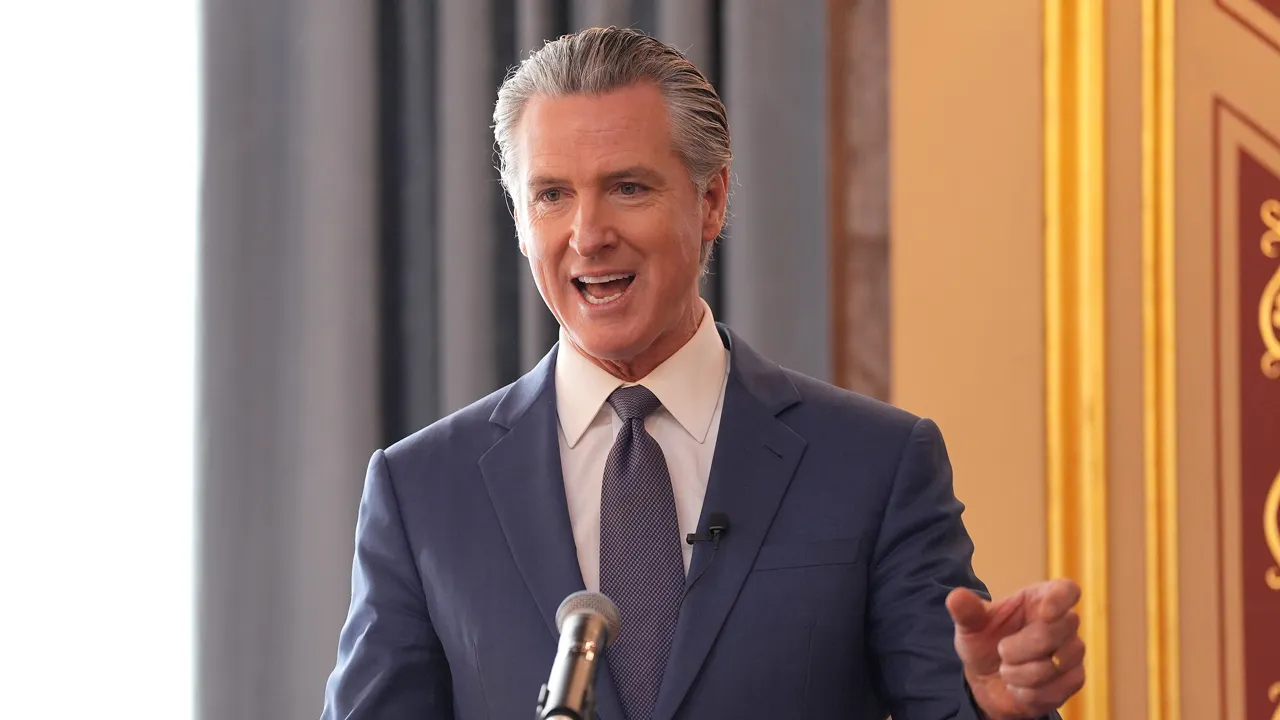
Democratic Party Governor of California, Gavin Newsom, holds up his new memoir during a book tour event in South Carolina earlier this month. (Peter Zay/Anadolu via Getty Images)
The testy response led to further criticism targeting Newsom’s office and Gardon, including from RCP’s Carl Cannon, who questioned why people who are offended so deeply by Trump “consistently imitate his worst behavior.” Newsom’s press office has been known to meet the White House’s pointed and often hostile social media posts targeting Democrats, which frequently include AI generated images, with similarly hostile social media posts targeting Trump and Republicans.
When reached for comment on this story, Gardon told Fox News Digital that “Susan is not a journalist.”
“She’s a MAGA blogger who writes about conspiracy theories,” Gardon added.
Transparent California, a statewide public pay and pension database, revealed that Gardon is being paid quite handsomely to be one of Newsom’s most ardent defenders online. Gardon has risen in stature from an administrative assistant making around $30,000 per year in 2019, to earning $212,154.02 in 2024 as a senior assistant and communications director in Newsom’s office.
NEWSOM BLASTED BY CA GOP CHAIR OVER VIRAL CLIP LABELED ‘RACIST’ BY CRITICS: ‘HE SHOULD BE EMBARRASSED’
California Gov. Gavin Newsom (D) seen laughing at an event earlier this month hosted by the South Carolina Democratic Party. (Sean Rayford/Getty Images)
Gardon’s “regular pay” in 2024 was $152,091.05. That was also supplemented by nearly $57,000 in benefits and another $3,141.16 in “other pay,” according to the database, leading to a combined annual payment of $212,154.02. However, his current pay, which does not appear to be publicly available online, is likely to be higher.
Following news of Gardon’s response to Crabtree’s follow-up, a senior reporter for the California Post also shared an email from Gardon in response to one of his media inquiries.
In Gardon’s response, he referred to the New York Post as the “New York Comic Book.” Then, when Koehn followed up, indicating the San Francisco Chronicle was covering the same story, Gardon replied, “I’d put that outlet in the same bucket,” according to Koehn, who posted screenshots of the pair’s back-and-forth on X.
A man is seen holding a copy of California Gov. Gavin Newsom’s new memoir titled “Young Man In A Hurry.” (Sean Rayford/Getty Images)
While some top Newsom staffers have praised Gardon’s style, including his boss and senior advisor of communications, Bob Salladay, who told Politico that “Izzy’s creativity and imagination is part of what the governor is doing.” Some Democratic operatives have vocally been critical about his communication style, including Garry Tan, a prolific Democratic donor and CEO of Y Combinator
“Most unprofessional person to ever work in politics,” Tan posted on X. “Izzy Gardon brings shame to the Newsom campaign.”
In addition to the email, Gardon came under fire earlier this month when he referred to rapper and MAGA activist Nicki Minaj as a “stupid hoe” on X. He defended his social media post by pointing to her 2012 song called, “Stupid Hoe.”
Related Article

Read the full article from Here

Friday, February 27, 2026 9:48PM
SCOTTSDALE, Ariz. — The San Francisco Giants scratched slugger Rafael Devers from the starting lineup because of a tight hamstring, keeping him out of a spring training game against the Los Angeles Dodgers on Friday.
The three-time All-Star and 2018 World Series champion is starting his first full season with the Giants after they acquired him in a trade with the Boston Red Sox last year.
Devers hit 35 home runs and had 109 RBIs last season, playing 90 games with San Francisco and 73 in Boston. He signed a $313.5 million, 10-year contract in 2023 with the Red Sox.
He was 20 when he made his major league debut in Boston nine years ago, and he helped them win the World Series the following year.
Devers, who has 235 career homers and 747 RBIs, led Boston in RBIs for five straight seasons and has finished in the top 20 in voting for AL MVP five times.
Copyright © 2026 ESPN Internet Ventures. All rights reserved.

The University of Denver will close the Ricks Center for Gifted Children next year as enrollment has fallen in recent years, the college announced this week.
The Ricks Center, which serves gifted children as young as 3 years old, will operate for the 2026-27 academic year before closing, according to a letter DU sent parents on Wednesday.
“The University of Denver has made the difficult decision to close the Ricks Center for Gifted Children at the conclusion of the 2026–2027 academic year,” spokesman Jon Stone said in a statement. “This decision reflects long-term operational and financial considerations and is not a reflection of the school’s quality, leadership, or community.”
The center, which is located on DU’s campus, was started in 1984 as the University Center for Gifted Young Children. The program offers classes to students in preschool through eighth grade, according to the website.
The program, along with other public K-12 schools in the state, has experienced declining enrollment in recent years. The center enrolled 142 students for the 2025-26 academic year, which is down from 200 pupils four years ago.
The center will hold a meeting about the pending closure on March 6 for parents.
Get more Colorado news by signing up for our Mile High Roundup email newsletter.

Trump says he is directing federal agencies to cease use of Anthropic technology

Video: Bill Clinton Says He ‘Did Nothing Wrong’ in House Epstein Inquiry

The Best Time To Drink Coffee for Weight Loss and a Faster Metabolism

Video: Prada Peels Back the Layers at Milan Fashion Week

Defense secretary Pete Hegseth designates Anthropic a supply chain risk

Florida High School Football Rankings: Top 25 teams – Oct. 21

Cleary's 21 help Le Moyne down Central Connecticut State 69-64 in OT

How old is Bo Nix? What to know about Oregon quarterback ahead of 2024 NFL Draft

99th annual Pony Swim held in Virginia

Indiana Members Credit Union announced as new anchor tenant at Bottleworks District

ICE blasts Washington mayor over directive restricting immigration enforcement

Did the EU bypass Hungary’s veto on Ukraine’s €90 billion loan?

How the federal government is painting immigrants as criminals on social media

Where Iran’s ballistic missiles can reach — and how close they are to the US

Has India’s influence in Afghanistan grown under the Taliban?
-

 World2 days ago
Exclusive: DeepSeek withholds latest AI model from US chipmakers including Nvidia, sources say
-

 Massachusetts2 days ago
Mother and daughter injured in Taunton house explosion
-

 Montana1 week ago
2026 MHSA Montana Wrestling State Championship Brackets And Results – FloWrestling
-

 Louisiana5 days ago
Wildfire near Gum Swamp Road in Livingston Parish now under control; more than 200 acres burned
-

 Denver, CO2 days ago
10 acres charred, 5 injured in Thornton grass fire, evacuation orders lifted
-

 Technology7 days ago
YouTube TV billing scam emails are hitting inboxes
-

 Technology7 days ago
Stellantis is in a crisis of its own making
-

 Politics7 days ago
OpenAI didn’t contact police despite employees flagging mass shooter’s concerning chatbot interactions: REPORT