West
Supreme Court ruling on secretive California gender policy could reshape parent rights fights nationwide

NEWYou can now listen to Fox News articles!
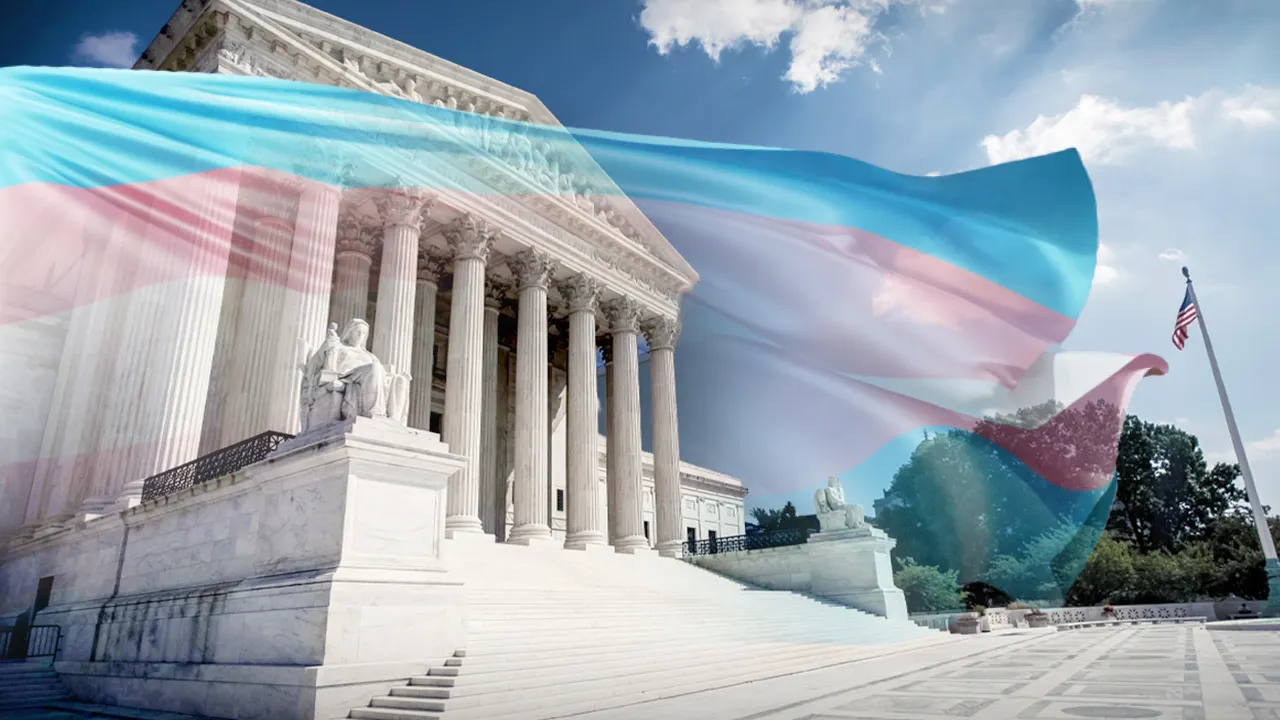
Parental rights advocates celebrated Monday after the Supreme Court temporarily stopped California from blocking school policies requiring parents to be told when their child identifies as transgender.
Corey DeAngelis, a research fellow at the conservative Heritage Foundation, told Fox News Digital the high court’s order, in which the three liberal justices dissented, was a “huge win.” The decision marks the latest in a string of victories for conservatives seeking to tighten policies surrounding transgender people, though DeAngelis noted it only applies to California at this stage.
“Parents in California should be very excited that the law that they have on the books to keep secrets from parents will no longer be in effect,” DeAngelis said, adding, “This precedent is surely a sign of good things to come. If there’s a lawsuit that arises in another state, you can be pretty sure that the Supreme Court is going to rule on the side of families.”
The case, Mirabelli v. Bonta, arose from a lawsuit brought by California parents and teachers who argued that the state’s policy violated their rights under the Fourteenth Amendment and religious freedom rights under the First Amendment. The parents said the policy prevented school administrators from telling them about their child’s potential efforts to engage in gender transitioning unless the child consented to it. The policy also required school staff to use a student’s preferred name and pronouns regardless of the parents’ wishes.
A protester holds a transgender pride flag outside the Supreme Court as it hears arguments in 2026. (Julia Demaree Nikhinson/AP)
After the U.S. Court of Appeals for the 9th Circuit sided with California Attorney General Rob Bonta, an elected Democrat, the parents and teachers appealed to the Supreme Court, and on an expedited and temporary basis, the high court vacated that order while the case proceeds through the lower courts.
“The State argues that its policies advance a compelling interest in student safety and privacy,” the high court wrote in the unsigned order. “But those policies cut out the primary protectors of children’s best interests: their parents.”
California Attorney General Rob Bonta speaks during a news conference. (Justin Sullivan/Getty Images)
Justice Elena Kagan, an Obama appointee, wrote in a dissent that the temporary order was a sign that the Supreme Court’s emergency docket, sometimes known as a shadow docket, continued to “malfunction.”
Attorneys for California argued that balancing the interests of parents and the “needs of transgender students” presented complex questions.
“In this case, the district court entered a sweeping permanent injunction that would require instant, dramatic changes from the status quo,” California attorneys wrote. “Currently, under California’s laws and constitutional provisions on privacy and antidiscrimination, schools may balance parental interests with students’ particular needs and circumstances, such as the risk of harm upon disclosure of the student’s gender identity without student consent.”
DeAngelis said the Supreme Court’s ruling also bolstered the case for school choice, which allows the government to funnel public education funds to schools parents want to send their children to that are not necessarily the designated public school in their neighborhood.
CALIFORNIA SCHOOL DISTRICT LETS STUDENTS CHANGE NAMES AND GENDER IDENTITY IN SECRET FROM PARENTS
Facade of the Supreme Court on Oct. 3, 2024. (Valerie Plesch/picture alliance via Getty Images)
“It would be great if more areas, like California, that are controlled by Democrats had policies like school choice. … You should be able to take your child’s education dollars somewhere else, to a private school that’s more aligned with your values, maybe a charter school,” DeAngelis said.
He added that Monday’s decision was a “wake-up call for school choice policy as well, because parents may be upset about a lot of things in the public schools. Transparency is just the very bare minimum that the public schools in too many places aren’t getting right.”
Carrie Severino, president of the conservative JCN Network, said the 9th Circuit appeared to disregard the Supreme Court’s key ruling last year in Mahmoud v. Taylor, which allowed parents to opt their children out of lessons that involved gender ideology or other sensitive topics based on religious beliefs.
CLICK HERE TO DOWNLOAD THE FOX NEWS APP
“The liberal Ninth Circuit disregarded the Court’s ruling in Mahmoud,” Severino wrote. “Today, the justices reaffirmed the principles of its landmark ruling and said that California’s law substantially interferes with the ‘right of parents to guide the religious development of their children.’”
New York Times columnist David French also agreed with the high court’s decision.
“The idea that a school could withhold such key information about a child from the child’s parents (in the absence of evidence of abuse) was ludicrously unconstitutional from the beginning,” French wrote on X.
Related Article

Read the full article from Here



ANCHORAGE, Alaska (ALASKA BEACON) – University of Alaska staff announced a vote to form a union on Wednesday. The union would represent 2,300 permanent staff across the three universities and a dozen community campuses, Corinne Smith with the Alaska Beacon reports.
Staff voted to form the union Coalition of Alaska University Staff for Equity, or CAUSE, which would be part of the national United Auto Workers union, in a 1,106 to 610 vote, with 64% voting yes.
UA staff that would be represented by the union include student services staff, researchers, fiscal and administrative staff, development staff, science communicators, information systems specialists, library workers, athletics coaches and many others, according to a statement announcing the vote.
“Amid growing uncertainty around state and federal funding for the University, staff cited several reasons for forming a union: consistency and competitiveness in pay and benefits; greater transparency in promotion, career development, and retention; fair workload; and more,” the statement said.
“This is an exciting day for staff at UA,” said Mike DeLue, a researcher with the International Arctic Research Center at the University of Alaska Fairbanks, in the emailed statement.
“We did our research, discussed and debated, and overwhelmingly chose to unionize. As soon as the result is certified, we’re ready to sit down with the University and work constructively on addressing the issues that motivated us to form a union in the first place. Improving our working conditions will help us serve more students, enhance UA’s research capacity, and support Alaska communities,” he said.
The results of the union vote are expected to be certified on April 8, barring any objections or challenges filed by either of the parties, said Jonathon Taylor, director of UA public affairs, by email on Wednesday.
Taylor also cited financial uncertainty as one of the reasons the university opposed the union effort, which he said was communicated to employees ahead of the vote.
“The university opposed unionization because we believed it would reduce flexibility, slow decision-making, and limit our ability to respond to financial uncertainty,” he said. “That position was operational, not ideological.”
“UA respects the outcome and the right of staff to organize,” he said by email. “We’ll be bargaining in good faith with CAUSE-UAW in accordance with Alaska labor law.”
Taylor noted that existing wages and working conditions will remain in place while the contract is negotiated. He said initial contracts take roughly 400 days to negotiate. He said a 3% salary increase the university requested of the Alaska State Legislature in next year’s budget for all unionized and non-union staff will not apply to the new union members since they are in the process of forming the union and have not yet negotiated a new contract.
“Under Alaska labor law and case law, a contract with a bargaining unit must be in place for negotiated raises to be requested and approved by the legislature,” he said. Taylor said the issue was communicated to staff ahead of the union vote.
“Non-represented staff remain eligible for that increase,” he said.
But Charlie Banks, an organizer for the union effort and an academic advisor with the University of Alaska Anchorage, said Thursday that it is the university’s choice, and the new union members should be eligible.
“We believe that the university has the ability to issue the pay increases to us,” she said in a phone interview.
She said support for salary increases is also a show of support for retaining staff, which she says is a common goal of both the union and the university.
“We agree with university admins concerns about difficulties with recruitment and retention. One of the main reasons for this is that Alaska is not keeping up with its peers in maintaining competitive packages for workers,” she said. “Not surprisingly, our peer institutions that have staff unions have much stronger recruitment tools because their contracts are responsive to their needs.”
The new staff union follows the 2024 unionization of UA graduate workers to form the Alaska Graduate Workers Association within the United Auto Workers Local 1907. The union represents graduate teaching assistants, researchers and fellows. They bargained their first three-year contract within 96 days, which secured higher pay, an updated grievance process and a change from at-will to just-cause employment, according to reporting from the student-run newspaper The Northern Light.
The new staff union joins the national UAW union, which includes approximately 120,000 higher education workers across the country, including staff at the University of Washington and University of California.
This story has been republished with permission from the Alaska Beacon.
See a spelling or grammar error? Report it to web@ktuu.com
Copyright 2026 KTUU. All rights reserved.

The weather in Tucson has gotten warmer, and the days are getting longer, meaning one thing: football season has returned to the delight of Arizona fans everywhere.
Spring football practice began a little over a week ago, and the Wildcats are looking to build off of an impressive season that saw them go 9-4, finish as the 21st-ranked team in the NCAA, and earn an appearance in the Trust & Will Holiday Bowl.
Although it is just spring practice and full pads haven’t been worn yet, Arizona is looking like a strong team, and as teammates continue to gel over the months, it will only get better.
The running back position group is greatly benefiting from having four returning players and a new coach in Lyle Moevao, who is already familiar with the Wildcats and how head coach Brent Brennan and offensive coordinator Seth Doege like to run things.
Quincy Craig was a part of a three-running back committee that had all the makings of an elite-level backfield. Now that Ismail Mahdi is gone and preparing for the NFL Draft, he and Kedrick Reescano are the team’s veterans and will see a lot more carries throughout the season.
Craig’s Initial Growing Pains in First Year With Arizona
In his first season with the Wildcats, Craig established himself as an all-purpose back who can scorch a defense, both on the ground and through the air. The 5-foot-10, 195-pound Sacramento State missed just one game and racked up 364 yards on 65 carries (5.6 yards) while also snagging 14 receptions for 114 yards,
Although transferring to a new team and getting acclimated to another offense may seem like a huge burden, Craig actually got used to it quickly, and it showed on the field. Now that he is in his second year, he is fully used to the ‘RedLine’ ways and credits the coaching staff and players for the smooth transition.
“I think the coaching staff does a really good job at keeping everybody together, and the team also does a good job at accepting everybody,” Craig said. “I actually do think that we have the potential to be another really close team, and I think that’s going to benefit us in the fall.”
Craig Taking Time To Get Back to Full Health
The 2025 season took a toll on Craig’s body. An undisclosed injury even sidelined him in Arizona’s week 11 game against Baylor. Craig is listed as limited in spring practice, meaning he is taking all the necessary steps to rehab any lingering injuries so he will be 100% by the time summer camp rolls around.
“It’s definitely been a grind,” Craig said. “We each have our ups and downs, and I think this is something to where, how can we be of value for the team through our own injury or through our own circumstances right now?”
Craig Accepting Leadership Role
Now that Craig is considered one of the veterans of the running back room, Moevao challenged him and Reecano to take on more of a leadership role with the second-year players Wesley Yarbrough and Cornelius Warren.
Craig feels that the coaches have done an exceptional job in letting him speak and share advice with the younger players, which allows him to be a role model on the field.
“I think our coaching staff does a really good job at letting us have the opportunity to talk and speak out about it,” Craig said. “I’m definitely taking this role of trying to, ‘how can I be of value?’ That’s the main thing that I’m really trying to step up… As of right now, it’s me trying to vocalize and become more of a leader into the situation. Just trying to take it day by day.”
Arizona’s spring practice will run through April 22, giving Craig about a month to fully rehab any lingering injuries. Until then, he will continue to be a vocal leader and help the running back room improve.

LOS ANGELES — The U.S. Department of Justice on Thursday announced what they called a major health care fraud takedown throughout Southern California, which included the arrest of doctors and nurses.
First Assistant U.S. Attorney Bill Essayli was joined during a press conference by several law enforcement agencies including the FBI, and Dr. Mehmet Oz, head of the Centers for Medicare and Medicaid Services.
They said they served a series of search and arrest warrants throughout the region, from Covina to Lakewood in Los Angeles County. Eight people were arrested and more than a dozen are being charged for suspected health fraud.
They also mentioned fraudulent hospice care.
“These defendants recruited beneficiaries who were not terminally ill, and paid them to pose as patients receiving hospice care. Medicare then paid millions of dollars – hundreds of millions of dollars – on false and fraudulent claims submitted by fraudsters,” said Essayli.
Among those arrested were a Covina couple. Prosecutors said 66-year-old psychologist Gladwin Gill and his wife, Amelou Gill, a registered nurse, operated a fraudulent hospice business out of Glendale.
“This particular hospice submitted more than $5.2 million in fraudulent claims, and Medicare actually paid out more than $4 million,” Essayli said.
Gill’s attorney told our sister station, ABC7 Eyewitness News in Los Angeles, he denies the allegations and looks forward to his day in court.
Oz announced a broader review of hospice providers in the state.
“We’re going to review every single hospice in California to make sure that they’re all appropriate, and we hope to do that expeditiously. We’ll do it this year,” Oz said.
During the news conference, federal authorities were questioned about a video California Gov. Gavin Newsom said in January his office was reviewing. In that video, Oz, who is Turkish American, was shown standing in front of an Armenian-owned bakery in Van Nuys while alleging widespread fraud in the area.
Essayli confirmed that none of the defendants named Thursday were connected to that video. Oz responded to outcry that his accusations, which the business owner denounced as false, were discriminatory.
“I was stating the facts as they’ve been explained to me, and we have a lot of evidence of where the fraud is, just looking at the numbers,” Oz said.
Oz did not provide any evidence against a specific business in connection to that video. He suggested that half of Los Angeles County hospice care facilities are fraudulent, pointing to survival percentages as evidence.
“World experts at CMS say if you’ve got 100% or near survival, certainly if you’ve got a survival over 50% for population that’s supposed to have passed in six months, you’ve got a problem,” he said.
Newsom responded to accusations that California had not done enough to address hospice fraud, saying in part, “The Trump Administration – home to the biggest fraudsters on Earth – is trying to blame California for issues with THEIR federal programs.”
His press office said the state has taken action for years, including suspending more than 280 licenses and banning new ones.
Copyright © 2026 KABC Television, LLC. All rights reserved.

Milwaukee Bucks games won’t be on TV in the same place next season

Man shot at Atlanta convenience store overnight, police say

Minneapolis proposes honoring fallen officer Jamal Mitchell with street naming

HBCU All-Star Game celebrates sports and civil rights in Indianapolis

Ex-Steelers QB Fires Back at Adam Schefter Over Aaron Rodgers Rumor

Florida High School Football Rankings: Top 25 teams – Oct. 21

How old is Bo Nix? What to know about Oregon quarterback ahead of 2024 NFL Draft

Cleary's 21 help Le Moyne down Central Connecticut State 69-64 in OT

99th annual Pony Swim held in Virginia

Indiana Members Credit Union announced as new anchor tenant at Bottleworks District

Video: Trump Struck Iran. Now Farmers Are Paying the Price.

What B-52 bombers bring to Iran fight — and what it means for the war now

Podcast: Hungary elects: what is at stake and who is likely to win?

ICE detention deaths are on a record pace. One Texas facility bears the brunt

GOP rails against ‘s— sandwich’ deal as all eyes turn to House to end DHS shutdown
-

 Culture1 week ago
Wil Wheaton Discusses ‘Stand By Me’ and Narrating ‘The Body’ Audiobook
-

 South-Carolina5 days ago
South Carolina vs TCU predictions for Elite Eight game in March Madness
-

 Miami, FL1 week ago
Jannik Sinner’s Girlfriend Laila Hasanovic Stuns in Ab-Revealing Post Amid Miami Open
-

 Culture1 week ago
What Happens When We Die? This Wallace Stevens Poem Has Thoughts.
-

 Minneapolis, MN1 week ago
Boy who shielded classmate during school shooting receives Medal of Honor
-

 Vermont5 days ago
Skier dies after fall at Sugarbush Resort
-

 Education1 week ago
Video: Transgender Athletes Barred From Women’s Olympic Events
-

 Politics5 days ago
Trump’s Ballroom Design Has Barely Been Scrutinized