West
Strange laws in Nevada, including ones preventing state lotteries and swearing on the Strip

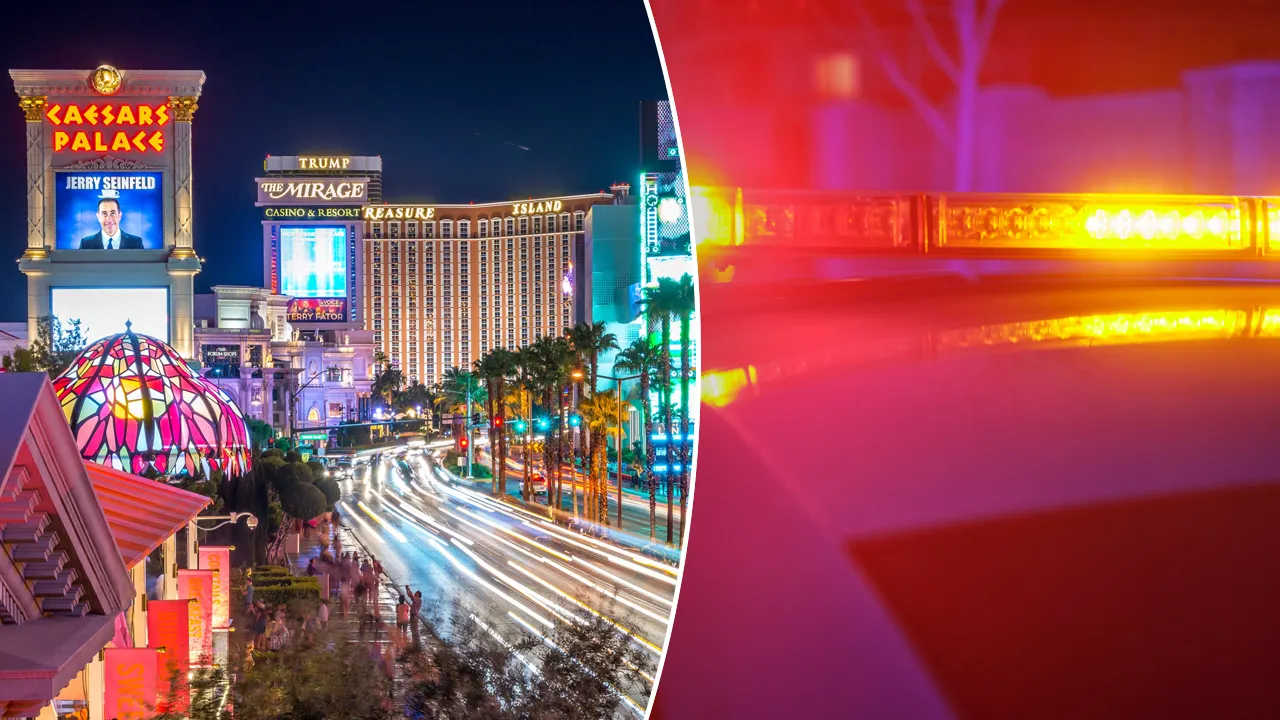
Every state has perplexing laws on the books, including Nevada.
With the world-renowned casinos and hotels of the Las Vegas Strip, it comes as no surprise that some of the state’s strangest laws revolve around gambling.
Read on about unusual laws in the Silver State.
Nevada’s strangest laws include bans on hula-hooping and state lotteries. (iStock)
STRANGE LAWS IN NEW MEXICO, INCLUDING TROUBLE FOR TRIPPING A HORSE
- No state lotteries
- Prohibited to pawn property from someone intoxicated
- Avoid swearing on the strip
- You can’t hula hoop on Fremont Street
- Rules of the road for funeral processions
1. No state lotteries
There are five states that don’t participate in state lotteries, and Nevada is one of them.
The other states that don’t take part in the drawings are Alabama, Alaska, Hawaii and Utah.
While you won’t be able to buy Powerball or Mega Millions tickets in Nevada, there are plenty of other ways to gamble in the Silver State.
Nevada may not have state lotteries, but there are plenty of other ways to test your luck. (iStock)
WEIRD LAWS IN MASSACHUSETTS INCLUDING A $20 FINE, POSSIBLE JAIL TIME FOR FRIGHTENING A PIGEON
2. Prohibited to pawn property from someone intoxicated
Nevada is home to many pawn shops, with plenty of rules and regulations regarding sales.
One law regards buying property from someone who is under the influence.
According to Nevada Statute § 646.060, “a pawnbroker, and a clerk, agent or employee of a pawnbroker” cannot receive “property from a person under the age of 18 years, common drunkard, habitual user of controlled substances, habitual criminal, habitual felon, habitually fraudulent felon, person in an intoxicated condition, known thief or receiver of stolen property, or known associate of a thief or receiver of stolen property, whether the person is acting in his or her own behalf or as the agent of another.”
Those who break this law are guilty of a misdemeanor.
3. Avoid swearing on the Strip
The Las Vegas Strip is full of delectable dining, plentiful shops, world-renowned entertainment, lavish hotels and casinos, and sometimes, foul language.
City municipal ordinance 10.40.030 covers swearing while in the area.
“The use of profane, vile or obscene language or words upon the public streets, alleys, or highway of the City is prohibited,” according to the law.
Las Vegas technically has a law against swearing, though it is not one that’s enforced. (Joe Sohm/Visions of America/Universal Images Group via Getty Images)
WEIRD LAWS IN COLORADO, INCLUDING ONE AGAINST THROWING SNOWBALLS
If you do let a swear slip on the Strip, don’t worry. This law is not commonly enforced.
4. You can’t hula-hoop on Fremont Street
On the historic Fremont Street in Las Vegas, there is plenty to do to keep you entertained late into the night, and also restrictions that may surprise you.
Don’t expect a hula-hooping contest on Fremont Street, as the recreational activity is one of many banned in the area.
“The use of unicycles, bicycles and other types of cycles, skateboards, roller skates, in-line skates, hula hoops larger than four feet in diameter, and shopping carts, except as authorized by The Fremont Street Experience Limited Liability Company in connection with special events and mall entertainment,” according to Section 11.68.100 the Las Vegas Code of Ordinances.
Hula-hooping is one of the many recreational activities not allowed by law on Fremont Street. (iStock)
5. Rules of the road for funeral processions
Nevada has a detailed section in state law regarding funeral processions.
The “Rules of the Road” section of the state’s law covers rights that are granted to an individual driving an emergency vehicle, leading a funeral procession or driving a regulatory agency vehicle.
Included in this law is the right to run red lights after slowing down when necessary and exceeding the posted speed by 15 mph “to overtake the procession and direct traffic at the next intersection.”
Additionally, those leading funeral processions or driving vehicles mentioned above can “disregard regulations governing direction of movement or turning in specified directions. The driver of a vehicle escorting a funeral procession may direct the movements of the vehicles in the procession in a similar manner and may direct the movements of other vehicles.”
Read the full article from Here

San Francisco, CA
Discovery Bay driver arrested for San Francisco fatal vehicle collision | Contra Costa Herald

Killed pedestrian, struck 3 more people
By San Francisco Police Department
On May 25, 2026, at approximately 12:13 am, San Francisco Police officers responded to the area of 16th and Mission Streets regarding a vehicle collision.
Officers were advised that a collision occurred between a vehicle and a pedestrian.
Officers arrived on scene and located a pedestrian victim being treated by paramedics for life threatening injuries. Paramedics transported the victim to a local hospital.
Despite lifesaving efforts of medical staff, the victim was later declared deceased at the hospital.
A preliminary investigation revealed that a vehicle collided with a pedestrian and struck three additional victims.
The three victims were medically assessed on scene for non-life-threatening injuries.
Through the course of the investigation, officers located the suspect vehicle and detained the occupant of the vehicle.
The Traffic Collision Investigations Unit (TCIU) responded to scene and conducted their investigation.
Through the course of the investigation, TCIU investigators developed probable cause to arrest the driver identified as 57-year-old Samuel Powell of Discovery Bay on June 30, 2026.
Powell was arrested and charged for vehicular Manslaughter 192(c)(2) PC and the driver’s responsibility to exercise due care for the safety of any pedestrian within the roadway 21955(b)(3) CVC.
Although an arrest has been made, this remains an open and active investigation. Anyone with information is asked to contact the SFPD at 415-575-4444 or text a tip to TIP411 and begin the message with SFPD.

After an extended wait of no activity from the Denver Nuggets in this year’s free agency period, the team has finally made its first new signing.
That signing just so happens to be the No. 2 pick from the 2018 NBA Draft, Marvin Bagley III.
According to ESPN‘s Shams Charania, the Nuggets and Bagley have agreed to a one-year, veteran minimum deal for the 2026-27 season, effectively providing some solid depth in the frontcourt.
Free agent center Marvin Bagley III has agreed to a one-year deal with the Denver Nuggets, sources tell ESPN. A critical frontcourt addition for the Nuggets. pic.twitter.com/enHBVxgfYl
— Shams Charania (@ShamsCharania) July 2, 2026
With Denver’s first free agency signing now officially in the books, here’s what the move to bring in Bagley might mean for the Nuggets moving forward into free agency and this offseason, as well as entering next season.
Marvin Bagley Brings Frontcourt Depth to Denver’s Lineup
Bagley split his time between the Washington Wizards and Dallas Mavericks this past season to put together one of his better years of production in recent memory.
In the 60 combined games he played, Watson averaged 10.5 points, 6.1 rebounds, and 1.4 assists while shooting a career-high 61.8% from the field and 46.2% from three on a little less than one attempt per game.
Bagley’s a big who’s game centers more around his offensive skillset. He spent most of his time shooting last season at the rim or in the mid-range, shooting a stout 64.1% on two-pointers last season that can bring a bit of an interior presence into Denver’s frontcourt.
Defensively, he leaves a little bit more to be desired. And he’s still not quite the most impressive three-point shooter, even coming off his most efficient season from deep.
But for the cost of a veteran minimum contract, he acts as a nice budget-friendly addition who can shoulder some of the load offensively, and has shown value as an offensive rebounder as well. It’s tough to find much better for the price Denver’s paying.
While entering the league slotted in primarily as a power forward, it’s been in the past few seasons that Bagley’s settled in more as a full-time five; having spent 95% of his minutes during the 2025-26 campaign playing at the five.
That might give you a bit of a hint as to how the Nuggets plan to use him this next season, though they might also have some stretches where he’s placed alongside Nikola Jokic at the four for a bit of a larger frontcourt lineup.
The Writing’s On the Wall for Jonas Valanciunas
Looking at what Bagley’s addition might mean for the Nuggets’ current roster, no one in the picture gets more impacted by Jonas Valanciunas.
Valanciunas was Denver’s primary backup behind Jokic at the five last season following his trade from the Sacramento Kings, and entered this offseason with an uncertain future because of his contract situation.
The veteran big man has an expiring $10 million contract heading into the 2026-27 season, but one that’s not fully guaranteed, giving the Nuggets the opportunity to release him and save $8 million, while incurring a dead cap hit of $2 million that can be stretched over multiple years.
Such a move can give the Nuggets further cap flexibility that they’ll need this offseason to re-sign key pieces like Peyton Watson and Spencer Jones, which to this point haven’t been done, but becomes a bit easier now that Denver can take that next step in pivoting off of Valanciunas.
Perhaps Denver might also look deeper into a trade involving Zeke Nnaji, now that they’ve got a cheaper option in Bagley that might even sit ahead of him on the initial depth chart. However, it remains to be seen if the Nuggets have any takers on the two years remaining on his contract. To this point, they haven’t found anyone to bite.
When factoring in Valanciunas and Nnaji though, Bagley’s addition now brings the Nuggets to a total of 10 players signed onto traditional contracts for the 2026-27 season.
That leaves them with four open spots left to utilize in the days and weeks ahead. How they decide to use that space remains to be seen, but at the very least, the Nuggets’ long-awaited first offseason signing has now officially come to light.
Sign up for our free Denver Nuggets On SI newsletter, and get breaking Nuggets news delivered to your inbox daily!
 Add us as a preferred source on Google
Follow

(2024 reader photo of fireworks damage on Nino Cantu SW Athletic Complex turf)
Here’s the annual announcement from Seattle Parks – we’ve excised the non-local parks:
Seattle Parks and Recreation will turn on field lighting on ballfields throughout the city on the evening of Friday, July 3 and Saturday, July 4 to protect the surfaces. The ballfield lights will be turned on at approximately 9 PM.
The lights will be turned on to discourage the use of fireworks. Fireworks are illegal in the city of Seattle and will destroy the artificial turf on the fields or surrounding facilities. The approximate replacement cost for the synthetic surface based on per average full-size field (110,000 square feet) is $1.2 million. All the fields have been renovated in the past several years and benefit field users including soccer, football, baseball, ultimate frisbee and lacrosse.
The fields will be monitored from 9 PM to 3 AM
Lights at the following synthetic fields will be turned off at 3 AM on July 3 and 4:
Delridge Playfield, 4458 Delridge Way SW
Hiawatha Playfield, 2700 California Ave. SW
South Park Playfield, 8319 8th Ave S
Walt Hundley Playfield, 6920 34th Avenue SWLights will be turned off at the following grass fields at 11 PM on July 3 and 4:
West Seattle Stadium, 4432 35th Ave. SW
Comparing this to last year’s announcement, the lights will be on longer the night before the 4th, and the “monitoring” will be an hour later.
-

 Los Angeles, Ca59 minutes ago
Family of boy, 8, killed by falling tree branch at Calabasas park to get $14.6M
-

 Detroit, MI1 hour ago
The worst Detroit sports uniform from every pro team
-

 San Francisco, CA1 hour ago
Discovery Bay driver arrested for San Francisco fatal vehicle collision | Contra Costa Herald
-

 Dallas, TX2 hours ago
Erling Haaland’s Dallas Western wear purchase goes viral
-

 Miami, FL2 hours ago
Miami’s FIFA Fan Fest draws thousands to Bayfront Park to watch Team USA win World Cup match against Bosnia
-

 Boston, MA2 hours ago
2026 Yukon Denali Ultimate gets pricey, but tops the charts
-

 Denver, CO2 hours ago
Nuggets Sign Marvin Bagley to 1-Year Deal: What It Means
-

 Seattle, WA2 hours ago
FOURTH OF JULY 2026: Here’s where Seattle Parks will leave the lights on longer

