West
‘Serial Killer Whisperer’ reveals how he cracked America’s most prolific murderer and unlocked 93 confessions

NEWYou can now listen to Fox News articles!
James Holland, the Texas Ranger who helped crack “the most prolific serial killer in U.S. history,” is breaking his silence on how he finally got the murderer to confess.
Samuel Little was interviewed repeatedly by Holland, dubbed the “serial killer whisperer,” from June 2018 until shortly before Little’s death in December 2020, according to the Texas Department of Public Safety. During those sessions, Little confessed to killing 93 people between 1970 and 2005.
More than 60 of those confessions have since been matched to victims through DNA evidence and corroborating interviews, authorities said.
JOURNALIST’S DANGEROUS OBSESSION WITH A FORGOTTEN SERIAL KILLER UNRAVELED HER REALITY
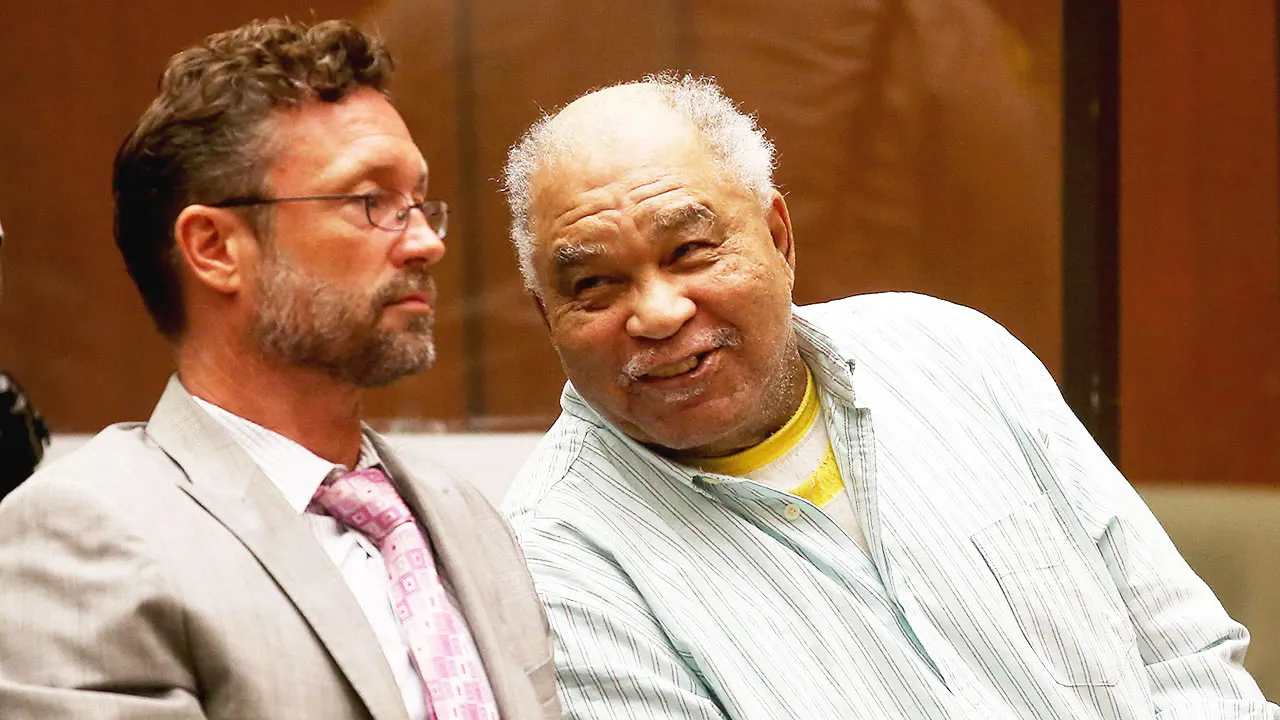
Samuel Little, right, appears unfazed after being convicted on three counts of first-degree murder Sept. 2, 2014, in Los Angeles Superior Court. (Luis Sinco/Los Angeles Times via Getty Images)
Now retired, Holland is hosting a new true-crime series on Investigation Discovery (ID), “Killer Confessions,” which examines the interrogation tactics and pivotal moments that defined his career.
Holland was initially asked to question Little about a killing he didn’t commit. During more than 700 hours of interviews, Little revealed details of dozens of other slayings only the real perpetrator could have known.
Georgia’s “Macon Jane Doe” has been identified as Yvonne Pless, a victim of Samuel Little (pictured) who was about 20 when he killed her in 1977. Little confessed to 93 murders before his death in 2020. (California Department of Corrections via AP)
“Samuel Little was the epitome of evil,” Holland told Fox News Digital. “He was a mean, horrible person. He was the ultimate predator — a killing machine. He was really smart and had a very distinct photographic memory.”
WATCH: FBI SAYS SAMUEL LITTLE IS WORST SERIAL KILLER IN US HISTORY AFTER HE CONFESSED TO 93 MURDERS
“Some people would have falsely looked at him and said he was just primarily picking up prostitutes,” Holland shared. “But that’s not necessarily true. A vast number of these victims were not prostitutes. They were people he met every day.
“His ability to win people over with his persona, one that manipulated and controlled them? I don’t know how to describe him other than as an ultimate apex predator because he wasn’t bothered by anything.”
This combination of undated sketches provided by the FBI shows drawings made by admitted serial killer Samuel Little, based on his memories of some of his victims. (FBI via AP)
Little was in failing health while serving a life sentence in a California prison when Holland was asked to interview him. The former boxer, who used a wheelchair to get around, had refused to speak with other authorities and initially reacted the same way to Holland.
Retired Texas Ranger James Holland, who interviewed serial killer Samuel Little for hundreds of hours, is the host of the new true-crime series “Killer Confessions: Case Files of a Texas Ranger.” (ID)
“The first time I stepped into that room, he was not happy to see me,” Holland recalled. “He’d get information from you, then send you packing, overwhelming you with anger and threatening tones. He was automatically that way with law enforcement.”
Despite Little’s attempts to assert dominance, Holland never flinched. Little tested the veteran investigator by describing in graphic detail how he killed a woman while locking eyes with him. Holland remained stone-faced, listening.
James Holland told Fox News Digital he refused to flinch as Samuel Little tested him. (ID)
“The first part of dealing with him was getting through the shock in that room with him,” Holland explained. “You couldn’t react to his negativity. When you deal with a serial killer, there’s no remorse. If you start talking to them about remorse, they think you’re speaking Martian. They don’t understand that, can’t comprehend it. They’ll immediately shut down.
FOLLOW THE FOX TRUE CRIME TEAM ON X
In this handout photo provided by the FBI, serial killer Samuel Little is seen in multiple mugshots/booking photos from 1966-1995. The FBI described Little as the most prolific serial killer in U.S. history. (FBI via Getty Images)
“Little treated it all like a game,” Holland continued. “Was he going to try to scare the hell out of me or recant the murder he’d just confessed to? He wanted to shock me. He’d throw things and study my face to see how I’d react, deciding whether I was ‘worthy’ of hearing more and whether I thought horribly of him. It was the ultimate acting job for me because I had to keep a completely blank face. He would just stare at me.
“He used the word ‘monster’ all the time. He didn’t want me to think he was a monster, which obviously he was. But I just couldn’t let him know what I was thinking.”
Serial killer Sam Little admitted to killing a Jackson woman in Pascagoula decades ago and dumping her body in a washout in an overgrown area off Greenwich Road in Moss Point. Little produced a photo of the victim, center, and said a police composite sketch (right) was the woman he killed. (Imagn)
Food played a role in Holland’s strategy, according to The Associated Press. During hundreds of hours of interviews, he brought pizza, Dr Pepper and grits — Little’s favorite snacks — and talked sports as Little ate. He also assured Little he wouldn’t be executed and addressed him by his childhood nickname, “Sammy.”
Samuel Little, who was indicted on charges he murdered three women in Los Angeles in the 1980s, listens to opening statements as his trial begins on Aug. 18, 2014. (Bob Chamberlin/Los Angeles Times via Getty Images)
Little, who called Holland “Jimmy,” began to open up.
“When I found something that entertained him, he was intrigued,” Holland said. “That would open the door. The strange thing is, if you blocked out who he was, you could almost enjoy talking to him. He was insightful and funny, and he told great stories. It was easy to forget, at times, how evil he really was. But he was a monster who had no remorse for his killings. You always had to keep that in the back of your mind.
SIGN UP TO GET THE TRUE CRIME NEWSLETTER
In this photo dated Oct. 10, 2019, Tonya Maslar holds an old photograph of her mother, Roberta Tandarich, taken before her death in 1991 in Ravenna, Ohio. Tandarich’s body was found dumped at Firestone Metro Park in 1991 and has been confirmed as one of the victims of serial killer Samuel Little. (Jeff Lange/Beacon Journal/USA Today Network)
“He was always trying to get into your head,” Holland recalled. “For me, it was the ultimate game of Sudoku because I was always thinking ahead and putting myself one step ahead of him.
“These serial killers like Little are convincing and manipulative. That’s why they get away with it. And they’re smart. With Little, he was already thinking about DNA before the technology existed. He was careful in what he did and where he left his victims.”
During their conversations, Holland said he was careful never to bring up remorse or discuss the victims as actual victims, and the tactic worked.
Some of Samuel Little’s drawings, according to the FBI. (Imagn)
“If you break that rule, step over that boundary, you can never go back into the room with them,” he said.
“I think, so often, detectives step into the room and lean in on remorse, their moral psyche. That’s generally how confessions occur. You talk about the victim, you talk about the lack of sleep from remorse. But if you take that into a room with a serial killer, you’re done. You can’t come back from that.”
Little was a career criminal who had spent decades in and out of jail. When he wasn’t behind bars for larceny, assault, drug offenses or other crimes, he traveled the country, according to the AP.
GET REAL-TIME UPDATES DIRECTLY ON THE TRUE CRIME HUB
Pascagoula Police Lt. Darren Versiga looks over crime photos to determine where an unidentified woman’s remains were dumped years ago off Greenwich Road in Moss Point, Miss. Versiga believes the woman was murdered by serial killer Samuel Little. (Imagn)
Little said he committed his first killing on New Year’s Eve 1970 in Miami and his last in 2005 in Mississippi. According to the AP, he also killed victims in Tennessee, Texas, Ohio, Kentucky, Nevada and Arkansas, among other states.
In 2012, Little was arrested on drug charges, and his DNA linked him to three killings in California.
In “Killer Confessions,” James Holland details the cases that defined his career. (ID)
As Little opened up to Holland, he provided dozens of paintings and drawings of his victims, sometimes scribbling their names and details such as the year they were killed and where he left their bodies.
Pascagoula police Lt. Darren Versiga believes the body of a woman found off Greenwich Road in Moss Point decades ago could be a victim of serial killer Samuel Little. (IMAGN)
“He always remembered where he met the person, the moment he killed them and what their last words were,” said Holland. “He always remembered where he dumped the bodies. And this is 40-plus years later, someone who’s using drugs and alcohol at different points in time. The majority of these crimes were matched up by his descriptions of the crime scene.
“The way he described where he left the bodies and then looked at these crime scene photos,” Holland paused. “It’s mind-numbing. He relived these crimes through his memories. We were able to match so many of those cases because he described the crime scene. And when you looked at the case files and read the reports, there were descriptions of Samuel Little in a witness account.”
Almost all of Samuel Little’s victims were women, many of them prostitutes, drug addicts or poor people living on the edges of society, The Associated Press reported. (Imagn)
As Little kept talking, authorities across the country rushed to reopen cold cases, relying on DNA evidence to prove his guilt. With his health failing, the clock was ticking. Investigators tracked down relatives and brought long-awaited closure to many families. Little later told the Los Angeles Times he had “found a friend in a Texas Ranger.”
CLICK HERE TO DOWNLOAD THE FOX NEWS APP
James Holland described Samuel Little as a “monster” and “master manipulator.” (ID)
Little died in 2020 at a California hospital. He was 80. He was serving a life sentence for multiple counts of murder.
“He had no remorse,” said Holland. “I had to convince him I was OK with that, which is still a very difficult thing to talk about. But I had to convince him he wasn’t destroying my mind. I just needed him to talk. And that’s what he did.”
“Killer Confessions: Case Files of a Texas Ranger” airs Tuesdays at 10 p.m. and streams the next day on HBO Max.
Read the full article from Here



Coffee, croissants and classical music brought office workers, residents and visitors together at One Sansome as the free monthly Baroque & Brew series transformed a weekday morning into a community gathering in downtown San Francisco.
The event, held inside the Conservatory at One Sansome, featured live performances by Philharmonia Baroque and invited attendees to enjoy music in the landmark building’s 8,100-square-foot atrium.
Guests were free to sit or stand while listening, with many nearby office workers stopping in during an early lunch break.
The monthly series is scheduled to return in August and September and aims to bring together downtown workers and neighbors through music and shared public space.
“It’s a beautiful opportunity to have coffee, to be in community, and do what our city is known for—the art, the culture—and to share it with each other,” attendee Roger Joyner said. “It’s a beautiful summertime moment.”
Joyner said events like Baroque & Brew reflect the character of the city.
“I think that’s what San Francisco is meant to be…a city that offers culture and the beauty of art to the world. And we that live here get to enjoy it,” he said.
Organizers said the performances are intended to make live classical music more accessible while contributing to ongoing efforts to revitalize downtown San Francisco.
“It’s just a really nice way for us to get the music out of the concert hall to the people downtown, trying to reactivate Downtown San Francisco and show what a welcoming place we can be as a city,” said Isaac Bunch, general manager of Philharmonia Baroque Orchestra and Chorale.
For Joyner, the event also offered a chance to pause amid the pace of daily life.
“We get to take a break. We are hustle and bustle, doing what we do to make the city work, and then we get refreshed by it,” he said. “I think it’s great — it brings it right into the middle of our hub.”
The gathering highlighted how music, conversation and public spaces can bring people together as downtown San Francisco continues its recovery.
Denver, CO
One tree at a time: Denver nonprofit works to close shade gap as heat dome threatens neighborhoods

DENVER — Some Denver neighborhoods are far more vulnerable to this weekend’s incoming heat dome than others — and the difference comes down to trees.
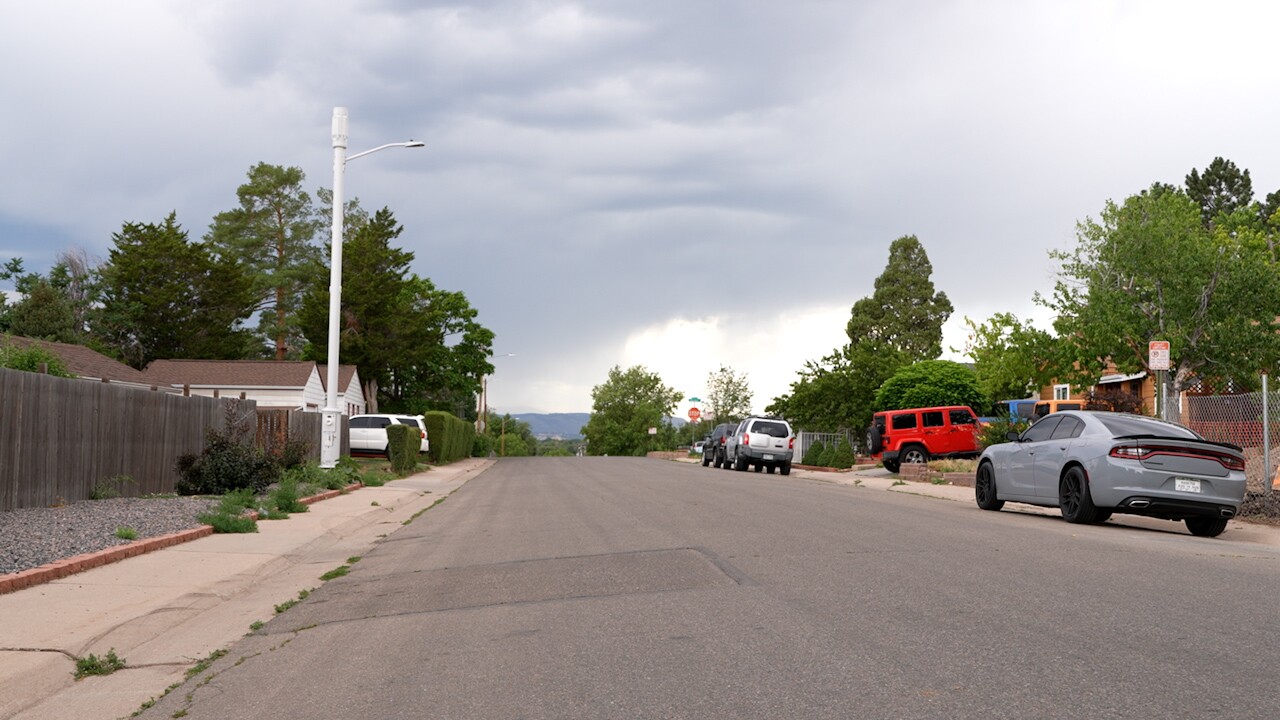
The Valverde neighborhood on the city’s west side has about 9% canopy cover, leaving residents with little shade as temperatures climb toward triple digits.
▶️ WATCH: Denver7’s Claire Lavezzorio learns more about The Park People and how it is helping neighborhoods in Denver.
One tree at a time: Denver nonprofit works to close shade gap as heat dome threatens neighborhoods
Kim Yuan-Farrell, executive director of The Park People, a nonprofit that plants trees in underserved neighborhoods, said the disparity across Denver is stark.
“We have some neighborhoods that have wonderful canopy cover, like 20 to 30% of those neighborhoods are forested. Then a number of our neighborhoods have really low canopy cover, between four or 8% where it’s just significantly less,” Yuan-Farrell said.
Denver7
The Park People identified 28 neighborhoods in need of more tree cover, including Westwood, Globeville and Northeast Park Hill.
Trees can cool an area by 15 to 20 degrees, making a significant difference.
The National Weather Service (NWS) warned the heat dome could last through next weekend.
“The exceptional thing about this is how long it will last,” said NWS meteorologist Russell Danielson. “If you do have trees to take shelter under, it does actually cool down the temperature a decent amount.”
Yuan-Farrell said trees are more than a comfort — they are a critical piece of urban infrastructure.
Denver7
“We really consider it a really essential element of green infrastructure, a real nature-based solution to a lot of these really serious local environmental problems,” Yuan-Farrell said.
In the map below, explore Denver’s libraries and rec centers that welcome the public in from the heat during business hours.
When asked whether Denver has a long road ahead, she did not hesitate.
“We have a lot of work ahead of us,” Yuan-Farrell said. “And we really need our whole community to get involved in that.”
The Park People plant anywhere from 1,200 to 2,000 trees a year. You can apply for one in your yard. Planting is set to begin in September.

Denver7 | Your Voice: Get in touch with Claire Lavezzorio
Denver7’s Claire Lavezzorio covers topics that have an impact across Colorado. If you’d like to get in touch with Claire, fill out the form below to send her an email.

(QUICK LINKS: Music lineups … vendor list … food and drink … Kids Zone info)
6:04 PM: At West Seattle Summer Fest, the crowd has grown steadily, especially now that the workday is over. Main-stage music continues – here’s the second band of the day, Chico Detour:
That’s their song “Crying at My Party.” As main-stage music continues, The Big Dark Corner is just getting going at California/Alaska by KeyBank, a new space this year – programmed by West Seattle’s The Big Dark Records. And you have a wide variety of choices for dinner and drinks – The Porch in the lot behind KeyBank, stands on that side of SW Alaska, some vendors on newly pedestrian-only SW Oregon, the beverage garden by the main stage ..

… and of course all the year-round local venues, many with outdoor cafés. Coordinators say it’s gone smoothly so far. Updates to come!
6:25 PM: That’s Leonard Jarvey and The Sock Monkeys, opening the night at The Big Dark Corner. Still to come there tonight – Sad Dad Autumn at 7, Across 35th at 7:30. Meantime, over in the Kids Zone, the foam party’s back this year:
7:39 PM: A bit of Zookraught and their dance-punk sound on the main stage:
And Across 35th has a throng at The Big Dark Corner – video:
8:20 PM: Vendors are wrapping up for the day, since the festival’s official end time – not counting music – was 8 pm. Here at the Info Booth, most everything’s rolled up too, except our table, and we’re packing up shortly (after one more band – added, here’s that video of Blackie:)
The night wraps up with Alien Crime Syndicate at 10 pm.
ADDED 11:45 PM: Thanks to WSB contributor Jason Grotelueschen for clips from the night’s last two main-stage bands – Caitlin & Brent with the Passenger String Quartet:
And Alien Crime Syndicate:
P.S. Thanks to the many kind people who stopped by our table to say hi – we’ll be back tomorrow, starting at 10 am.
-
 Lifestyle15 minutes ago
Shy on the dance floor? Virtual reality ‘partners’ aim to help you find your groove
-

 Technology27 minutes ago
Are you filthy enough for a $700 portable shower?
-

 World29 minutes ago
Former British MP and reality TV star Ann Widdecombe found dead; man arrested for murder
-

 Politics35 minutes ago
Trump takes unusual step, lets bipartisan housing bill become law unsigned amid SAVE pressure campaign
-

 Health42 minutes ago
Eating common dairy food every day may slow biological aging, study suggests
-

 Sports45 minutes ago
CM Punk to defend Undisputed WWE Championship against Cody Rhodes at SummerSlam
-

 Technology50 minutes ago
Would you pay $8,000 for a robot to fold laundry?
-
 Business57 minutes ago
Legendary Television City may be be sold in further blow to Hollywood

