Seattle, WA
Soaking in Seattle (and Tacoma)


Israel recently experienced more than 14 straight days of rainfall throughout the country for the first time since February 1992 – but it’s still not as rainy as Seattle.
While in Jerusalem, it typically rains around 4.8% of the time, in Seattle, it’s rainy 9.4% of the time. While Jerusalem sees about 59 cm of rain per year, in Seattle, it’s 94 cm on average, though climate change is causing both more dry spells and heavier downpours.
So if you’re planning a visit to Seattle and/or its sister city, Tacoma, it’s best to come equipped with foul-weather gear because it would be a shame to spend all your time indoors, even though you could – the Seattle area has more than 40 museums.
If you’re in a hurry – for example, you’ve only got a short stop in Seattle before setting off on an Alaska cruise – it’s possible to take in Seattle’s “greatest hits” in just one day.
Start at the top – at Seattle’s iconic Space Needle. It stands 184 meters tall and was built for the 1962 World’s Fair. Once the tallest building on the West Coast, it’s now dwarfed by downtown skyscrapers.
In keeping with the Fair’s theme, “The Age of Space,” the Needle is topped with what looks like a flying saucer.
The upper level of the saucer offers panoramic views of downtown, Mount Rainier (aka Mount Tacoma), Puget Sound, and the Cascades and Olympic mountain ranges – if they’re not obscured by clouds.
The lower level has a glass floor and rotates – which is great for making videos and very bad if you suffer from vertigo.
Tickets for the Space Needle start at $35 but are around half price if you invest in a Seattle CityPASS, which will also get you into several of the other attractions mentioned below.
You can avoid waiting in line by booking your timed visit in advance on the Space Needle website using your Seattle CityPASS.
The next stop is just a few steps from the base of the tower: Chihuly Garden and Glass, dedicated to the work of Seattle glass artist Dale Chihuly.
More than a million visitors saw the Chihuly in the Light of Jerusalem 2000 exhibit at Jerusalem’s Tower of David Museum from 1999-2000, and some of the same works are on display in Seattle.
A SHORT stroll away is MoPOP – the Museum of Pop Culture. The distinctive building, clad in sinuously curving multichromatic stainless steel and painted aluminum shingles, was designed by star architect Frank O. Gehry – born Frank Owen Goldberg – who was told by teachers at USC’s School of Architecture to change his name if he wanted to get ahead.
MoPOP is a shrine to pop music and pop culture, with an emphasis on modern music (from Hendrix to hip-hop), science fiction, fantasy, horror, and video games.
(By the way, Jimi Hendrix’s first gig was as a teenager in 1959, on the stage of Seattle’s Temple De Hirsch Sinai. The legendary guitar player was fired before the end of the first set for playing too wildly.)
MoPOP’s science fiction collection includes more than 150 artifacts, including a Ghostbusters Proton Pack, a Klingon Bat’leth, Ellen Ripley’s flamethrower from Alien, and Rick Deckard’s pistol from Blade Runner.
Many of the exhibits are hands-on, allowing visitors to experiment with animation, video game design, and making music.
Just across the street is the more serious-minded Bill & Melinda Gates Foundation Discovery Center, with exhibits on programs to fight poverty, disease, and inequity around the world. An exhibition opening in late February is entitled A Better Way to Go: Toilets and the Future of Sanitation.
The most fun way to get from the Seattle Center, where the above attractions are located, to downtown Seattle is via the elevated monorail, which runs right through MoPOP. Built for the World’s Fair, it takes two minutes to travel the 1.4-km. route. At night, the lights inside the cars are lowered, allowing a voyeuristic view into the windows of passing third-floor offices.
One of Seattle’s architectural landmarks is a nine-minute walk from the monorail stop. The Central Library is an 11-story glass and steel structure that looks something like a wireframe model of a Tesla Cybertruck. It was designed by Rem Koolhaus (known as “the World’s Most Controversial Architect,” according to Smithsonian Magazine) and Seattle native Joshua Ramus.
Another nine-minute walk takes you to the Seattle Art Museum, with its 15-meter-tall mobile sculpture – Johnathan Borofsky’s Hammering Man – honoring working-class men and women.
The Pike Place Market offers a plethora of restaurant options
AT THIS point, you’re probably more than ready for something to eat. Luckily, the Pike Place Market is only a six-minute walk from the museum.
The Market, founded in 1907, encompasses restaurants, food stands, specialty food shops, retailers, and a farmers’ market selling local produce. It smells strongly of fish.
The Market can be very crowded, especially on weekends, and one of the longest lines is likely to be outside the original Starbucks. Tourists from around the world make a pilgrimage to this standing-room-only coffee shrine to collect branded souvenirs only available at this location.
If you still have any energy left after this busy day, you can finish up in the hip Capitol Hill neighborhood, about a 10-minute cab ride from Pike Place, where you can find Blade & Timber, Seattle’s premier axe-throwing bar, alongside drag clubs, vintage boutiques, and comic book shops.
Tacoma, Seattle’s sister city (they share Sea-Tac Airport, located midway between them) is about a 40-minute drive from Seattle (with optimal traffic) and is also accessible via train or bus. It’s not as popular with tourists, but it’s less expensive than Seattle and can be a convenient base of operations for exploring the area.
If your taste for glass hasn’t been sated by the Chihuly Museum, you can also visit the Tacoma Museum of Glass and the Chihuly Bridge of Glass, topped by what looks like two enormous stalks of Brussels sprouts.
Nearby, next to the Tacoma Dome and the train station, is the LeMay Car Museum. With more than 3,000 cars, it’s one of the largest automobile museums in the world.
Also near the Tacoma Dome is the Tacoma Book Center, the biggest used bookstore in the state of Washington, with a particularly large collection of children’s books.
Back downtown, Tacoma’s Antique Row is located around Broadway between 9th and 7th. Hands-on nostalgia is available by the quarter at Dorky’s Arcade, with its collection of vintage and modern video games and pinball machines.
When you’re ready to brave the elements – or take advantage of the rare sunshine – the Ruston Way Waterfront is a 3.2-km. paved walking path connecting downtown Tacoma with Point Defiance Park and the Dune Peninsula.
One section of the path commemorates Frank Herbert, the Tacoma native who authored Dune. The trail is dotted with quotes from his work and features a sculpture of sand trout (baby sandworms).
The Seattle-Tacoma area has dozens of Jewish congregations, including about 25 Chabad centers.
A handful of kosher dining options include the Gold Schnitzel (Meat) Restaurant, Pabla Indian Cuisine in the suburb of Renton, and Einstein Brothers Bagels in University Village. The QFC grocery stores in University Village and on Mercer Island offer kosher rotisserie chickens, sushi, deli meats, and side salads.



With spring training wrapping up and opening day just a few days away, the Seattle Mariners continued to whittle down their roster on Sunday.
Drayer: Mariners to go with Garver as backup catcher
The Mariners optioned catcher Jhonny Pereda, right-handed reliever Cole Wilcox and right-handed reliever Yosver Zulueta to Triple-A Tacoma. They also re-assigned first baseman/outfielder Connor Joe and infield prospect Brock Rodden to minor league camp.
The Mariners’ spring training roster is now at 31 players.
Pereda, 29, was acquired from the Minnesota Twins for cash in January. He was brought in to compete for Seattle’s backup catcher role, but Mariners insider Shannon Drayer reported earlier Sunday that veteran Mitch Garver will break camp as Cal Raleigh’s backup. Pereda batted .200 in 25 Cactus League at-bats this spring.
Wilcox, 26, flashed potential this spring after he was acquired from the Tampa Bay Rays for cash last November. He struck out 11 batters across 8 1/3 innings in eight Cactus League appearances, while allowing four runs, six hits and four walks. Mariners manager Dan Wilson said earlier this month that “his stuff has been tremendous” and he “has opened some eyes.”
Zulueta, 28, struck out 10 batters across seven innings in eight Cactus League appearances, while allowing three runs, six hits and three walks. He was acquired from the Cincinnati Reds in a January trade.
Joe, 33, signed a minor league contract with Seattle in February. The six-year MLB veteran had a strong spring, batting .362 with one home run, one triple and six doubles in 47 Cactus League at-bats.
Rodden, 25, is ranked by MLB Pipeline as the Mariners’ No. 18 prospect. A 2023 fifth-round draft pick out of Wichita State, Rodden hit .361 with two homers, one triple and one double in 36 Cactus League at-bats.
More on the Seattle Mariners
• Randy says he apologized, Cal says WBC drama ‘in the past’
• ‘Torpedo 2.0’: Seattle Mariners release another new commercial
• Seattle Mariners re-assign Colt Emerson to minor league camp
• Seattle Mariners’ Cole Young blasts 478-foot moonshot home run
• 3 standouts from Seattle Mariners’ Spring Breakout game


Seattle – March has been off to a very wet start. We have already surpassed the normal monthly rainfall total by an inch with more on the way next week. The atmospheric river event we were tracking wrapped up yesterday and our area rivers have crested and continue to recede. The rain also triggered a landslide on I-5 near Bellingham. Fortunately, the risk of additional landslides is also decreasing.
It’s been a wet start to the month with more than 5″ of rain already recorded so far.
We’ve enjoyed a pleasant, dry first weekend of Spring. Much of Sunday is also expected to be dry. A weak system is forecast to brush by which may bring a few sprinkles with it to a few spots. A few stray flurries are also possible in the mountains.
The much-needed break in rain will continue. Only a stray shower is possible on Sunday.
The cold front which swept through yesterday, ending the days-long rain, also brought some cooler air with it. Afternoon highs will remain slightly below normal on Sunday.
Highs near normal on Sunday with some afternoon sunbreaks.
While Sunday and Monday remain mostly dry, a more significant weather system is expected to move into the region on Tuesday, bringing widespread rain to the lowlands and snow to the mountain passes along with breezy winds.
Increasing clouds Monday with rain returning by Tuesday. Snow in the mountains.

PEORIA, Ariz. – Seattle Mariners camp has been a flurry of activity since the return of the last group of players from the World Baseball Classic. There have been innings and at-bats to be found, schedules and lineups scrambled, whatever it takes to get in the work they need for what in just a few short days will be the 26-man roster.
Mariners re-assign Colt Emerson to minor league camp
Somewhere amongst that flurry of activity, a long-awaited conversation was had, according to Randy Arozarena.
About about two hours before the Mariners’ Cactus League game against the Chicago Cubs on Saturday night, Arozarena put out a statement via the team that addressed the WBC incident between him and teammate Cal Raleigh.
“I understand that with Opening Day a few days away, I don’t want it to be a distraction,” Arozarena said. “Cal and I have talked and I apologized for what I said after the game. Nothing in the WBC takes away from the fact that we are brothers and teammates. He’s family, and we are both focused on helping the Mariners win the World Series.”
The statement echoes much of the sentiment of Raleigh’s comments to members of the Seattle media the morning after he refused Arozarena’s handshake in the March 9 WBC game between the United States and Mexico, which prompted postgame comments from Arozarena that spurred unwanted attention on the Mariners.
“I love Randy,” Raleigh said back on March 10. “I have all the respect for him and Team Mexico. I already reached out to him personally to talk with him. And obviously, when we’re back in Seattle, we’re family, we’re brothers, and I’ll do anything for him. I’ll do anything for our team to win.”
Neither player would want anything within their control to put achieving the Mariners’ lofty goals they have set this season in jeopardy. It is likely those words alone from Arozarena would have helped close the door on the incident. The fact he said he apologized to Raleigh for his comments at the WBC in Houston hopefully helps lock that door and put the focus back on what happens on the field, as has been the case with the players in Peoria all along.
An unpleasant sidenote to the WBC should not be a season-changing episode for a team that has put itself in the position the Mariners have.
More on the Seattle Mariners
• Seattle Mariners’ Cole Young blasts 478-foot moonshot home run
• Seattle Mariners release their first commercial for 2026 season
• 3 standouts from Seattle Mariners’ Spring Breakout game
• Gilbert’s final spring start features surprises from Raleigh
• Callis: Seattle Mariners have MLB’s best pitching prospect duo

Texas ‘generational talent’ Booker scores 40 in March Madness rout of Oregon

🗳️ Roll reversal on voter trends | Morning Newsletter

Obituary: Kathleen Mary Mosher (1962-2026) – Newport Buzz

USC and South Carolina face off in Women’s March Madness. Which is the real SC?
SD Lottery Millionaire for Life winning numbers for March 22, 2026

Florida High School Football Rankings: Top 25 teams – Oct. 21

How old is Bo Nix? What to know about Oregon quarterback ahead of 2024 NFL Draft

Cleary's 21 help Le Moyne down Central Connecticut State 69-64 in OT

99th annual Pony Swim held in Virginia

Indiana Members Credit Union announced as new anchor tenant at Bottleworks District

Video: Plane Collides With Vehicle at LaGuardia Airport

As cattle herds shrink and beef prices rise, investors back AI cow collars

French elections: Paris stays left as far right makes mixed gains

ICE officers set to deploy to airports as delays mount, border czar Homan confirms

Video: ICE Agents Will Be Deployed to U.S. Airports, White House Confirms
-

 Detroit, MI4 days ago
Drummer Brian Pastoria, longtime Detroit music advocate, dies at 68
-

 Oklahoma1 week ago
Family rallies around Oklahoma father after head-on crash
-

 Georgia7 days ago
How ICE plans for a detention warehouse pushed a Georgia town to fight back | CNN Politics
-

 Alaska1 week ago
Police looking for man considered ‘armed and dangerous’
-
 Science1 week ago
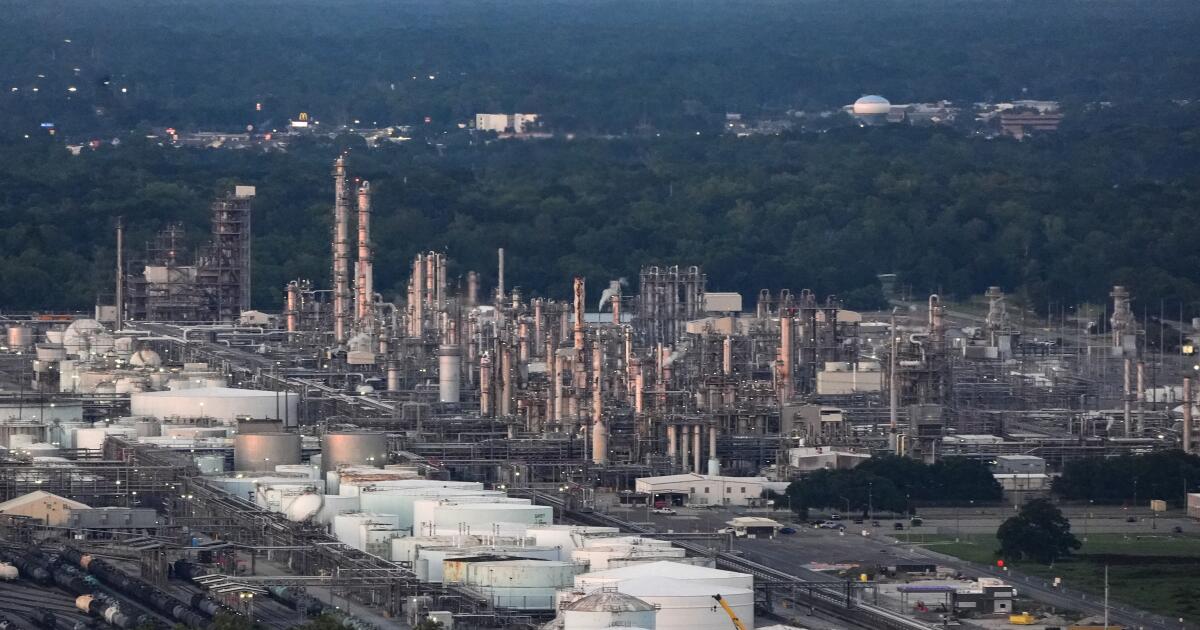
Federal EPA moves to roll back recent limits on ethylene oxide, a carcinogen
-

 Movie Reviews4 days ago
‘Youth’ Twitter review: Ken Karunaas impresses audiences; Suraj Venjaramoodu adds charm; music wins praise | – The Times of India
-

 World1 week ago
Thousands march worldwide in solidarity with Palestine, Iran on al-Quds Day
-

 World1 week ago
Jamal Rayyan, the first face of Al Jazeera, dies at 73