Seattle, WA
Seattle’s troubled past and present suggest a new approach to mental health


E
dward Moore, a 32-year-old sailor, was discovered, near freezing and living in a tattered tent on the shore near current day Seattle in 1854. At the time, Washington was still a territory and Seattle was a misty settlement of log cabins and wood-framed homes at the edge of the known world.
“He’d been living in his makeshift tent for months, living off raw shellfish he foraged and being cared for after a fashion by the Coast Salish people who lived nearby,” explained Josephine Ensign, a University of Washington nursing professor, and the author of “Skid Road,” which documents the history of homelessness in Seattle.
“He most likely had PTSD from a really, really bad shipwreck and maybe also potentially some traumas from his childhood back in Massachusetts,” Ensign said. “It does seem like he had schizophrenia or some type of psychosis.”
After having several of his frost-bitten toes amputated with an axe, Moore was taken to a doctor at Fort Steilacoom, which would later become Western State Hospital.

But when the bill came due for Moore’s care, Washington lawmakers balked. They didn’t want to set a precedent that would require the territory to care for the growing number of poor and ill sailors who were ending up on its rugged shores.
They decided Moore’s care was the responsibility of the county, not the territory, and shipped him back to Seattle by canoe. After he returned, Seattleites decided the best thing to do was to send Moore back to Massachusetts.
“Townspeople took a collection to buy him a new pair of clothes, paid a ship’s captain, and shipped him off,” Ensign said.
Living on the East Coast with his sister and elderly parents, without treatment for his mental illness, Moore didn’t last long.
“The cause of death was hanging,” Ensign said. “And it says, ‘Cause: Insanity.’”
Moore’s story and his death carry disturbing parallels to current-day treatment of mental illness and may also contain a message about how the region could better manage both mental illness and homelessness in the years to come. At the core of this message is the ability, or in most cases, inability, to see mental illness from the perspective of those who suffer from it.
RELATED: Vulnerable patients caught in ‘churn’ between Washington mental health care systems face life and death circumstances
Many of the gaps in mental health care stem from the assumptions made about the capacity of people to cope with day to day activities once they are “cured.”
“We have sort of the crisis management of the inpatient unit and then the outpatient treatment, which assumes that you can manage all areas of your life,” said Katherine Jonas, who researches psychosis at Stony Brook University in New York. “You can get yourself to an outpatient clinic. You can fill the prescription and remember to take them. And then there’s nothing in between.”

L
ew Middleton lived in a state of turmoil for years because he heard and obeyed the many voices in his head. The voices drove Middleton into the forests of Washington state, where he lived while they reinforced his delusions.
“What I noticed was the more I collectively listened to them and the more I thought about maybe people chasing me, the more it became people chasing me,” he said.
One night, Middleton ran into an ex-girlfriend. He showed her the bite marks he had on his arm from a fight he’d been in, and she convinced him to go to the hospital, where he was admitted to Harborview Medical Center, one of the only hospitals in the Seattle area with a specific unit for psychiatric emergencies.
Middleton thought he’d been abducted and the anti-psychotic medicine he was prescribed was poison. But he took it and he began to notice a change.
“The voices didn’t go away completely,” he said. “It just kind of brought it down to the point of where they weren’t so loud.”
RELATED: 50 years ago, many psychiatric hospitals closed. Did that cause today’s mental health crisis?
The antipsychotics that Middleton was prescribed in the 1990s hadn’t changed much since they came out in the 1950s and there have been few game-changing breakthroughs in those medications in the 30 years since.
“I work toward de-prescribing because people come out of the hospital with tons of medications, over-prescribed, really just kind of shells of people when they come out,” explained Alix Van Hollebeke, the head of nursing at Seattle’s Downtown Emergency Center, a nonprofit near Harborview that provides shelter, housing, and medical care to people with complex cases of mental illness and substance abuse.
“We want to get to the point where they get to live their life, even if it’s weird and different and we don’t understand what it’s like, but they get to live their life as they want to live it. With maybe a little bit more sparkle than the rest of us,” Van Hollebeke said.
While the antipsychotics helped lower the voices Middleton heard, they did not silence those voices. They also caused side effects such as facial tics and other involuntary movements. Other meds seemed to make the voices louder.
His mom worried he’d wind up dead. But getting him committed was nearly impossible
But the treatment and care gave Middleton the ability to separate from the voices and helped him understand they were a part of him that he could reason with and learn to live with.
“It’s almost like I was playing this role like, almost like a movie, a role where I was believing everything that was going on and as soon as I tested it, the reality came through,” Middleton said. “There was nobody out there chasing me.”

Middleton went on to work at the Downtown Emergency Center and became the longest served certified peer counselor in Washington state history. The center now has a drop-in center named after him.
While some people who suffer from mental illness are able to gain stability through a combination of care and recovery, others require ongoing care that is difficult to find in the current mental health system.
D
onald is a psychiatrist who dealt for years with his son Eli going through “the churn,” spending time in psychiatric hospitals, emergency rooms, living on the street, and seeking relief through alcohol and drugs.
Donald and his wife, who asked that their last name not be used to protect his son’s identity, reached a critical moment when their son was about to be arrested and he turned to his parents and asked, with a look of terror in his eyes, “Please, can’t I stay with you?”
RELATED: A boy named Adam: When psychosis spills onto Seattle streets
They could not turn him down. Donald and his wife now provide their son with 24-hour care. Their lives revolve around Eli’s daily needs for routine and consistency.
They avoid sarcasm and innuendo, which they have found lend to Eli’s paranoia and can erupt into psychosis.
“How do I help him mitigate the terror he’s experiencing?” Donald asked. “The terror is terror, whether it’s internally induced or whether it’s externally induced, it’s terror. And it’s in the eyes, his eyes.”

The process of living with Eli made Donald recognize aspects of mental health care that potentially contributed to psychosis and delusion, rather than offering relief and stability. For example, not being able to sleep in a hospital because a roommate is yelling, or being overdosed on medications, then released without assistance and suffering a fall.
At the core of this frustration with his own field of psychiatry was the mistaken attitude he described as “doctors know best.” Donald did not see a genuine curiosity about the way people in psychosis were experiencing the world. He realized that mental health care, as with the “care” offered to Edward Moore on the shores of Seattle 170 years ago, was based not on the needs of the people who are sick, but on what is expedient for the rest of us.
“The quickest way is to do what we’ve done for centuries, which is to lock people away unseen and to make people invisible and less disruptive so that’s what we do,” he said.
RELATED: Who was Lillian Massey? A journey to Northern State psychiatric hospital
One of the things that offers Donald hope is the compassion he sees in his son Eli when he encounters other people in mental distress. The first thing he thinks of when he sees someone in pain is not how he can change or fix them.
“Most people, if they can calm their minds down, and that takes time, it’ll be the same for them, all of us,” Donald said. “It doesn’t take a lot of know-how to offer somebody or ask them a question. What can I do to help you?”
To listen to the full episode of “Lost Patients,” tap the link above.
Looking for mental health resources? KUOW compiled an “Acute mental health resource guide” that can help.


SEATTLE — Seattle Mayor Katie Wilson is wading into a series of high-profile Democratic primaries, backing progressive challengers against longtime state lawmakers in a move that could test both her political reach and Seattle’s relationship with Olympia.
Wilson has endorsed several local candidates, including Ron Davis in the 46th Legislative District and Hannah Sabio Howell in the 43rd District. Both are running from the left against veteran Democratic legislators, including Senate Majority Leader Jamie Pedersen.
The endorsements come as Democrats in Washington state face a series of intraparty challenges, with younger and more progressive candidates arguing that longtime lawmakers have not moved quickly enough on affordability, housing, taxation and social services.
An image of Mayor Wilson and Gov. Bob Ferguson giving an update on how the World Cup matches have played out so far in Seattle. (KOMO)
Political analyst Sandeep Kaushik called Wilson’s decision “a high-risk roll of the dice,” saying she is not only challenging veteran Seattle Democrats but also potentially putting at risk the city’s relationship with state leaders in Olympia.
“It’s definitely going to be” a test of her political influence, Kaushik said, noting that Pedersen can point to a long list of progressive credentials, including work on LGBTQ rights and the state’s new millionaires’ tax.
Wilson’s endorsements follow a national trend in which progressive candidates have tried to build momentum by challenging establishment Democrats in deeply blue areas. Kaushik said the timing did not appear coincidental, coming shortly after New York City Mayor Zohran Mamdani endorsed several candidates who went on to win their races. But he also noted a key difference: Wilson won Seattle’s mayoral race by a much narrower margin and has faced a bumpier start in office.
Davis, who is running against Rep. Gerry Pollet in the 46th District, said he entered the race after working on statewide housing legislation and deciding Olympia was a place where he could make a larger impact.
“Urgency” has been missing in Olympia, Davis said, arguing that too many lawmakers treat the job as a side role while families struggle with the cost of living. He said he wants the state to move faster on housing, transit, Sound Transit accountability, and progressive taxation.
Davis said Wilson’s endorsement matters because of her role in Seattle’s JumpStart payroll tax and broader progressive organizing.
“Katie Wilson is one of the people who has done more to bring taxation on the rich in Washington state than anyone else,” Davis said, calling JumpStart a measure that “broke the legal dam” for other forms of progressive taxation.
Davis also defended a challenge from the left after Democrats delivered the millionaires’ tax, saying internal competition is healthy and necessary.
“I think it’s needed,” Davis said. “There needs to be disagreement, and there needs to not be a cling to the status quo.”
According to a Washington Public Disclosure Commission candidate finance chart, Democrat William Dreher has raised about $258,000 in the race and spent $21,000. Davis has raised about $140,000 and spent $26,000.
Pollet has raised about $96,000 and spent $14,000.
Kaushik noted that Dreher, a prosecutor who worked on cases connected to the Jan. 6 attack on the US. Capitol, makes that race a three-way contest.
In the 43rd District, Sabio-Howell is challenging Pedersen, one of the most powerful Democrats in the Legislature. Sabio-Howell said she is running because the affordability crisis has worsened under current leadership.
“I believe in Washington’s potential to be the best place in the country to build good lives if we can afford it,” Sabio Howell said. “Status quo leaders, career politicians who have been in office as the crisis of affordability has only gotten worse, are not the people who are going to make an affordable future possible.”
Sabio Howell acknowledged the millionaires tax as a “historic win,” but argued it came only after a severe budget deficit forced lawmakers to act. She said progressive leadership from the 43rd District should have pushed for the policy earlier.
She also rejected arguments from large employers that Washington has reached a tipping point on taxes, comparing the current debate to warnings made during the fight for a $15 minimum wage. Sabio-Howell said voters have repeatedly shown support for funding social services through measures such as the capital gains tax, the Climate Commitment Act and the Long Term Care Act.
Sabio-Howell said Wilson’s endorsement aligns with her campaign’s focus on affordability, housing, schools, public transit and shifting political power away from corporate interests.
The fundraising gap in the 43rd District remains significant. The PDC chart shows Pedersen has raised about $348,000 and spent $77,000. Sabio-Howell has raised about $82,000 and spent $23,000. A third candidate, Heather-Marie P. Wilson, reported no contributions or expenditures on the chart.
Wilson did not return a request for comment.
The Washington State Labor Council also issued a statement, “Jamie Pedersen is the most progressive Senate Majority Leader we have ever had, delivering on major progressive priorities like progressive tax reform and rent stabilization when previous majority leaders couldn’t. If he is not re-elected, the next majority leader will most likely be less progressive and less willing to tackle the toughest problems. Campaigning is an extended job interview and Pedersen has demonstrated he can do the job effectively and in-line with his district’s values. Our unions and community allies should be united in fighting back against a right-wing authoritarian government, not divided against legislators like Jamie Pedersen and Gerry Pollet, who have strong progressive voting records. We have a common foe: the conservative forces in Washington seeking to take over our State Supreme Court, attack our trans community, and repeal the Millionaire Tax and force deep cuts to education and healthcare.”
His campaign also cited a statement from Katy Ozog, the Executive Director of the Washington Senate Democratic Campaign, “Jamie Pedersen is the most progressive Senate Majority Leader in state history, and the author of landmark legislation like the Millionaires Tax, a champion for affordability measures like rent stabilization, and a leader in the fight for LGBTQ+ equality. He is proud to be the only candidate in the race to have sole endorsements from labor unions and Planned Parenthood.”
Kaushik said the broader picture is a Democratic Party “at war with itself” in Washington, with younger, outsider candidates challenging incumbents they view as part of a failed establishment.
“The mayor doesn’t see herself as just another typical Democratic politician,” Kaushik said. “She very much sees herself as part of and a leader of a movement, a progressive political movement that really aims to take over and change the Democratic Party.”
Whether Wilson’s endorsement can help deliver victories for those challengers remains uncertain. Her allies see the move as part of a broader push for progressive leadership at every level of government. Her critics may view it as an unnecessary risk at a time when Seattle still depends on Olympia for housing, transportation, public safety, and budget support.
For now, the races offer a clear test of whether Wilson’s narrow mayoral victory has grown into broader political power or whether longtime Democratic incumbents can withstand a challenge from their own left flank.

The Seattle Seahawks are the defending champions, but that doesn’t mean their rookie class isn’t important.
If anything, it means the rookie class is more important because these first-year players will have to play at a very high level right from the jump in their careers. The Seahawks’ rookie class is going to be expected to help the team win a Super Bowl by replacing some key players on the roster.
“The world champion Seahawks, as I saw it, had three clear areas that became needs this offseason: running back, safety and corner, with the departures of Kenneth Walker III, Coby Bryant and Tariq Woolen,” Sports Illustrated reporter Albert Breer wrote.
“Accordingly, running back Jadarian Price, safety Bud Clark and corner Julian Neal were their first three draft picks, and all three will be guys to watch in late July and August. And another storyline, one that’ll tie back to Price, will be Zach Charbonnet’s return from a torn ACL.”
Jadarian Price
With Zach Charbonnet tearing his ACL during the divisional round game against the San Francisco 49ers back in January, first-round pick Jadarian Price will be thrown into the limelight in Week 1, assuming he gets through training camp in full health.
This will be an excellent opportunity for Price to get early reps, especially considering he was a backup in college to Jeremiyah Love, the No. 3 overall pick in the draft. He’ll compete with George Holani in training camp for the starting job against the New England Patriots on Sep. 9.
Bud Clark
Clark shouldn’t be expected to start over Julian Love and Ty Okada, but he should still have a handsome role in the secondary. Last year, the secondary proved how important depth is, and everyone in Seattle’s back line can play at a high level.
Clark is taking over for Coby Bryant, who signed with the Chicago Bears back in March. Those are tough shoes to fill, but Clark will be given an opportunity to show why he was a second-round pick.
Julian Neal
The Seahawks won’t have Riq Woolen this season after he signed with the Philadelphia Eagles. Josh Jobe and Nick Emmanwori will also need to fill in for Woolen’s absence, but third-round pick Julian Neal will have to shoulder some of the responsibility as well.
Woolen played in 78 percent of the team’s defensive snaps last season, which means Neal could hear his number early and often if he has a strong showing in training camp.
— Enjoy free coverage of the Super Bowl champions from Seattle Seahawks On SI —
Sign Up For the Seahawks Daily Digest – OnSI’s Free Seattle Seahawks Newsletter
Add us as a preferred source on GoogleFollow

PHOTOS BY OLIVER HAMLIN FOR WEST SEATTLE BLOG
Hundreds of people spent Sunday admiring and photographing the 12 gardens spotlighted on this year’s West Seattle Garden Tour. Among them was WSB contributing photojournalist Oliver Hamlin, who presents a scene from each garden (including some of the gardeners. First, at Garden A, “A Show of Northwest Natives“:
Charles Anthony, who created Garden B, “Salish Sea Sanctuary,” posed with his Japanese Maple:

Garden C, “Heron Cove,” has its namesake standing sentinel:

Below are Debra Montgomery and Lee Kelly; she bought the “Heron Cove” house 7 years ago and inherited Lee, who has been the gardener for 40 years. She said the previous homeowners sought out a buyer who wouldn’t tear down the house and would keep caring for the garden, which she and Lee both now do.

Garden D was described as “Small Spaces, Big Moments”:

Below (L-R) are the gardeners behind Garden D, Laird Applegate and Brian Pelzel:

Garden E was “From a Sprawling Lawn and One Tree to …”

Blackberries are often the bane of a gardener’s existence, but in Garden F, “Transformation,” they were beautiful:

Garden F’s (L-R) Diane Elie and Raquel Gonzalez store water in 60-gallon rainbarrels and told Oliver that it fills most of their irrigation needs:

At Garden G, “Hidden Gem,” Julie Robinson-Jasper and Maple the dog are seen through a mirror surrounded by star jasmine at Garden G, “Hidden Gem”:

Another scene from Garden G:

Garden H, “Behind the Fences,” sported an arch of bittersweet nightshade:

A clawfoot bathtub graced Garden I, “A Fresh Look for A Once-Beloved Garden“:

Garden J, “Garden of Many Rooms,” was conducive to wandering:

Garden K offered onlookers “Plants from Around the World“:
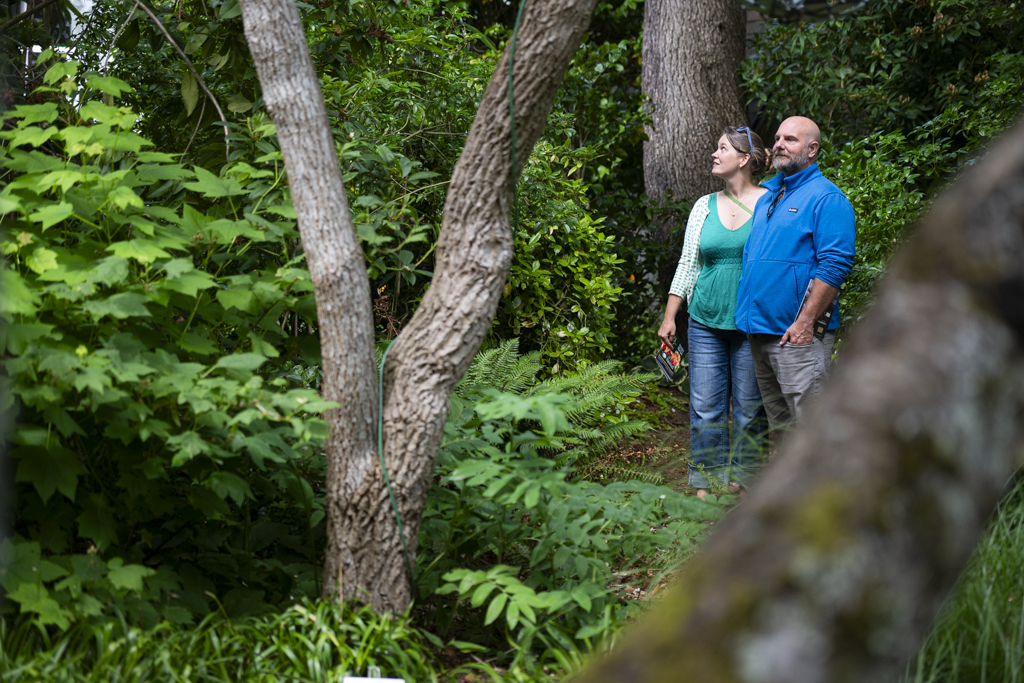
And Garden L, “Conifer Corner,” featured a 75-year-old wisteria:

(Read details of each garden here.) The West Seattle Garden Tour is organized by a nonprofit that uses the proceeds to support other nonprofits – here are this year’s grant recipients; see how to apply for one of next year’s grants by going here (July 15 is the deadline).
-

 Technology6 minutes ago
Meta is adding ridiculous ‘rate limits’ and a soft paywall to its smart glasses
-

 World11 minutes ago
Boy, 2, pulled alive from rubble six days after Venezuela’s devastating twin earthquakes
-

 Politics13 minutes ago
Socialism goes west as DSA-backed challenger ousts longtime Democrat
-

 Health18 minutes ago
Americans are giving up multivitamins for a different daily health habit, study finds
-

 Sports21 minutes ago
2026 World Cup Quarterfinal Odds: Which Squads Will Make Final 8?
-

 Technology26 minutes ago
Warehouse robots move packages without human handoff
-
 Business33 minutes ago
Disneyland to offer $59 evening tickets next month
-
 Entertainment36 minutes ago
After Amazon drops OpenAI movie ‘Artificial,’ film finds new home at Neon

