Seattle, WA
Seattle Architects Unveil Designs for Social Housing Ahead of February Vote – The Urbanist


In support of their effort to build social housing in Seattle, the nonprofit House Our Neighbors recently released architectural designs for transforming a piece of surplus publicly-owned land in Northgate. In the vision, designed by Neiman Taber Architects, a row of townhomes, a block of family-sized apartments, and a wing of co-living efficiency studios are wrapped around a central courtyard.
While voters approved formation of the Seattle Social Housing Developer in 2023, the city has a special election on deck in February with dueling ballot measures to actually fund that public developer. House Our Neighbors put forward the grassroots Initiative 137 that will be on next February’s ballot as Proposition 1A, while the centrist majority on Seattle City Council proposed the reactionary alternative. Voters will be asked whether they want to fund social housing at all, and if yes, they’ll have to choose between one of the two options.
“For House Our Neighbors, [Neiman Taber Architects] designed a detailed proposal for this parcel as a proof-of-concept to expand our idea of what a brighter, more equitable future could actually look like,” House Our Neighbors wrote. “Their design shows what is possible when we put people over profit; A variety of unit types to suit all kinds of households — from students and working class people to elderly folks, people with mobility needs, and families with and without children and with ample communal space and an interior courtyard where the community can come together to socialize and support each other. All of it affordable. Forever.”

” data-medium-file=”https://www.theurbanist.org/wp-content/uploads/2024/11/Social-Housing-cross-section-Northgate-Way-by-Neiman-Taber-300×220.jpeg” data-large-file=”https://i2.wp.com/www.theurbanist.org/wp-content/uploads/2024/11/Social-Housing-cross-section-Northgate-Way-by-Neiman-Taber-1024×751.jpeg?ssl=1″ fifu-data-src=”https://i2.wp.com/www.theurbanist.org/wp-content/uploads/2024/11/Social-Housing-cross-section-Northgate-Way-by-Neiman-Taber-1024×751.jpeg?ssl=1″ alt=”A cross section shows the guts of the building with captions noting the unit mix, which included 15 two- or three-bedroom apartments, four two-bedroom townhomes, and 16 co-living one-bedroom apartments.” class=”wp-image-187550″ srcset=”https://i2.wp.com/www.theurbanist.org/wp-content/uploads/2024/11/Social-Housing-cross-section-Northgate-Way-by-Neiman-Taber-1024×751.jpeg?ssl=1 1024w, https://www.theurbanist.org/wp-content/uploads/2024/11/Social-Housing-cross-section-Northgate-Way-by-Neiman-Taber-300×220.jpeg 300w, https://www.theurbanist.org/wp-content/uploads/2024/11/Social-Housing-cross-section-Northgate-Way-by-Neiman-Taber-768×563.jpeg 768w, https://www.theurbanist.org/wp-content/uploads/2024/11/Social-Housing-cross-section-Northgate-Way-by-Neiman-Taber-573×420.jpeg 573w, https://www.theurbanist.org/wp-content/uploads/2024/11/Social-Housing-cross-section-Northgate-Way-by-Neiman-Taber-80×60.jpeg 80w, https://www.theurbanist.org/wp-content/uploads/2024/11/Social-Housing-cross-section-Northgate-Way-by-Neiman-Taber-696×510.jpeg 696w, https://www.theurbanist.org/wp-content/uploads/2024/11/Social-Housing-cross-section-Northgate-Way-by-Neiman-Taber-1068×783.jpeg 1068w, https://www.theurbanist.org/wp-content/uploads/2024/11/Social-Housing-cross-section-Northgate-Way-by-Neiman-Taber.jpeg 1080w” sizes=”(max-width: 1024px) 100vw, 1024px”><figcaption class=) The project envisioned on Northgate Way would create a central courtyard greenspace for socializing. (Neiman Taber Architects)
The project envisioned on Northgate Way would create a central courtyard greenspace for socializing. (Neiman Taber Architects)House Our Neighbors Co-Executive Director Tiffani McCoy said more design examples are on the way, with a call out for architects to lay out their own visions for surplus City-owned parcels.
“This is all pro bono from these architecture firms, but we know from I-135 that architects are incredibly excited about social housing, not just because they would be able to actually afford to live in the city in which they work, because architects are often between 80 to 120% of AMI [area median income], but also, you know, they’re just so restricted in their craft,” McCoy told The Urbanist. “Their creativity is really lost a lot because we’re more focused on quantity over quality, which has its benefits. But especially working in typical affordable housing buildings, the focus is as many as you can with the amount of funding.”

” data-medium-file=”https://www.theurbanist.org/wp-content/uploads/2024/11/1319-N-Northgate-Way-Aerial-View-social-housing-by-Neiman-Taber-300×220.jpg” data-large-file=”https://i2.wp.com/www.theurbanist.org/wp-content/uploads/2024/11/1319-N-Northgate-Way-Aerial-View-social-housing-by-Neiman-Taber-1024×751.jpg?ssl=1″ fifu-data-src=”https://i2.wp.com/www.theurbanist.org/wp-content/uploads/2024/11/1319-N-Northgate-Way-Aerial-View-social-housing-by-Neiman-Taber-1024×751.jpg?ssl=1″ alt=”” class=”wp-image-187570″ srcset=”https://i2.wp.com/www.theurbanist.org/wp-content/uploads/2024/11/1319-N-Northgate-Way-Aerial-View-social-housing-by-Neiman-Taber-1024×751.jpg?ssl=1 1024w, https://www.theurbanist.org/wp-content/uploads/2024/11/1319-N-Northgate-Way-Aerial-View-social-housing-by-Neiman-Taber-300×220.jpg 300w, https://www.theurbanist.org/wp-content/uploads/2024/11/1319-N-Northgate-Way-Aerial-View-social-housing-by-Neiman-Taber-768×563.jpg 768w, https://www.theurbanist.org/wp-content/uploads/2024/11/1319-N-Northgate-Way-Aerial-View-social-housing-by-Neiman-Taber-573×420.jpg 573w, https://www.theurbanist.org/wp-content/uploads/2024/11/1319-N-Northgate-Way-Aerial-View-social-housing-by-Neiman-Taber-1145×840.jpg 1145w, https://www.theurbanist.org/wp-content/uploads/2024/11/1319-N-Northgate-Way-Aerial-View-social-housing-by-Neiman-Taber-80×60.jpg 80w, https://www.theurbanist.org/wp-content/uploads/2024/11/1319-N-Northgate-Way-Aerial-View-social-housing-by-Neiman-Taber-696×511.jpg 696w, https://www.theurbanist.org/wp-content/uploads/2024/11/1319-N-Northgate-Way-Aerial-View-social-housing-by-Neiman-Taber-1068×783.jpg 1068w, https://www.theurbanist.org/wp-content/uploads/2024/11/1319-N-Northgate-Way-Aerial-View-social-housing-by-Neiman-Taber.jpg 1280w” sizes=”(max-width: 1024px) 100vw, 1024px”><figcaption class=) A rendering of the Northgate proposal show a brick townhome row and brick co-living building next to the larger building with family-sized apartments. The courtyard includes a playground and families playing or relaxing. (Neiman Taber)
A rendering of the Northgate proposal show a brick townhome row and brick co-living building next to the larger building with family-sized apartments. The courtyard includes a playground and families playing or relaxing. (Neiman Taber)
The first social housing prototype came from the 2023 Seattle Design Festival with a submission by architects Jacqui Aiello and Anna Brodersen, McCoy said. The pair proposed a nine-unit apartment building with one ground-floor commercial space and a mix of unit sizes including two- and three-bedroom units. The roughly 4,000-square-foot lot being eyed was a surplus City-owned site at 1405 NE 65th Street in Roosevelt.

” data-medium-file=”https://www.theurbanist.org/wp-content/uploads/2024/11/PASSIVHAUS-JD-Roosvelt-Example-by-Jacqui-Aiello-and-Anna-Brodersen-300×194.jpg” data-large-file=”https://i2.wp.com/www.theurbanist.org/wp-content/uploads/2024/11/PASSIVHAUS-JD-Roosvelt-Example-by-Jacqui-Aiello-and-Anna-Brodersen-1024×663.jpg?ssl=1″ fifu-data-src=”https://i2.wp.com/www.theurbanist.org/wp-content/uploads/2024/11/PASSIVHAUS-JD-Roosvelt-Example-by-Jacqui-Aiello-and-Anna-Brodersen-1024×663.jpg?ssl=1″ alt=”” class=”wp-image-187564″ srcset=”https://i2.wp.com/www.theurbanist.org/wp-content/uploads/2024/11/PASSIVHAUS-JD-Roosvelt-Example-by-Jacqui-Aiello-and-Anna-Brodersen-1024×663.jpg?ssl=1 1024w, https://www.theurbanist.org/wp-content/uploads/2024/11/PASSIVHAUS-JD-Roosvelt-Example-by-Jacqui-Aiello-and-Anna-Brodersen-300×194.jpg 300w, https://www.theurbanist.org/wp-content/uploads/2024/11/PASSIVHAUS-JD-Roosvelt-Example-by-Jacqui-Aiello-and-Anna-Brodersen-768×497.jpg 768w, https://www.theurbanist.org/wp-content/uploads/2024/11/PASSIVHAUS-JD-Roosvelt-Example-by-Jacqui-Aiello-and-Anna-Brodersen-1536×994.jpg 1536w, https://www.theurbanist.org/wp-content/uploads/2024/11/PASSIVHAUS-JD-Roosvelt-Example-by-Jacqui-Aiello-and-Anna-Brodersen-649×420.jpg 649w, https://www.theurbanist.org/wp-content/uploads/2024/11/PASSIVHAUS-JD-Roosvelt-Example-by-Jacqui-Aiello-and-Anna-Brodersen-1298×840.jpg 1298w, https://www.theurbanist.org/wp-content/uploads/2024/11/PASSIVHAUS-JD-Roosvelt-Example-by-Jacqui-Aiello-and-Anna-Brodersen-696×450.jpg 696w, https://www.theurbanist.org/wp-content/uploads/2024/11/PASSIVHAUS-JD-Roosvelt-Example-by-Jacqui-Aiello-and-Anna-Brodersen-1392×901.jpg 1392w, https://www.theurbanist.org/wp-content/uploads/2024/11/PASSIVHAUS-JD-Roosvelt-Example-by-Jacqui-Aiello-and-Anna-Brodersen-1068×691.jpg 1068w, https://www.theurbanist.org/wp-content/uploads/2024/11/PASSIVHAUS-JD-Roosvelt-Example-by-Jacqui-Aiello-and-Anna-Brodersen-1920×1242.jpg 1920w, https://www.theurbanist.org/wp-content/uploads/2024/11/PASSIVHAUS-JD-Roosvelt-Example-by-Jacqui-Aiello-and-Anna-Brodersen.jpg 2000w” sizes=”(max-width: 1024px) 100vw, 1024px”><figcaption class=) A diagram lays out the Passivhaus environmental standards of the project, which includes a greenscaping, white roof, cross ventilation, and high quality thermal insulation. (Neiman Taber)
A diagram lays out the Passivhaus environmental standards of the project, which includes a greenscaping, white roof, cross ventilation, and high quality thermal insulation. (Neiman Taber)
As laid out in the charter for the Seattle Social Housing Developer, the Roosevelt building would be built to Passive House standards, which go above and beyond the energy efficiency and sustainability requirements of Seattle’s already rigorous code.
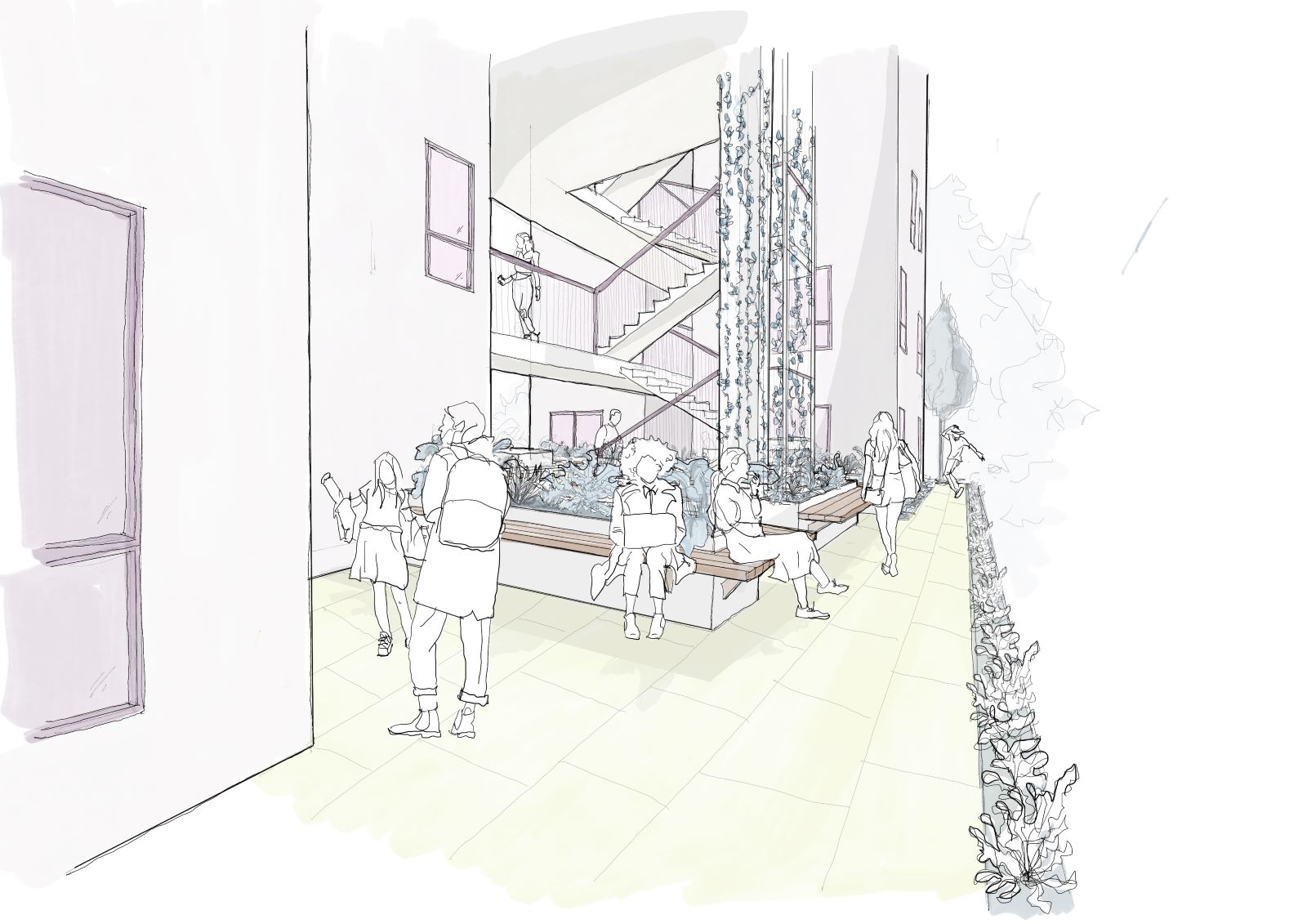
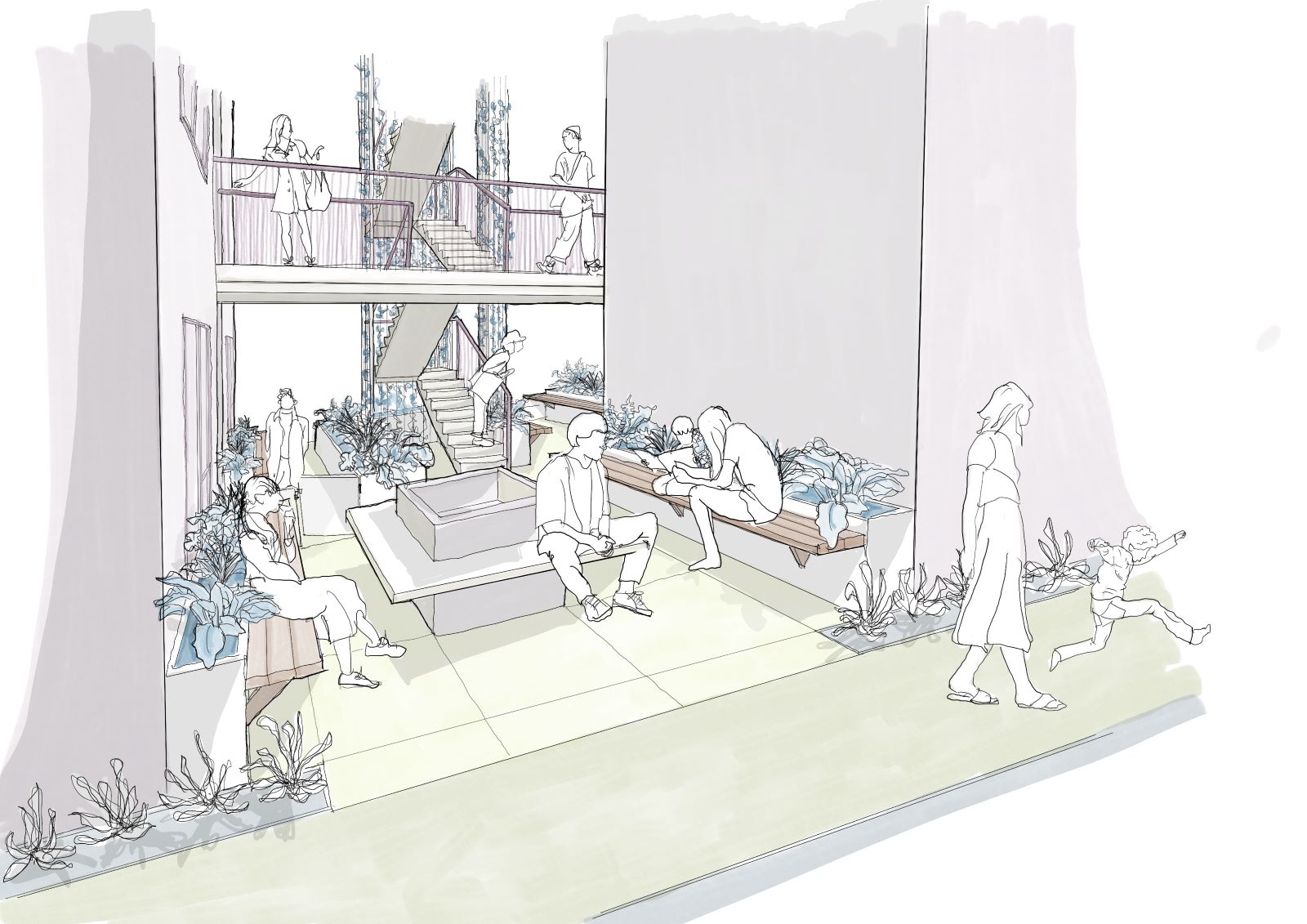
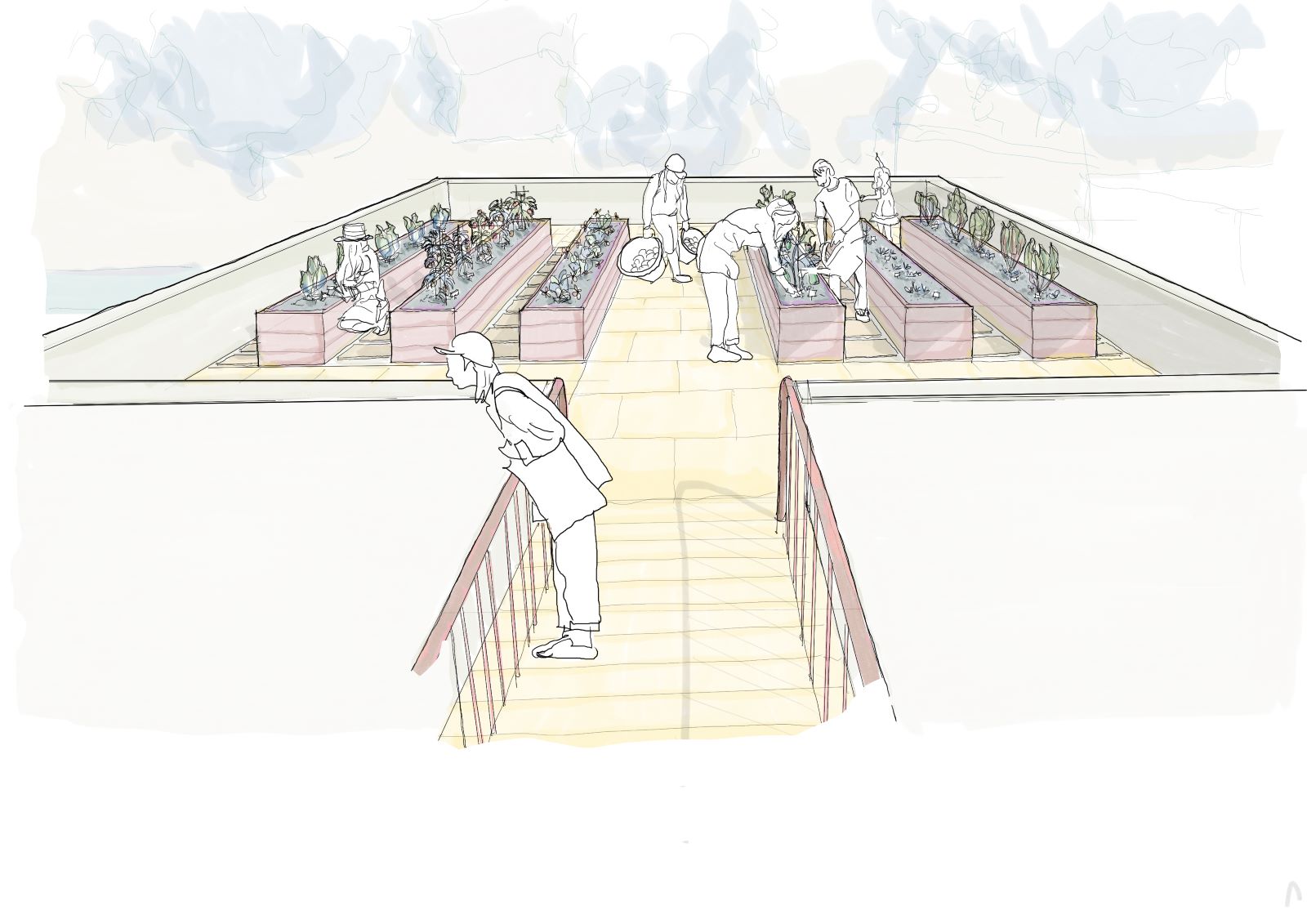
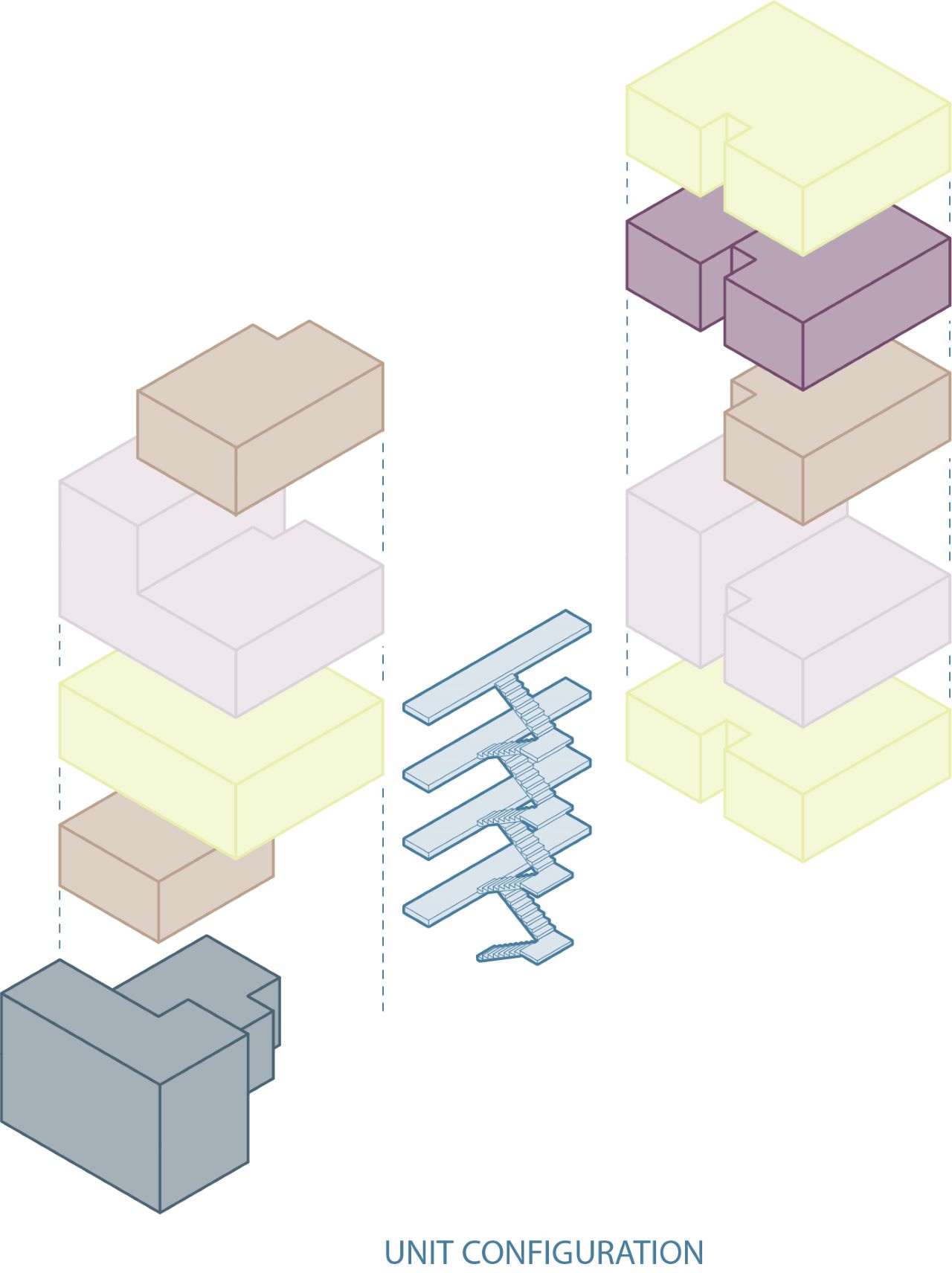
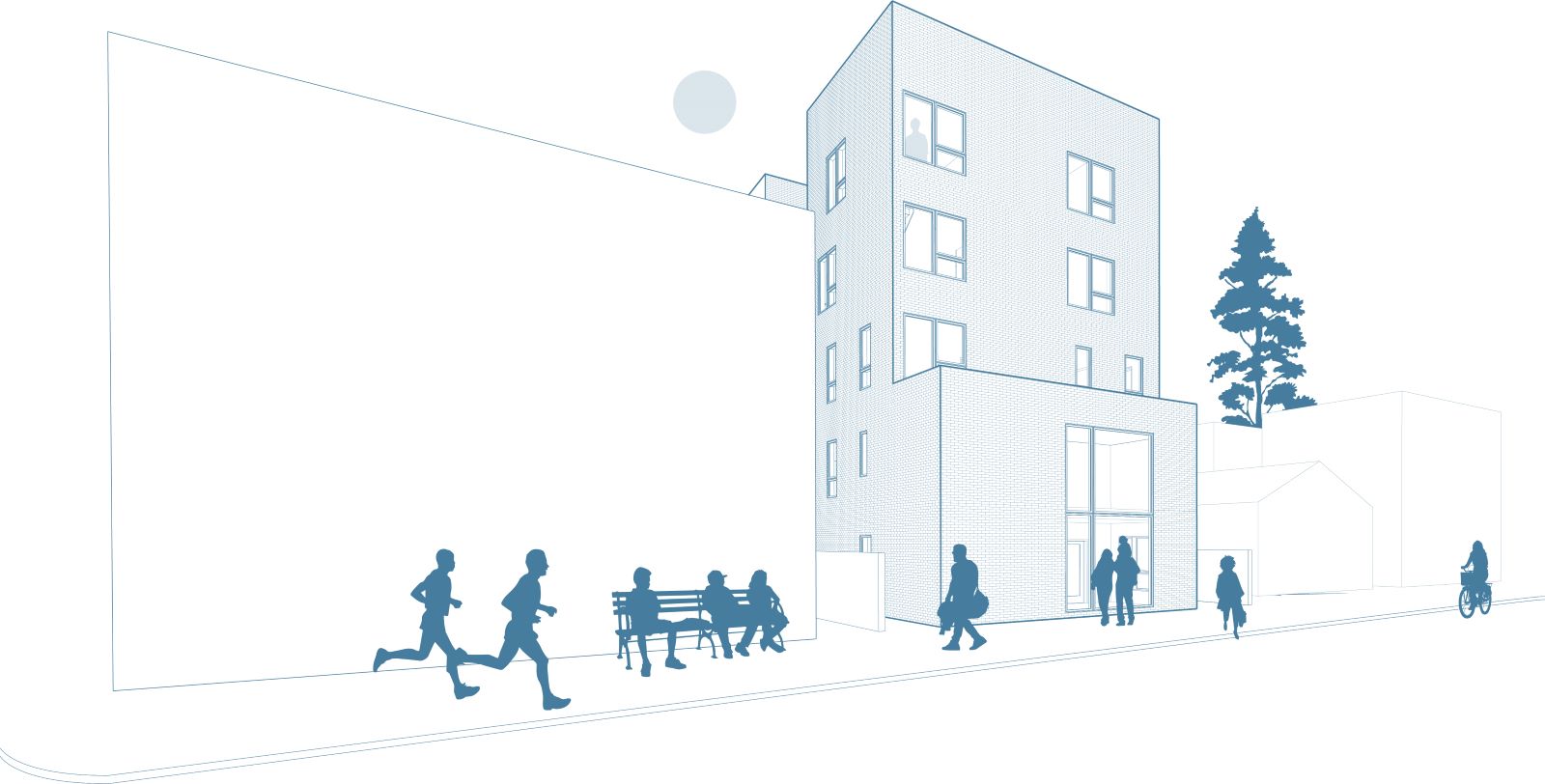
In addition to meeting very high environmental standards, social housing proponents are also hoping to design spaces that encourage socializing and social wellbeing. The courtyard space in the Northgate proposal seeks to foster those bonds, as does the rooftop and atrium in the Roosevelt proposal.
“You have these spaces that are designated to getting to know people, relationship-building community space,” McCoy said. “There’s this beautiful opportunity there to grow friends, maybe lifelong friends, that you wouldn’t have in a traditional apartment setting.”
House Our Neighbors is also planning to create a financial model, or “pro forma” in developer lingo, to go along with Neiman Taber’s architectural designs. That model would demonstrate the feasibility of actually turning the plan into a real-life building. Nonetheless, part of the value of the architectural plans is helping visualize for voters the work the Seattle Social Housing Developer would do — if they elect to fund it.
“We are just the ones creating the vision and showing people that this is what it looks like this is what could be in your neighborhood,” McCoy said. “People don’t know what this looks like. So that’s what we’re trying to do.”

Social housing advocates are confident of success in the upcoming February special election. McCoy did note that council added a wrinkle by putting a competing measure on the ballot, which will make it a two-part vote. House Our Neighbors is also expecting a more robust opposition campaign than in 2023, when there was no funding source involved.
“We’ll just have a little bit more education to do since the council put on their alternative, which isn’t social housing,” McCoy said. “It’s just getting people to recognize that you have to vote twice. You have to vote yes twice, not just one. You have to make sure to do [Prop] 1 and 1A.”
Nonetheless, recent results point toward likely success.
“Seattle has already showed us that they’re very, very strongly supportive of social housing. You’ve seen that with the 14-point win in February 2023. We’ve seen that again with over 38,000 people signing Initiative 137, now Proposition 1A,” McCoy said. “And we’ve seen overwhelmingly Washingtonians want to tax the wealthiest in our state in order to provide services that regular people need. I have no problem thinking that we will win resoundingly at the ballot.”

Doug Trumm is publisher of The Urbanist. An Urbanist writer since 2015, he dreams of pedestrianizing streets, blanketing the city in bus lanes, and unleashing a mass timber building spree to end the affordable housing shortage and avert our coming climate catastrophe. He graduated from the Evans School of Public Policy and Governance at the University of Washington in 2019. He lives in East Fremont and loves to explore the city on his bike.


I caught this neighbor red-handed cleaning up the beach at Lincoln Park after last night’s … festivities…
She�…

SEATTLE, WA – JULY 4: Dominique Malonga #14 of the Seattle Storm drives to the basket during the game against the Portland Fire on July 4, 2026 at Climate Pledge Arena in Seattle, Washington. (David Ryder / NBAE / Getty Images)
SEATTLE – Carla Leite scored 20 points to lead the Portland Fire to a 77-72 victory over the Seattle Storm on Saturday night.
Leite made 4 of 8 shots and all 12 of her free throws, adding four assists for Portland (9-12). Bridget Carleton totaled 14 points and seven rebounds, while Megan Gustafson added 10 points and nine boards.
Dominique Malonga had 22 points to pace Seattle (5-17) and Natisha Hiedeman scored 15. Awa Fam had 12 points, while fellow rookie Flau’jae Johnson was held to a season-low one point.
Leite had two three-point plays to start the third quarter and Frieda Buhner came off the bench to score all nine of her points over a six-minute span as Portland turned a 32-30 halftime lead into a 54-47 advantage. Gustafson sank a 3-pointer for a 41-38 lead and the Fire never trailed again.
Emily Engstler had all nine of her points and six of her eight rebounds by halftime, helping Portland outscore Seattle 22-10 in the second period for a two-point lead at the break.
Hiedeman had nine points in the first quarter and Seattle used a 13-2 run over the final 5:27 to take a 20-10 lead before falling to 0-12 against Western Conference opponents this season.
Portland went 1-3 on a four-game trip.
Up next
Seattle: At Los Angeles Sparks on Monday.
Portland: Hosts Las Vegas Aces on Thursday.
The Source: Information in this story came from The Associated Press.
MORE STORM NEWS FROM FOX 13 SEATTLE
Kahleah Copper’s 23 points leads Mercury to 90-67 win over Seattle Storm
Flau’jae Johnson, Awa Fam lead Seattle Storm 105-90 over Dream
Flau’jae Johnson scores career-high 28 as Seattle Storm end losing streak with 99-88 win over Liberty
Seattle Storm losing streak reaches 10 with 93-73 loss to Mercury
Dominique Malonga scores career-high 28 points, but Seattle Storm lose ninth-straight 94-89 to Fire
To get the best local news, weather and sports in Seattle for free, sign up for the daily FOX Seattle Newsletter.
Download the free FOX LOCAL app for mobile in the Apple App Store or Google Play Store for live Seattle news, top stories, weather updates and more local and national news.

An exciting cross-conference WNBA matchup takes center stage on Independence Day as the Portland Fire travel north to the Emerald City to clash with the Seattle Storm at Climate Pledge Arena on Saturday, July 4, 2026, at 6:00 PM PT.
The home-standing Storm look to assert their dominance behind a balanced offensive attack led by dynamic playmaker Dominique Malonga and veteran guard Naty Hiedeman. The visiting Fire will try to play the ultimate holiday spoiler, counting on a heavy scoring punch from Carla Leite to disrupt Seattle’s defensive rhythm. To help you locate the sharpest analytical angles before tip-off, we cross-referenced our advanced game simulations with live, crowd-sourced contract data from Polymarket, the world’s largest decentralized prediction platform.
Fire vs. Storm: Matchup Overview
- Teams: Portland Fire vs. Seattle Storm
- Date: Saturday, July 4, 2026
- Time: 6:00 PM PT
- Venue: Climate Pledge Arena (Seattle, WA)
Current Betting Odds
- Spread: Storm -4.5 (+100), Fire +4.5 (-106)
- Total (Over/Under): 171.5 Points
- Moneyline: Fire +170, Storm -174
The odds and lines featured in this article are the best available from selected sports betting sites like Novig and BetMGM at the time of publication and are subject to change.
Polymarket Prediction Market Insights:
Polymarket’s liquid wagering pools offer real-time tracking of public and sharp sentiment, where contract share prices adjust fluidly to represent precise market-implied probabilities:
- Seattle Storm Moneyline (To Win): 63¢ (63% implied probability)
- Portland Fire Moneyline (To Win): 38¢ (38% implied probability)
- Storm Spread (-4.5): 50¢ (50% implied probability)
- Fire Spread (+4.5): 52¢ (52% implied probability)
- Total Points Over 171.5: 51¢ (51% implied probability)
- Total Points Under 171.5: 50¢ (50% implied probability)
(Note: Prediction market participants on Polymarket are trading the game notably closer than standard sportsbooks, pricing Seattle as a more modest 63% moneyline favorite).
Deep Betting Market Analysis & Projections
By routing raw roster efficiency matrices, player matchup data, and home-court advantages through 10,000 algorithmic simulations, our predictive engine has mapped out the highest-probability vectors for Saturday’s showdown:
1. Outright Moneyline: Seattle Storm (73.7% Win Probability)
- The Data: Our machine-learning model gives Seattle a commanding 73.7% probability to win straight up.
- The Angle: This represents a massive value gap on the prediction exchanges. While sportsbooks have priced the Storm heavily at -174, Polymarket traders are valuing Seattle shares at just 63¢. Backing the Storm moneyline contract on Polymarket provides exceptional statistical leverage over standard bookmaker juice.
2. The Point Spread: Storm -4.5 (+100)
- The Data: Simulations indicate a strong 58.0% probability that Seattle covers the -4.5 spread.
- The Angle: Our model projects a final score of Storm 88, Fire 81, indicating a seven-point victory for the hosts. Laying the 4.5 points with Seattle at even money (+100) on Novig represents an analytical edge over public sentiment.
3. Game Total: Under 171.5 Points (+106)
- The Data: The simulation baseline shows a clear 58.6% lean toward the Under.
- The Angle: Our projected combined score sits at 169 points. With Novig offering a plus-money premium of +106 on the Under, fading a high-scoring track meet provides a very comfortable mathematical cushion compared to public expectations.
WNBA Player Props: Projected Box Scores
To evaluate how the individual stars will impact the floor at Climate Pledge Arena, here is the statistical breakdown from our game simulations:
Seattle Storm Projection
- Dominique Malonga: 18 PTS, 9 REB, 2 AST
- Naty Hiedeman: 14 PTS, 2 REB, 4 AST
- Awak Kuier Fam: 13 PTS, 5 REB, 2 AST
- Flau’jae Johnson: 12 PTS, 4 REB, 2 AST
- Jordan Horston: 6 PTS, 3 REB, 2 AST
Portland Fire Projection
- Carla Leite: 15 PTS, 3 REB, 5 AST
- Brack Carleton: 10 PTS, 4 REB, 2 AST
- Megan Gustafson: 9 PTS, 3 REB, 1 AST
- Luisa Geiselsoder: 9 PTS, 5 REB, 2 AST
- Emily Engstler: 8 PTS, 5 REB, 2 AST
Fire vs. Storm Summary:
The data signals a celebratory night for Seattle fans, as the Storm are structurally positioned to handle their Pacific Northwest rivals. While backing Seattle on the flat moneyline via Polymarket yields the highest pure value, locking in Under 171.5 points (+106) provides an excellent statistical fallback play.
Remember to bet responsibly and within your financial limits. For additional resources and advice on responsible gambling, please call 1-800-GAMBLER.
Learn more about our gaming editorial staff.
If you or a loved one has questions or needs to talk to a professional about gambling, call 1-800-GAMBLER or visit 1800gambler.net for more information.
If you purchase a product or register for an account through a link on our site, we may receive compensation. By using this site, you consent to our User Agreement and agree that your clicks, interactions, and personal information may be collected, recorded, and/or stored by us and social media and other third-party partners in accordance with our Privacy Policy.
-

 Pennsylvania2 minutes ago
These 9 Towns In The Poconos Were Ranked Among US Favorites In 2026
-

 Rhode Island7 minutes ago
25-year-old drowns in Charlestown
-

 South Dakota17 minutes ago
One child dead following Hughes County fatal crash
-

 Tennessee29 minutes ago
Wild ride for temperatures: A look at Middle Tennessee’s first major heat wave of 2026
-

 Texas32 minutes ago
Riley Greene homers and triples for 4 RBIs as Tigers top Texas Rangers 6-3
-
 Utah37 minutes ago
Utah’s Venezuelan community gathers to honor victims, aid survivors after deadly earthquakes
-

 Vermont44 minutes ago
Vermont State Police seek missing Rutland man
-

 Virginia47 minutes ago
Way-Too-Early 2026 Virginia Tech Football Preview and Prediction: Week 12, @ Miami

