Seattle, WA
Seattle Architects Unveil Designs for Social Housing Ahead of February Vote – The Urbanist


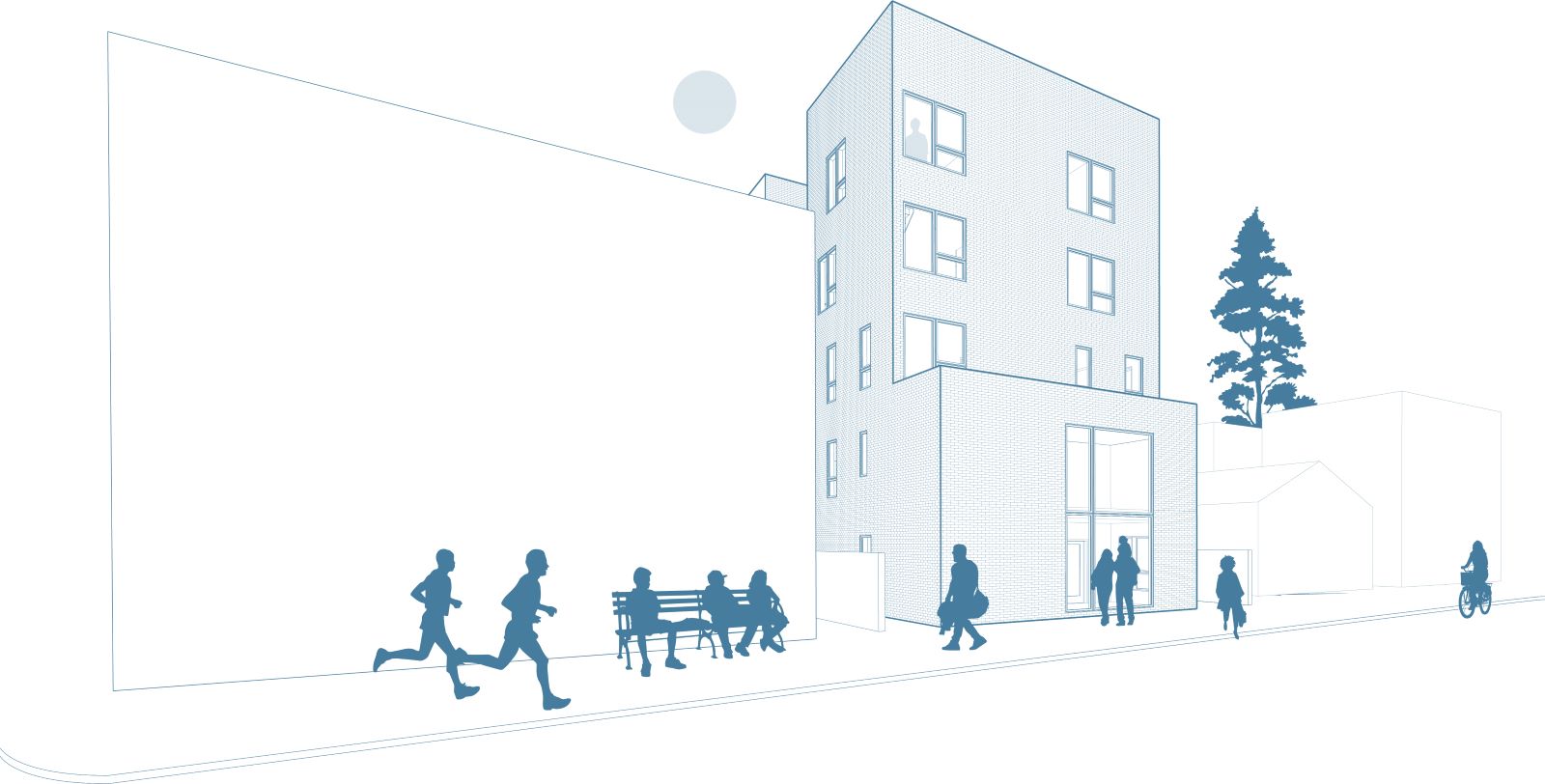
In support of their effort to build social housing in Seattle, the nonprofit House Our Neighbors recently released architectural designs for transforming a piece of surplus publicly-owned land in Northgate. In the vision, designed by Neiman Taber Architects, a row of townhomes, a block of family-sized apartments, and a wing of co-living efficiency studios are wrapped around a central courtyard.
While voters approved formation of the Seattle Social Housing Developer in 2023, the city has a special election on deck in February with dueling ballot measures to actually fund that public developer. House Our Neighbors put forward the grassroots Initiative 137 that will be on next February’s ballot as Proposition 1A, while the centrist majority on Seattle City Council proposed the reactionary alternative. Voters will be asked whether they want to fund social housing at all, and if yes, they’ll have to choose between one of the two options.
“For House Our Neighbors, [Neiman Taber Architects] designed a detailed proposal for this parcel as a proof-of-concept to expand our idea of what a brighter, more equitable future could actually look like,” House Our Neighbors wrote. “Their design shows what is possible when we put people over profit; A variety of unit types to suit all kinds of households — from students and working class people to elderly folks, people with mobility needs, and families with and without children and with ample communal space and an interior courtyard where the community can come together to socialize and support each other. All of it affordable. Forever.”

” data-medium-file=”https://www.theurbanist.org/wp-content/uploads/2024/11/Social-Housing-cross-section-Northgate-Way-by-Neiman-Taber-300×220.jpeg” data-large-file=”https://i2.wp.com/www.theurbanist.org/wp-content/uploads/2024/11/Social-Housing-cross-section-Northgate-Way-by-Neiman-Taber-1024×751.jpeg?ssl=1″ fifu-data-src=”https://i2.wp.com/www.theurbanist.org/wp-content/uploads/2024/11/Social-Housing-cross-section-Northgate-Way-by-Neiman-Taber-1024×751.jpeg?ssl=1″ alt=”A cross section shows the guts of the building with captions noting the unit mix, which included 15 two- or three-bedroom apartments, four two-bedroom townhomes, and 16 co-living one-bedroom apartments.” class=”wp-image-187550″ srcset=”https://i2.wp.com/www.theurbanist.org/wp-content/uploads/2024/11/Social-Housing-cross-section-Northgate-Way-by-Neiman-Taber-1024×751.jpeg?ssl=1 1024w, https://www.theurbanist.org/wp-content/uploads/2024/11/Social-Housing-cross-section-Northgate-Way-by-Neiman-Taber-300×220.jpeg 300w, https://www.theurbanist.org/wp-content/uploads/2024/11/Social-Housing-cross-section-Northgate-Way-by-Neiman-Taber-768×563.jpeg 768w, https://www.theurbanist.org/wp-content/uploads/2024/11/Social-Housing-cross-section-Northgate-Way-by-Neiman-Taber-573×420.jpeg 573w, https://www.theurbanist.org/wp-content/uploads/2024/11/Social-Housing-cross-section-Northgate-Way-by-Neiman-Taber-80×60.jpeg 80w, https://www.theurbanist.org/wp-content/uploads/2024/11/Social-Housing-cross-section-Northgate-Way-by-Neiman-Taber-696×510.jpeg 696w, https://www.theurbanist.org/wp-content/uploads/2024/11/Social-Housing-cross-section-Northgate-Way-by-Neiman-Taber-1068×783.jpeg 1068w, https://www.theurbanist.org/wp-content/uploads/2024/11/Social-Housing-cross-section-Northgate-Way-by-Neiman-Taber.jpeg 1080w” sizes=”(max-width: 1024px) 100vw, 1024px”><figcaption class=) The project envisioned on Northgate Way would create a central courtyard greenspace for socializing. (Neiman Taber Architects)
The project envisioned on Northgate Way would create a central courtyard greenspace for socializing. (Neiman Taber Architects)House Our Neighbors Co-Executive Director Tiffani McCoy said more design examples are on the way, with a call out for architects to lay out their own visions for surplus City-owned parcels.
“This is all pro bono from these architecture firms, but we know from I-135 that architects are incredibly excited about social housing, not just because they would be able to actually afford to live in the city in which they work, because architects are often between 80 to 120% of AMI [area median income], but also, you know, they’re just so restricted in their craft,” McCoy told The Urbanist. “Their creativity is really lost a lot because we’re more focused on quantity over quality, which has its benefits. But especially working in typical affordable housing buildings, the focus is as many as you can with the amount of funding.”

” data-medium-file=”https://www.theurbanist.org/wp-content/uploads/2024/11/1319-N-Northgate-Way-Aerial-View-social-housing-by-Neiman-Taber-300×220.jpg” data-large-file=”https://i2.wp.com/www.theurbanist.org/wp-content/uploads/2024/11/1319-N-Northgate-Way-Aerial-View-social-housing-by-Neiman-Taber-1024×751.jpg?ssl=1″ fifu-data-src=”https://i2.wp.com/www.theurbanist.org/wp-content/uploads/2024/11/1319-N-Northgate-Way-Aerial-View-social-housing-by-Neiman-Taber-1024×751.jpg?ssl=1″ alt=”” class=”wp-image-187570″ srcset=”https://i2.wp.com/www.theurbanist.org/wp-content/uploads/2024/11/1319-N-Northgate-Way-Aerial-View-social-housing-by-Neiman-Taber-1024×751.jpg?ssl=1 1024w, https://www.theurbanist.org/wp-content/uploads/2024/11/1319-N-Northgate-Way-Aerial-View-social-housing-by-Neiman-Taber-300×220.jpg 300w, https://www.theurbanist.org/wp-content/uploads/2024/11/1319-N-Northgate-Way-Aerial-View-social-housing-by-Neiman-Taber-768×563.jpg 768w, https://www.theurbanist.org/wp-content/uploads/2024/11/1319-N-Northgate-Way-Aerial-View-social-housing-by-Neiman-Taber-573×420.jpg 573w, https://www.theurbanist.org/wp-content/uploads/2024/11/1319-N-Northgate-Way-Aerial-View-social-housing-by-Neiman-Taber-1145×840.jpg 1145w, https://www.theurbanist.org/wp-content/uploads/2024/11/1319-N-Northgate-Way-Aerial-View-social-housing-by-Neiman-Taber-80×60.jpg 80w, https://www.theurbanist.org/wp-content/uploads/2024/11/1319-N-Northgate-Way-Aerial-View-social-housing-by-Neiman-Taber-696×511.jpg 696w, https://www.theurbanist.org/wp-content/uploads/2024/11/1319-N-Northgate-Way-Aerial-View-social-housing-by-Neiman-Taber-1068×783.jpg 1068w, https://www.theurbanist.org/wp-content/uploads/2024/11/1319-N-Northgate-Way-Aerial-View-social-housing-by-Neiman-Taber.jpg 1280w” sizes=”(max-width: 1024px) 100vw, 1024px”><figcaption class=) A rendering of the Northgate proposal show a brick townhome row and brick co-living building next to the larger building with family-sized apartments. The courtyard includes a playground and families playing or relaxing. (Neiman Taber)
A rendering of the Northgate proposal show a brick townhome row and brick co-living building next to the larger building with family-sized apartments. The courtyard includes a playground and families playing or relaxing. (Neiman Taber)
The first social housing prototype came from the 2023 Seattle Design Festival with a submission by architects Jacqui Aiello and Anna Brodersen, McCoy said. The pair proposed a nine-unit apartment building with one ground-floor commercial space and a mix of unit sizes including two- and three-bedroom units. The roughly 4,000-square-foot lot being eyed was a surplus City-owned site at 1405 NE 65th Street in Roosevelt.

” data-medium-file=”https://www.theurbanist.org/wp-content/uploads/2024/11/PASSIVHAUS-JD-Roosvelt-Example-by-Jacqui-Aiello-and-Anna-Brodersen-300×194.jpg” data-large-file=”https://i2.wp.com/www.theurbanist.org/wp-content/uploads/2024/11/PASSIVHAUS-JD-Roosvelt-Example-by-Jacqui-Aiello-and-Anna-Brodersen-1024×663.jpg?ssl=1″ fifu-data-src=”https://i2.wp.com/www.theurbanist.org/wp-content/uploads/2024/11/PASSIVHAUS-JD-Roosvelt-Example-by-Jacqui-Aiello-and-Anna-Brodersen-1024×663.jpg?ssl=1″ alt=”” class=”wp-image-187564″ srcset=”https://i2.wp.com/www.theurbanist.org/wp-content/uploads/2024/11/PASSIVHAUS-JD-Roosvelt-Example-by-Jacqui-Aiello-and-Anna-Brodersen-1024×663.jpg?ssl=1 1024w, https://www.theurbanist.org/wp-content/uploads/2024/11/PASSIVHAUS-JD-Roosvelt-Example-by-Jacqui-Aiello-and-Anna-Brodersen-300×194.jpg 300w, https://www.theurbanist.org/wp-content/uploads/2024/11/PASSIVHAUS-JD-Roosvelt-Example-by-Jacqui-Aiello-and-Anna-Brodersen-768×497.jpg 768w, https://www.theurbanist.org/wp-content/uploads/2024/11/PASSIVHAUS-JD-Roosvelt-Example-by-Jacqui-Aiello-and-Anna-Brodersen-1536×994.jpg 1536w, https://www.theurbanist.org/wp-content/uploads/2024/11/PASSIVHAUS-JD-Roosvelt-Example-by-Jacqui-Aiello-and-Anna-Brodersen-649×420.jpg 649w, https://www.theurbanist.org/wp-content/uploads/2024/11/PASSIVHAUS-JD-Roosvelt-Example-by-Jacqui-Aiello-and-Anna-Brodersen-1298×840.jpg 1298w, https://www.theurbanist.org/wp-content/uploads/2024/11/PASSIVHAUS-JD-Roosvelt-Example-by-Jacqui-Aiello-and-Anna-Brodersen-696×450.jpg 696w, https://www.theurbanist.org/wp-content/uploads/2024/11/PASSIVHAUS-JD-Roosvelt-Example-by-Jacqui-Aiello-and-Anna-Brodersen-1392×901.jpg 1392w, https://www.theurbanist.org/wp-content/uploads/2024/11/PASSIVHAUS-JD-Roosvelt-Example-by-Jacqui-Aiello-and-Anna-Brodersen-1068×691.jpg 1068w, https://www.theurbanist.org/wp-content/uploads/2024/11/PASSIVHAUS-JD-Roosvelt-Example-by-Jacqui-Aiello-and-Anna-Brodersen-1920×1242.jpg 1920w, https://www.theurbanist.org/wp-content/uploads/2024/11/PASSIVHAUS-JD-Roosvelt-Example-by-Jacqui-Aiello-and-Anna-Brodersen.jpg 2000w” sizes=”(max-width: 1024px) 100vw, 1024px”><figcaption class=) A diagram lays out the Passivhaus environmental standards of the project, which includes a greenscaping, white roof, cross ventilation, and high quality thermal insulation. (Neiman Taber)
A diagram lays out the Passivhaus environmental standards of the project, which includes a greenscaping, white roof, cross ventilation, and high quality thermal insulation. (Neiman Taber)
As laid out in the charter for the Seattle Social Housing Developer, the Roosevelt building would be built to Passive House standards, which go above and beyond the energy efficiency and sustainability requirements of Seattle’s already rigorous code.
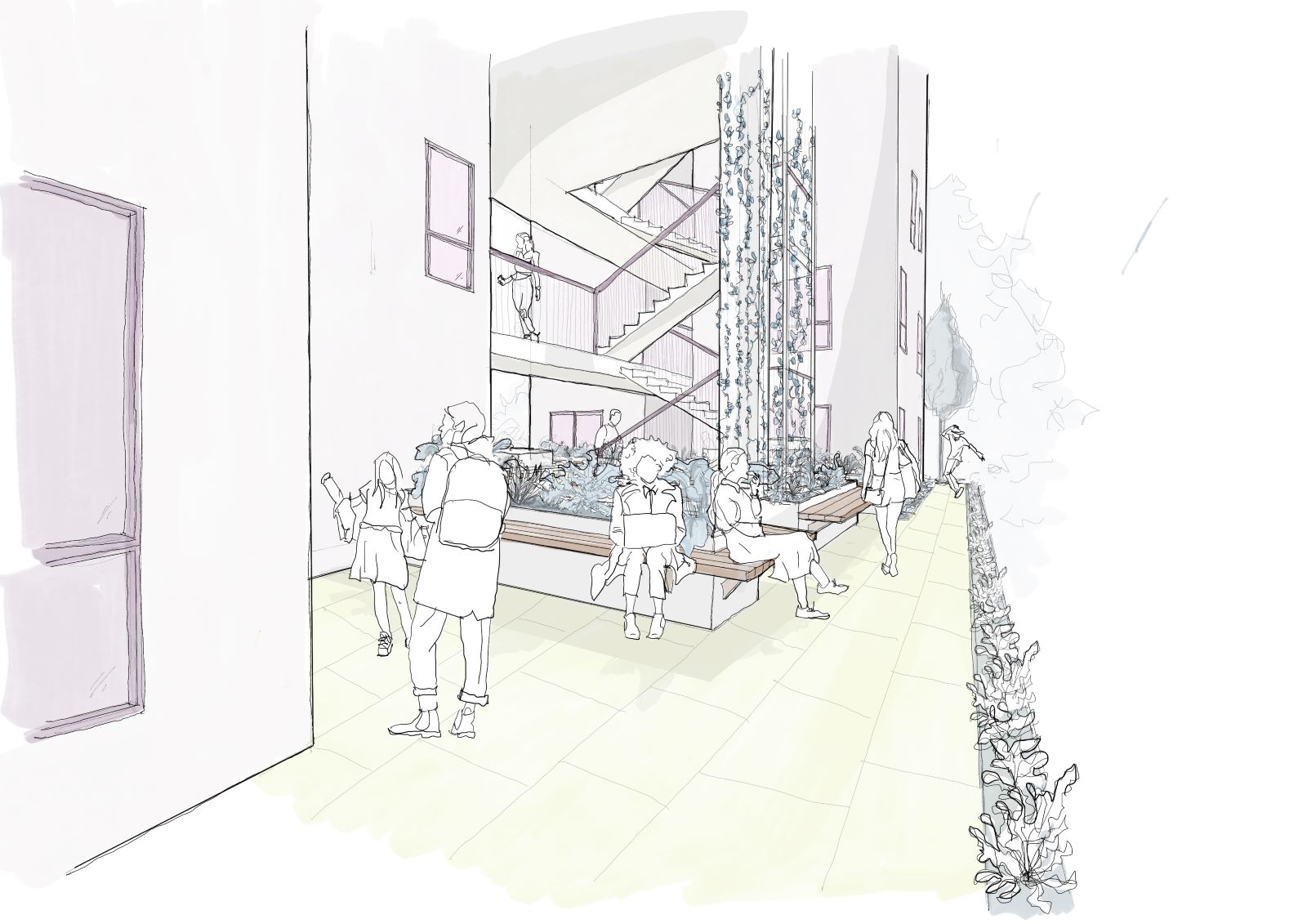
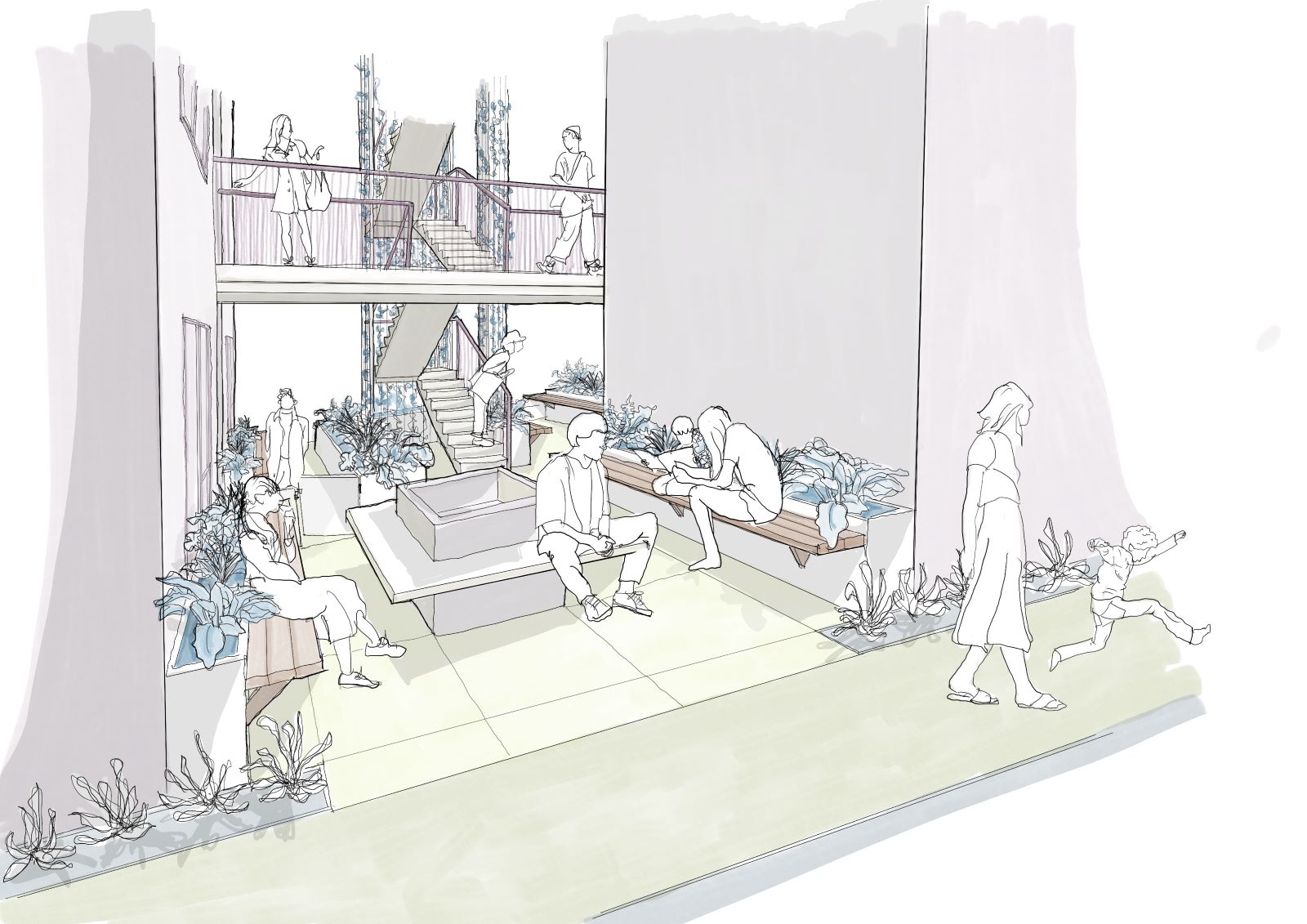
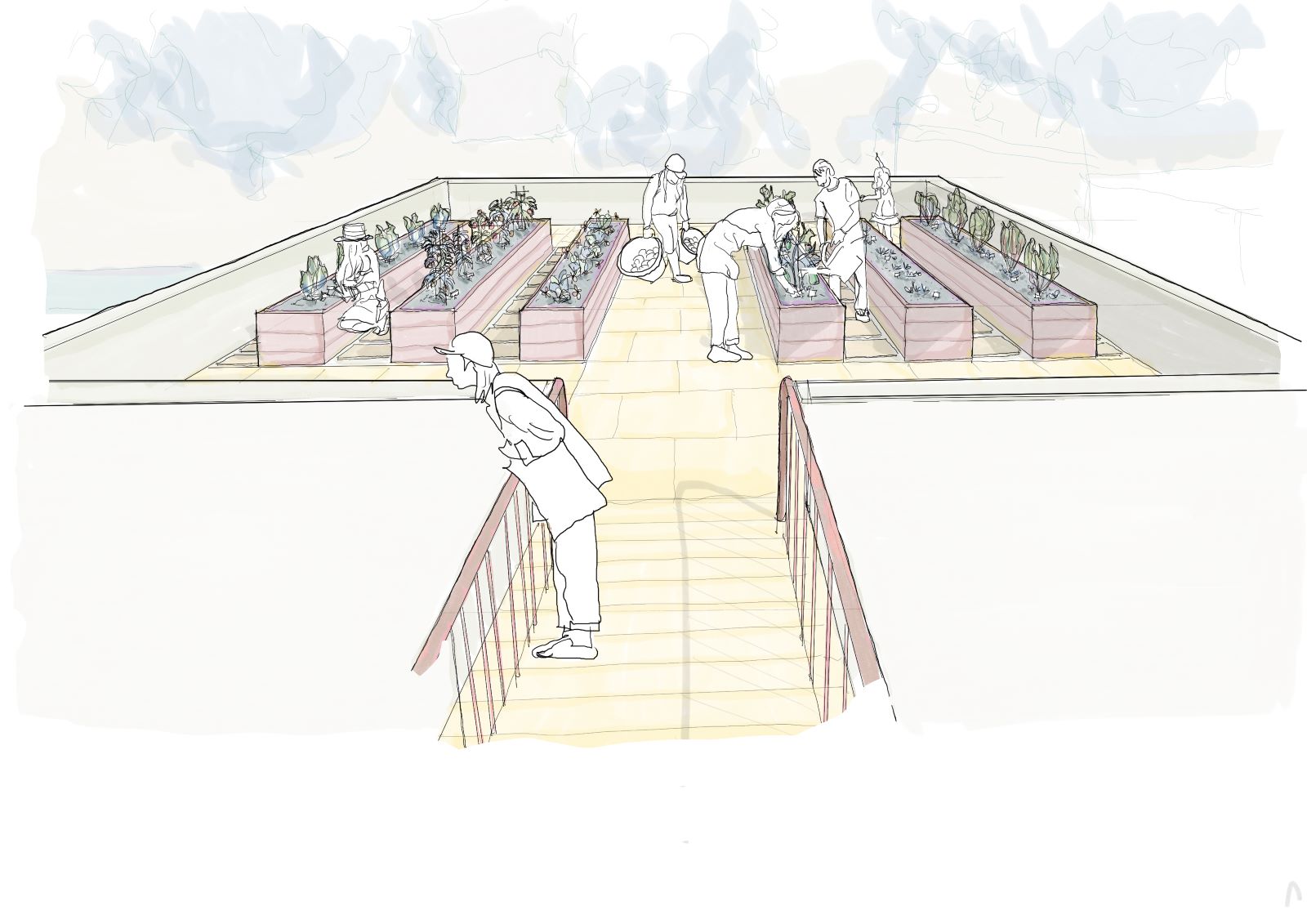
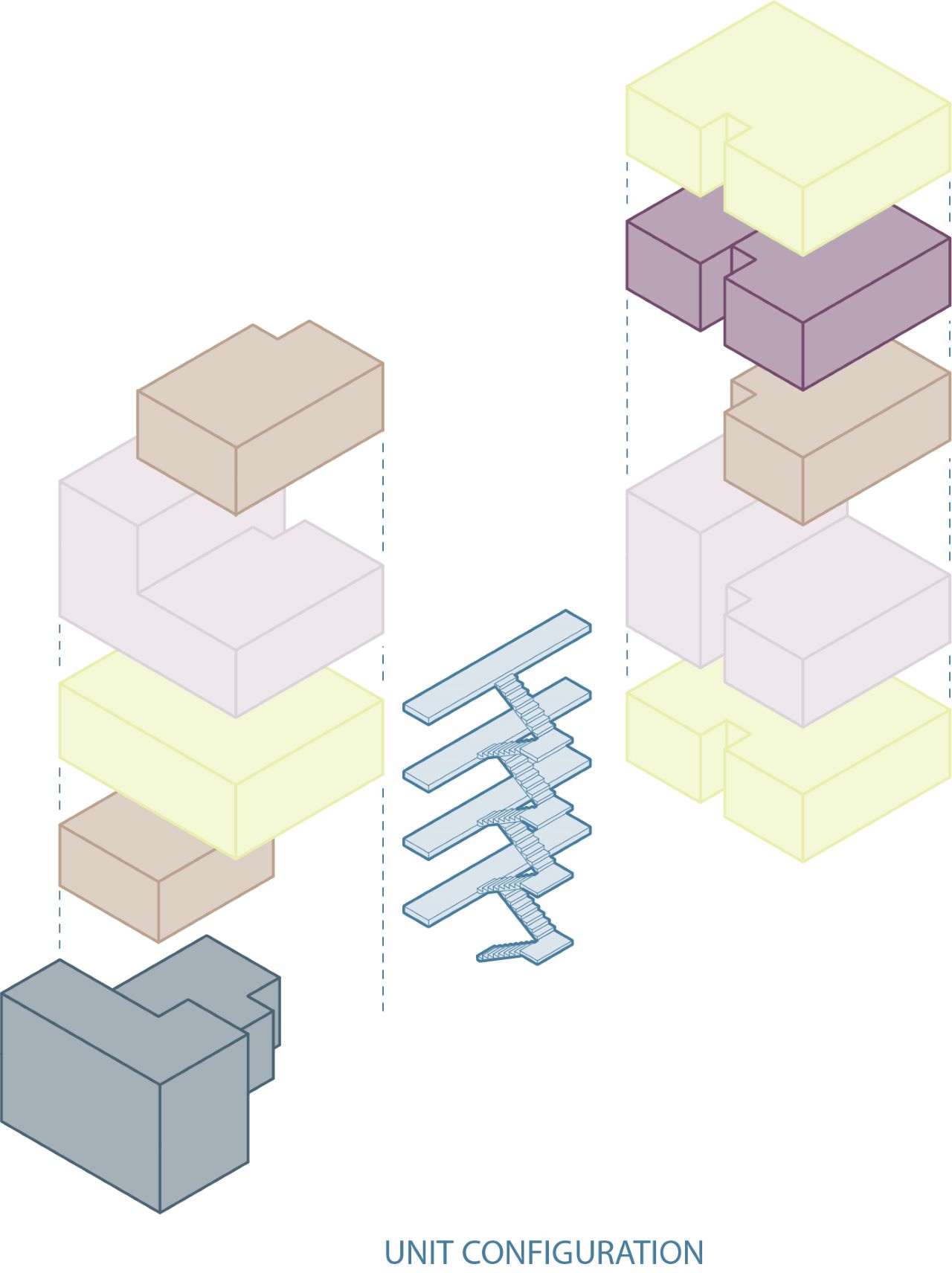
In addition to meeting very high environmental standards, social housing proponents are also hoping to design spaces that encourage socializing and social wellbeing. The courtyard space in the Northgate proposal seeks to foster those bonds, as does the rooftop and atrium in the Roosevelt proposal.
“You have these spaces that are designated to getting to know people, relationship-building community space,” McCoy said. “There’s this beautiful opportunity there to grow friends, maybe lifelong friends, that you wouldn’t have in a traditional apartment setting.”
House Our Neighbors is also planning to create a financial model, or “pro forma” in developer lingo, to go along with Neiman Taber’s architectural designs. That model would demonstrate the feasibility of actually turning the plan into a real-life building. Nonetheless, part of the value of the architectural plans is helping visualize for voters the work the Seattle Social Housing Developer would do — if they elect to fund it.
“We are just the ones creating the vision and showing people that this is what it looks like this is what could be in your neighborhood,” McCoy said. “People don’t know what this looks like. So that’s what we’re trying to do.”

Social housing advocates are confident of success in the upcoming February special election. McCoy did note that council added a wrinkle by putting a competing measure on the ballot, which will make it a two-part vote. House Our Neighbors is also expecting a more robust opposition campaign than in 2023, when there was no funding source involved.
“We’ll just have a little bit more education to do since the council put on their alternative, which isn’t social housing,” McCoy said. “It’s just getting people to recognize that you have to vote twice. You have to vote yes twice, not just one. You have to make sure to do [Prop] 1 and 1A.”
Nonetheless, recent results point toward likely success.
“Seattle has already showed us that they’re very, very strongly supportive of social housing. You’ve seen that with the 14-point win in February 2023. We’ve seen that again with over 38,000 people signing Initiative 137, now Proposition 1A,” McCoy said. “And we’ve seen overwhelmingly Washingtonians want to tax the wealthiest in our state in order to provide services that regular people need. I have no problem thinking that we will win resoundingly at the ballot.”

Doug Trumm is publisher of The Urbanist. An Urbanist writer since 2015, he dreams of pedestrianizing streets, blanketing the city in bus lanes, and unleashing a mass timber building spree to end the affordable housing shortage and avert our coming climate catastrophe. He graduated from the Evans School of Public Policy and Governance at the University of Washington in 2019. He lives in East Fremont and loves to explore the city on his bike.



WINNIPEG, Manitoba — The Kraken dropped their fifth-straight game as the Jets won 6-2 in Winnipeg.
The loss adds to the dwindling Stanley Cup Playoff hopes for a Kraken team that’s made the postseason just once since the team began playing in the 2021-2022 season.
The Kraken’s (32-33-11) 75 points trail the Nashville Predators’ 81 points with just six games remaining.
The Jets, Los Angeles Kings, San Jose Sharks, and Saint Louis Blues are ahead of the Kraken in the standings as teams jockey for Wild Card spots.
Kraken captain Jordan Eberle opened the scoring in the first period to give Seattle a 1-0 lead.
The Jets then scored once in the first period and twice in the second to take a 3-2 advantage into the third.
Goalkeeper Joey Daccord was pulled after allowing two goals on 12 shots.
Forward Jared McCann scored early in the third period to bring the Kraken to within one.
The Jets then scored two unanswered goals and an empty-net goal to seal the 6-2 win.
Up next
The Kraken play at the Minnesota Wild on Tuesday.

(Photo by James Bratsanos)
Here’s the Monday list of highlights, most (but not all) from our West Seattle Event Calendar:
PUBLIC HEARING ON UPZONING PROPOSAL: As previewed here, the City Council is holding an all-day public hearing, both in-person and online/phone, under way right now – the agenda explains how to participate.
FREE TAX HELP: The deadline’s nearing … If you need assistance, today from 11 am-4 pm, find drop-in help at Alki Masonic Center. (4736 40th SW)
BABY STORY TIME: Noon at Southwest Library (9010 35th SW). Free.
NO CITY COUNCIL BRIEFING MEETING: Regular 2 pm meeting is canceled today because of the aforementioned all-day hearing.
LONG-DISTANCE ADVOCACY: Write postcards to far-away voters with West Seattle Indivisible, 3:30-5:30 pm at West Seattle (Admiral) Library (2306 42nd SW)
HIGH-SCHOOL SPORTS: In baseball, West Seattle HS vs. Seattle Academy, 3:30 pm at Delridge Playfield (4501 Delridge Way SW); at 4 pm, the Chief Sealth IHS boys’ tennis team plays Rainier Beach at Nino Cantu SW Athletic Complex (2801 SW Thistle); also at 4 pm at NCSWAC vs. Rainier Beach, West Seattle HS plays softball.
FREE HOMEWORK HELP: Drop-in assistance for K-12 students at High Point Library (3411 SW Raymond), 4-5:45 pm.
‘BEFORE THE BADGE’: 5:30 pm, community conversation with SPD recruits, online; our calendar listing explains how to participate.
D&D: Long-running weekly D&D at 6:30 pm at Meeples Games (3727 California SW). All welcome, first-time players too!
‘LISTENING TO GRIEF’ SUPPORT GROUP: 6:30 pm, weekly group gathering for people experiencing grief – you can participate once, weekly, or occasionally. Fee. Before you go, RSVP/register here. (4034 California SW)
ALKI MEDITATION: Monday night meditation at Alki UCC, doors open at 6:45, meditation at 7. (6115 SW Hinds)
MONDAY NIGHT TRIVIA X 3: Three venues for trivia/quiz tonight! Music Quiz at Easy Street Records (4559 California SW), 6:30 and 7:30 pm … 7 pm at The Good Society (California/Lander) … and 7:30 pm with QuizFix at The Skylark (3803 Delridge Way SW).
POOL TOURNAMENT: If you play pool, you’re invited to enter The Corner Pocket‘s weekly tournament starting at 7 pm. $10 buy-in. (4302 SW Alaska)
FAUNTLEROY MEDITATION: Free weekly Zen sitting/meditation in the chapel at Fauntleroy UCC (9140 California SW), 7 pm-8:30 pm.
JAZZ AT THE ALLEY: Monday night music with The Westside Jazz Trio, 8 pm at The Alley (behind 4509 California SW), 21+, no cover.
KARAOKE AT TALARICO’S: 9 pm Mondays, karaoke at Talarico’s Pizzeria (4718 California SW).
Big thanks to everybody who sends info for our calendar; if you have something to add or cancel (or update), please send the info to westseattleblog@gmail.com – thank you!

Thanks for continuing to send West Seattle bird photos! We’ve gathered a few for this gallery. Above, Dan Ciske‘s view of Brant in the sunset; below, Robin Sinner photographed them earlier in the day:

Robin also shared this photo of a Barrow’s Goldeneye:
Leucistic (“caramel”) Crows turn up in West Seattle from time to time – Mark Rhea photographed this one:

Here’s a more conventionally colored one, courtesy of K. Smith:
K. also sent this unidentified bird (do you recognize it?):
And we have more recent views of the baby Anna’s Hummingbirds that recently fledged at West Seattle Nursery (WSB sponsor) – from Suzanne Krom:
And from Jerry Simmons:

Again, huge thanks to everyone who shares photos, from birds to breaking news and beyond – westseattleblog@gmail.com or (when urgent) text 206-293-6302 – thank you!

Former South Dakota AutoZone workers say they were bilked out of overtime pay

Tennessee Basketball Loses A Freshman Guard To The Transfer Portal | Rocky Top Insider

Gov. DeSantis to join Texas governor for Texas Stock Exchange event in Miami

Taylor Frankie Paul faces protective order hearing in Utah after ‘Bachelorette’ cancellation

Hour-by-hour: See when to expect steady snow Tuesday in Vermont, New York

Florida High School Football Rankings: Top 25 teams – Oct. 21

How old is Bo Nix? What to know about Oregon quarterback ahead of 2024 NFL Draft

Cleary's 21 help Le Moyne down Central Connecticut State 69-64 in OT

99th annual Pony Swim held in Virginia

Indiana Members Credit Union announced as new anchor tenant at Bottleworks District

Ilhan Omar calls Trump an ‘unhinged lunatic,’ urges booting him out of office
Between Budapest and Brussels: Péter Magyar’s political tightrope

Michigan muscles its way to program’s 2nd NCAA basketball title, beating UConn

Map: Minor Earthquake Strikes Near San Diego

Trump claims he’d win as the president of Venezuela — just needs to ‘quickly’ learn Spanish
-

 Atlanta, GA2 days ago
1 teenage girl killed, another injured in shooting at Piedmont Park, police say
-

 South-Carolina1 week ago
South Carolina vs TCU predictions for Elite Eight game in March Madness
-

 Movie Reviews5 days ago
Vaazha 2 first half review: Hashir anchors a lively, chaos-filled teen tale
-

 Vermont1 week ago
Skier dies after fall at Sugarbush Resort
-

 Politics1 week ago
Trump’s Ballroom Design Has Barely Been Scrutinized
-

 Politics1 week ago
JD Vance says he was ‘obsessed’ with UFOs, believes aliens are actually ‘demons’
-
 Entertainment5 days ago
Inside Ye’s first comeback show at SoFi Stadium
-

 Politics1 week ago
Jeffries declines to break with indicted Democrat after ethics panel’s guilty verdict