Seattle, WA
City Council proposal could lower delivery driver minimum wage law in Seattle


Delivery driver minimum wage law controversy
A new proposal in City Council could mean a change in a law for gig workers in Seattle.
SEATTLE – Seattle City Council is considering a proposed ordinance related to app-based worker labor standards that advocates say would harm gig workers in Seattle.
CB 120775 would revise major parts of the PayUp bill passed by the previous Seattle City Council in May 2022.
The original PayUp bill guarantees a minimum wage for gig workers.
The new proposal would pay gig workers based on an hourly rate when making deliveries to keep the wage at $19.97, which is Seattle’s mandated minimum wage, as well as add a per-mile minimum of $0.35.
Advocates of the original PayUp bill say when you consider payroll taxes and other fees that gig workers have to deal with, CB 120775 misses the mark for meeting the minimum wage.
“At the end of the day, this proposal is to return this industry to sub-minimum wages, which is why we oppose it,” said Danielle Alvarado, Executive Director of Working Washington.
Alvarado blamed customer fees that app-based delivery companies tacked onto customers as soon as the PayUp bill started in January. In Thursday’s Committee meeting, Seattle City Council President Sara Nelson also pointed the finger at customer fees.
“The fee has to go away because no one is disputing that was a catalyst to this,” said Councilmember Nelson.
Councilmember Nelson cited data from Drive Forward, saying the customer fees have reduced customer demand, hurting income for drivers and restaurants in Seattle.
In the past 3 months, DoorDash says there has been an estimated 300,000 fewer orders made in Seattle.
The company sent us this statement:
“It’s painfully clear from listening to Dashers, merchants and consumers that this new law simply isn’t working. The latest numbers show that the longer this law remains in place, the more harm it causes. The compromise proposal presented by Drive Forward that the City Council is considering is a promising step toward increasing affordability for consumers and restoring millions in lost revenue for merchants and Dashers in Seattle.”
However, Alvarado says companies like DoorDash need to share data, especially when it comes to customer fees and that data from Drive Forward is coming from a group founded and funded by Uber.
“So, that tells us it’s an industry-drafted policy which didn’t include so many other stakeholders,” said Alvarado.
Alvarado wants to see data when it comes to customer fees.
“We feel like data really should be provided to explain why those fees have been imposed on customers,” said Alvarado. “What is the impact of those fees on workers? All of that, we think, should be explored.”
Alvarado says CB 120775 also lacks transparency. As listed here, this proposed ordinance would “Eliminate OLS’s ability to require affirmative records production from companies for purposes of administration, evaluation, and enforcement.”
If CB 120775 passes, its impacts could spill beyond the gig worker economy.
“If we have parts of our economy where they say all bets are off, there are no expectations with how businesses treat workers, that’s something that will never stay to one segment,” said Alvarado.
While amendments could be made to CB 120775, a vote on this proposed ordinance could come as early as May 21.
We reached out to Seattle City Council, but a spokesperson said members were not available for interviews on Thursday.
More top headlines from FOX 13:
Suspect killed by SPD at Seattle hotel identified as retired Navy doctor
Family, friends remember two women killed by Elias Huizar
Seattle dog owner says pet sitter abandoned his senior dog with dementia
In-N-Out Burger proposes second Washington location
Washington’s gray wolf population recovering, warning issued for hikers
To get the best local news, weather and sports in Seattle for free, sign up for the daily FOX 13 Seattle newsletter.



SEATTLE — A man accused of stealing copper wire from the West Seattle Bridge is wanted after prosecutors say he failed to show up in court this week, prompting a warrant for his arrest.
New police body camera video shows an officer arresting the man, who had bundles of copper wire in his arms.
Seattle police arrested Gregory Wayne Galitzeck after prosecutors say he was caught stealing copper wire from the bridge in the middle of the night.
Court documents say Galitzeck had four 100-foot coils of stolen copper wire, causing about $100,000 in damage that Seattle City Light customers will have to pay to repair.
Prosecutors say that when he was caught, Galitzeck claimed to be a Seattle City Light employee.
People in West Seattle called the alleged theft shocking, but not surprising.
“I feel like we live in an alternate timeline now anyway, so nothings really surprising to me,” said Lisa Coronado, who lives in West Seattle.
The case comes amid a string of similar crimes. This was the second copper wire theft along the West Seattle Bridge in just weeks. Similar thefts have also hit agencies such as Sound Transit, with thieves selling copper wire for cash.
Galitzeck is charged with theft and impersonating a City Light worker. He was supposed to come to court this week to answer the charges but did not appear. A $5,000 warrant has been issued for his arrest.
JOIN THE CONVERSATION (19)
King County prosecutors are again pushing for a new law that would require recyclers to upload photos of purchased copper to a database, a step intended to help investigators track stolen metal.

Breast milk samples from moms in the Seattle area contained chemicals linked to health problems, new research has found.
The chemicals are often used in beverage can liners, receipt paper, and other products, and they’ve been linked to reproductive problems, cancer, and immune problems like asthma.
Ryan Babadi is the science director at the nonprofit Toxic Free Future, which co-authored the research. He said breast milk is still the best food for most babies.
“The problem is not breast milk,” he said. “The problem is that we have chemical policies that are allowing these contaminants to end up in women and breastmilk and result in exposure to infants during a very sensitive time period of development.”
Researchers collected breast milk from 50 women and tested it for various chemicals. They found that the majority of the samples contained BPA and the related chemical BPS, triclosan, and melamine. All three of these chemical groups are known as “endocrine disruptors” because they can mimic, block, or alter human hormones and thus affect a large number of systems. BPA, for example, has been linked to diabetes, the early onset of puberty, and a number of cancers. Triclosan interferes with thyroid function and could increase cancer risk. And melamine has been linked to kidney problems.
“This isn’t a problem that mothers or people in general can shop their way out of,” Babadi said. “We need government decision-makers and policymakers as well as the corporate environment to come up with policy solutions that protect us.”
RELATED: Trump administration actions contradict MAHA rhetoric on toxic chemicals
Breast milk for the study was collected in 2019. In the years since, Washington state has started regulating some of the chemicals the researchers found.
For example, as of last year, beverage cans in Washington aren’t allowed to contain BPA and related chemicals. And as of January, those chemicals aren’t allowed in receipt paper in the state.
That’s because, under a state law passed in 2019, the ecology department prioritizes harmful chemicals, identifies consumer products that contain those chemicals, and writes new regulations to ban or restrict them.
So far, the state has regulated not only BPA and related chemicals, but also phthalates in personal care products and vinyl flooring, triclosan in cosmetics, and PFAS chemicals in carpets, rugs, and furniture. Those last are known as “forever” chemicals because they do not degrade over time.
RELATED: 5 ways to reduce everyday exposure to ‘forever chemicals’
The state is now looking at chemicals in cosmetics, jewelry, cookware, paint, and artificial turf, among other products, for possible future regulation.
The state has not looked at banning or restricting melamine, one of the chemicals the researchers found in breast milk.
Babadi said in an email that Washington’s law is the nation’s strongest for regulating toxic chemicals, but he said it needed to be improved “to be able to enact bans in urgent scenarios when, for example, we observe harmful chemicals in breast milk.” The process for restricting new chemicals currently takes at least five years.
Marissa Smith is a toxicologist and the former technical lead for the Safer Products for Washington program. She now works on chemical policies across the ecology department.
She said the state’s current process of chemical regulation helps build compliance by giving manufacturers and industries plenty of lead time and compliance assistance.
“We generally do see compliance with state laws,” she added. “Most manufacturers want to sell products that are compliant.”
RELATED: Trump cuts demolish agency focused on toxic chemicals and workplace hazards
Smith emphasized that state-level chemical regulations like those in Washington and California can have an effect across the country, as manufacturers switch over to safer alternatives for their entire supply chain.
And Smith sees other reasons for hope.
“ Products are getting safer over time,” she said. “ There were some toxic flame retardants that were used in kids’ pajamas and other products, and we banned those, and we actually saw concentrations in our bodies and in our environment go down.”
For another example, Smith pointed to the dramatic decline in how much lead was in children’s blood after the U.S. banned leaded gasoline in 1996.
“ There’s just a lot of examples where we have actually regulated products and we’ve seen reductions in people’s exposure,” Smith said.
Seattle, WA
14-year-old dies in Seattle e-bike crash at Colonnade Park after losing control on steep stairs – MyNorthwest.com

A 14-year-old boy was killed Monday evening after crashing a motorized electric bicycle while riding down a steep staircase at Seattle’s Colonnade Park, according to the Seattle Police Department (SPD).
Investigators said the teenager was riding an e-bike on a staircase inside the park, located beneath I-5 near the Ship Canal Bridge, when he lost control. He suffered severe head and body injuries.
Seattle Fire Department (SFD) medics attempted life-saving measures, but the teen died at the scene, according to police.
The crash happened at Colonnade Park, a popular mountain biking destination known for its technical trails and riding features. Police said the investigation determined the teen lost control while attempting to ride down the steep stairs. Because of the victim’s age, SPD’s Homicide Unit responded to conduct the investigation, though authorities said the death appears to have been a tragic accident.
The fatal crash comes as electric bicycles continue to grow in popularity among teenagers and young adults across Washington and the country.
Research published by the American College of Surgeons has found that riders injured on electric bicycles are more likely to suffer serious trauma than riders on traditional bicycles. The study found e-bike riders faced a 17% risk of internal injuries compared with 7.5% for riders on conventional bicycles, a difference researchers attributed in part to the heavier weight and higher speeds of electric bikes.
Under Washington law, electric bicycles capable of producing more than 750 watts of power or traveling faster than 28 mph while powered by a motor are not classified as e-bikes and may instead be regulated as motor-driven cycles or motorcycles.
The Seattle tragedy follows several recent serious crashes involving young e-bike riders. Earlier this year, a child was critically injured in Kirkland after an e-bike collided with a vehicle, while other fatal e-bike crashes involving teenagers have been reported in Illinois and Missouri.
SPD will continue to investigate the circumstances surrounding the crash.
Follow Luke Duecy on X. Read more of his stories here. Submit news tips here.

-

 South Dakota3 minutes ago
Petition to clarify South Dakota proof of citizenship law shot down over technicality
-

 Tennessee6 minutes ago
Tennessee State men’s hockey cancels 2026-27 inaugural season for second straight year
-

 Texas11 minutes ago
Ted Cruz warns Talarico has ‘real chance’ to flip Texas’ U.S. Senate seat
-

 Utah18 minutes ago
Man suspected in 2006 Utah murder left suicide note in Las Vegas jail cell: police
-
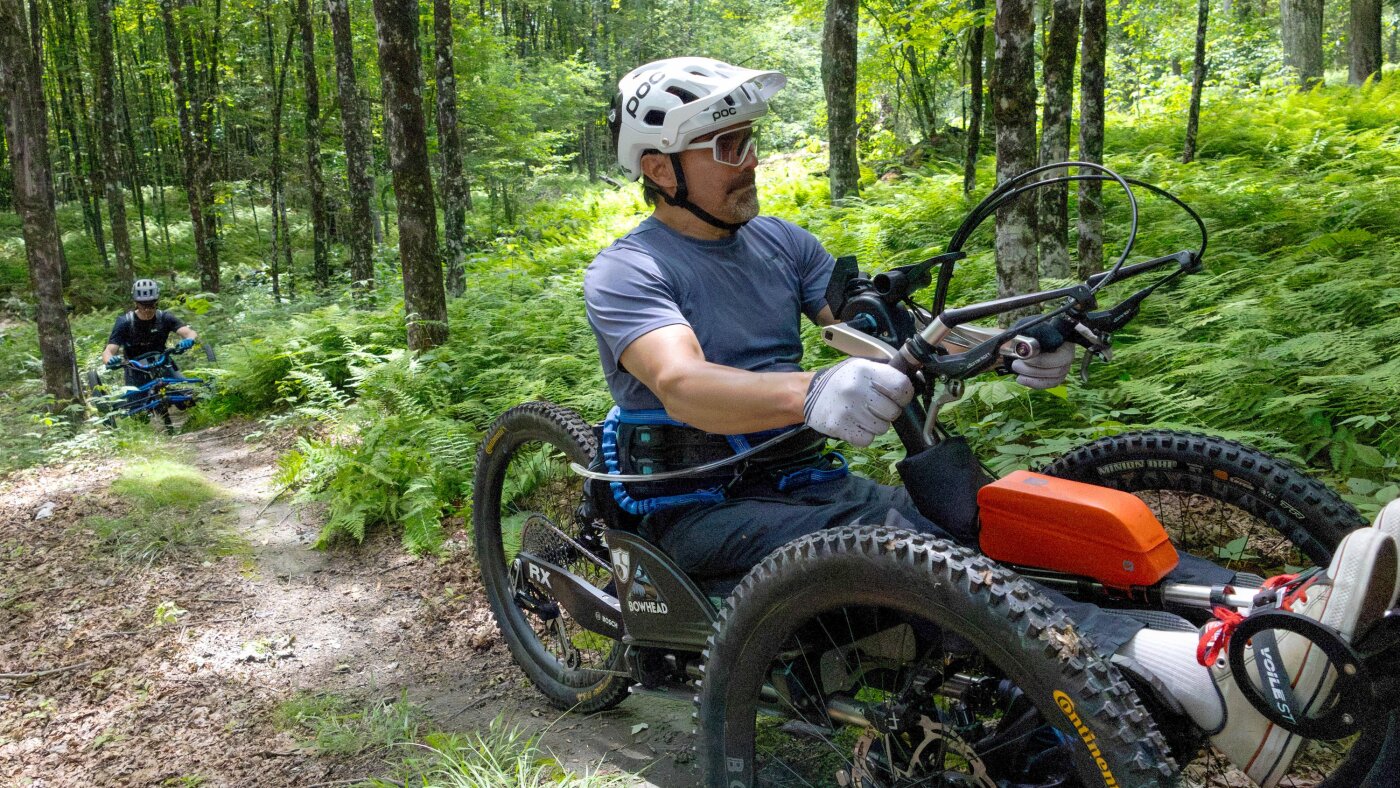 Vermont21 minutes ago
OUTDOOR ACCESS FOR DISABLED IN VERMONT
-
 Virginia26 minutes ago
4 indicted in Virginia double homicide; second victim ID’d as grandmother of 6
-

 Washington33 minutes ago
Washington Commanders are retiring Hall of Famer John Riggins’ No. 44
-

 Wisconsin36 minutes ago
Wisconsin State Patrol rides with truck and bus drivers to spot violations in five areas

