West
Scott Peterson theorizes that burglars killed wife Laci in first jailhouse interview since arrest 20 years ago

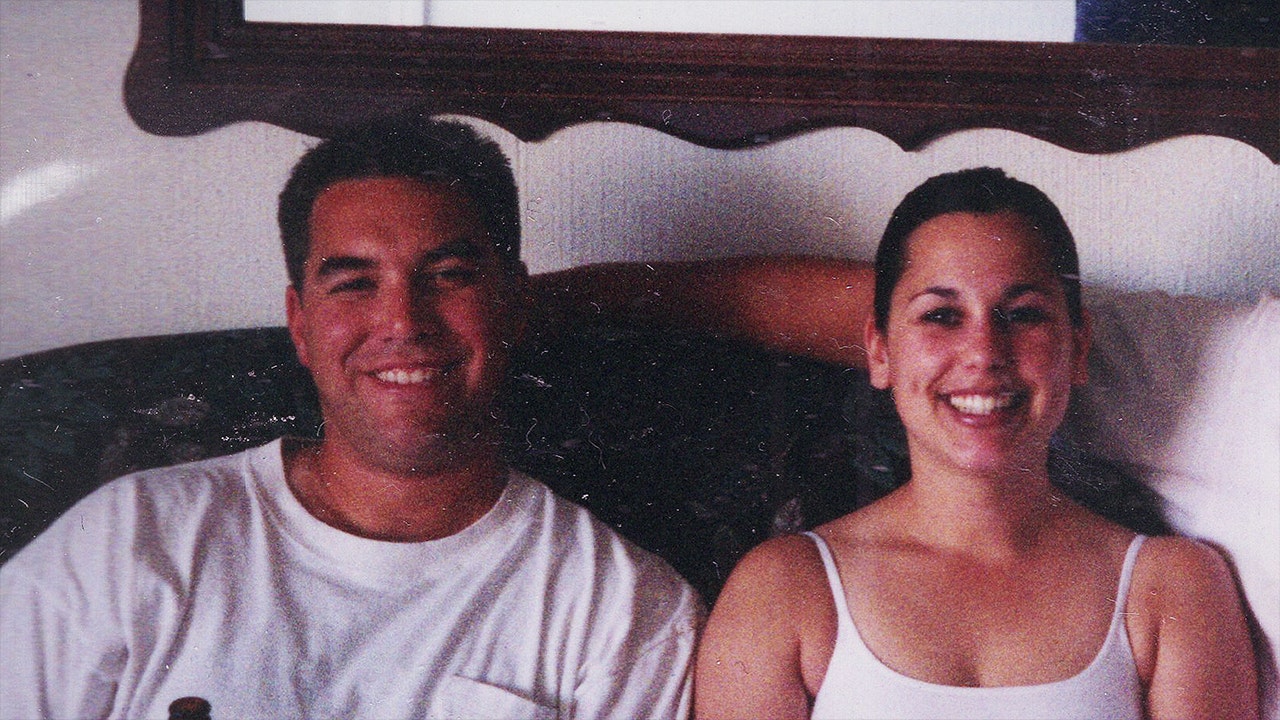
In his first on-camera interview since he was convicted for his wife’s murder twenty years ago, Scott Peterson maintains his innocence – and shares his theory on what really happened to his pregnant wife.
“Why do I want to speak? I regret not testifying,” Peterson said in Peacock’s new three-part series Face-to-Face with Scott Peterson. “I have a chance to show people what the truth is, and if they’re willing to accept it, it would be the biggest thing I can accomplish right now – because I didn’t kill my family.”
Laci, 27, was eight months pregnant when she vanished on Christmas Eve 2002. Peterson reported her missing after allegedly returning from a solo fishing trip to find their Modesto home empty. Laci’s body, along with the body of her unborn child Conner, washed up on shore near Peterson’s fishing spot four months later.
SCOTT PETERSON’S MOST OUTRAGEOUS DEFENSE CLAIMS, DEBUNKED
Scott Peterson and Laci Peterson in a still photo appearing in the docuseries, “American Murder: Laci Peterson.” (Courtesy of Netflix)
After he was arrested at the Mexico border with bleached hair carrying his brother’s passport, prosecutors revealed a mountain of evidence against him. A police K9 unit picked up Laci’s scent at a boat ramp in Berkeley, where Peterson claims he went fishing, and found the woman’s hair in the teeth of a pair of needle-nose pliers on Peterson’s boat.
Convicted of Laci’s murder in 2004, Peterson returned to headlines after the Los Angeles Innocence Project announced it would take on his latest appeal for a new trial.
“There was a burglary across the street from our home,” Peterson told filmmakers via video call from Mule Creek State Prison “And I believe that Laci went over there to see what was going on, and that’s when she was taken.”
A burglary was committed near the Peterson home around the time Laci went missing – but one of the convicted burglars testified that the break-in took place on December 26, 2002 rather than on December 24, when Laci went missing.
LACI PETERSON’S MOM REVEALS FIRST IMPRESSION OF KILLER SON-IN-LAW
Scott Peterson listens to Stanislaus County Deputy District attorney Dave Harris speak during a hearing at the San Mateo County Superior Court in Redwood City, California, on Wednesday, Dec. 8, 2021. Peterson appeared in San Mateo Superior Court for the first time since he was sentenced to death there more than 17 years ago for the murders of his wife Laci and their unborn son Conner. (Andy Alfaro/The Modesto Bee/Tribune News Service via Getty Images) (Andy Alfaro/The Modesto Bee/Tribune News Service via Getty Images)
TIMELINE: THE LACI PETERSON CASE
Journalists and legal experts interviewed in the docuseries said that witnesses had told police that they saw a suspicious van in the area of Peterson’s Modesto home on December 24 – one witness even claimed they saw a pregnant woman being forced into a van.
The burglary wasn’t mentioned the Peterson’s trial in 2004, and the convict cites this as evidence that police did not turn over evidence during the discovery process that potentially could have exonerated him.
“There are so many instances where there was evidence that didn’t fit the detectives’ theory that they ignored,” Peterson insisted.
Peterson even claims that detectives on the case assumed he was guilty from their first walk through of his home.
“When [Modesto Detective Al Brocchini] took a first walk through the house with the other officers, I don’t think that they knew that I was near them when they said ‘we know what’s going on here – it was the husband,’” Peterson claimed in his jailhouse interview “Then he realized I was there and kind of turned around.”
SCOTT PETERSON PROSECUTORS LAY OUT ‘OVERWHELMING EVIDENCE’ AGAINST KILLER’S NEW APPEAL IN 337-PAGE FILING
Scott Peterson and Amber Frey pictured at a Christmas party on Dec. 14, 2002, before the murder of Laci Peterson and before Frey knew Scott Peterson was a married man. (Superior Court of California, San Mateo County)
But Brocchini and former Modesto Police Officer Jon Buhler told filmmakers that they withheld any evidence or failed to investigate leads in the case.
“He was kind of just nonchalant – he didn’t have any urgency about him,” Brocchini said of his first time meeting Peterson. “To me, that was suspicious.”
Peterson, who was involved in multiple extramarital affairs, quickly became the prime suspect in his wife’s disappearance.
Brocchini said that a voicemail Peterson left for his wife at 2:15 p.m. on December 24 2022, telling her he loved her and would see her “in a bit,” was made to cover his tracks hours after killing Laci and dumping her in the San Francisco Bay. “To me, it was really meant for me to hear it,” Brocchini said, saying that the voicemail was “gooey.”
But Peterson said that heartfelt messages were typical in his relationship with Laci, and suggested that police who cast doubt on the intention of the voicemail must have “really sad marriages.”
“We loved one another, we enjoyed one another,” he said in his jailhouse interview. “We were great friends.”
SIGN UP TO GET TRUE CRIME NEWSLETTER
Prosecutors said police recovered Laci Peterson’s hair from the teeth of these needle-nosed pliers, which they found on her husband and convicted killer Scott Peterson’s boat. (Superior Court of California, San Mateo County)
“Every moment remains so tactile,” Peterson said of his final memories with his wife. “I’m still there, and the smells and the lighting, the sound of when I said goodbye to Laci. And then my family was gone.”
Amber Frey, Peterson’s mistress, went to police when she learned about Laci’s disappearance. Peterson, the man who she thought was her boyfriend, previously told her he had never been married, then changed his story and said that he was a widower.
Laci was missing her head and three limbs. A forensic pathologist determined she had not been dismembered, but her body likely came apart due to the marine conditions after being anchored down.
Prosecutors argued that the homemade concrete anchor Peterson used for his boat would have been easily duplicated. They suggested he made more and used them to try and hold his wife’s body on the seafloor.
FOLLOW THE FOX TRUE CRIME TEAM ON X
Prosecutors said these photographs a smiling Scott Peterson were taken during a vigil for Laci Peterson on New Year’s Eve in 2002. Jurors found at the end of his trial in 2004 that he killed her days later. She was more than 8 months pregnant with their son Conner. (Superior Court of California, San Mateo County)
After Laci’s disappearance, Peterson allegedly told Frey that his wife was alive and pregnant, but had gone missing. Frey began recording her phone conversations with the suspected murderer in an effort to help police.
Last week, those recorded conversations were aired for the first time in a new Netflix documentary, American Murder: Laci Peterson.
“So what, do you want to be together with me?” Frey asked Peterson in one of the recordings.
GET REAL TIME UPDATES DIRECTLY ON THE TRUE CRIME HUB
“For the rest of our lives I think we could care for each other,” Peterson replied.
In May this year, Peterson’s defense team asked for DNA testing on a blood-stained mattress found in the bed of a burned-out van located near Peterson’s Modesto home the day after Laci disappeared. In the past, the LA Innocence Project says, only a sample of the mattress was tested. Now they want the entire mattress tested, saying that advancements in DNA technology could find DNA that would support their client’s claim.
But a judge ruled in May that a piece of duct tape found on Laci’s body could be retested, along with a dozen other pieces of evidence. It is unclear whether the mattress will be among the tested items.
Lara Yeretsian, one of Peterson’s lawyers from his first trial, remains hopeful that her client will be exonerated.
“This is not the end of it,” she said in the docuseries. “It’s just the beginning, and at least we’ve got one win.”
Read the full article from Here



Ceremonial procession for fallen firefighter Nick Hutcherson
A ceremonial procession for Nick Hutcherson, a local firefighter who died fighting a Colorado wildfire, arrives at Dream City Church in Phoenix.
A Snoopy sticker on a fellow firefighter’s helmet became part of the last photo fallen firefighter Nick Hutcherson texted to his father, capturing one of their final shared moments.
“I smiled when I saw the picture and texted him back, ‘Thank you and be safe out there.’ And he replied, ‘Will do.’ That evening, I did get a call, but it wasn’t from Nick,” said Ron Hutcherson through tears during his son’s memorial service on the afternoon of July 11 at Dream City Church in north Phoenix.
The brief exchange between father and son happened June 27, when the 27-year-old Nick Hutcherson and two fellow firefighters died as they took on what became the sprawling Snyder Fire in western Colorado.
The “Peanuts” character anecdote offered a glimpse into the man by those who eulogized Hutcherson, remembering him as courageous and intelligent, yet never one to lose his lighthearted spirit.
“Nick could pull all of these facts and quotes out like they were common knowledge. He was incredibly smart, but he didn’t let that get in the way of being goofy and funny. He was so unapologetically himself that you couldn’t help but to like him and get drawn into whatever subject he was talking about,” said Cantene Coker, his friend and crew member.
Wise words, laughter marked memories
Hutcherson served as a firefighter on the Kaibab National Forest after joining the profession in July 2021, according to those who spoke at the service. He was also pursuing a degree in physical therapy with the goal of one day becoming a doctor.
Before becoming a firefighter, Hutcherson served in the U.S. Navy. His father said he enlisted after the U.S. Marine Corps declined to accept him because of his high arches.
“A lot of people would have taken that as a sign to give up, but not you. Instead of continuing to wait, you made up your mind to go and walk through the door of the Navy. You weren’t looking for the easiest path. You were looking for a way to serve. And you did,” Ron Hutcherson said.
The grieving father recalled how he sat his son down to apologize for any shortcomings as a father.
“You explained how you understood there was no road map for being a parent, no blueprint, and that people make mistakes. You expressed you held no resentment towards me, not then and not ever,” Ron Hutcherson said. “For a moment it felt like our worlds had been reversed. I was the child and you were the parent, teaching me one of the most important lessons in life. And I want to thank you for that.”
Brandon Smith remembered Nick Hutcherson before he achieved that level of maturity.
“He was super awkward in his younger years, but then he developed into a man who was incredible,” said Smith as he and Hallie Costa walked to the church.
The two, both 28, had known Hutcherson since they all attended Desert Sage Elementary School in Glendale, where the future firefighter and Flagstaff resident grew up.
“He had a super cute laugh,” Smith added as Costa gave a light chuckle.
Prior ceremonies celebrated life
Many who knew him remembered the amateur Muay Thai practitioner as “a warrior in all respects of the word.”
Those who spoke at a July 5 memorial service in Grand Junction, Colorado, also remembered Hutcherson’s generosity. The service also honored the firefighters who died alongside Hutcherson: Emily Barker, 38, of Michigan; and Sydney Watson, 26, of Alabama.
Hutcherson would try and teach fellow crew members American Sign Language, said Travis Nichols, a unit aviation officer in the Upper Colorado River Interagency Fire Management Unit.
Brian Fennessy, director and fire chief of the United States Wildland Fire Service, said one of Hutcherson’s most valued qualities was his “uncommon ability to face hard things with optimism, humility and a smile.”
His favorite phrase, “easy day,” was emblematic of this, Fennessy said.
Hutcherson’s remains were brought July 2 to Arizona.
“This is the community thanking him for what he did, the sacrifice that he made. The fire service is one big family,” said Phoenix Fire Capt. Rob McDade as Hutcherson’s casket arrived at Deer Valley Airport.
Flags were flown at half-staff on July 11 in accordance with an order from Gov. Katie Hobbs, who attended the memorial service at Dream City Church.
A GoFundMe to benefit Hutcherson’s family had amassed a little more than $84,000 of a $100,000 goal as of July 11.
The Knowles Fire, which claimed the three firefighters’ lives and reportedly injured two others, merged with three fires into the Snyder Fire. Spanning 30,202 acres, the Snyder Fire was 98% contained as of July 8, according to inciweb.gov.
Republic reporters Stacey Barchenger and Christian Cervantes contributed to this article.
California
Cowboys, margaritas and toxic trash: Some sour on lawyers in lucrative L.A. landfill cases

Val Verde is a place with few strangers.
Forty miles northwest of downtown Los Angeles, the tiny foothill community of 3,000 has one main road, spotty cell service and a lone local market.
Yet nobody could remember ever seeing the man in a cowboy hat before 2024, when he was spotted talking to residents about lawsuits against the local dump.
At the time, the neighboring Chiquita Canyon landfill had never smelled worse. For more than a year, an uncontrolled fire had burned in the bowels of the dump, broiling old garbage and sending nauseating fumes into nearby homes.
Oshea Orchid, a local lawyer, filed the first class-action lawsuit in 2023 against the operators of the county’s second-largest landfill, alleging the fumes were sickening her neighbors, causing headaches and heart palpitations.
An aerial view of the Chiquita Canyon landfill in Castaic, photographed in February 2024.
(Allen J. Schaben / Los Angeles Times)
For months, she said, she’d been the only lawyer taking on the cases. But as she passed the town’s market Feb. 4, 2024, she spotted the cowboy promising lawsuits to patrons, according to a complaint Orchid later filed with the State Bar of California.
The man, she said in the complaint, told her he was hired by Downtown LA Law Group, a firm under criminal investigation by L.A. County’s district attorney over claims that some of its clients made up stories of sexual abuse in juvenile halls in order to sue.
“He admitted he was an actor and that the DTLA Law Group had paid him $5,000 to drive from Las Vegas, put him up in a hotel, given him Western attire and directed him to pretend to be a local cowboy to solicit residents of Val Verde in front of the Fast Stop,” Orchid recounted in the April 2026 complaint. “Before agreeing to leave, he gave us the chaps he didn’t know how to use.”
The brown leather chaps, Orchid said, are still stuffed in her office.

Attorney Oshea Orchid holds up a pair of chaps she says were handed to her by a man recruiting people to join lawsuits over the Chiquita Canyon landfill. Orchid filed a state bar complaint that said the man was hired by Downtown LA Law Group.
(Eric Thayer / Los Angeles Times)
California bans non-attorneys from directly soliciting or procuring clients to sign up for lawsuits. The practice, known as capping, was outlawed over concerns it allows law firms to exploit victims in pursuit of hefty payouts.
A spokesperson for DTLA said the man had been hired solely to ask “local businesses for permission to display educational fliers,” and accused Orchid of filing the complaint to tarnish lawyers vying for the same pool of clients.
This “is not a story about our firm’s marketing,” the spokesperson said, but rather “a story about a competing law firm attempting to use the press and the State Bar to eliminate competition in the same litigation.”
Now, Orchid and other attorneys on the Chiquita Canyon case worry about the future of some of the most significant environmental justice litigation in Southern California.

Downtown LA Law Group, headquartered in the Arts District, is facing several investigations following allegations of illegal solicitation.
(Myung J. Chun / Los Angeles Times)
DTLA has signed up roughly 1,300 of the 10,000 people who have filed claims over the landfill.
The firm is currently facing a state bar probe and a criminal investigation by L.A. County’s district attorney following Times reporting last fall that found nine clients of the firm who said they were paid to sue the county, ultimately becoming part of a $4-billion sex abuse settlement. Four of the clients said they fabricated their claims, which the firm later withdrew.
Orchid, 43, said the point of starting the landfill litigation was to shutter the dump and squeeze out enough money from the owners for her sick neighbors to move out of town. DTLA, she argues, has now put these life-changing payouts at risk.
Attorneys for the owners of the landfill, which stopped accepting trash last year, claimed this spring in the litigation that the lawsuits may be tainted by fraud. The firm said in a statement to The Times that it remains “deeply concerned.”
“Credible allegations suggest that this case has been infected with lawyer misconduct or even criminal activity that has caused the filing of fraudulent claims,” Paul Chan, an attorney representing the landfill owners, wrote in an April 24 motion.
Andrew Morrow, one of DTLA’s lead attorneys for both the sex abuse and landfill cases, insisted in a May 8 court filing that there was no improper solicitation, arguing the claims were built on a “foundation of speculation, innuendo, and a patchwork of sensational allegations and headlines.”
These allegations in the firm’s sex abuse cases, he said, “are wholly unrelated to the present litigation.”
The court ruled that the allegations against DTLA did not warrant a separate discovery process for the firm’s clients.
After meeting the self-professed cowboy outside the market, Orchid said she invited him to a boozy meal at a nearby pub. He introduced himself as Raymond Henderson, a commercial actor gathering cases for DTLA.
“I buy him a few margaritas and I’m like, tell me all about it,” recounts Orchid.
Henderson told The Times that Orchid accurately described his gig with DTLA, which he says earned him a few thousand dollars. But, he said, his cowboy attire was no costume. The 72-year-old actor said he spent his upbringing around horses in rural Alabama and knew his way around a pair of chaps. He said he has given away several sets over the years, though he didn’t recall handing that particular pair to Orchid.
Henderson said attorneys at DTLA never told him that soliciting clients for the firm was against the law. Henderson sent several texts to a partner at DTLA about picking up checks for his work in Val Verde, according to messages reviewed by The Times.

Raymond Henderson says he was hired by Downtown LA Law Group to find clients in Val Verde who wanted to sue over the nearby Chiquita Canyon landfill.
(Mikayla Whitmore / For The Times)
“I do what we call ‘chasing,’” Henderson said in an interview from his Las Vegas home. “They just tell you what they want.”
A firm spokesperson denied soliciting clients and said it was Orchid who had tried to use Henderson to illegally gather plaintiffs in the landfill cases. The firm said Henderson signed a declaration two years ago that accused Orchid of asking him to get “cases for her in the community.”
“He refused. She then asked him to lie and say he was being paid for cases,” the firm said in a statement. “She told him these cases were her ‘territory’ that no other firm had a right to market there, and that she would use her ‘clout’ to generate complaints against any firm that took her landfill cases. That is exactly what has followed.”
The firm declined to share Henderson’s declaration, citing a confidentiality agreement. Henderson did not respond to an inquiry about the February 2024 declaration.
Orchid said she had liked Henderson. He was chatty and upbeat, and she told him she would try to find him work, potentially as an assistant at her law firm. But that job, which never materialized, was not going to be as a recruiter, she said.
For the longest time, the residents of Val Verde could not find a lawyer willing to fight the landfill enveloping their neighborhood in clouds of stench.
Cher Arabalo, a former Denver sheriff captain, said she moved to the town in 2022 and promptly regretted it.
“Like a sour milk base or something, mixed with porta potty with a little chemical on top of it,” she said, describing the aroma.

Cher Arabalo said nobody warned her about the acrid stench from the Chiquita Canyon landfill when she moved to Val Verde in 2022. She later joined litigation against the landfill owners.
(Eric Thayer / Los Angeles Times)
Neighbors hosted pancake breakfasts and spaghetti nights to raise money for lawyers. The amounts were measly. They tried to get a firm affiliated with environmental crusader Erin Brockovich interested. No luck.
Then Orchid moved to town, lured by a sprawling ranch for her four horses. Before long, she said, she got persistent headaches, which she blamed on fumes from the dump three miles away.
After word spread that a local attorney was starting a class action, residents said they were besieged by out-of-town lawyers competing aggressively for their business.
On Dec. 29, 2023, a resident emailed Orchid about a group of recruiters at the market who were handing out fliers for DTLA.
“They were asking for a signature on a ‘petition’ but I think it was actually to sign with this firm for a class action lawsuit,” wrote Rosalie Alaniz. “He was using the terms ‘class action’ and ‘petition’ interchangeably. So, yes it was definitely sketchy.”

Residents of Val Verde say they’ve been bombarded by Instagram ads looking for plaintiffs for the landfill cases.
(Eric Thayer / Los Angeles Times)
Two days later, on New Year’s Eve, Orchid made her own trip to the market and found a group of men who said they were paid hourly to collect “petitions for the lawsuit” on behalf of DTLA, according to a video she took of the encounter. The “petition,” a portion of which flashes briefly on screen, appears to be a DTLA fee agreement entitling the firm to at least 40% of any future payout.
Sereen Banna, a former DTLA paralegal who sued the firm in December, previously told The Times that landfill clients had reported getting gift cards in exchange for signing a petition. Those names, she said, later appeared on retainer agreements, even though clients insisted they never agreed to a lawsuit.
Morrow, the DTLA attorney, acknowledged allegations that clients had signed up accidentally in his May 8 motion, but said it was “impossible to imagine someone who is still unwittingly in the case at this stage because they believed a retainer agreement was a petition.”
Every client who wanted to drop the firm, DTLA said in a statement, was free to do so.
On Jan. 25, 2024, Henderson ventured into Val Verde to help the firm get in on the Chiquita Canyon action, according to text messages reviewed by The Times.
“The smell ??” Salar Hendizadeh, a partner at DTLA, texted Henderon as he ventured into the foothills. “How bad ?”
“Really bad,” Henderson replied.
“Wow,” Hendizadeh texted.
“Packem
Rackem
Stackem”
Three weeks later, Henderson sent a picture of a group of elderly residents huddled in a circle.
“Get em for me,” Hendizadeh replied.
“all of them”
“Need it”
Over the next month, Henderson would text Hendizadeh the names and phone numbers of more than 40 prospective clients, according to text messages between the two.
Hendizadeh left the firm in October 2025. The State Bar has since charged him, along with the remaining partners at DTLA, over separate allegations that they signed up clients in states where they had no license to practice. The firm has denied all wrongdoing.
Henderson said he started working for DTLA after picking up Hendizadeh in an Uber at LAX around 2018. He said he would listen to the police scanner for car crashes and then rush to the scene to recruit accident victims who would hire DTLA to sue the driver.

Orchid poses for a portrait at her ranch in Val Verde. A partner at Sethi Orchid Miner, Orchid sued the operators of the county’s second-largest landfill, alleging the dump was sickening the community.
(Eric Thayer / Los Angeles Times)
If the crash involved an Uber or Lyft, which are required to have top-of-the-line insurance policies, Henderson said he got about $5,000 per client. He got more, he said, if the client’s bones were broken.
The discussions around price-per-plaintiff, he said, were always furtive.
“If I asked him verbally, he’d write it on a piece of paper,” he said of Hendizadeh. “I thought it was just a lawyer thing.”
When it became clear L.A. County was poised to shell out billions on victims who’d experienced sexual abuse in juvenile halls, Henderson said Hendizadeh wrote “500” on a slip of paper in his office. So Henderson said he started looking for people in destitute neighborhoods where “people [have] been going to jail all their life.”
Hendizadeh said in a statement that Henderson’s claims were “demonstrably untrue,” and that the firm has “independently investigated his claims and is confident it has acted in full compliance of all applicable ethical and legal standards.”
Henderson said he only realized the solicitation he’d been asked to do might be frowned upon after Orchid told him as much at their meal.

A DTLA Law Group hat inside the home of Raymond Henderson in Las Vegas on May 22.
(Mikayla Whitmore / For The Times)
“I met another attorney up. There was telling me that what I was doing was unethical,” Henderson texted Hendizadeh after meeting Orchid on Feb. 4, 2024.
“Don’t talk to them,” Hendizadeh responded. “Marketing and community education is 100 percent good.”
Henderson said he had no issue speaking publicly about the work he’d been hired to do.
“I’m talking to anybody,” Henderson said. “I mean, it’s not McDonald’s. You can’t have it your way over here.”
The lawsuit recruiters came to their town bearing gifts, several residents told The Times.
Jorge Real, a 53-year-old house painter, said he was given $10 for each person he convinced to sign up.
Roberto Talamantez, who spends many afternoons drinking beers in the empty plot next to the market, said he got about $25 and a cellphone from a law firm recruiter to sign a petition. So did everyone else he knows, he said.
“Like he was giving potato chips,” said Talamantez, whose suit was filed by DTLA on March 6, 2024. “We’re poor. If someone offers you $20 … and they barbecue for you and they’re buying you beers, why not?”

Roberto Talamantez said he got about $25 and a cellphone in exchange for giving a lawsuit recruiter his name outside of the only market in town.
(Eric Thayer / Los Angeles Times)
Some residents said they were unclear about what they were being asked to sign up for.
“One got kind of upset, like, ‘Why won’t you sign? You’re going to make money’ … They were really pushing me,” said Salvador Yoguez, a retired farmworker. “They kept following me all the way to the car — ‘look at this, look at that.’ I kept telling them, ‘I don’t know anything about this.’ I had been drinking.”
Like many in the working-class community, Yoguez speaks only Spanish and said he didn’t understand why the group of young guys wanted his name and ID as he made a beer run at the market. His wife, Delia Yoguez, who drove him there, said she, too, gave her name to the men.

Sereen Banna, a former DTLA paralegal, said she reported unethical solicitation in the firm’s landfill cases to her boss. The firm has denied any wrongdoing.
(Allen J. Schaben / Los Angeles Times)
DTLA filed lawsuits for the couple on March 4 and March 18, 2024, alleging the odors were causing them to “remain inside their homes” and “embarrassment and reluctance” to invite any guests over.
Both told The Times they were unaware they had a lawsuit with DTLA and believed they had only signed up with Orchid, a friend of their daughter. DTLA said every client provided an ID card, proof they were in the zone affected by the landfill, and signed a “clearly labeled contingency fee agreement” before a case was filed.
This spring, DTLA announced plans to get out of the landfill litigation, passing on most of its caseload to Carpenter & Zuckerman, a Beverly Hills-based personal injury law firm.
Carpenter & Zuckerman is taking on a growing role in environmental litigation in the region. The morning after the evacuations due to a leaking chemical tank in Garden Grove, firm representatives were stationed outside an evacuation center, taking contact information and handing out fast food and coffee, according to two volunteers working at the Red Cross stand next door. The next day, the firm would claim to file the first lawsuit against the owners of the leaking chemical tank.
Some Val Verde residents who unwittingly signed up with DTLA said they were confused why Carpenter & Zuckerman was insistently calling them, trying to get them to sign a new agreement.
“Beginning in or around March 6, 2026, I have been called numerous times,” Delia Yoguez wrote in a signed declaration from June 23, which Orchid says she took as part of a bar complaint. “The lady told me that I had signed paperwork with them and that I could not back out.”
The new agreement entitles lawyers to 45% of the settlement, which will be split evenly between the two firms. “In short, Client is getting two law firms for the price of one,” it explains.

A November 2016 aerial view of the Chiquita Canyon landfill in northern Los Angeles County.
(Los Angeles Times)
On May 25, Val Verde’s civic association sent Carpenter & Zuckerman a cease and desist letter, citing reports that attorneys had been “misleading, coercive, and exploitative” and “had repeatedly contacted, pressured, harassed, and misled residents into signing retainer agreements.”
“Targeting vulnerable residents, particularly non-English-speaking individuals, is especially concerning and entirely inappropriate,” the letter stated.
Carpenter & Zuckerman said in a statement to The Times that it “independently evaluates every matter and client on an individual basis and represents only those clients who desire to pursue their claims and whose cases meet the firm’s standards.” The firm denied engaging in “high-pressure tactics” and said it remains committed to “ethical advocacy and ensuring that individuals who wish to pursue their claims are not left without representation due to circumstances involving prior counsel.”
Some locals say the renewed jockeying for clients is the latest distraction from the fight over the toxins they believe are polluting their home.
“We’re just trying to survive this,” said longtime resident Abigail DeSesa. “And it’s like the Val Verde ‘Hunger Games.’”
Colorado
Spending topped $67 million in key Colorado primary races. But big money didn’t always win.

The $67 million storm has passed. For now.
That is roughly how much was spent on all of Colorado’s competitive primaries for statewide and federal office — and almost all of it went to influence Democrat-vs.-Democrat contests as voters picked who would represent the party in November’s election, according to an analysis by The Denver Post. Millions more went to down-ballot races, such as local legislative races.
The rain from the proverbial storm of cash poured down in the form of candidate mailers, door knockers, and TV and digital ads, and in less apparent campaign infrastructure and polls. The vast majority of the money went directly to campaigns and supported direct messaging, staffing and other expenses of running for office.
But more than a third — almost $25 million — flooded the races through super PACs and other outside groups that approach politics with different levels of opacity.
The money also didn’t do much to predict eventual winners. Four of the most-monied candidates seeking statewide or federal offices won their primaries. Four others lost.
Paul Teske, a political scientist at the University of Colorado Denver, said it can be tough to tease out how much of a difference money can make in a campaign, especially if spending between candidates is in the same ballpark. But the amount this time also seems striking, even if there isn’t an immediate apples-to-apples comparison to prior election years.
“People realize this is a way to influence policy that can be effective — if it’s the right place, at the right time, in the right way,” Teske said.
Former New York City Mayor Michael Bloomberg appears to have been the single largest player in Colorado politics in the June 30 primaries. The billionaire pumped $5 million in cash into a state super PAC backing U.S. Sen. Michael Bennet’s failed bid for governor against Attorney General Phil Weiser. Weiser ended up winning the race by more than 13 percentage points.
The race for the Democratic nomination for governor by far outstripped every other race in the primaries, with more than $24.5 million spent by either the super PACs backing the candidates or by the campaigns themselves.
That money was almost evenly split between the super PACs and the campaigns, though that number is skewed by the super PAC backing Bennet, Rocky Mountain Way. That political action committee spent nearly $11 million, almost twice as much as Bennet’s official campaign spent.
The Republican side of the governor’s race saw a relatively paltry $4.1 million spent through June 29, the cutoff for the most recent batch of campaign data. Nonprofit leader Victor Marx, who had more than $3.2 million of that money backing him either directly or through a state super PAC, narrowly secured the nomination Thursday over state Sen. Barb Kirkmeyer and third-place state Rep. Scott Bottoms.
On the federal side of the ledger, the money becomes even more opaque — though there was less of it. Campaigns’ federal reports cover fundraising and spending through June 10, though outside groups had to file more frequent spending reports in the lead-up to the election.
State Rep. Manny Rutinel benefited from the most outside money, $5.5 million, in his successful campaign for the Democratic nomination in the 8th Congressional District. By comparison, Shannon Bird, the former state representative who lost to Rutinel, saw $1.7 million spent to buoy her.
More than $3 million of outside help for Rutinel came from the Latino Victory Fund and the associated Latino Victory Project. Those groups have received money from Opportunity Forward Alliance, a dark-money group that describes itself as backing business-friendly policies, and 5000 Broadway Productions, the production company founded by Lin-Manuel Miranda.
He also benefited from almost $1 million spent by You Can Push Back, a super PAC supported by pro-AI regulations billionaire Chris Larsen. And $1.2 million backing Rutinel’s campaign came from the SOMOS PAC, a super PAC that was backed by the nonprofit Advocacy Action Fund. That nonprofit has been linked to former Google CEO Eric Schmidt and has a history of giving to self-styled progressive and abortion-rights advocacy groups.
That 8th District race — expected to be one of the most competitive in the nation, again — will almost certainly draw a gob-smacking amount of money and attention as the November general election nears. In 2024, the candidates and outside groups spent more than $40 million on the election that saw U.S. Rep. Gabe Evans, a Republican, win the seat. It was among the top 10 most expensive races in the country and is seen this time as key to whichever party will hold the House majority next year.
Now Evans is running for reelection in the 8th District, which stretches from the north Denver suburbs to Greeley.

U.S. Rep. Diana DeGette, who was on the wrong side of the primary night’s biggest upset in Colorado, was the second-largest beneficiary of outside money, largely as part of a last-minute surge to preserve her office. More than $2.3 million flew into that race to defend DeGette, whose 1st Congressional District mostly covers Denver.
Of that, more than $1.5 million came from the Pro-Choice Majority Action PAC, which in turn receives money from the EDW Action Fund, a pro-Democratic women’s group that is affiliated with the American Israel Public Affairs Committee, or AIPAC.
By comparison, now-Democratic nominee Melat Kiros, a democratic socialist who beat DeGette by 13.4 percentage points, had just over $500,000 in outside spending support her campaign against the 30-year incumbent. Kiros’ campaign also spent less than $600,000 directly, or less than half of DeGette’s total campaign spending.
Stay up-to-date with Colorado Politics by signing up for our weekly newsletter, The Spot.
-

 Arizona4 minutes ago
Arizona firefighter killed in wildfire remembered as brainy, ‘goofy’
-

 Arkansas11 minutes ago
Bentonville’s Dave Peel Park to become new downtown entertainment space | Arkansas Democrat Gazette
-
California14 minutes ago
Cowboys, margaritas and toxic trash: Some sour on lawyers in lucrative L.A. landfill cases
-

 Colorado19 minutes ago
Spending topped $67 million in key Colorado primary races. But big money didn’t always win.
-

 Connecticut26 minutes ago
Milford business celebrating 50th anniversary
-

 Delaware29 minutes ago
Delaware ranks 11th nationally for arts vibrancy, fueled by public investment
-

 Florida41 minutes ago
Forget Florida, Retire To This East Coast City With River Views, Festivals, And Endless Outdoor Fun – Islands
-

 Georgia44 minutes ago
Damaging Winds and Hail Possible in North and Central Georgia

