San Francisco, CA
I moved to San Francisco despite the negative things I'd heard. The cost of living is high but it's worth it.

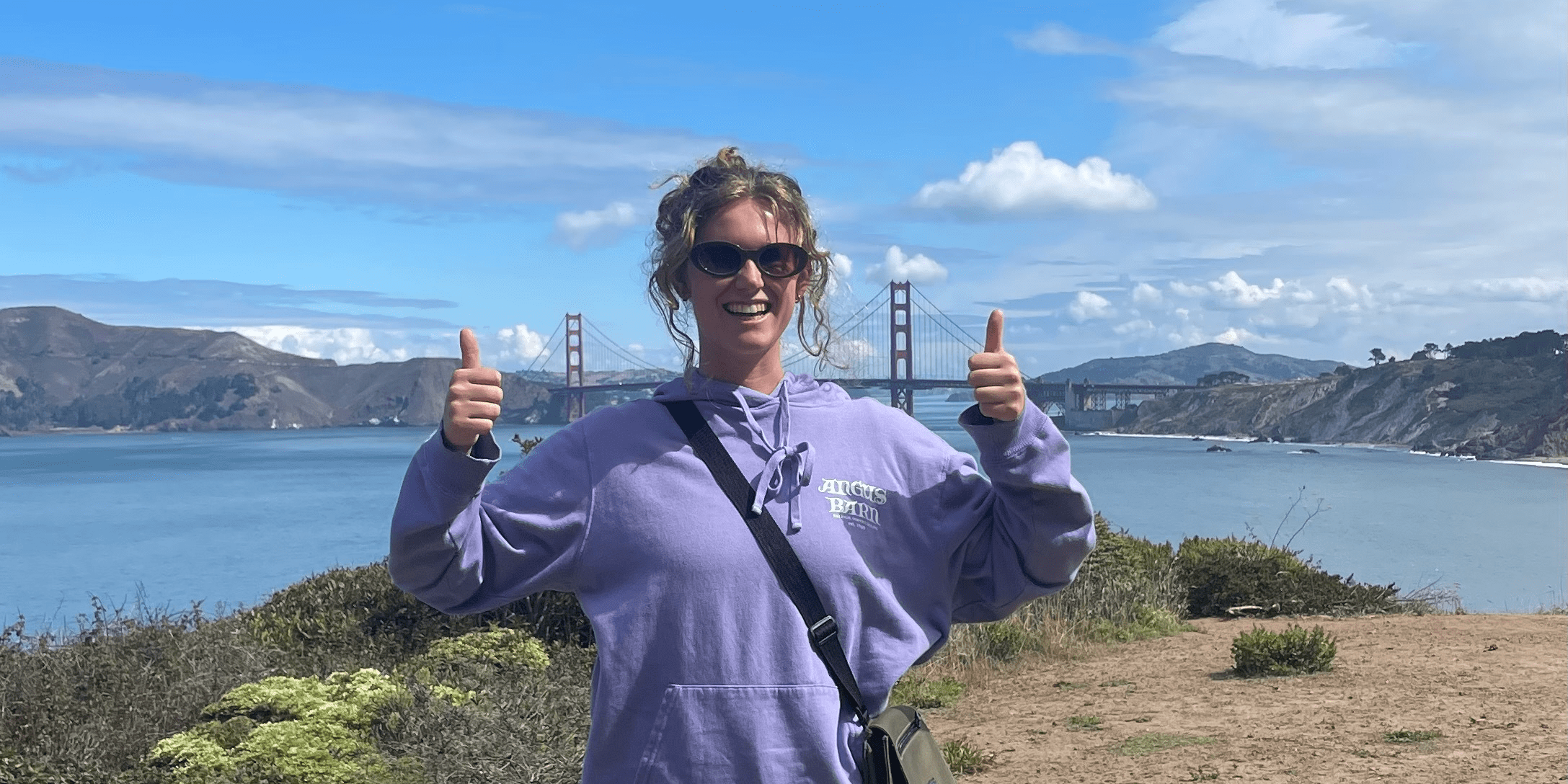
- Julia Stevens moved to San Francisco after visiting friends there and falling in love with it.
- She landed a new job and moved from Raleigh, North Carolina, with her partner in August.
- She says she isn’t concerned about safety and enjoys the outdoor activities but pays higher prices.

This as-told-to essay is based on a conversation with Julia Stevens, a 25-year-old who recently moved to San Francisco. The following has been edited for length and clarity.
I was born and raised in Raleigh and started building my adult life there when I landed a job after college. Even though I loved it, I always dreamed of moving away from home and living in a big city.
I was open to living anywhere as long as it was in the US and I had friends nearby.
In August 2022, a few of my college friends who’d moved to San Francisco invited me to visit them.
I’d never been to San Francisco and didn’t know much about it
I’d heard SF was home to many technology companies and the oldest Chinatown in America. The day I got there, I was flabbergasted. I’d traveled in Europe during college; even still, San Francisco was the most beautiful and striking place I’d ever seen.
Candy-colored houses, the Pacific Ocean, and mountains in the distance surrounded me. My friends took me to popular spots like Dolores Park and Golden Gate Park, and people my age were everywhere. During that trip, I decided to move there.
In August 2023, I unpacked my boxes and started a new job in the city I fell in love with. Even though there’s talk about how SF has become a ghost town and is unsafe, I’ve had a different experience.
San Francisco was perfect for the career path I wanted to take
I majored in English and minored in environmental science. My first few jobs were for nonprofits, but I always aimed to work in communications in the climate-change and sustainability space.
SF has a big focus on climate, clean energy, and sustainability. Many companies like this are headquartered here because the state is known for its progressive policies. I knew that moving to this city would help further my career.
In May, I started applying for jobs. The process felt long, and I applied to dozens. In August, I landed a job at a PR agency focusing on cleantech, healthtech, and edtech.
Finding a job in a city I didn’t live in yet was challenging, but I included my intent to move to San Francisco in my cover letters and interviews. I also changed my location on LinkedIn from Raleigh to San Francisco so recruiters would be less confused by my profile.
I didn’t let the news affect my decision to move to San Francisco
I heard the news about SF struggling to recover after the pandemic. I was aware of the increasing homeless population, crime rates, and the amount of people struggling with addiction. I didn’t feel like these things made the city a bad place, and I understand that cities nationwide have similar problems.
It did make me a little nervous to move from a place like Raleigh, where the crime rate is low. But even in Raleigh I took safety precautions. I avoid walking by myself late at night, take rideshares home after a night out on the weekend, and am generally aware of my surroundings.
I don’t think the answer is pretending these problems don’t exist in San Francisco. I educated myself, and I’m interested in finding a community-based mutual-aid organization to volunteer with.
Moving across the country was easy because I didn’t have a lot
I moved with my partner, who also found a job here. Since we’re in our early 20s, we don’t have a lot of possessions or investment pieces. We offloaded our furniture to friends and sold items on Facebook Marketplace, then packed everything in our car and drove ourselves.
It was hard to look for apartments online without seeing them in person. I didn’t want to get scammed, so we stayed in an Airbnb for a month and explored different neighborhoods and apartments.
We used Zillow, Craigslist, and Facebook to find good deals and found the winner on Zillow. We’re paying nearly twice as much as we did in North Carolina, but I did receive a salary increase that reflects the higher cost of living here.
There’s a lot I love about this city that makes it better than Raleigh
I think SF is the most beautiful city I’ve ever seen. Though Raleigh is very green, the Bay Area has stunning grassy hills, redwood trees, and native succulents that make it unique.
I’m outdoorsy and enjoy nature, and there are so many opportunities to go for hikes or explore towns nearby like Half Moon Bay or Santa Cruz.
I’m also in a food paradise here. I’m close to some of the best Szechuan, Vietnamese, Japanese, Mexican, El Salvadorian, Eritrean, Taiwanese, Italian, Filipino, French, Arab, Burmese, and new American food I’ve ever had.
While my boyfriend and I share a car, we rarely use it. In Raleigh, you have to drive everywhere. Here, there are bus and subway systems. San Francisco is also one of the most bike-friendly cities in America, though I don’t have a bike yet.
The cost of living is the biggest downside
I wasn’t fully prepared for the high cost of living in SF. I knew I’d pay a premium to live here, but everything from gas to laundry is significantly more expensive than in Raleigh.
The trade-off is that living here, I have better access to amazing food, a vibrant social scene, incredible hiking, and a good transportation system.
I don’t know if I’ll live in San Francisco forever, because it’ll be difficult to purchase a home here. Plus I’m far from my family, who are all on the East Coast. But right now I love it here and enjoy exploring all the city offers.



San Francisco, CA
Man convicted in the deadly 2021 assault of a Thai grandfather in San Francisco avoids prison

SAN FRANCISCO (AP) — The man convicted in the fatal 2021 attack of an older Thai man in San Francisco, which galvanized a movement against anti-Asian hate, will be able to avoid prison time, a judge ruled Thursday.
Antoine Watson, 25, was sentenced to eight years for manslaughter in the death of Vicha Ratanapakdee, 84. But, having already spent five years in jail awaiting trial, Watson received credit for time served, and San Francisco Superior Court Judge Linda Colfax said he could have the remaining three years suspended if he follows the rules of his probation.
Ratanapakdee’s daughter, Monthanus, expressed her family’s disappointment in a statement shared by Justice For Vicha, the foundation named for her father.
“We respect the court process. However, this is not about revenge — it is about accountability,” she said. “When consequences do not reflect the seriousness of the harm, it raises concerns about how we protect our seniors and public safety.”
Vicha Ratanapakdee was out for his usual morning walk in the quiet neighborhood he lived in with his wife, daughter and her family when Watson charged at him and knocked him to the ground. Ratanapakdee never regained consciousness and died two days later.
Watson testified on the stand that he was in a haze of confusion and anger at the time of the unprovoked attack, according to KRON-TV. He said he lashed out and didn’t know that Ratanapakdee was Asian or older.
San Francisco Public Defender Mano Raju, whose office defended Watson, also said at his trial that the defendant is “fully remorseful for his mistake.”
The Office of the San Francisco Public Defender did not immediately respond to an email requesting comment on Watson’s sentencing.
Footage of the attack was captured on a neighbor’s security camera and spread across social media, prompting a surge in activism over a rise in anti-Asian crimes driven by the COVID-19 pandemic. Hundreds of people across several U.S. cities commemorated the anniversary of Ratanapakdee’s death in 2022, seeking justice for Asian Americans who have been harassed, assaulted and even killed in alarming numbers.
Asians in America have long been subject to prejudice and discrimination, but the attacks escalated sharply after COVID-19 first appeared in late 2019 in Wuhan, China. More than 10,000 hate incidents against Asian Americans and Pacific Islanders were reported to the Stop AAPI Hate coalition from March 2020 through September 2021.
While the Ratanapakdee family asserts he was attacked because of his race, hate crime charges were not filed and the argument was not raised in trial. Prosecutors have said hate crimes are difficult to prove absent statements by the suspect.
San Francisco, CA
Authors gathering in San Francisco to raise awareness and money for the National Kidney Foundation

A number of notable authors are set to take part in a special event in San Francisco this Sunday, celebrating a shared love of reading while shining a light on an often overlooked health issue. The National Kidney Foundation Authors Luncheon brings together writers and community members to support kidney health awareness and raise funds for critical programs.

Aaron Judge went hitless on opening day for the first time and struck out four times for the first time since September 2024, but the New York Yankees still produced plenty of offense and beat San Francisco 7-0 Wednesday night in the debut of Giants manager Tony Vitello as the major league season began.
José Caballero drove in the go-ahead run with an RBI single in a five-run second and also lost the first challenge taken to Major League Baseball’s so-called robot umpire, unsuccessfully appealing a strike by Logan Webb in the fourth.
Max Fried (1-0) allowed two hits in 6 1/3 innings to became just the fifth Yankees pitcher since 1969 with at least 6 1/3 shutout innings on opening day, joining Catfish Hunter (1977), Ron Guidry (1980), Rick Rhoden (1988) and David Cone (1996). New York won an opener with a shutout on the road for the first time since 1967.
Webb (0-1) started the fourth inning with a 90.7 mph sinker on the upper, inner corner that was called a strike by Bill Miller, a major league umpire since 1997. Caballero tapped his helmet, and the 12 Hawk-Eye cameras of the Automated Ball-Strike System upheld Miller’s decision in a graphic shown on the Oracle Park scoreboard.
Caballero singled in the second and Ryan McMahon followed with a two-run single before Austin Wells’ single prompted a mound visit for Webb. Trent Grisham hit a two-run triple and was checked by medical staff after a hard slide into third.
Judge was booed before the game and during each at-bat as he began his 11th big league season. The California native had been pursued by the Giants during free agency in 2022 but he ultimately chose the Yankees’ $360 million, nine-year contract offer.
Webb, a 15-game winner last season making his fifth start on opening day, was tagged for six earned runs — seven in all — and nine hits over five innings.
The 47-year-old Vitello made the big jump from coaching the University of Tennessee.
The teams resum3 the series Friday afternoon, with RHP Cam Schlittler starting for New York opposite lefty Robbie Ray.
___
AP MLB: https://apnews.com/mlb

CMU acquires Chatham’s Eastside location, will lease back part of property

Trump to sign emergency order to pay TSA agents as Augusta airport preps for golf week

50 years of DC Metro: A look back in photos

WKYC Channel 3

Austin’s Star Is Still Shining Bright: Venture Funding To City’s Startups Hits All-Time High

Florida High School Football Rankings: Top 25 teams – Oct. 21

How old is Bo Nix? What to know about Oregon quarterback ahead of 2024 NFL Draft

Cleary's 21 help Le Moyne down Central Connecticut State 69-64 in OT

99th annual Pony Swim held in Virginia

Indiana Members Credit Union announced as new anchor tenant at Bottleworks District

Video: Will ICE Change Under Its New Leader?

DHS shutdown breakthrough comes at cost for Republicans as funding fights nears end

Rubio joins crucial G7 talks as Iran war set to dominate second day

A surprise resignation could open the door for an independent to win a Montana Senate seat

Video: Savannah Guthrie Says She Believes Her Mother Was Taken for Ransom
-

 Detroit, MI1 week ago
Drummer Brian Pastoria, longtime Detroit music advocate, dies at 68
-

 Science1 week ago
How a Melting Glacier in Antarctica Could Affect Tens of Millions Around the Globe
-
 Science1 week ago
I had to man up and get a mammogram
-

 Movie Reviews1 week ago
‘Youth’ Twitter review: Ken Karunaas impresses audiences; Suraj Venjaramoodu adds charm; music wins praise | – The Times of India
-

 Sports6 days ago
IOC addresses execution of 19-year-old Iranian wrestler Saleh Mohammadi
-

 New Mexico5 days ago
Clovis shooting leaves one dead, four injured
-
 Business1 week ago
Disney’s new CEO says his focus is on storytelling and creativity
-

 Texas1 week ago
How to buy Houston vs. Texas A&M 2026 March Madness tickets