San Francisco, CA
COVID-19 cases on the rise in Bay Area; highest levels since winter, health officials say


SAN FRANCISCO (KGO) — There is an increase in positive COVID-19 cases across the Bay Area, especially in San Francisco.
UCSF’s Dr. Monica Ghandi says it’s because two new subvariants have come up this season.
“The problem with COVID-19 is that it hasn’t settled yet into a typical pattern. And these sub-variants are really coming. They’re both still in the omicron family, the nimbus and spartus variants. But they have now come out again, they’re arisen this summer, and that drives up new cases when you get new variants,” she said.
MORE: Contagious COVID-19 variant now circulating in CA, health experts warn: Here’s what to know
The sub-variants notably have more sore throat and hoarseness, so that is an important clue that you could have COVID this summer.
Six out of nine wastewater testing sites in San Francisco reported high levels of COVID.
The state as a whole is measuring at moderate levels.
Here’s how and why health officials test wastewater
“Wastewater is kind of an unbiased sampling, so it’s basically poop and pee that sequence to look for viruses. And because people aren’t going to get tested voluntarily, it kind of gives really, that unbiased level in the community. And what also is striking about wastewater is that you kind of see it go up before you see cases in the community,” according to UCSF’s Dr. Peter Chin-Hong.
Is it surprising to see a summer surge in COVID-19 cases?
“It’s surprising, but also not surprising. It’s not surprising because it’s kind of the pattern for COVID. We’ve seen four previous consecutive summer summers of increasing cases, so this summer is probably not going to be an exception,” Dr. Chin-Hong said.
“What we have seen over time, though, is fewer and fewer people going to the hospital, but it will represent also an increase in hospitalization, just not as much as it was in 2020, 2021,” he said.
Dr. Chin-Hong wants to remind people if people think they have COVID, a cold, or RSV, to stay away from other people to avoid transmission, especially the vulnerable.
You can watch Dr. Peter Chin-Hong’s interview with ABC7’s Karina Nova from our 5:30 p.m. weekday streaming newscast from Tuesday here.
ABC7 News streaming anchor Karina Nova spoke with UCSF infectious disease specialist Dr. Peter Chin-Hong on the rising Bay Area COVID-19 cases.
Copyright © 2025 KGO-TV. All Rights Reserved.


Three adults and five juveniles were arrested after two people were stabbed on Wednesday at San Francisco’s Dolores Park, police said.
The San Francisco Police Department said officers responded at about 4:50 p.m. to a report of a group of people fighting at the park. On the way there, the officers were notified that there was a possible stabbing, police said.
When officers arrived, they found two men with stab wounds, and the officers began first aid before medics arrived. Both men were taken to the hospital, one with life-threatening injuries, police said.
Officers searched the area around the park and detained eight people; they were all arrested after investigators developed probable cause, police said. The adults were identified as 18-year-old Fernando Moreno Hernandez, 18-year-old David Paz, and 19-year-old Yeferson Mondragon-Ortiz. Each was booked into the San Francisco County Jail.
The five teenagers were taken and booked into the city’s Juvenile Justice Center.
All suspects were charged with attempted murder, conspiracy, assault likely to produce great bodily injury, and assault with a deadly weapon.
Police said the case was still under active investigation, and anyone with information was asked to contact the department at 415-575-4444, or send a text to TIP411 and begin the message with SFPD.

It’s 10 a.m. sharp, and Abby Kurtz gets her first assignment of the day. She’s received a time, a location in San Francisco and a target.
Her weapon of choice: an iPhone.
“Being a social agent is really the coolest thing ever,” she said.
Kurtz is a content creator working through an app called Social Agent, part of an expanding gig economy where more and more workers are trading stability for flexibility. Work that once required connections, planning, and a big budget can now be booked with a tap —extending the on-demand model from rides and meals to storytelling itself.
Just make a request, and someone like Kurtz can arrive within 30 minutes, camera-ready.
“What I look for when I’m shooting events is very crisp and clean content,” she said.
Her mission this time took her to Sutro Nursery, a nonprofit dedicated to growing native plants and that is hoping to grow its volunteer base, too. Board member Maryann Rainey said booking a Social Agent is a lot cheaper than hiring someone to do their social media full-time.
“I know I can’t do it myself, and I was certainly hoping that these young people would know how to do a good film,” Rainey said.
A typical job runs about $200, with same-day delivery. Agents earn around $50 an hour, plus tips. And if clients already have footage, they can upload it and have it turned into a finished piece.
The service is currently available in New York, Los Angeles, and Miami, with a slower rollout now underway in other cities.
Lisa Jammal, the company’s CEO, said the idea is simple: Let someone else do the shooting.
“We all are missing those beautiful moments because we’re always behind the phone,” she said.
As for Kurtz, after the shoot, she headed straight to a nearby coffee shop, where the clock started ticking. She had just over an hour to shape her raw material into a polished final cut.
“I think I’m going to give this reel a really peaceful, calming feel, but also informative and inviting,” she said.
San Francisco, CA
SF scientists build robotic storm samplers to track pollutants before they reach the Bay

SAN FRANCISCO (KGO) — Environmental Scientist Kayli Paterson from the San Francisco Estuary Institute is hitting the road with colleague David Peterson and a trunk full of water sampling robots.
“Yeah, I think the max we’ve ever done was five. But the sites are very close together. Oh, there it is. Hopefully it samples well,” says Paterson as she turns the mobile sampling lab onto a private oak-lined road.
They’re closing in on a watershed creek flowing through the hillsides near the San Andreas Lake reservoir, west of Highway 280 in Millbrae, part of the larger watershed that eventually drains into San Francisco Bay.
“So, we’ve got our sampler. Look at the battery. Hook that up, red and black. This is a 12-volt lithium battery, and it powers our sampler for probably about six to seven days,” she explains, showing off a self-contained unit miniaturized into a portable case.
MORE: Futuristic Fight Club: VR-controlled boxing humanoid robots battle in San Francisco
The black cases are their latest innovation in stormwater science. Robotic samplers anchor in key sections of the watershed to monitor not only flow, but also the chemicals and pollutants washing downstream toward the Bay.
“And this is a front-line pollution sampler. It’s getting the stormwater before it enters the Bay. And so, we want to know what’s coming into the Bay and getting these samplers out there in more locations will give us a better idea of where we might have issues, where a hotspot is, or maybe a previously unknown contaminant,” says Paterson.
“It’s important to get out that fast,” her colleague David Peterson adds. “You know, in these storms as they’re happening, because the water is picking up pollutants in real time, and we need to be there to capture them.”
When we first met Peterson several years ago, he and another Estuary Institute team were sampling water along the Bay shoreline by hand, a technique that’s still valuable. But to cover more ground, Kayli and a group of collaborators began developing the robotic samplers over recent storm seasons.
Kayli and David start by chaining the unit itself to a tree near the creek bank. The system employs remote-controlled pumps that draw samples from the creek and store them in onboard containers. The software controlling the volume and frequency can be operated from a phone app.
MORE: New study of San Francisco Bay fish confirms concentrations of PFAS aka ‘forever chemicals’
One of the key targets in this study is a group of so-called “forever chemicals” known as PFAS, synthetic compounds that persist in the environment and have been detected in widespread areas of the Bay.
“And we capture samples and send them off to analytics labs across the country. Typically, universities or private labs will process these for us,” Peterson explains.
For these two stormwater detectives, it’s a mission that requires a combination of speed and patience**, chasing flowing water** through creeks and storm drains, sampling as they go.
“So, we’re looking for areas – the point of this is to do source control. Ultimately, we want to be able to trace this back to a possible source,” says Kayli Paterson.
And potentially prevent a source of toxic pollution from reaching San Francisco Bay and our Bay Area ecosystem.
More than a dozen of the robots were given names in a special contest, including the Big Sipper and the Tubeinator.
Copyright © 2026 KGO-TV. All Rights Reserved.

Video: President Fires Noem as Homeland Security Secretary

GLP-1 Drugs Linked to Osteoporosis and Gout: Here’s How To Stay Safe
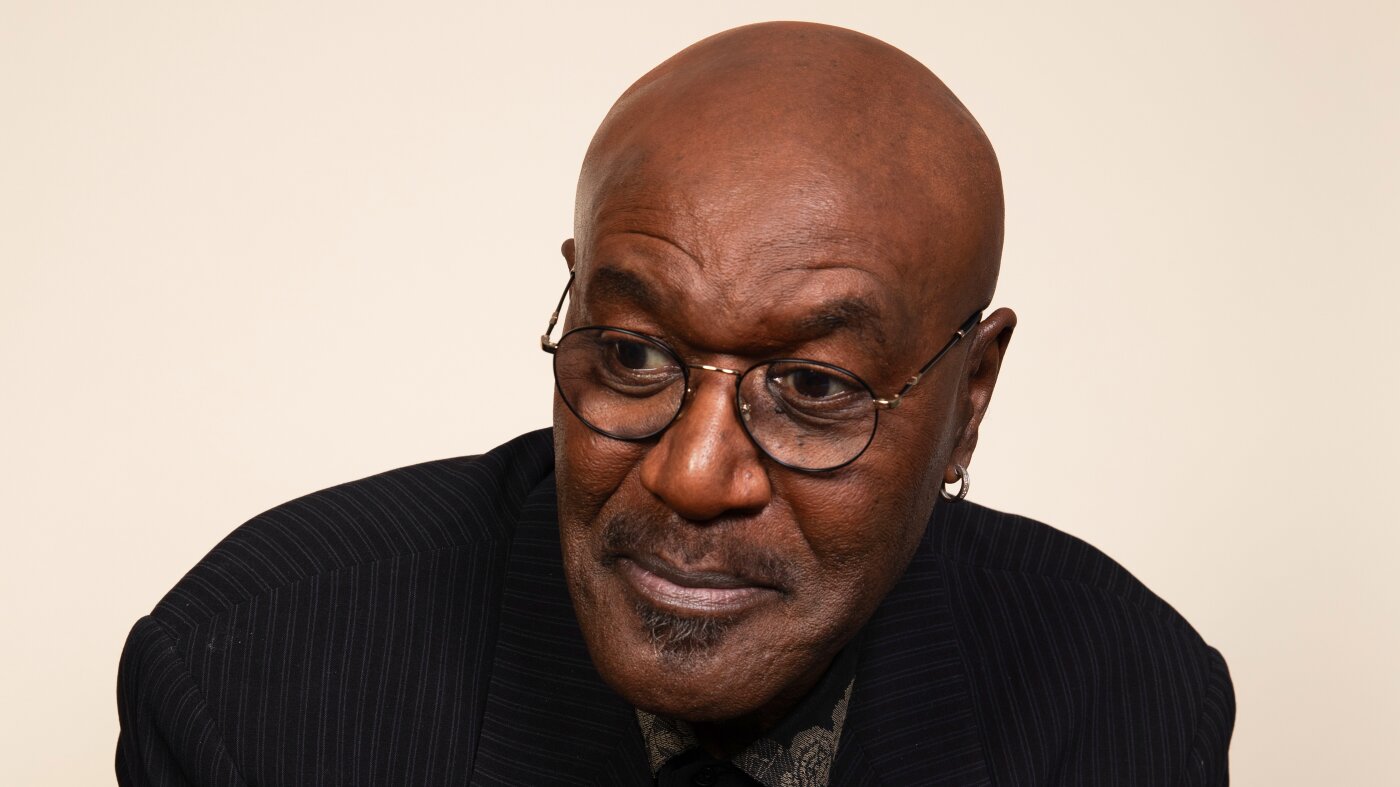
No matter what happens at the Oscars, Delroy Lindo embraces ‘the joy of this moment’

Amazon.com says things are fixed after some issues with logging in and checking out

Private flights account for 30% of departures from Oman airport as wealthy evacuate Middle East

Florida High School Football Rankings: Top 25 teams – Oct. 21

Cleary's 21 help Le Moyne down Central Connecticut State 69-64 in OT

How old is Bo Nix? What to know about Oregon quarterback ahead of 2024 NFL Draft

99th annual Pony Swim held in Virginia

Indiana Members Credit Union announced as new anchor tenant at Bottleworks District

DOJ continues Biden autopen probe despite former president unlikely to face charges
Fact check: Did French border guards mock influencers returning from Dubai amid Iran war?

Iran’s fight for survival / The widening war / Trump’s nebulous goals : Sources & Methods

Map: 4.9-Magnitude Earthquake Shakes Louisiana

Paxton vows he’s ‘staying in this race’ even if Trump backs Cornyn in Texas GOP clash
-

 World1 week ago
Exclusive: DeepSeek withholds latest AI model from US chipmakers including Nvidia, sources say
-

 Wisconsin4 days ago
Setting sail on iceboats across a frozen lake in Wisconsin
-

 Massachusetts1 week ago
Mother and daughter injured in Taunton house explosion
-

 Maryland5 days ago
AM showers Sunday in Maryland
-

 Massachusetts3 days ago
Massachusetts man awaits word from family in Iran after attacks
-

 Florida5 days ago
Florida man rescued after being stuck in shoulder-deep mud for days
-

 Denver, CO1 week ago
10 acres charred, 5 injured in Thornton grass fire, evacuation orders lifted
-

 Oregon6 days ago
2026 OSAA Oregon Wrestling State Championship Results And Brackets – FloWrestling