San Francisco, CA
Bay Bridge lights to return with almost double the number of lights, better visibility


SAN FRANCISCO — For ten years, the Bay Bridge lights brought a sparkle to San Francisco’s skyline.
The feeling that came along with looking up at them was one of awe, said Ben Davis, the founder and Chief Visionary Officer of Illuminate, the art nonprofit behind the installation
“It just makes you want to reach out and grab the hand of the person next to you – it doesn’t make a difference who they are,” he said. “There is something that really brings us into a sense of humility through awe that unleashes the better nature of our character.”
But the lights had to go dark in 2023.
“I feel like there is a hole in the night sky, and there has been for the past year,” Davis said.
The lights first lit up in 2013. What was originally meant to be a two-year art display ended up turning into 10 years. But, over time, many of the lights lost their luster.
“The Bay Bridge is a really harsh environment for electronics. So, they were suffering,” Davis said. “Really, rather than letting them decay into oblivion, which is a bad look for San Francisco, we did the responsible thing: We took them down and set about bringing them back in a new configuration – really designed to do well over time on this side of the Bay Bridge.”
Now dubbed “Bay Lights 360,” the new public art installation with have around 50,000 LED lights – about double the original number – and better visibility.
“We’re going to wrap both sides of the cable so people can see it not just from San Francisco and the North Bay – but as a matter of aesthetic equity, to communities all around the Bay,” Davis said.
The revamp was made possible after the art nonprofit’s successful fundraising campaign.
“We’ve received $10 million in major gifts to bring the artwork back, which is exciting. We’re actually at $10.5 million raised so far. The $11th million we are raising through not major gifts, but actually just through crowdfunding,” Davis said.
Davis said the contributions came from people, not government organizations or corporations.
“We didn’t seek any city funds because we really didn’t want to rob the public art community in San Francisco and other organizations that could use it more,” he said. “I have deep faith and love for the place in which we live, and I find it an honor to have gestures like the Bay Lights manifest in the world with the help of thousands of people bringing together this culture of generosity to make it happen.”
He said they’re working on building the materials now and will begin installing the lights in the fall. The plan is to have them shining again sometime around March of 2025.



San Francisco, CA
Man convicted in the deadly 2021 assault of a Thai grandfather in San Francisco avoids prison

SAN FRANCISCO (AP) — The man convicted in the fatal 2021 attack of an older Thai man in San Francisco, which galvanized a movement against anti-Asian hate, will be able to avoid prison time, a judge ruled Thursday.
Antoine Watson, 25, was sentenced to eight years for manslaughter in the death of Vicha Ratanapakdee, 84. But, having already spent five years in jail awaiting trial, Watson received credit for time served, and San Francisco Superior Court Judge Linda Colfax said he could have the remaining three years suspended if he follows the rules of his probation.
Ratanapakdee’s daughter, Monthanus, expressed her family’s disappointment in a statement shared by Justice For Vicha, the foundation named for her father.
“We respect the court process. However, this is not about revenge — it is about accountability,” she said. “When consequences do not reflect the seriousness of the harm, it raises concerns about how we protect our seniors and public safety.”
Vicha Ratanapakdee was out for his usual morning walk in the quiet neighborhood he lived in with his wife, daughter and her family when Watson charged at him and knocked him to the ground. Ratanapakdee never regained consciousness and died two days later.
Watson testified on the stand that he was in a haze of confusion and anger at the time of the unprovoked attack, according to KRON-TV. He said he lashed out and didn’t know that Ratanapakdee was Asian or older.
San Francisco Public Defender Mano Raju, whose office defended Watson, also said at his trial that the defendant is “fully remorseful for his mistake.”
The Office of the San Francisco Public Defender did not immediately respond to an email requesting comment on Watson’s sentencing.
Footage of the attack was captured on a neighbor’s security camera and spread across social media, prompting a surge in activism over a rise in anti-Asian crimes driven by the COVID-19 pandemic. Hundreds of people across several U.S. cities commemorated the anniversary of Ratanapakdee’s death in 2022, seeking justice for Asian Americans who have been harassed, assaulted and even killed in alarming numbers.
Asians in America have long been subject to prejudice and discrimination, but the attacks escalated sharply after COVID-19 first appeared in late 2019 in Wuhan, China. More than 10,000 hate incidents against Asian Americans and Pacific Islanders were reported to the Stop AAPI Hate coalition from March 2020 through September 2021.
While the Ratanapakdee family asserts he was attacked because of his race, hate crime charges were not filed and the argument was not raised in trial. Prosecutors have said hate crimes are difficult to prove absent statements by the suspect.
San Francisco, CA
Authors gathering in San Francisco to raise awareness and money for the National Kidney Foundation

A number of notable authors are set to take part in a special event in San Francisco this Sunday, celebrating a shared love of reading while shining a light on an often overlooked health issue. The National Kidney Foundation Authors Luncheon brings together writers and community members to support kidney health awareness and raise funds for critical programs.

Aaron Judge went hitless on opening day for the first time and struck out four times for the first time since September 2024, but the New York Yankees still produced plenty of offense and beat San Francisco 7-0 Wednesday night in the debut of Giants manager Tony Vitello as the major league season began.
José Caballero drove in the go-ahead run with an RBI single in a five-run second and also lost the first challenge taken to Major League Baseball’s so-called robot umpire, unsuccessfully appealing a strike by Logan Webb in the fourth.
Max Fried (1-0) allowed two hits in 6 1/3 innings to became just the fifth Yankees pitcher since 1969 with at least 6 1/3 shutout innings on opening day, joining Catfish Hunter (1977), Ron Guidry (1980), Rick Rhoden (1988) and David Cone (1996). New York won an opener with a shutout on the road for the first time since 1967.
Webb (0-1) started the fourth inning with a 90.7 mph sinker on the upper, inner corner that was called a strike by Bill Miller, a major league umpire since 1997. Caballero tapped his helmet, and the 12 Hawk-Eye cameras of the Automated Ball-Strike System upheld Miller’s decision in a graphic shown on the Oracle Park scoreboard.
Caballero singled in the second and Ryan McMahon followed with a two-run single before Austin Wells’ single prompted a mound visit for Webb. Trent Grisham hit a two-run triple and was checked by medical staff after a hard slide into third.
Judge was booed before the game and during each at-bat as he began his 11th big league season. The California native had been pursued by the Giants during free agency in 2022 but he ultimately chose the Yankees’ $360 million, nine-year contract offer.
Webb, a 15-game winner last season making his fifth start on opening day, was tagged for six earned runs — seven in all — and nine hits over five innings.
The 47-year-old Vitello made the big jump from coaching the University of Tennessee.
The teams resum3 the series Friday afternoon, with RHP Cam Schlittler starting for New York opposite lefty Robbie Ray.
___
AP MLB: https://apnews.com/mlb
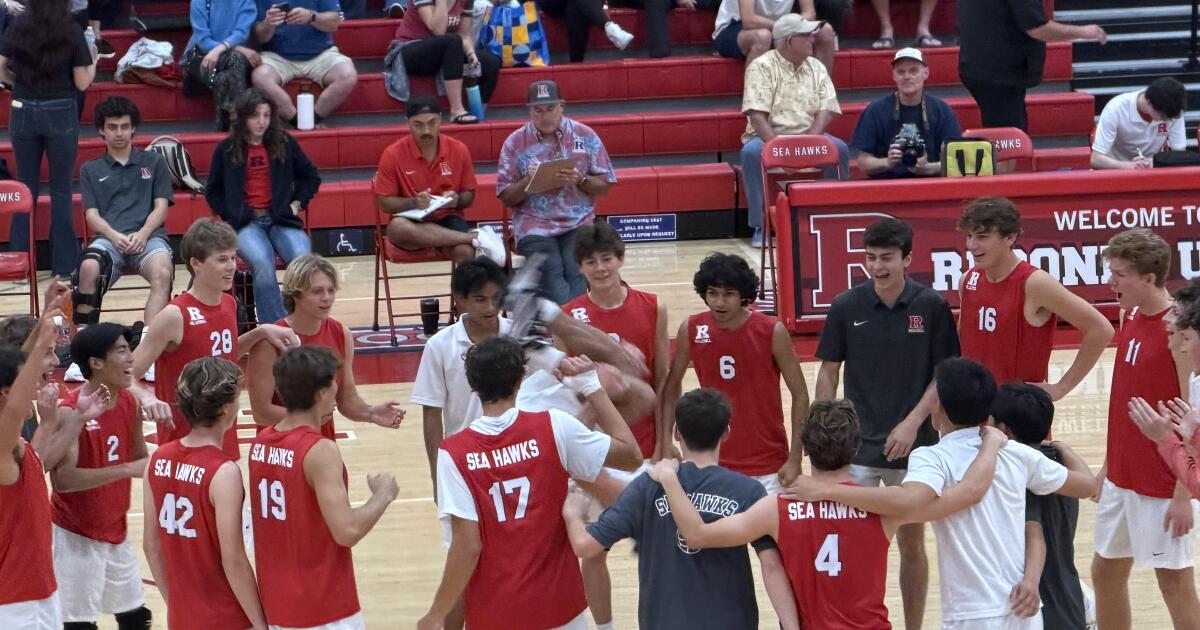
Prep sports roundup: Redondo Union takes down No. 1 Mira Costa in boys volleyball

Rubio joins crucial G7 talks as Iran war set to dominate second day

A surprise resignation could open the door for an independent to win a Montana Senate seat

Metro Detroit weather forecast, March 26, 2026 — 11 p.m. Update

Man convicted in the deadly 2021 assault of a Thai grandfather in San Francisco avoids prison

Florida High School Football Rankings: Top 25 teams – Oct. 21

How old is Bo Nix? What to know about Oregon quarterback ahead of 2024 NFL Draft

Cleary's 21 help Le Moyne down Central Connecticut State 69-64 in OT

99th annual Pony Swim held in Virginia

Indiana Members Credit Union announced as new anchor tenant at Bottleworks District
Rubio joins crucial G7 talks as Iran war set to dominate second day
A surprise resignation could open the door for an independent to win a Montana Senate seat

Video: Savannah Guthrie Says She Believes Her Mother Was Taken for Ransom

Stefanik grills University of Michigan leader on lack of audit after string of Chinese national arrests

Photos: More than one million displaced by Israel’s evacuations in Lebanon
-

 Detroit, MI1 week ago
Drummer Brian Pastoria, longtime Detroit music advocate, dies at 68
-

 Science1 week ago
How a Melting Glacier in Antarctica Could Affect Tens of Millions Around the Globe
-

 Movie Reviews1 week ago
‘Youth’ Twitter review: Ken Karunaas impresses audiences; Suraj Venjaramoodu adds charm; music wins praise | – The Times of India
-
 Science1 week ago
I had to man up and get a mammogram
-

 Sports6 days ago
IOC addresses execution of 19-year-old Iranian wrestler Saleh Mohammadi
-

 New Mexico4 days ago
Clovis shooting leaves one dead, four injured
-

 Texas7 days ago
How to buy Houston vs. Texas A&M 2026 March Madness tickets
-

 Tennessee3 days ago
Tennessee Police Investigating Alleged Assault Involving ‘Reacher’ Star Alan Ritchson