San Diego, CA
Opinion: How long must Mexican Americans wait to be heard?


As a first-generation American of Mexican descent, I find myself reflecting on the historical significance of the Bracero Program, initiated by the Democrats in the 1940s. This program, designed to address labor shortages during World War II, opened the door for countless Mexican workers to contribute to the American economy. It was a moment of recognition and opportunity, allowing many to chase the American dream. However, as I watch the current political landscape unfold, I can’t help but feel a growing sense of disillusionment and neglect.
The Bracero Program was a landmark initiative that underscored the vital role that immigrants have played in shaping our nation. It was an acknowledgment of the contributions of Mexican laborers during a critical time in American history. Yet as we approach the 2024 elections, I am struck by the silence surrounding first-generation Americans in the current discourse — despite our historical significance and the estimated 36 million-plus Mexican Americans in the United States.
Today, both political parties seem to overlook the unique challenges and perspectives of Mexican Americans. We are a community that has navigated the complexities of identity, cultural heritage and economic disparity. Yet as I watch campaign events and discussions, our issues often remain unaddressed and overshadowed by broader narratives. Why?
In a time of increasing diversity and calls for inclusion, are we witnessing Hispanics being ignored, the very people who embody the values of hard work, resilience and determination? Mexican Americans bring a unique perspective to the table — one that merges the dreams of our parents with the aspirations of our children. We understand the struggles of legal immigration, the importance of education and the pursuit of economic stability, yet we often find ourselves sidelined in political conversations that should matter most to us. When will we be given a chance?
The absence of dialogue around our experiences is not just a political oversight; it is a disservice to a community that has consistently contributed to the fabric of this nation. It is a disservice to a community that has consistently and historically contributed to the fabric of the Democratic Party. Political parties have the potential to harness our stories, our struggles and our dreams to create a more comprehensive narrative. By engaging with first-generation Hispanic Americans, they could craft policies that resonate deeply and foster an opportunity for all.
We are the children of immigrants who have fought tirelessly for a better future. We have stories of resilience, innovation and success that deserve to be heard. Yet as I look around, I find myself questioning whether our contributions are being understood. This has nothing to do with race baiting; it is about understanding the untapped political power that could bring a major shift in the political arena.
Yes, even though the 2024 elections are already underway, I urge both parties to reconsider their approach. We are not just voters; we are part of the American story. Our families left Mexico in exchange for the American Dream. We assimilated to norms of American life while preserving our heritage. Our history, marked by hope and perseverance, deserves to be recognized and celebrated. Neither party should lose sight of the diverse voices that enrich our community.
In acknowledging our history with the Bracero Program, let us not forget the present. Mexican Americans are here, we are watching and we are waiting for our moment to be heard. The upcoming election is not just about policies, platforms and celebrity-like attention; it is about the people, their stories and their struggles. But it is time for our voices to be part of the conversation, to ensure that the promise of America remains alive for future generations.
I was shocked that no party chose a candidate with Mexican heritage, but life goes on — we win some and we lose some. But the path forward lies in collaboration, understanding, and accepting who we are. Let’s hope that the future chooses to embrace the richness of our community and recognize that in doing so, they strengthen the very foundation of this country.
Rodriguez is a consultant who lives in Downtown San Diego.



San Diego, CA
Elite California city set for mass illegal street vendor expansion as judge issues stunning verdict

San Diego seems to have no solution to its illegal street vendor problem and it’s only getting worse in many areas including the popular Balboa Park and Gaslamp Quarter.
Local business leaders are frustrated following the January 2026 California appeals court ruling, which forced the city officials to entirely halt the crackdown on street vendors.
“It’s a disaster,” Denny Knox, executive director of the Ocean Beach Main Street Association, told the San Diego Union Tribune last week.
An increasing number of street vendors are exploiting the court’s ruling and many don’t even bother to get a permit.
Executive Director of Gaslamp Quarter Association, Michael Trimble, said that street vendors block the sidewalks, making it difficult for the businesses in the area to function.
“The lack of action has also led to an escalation of activity, including new vendors setting up tents and selling goods without permits, health approvals or accountability,” said Trimble, the Union-Tribune reports.
Organized groups of hot dog vendors have returned to the Gaslamp Quarter—bringing associated hazards like open fires, blocked walkways, and the dumping of grease into storm drains.
“It’s so much of a slap in the face to merchants that have done things the legal way, the right way,” said Ruth-Ann Thorn, owner of Native Star boutique and Exclusive Collections Gallery in the Gaslamp Quarter, reports inewsource.
Officers can no longer impound vending carts and law enforcement in Ballpark District is restricted, SDPD’s Ashley Nicholes said in a statement, according to the Union-Tribune.
“Recent court rulings involving the city’s street vending ordinance have limited what police officers can do to enforce street vending laws,” Nicholes said.
San Diego’s tug-of-war with street vendors started in 2018 when the state law decriminalized aspects of street vending. The task to draft a vendor law fell into the laps of then-Mayor Kevin Faulconer in 2019, then passed on to Mayor Todd Gloria in 2021 and then Councilmember Jennifer Campbell.
The law, approved by the City Council in May 2022, banned vendors in Balboa Park, Little Italy, Ocean Beach and some beach areas during summer months. But, the merchants kept complaining about the lack of law enforcement and that led to the revision of the law in 2024.
The revised law made it easier for officials to impound vendors’ carts, limited free-speech protections, which didn’t include yoga classes on the beach and selling food.
After an immediate backlash, a federal appeals court ruling in June 2025 said the city’s ban on beach yoga classes is unconstitutional as they are protected under the First Amendment.
A California appeals court in the case of Imhotep Mustaqeem earlier this year ruled that San Diego’s revised 2024 street vendor law violated state law by establishing “overly restrictive” geographic no-vendor zones and restricted operating hours.
Imhotep Mustaqeem, a licensed vendor who had sold snacks outside Petco Park since 2009, sued the city after police impounded his cart under San Diego’s revised 2024 ordinance. While a lower court initially ruled against him, the Fourth District Court of Appeal ultimately vindicated Mustaqeem and quashed the 2024 street vendor law.

A California yoga instructor known as “Namasteve” is leveling up his warrior pose as he battles San Diego’s efforts to end his popular beachfront classes.
Steven Hubbard recently filed his third lawsuit over a 2024 city ordinance that prohibits teaching yoga to four or more people at local beaches and parks.
Hubbard, who’s been teaching yoga by the Pacific Ocean shoreline for 17 years, contends the local law violates his right to free speech because he doesn’t charge his students and instead accepts voluntary donations.
“It does set a dangerous precedent for government to be passing bans on specific types of speech that, for whatever reason, it doesn’t like,” Hubbard’s lawyer, Bryan Pease, told The Independent. “We don’t know why they decided yoga is something they want to target. They’ve never explained it, but it is concerning from a First Amendment perspective.”
Neither the San Diego mayor’s office nor the city attorney’s office replied to inquiries from The Independent.

The yoga ban is buried in a subsection of the San Diego Municipal Code that defines the “services” that are regulated at beaches and parks.
“Examples include massage, yoga, dog training, fitness classes, equipment rental, and staging for picnics, bonfires or other activities,” it says, marking the only time yoga is mentioned.
At the time the ordinance was introduced, Pease said, it was “put on the city council agenda as a sidewalk vending ordinance.”
“There was no public notice that they would be targeting the free and donation-based teaching of yoga in parks and beaches,” the lawyer said. “ I don’t even know that the city council members themselves knew what they were voting on.”
Videos posted on Hubbard’s “Namasteve Yoga” page on YouTube show scores of students following his instructions as they face the water in the Southern California sunshine.
San Diego park rangers issued Hubbard a total of 10 citations under the 2024 law, Pease said.
Some were for leading classes from his backyard while livestreaming on YouTube as students apparently watched on their devices by the beach, Pease said.
After Hubbard first challenged the 2024 ordinance in federal court, the judge overseeing the case denied a motion to block its enforcement, saying the First Amendment didn’t protect the teaching of yoga.
But that decision was reversed last year by the U.S. Court of Appeals for the Ninth Circuit, which ruled that Hubbard and fellow yoga teacher Amy Baack were “likely to succeed” in challenging the legality of San Diego’s public yoga ban.

“Teaching yoga is protected speech. The City’s prohibition on teaching yoga in shoreline parks is content-based and fails strict scrutiny,” according to the unanimous decision written by U.S. Circuit Judge Holly Thomas.
Hubbard has also filed two lawsuits in state court, with the most recent on June 22. It was first reported by the Times of San Diego.
It seeks unspecified damages for three tickets he received in May 2025, all of which charged him with giving a lecture without a permit.
The accusation came despite a ruling in the federal case that said requiring a permit to give a lecture “substantially overburdens” the right to free speech, according to Hubbard’s lawsuit.
All the citations issued against Hubbard were dismissed in April when the city attorney’s office didn’t appear in court to prosecute, Pease said.
Meanwhile, city lawyers have issued a series of subpoenas that seek “detailed GPS tracking information, all social media posts from all time and complete financial records for all financial transactions” involving Hubbard and Baack, Pease said.
Pease characterized the move as “pure harassment,” saying it seemed “calculated to have a chilling effect on people’s participation if they think their personal information is going to be obtained through these channels.”
“All that the city attorney has said to me about it is that it’s to prove that this is commercial activity, and they’re going to hire a financial expert to go through all these records,” he said.
A hearing on a motion to quash the subpoenas is scheduled for July 17 in state court, and pretrial discovery in the federal case is pending, with a deadline of August 28.
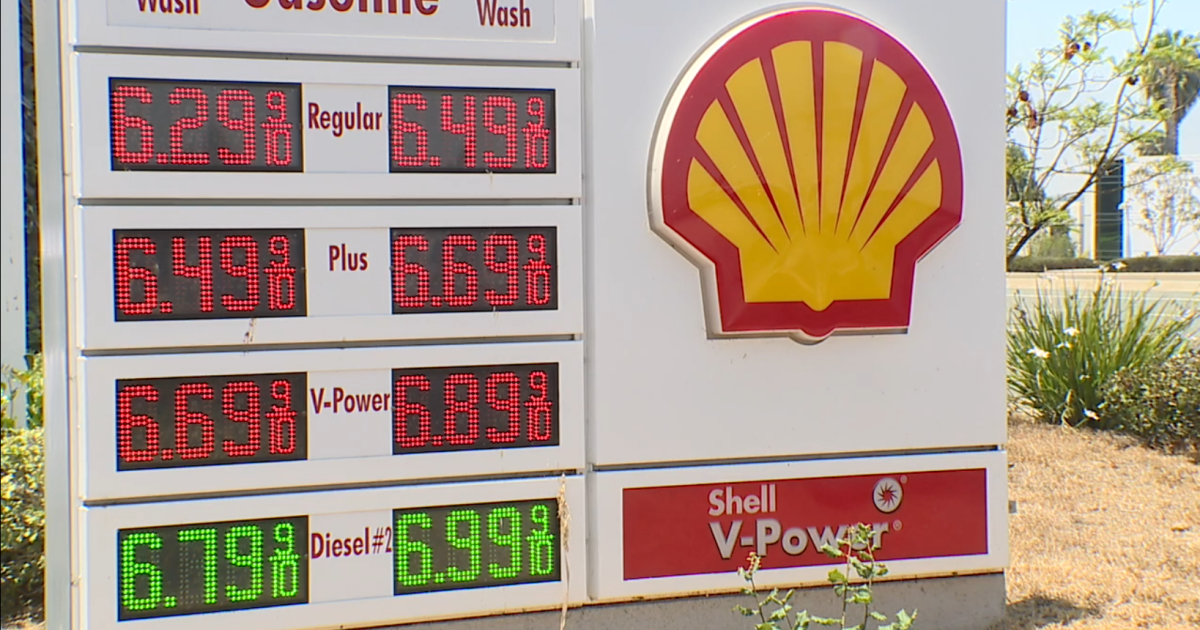
SAN DIEGO (CNS) — The average price of a gallon of self-serve regular gasoline in San Diego County dropped for the 44th time in 45 days today, falling eight-tenths of a cent to $5.42, its lowest amount since March 12. The average price has fallen 74.9 cents over the past 45 days, including eight-tenths of a cent Saturday, according to figures from the AAA and Oil Price Information Service. It is 9.8 cents less than one week ago and 53.2 cents less than one month ago, but 80 cents more than one year ago. The national average price dropped for the 43rd time in 45 days, falling six-tenths of a cent to $3.804, its lowest amount since March 17.
It has decreased 76 cents over the past 45 days, including 1.3 cents Saturday. The national average price is 6.3 cents less than one week ago and 41.6 cents less than one month ago, but 65.6 cents more than one year ago. “Crude oil prices have fallen to their lowest levels in months, dropping to the $60 a barrel range,” the AAA said Thursday. “Overall, gas prices remain the highest they’ve been in 4 years, but the downward trend since late May is welcome news during the busy summer driving season.”
Copyright 2026, City News Service, Inc.
-

 Minnesota1 minute ago
Minnesota Lynx bested by Connecticut Sun 90-89
-

 Mississippi8 minutes ago
Mississippi Lottery Mississippi Match 5, Cash 3 results for July 6, 2026
-
Missouri11 minutes ago
Missouri teachers push back on governor’s A-F school grading plan
-

 Montana16 minutes ago
The Record is Clear: The Wilderness Society, Greater Yellowstone Coalition, and Montana Wilderness Association have Consistently Undermined the Roadless Rule
-

 Nebraska23 minutes ago
Pine-Richland receiver Khalil Taylor pulls hat trick, picks Nebraska over Penn State
-

 Nevada26 minutes ago
Nevada Youth Sports estimates $250K in damage after Fourth of July firework fire
-

 New Hampshire31 minutes ago
Suspected gunman in Hampton Beach shooting was in U.S. Navy
-

 New Jersey38 minutes ago
I took my kids to this New Jersey hotel and stopped making fun of the state (for now)

