San Diego, CA
Men’s March Madness Snubs: San Diego State, Auburn Left Out of NCAA Tournament Field


Much of the conversation every year after the men’s NCAA tournament selection show is about who didn’t get in. And this year in particular, with all the wild narratives that took off late in the year debating the importance of strength of schedule and how to evaluate teams like Miami (Ohio) and Auburn, we were guaranteed to get at least one team with every reason to be upset that their name wasn’t called.
Which teams have the biggest gripe about not being selected to go dancing? Here’s a look at five with the most valid complaints.
San Diego State and the Mountain West
Mountain West commissioner Gloria Nevarez likely has among the biggest gripes with how her league was treated on Selection Sunday. The league had six top-75 KenPom teams, but only its champion, Utah State, is dancing after San Diego State was the third team out. New Mexico was also in the bubble mix coming down the stretch. For a league that has gotten four or more bids in the last four years, it’s hard to believe just one Mountain West team will have a chance to dance this season.
San Diego State’s case was the strongest. It had boosted its résumé this week by beating Colorado State and New Mexico in the Mountain West tournament, and hung right with Utah State in the title game most of the way. The Aztecs challenged themselves in the nonconference schedule, playing in the Players Era tournament in Las Vegas and a neutral-site game vs. Arizona. Unfortunately, the Aztecs took a difficult Quad 3 loss to Troy (an eventual NCAA tournament team) in mid-November that haunted them. Teams unfortunately are rarely rewarded for playing buy games against better mid-majors instead of the dregs of Division I.
And New Mexico looked in good shape in mid-February, but finished poorly with losses in four of six to close the season. Some of those were heartbreakers: a two-point defeat to San Diego State, a four-point loss to Utah State and two more single-digit defeats against Nevada and Colorado State. Like SDSU, the Lobos were hurt by an early bad loss, falling to rival New Mexico State on Nov. 15 for their worst defeat of the season.
Auburn
It’s certainly hard to be sympathetic for Steven Pearl’s Tigers after losing 16 times in the regular season and posting a pedestrian 17–16 record. That being said, everything else about the Tigers’ profile was NCAA tournament caliber. Auburn beat Florida on the road in Gainesville, Fla., the best win of any bubble team by a long shot. They also beat Big East champion St. John’s on a neutral court in November and blew out Arkansas in January. And from a metrics standpoint, Auburn was the strongest overall profile to miss the cut.
Is that enough for me to say Auburn deserved to be in? Maybe not. But Auburn’s schedule was so difficult that perhaps the committee could have been a bit more forgiving of its very middling record.
Oklahoma
In a season in which it seemed like just about every bubble team stumbled to the finish line, perhaps the committee could have rewarded an Oklahoma team that soared in the season’s final month. In February, the Sooners won on the road at Vanderbilt, a monster résumé-topping win over a top-15 team in the NET. They also notably won late-season matchups against several of the league’s bubble teams, including winning on the road at Texas (one of the last teams in) and blowing out both Missouri and Texas A&M that landed on the No. 10 line. If the objective is to select the best teams at the present moment, Oklahoma certainly seemed more dangerous than some of the teams that enter the Big Dance on a whimper.
Instead, it’s yet another bubble heartbreak for the Sooners under Porter Moser, who have made a living coming up just short. The Sooners had a strong case in both 2022 and ’24 but were left out. This year, Oklahoma was the first team out, meaning that if not for bid steals in the Atlantic 10 (VCU) and MAC (Akron), the Sooners would have snuck in.
Indiana
You might not call Indiana a snub, but the Hoosiers were in the first four out in spite of their brutal finish. Had the Hoosiers not lost to Northwestern in ugly fashion in the Big Ten tournament, it’s possible Indiana might have been able to sneak in. In the end though, going from 17–8 to 18–14 will elicit little sympathy from most.
That said, Darian DeVries is another coach who can’t be enjoying Selection Sunday lately. This year’s snub was far less egregious than last year’s shocking exclusion at West Virginia though.
Seton Hall
This wasn’t as egregious as two years ago, when Seton Hall was left out in spite of a 13–7 Big East record. But Shaheen Holloway can’t be too happy about the lack of respect for his Pirates and the Big East after not even coming close to the field despite winning 21 games. In the end, the Pirates just were victims of too many close calls, losing single-digit games to St. John’s and UConn twice each and in controversial fashion against UCLA in Maui. I maintain the Pirates might have been dangerous despite an anemic offense had they gotten in.
More March Madness from Sports Illustrated
Listen to SI’s college sports podcast, Others Receiving Votes, below or on Apple and Spotify. Watch the show on SI’s YouTube channel.



PITTSBURGH — Germán Márquez is a winner with the San Diego Padres.
The right-hander pitched five effective innings in Monday night’s 5-0 victory at Pittsburgh. He allowed six hits, struck out four and walked one in his second start with his new team.
It was his first win since June 18 for Colorado at Washington.
“It’s been a while, man,” Márquez said.
The 31-year-old Márquez is trying to rebuild his career with San Diego. He won a spot in the team’s rotation after agreeing to a minor league deal in February.
Márquez spent his first 10 seasons with Colorado, going 68-72 with a 4.67 ERA in 200 starts and three relief appearances. He missed most of the 2023 and 2024 seasons due to Tommy John surgery, and then struggled in his final year with the lowly Rockies.
Márquez went 3-16 with a 6.70 ERA in 26 starts in 2025. He recorded his first win of last season on May 11.
San Diego Padres pitcher Germán Márquez delivers during the first inning of a baseball game against the Pittsburgh Pirates in Pittsburgh, Monday, April 6, 2026. Credit: AP/Gene J. Puskar
Colorado finished with a 43-119 record, setting a franchise record for losses.
Márquez dropped his first start with San Diego when he surrendered four runs and eight hits in three innings in a 9-3 loss to San Francisco last week.
He threw 92 pitches against Pittsburgh, 56 for strikes. He got some help from Gold Glove outfielder Fernando Tatis Jr., who cut down Ryan O’Hearn when he attempted to score from second on Spencer Horwitz’s single in the second.
The Pirates put a runner on third with one out in the fifth, but Márquez escaped the jam when he retired Brandon Lowe on a popup to third and Bryan Reynolds on a flyball to left.
San Diego Padres pitcher Germán Márquez delivers during the first inning of a baseball game against the Pittsburgh Pirates in Pittsburgh, Monday, April 6, 2026. Credit: AP/Gene J. Puskar

“A couple breaks went his way, and then he finished strong, too,” Padres manager Craig Stammen said. “So got that breaking ball going. That’s key for him doing well.”

In 2022, my wife and I were ready to take the next step to start a family. Like many people, I began with a simple step: checking in with a doctor to make sure everything was on track with my health. I never imagined that visit would uncover a diagnosis that could take both my future and my life. And I certainly didn’t expect that my survival would depend on access to a clinical trial.

Three years ago, I was diagnosed with Lynch Syndrome, an inherited genetic condition that significantly increases the risk of colorectal and other cancers. Shortly after, a colonoscopy revealed a mass in my rectum. Because of a specific biomarker linked to my condition, I qualified for a groundbreaking clinical trial.
That trial changed everything.
Instead of enduring chemotherapy, radiation and invasive surgery, I received an innovative therapy. Within three months, the mass was undetectable. What could have been a devastating, life-altering medical journey became something entirely different.
Stories like mine are only possible because clinical trials exist, and because the system that supports them works.
Today, that system is at risk.
California lawmakers are considering Assembly Bill 1776, legislation intended to strengthen antitrust enforcement. But as written, the bill could unintentionally disrupt the cross-sector collaborations that make clinical trials possible. It expands the state’s authority to challenge business practices deemed “anticompetitive,” creating new uncertainty for the partnerships between researchers, hospitals and innovators that drive medical progress.
In biomedical research, collaboration is foundational, not optional. The same relationships that might raise concerns in other industries are often essential to developing new treatments and bringing them to patients through clinical trials.
California leads the world in clinical research, with thousands of trials actively recruiting patients across the state. These studies are not theoretical – they are where new therapies are tested, refined and delivered to people who need them most like me.
If AB 1776 disrupts the clinical trial pipeline, the consequences will be profound. Fewer clinical trials, slower research, and reduced access to cutting-edge treatments could become the new reality. For those of us facing rare or life-threatening conditions, time is not a luxury. Treatment delays can mean the difference between life and death.
I am one of the fortunate ones. My condition was caught early. A clinical trial was available. The treatment worked.
But not everyone will be so lucky if policies like AB 1776 unintentionally undermine the very system that made my recovery possible. I urge California lawmakers to reject AB 1776 and protect the clinical trials that save lives every day.
Jessica Acosta is a patient advocate who lives in San Diego.

A brush fire in San Marcos forced hundreds of families to evacuate their homes Sunday afternoon.
It happened near the Cal State San Marcos campus in the 500 Block of La Moree Road.
“I was at home when an amazing sheriff literally pounded on the door, broke in, grabbed me, grabbed my dogs and said…you’ve got to get out of here. Fire is behind your house,” Daun Everforest said.
Everforest was among hundreds of families evacuated to Mission Hills High School after a brush fire threatened their homes Sunday afternoon.
Neighbors said the fire came really close to homes on the nearby hillside.
“My daughter came running into our back bedroom and she said mom you’ve got to come there’s a fire on the hill,” Angel Martinez said.
“I stepped outside and I saw just everything was just blazing,” Ethan Ochoa, another neighbor said.
San Marcos Fire Department said crews responded to a call about a brush fire at around 3p.m. Sunday afternoon.
The first unit on scene found the fire spread out to about one acre with the heavy fuels.
A division fire marshal told NBC 7 the brush fire prompted a large response, with at least 30 fire engines, air support from Cal Fire, and Sheriff’s Deputies on the ground to help with evacuations.
Hand crews were able to establish fuel break to stop the fire from spreading and several firefighters stuck around to mop up hot spots.
Fire investigators said no one was injured, but one storage container was damaged.
Neighbors are thankful firefighters acted quickly to stop the flames.
“I’m so grateful for you guys,” Daun Everforest said.
Fire crews were able to stop the forward rate of spread at 1.93 acres. at around 4 p.m.
Neighbors like Angel said this is a great reminder to always have a plan in case a fire starts in your neighborhood.
“Know your area”… “Read up on safety and get your to-go bags ready,” she said.
Investigators are looking into the possible cause of the fire.

Commitment 2026: Key races, dates ahead of Ohio, Kentucky, Indiana elections

Fire damages apartment complex in northwest Oklahoma town

Kentucky showing interest in Oregon forward Kwame Evans Jr.

Pa. data centers: How lawmakers are responding, from electricity and water use to tax breaks

Hate self-checkout at the grocery store? A RI bill to limit it is back.

Florida High School Football Rankings: Top 25 teams – Oct. 21

How old is Bo Nix? What to know about Oregon quarterback ahead of 2024 NFL Draft

Cleary's 21 help Le Moyne down Central Connecticut State 69-64 in OT

99th annual Pony Swim held in Virginia

Indiana Members Credit Union announced as new anchor tenant at Bottleworks District

Ilhan Omar calls Trump an ‘unhinged lunatic,’ urges booting him out of office
Between Budapest and Brussels: Péter Magyar’s political tightrope
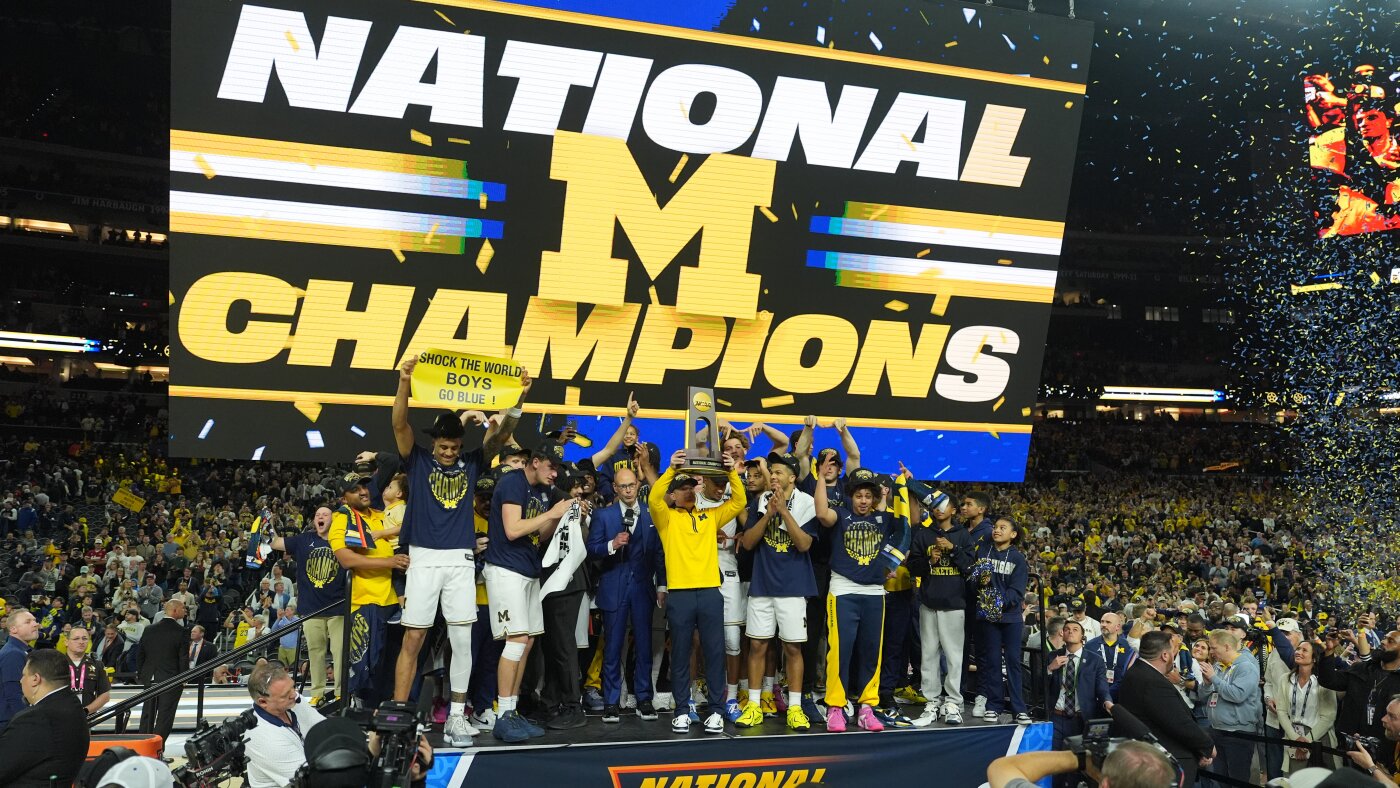
Michigan muscles its way to program’s 2nd NCAA basketball title, beating UConn

Map: Minor Earthquake Strikes Near San Diego

Trump claims he’d win as the president of Venezuela — just needs to ‘quickly’ learn Spanish
-

 Atlanta, GA2 days ago
1 teenage girl killed, another injured in shooting at Piedmont Park, police say
-

 South-Carolina1 week ago
South Carolina vs TCU predictions for Elite Eight game in March Madness
-

 Movie Reviews5 days ago
Vaazha 2 first half review: Hashir anchors a lively, chaos-filled teen tale
-

 Vermont1 week ago
Skier dies after fall at Sugarbush Resort
-

 Politics1 week ago
Trump’s Ballroom Design Has Barely Been Scrutinized
-

 Politics1 week ago
JD Vance says he was ‘obsessed’ with UFOs, believes aliens are actually ‘demons’
-
 Entertainment5 days ago
Inside Ye’s first comeback show at SoFi Stadium
-

 Politics1 week ago
Jeffries declines to break with indicted Democrat after ethics panel’s guilty verdict