San Diego, CA
After years of just imagining her favorite book characters, a local woman rounded up some friends to bring the characters to life


The idea for this photo book came from her longtime love of stories. Chino Mannikarottu developed a passion for literature growing up in Kerala, one of the southern states in India. She read all of the Malayalam classics (the language spoken in Kerala) and used to wonder what her favorite characters would look like in real life.
“Whenever I would meet someone new, I would relate them to a character I had read about and pictured in my mind while reading. That curiosity grew with time, and the idea of doing a photoshoot recreating some of the characters came to mind,” she says, with an initial idea of simply uploading some photos on social media or turning the project into a calendar. After interest in her project grew, she realized she wanted to do more. “The photoshoots became more elaborate, making it apparent to me that I needed to do more with the photos — to reflect on the characters and give a sense of why they were iconic and unforgettable. I realized it was important to give my perspectives about them and a photo book would give the opportunity for precisely that.”
She describes the finished project, “Through Her Eyes,” as a photo book that brings the female characters from these iconic novels to life, focusing on the strength, resilience, intellect, and values demonstrated through each of their stories. She says it’s both an homage and “an exploration of how their stories continue to resonate in our society today.” She spent more than a year gathering her girlfriends in her local Indian community, scouting locations in San Diego (an area in Torrey Pines that mimicked a hill station in India, or a lush and green section of Balboa Park that looked like a scenic Indian village), and the final editing and compilation of the book. (Copies of the book are available for $30 by emailing her at chinnamma@gmail.com, and all of the proceeds are being donated to San Diego area charities focused on the welfare of women.)
Mannikarottu, 40, studied internal medicine and is a hospitalist at Scripps Memorial Hospital in La Jolla. She lives in Carmel Valley with her husband, Elviz George, and their three children. An actress, writer, and dancer active in her local Indian community, she took some time to talk about her project and the relatability women share, regardless of culture or location.
Q: I’m guessing that the novels you chose the characters from carry significance? Can you talk about why these selected novels and their characters are so special? Special enough to be included in your book?
A: Yes, each one of them holds specific significance, particularly because of the times that these novels were written in. Set in a heavily patriarchal society, the female characters symbolize various facets of femininity, identity, and societal roles. Their stories were often about their struggle against societal constraints, whether it’d be gender norms, class structures, or familial expectations. They all search for autonomy in their own way, in a world that seeks to restrict them. By knowing them, a woman today can feel a sense of connection that’s unifying and may even offer a gentle relief to modern day struggles. Many of these women, though seemingly silent or subdued, speak volumes through their emotions and inner turmoil. Their silence becomes a powerful tool to challenge society, and by photographing them, I wanted to emphasize how silence in literature and in real life can be powerful. These women may not speak loudly due to their constraints, yet they made a prominent presence in a man’s world.
Q: Can you tell us the backstories of a couple of the characters who are featured in your book?
A: Indulekha is from the novel of the same name, which was published in 1889. Set in the backdrop of 19th-century Kerala, the novel revolves around her life. She is a strong-willed, independent woman from a prominent Hindu-Nair family, which is a subcaste in the Hindu religion, during the time in which the caste system was prevalent (and unfortunately, it still is to some degree). She belonged to a time when something called “Sambhandam” existed, where an older man of the upper caste (a Brahmin) could have sexual relations with young Nair girls, as the latter were of the lower caste compared to Brahmin. Indulekha rejects a “Sambandham” proposal from a Brahmin man who is three times her age, symbolizing a new era of self-respecting, educated women seeking dignity and equality in relationships. She is regarded as a proto-feminist character, as she embodies the idea of intellectual freedom and self-expression, paving the way for future literary portrayals of strong female characters in Malayalam literature.
Malu is from the novel, “Oppol,” which was published in 1975. Malu is a young woman who raises a 6-year-old boy with deep love and care, but without ever revealing to him that she is his real mother, as the child was born out of wedlock. The man left her and she is trapped between societal norms and maternal instinct. The boy calls her “oppol,” which means “elder sister,” as the truth is never revealed to him or to the people in the new village she relocates to. She represents the silent endurance of women navigating love, shame, and the guilt of motherhood within the confines of a conservative society, where a child out of wedlock could not even be talked about, let alone be accepted.
Saramma is from the novel “Premalekhanam (Love Letter),” published in 1943. Saramma is a witty, intelligent, and progressive young woman who challenges societal and religious norms. A Christian girl, she falls in love with Keshavan Nair, a Hindu man, and together they question the absurdities of caste, religion, and conventional marriage. She lived in an era where interreligious marriages were unheard of and socially unacceptable. Saramma and Keshavan Nair wrote love letters to each other, unafraid to challenge tradition in pursuit of love and equality.
What I love about Carmel Valley…
I love the vibe of our neighborhood in Carmel Valley, where I can just wave at people I pass by, or stop for a quick chat with a neighbor while picking up groceries. I love having that sense of familiarity while seeing the same people, having little interactions that make me feel like part of a shared space.
Q: You mentioned the universality of the social, physical, and emotional experiences of these characters; why is it important to you that women from other cultures be able to relate to the characters you’re sharing in this book?
A: I wanted this photo project to be done through the lens of universality because the physical and emotional experiences these characters go through is key in making them unforgettable. Art often reflects society, so these characters represented a cross-section of what that society was when these novels were written. Despite cultural, geographical, or linguistic differences, such human experiences are often deeply shared. I believe women from different backgrounds, even if they come from very distinct cultures, will find moments of empathy and understanding when they encounter these characters. Themes of love, loss, empowerment, and societal expectations transcend borders, and this is especially important when it comes to female representation. Their stories talk about navigating societal restrictions, family dynamics, or self-discovery, which women from various backgrounds can relate to as we all face similar challenges, even today. Whether it’s the pressure of traditional roles or the journey of self-empowerment, these are struggles that we can understand collectively. Also, the idea that women’s experiences are only defined by their culture or region is quite narrow as it’s often much more complex than that. With a wider audience, my hope is that the book can make you reflect on your own life through the lens of another culture.
Q: For people who may be unfamiliar, how would you describe Malayalam fiction?
A: Malayalam fiction has this compelling ability to connect you emotionally while making you think deeply. The blend of realism with elements of magical realism, myth, and folklore can make the stories feel deeply rooted in place, but also transcendent, touching on something that’s universal. It has a lyrical, almost poetic flow. The rhythm of the language itself feels very natural, and it’s often said that it has an almost musical quality. The cadence of the sentences can be soft and meditative one moment, then abruptly intense the next. It makes you feel the weight of every word. It tends to have a slower, reflective pace compared to some other genres. This allows for a deep exploration of the characters.
Many Malayalam novels linger on small moments, whether it’s the way a character picks up a cup of tea, or how they stare out the window while lost in thought-seemingly insignificant details, but they often carry much more emotional weight than the main plot.
The structure is often non-linear; stories are broken up in flashbacks and fragmented perspectives, mirroring the complexity of human memory, which makes the story feel more authentic, especially when exploring personal stories or trauma. It often incorporates elements of Kerala’s culture, traditions, and landscapes, which gives the stories a very local flavor, but also a universal resonance. For instance, you’ll find references to the monsoon, the lush green landscapes, the backwaters, and the cultural importance of religion, festivals, and the local communities.
Q: Let’s say someone comes to you and they want an introduction to Malayalam fiction (that has been translated to English)-what are three books you’d recommend they start with, and why those books?
A: The first book I’d recommend is “The Covenant of Water” by Abraham Verghese. The book is actually written in English and is set in Kerala with all the characters residing there. The book made it to Oprah’s book club and Obama’s reading list last year. It’s about a Christian family where, in each generation, at least one person dies of drowning. The novel explores themes of family, tradition, the pain of loss, and the impact of societal changes, including India’s fight for independence. The story revolves around Mariamma, a child bride at age 12, who grows to become the powerful matriarch of the family. In the photobook, we have recreated her, as the novel was translated to Malayalam last year and is now part of Malayalam literature.
Another book, again set in Kerala and written in English, is “The God of Small Things” by Arudhathi Roy, which has won several accolades, including the Booker prize. It’s about the complexities of forbidden love, colonialism, and the caste system. It reveals how the past continues to shape the future and how things that may be considered insignificant can have profound consequences.
I would also recommend the English translation of one of the most popular Malayalam novels of all time, “Chemmeen,” which was later made into a blockbuster movie. “Chemmeen-The Enduring Classic” is the translated version by Anita Nair. The story revolves around the fishing community in Kerala, which explores the myth of “sea mother” and how a fisherman’s safety is impacted by his wife’s fidelity. We have recreated “Karuthamma,” the female protagonist from this novel, in “Through Her Eyes.”
Q: What was your initial goal for pursuing this project and are there ways that goal changed/evolved by the end of it?
A: My initial goal was just some pretty photos to look at and a fun experience to play dress up with my female gang of friends within the Malayalee community. Later, it evolved to something much more meaningful; I realized I had a powerful tool to educate and introduce Malayalam literature. The goal then changed to having these characters make an impact on folks who have never heard of them-particularly non-Malayalam speakers here and our next generation of children who are unaware of the legacy they carry of such a rich literary heritage.
Q: Ultimately, what do you want to say through this book?
A: I want to encourage people to imagine! I want to encourage everyone to read, particularly fiction, and realize it can be more engaging and entertaining than watching a movie sometimes, as the imagination and possibilities in your mind are endless. I want someone to become curious about one of these characters, maybe look them up online and read about them.
Q: What is the best advice you’ve ever received?
A: If you have a strong conviction about something, it’s worth going for it. Somehow, things will fall into place and the universe will make it happen for you. If it doesn’t work out as you expected it to, there will still be some things that you can take away from it. It’s a matter of perspective. Don’t be too focused on the end result as the process, the journey, will make it most meaningful.
Q: What is one thing people would be surprised to find out about you?
A: I was surprised to find out that I could manage coordinating such a large group of women who are unlike me. Personally, I like to plan ahead and arrange things ahead of time, but I had women in this photoshoot who would be preparing at the last minute, which was initially bothersome to me. Later, as the project went on, I realized I can be flexible to accommodate that. I do not need to worry about how others do things. Everyone has their own pace and modus operandi in life, I just need to trust it.
Q: Please describe your ideal San Diego weekend.
A: The theme would be “chill and unwind”—going to brunch in La Jolla, watching the seals at La Jolla Cove, catching the sunset at Sunset Cliffs, getting dinner in Old Town, and a nightcap in the Gaslamp Quarter would make it ideal.



San Diego’s most beloved neighborhoods, like North Park, Golden Hill and Sherman Heights, were built by people who needed a place to live and found one. But the bungalows, fourplexes and cottages that gave working San Diegans a foothold in those neighborhoods can hardly be built anywhere else in the city.
Rules written decades ago banned them. For 70 years, San Diego has been paying for that mistake in the form of a city its own workforce can no longer afford to live in.
Neighborhood Homes for All of Us is the city’s plan to fix that: family-sized townhomes, rowhouses and small duplexes built in the neighborhoods where San Diegans most want to live.
While San Diego rents are softening as new apartments are built, the cost of buying a home is not moving, and it won’t, because the rental and ownership markets run on entirely separate tracks. Renters benefit when more rentals are built, forcing landlords to compete for them.
However, a family trying to buy a home benefits only if more homes are available for sale. San Diego home prices now exceed nine times the median household income, among the worst ratios in the nation, according to Harvard’s Joint Center for Housing Studies. Building rental housing is important, but it does not change the math for a buyer.
The homes that would change it — family-sized, on the ownership track, in the neighborhoods where people most want to raise children — have been illegal to build for decades. San Diego produced roughly 7,000 condos and townhomes a year in 2005. By 2022, that number had collapsed below 500. Part of that drop is because of litigation rules that drove up insurance costs for builders, caps on pre-sales that finance these projects and high fees. Another major reason is that we simply do not allow starter homes on smaller lots. So, instead, builders default to rentals because that’s what current rules allow them to build profitably.
London Moeder Advisors, a San Diego real estate economics firm, finds that eliminating the city’s large-lot-size mandates could produce new townhomes at 42% less cost than surrounding single-family homes without taxpayer subsidies. While this price point is still high for many, it’s more attainable for young families starting out. And importantly, the price could drop further if the state advances reforms to address litigation rules and pre-sale caps that drive up costs.
The city’s program is also focused on adding homes in San Diego’s neighborhoods with the best-performing schools and most accessible jobs. These are also the neighborhoods with the most restrictive regulations on smaller starter homes. A teacher whose classroom is in La Jolla cannot afford to live there. A firefighter stationed in Mission Hills commutes from Santee. The homes that would let them stay are currently illegal to build in much of these areas. Neighborhood Homes changes that.
While critics may say San Diego already has the tools for adding homes to neighborhoods, why add another program? Because each of those tools was for a different purpose. None were designed to add more for-sale housing.
ADUs, the backyard homes now common across the city, typically top out at 750 square feet (because of fee cliffs) and entail intricacies when selling to own. Other tools, like Senate Bill 9, have been layered with requirements that make it far too complicated and expensive for many homeowners to split their lots to add homes. Laws like Senate Bill 79 are important for adding more housing near transit. But none of these tools focuses on family-sized, ownership-track townhomes in an established neighborhood.
The Neighborhood Homes initiative asks a simple question: Where do the families who can’t afford a million-dollar home but don’t want an apartment go? We can continue to say certain neighborhoods are off-limits to the teachers, trades workers and young families who want to live there, or San Diego can set its own terms for how they grow, with local standards in a form the city controls.
San Diego’s most beloved streets were not preserved into existence. They were built — a duplex here, a rowhouse there — by people who needed a place to live in the city they loved and found one. That is what Neighborhood Homes makes possible again.
Asad is a former board member of the YIMBY Democrats of San Diego County. He resides in Mid-City.

So Justin Verlander is calling it quits, effective at the season’s end.
There’s Padres-related history to explore with Verlander, 43.
With it comes many groans.
San Diego passed on Verlander as part of the infamous, franchise-rocking decision to draft Mission Bay High School’s Matt Bush with the first overall pick in 2004.
Had the Padres chosen Verlander and tweaked the Old Dominion alum’s delivery, as the Tigers did soon after selecting him No. 2 overall, the best innings-eater of his generation could’ve headed San Diego’s rotation for many years.
As a National Leaguer, Verlander would’ve pitched against pitchers, rather than designated hitters. His annual ERA would’ve fallen by about a half run, per DH and no-DH data of that time.
The Padres would’ve boasted a generational monster atop their rotation as soon as 2006, when Verlander won the American League rookie of the year award with Detroit, while the San Diego rotation featured next year’s NL Cy Young winner, Jake Peavy.
Recall also that Petco Park, from its opening in 2004 until its remodel in 2012, played as big as Yellowstone National Park.
Not that the DH rule greatly impeded Verlander, a nine-time All-Star.
Many times over, the ace rewarded Tigers general manager Dave Dombrowski and scouting director Greg Smith for drafting him one spot after Kevin Towers and Bill Gayton — their options reduced by Padres owner John Moores’ stated opposition to drafting Scott Boras-assisted prospects Jered Weaver and Stephen Drew — selected Bush, the easy-to-sign but troubled shortstop turned pitcher.
Verlander helped Detroit reach its first two World Series in decades. He led the league in innings three times as part of chewing up 200-plus innings in eight consecutive seasons.
Dombrowski had displayed an unwavering faith in betting big on hard throwers.
Unfazed by power-righty Kyle Sleeth breaking down soon after he took him third overall in 2003, Dombrowski and Smith, a former Padres scout, became dead set on taking Verlander if the Padres didn’t.
Why didn’t Towers and Gayton choose Verlander?
Foremost, the Padres generally didn’t like him as much as the Tigers did.
In fact, they preferred Weaver and Drew.
But Moores all but blocked his scouts there. He was openly critical of their adviser, Boras, saying he didn’t trust him. The two had clashed in the Kevin Brown talks that ended with Brown joining the Dodgers, months after Brown had led the Padres to the 1998 World Series.
Moores was subjected to other kinds of pressure, too. Legal complaints had delayed Petco’s construction. Those complaints all failed in court. But in the interim, the price of steel rose. Padres ownership bore that cost.
Even though Moores’ baseball staffers whiffed on Verlander and failed miserably in choosing Bush, Moores put them in a tough spot. He in effect removed two players who would both pan out as big leaguers.
Someone with the Tigers correctly foresaw that shortening Verlander’s stride would sharpen his control. Untroubled by his 21-18 college record and bursts of subpar accuracy, the Tigers’ duo touted the 6-foot-5, 240-pounder’s “electric” combination of size, velocity and a powerful curveball.
Signing Verlander wasn’t easy.
David Verlander, the pitcher’s father and a union organizer with experience in sticky negotiations, said a contractual impasse led him to negotiate directly with Smith, leading to a deal, per CWA-Union.org.
The sides agreed on a $3.12 million signing bonus, which was less than the $3.15 million bonus the Padres paid to Bush, who was advised by Jeff Moorad.
The Boras-advised Weaver and Drew, who went 12th and 15th to the Angels and Diamondbacks, respectively, got $4 million apiece — but they and Verlander each got major league contracts, increasing the value of all three deals.
It wasn’t until close to the 2005 draft that Weaver was signed. He nonetheless returned great value to the Angels.
Verlander went on to pitch for the Astros after GM Jeff Luhnow obtained him at age 34 from Detroit.
Verlander became a better pitcher with Houston, benefiting from the tech-and-data-driven edges the Astros provided him. Verlander embraced high-speed camera data, eventually dropping his two-seam fastball and limiting his rising fastball to high in the zone. Prodded by high-speed imagery, he adjusted his slider grip.
He won his second and third Cy Youngs with the Astros, and now stands 266-159 with a 3.33 career ERA in nearly 3,600 innings.
For baseball’s hungriest fanbase, he represents a case of what might have been.
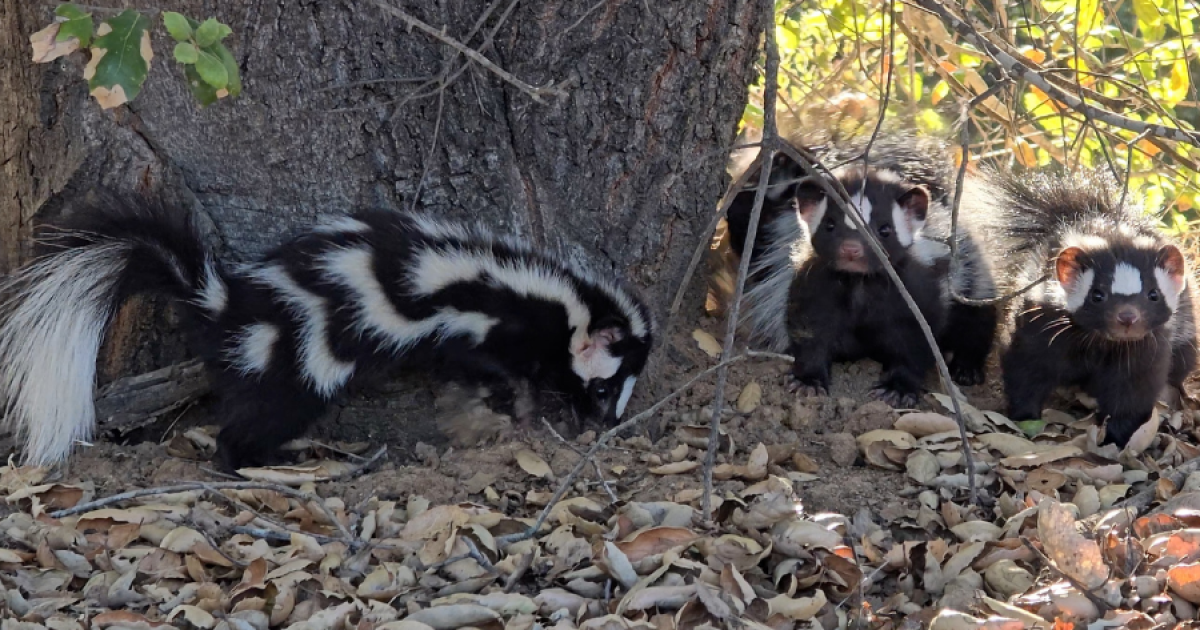
RAMONA (CNS) – Four rare western spotted skunks were released back in the wild after weeks of rehabilitation and socialization at the San Diego Humane Society’s Ramona Wildlife Center, officials announced Wednesday.
The successful release marks a major milestone for a species rarely seen in wildlife rehabilitation. The group included one orphaned skunk that was flown more than 400 miles by Flying Tails Animal Rescue from Sierra Wildlife Rescue in Northern California to join an orphaned group in Ramona, according to the SDHS.
The four skunks were returned to a carefully selected, remote habitat in Valley Center after reaching the necessary weight and developmental milestones to thrive on their own.
Western spotted skunks are a rare sight for the Humane Society’s Project Wildlife team. While the wildlife center typically handles hundreds of striped skunks each year, admitting six spotted skunks from different litters in one season is unusual. Spotted skunks are generally found in remote forested areas and are not as common in urban neighborhoods, officials said.
“We have never seen this many western spotted skunks in a single season before,” said Autumn Welch, wildlife operations manager at the Ramona Wildlife Center. “Because they are more reclusive than striped skunks, they require very specific care and even more secluded release sites to ensure they can stay wild.”
Socialization is critical for orphaned spotted skunks. During their stay at the Ramona Wildlife Center, the group became a bonded unit — exploring, digging and sleeping together, according to SDHS officials. Experts say these social cues prevent habituation to humans and teach the orphans natural skunk behaviors.
While four members of the group have returned to the wild, two spotted skunks remain in care at the facility. The smallest skunk was moved to an outside pre-release habitat and introduced to a slightly older skunk in late June.
Wildlife officials said by keeping the pair together, the wildlife team ensures the younger skunk will have a companion to learn from until they are both ready to be released, likely within the next month or two.
Anyone who finds an injured, sick or orphaned wild animal is encouraged to visit sdhumane.org/wildlifehelp or call 619-299-7012.
Copyright 2026, City News Service, Inc.
-

 Politics2 minutes ago
Omar’s disclosures erased millions, leaving her with potential negative net worth. She won’t explain why.
-

 Health9 minutes ago
Dr Oz links obesity to chronic disease surge, says GLP-1s can ‘jumpstart’ better health
-

 Sports12 minutes ago
Pirates star pitcher makes unfortunate history after being taken out in middle of perfect game bid
-

 Technology17 minutes ago
Medical identity theft follows you into the doctor’s office
-
 Business24 minutes ago
California soccer fans sue StubHub after it fails to deliver expensive World Cup tickets
-
 Entertainment27 minutes ago
Lucas Museum to give free annual passes to South L.A. neighbors, host community preview day
-
 Lifestyle32 minutes ago
Meow Wolf taps famed L.A. animation house for its new Los Angeles venue
-
Politics39 minutes ago
Column: Trump decries ‘communism’ while his government takes ownership of companies


