New Mexico
In Talks With Casting Director Kathryn Brink On New Mexico Productions and More – Casting Networks


Kathryn Brink is one of those rare people who has thrived in the entertainment business in spite of never living in either New York or Los Angeles. She’s spent her entire adult life in New Mexico, and has never found any reason to live anywhere else. Since incentives were introduced to expand production in the state, Brink’s career has exploded, rewarding her faith.
Don’t limit her, either. She’s no longer just acting as the local casting director for productions, she’s now the lead for more and more films, including The Absence of Eden, starring Zoe Saldana and Garrett Hedlund, currently in theaters. There is something reassuring, maybe even a little thrilling, about someone succeeding in Hollywood without living there, or compromising what’s important to them in the process.
That’s Brink in a nutshell, a professional who stays true to herself. She spoke to us from her home office in the Land of Enchantment.
How did you get into casting in the first place?
I actually graduated from college with a directing degree, and went almost immediately into television production stuff that was mostly centered around commercials and big interactive video games. That was what was going on in the industry at the time in New Mexico. I was doing mostly line producing and things of that sort. I was also constantly doing casting for a lot of my directors.
They’d be like, Well, you know what I want, why don’t you just do the casting on this commercial? I loved working with the actors, so it felt like a natural fit. Then, when the industry really started to change in New Mexico, we got all the incentives and the industry really started to pop, I thought, you know, I’d much rather be in the casting end of things. I’m not enough type A to be a producer forever. (Laughs) So yeah, it was a natural shift.
It’s amazing to me how often I talk to casting directors who say they kind of fell into it, or they started out as an actor or as a director, and then got into casting that way, because it was a chance to work with actors, without acting yourself, or from a directing perspective without having to deal with all the other stuff that not everybody wants to deal with.
(Laughs) Very true. I think it’s great because I had a huge amount of experience, being intertwined with other departments and understanding their concerns and priorities. I think that really helped a lot in terms of giving me the perspective and the confidence to work with people that are in all those different areas of production, and how I have to be part of a team.
Can you tell me about working specifically for productions set in New Mexico?
It has evolved. That is one 100% for sure, when I first started doing casting here, there wasn’t a single director that would would look at anyone for being anything other than a day player with two lines. They just didn’t trust that we had the talent pool here. That has absolutely changed drastically. COVID really seemed to move things in a whole different direction, because the the directors and producers knew that we couldn’t be in person anymore, they really had to take our word that these are the people that you want to see.
I think it gave casting directors that are in a local market a little more freedom to really be able to help make decisions about roles, and to start incorporating and bringing people in that would be reoccurring roles, costar roles, even starring roles. A lot of the movies that I’m working on now, I’m doing all the casting, not just local casting. Granted, they are more in the independent vein, but it’s really exciting to be able to see these New Mexico actors get elevated in their profession and be able to absolutely be able to compete and be cast in the larger roles.
I would have thought that something like Breaking Bad would be a line of demarcation for New Mexico, but it sounds to me like the equanimity of the pandemic really opened up everything for everybody.
I think it did. I just think it blew away some of the illusions that we had that you can’t be a casting director in New Mexico and be casting in LA, or an East Coast casting director can’t do west coast casting, and so forth. I feel like the directors and producers have had more of an open mind since then.
What about the decision to stay in New Mexico, rather than moving to one of the coasts?
I think that when I really came into my own with casting, I had also gone through some fairly significant like changes. So I wasn’t 22 years old or 25, which is maybe a time when I would’ve said, I’ve got to go to LA and I have to be part of that market. I made decisions based on what I thought was going to be a very well rounded lifestyle for me, where my work was extremely important, but also who I surrounded myself.
The environment here was also equally as important for my child to be here. I just felt very strongly that things were going to change here. I could already see it coming. When the incentives started and things really started to pop, I think that was enough to keep us here. Now, there are casting directors in New Mexico who really have that strong connection to Los Angeles, who are equally as much there as here, and that works for them. But for me, I felt like my life style choices were just as important as my career choices, and I chose to stay here,
That’s surprisingly healthy talk for somebody in the entertainment industry.
(Laughs) And there have been moments when I’ve kicked myself and said, Well, why the heck didn’t I? Or I’ve lost a job to somebody else, and it’s like, gosh, if I had just been in LA, I would have attached myself to that project. But I guess I have a fairly humane, esoteric kind of view of life.
What piece of advice or wisdom would you give to an actor coming into audition for you?
I think just to try to relax. Because if you’re not relaxed, you’re not going to be yourself. There’s so many actors that are not used to auditioning in person anymore. Even actors who are very experienced, lately I had a callback session and I had an actor say to me, I am so nervous, and this is somebody I’ve cast like four or five times. So I’d say to those people, just take a breath and relax. We love you. You wouldn’t be here if I wasn’t crazy about you and your work.
So that’s number one. Breathe, relax, enjoy the process. Because if you can’t do that, then we can’t see you. Just be able to open up and show us who you are, and potentially where we could take you.
Casting directors use Casting Networks every day to discover people like you. Sign up or log in today to get one step closer to your next role.
You may also like:


LAS CRUCES, N.M. (KFOX14/CBS4) — A leader in the New Mexico Republican Party was arrested Wednesday, accused of a deadly hit-and-run in Las Cruces.
Former Treasurer of the Republican Party in New Mexico, Kimberly Ann Skaggs, 54, was arrested Wednesday and charged with leaving the scene and tampering with evidence, jail records show.
Police documents show the charges stem from a deadly hit-and-run crash that happened Monday afternoon, which killed 40-year-old bicyclist, Andrew Brown.
Investigators believed Skaggs was involved after an investigation revealed that Skaggs allegedly was driving fast in the area, fled the scene after the crash and then tried to hide the vehicle from authorities.
RECOMMENDED: Las Cruces couple arrested on murder, child abuse charges in neighbor’s stabbing death
The investigation
According to police documents, a witness at the scene of the crash– 850 N. Fairacres Rd.– described seeing a dark blonde-haired woman flee in a black Cadillac Escalade SUV.
Afterwards, investigators said they saw on Flock cameras– A.I. powered license plate readers– a black Cadillac Escalade traveling near the site of the crash minutes before the incident.
READ MORE: Dona Ana County expands Flock license plate cameras as officials cite crime-solving gains
The license plates showed that the vehicle belonged to Skaggs and that, in September 2025, the Las Cruces Police Department had given her a citation for “racing on streets-exhibition driving.”
Investigators stated that a business on Picacho Ave. captured what they alleged was the same black Cadillac Escalade driving fast.
Then, the documents described how investigators tracked down the Escalade using OnStar’s live GPS tracking, discovering the SUV was at a property on the 5000 block of Northwind Road, which investigators said the Dona Ana County Assessors Office confirmed is a property owned by Skaggs.
On Tuesday, at around 6:41 p.m.– over 24 hours after the deadly hit-and-run– investigators executed a search warrant on the property and described finding the black Cadillac Escalade behind a home, under a red metal carport.
Investigators noted damage on the SUV consistent with the crash, highlighting that there was blood splatter near one of the front tires, markings on the front bumper consistent with hitting a bicycle and parts missing, which investigators said were the same parts found at the scene.
Dona Ana County jail records show Skaggs was booked on Wednesday afternoon and remains jailed without a bond.
RECOMMENDED: Noises in an empty Mesilla home led to discovery of burglar naked in bathtub
About Skaggs
On the official website of the Republican Party of New Mexico, Skaggs was listed as the treasurer before she was removed.
KFOX14/CBS4 has reached out to the Republican Party to learn more and are waiting for a comment regarding the arrest.
Also, according to election statistics, Skaggs ran for State Representative in District 36 in 2022 and 2024, losing both times to Democrat Nathan P. Small.
Sign up to receive the top interesting stories from in and around our community once daily in your inbox.

SANTA FE, N.M. – Gov. Michelle Lujan Grisham asked Attorney General Raúl Torrez to investigate whether any Drug Enforcement Administration agents broke state law when pills reached New Mexico streets.
In a statement, Lujan Grisham said, “make no mistake: the DEA knew people would die if these pills made it into New Mexico communities.”
The governor also shared a timeline from 2022 to 2025 that she said shows when she asked federal officials for help with New Mexico’s fentanyl crisis and violent crime.
Lujan Grisham said the first request came on June 21, 2022, when she wrote to then-Federal Bureau of Investigation Director Christopher Wray and asked for 50 additional federal agents.
She said she wrote to then-Attorney General Merrick Garland on Sept. 15, 2022, asking for more agents, resources and support for New Mexico law enforcement.
Lujan Grisham said she wrote Garland a second time on Aug. 8, 2023, with the same request.
What came next?
About a month later, Lujan Grisham said she sent Garland a third letter and said New Mexico needed more federal law enforcement to curb violent crime, drug trafficking and human trafficking.
She said her most recent request came on Sept. 4, 2025, when she wrote to former Attorney General Pam Bondi and again asked for additional agents and resources.
The governor’s statement says those requests span several years as she pressed the federal government for more help in New Mexico.
Full statement from Gov. Michelle Lujan Grisham:
“I am appalled by reporting this week by the Associated Press and Albuquerque Journal that revealed federal authorities made a deliberate decision to let hundreds of thousands of fentanyl pills flood into New Mexico communities, despite knowing that fentanyl is so lethal the White House has designated it a weapon of mass destruction.
Let me say that again: the Drug Enforcement Administration watched as 74,000 fentanyl pills were delivered to a mobile home park in Albuquerque, and they did nothing. And that’s just one transaction. Shockingly, the federal government stood by while monitoring shipments, tallying exact pill counts, and watching as these deadly drugs hit the streets.
There are no words to describe how reckless and dangerous these decisions were. Make no mistake: the DEA knew people would die if these pills made it into New Mexico communities, and the agency let it happen anyway. The result: hundreds of New Mexican parents burying their kids. Hundreds of New Mexican kids growing up without stable parents. All while the federal government stood by.
If the justification for letting these pills flood our communities was that it would somehow make New Mexico safer down the road through bigger eventual busts, the results say otherwise. New Mexico now leads the nation in the increase in overdose deaths for the second straight year, despite deaths dropping nationwide.
Today, I wrote to Attorney General Raúl Torrez and asked him to investigate whether any federal agents broke state law when they allowed lethal drugs to remain on our streets, and to prosecute anyone responsible — regardless of whether they are a federal agent or not.
I have spent years working across two administrations — writing letters, traveling to Washington, meeting directly with President Joe Biden and his cabinet, pushing for accountability, asking for more federal agents to be deployed to New Mexico to help fight this crisis.
- On June 21, 2022, I wrote to FBI Director Christopher Wray, imploring the FBI to assign no less than 50 additional agents to New Mexico to stem escalating drug trafficking and violent crime.
- On September 15, 2022, I wrote to Attorney General Merrick Garland, requesting that the Department of Justice provide additional federal agents, resources and support to New Mexico law enforcement. We asked the department to match the level of investigative, analytical, and technical resources the FBI had deployed in its Buffalo, NY surge.
- On August 8, 2023, I wrote again to Attorney General Garland, renewing my request that the DOJ expeditiously assign more federal agents to New Mexico.
- On September 7, 2023, I wrote to Attorney General Garland for a third time, reiterating my request once more federal law enforcement support to curb violent crime, drug and human trafficking.
- On September 4, 2025, I wrote to Attorney General Pam Bondi, once again requesting additional agents and resources.
I have declared the surge of drugs like fentanyl to be a public health emergency. I have deployed the National Guard to both Albuquerque and Española. While my administration was doing everything we could to stem the tide of fentanyl coming into our state, the federal government deliberately allowed it to flood in.
New Mexican lives are not the federal government’s cost of doing business.
I plan to hold the federal government accountable for this disaster and will explore every possible avenue of action against the federal government to right these wrongs.”

The Canyon Venado Fire has grown to 852 acres east of Clines Corners and crews say wind farms in the area are threatened.
CLINES CORNERS, N.M. – The Canyon Venado Fire has grown to 852 acres east of Clines Corners and crews say wind farms in the area are threatened.
The fire is burning just east of Clines Corners, south of Interstate 40.
It forced the closure of eastbound Interstate 40 at Clines Corners on Tuesday night. I-40 reopened Tuesday night. I-40 is back open but smoke still affects visibility.
“We’re on the side of I-40 so drivers have to be pretty cautious. As far as our establishment itself we’re pretty isolated by the freeway itself as a nice fire break,” said Lincoln Tarantino, Clines Corner general manager.
The fire has burned around 852 acres, up from just 20 at this time Monday.
Crews say the fire is not contained and wind farms in the area are threatened.
-

 Politics4 minutes ago
Trump administration pledges $150M in aid, deploys Navy warships after deadly Venezuela earthquakes
-

 Sports13 minutes ago
Second Lady Usha Vance joins celebrity-filled crowd for Team USA’s group-stage finale in LA
-

 Technology19 minutes ago
Debt collection letter for debt you don’t owe? What to do now
-
 Business26 minutes ago
Newsom blesses Uber ballot measure truce — but fight over car crash lawsuits continues
-
 Entertainment29 minutes ago
La Cruz offers a musical memorial to Pulse shooting victims on Pride Month
-
 Politics41 minutes ago
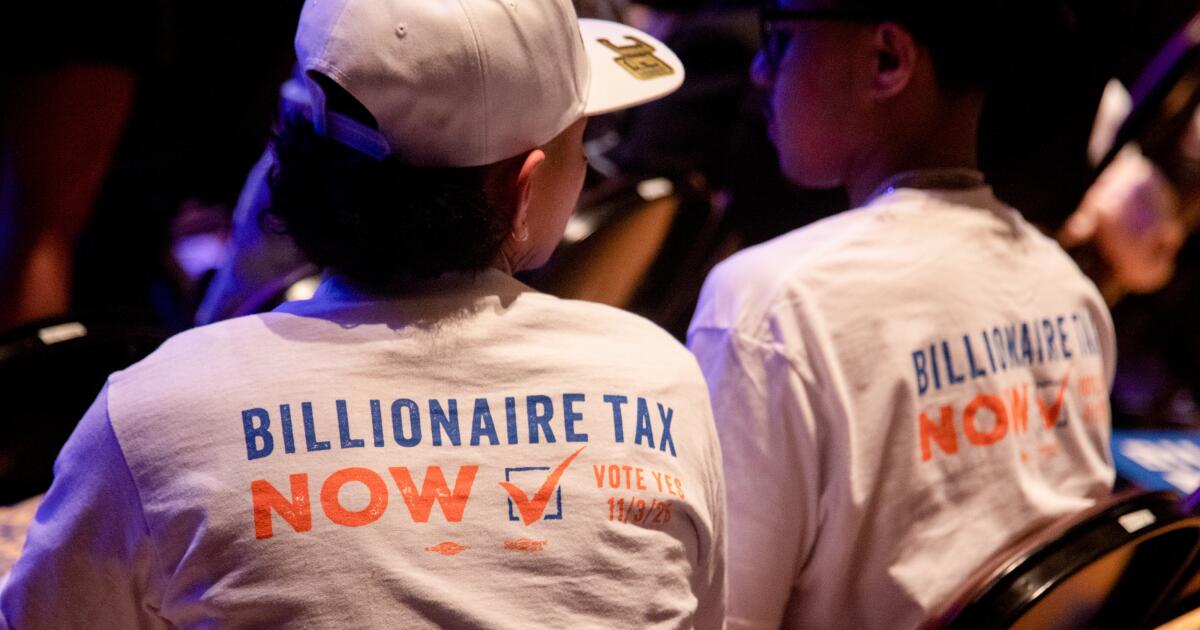
Controversial billionaire tax proposal will appear on November ballot
-
 Sports49 minutes ago
Shohei Ohtani is the first Dodger to be named 2026 All-Star
-

 World59 minutes ago
Who will control Africa’s AI infrastructure and at what cost

