Nevada
How public charter schools in Nevada can become private when building their facilities


Charter schools are using a loophole to bypass Nevada prevailing wage laws, allege an alliance of building trades unions and one state lawmaker, who says he wants the state agency tasked with overseeing the majority of the charter schools to crack down on the practice.
But the Nevada State Public Charter School Authority and Academica Nevada, the largest educational management organization in the state, argue prevailing wage laws don’t apply to construction projects included within lease agreements that charter schools enter into with private companies.
The differing interpretations of state law raises questions about just how public charter schools are. Proponents of charter schools often stress they are public entities subject to many of the same requirements of traditional district schools, but opponents argue charters see themselves as public only when it is convenient to their bottom line, which they see as making profit for their out-of-state for-profit operators.
In Nevada, any public project with a contract price of $100,000 or greater that is wholly or partially funded by public dollars is subject to prevailing wage law. Rates for prevailing wage are set annually by the Nevada Office of the Labor Commissioner, which compares similar projects in the region.
Prior to 2019, charter schools were explicitly exempt from prevailing wage requirements. That exemption was put into place by the Republican-controlled Nevada State Legislature in 2015. After Democrats regained control of the Legislature and secured the governorship, the charter school exemption was removed.
Since 2019, charter schools that have directly built or renovated their own facilities using public dollars have been subject to prevailing wage law and have adhered to it, says Charter School Authority Executive Director Melissa Mackedon. That includes major construction projects undertaken by Beacon Academy in Southern Nevada, Oasis Academy in Northern Nevada, and Elko Institute for Academic Achievement in Elko.
But not all charter schools directly own their buildings. Many, if not most, lease privately owned space, especially in their first few years of operation.
The charter schools who fall under this category aren’t confined to those renting space inside an existing recreation center or church, as some do. It also includes charter schools who have standalone buildings that were essentially built for them.
Mackedon confirmed it is the Charter School Authority’s position that the state cannot force the construction of those charter school buildings to pay prevailing wage.
“The Nevada and U.S. constitutions guarantee private actors contracts without government interference,” she told the Nevada Current. “We cannot infringe or coerce the private actors’ right to contract.”
Democratic state Sen. Skip Daly of Reno believes this is willful evasion of state law by the charter schools and the companies they lease from, which they typically call “facility partners.”
“They say, ‘No, no, no, we’ll magically just build a building on a piece of land that will match your needs. We’ll build it to your specifications — right down to the flagpole out front — meeting all your requirements. Miraculously we’ll have this building on spec right here for your school and we’ll lease it to you.”
Academica Nevada, the educational management organization associated with more than half of all charter school students across the state, disagrees with Daly’s characterization.
“In order to obtain a facility to open a charter school, most Nevada charter schools find it necessary to enter into rental or lease agreements with a private property owner, who constructs and owns the facility, and then rents the facility to the school on a standard, long-term facility lease,” Academica Nevada Chief Operating Officer Ryan Reeves said in a lengthy statement to the Current. “Since these are private dollars, developing private property, with the school having a standard lease agreement … there is no applicable law requiring the payment of prevailing wage on the construction. The selection of contractors is the purview of the private developer of the property.”
Often, the lease agreements include a provision allowing the charter school to purchase the building after a set number of years. Reeves noted these provisions “are not rent-to-own contracts where monthly payments apply to the purchase price” and therefore don’t change the applicability of prevailing wage law.
Daly points to Senate Bill 226 of the 2023 Legislative Session which put into law that “careful scrutiny of novel leasing and financing arrangements” is necessary to ensure prevailing wage is paid on public works projects. That bill was sponsored by Senate Majority Leader Nicole Cannizzaro, passed on party lines and was signed by Gov. Joe Lombardo.
Daly also pointed to another law, passed as Assembly Bill 190 in 2019, which clarified that prevailing wage laws apply not just to the public body itself but also to the contractors and subcontractors acting on their behalf. Daly, a retired building trades union member, sponsored that legislation.
The charter schools and their private facilities partners are not following the spirit of the state’s prevailing wage laws, argues Daly, though he acknowledged the matter has not been litigated in court.
Mackedon suggested the issue might best be decided by a judge.
“If the trade unions want to talk, if they think the private actors are doing something wrong and out of the confines of (Nevada Revised Statute), I think they should absolutely file a complaint with the Labor Commissioner,” she said. “There are entities that are in the position to deal with this and make judgments, but it’s not the SPCSA.”
When asked about the legality of these types of agreements between public charter schools and private facility partners, Labor Commissioner Brett Harris referenced last year’s SB226, saying it closed such loopholes.
“Prevailing wage, the apprenticeship and payroll requirements, those all apply,” she said.
Harris noted that, in 2020, Laborers International Union Local 169 — then headed by Daly — sued the City of Sparks over prevailing wage issues stemming from the below-market-value transfer of land from its redevelopment agency to a private developer. The Office of the Labor Commissioner determined the workers on that parking garage-condominium project should have been paid prevailing wage. The city and developer appealed.
That case is still awaiting a decision from the Nevada Supreme Court.
“In the meantime, SB226 explicitly says purchase property lease agreements and there is some agreement with the land,” she said. “This applies to all of them.”
Academica Nevada disagrees, saying SB226 revised a portion of the law (NRS Chapter 354, on local government finance) that charter schools are exempt from by NRS 388A.366(1)(n). Furthermore, Reeves argues, the legislative intent of last year’s law was to address situations “where public resources contributed directly to a private development.”
“Standard charter school development involves a private developer purchasing land at market value, developing a building with private dollars, and then renting it to the school with no certainty whether the school will eventually be in a financial position to purchase the project,” he said. “This type of project does not fit within the intent or language of SB226.”
Who’s supposed to be watching?
Prevailing wage and other labor violations are not confined to the charter schools, and Daly acknowledges there have been cases of university foundations and redevelopment areas attempting to skirt prevailing wage laws under similar grounds.
“It’s a lease paid for nearly 100% by public funds,” said Daly. “Liars are gonna lie, that’s what they do. Cheaters are going to cheat.”
For building trades professionals, the skirting of prevailing wage requirements by a charter school is uniquely egregious because many of them approach unions for guidance inside the classroom.
“They ask us for pre-apprenticeship curriculum,” said Southern Nevada Building Trades Union Executive Secretary-Treasurer Vince Saavedra. “You want us to train your students to be pre-apprentices, to get them ready. You want our curriculum to use; but you don’t want us to build your schools.”
Charter schools are granted wide autonomy by the state, and the nature of their oversight in Nevada lends itself to increased confusion, says the labor commissioner.
“There tends to be confusion because (charter schools) are individually operated,” Harris said. “It seems like the (Authority) is confused about being a central body because they are not fronting the money for a project.”
But the labor commissioner says oversight is the responsibility of the Charter School Authority and “they should be driving the compliance portion.”
State agencies overseeing qualified public works projects are supposed to collect payroll breakdowns from contractors and subcontractors and review for potential violations. If they find them, they are supposed to submit a complaint to the Labor Commissioner, which conducts their own investigation.
But in reality, state agencies across the board are understaffed when it comes to compliance officers, says Harris. Most complaints about prevailing wage violations are initiated by third-party observers — typically labor unions who fund their own compliance officers to seek out bad actors.
SNBTU notes they have found prevailing wage violations on projects that are clearly subject to public works laws, including at Clark County School District.
“If it happens on CCSD projects, it’s likely happening on charter schools that aren’t subject to the same scrutiny,” said Aaron Ibarra, chief of staff at SNBTU.
Robert Diaz is one of those union reps who has been looking into the prevailing wage violations at charter schools. He says the Charter School Authority and individual charter school operators have outright ignored him or shuffled him around to different people in hopes he drops the issue.
“The intent seems willful but nobody will tell me that outloud,” he said. “You get the vibe of it when you get told, ‘Oh, visit this office, or this office.’ Then you’ve visited every office. Then, it’s, ‘Speak to our attorneys.’”
Diaz and half a dozen representatives of building trade unions appeared before the interim Sunset Committee on Legislative Commission in April to urge lawmakers to investigate the matter and potentially take action.
“We support charter schools but we want to make sure they are following the law when building new schools,” Saavedra told the subcommittee, which Daly chairs. “We’re calling for more transparency.”
Studies have shown that skirting prevailing wage law typically results in the developer making a bigger profit, said Saavedra. Labor cost savings aren’t passed onto the public.
Harris acknowledges the enforcement of prevailing wage issues is reactive and says her office is currently considering sponsoring legislation in the 2025 session to move away from being complaint driven and become proactive with compliance. One idea being floated is to create a centralized reporting system for prevailing wage projects and add additional compliance officers, which could be funded through a small fee charged to contractors.
“If they could set up projects in the same place, the Labor Commissioner can audit,” said Harris. “We can pull data and do compliance ourselves and not rely on these awarding bodies.”
In the meantime, agencies across the state may be confused about what labor laws apply and when. Harris emphasized she’s seen nothing nefarious from the Charter School Authority.
Daly is less forgiving.
“In my view, they are intentionally ignoring (the issue), failing to put (charter schools) on notice, and allowing them to continue skirting, if not flat out violating, requirements,” he said.
Mackedon told the Current the Charter School Authority doesn’t get updated of schools’ maintenance projects, regardless of how costly they might be.
“Obviously, if they’re building a brand new school and location, we would know,” she said of the authority’s role, “but if something happens with the HVAC and it’s over $100,000 and hits that threshold, they don’t notify us of all their maintenance everytime they do it.”
The longstanding facilities funding debate
“It’s important to understand that charter schools not receiving the same funding that traditional schools are is the root cause of this entire problem and argument,” said Mackedon, who was appointed executive director of the Charter School Authority in October.
Charter schools would prefer to own their own buildings because it would save them money, she said. That they can’t is a byproduct of the lack of dedicated facilities funding, which Mackedon says is an estimated $1,200 per pupil that traditional school districts receive from counties on top of the base per pupil funding they receive from the state.
“If charter schools were getting facilities funding, this would be a non-issue,” she added.
Reeves in Academica Nevada’s statement agreed with that sentiment, saying the company “would welcome” paying prevailing wage with dedicated facility funding.
“Instead of providing equal funding to charter schools, discrepancies in funding between school districts and public charter schools have been expanded,” he added.
Reeves pointed to the exclusion of charter school teachers in a bill designed to fund educator pay raises: “You can’t oppose equal funding for charter school teachers and facilities, while simultaneously demanding that charter schools incur the costs that would be applicable only if they received equal public funding.”
The Nevada Facilities Fund, which is partially seeded by the Nevada State Infrastructure Bank and administered by the non-profit Opportunity 180, is designed to provide a below-market rate financing option for charter schools. According to the State Treasurer’s Office and Opportunity 180, any charter school borrowing from the fund will be subject to prevailing wage.
Opportunity 180 declined to speak to the Current more broadly about charter schools and prevailing wage laws, sending only this statement: “The Nevada Facilities Fund is a public-private partnership and does not play a role in the construction or contracting process for school buildings; it is a loan fund dedicated to helping charter schools access low-cost capital for their campuses, providing opportunities for more students to have access to an education that fits their needs.
Reeves noted in his statement that the funds available through the facilities fund are limited “and ultimately the schools are still using operations and instruction funding to pay those loans.”
Diaz of SNBTU said union representatives have spoken to charter school advocates about the facilities funding issue, but he remains unconvinced that it matters.
“We’ve heard them,” he said. “My answer is, once you know the rules of engagement, the laws you have to abide by, the rules are there and prevailing wage is in place, then you can choose to build the school or not. I don’t know any other way to understand it.”



MESQUITE (KTNV) — A deadly crash on Interstate 15 near Mesquite prompted a group of bystanders to spring into action before first responders could arrive, pulling a man from a burning motor home after a collision with a semi-truck.
Steven Grossman, a retired Army National Guard veteran, said he was driving northbound on I-15 after a Fourth of July camping trip with his family when he saw a motor home cross the center median from the southbound lanes.
“It was like a pile of dust, it was going across the center medium and down that big hill,” Grossman said.
WATCH | Nevada bystanders pull crash victim from burning motorhome on I-15 near Mesquite
Nevada bystanders pull crash victim from burning motorhome on I-15 near Mesquite
Nevada State Police Highway Patrol said the motor home had a blown tire. When it crossed the median, it crashed into a semi-truck and burst into flames.
Grossman said he immediately pulled over and ran toward the fire.
“I seen it on fire and, you know, we just, I just got out of the truck and just ran over there,” Grossman said.
NSP
Several other drivers also pulled over. Together, they worked to pull the motor home’s driver to safety.
“Let’s grab him and get him out of here. So we just grabbed him and just tugged him into the gutter right there, into the center medium,” Grossman said.
A propane tank exploded shortly after.
Grossman used his military medical training to keep the man still, while another bystander helped stabilize the victim’s neck until paramedics arrived.
NSP

The driver of the motor home, 62-year-old Gregory Louis Painter, later died at the hospital. Fire officials said 3 other people were taken to the hospital for injuries sustained in the crash.
Grossman said he does not consider himself a hero and that stopping to help was simply the right thing to do.
KTNV
“We were just the first ones there that if the next people that were the first ones there would have done the same thing,” Grossman said. “Same thing with behind them if it was 10 cars behind me, the cars behind them would have taken care of it. It’s just I think it’s just our human nature. People just want to help.”
This story was reported on-air by a journalist and has been converted to this platform with the assistance of AI. Our editorial team verifies all reporting on all platforms for fairness and accuracy.


Beach Boys co-founder selling Tahoe mansion for $43 million
The Lake Tahoe mansion of one of the original members of the Beach Boys was listed for $43 million.
You love to see it: local artists on local stages. Here are 12 shows featuring local artists between now and Labor Day, including rock, metal, punk, folk, jazz, hip-hop and more.
Bark Hardly
This indie-folk group from Reno headlines an all-local bill with Glitter Bats, Sad Giants and Anabelle and the Desert Scrubs. It starts at 7 p.m. at Holland Project, 140 Vesta St.
The show is July 10. Tickets are $12. Details: 775-742-1858 or hollandreno.org.
Thrashmob
It’s an all-local hip-hop night featuring this artist as headliner. They perform at 7 p.m. at Club Underground, 555 E. 4th St.
The show is July 11. Tickets are $20-$25. Details at clubundergroundreno.com.
Shared Scars
This Reno metal band celebrates the release of its new EP with a show that also features area metal bands Emberwake, Desolist, Titvn and Everglade. It all begins at 7 p.m. at The Alpine, 324 E. 4th St.
The show is July 11. Tickets are $20-$25. Details at thealpine-reno.com.
Cruz Control featuring Bree Rose
Rock, soul and hip-hop mix with this group from Reno. They play at 7 p.m. the first night and 8 p.m. subsequent nights at Terrace Lounge, Peppermill Resort Casino, 2707 S. Virginia St.
Free shows are July 16-18. Details at peppermillreno.com.
Next Question
The popular indie-punk group from Reno kicks off its tour at this show, which also features locals Blackstallion and Ring Pop Wedding. It begins at 7 p.m. at Holland Project, 140 Vesta St.
The show is July 17. Tickets are $10-$12. Details: 775-742-1858 or hollandreno.org.
Vampirates
The longtime local progressive-punk/noise band performs with Sacramento ska punks Lesdystics and local hardcore punk band The Scattering. It all begins at 7:30 p.m. at Lost Highway, 1526 S. Wells Ave.
The show is July 17 and there is a $10 suggested donation. Details at instagram.com/corrigans_losthighway.
Fireman’s Ball Reignited
A benefit for the Silver City Volunteer Fire Department, this show features some big northern Nevada and regional names including former Tahoe resident and country-rock singer/songwriter Matt Axton. Also on the bill are Darren Senn, Charity Kiss and Next Question, among others. It all starts at 1 p.m. at Silver City Park, 385 High St., Silver City.
This free show, with donations accepted, is July 18. Details at instagram.com/silvercityvfd_nv.
Everything Sucks Fest 2026
The annual punk-band event returns, this time with locals Hired Fun, Irreplaceable Beings, Flicker And Fade and Cold Amber Medicine. It begins at 4 p.m. at Shoe Tree Brewing Co., 1496 Old Hot Springs Road, Carson City.
This free show is July 25. Details at instagram.com/shoetreebrewing.
Reno Jazz Orchestra with Matt Mauser
For their Artown show, this local group will be joined by Mauser, an “America’s Got Talent” finalist who specializes in pop and jazz standards. The show starts at 7 p.m. at Robert Z. Hawkins Amphitheater, 6000 Bartley Ranch Road.
This show is July 29. Tickets are $35. Details at artown.org.
Reno Devilles
Rockabilly meets surf-rock with this local band. They play at 8 p.m. at Pele Utu, 1275 Stardust St.
This free show is Aug. 1. Details at instagram.com/peleutureno.
Jakota Wass
A country singer/songwriter from Gardnerville, Wass plays at 7 p.m. at the Outdoor Stage, Brewery Arts Center, 449 W. King St., Carson City.
The free show is Aug. 8. Details at breweryarts.org.
The Electric
A straight-ahead alternative rock band from Reno, the Electric headline an all-local bill that also features Sad Giants and The Jackeyes. They play at 7 p.m. at Holland Project, 140 Vesta St.
The show is Aug. 15. Tickets are $8-$10. Details: 775-742-1858 or hollandreno.org.
Cape Fear Quartet
This swing-jazz quartet from Reno performs at 8 p.m. at Pele Utu, 1275 Stardust St.
This free show is Aug. 15. Details at instagram.com/peleutureno.
Jelly Bread
Soul music meets alternative rock with this Reno group. They perform at 7 p.m. at the Outdoor Stage, Brewery Arts Center, 449 W. King St., Carson City.
The free show is Aug. 15. Details at breweryarts.org.
Band Wars Music Festival
An extension of the contest at Club Underground earlier this year, the participants now get to play at Bartley Ranch. Contest winners No One Good are joined by Split Persona, Interstate, Giant Skunk and Quitter, among others. It all begins at 2 p.m. at Robert Z. Hawkins Amphitheater, 6000 Bartley Ranch Road.
The show is Sept. 5. Tickets are $25-$35. Details at clubundergroundreno.com.

The dilapidated fishing vessel from which “Rose of Nevada” takes its name disappeared into the sea off the coast of Cornwall, England, in 1993, bringing with it two members of a shorthanded crew. A young fisherman who had called out sick that day later died by suicide; some speculate because of survivor’s guilt. There’s a lot of speculation about that old boat. It was the kind of tragedy from which a tight-knit community never really recovers, and this quaint Cornish fishing village has since been stricken by decades of poverty and rot. Now, 33 years later, the Rose has mysteriously returned. It just showed up, ship-shape and empty, sitting there in the harbor one misty Monday morning. All she needs now is another crew.
How and why the boat returned is not for me to say, nor are such matters of much concern to writer-director Mark Jenkin. A time travel adventure with the cadence of a ghost story, “Rose of Nevada” haunts the viewer like the sound of a faint, distant horn on a foggy night. George MacKay stars as Nick, a loving husband and doting dad who has been out of work for some time now. He’s also a bit of a dummy, caving in their apartment’s roof while trying to patch a leak during a rainstorm. Nick finds himself crewing the Rose out of financial necessity — he’s literally trying to put a roof over his family’s heads — while Callum Turner’s gruff drifter Liam comes aboard seemingly because he’s got nothing better to do.
Any other movie would probably try to explain exactly how these boys return from their maiden voyage with a robust catch to find themselves transported back to 1993. They discover their little town thriving and keep running into younger, happier versions of characters we’ve met in the miserable present. Everyone seems to know who Nick and Liam are, but they’re calling them different names. It’s as if the two have somehow stepped into the shoes of those doomed crewmembers from 33 years ago, brought back here by the Rose either to fix history or repeat it.
Part of what makes the movie so mesmerizing is Jenkin’s artisanal approach. He shoots on an ancient, hand-cranked 16mm Bolex camera — a model slightly less advanced than what my film school class was using three decades ago. Jenkin leans into the grainy imperfections of the image, keeping in all the scratches and light leaks that professional labs and technicians typically scrub out. It’s impossible to capture synchronized sound with this equipment, so background noises and the necessarily sparse dialogue are added later in post-production, lending an eerie, uncanny quality to the proceedings.
The set of self-imposed limitations creates its own aesthetic. Jenkin’s hand-cranked camera won’t run for more than 28 seconds at a time, forcing him to tell the story in a series of punchy, discrete images. Instead of wide establishing shots, he favors tight closeups made even more claustrophobic by 16mm’s boxy 1.33 aspect ratio. Our brains assemble the scenes almost like a mental jigsaw puzzle, getting a full sense of the boat without ever getting a complete look at it. Same goes for the town. It’s amazing how many gaps your mind fills in for you when prompted properly.
Jenkin takes a similar approach to the screenplay, allowing rhyming images and visual cues to provide most of the exposition. I went back and watched the movie a second time to try and understand how I always felt like I knew what was happening, even though I couldn’t possibly explain what was going on. The rhythms of the picture feel almost like a dream, obeying their own strict logic that locks in perfectly at the end. Jenkin’s previous picture, the cryptic Cornish island folk tale “Enys Men,” tried similar tactics, but with annoying, off-putting results. Two of the reasons this film connects so much better are the appealing lead performances by MacKay and Turner, a couple of genuine movie stars with whom we are happy to get lost at sea.

MacKay made no impression at all in the insipid, Oscar-winning World War I gimmick film “1917,” but has since revealed himself to be one of our most adventurous young actors. He was electrifying as a bi-curious, homophobic hooligan in the 2024 Boston Underground Film Festival favorite “Femme,” and nailed multiple roles from swoon-worthy stud to psychopathic incel stalker in Bertrand Bonello’s brain-melting “The Beast.” There’s a performative aspect when most actors play dumb, a theatricality that reminds the audience they’re actually smarter than the character. As our stranded family man Nick, MacKay offers no such condescension. He’s a dim bulb with a big heart in an unfathomable situation; his eyes sometimes touchingly, hilariously blank. So much is already beyond Nick, and then all this happens.
Most readers probably know Turner as Mr. Dua Lipa. For those who have trouble keeping track of their cute British boys, he’s the jug-eared, scruffy one who isn’t Josh O’Connor. I’ve never understood the hubbub about this guy, but he won me over here. It’s tough to recall a character in a science-fiction story quite like Liam, who, when experiencing something as foundation-shattering as time travel, figures, “Sure, why not?” and rolls with it. MacKay has some hilarious reaction shots to his screen partner’s blithe acceptance of their new reality. Though I suppose it helps that in this alternate 1993 timeline, Liam winds up with a beautiful wife and daughter, while Nick just gets stuck with overbearing parents.
I’ve been turning over the movie’s ending in my mind for a couple of weeks. “Rose of Nevada” comes to a conclusion both hopeful and bittersweet, depending on how you want to read it. This is an odd, beguiling film that doesn’t look or sound like anything else you’ll see in theaters this year. The raggedly beautiful imagery is a feast of rust and decay, the film itself dinged up like it’s followed the boat here from a distant, mysterious time.
“Rose of Nevada” opens at the Coolidge Corner Theatre on Friday, July 10.
-
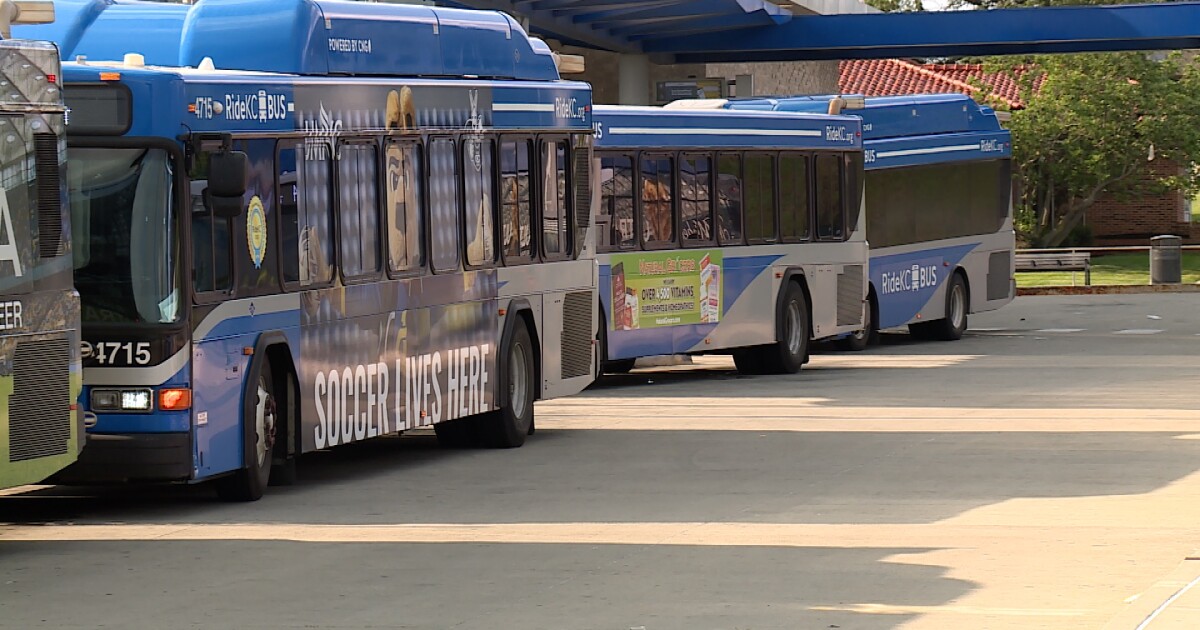 Kansas4 minutes ago
Kansas City to reduce bus transit frequency, extended hours after World Cup matches end
-

 Kentucky7 minutes ago
Public Health Student Hollie Hagan found her calling in rural Kentucky
-

 Louisiana12 minutes ago
Inside the lab at the heart of Louisiana’s mosquito-borne disease prevention network
-
 Maine19 minutes ago
Meet 16 obscure Maine Democrats shaping Graham Platner’s replacement
-

 Maryland22 minutes ago
Justice Department sues Maryland over immigration policies
-

 Michigan27 minutes ago
How two Michigan stamping plants power Stellantis turnaround plan
-

 Massachusetts34 minutes ago
3 hospitalized after vehicle crashes into Danvers business
-

 Minnesota37 minutes ago
Minnesota voter registration review finds county record errors

