Nevada
California, Arizona and Nevada all agree: The Trump administration needs to fix a key Colorado River dam

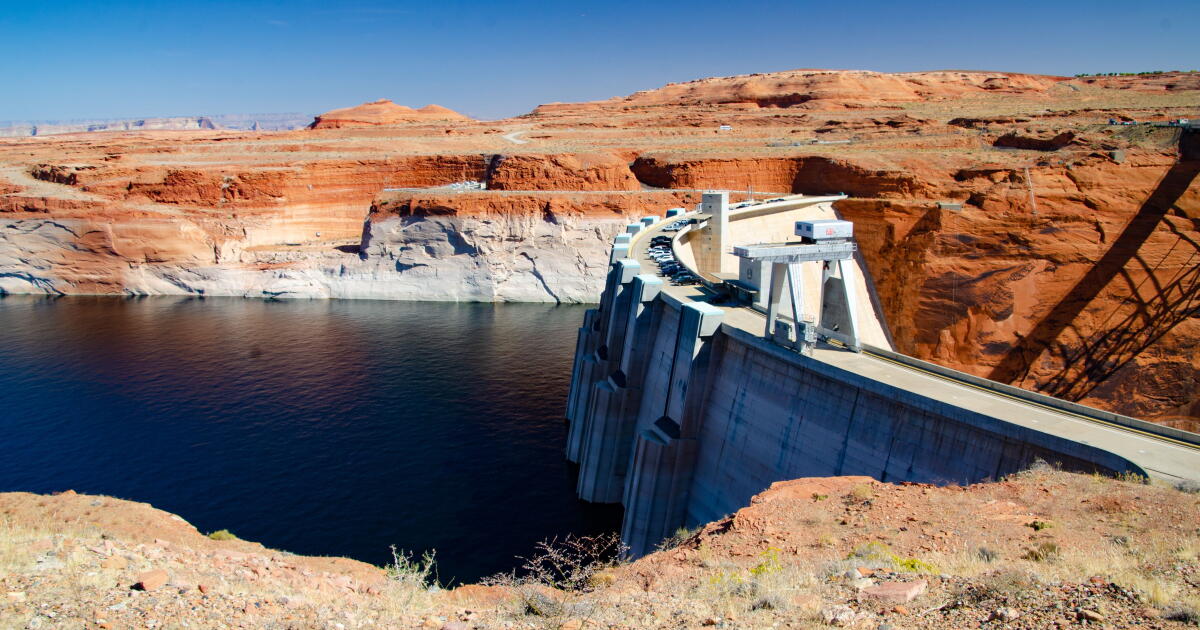
Representatives of California, Arizona and Nevada are urging the Trump administration to take a different approach in confronting the problems of the water-starved Colorado River.
As Trump’s appointees inherit the task of writing new rules for dealing with the river’s chronic water shortages, the three states are raising several concerns they want to see addressed. One of their top asks: consider fixing or overhauling Glen Canyon Dam.
The infrastructure problems at the dam in northern Arizona have come into focus over the last few years. If the levels of Lake Powell continue to decline and reach critically low levels, water could be released only through four 8-foot-wide steel tubes, potentially limiting how much could pass downstream to the three states and Mexico.
Last year, federal officials discovered damage inside those four tubes that could severely restrict water flow when reservoir levels are low, raising risks the Southwest could face major shortages that were previously unforeseen.
“It’s a better situation to have the dam actually function without tripping us up and forcing massive reductions,” said JB Hamby, California’s Colorado River commissioner. Making fixes to Glen Canyon Dam, he said, “would prevent the need for draconian reductions.”
Hamby and officials representing the governors of Arizona and Nevada presented their concerns in a letter to the Trump administration last month.
They urged Secretary of the Interior Doug Burgum to scrap a report the Biden administration released in November outlining options for new water management rules, arguing that it failed to consider their proposals and would violate the 1922 Colorado River Compact, the foundational agreement that apportions the water.
For one thing, they said, the federal Bureau of Reclamation, which manages the river’s dams, “must evaluate the impacts of infrastructure repairs, modifications and enhancements at Glen Canyon Dam” as part of its analysis of options.
The Colorado River provides water for cities from Denver to Los Angeles, 30 Native tribes and farmlands from the Rocky Mountains to northern Mexico. California relies on Colorado River water to supply farmlands in the Imperial Valley and the Coachella Valley, as well as cities from Palm Springs to San Diego.
The river’s water has long been overused and its reservoirs have declined dramatically since 2000. The average flow of the river has shrunk about 20% in that time, and while drought is partly to blame, scientists have estimated that roughly half the decline in flow has been caused by global warming driven by the burning of fossil fuels and rising levels of greenhouse gases.
The water level of Lake Powell, the nation’s second-largest reservoir, now stands at 34% of capacity. The reservoir’s surface is currently 71 feet above a threshold at which water could no longer flow through the dam’s main intakes and would instead have to move through the low-level bypass tubes — called the river outlet works.
The dam’s managers said last year that they had spotted deterioration in these bypass tubes, and federal officials have said they are analyzing options for fixes — but have been doing this on a separate track from the writing of new rules for sharing shortages.
The three states’ representatives said in their Feb. 13 letter that failing to consider these “infrastructure limitations” as part of the new rules would violate the law.
“The prior administration’s approach to protecting the Lake Powell outlet works by reducing releases from Lake Powell — rather than making infrastructure repairs and improvements — is shortsighted,” they wrote. They said this approach would harm the three states “by slashing the water available to our farmers, communities, and economies.”
Lake Powell has shimmered between Glen Canyon’s reddish sandstone walls along the Arizona-Utah border since the dam was completed in the 1960s.
But Glen Canyon Dam has been controversial since its inception, with environmentalists arguing the reservoir was unnecessary and destroyed the canyon’s pristine ecosystem. In recent years, advocates of river restoration have called for reengineering the dam and gradually draining Lake Powell to store the water downstream in Lake Mead near Las Vegas.
Hamby said the dam was “built in not a great way.” He likened it to a defective gas tank in a car that would stop working if it was less than half full.
“You’ve got a couple options. You could either constantly gas up your car or you could just stop driving,” Hamby said. “But a better option is, go get your car fixed.”
The push by California for the federal government to take a different approach is occurring alongside persistent disagreements that have left two camps at an impasse. On one side are the states in the river’s lower basin — California, Arizona and Nevada — which have been deadlocked in negotiations with the states in the river’s upper basin: Colorado, Utah, Wyoming and New Mexico.
Those on both sides say they are willing to continue trying to reach a deal on how to apportion cutbacks in water use after 2026, when the current rules expire.
In their letter, Hamby, Tom Buschatzke of Arizona and John Entsminger of Nevada suggested that the potential water-supply bottleneck at Glen Canyon Dam could be “avoided by some combination of straightforward engineering fixes, moving water to Lake Powell from upstream reservoirs when necessary, and temporary reductions in upper basin use.”
They said they would strongly support a “collaborative, consensus-driven approach,” but they also suggested that without a consensus, ongoing disputes among the Colorado River Basin’s seven states might end in court battles.
In response to questions about the states’ letter, a spokesperson for Bureau of Reclamation said in an email that the agency is “actively engaging in dialogue with the Colorado River Basin partners as we work toward long-term operational agreements for the river after 2026.”
The three states stressed in the letter that the 1922 Colorado River Compact requires the upper basin states to deliver an annual average of 7.5 million acre-feet to California, Arizona and Nevada over any 10-year period. If water deliveries were to decrease below that required minimum, that would enable the lower basin states to make a so-called compact call and require the upper basin states to cut their water usage.
The letter mentioned a potential compact call 23 times. It said this outcome is “reasonably foreseeable” in the coming years if the states don’t reach an agreement, and that the implications must be considered in the federal government’s review of alternatives.
“Ultimately, having a strong federal role to motivate people to come together and come to a compromise is essential,” Hamby said, “in order to get us to a place where we sustainably manage the river and don’t end up in litigation.”
Environmentalists said they agree with California, Arizona and Nevada.
“What the letter really is trying to do is force the Bureau of Reclamation to rebuild those bypass tubes so that they will pass enough water,” said Gary Wockner, executive director of the Colorado nonprofit group Save The World’s Rivers. “There needs to be an infrastructure solution that allows water to get through or around that dam in order for the Colorado River Compact to not be violated.”
During the Biden administration, federal officials said they were studying the possibility of overhauling the dam. They discussed proposals such as penetrating through the dam’s concrete to make new lower-level intakes, or tunneling a shaft around either side of the dam, among other options.
The Bureau of Reclamation announced in September that the agency was spending $8.9 million relining the bypass tubes, where the original coal-tar coating was “showing normal signs of wear and tear” after more than 60 years of use. The agency said this maintenance work, expected to take about a year, will not prevent the risk of additional “cavitation” when reservoir levels are low — which refers to the formation and collapse of air bubbles in flowing water, and which can pit and tear into metal, damaging infrastructure. The agency said it was “working on reducing that risk” by developing interim procedures and carrying out “additional analyses.”
But the three states indicated in their letter they believe the government must do more to address what they see as problems in the dam’s design.
“The reason that they wrote this letter is because they see a very serious water delivery risk at Glen Canyon Dam,” said Eric Balken, executive director of the nonprofit Glen Canyon Institute.
“The writing is on the wall that something has to be done sooner than later,” he said. “If we want to actually fix this river system for the long term, we have to have a thorough debate about how to reengineer Glen Canyon Dam.”


LAS VEGAS (AP) — Nevadans are choosing their party nominees Tuesday for two closely watched congressional seats and the governor’s race, among others, as the state grapples with an affordable housing shortage, exploding energy demand from data centers and federal cuts to key state programs.
The state has a closed primary, meaning only registered Democrats and Republicans will vote in party contests after an effort to open them up failed in 2024.
Several primaries feature matchups between candidates backed by party leaders and political outsiders promising change. Come November, the governor’s race is considered one of the most competitive in the country, and holding on to the 3rd Congressional District is considered crucial for Democrats’ hope of retaking the U.S. House.
Here’s a look at the most prominent races:
Democrats seek a rival for Lombardo
Gov. Joe Lombardo, a Republican, is considered one of the most vulnerable governors in the country this fall.
The Democrats vying to challenge him include state Attorney General Aaron Ford, who has the backing of the Democratic congressional delegation and former Vice President Kamala Harris, and Alexis Hill, a county commissioner in northern Nevada who campaigned as a candidate willing to shake things up.
They focused their campaigns on affordability, as the state continues to see a shortage of affordable housing, some of the highest gas prices in the country and cuts to federal healthcare and food assistance programs.
Ford largely ignored Hill, instead directing his attacks at Lombardo and arguing that both the governor and Trump are responsible for Nevadans’ economic woes. He is trying to become Nevada’s first Black governor.
2nd Congressional District
In the Republican contest to replace longtime Rep. Mark Amodei, who is retiring, President Donald Trump has endorsed David Flippo, a loyalist of the president who has never held elected office. Amodei and Lombardo have backed James Settelmeyer, a former state senator with a long political track record.
The district covers northern Nevada and includes Reno and Carson City, the capital, along with an immense rural expanse.
Trump-endorsed candidates have seen successful in primaries elsewhere, underscoring his unrivaled power over the Republican Party as he enters the last years of his presidency. He easily won the district in the 2024 presidential election.
The GOP nominee has a good chance of winning in November, as registered Republicans outnumber Democrats by 70,000 in the 2nd District. A Republican has held the seat since the district was created in the 1980s.
Still, Democrats hope to entice the large number of nonpartisan voters in the district this fall. Their candidates include Teresa Benitez-Thompson, a former majority floor leader of the Nevada Assembly, and Greg Kidd, an investor who ran in the last cycle as a nonpartisan.
3rd Congressional District
Nevada’s other three members of Congress, all Democrats, are expected to win their primaries easily.
In the 3rd District, Republicans are battling to determine who will face Democratic Rep. Susie Lee in what is considered the most competitive congressional district in Nevada because of its narrow Democratic registration advantage, its high number of nonpartisan voters and a history of razor-thin election margins. In 2024 both Lee and Trump won narrowly.
Candidates include Trump-backed Marty O’Donnell, a composer who worked on the “Halo” video game series and ran unsuccessfully for the seat in 2024; Jeff Gunter, a dermatologist and former ambassador to Iceland; neurosurgeon Aury Nagy; and businessperson Tera Anderson.
The candidates ran on border security, energy independence and decreasing the federal debt.
Attorney general
With Ford term-limited and running for governor, the opening has prompted competitive primaries for the state’s top law enforcement post.
The Democratic side features state Senate Majority Leader Nicole Cannizzaro and Treasurer Zach Conine. Both campaigned on promises to take on the Trump administration, following in the footsteps of Ford, who filed numerous lawsuits against the federal government.
For the Republicans, Trump-backed attorney Adriana Guzmán Fralick faces Douglas County commissioner Danny Tarkanian. Tarkanian, son of legendary University of Nevada, Las Vegas basketball coach Jerry Tarkanian, previously ran unsuccessfully in multiple congressional races.
Both candidates campaigned on “election integrity,” casting doubt on voting security. Nevada is one of the swing states in which Trump falsely claimed the 2020 election was stolen, despite officials finding no evidence of widespread fraud.
Tarkanian promised to investigate voter fraud allegations, while Guzmán Fralick vowed to seek passage of the SAVE Nevada Act, which would be similar to changes Trump has sought at the federal level.
Her legislation would require all votes to be counted on Election Day, end universal mail ballots and eliminate automatic voter registration. It would almost certainly hit a dead end in the Democratic-controlled Legislature.
GOP secretary of state candidates question Nevada’s elections
Several Republicans are running for secretary of state, the office that oversees elections, including some who falsely claimed the 2020 election was stolen from Trump. The winner of the primary will take on Democratic Secretary of State Cisco Aguilar.
The GOP candidates include Jim Marchant, a former state lawmaker and perennial candidate who has said the 2020 election “was probably stolen”; Sharron Angle, a former state lawmaker who was part of an effort to block the certification of Nevada’s 2020 election results; and Shirley Folkins-Roberts, an attorney who received Lombardo’s endorsement and has denied there is widespread fraud in Nevada’s elections.
All the candidates support implementing voter ID, which will be on the ballot for the second time in November after the question passed by a wide margin in 2024.
Angle promises to enforce voter ID if voters pass it and supports Trump’s executive order seeking to require documentary proof of citizenship to vote. The courts have so far halted that order, issued last year, from taking effect.
Marchant wants to eliminate electronic voting machines and end the state’s universal mail ballot system. He also wants to require paper ballots, which would be counted by hand, according to his campaign website.
Folkins-Roberts said she will work to keep voter rolls accurate and up-to-date, require voter ID and ensure that election results are delivered on time. She also wants to reverse the automatic voter registration system. In an interview with News 4 Reno, Folkins-Roberts said she believes Nevada’s elections are “good,” but wants to improve voters’ confidence by making changes.

LAS VEGAS (KSNV) — We’ll start the week with a heightened fire danger with dangerous heat later this week.
TODAY
Expect mostly sunny skies with winds picking up again on Monday. High temperatures will reach 98 degrees in Las Vegas with south winds 10-20 mph and wind gusts up to 30 mph.
A RED FLAG WARNING is in place from 10am to 9pm Monday for gusty winds and dry weather, so if a fire started, it would spread quickly.
Winds are estimated to be 20-25 mph with gusts around 40 mph at times with relative humidity of 5%-15%.
Air quality is ranked ‘good’ to ‘moderate’ for dust and tree pollen. The most common pollens are juniper, cedar, willow, sycamore and palm.
TONIGHT
We’ll see variable clouds this evening with skies going from mostly cloudy to mostly clear overnight.
Wind gusts will pick up again before midnight with gusts 30-40 mph possible downslope of the Spring Mountains in the west valley.
Elsewhere, gusts will be 20-30 mph. Breezes will eventually back down to 5-15 mph overnight. Valley lows will drop to around 74 degrees.
WHAT’S NEXT
We have reached 109 consecutive days without measurable rain in Las Vegas.
No rain is in sight, but for perspective, June is the driest month of the year in Las Vegas. Fingers crossed on a hopefully more active monsoon season!
High pressure builds next with highs 5-10 degrees above normal. Temperatures will reach around 108 degrees in Las Vegas by Friday. The last time we hit a high temperature of 108 degrees was back on August 20th of last year.
Not much relief is in sight by the weekend with highs around 107 degrees and temps at or above 105-106 degrees NEXT Monday through Wednesday.

Growing DNA databases continue to unlock decades-old cold cases. How the DNA Doe Project helped to identify remains 37 years later.
© KSNV, NBC News Channel
-

 New Hampshire5 minutes ago
Woman Claims Forced Marriage During Road Trip from NH to Maine
-

 New Jersey12 minutes ago
Sherrill, FIFA World Cup 2026™ New York New Jersey Host Committee Chief Executive Officer Alex Lasry Announce Over 750 Free Tickets for New Jerseyans for FIFA World Cup Matches – Insider NJ
-

 New Mexico15 minutes ago
Pecos Zone Type 3 Team to Take Command of Seven Cabins Fire on Wednesday
-

 North Carolina20 minutes ago
These Western NC towns ranked among best places to live in NC in 2026
-
 North Dakota27 minutes ago
Former Senator Byron Dorgan reflects on politics, North Dakota, the tragedies that shaped his career
-

 Ohio30 minutes ago
Mass shooting at Ohio festival that wounded 12 stemmed from dispute between rival groups, police say
-

 Oklahoma35 minutes ago
This Bowl Game Projection Should Make Oklahoma State Optimistic for 2026
-
Oregon42 minutes ago
Oregon Lottery Powerball, Pick 4 results for June 8

