Nevada
A plan to mine lithium could eradicate a Nevada flower. Is extinction just the cost of green energy?


Botanist Jerry Tiehm, the curator of herbarium at the University of Nevada Reno, discovered the plant that now bears his name more than 40 years ago. It was early in his career, and Tiehm was driving through a remote central Nevada canyon while collecting samples to study. He was unaware at the time that it was an unknown species until a different expert informed him that the yellow, white and green plant was something altogether new. Indigenous to a tiny patch of land no larger than 10 acres in area, the new plant was named Tiehm’s buckwheat after its discoverer.
“The pit walls will eventually subside and as the result in some number of years after the pit is built, the buckwheat will end up falling into the pit.”
More than four decades later, and Tiehm’s buckwheat is at the center of a historic lawsuit with millions of dollars at stake. Amidst of all of this furious debate, Tiehm is a mere bystander.
“I am not involved with this controversy,” Jerry Tiehm said. “I simply discovered the plant and it was named in my honor.”
The controversy involves lithium, a key component of the batteries in electric cars and our always-online gadgets. As climate change continues to worsen because of humans burning fossil fuels, environmentalists of all stripes are turning to electric vehicles as a potential way to reduce the release of carbon dioxide.
Yet the tiny town of Tonopah contains the only legal lithium mine in the United States, meaning that Americans who wish to capitalize on this potential green technology have only one place where they can do so. President Biden accelerated the lithium boom when he signed the Inflation Reduction Act in 2022, since one provision of the bill requires that all batteries for any new electric vehicles be sourced in either the United States or one of its pre-selected allies to qualify for a tax credit. The Department of Energy has even awarded billions of dollars in grants to upstart lithium companies.
Yet not everyone is happy about the prospect of resource-intensive lithium mining occurring in the Tiehm’s buckwheat’s neighborhood. Last week the Bureau of Land Management (BLM) officially closed public comments on a new environmental impact survey for the proposed Rhyolite Ridge Lithium-Boron mine after thousands of people commented. In addition to ordinary citizens, experts like Claremont Graduate University research assistant professor of botany Naomi Fraga describe potential lithium mines in dire language.
“We know that the proposed mine would destroy 22% of the habitat deemed essential for the species survival,” Fraga said. “Further the line will create a large open pit that is 200 acres large and 960 feet deep. This pit is just feet from buckwheat plants.” Fraga added that the Australia-based mining company Ioneer says the mine would be 44 feet away from the plants but that she believes based on the spatial files it would only be roughly 15 feet away.
“The pit walls will eventually subside and as a result, in some number of years after the pit is built the buckwheat will end up falling into the pit,” said Fraga. “Further the mine will create the conditions for non-native plant species to invade the habitat and it will create dust that will impact the plant.”
Patrick Donnelly is the Great Basin director at the Center for Biological Diversity. The non-profit conservationist group has worked for over five years to protect the Tiehm’s buckwheat from open pit mines like the lithium facility proposed by Ioneer. If constructed, the open pit would require thousands of acres for rock dumps, tailings piles, a tailings dam and a sulfuric acid processing plant.
“Tiehm’s buckwheat lives on just 10 acres and would be surrounded by this devastating development,” said Donnelly. Given that the Tiehm’s buckwheat was listed as protected under the Endangered Species Act, more than 100 scientists felt confident submitting a public letter to the BLM urging them to honor the plant’s special status by stopping the mine.
“The mine plan would directly destroy 22% of the plant’s protected critical habitat, whole irreparably degrading the other 78% with massive amounts of dust, acid mist and other pollution, pollinator disruption, and the high likelihood of eventual pit wall collapse leading to the total destruction of the plant,” Donnelly said.
Want more health and science stories in your inbox? Subscribe to Salon’s weekly newsletter Lab Notes.
“Ioneer is confident in our ability to quadruple the nation’s supply of lithium while protecting Tiehm’s buckwheat.”
Chad Yeftich, Ioneer’s vice president of corporate development and external affairs, emphatically disagrees with these assessments.
“Ioneer is confident in our ability to quadruple the nation’s supply of lithium while protecting Tiehm’s buckwheat,” said Yeftich. He pointed out that in 2022 the company submitted a revised plan to the BLM with the purpose of eliminating direct impacts and minimizing indirect impacts to the rare plant from the mine. The BLM released a draft Environmental Impact Statement in April to reflect Ioneer’s proposed changes, including those for protecting the buckwheat.
“Rhyolite Ridge is a better project having gone through the federal permitting process and engaging with the community, and we are pleased the U.S. government recognizes that yearslong work and has advanced our project past the public comment period, which closed on June 3,” said Yeftich. He added that the company is voluntarily dedicating time and resources “to the successful propagation and growth of Tiehm’s buckwheat at Rhyolite Ridge. We have taken significant voluntary measures to ensure the plant and its habitat are protected, including investing $2.5 million in conservation efforts and committing an additional $1 million annually for its ongoing protection.”
Additionally, Ioneer has performed research at their company’s Tiehm’s Buckwheat Conservation Center. The researchers claim to have learned that the plant can grow in many types of soil, including some potting mixes available at hardware stores. While conducting this research, they created a seed bank has collected 8,000 seeds, with their greenhouse yielding another 3,000 seeds.
“After another successful harvest of seeds from site – regulated by a BLM permit – we hope to grow even more,” said Yeftich. “Working with U.S. Fish and Wildlife, we will plant buckwheat plants grown from seedlings at our greenhouse at Rhyolite Ridge.”
Perhaps most notably, Ioneer characterized their mining expedition as a blow for planet Earth, not against it. Pointing to the Intergovernmental Panel on Climate Change’s report that climate change is the greatest threat to biodiversity in the world, Yeftich said that “the rapid transition from fossil fuels cannot happen without access to critical minerals like lithium needed to decarbonize the transportation sector. When operational, Rhyolite Ridge will quadruple our nation’s lithium supply, creating a unique and important source to support domestic battery supply chains.”
By contrast, Fraga is skeptical that a lithium mine which could endanger Tiehm’s buckwheat is necessary to fight climate change.
“Not all places containing [lithium] should be subject to mining, as they may contain features that are important to culture, biodiversity and the environment overall,” Fraga said. “Rhyolite Ridge is one such place as it contains all of these things, including a spring that is sacred to tribal communities.” Although Fraga is concerned about both climate change and the biodiversity crisis, she draws a line at this plant in particular.
“Tiehm’s buckwheat represents a unique form of life on this planet,” Fraga continued. “I value all life, including Tiehm’s buckwheat. I feel strongly that that we need to transition away from fossil fuels, but it should not come at the cost of species extinction.”
Donnelly said that the proposed mine is more than just environmentally dangerous; he also says that it is illegal.
“The proposed Rhyolite Ridge Mine clearly violates the Endangered Species Act,” Donnelly explained. “The Act is the most successful conservation law in the world at preventing extinction, and we don’t aim to see it undermined by a shady Australian mining company looking to turn a quick buck by driving species extinct. We will be fighting this mine in court, to halt the extinction crisis, save Tiehm’s buckwheat, and defend the integrity of the Endangered Species Act.”
He added, “Lithium is part of our clean energy transition but it can’t come at the cost of extinction. There are over 99 proposed lithium projects in Nevada, many of which do not have endangered species present. There’s no legitimate reason to develop this disaster of a mine, and we aim to stop it.”
Read more
about climate change and mining



The Las Vegas Raiders have orchestrated many groundbreaking moves this offseason, but none as important as the impact they made at a fundraising event.
Over the weekend, the Raiders hosted the Silver & Black Gala, raising $2.5 million for mental health in Nevada. Sunday marked the third time the organization had hosted the event, which has produced a tremendous turnout.
Several individuals spoke during the event, including Las Vegas Raiders owner Mark Davis and president Sandra Douglass Morgan, who each highlighted the importance of acknowledging mental health.
Davis’ Thoughts
- “We’re here to raise money for mental health, which is one of the most important things we can all deal with,” Davis said. “Every one of us is impacted by mental health and our families, friends, or anywhere else, we are all directly affected. That’s why it’s so critical to raise money for our community. We’re grateful for you all, and appreciate you being here.”
Morgan’s Thoughts
“Mental health remains one of the most urgent issues across Nevada,” Morgan said. “Through the Silver & Black Gala, the Raiders Foundation is helping expand access to trusted, community-based resources that meet people where they are. This year’s recipients reflect the depth and complexity of that work, supporting our community in schools, clubhouses, homes, shelters, and family systems statewide.”
The Raiders also honored former player Carl Nassib and NFL broadcaster Jay Glazer on Sunday night as the winners of the Commitment to Excellence award. Here is what each of them had to say.
Glazer’s Thoughts
- “First, this is incredible what the Raiders are doing,” Glazer said. “God blessed me with the ability to communicate, so I’m going to use that to try and help other people. When we’re willing to share our scars, we turn them into strength—into something that connects us as teammates with nothing to hide. That’s what builds a true team, a championship team. I’m proud to stand with you and be part of this team tonight.”
Nassib’s Thoughts
- “It is truly a privilege to be up here,” Nassib said. “We’re creating space for people to be vulnerable—and that work is truly lifesaving. It’s not about being perfect, it’s about showing up and reminding people they’re not alone.”
Overall Thoughts
This has been a tremendous event over the last few years, and the Raiders’ organization has done a great job of raising awareness for mental health. This will be an event that the team will continue to host in the future.
 Add us as a preferred source on Google
Follow
Nevada
Nevada workers fear homelessness as housing, jobs vanish before July deadline | Fox News Video

The final casino resort in Primm, Nevada, will close this summer after years of declining tourism, ending gaming operations in the once-busy border town and putting hundreds of employees out of work.
Primm Valley Casino Resorts is shutting down its remaining hotel and casino operations in July as experts point to increased competition, changing travel habits and post-pandemic losses behind the decline.

RENO, Nev. (News 4 & Fox 11) — Nevada Governor Joe Lombardo (R) is in a strong position heading into the thick of his 2026 reelection bid — a huge war chest, almost universal name recognition and strong favorability numbers among the electorate.
Though Lombardo is likely focusing on the general election already, he faces 6 longshot candidates in the GOP primary seeking to upset him in June.
Nevada Governor GOP primary: 6 longshot candidates taking on incumbent Joe Lombardo
The challengers face a ‘Herculean’ task, said Mike Noble, CEO and founder of Noble Predictive Insights, an Arizona-based nonpartisan pollster focusing on the Southwest region.
“I see it as a Herculean task for anyone. If someone was coming in with like, I don’t know $10 million or something to spend, sure I can see that might be competitive, but I don’t see any of them coming anywhere near close to that. And so again, I just think I think it’s a non-factor at this point,” Noble said.
RELATED | Ballot Battleground: Nevada podcast: Early Noble poll shows dead heat in governor’s race
Despite the long odds, News 4-Fox 11 reached out to all candidates requesting an interview as part of our commitment to 2026 election coverage and our Know Your Candidates series. Three of the 7 running interviewed with us — Irina Hansen, Kameron Hawkins, Lombardo and Jose Zelaya did not respond to multiple emails requesting an interview.
We asked them similar questions about Gov. Lombardo’s leadership as governor, how they would pass a balanced budget and whether they support taxpayer subsidies for sports teams or major projects.
Click the candidate’s name to watch their full interview. Quotes below have been edited for space and clarity.
Donald J. Beaudry Jr. is an entrepreneur who founded BlkEdgeAi, a financial technology firm specializing in AI-driven trading systems and market strategy, according to his campaign website.
He told News 4-Fox 11 that Nevada has been drifting the last four years with ‘no captain, no vision.’ He believes his Wall Street-like trading market called NGEX (Nevada Global Exchange) would generate enough revenue to eliminate sales taxes, property taxes, business taxes and vehicle registration fees.
“I completely blueprinted it out and calculated that this model could generate enough revenue in this state that we could eliminate all the state taxes and fees that are currently in place and use that as the revenue source for the state and make everybody, every man, woman and child throughout Nevada, a shareholder in the dividends of that exchange … it would be a kind of Wall Street type of stock market, but far broader, more advanced, and exponentially more profitable.”
Matthew Rian Winterhawk is the founder of SmartSlaps foundation, a nonprofit that works to help schools and students with civic engagement and community responsibility.
If elected, he described going through a DOGE-like review of the state budget to determine which areas can be cut or kept depending on their ‘dollar to impact’ ratio.
“What I would like to do is go through every department, I’m talking top to bottom, from here from the primary to the beginning. We will cut every piece of administrative bloat across the system … I need more money for my teachers. Teachers never see it, students never see it, the impact never reaches the classroom. It’s 100% administrative bloat.”
The son of immigrants, Barak Zilberberg is now an entrepreneur and real estate investor based in Las Vegas. He ran for governor in 2022, earning 0.2% of the vote in the GOP primary. He told News 4-Fox 11 he’s also running for President in 2028.
He said he’s running for governor to improve the educational system, bring jobs to Nevada and open up federal land to build more affordable housing.
“We’ve got get high-speed railing systems in here where we can transit very easily, efficiently, and basically moving around between economies of both cities. Not only that, I’d like to bring Disneyland here and the Olympics, sponsor the Olympics here. I just want to make this a well-known place of entertainment, a hub.”
To help voters make informed decisions this election year, News 4-Fox 11 is publishing and broadcasting dozens of interviews with candidates who will appear on the June primary ballot.
In fairness to all candidates, they were asked a series of similar questions. We are posting the full interviews online so voters can watch their responses in their entirety.
Visit our Know Your Candidates 2026 page to view other race previews and meet other candidates.
Email reporter Ben Margiott at bjmargiott@sbgtv.com. Follow @BenMargiott on X and Ben Margiott KRNV on Facebook.
-

 Tennessee2 minutes ago
Big Machine CEO Scott Borchetta fires back at graduates booing ‘AI speech’ during Middle Tennessee State University ceremony
-

 Texas8 minutes ago
Texas A&M slugger named to Softball America’s All‑American Second‑Team
-
 Utah14 minutes ago
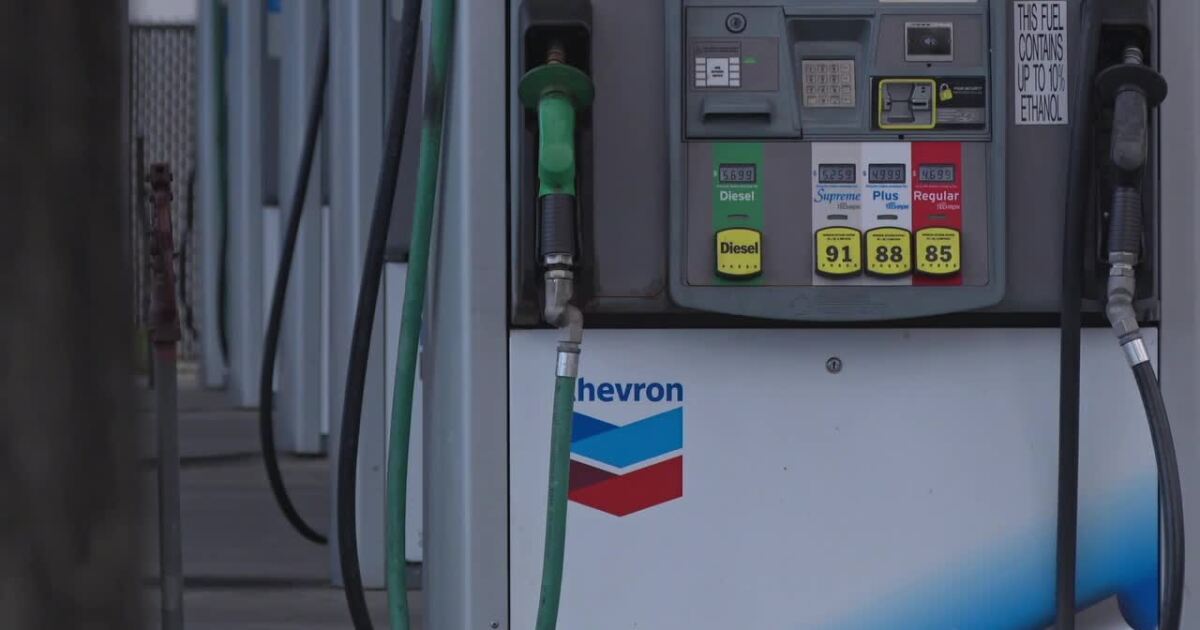
Rising gas prices squeeze Utah drivers ahead of summer travel
-
Vermont20 minutes ago
What to know, prize money, road closures for 2026 Vermont City Marathon & Relay
-

 Virginia26 minutes ago
A Republican mocked a child over ‘propaganda.’ Ironic. | Opinion
-
Washington32 minutes ago
Washington Lottery Mega Millions, Cash Pop results for May 19, 2026
-

 Wisconsin38 minutes ago
Wisconsin Lottery Mega Millions, Pick 3 results for May 19, 2026
-

 West Virginia44 minutes ago
This week in West Virginia history

