Montana
Why are Montana's primary elections held so late in the year?


Montana’s primary election is now officially in the rear-view mirror. MTPR reporter Edward O’Brien investigated a deceptively simple question from a listener about why Montana’s primaries are so late in the year.
Austin Amestoy: Welcome to The Big Why, a series from Montana Public Radio where we find out what we can discover together. I’m your host, Austin Amestoy. This is a show about listener-powered reporting. We’ll answer questions, big or small, about anything under the Big Sky. By Montanans, for Montana, this is The Big Why.
Welcome back Ed!
Edward O’Brien: Thank you, Austin! Always good to be here. Indeed, we’ve just passed a significant milestone in Montana’s election calendar this year. This makes the question Gillian Glaes posed all the more timely and poignant. In fact, Austin we’re honored to have Gillian join us in the studio today.
Welcome aboard! Great to have you here!
Gillian Glaes: Thanks, you two! It’s nice to be here.
Austin Amestoy: Would you tell us a little bit about yourself?
Gillian Glaes: I’m originally from Montana and grew up in Missoula. I work at the University of Montana and direct the UM’s Franke Global Leadership initiative.
Edward O’Brien: And I also understand you have a passion for history?
Gillian Glaes: I do! I’m an historian and worked in the history departments of Carroll College and the University of Montana, respectively.
Austin Amestoy: Gillian, you’ve piqued my curiosity. What did you ask the Big Why?
Gillian Glaes: I really just wanted to know, why is the Montana primary, held in June, so late on the election calendar?
Austin Amestoy: That’s a fascinating question. Gillian, since we’ve got you here in-person, I think I’ll take a step back and let you and Ed drive the story today.
Edward O’Brien: It’s a fantastic and deceptively challenging question. To be candid — I originally assumed I’d have both it answered and this episode wrapped up in a flash. I was so wrong. It stumped a lot of professional and passionate amateur Montana historians. Heard lots of neat guesses. Nothing concrete. In fact, for a while I was convinced the answer was lost to the sands of time.
Gillian Glaes: But you eventually persevered?
Edward O’Brien: Only after pulling on a few threads provided by many bright, patient and generous people.
Gillian Glaes: Ed, how did you approach my question?
Edward O’Brien: The first person I turned to was former Montana Secretary of State Bob Brown. Brown was first elected to the Montana State House in 1970 and served over two decades in the State Senate. Few Montanans have the kind of institutional political knowledge that Bob Brown has.
Gillian Glaes: What did he have to say?
Edward O’Brien: Brown told me with candor and honesty that he didn’t know why Montana’s primary is held in June! Brown, who loves Montana history, told me he did some research and put in some phone calls to friends who share that passion and everyone came up empty.
He wasn’t the only one.I contacted other historians and history professors and all were left scratching their heads.
Gillian Glaes: So, what came next??
Edward O’Brien: The Montana Historical Society. They found an intriguing reference to a bill from the 1979 legislative session titled: “Times for holding primary elections — cost of municipal election.”
Gillian Glaes: So, that must be the answer. Why June?
Edward O’Brien: Not so fast. I accessed this massive electronic file of the bill’s legislative history — gobs of stuff, hundreds of pages of information to chase that lead. But After poring through it, I realized I‘d hit a dead end. None of it even remotely seemed to address your specific question, Gillian. What’s more, many of the legislators from that time are no longer with us.
One name, however, stood out: Fred Van Valkenburg.
Gillian Glaes: The Van Valkenburg family! Will you share with our listeners who Fred Van Valkenberg is?
Edward O’Brien: Most recently, he was Missoula’s county attorney. But back in ‘79 Van Valkenburg was a young man serving his very first term in the State Senate,making a name for himself and rapidly gaining influence. I gave him a call to see if we could jog his memory.
Gillian Glaes: And?
Edward O’Brien: Didn’t ring any immediate bells. In his defense, we’re talking about some bill from nearly 45 years ago. After giving it some more thought for a few days he determined what we were looking at was a — as he put it — ‘minor and technical ‘clean up’ bill regarding elections in general.
But, during our communication, Van Valkenburg mentioned an intriguing lead from a book in his personal collection called “Atlas of Montana Elections, 1889-1976”. I knew we were onto something a few days later when Montana State University Political Science Professor Jessi Bennion responded to my cry for help, coincidentally mentioning the very same title. Sure enough, the Atlas, prized by Montana politicos, is where we finally found the answer to your question.
Courtesy of Jessie Bennion
Jessi Bennion: It is actually just a book that goes year-by-year. It tells who won each election, what the big debates were at the time and it gives a snapshot of what the elections and the outcomes looked like at the time.
Edward O’Brien: The impetus for moving Montana’s primary to June was the 1952 presidential nomination showdown between Republicans Dwight D Eisenhower and Ohio’s conservative firebrand, Senator Robert Taft:
Video: “At Chicago, the battle for the Republican candidature is underway as Senator Taft is noisily championed by his supporters for the presidential election in November. In his hotel, Mr Eisenhower goes into conference …
Gillian Glaes: So this relates to President Eisenhower’s election in 1952? OK, I’m intrigued. Tell me more.
Edward O’Brien: Montana’s primaries bounced around the calendar throughout the 1900’s, and by ‘52 were held in late summer, actually even later than they are today. That butted them right up against the major party national presidential nomination conventions.
Gillian Glaes: That sounds like a pretty small window between the primary and the conventions.
Edward O’Brien: You are right over the target. Montana was Eisenhower country in ‘52. Yet according to the Atlas of Montana Elections, local party bosses pressured delegates to support Taft at the Republican national convention. That didn’t sit well with a cadre of state lawmakers back home. They developed a proposal to essentially put a little more space and time between Montana’s presidential preference primary and the national convention.
Edward O’Brien: Again, here’s Jessi Bennion:
Jessi Bennion: So, I think that they thought by moving the primary to June, seeing a clear election outcome in June, then the party bosses wouldn’t be able to do any shenanigans during the presidential convention.
Edward O’Brien: Apparently the proposal set off a hell of kerfuffle within the halls of the State Capitol. After the dust settled, the reformers won out and a measure was put on the ballot in 1954 to move that primary.
Gillian Glaes: Interesting. How did voters respond?
Edward O’Brien: I’d say pretty well. It passed by almost 70 percent.
Gillian Glaes: Wow, that’s amazing.
Edward O’Brien: As Bennion pointed out to me — can you imagine anything today passing by that margin? Anyway, beginning in 1956, Montana’s primaries were moved to the Tuesday after the first Monday in June.
Gillian Glaes:
That’s really interesting, because a move designed to empower Montana voters, now seems to kind of rob them of national influence in presidential politics.
Edward O’Brien: It’s a great point. Montana’s primary is near the tail end of the presidential nomination process. Iowa, New Hampshire, Super Tuesday — all those states and many more get to weigh in before we do. Bennion feels your pain, Gillian.
Jessi Bennion: The presidential race gets all the attention. It’s what fires people up. So, if Montana voters already know who the nominee is going to be, it probably de-incentivizes them from showing up at the primary.
Austin Amestoy: I just love it when we can put a nice bow on a good mystery. Gillian, Ed, thanks so much for unpacking this for us today. Great to have you on.
Gillian Glaes: Thank you so much for having me, this was a ton of fun and I really appreciate the time you took to answer my question.
Edward O’Brien: You bet, Gillian, thanks for joining us.
Austin Amestoy: Now we want to know what makes you curious about Montana. Submit your questions below. Find us wherever you listen to podcasts and help others find the show by sharing it and leaving a review. Let’s see what we can discover together!
-
Montana has seen record levels of fundraising for Supreme Court candidates in recent years, parties seem to have their favorite candidates and outside special interest groups spend a lot of money to influence these races. On top of that, not everyone is familiar with the workings of the court. So, how can voters evaluate candidates for state Supreme Court?
-
A listener wants to know why it seems like the homeless population is growing. We’ll look at this issue both statewide and in Missoula to put it into context.
-
Everywhere you look in Montana, there are places to gamble. Odds are good you’ve seen machines in bars, liquor stores and of course, gas stations. How did Montana end up with so many “casinos,” and what does it have to do with bingo? The only sure bet is that The Big Why team has the answers.
-
Montana’s frontier days were stuffed with gold, greed and political corruption — and all three played a part in drawing the state’s western boundary with Idaho. A listener wants to know how that squiggly line came to be. Find out now on The Big Why.
-
In this special episode of The Big Why, A New Angle host, Justin Angle, joins Austin Amestoy to answer two questions.


The Ole’ Mercantile is a busy place by Grass Range, Montana, standards.
The community of roughly 125 people sits along a long, lonely network of two-lane highways connecting Billings with points north along Montana’s Hi-Line.
For drivers pushing toward Lewistown, Malta or Glasgow, the store’s lights are often the first sign of anything for miles.
Of late, they may also offer a chance of identifying the person driving a truck local women say is stalking these roads.
Owner Krista Manley told Cowboy State Daily her store is outfitted with a top-of-the-line camera system that offers a 360-degree view with no blind spots. Four overlapping cameras capture her property, the Wrangler Bar and the full stretch of Highway 87 frontage running through town.
Fergus County investigators now hope that footage — and Manley’s willingness to comb through hours of it — can help identify the driver of a newer white Ford four-door pickup with dark tinted windows, no front license plate and a chrome grill guard.
The truck is at the center of the most recent reported highway stalking incident.
Lizette Lamb, a 48-year-old traveling health care worker, says she was nearly run off the road the evening of April 10.
Now a growing chorus of similar accounts from women across north-central Montana are popping up on social media.
At The Ole Merc
Travis Lamb, Lizette’s husband, took to Facebook to post about what happened to his wife on one of the loneliest stretches of highway in Montana.
Travis told Cowboy State Daily Lizette pulled into the Ole’ Merc Conoco in Grass Range between 7 and 8 p.m. to grab a drink. She later remembered a pickup was backed in alongside the cafe: a newer white Ford four-door.
“Kind of gave her the heebie-jeebies,” he said. “My wife has worked in a prison and stuff like that, so she’s used to kind of going with her gut.”
She bought a drink, got back in her Ford Bronco Sport and headed north on Highway 19 toward Glasgow.
About a mile and a half down the road, she realized the white pickup was behind her. Through the dark tint, she could make out the silhouettes of two men.
She slowed down and edged toward the shoulder to let them pass. They slowed with her. She sped up. They sped up.
By the time she reached Bohemian Corner 23 miles up the road, Travis Lamb said, his wife knew something was wrong.
There were no other vehicles in the lot, so she didn’t bother pulling in. She tried to call Travis. No service.
She tried 911. The phone beeped, displayed a red message and disconnected.
Truck Gets Aggressive
The white truck continued to shadow Lizette along Highway 191. About two miles from where the road crosses the Missouri River, coming into a construction zone, the pickup got aggressive.
Travis said the truck rode so close to the Bronco’s bumper that his wife could no longer see its windshield, only the grille.
Then it pulled out as if to pass and swerved into her, he said, in what he described as an attempted PIT maneuver — the law-enforcement technique of clipping a fleeing vehicle’s rear quarter to spin it out.
PIT stands for Precision Immobilization Technique, and this tactic is used to stop a fleeing vehicle by forcing it to turn sideways, causing the driver to lose control and stop.
“She was fortunate, kind of timed it to when they went to turn into her and hit her, she sped up,” Travis Lamb said. “And they missed.”
That’s when Lizette Lamb pulled her Springfield XDM 9mm pistol out of the center console. She didn’t point it, but she made sure they could see it.
The white pickup hit its brakes, threw a U-turn in a spray of dust and gravel, and headed back toward Grass Range.
The Video
“I thank God that it did happen to her and not somebody else, because I know my wife is more than capable of defending herself,” said Travis Lamb, an Iraq War combat veteran, who eventually reached out to Manley at the Ole Merc.
Then, when Manley reviewed the surveillance video from the Merc’s camera system, she found no sign of a white Ford truck.
“We have not found evidence of them at our store or at the three businesses that come along the highway right there,” Manley said. “That doesn’t mean it didn’t happen.
“My default is to absolutely believe women, and she (Lizette) was, she was rattled.”
Manley holds a Ph.D. in cognitive psychology and ran the research team at Procore Technologies before going into business for herself.
When reviewing the video, Manley logged the times Lizette arrived and left, and then watched the highway for an hour after.
“We’re absolutely not arguing the authenticity of the report in any way, shape or form,” said Manley. “In my previous life before I had the store, I actually was a memory and cognition researcher. I understand how stress impacts memory.”
The Echoes
Travis Lamb’s Facebook post went off like a flare.
He tallied 36 accounts of similar experiences in roughly the same swath of country stretching across prairie and badlands in one of the least populated parts of Montana.
The pattern in many of the comments was consistent enough to be unsettling: a white pickup, often a Ford, sometimes with out-of-state plates, tailgating women on isolated stretches of two-lane after dark.
One commenter described being followed by a white truck north of Grass Range three years ago around 10 p.m., tailgated with brights on at more than 80 mph until the truck peeled off in a different direction.
Another described a white Ford pickup near Harlowton trying to force her to stop, then waiting for her at a gas station. Another recalled a white pickup with North Dakota plates in the same area.
In Wyoming, one poster described two men in a white truck with Washington plates on Highway 120 between Cody and Meeteetse who tailgated her, tried to push her off the road, then cut in front and slammed on the brakes.
Other women described different vehicles — a dark Escalade, a small white car, a black double-cab — but the same script: tailgating, refusing to pass, brake-checking, dead zones with no cell service.
Easter Night
One name in that Facebook thread was Joni Hartford of Lewistown, who told Cowboy State Daily she had her own near-identical encounter on Easter evening just days before Lizette Lamb’s.
Hartford, who works in insurance, had dropped off some belongings to her son, a football player at Rocky Mountain College in Billings.
She stopped at a gas station on her way out of town “for a pop,” climbed back into her red 2014 Ford F-150 and headed north on Highway 87 around 7:30 or 8 p.m.
“I noticed it right after I left Billings,” Hartford said of the pickup behind her. “It was right behind me and I kept thinking, ‘God, this vehicle is super close.’”
About 15 miles out of town, past the racetracks, she pulled toward the white line and slowed to 60 mph on a long straightaway, hoping the truck would go around. It wouldn’t.
“He was so close behind me, I couldn’t see his taillights, but I could see his marker lamps on his mirrors, his tow mirrors,” Hartford said. “So I knew it was a Ford pickup, and I knew it was like a three-quarter or a 1-ton. It was a big pickup.”
She couldn’t make out the color in the dark. She called her husband.
“I said, ‘This pickup is tailgating me,’ and said, ‘It’s really kind of making me nervous, because if I had to stop for a deer, it would run me over. It would run me off the road,’” Hartford said.
“And he goes, ‘Well, just stop.’ And I said, ‘I am not stopping. I’m in the middle of freaking nowhere,’” she added.
She made it through Roundup with the truck still on her bumper.
North of town, climbing toward Grass Range, Hartford caught a lucky break with an Amish buggy sluggishly clapping up a blind hill and slowing traffic.
“I darted around the Amish buggy, right before the blind hill, and he couldn’t get around them, and I just gunned it, and I was going probably 90 mph just to put space between us,” Hartford said. “I never seen him again.”
Hartford carries a .380 pistol. She had it out and on the seat. She didn’t show it — between the dark and her tinted windows, she wasn’t sure the driver behind her would have seen it anyway.
When Lamb’s post crossed her Facebook feed, Hartford said the parallels stopped her cold.
“It’s the same exact situation,” she said. “I can’t say for certain it was the same person, but it sure seems like it was the same person.”
Hartford said she believes the driver is hunting for circumstance: single women, after dark, on a corridor he knows is desolate and short on cell coverage.
“They’re targeting them at gas stations,” she said. “That’s the only place they could have found me, because it’s the only place I’ve stopped.”
The Candidate
Penny Ronning, cofounder and president of the Yellowstone Human Trafficking Task Force, had a similar drive in 2022.
She remembers it as the only time in nearly a year of solo campaign travel across 41 Montana counties that she felt afraid.
Ronning, then a Democratic candidate for U.S. Congress, was driving from Billings to Havre for a campaign event.
Instead of taking the interstate, she chose the back roads — north out of Winifred on Highway 236, a route that runs about 30 miles of gravel through some of the most remote country in the state before dropping into the Missouri River Breaks, which Ronning compared to a Montana version of the Grand Canyon.
As she entered the gravel, a four-door white pickup with blacked-out windows pulled in behind her.
“That was what made it frightening,” Ronning said. “It was that I was followed.”
Ronning, who has spent years working on human trafficking policy and prevention, was careful to push back on the framing that has circulated on Facebook around the Lamb case — that the white-pickup encounters are likely abduction attempts tied to trafficking networks.
“Human trafficking is the use of force, fraud or coercion to compel a person into commercial sex acts or labor against their will,” Ronning said. “Just because someone is being followed, that doesn’t rise to the level of human trafficking.”
The most prevalent form of human trafficking in the United States, she said, is familial trafficking, one family member trafficking another.
In Montana, she said, labor trafficking is also common in construction, nail salons, illicit massage businesses, hospitality and domestic servitude in pockets of high-end real estate.
Sex trafficking almost always begins with someone the victim knows.
The Watch
Back in Grass Range, every white pickup that rolls past the four-corner blinking light is now turning heads.
Manley said her store has worked closely with the Fergus County Sheriff’s Office on past incidents, and her cameras are essentially a standing resource for investigators.
She also said the response on social media has dismayed her, commenters questioning whether these highway stalking incidents happened at all, or suggesting Grass Range itself isn’t safe.
She believes her store, and others like it in remote pockets of Montana, are informal refuges.
“We’ve all been there, whether it’s in a snowstorm or where we’re just uncomfortable driving like this where we’re just like, ‘Oh my gosh,’ you see the big lights and you’re like, there’s a beacon of safety, essentially,” Manley said.
She said that her eyes are open to potential threats along the isolated highways connecting Grass Range to the rest of the world.
“We know that it is a highway that has a reputation for, you know, trafficking, drug moving, all of those different things, and that’s why we are as diligent as we are,” said Manley. “We really care about the safety of our community, our employees, and our customers.”
Manley remains in contact with the Lambs.
“She told me, ‘I’m not going to quit looking,’” said Travis, explaining how Manley is arranging for the Lambs to review the footage themselves.
Travis figures that perhaps, “Instead of a white Ford, maybe it’s a tan Dodge.”
He added, “I’m hoping somebody’s like, ‘I know that pickup.’ That’s what I’m praying for.”
So is Lizette, who told Cowboy State Daily, she’s thankful for the response to her story. She’s also thankful she was traveling with her sidearm.
“Unfortunately, that’s the world we live in now. You know, Montana, in the middle of nowhere,” said Lizette, who encouraged anyone else with similar encounters to come forward.
“This is just a reminder that it is happening,” she said. “It is real.”
David Madison can be reached at david@cowboystatedaily.com.
The Montana Lottery offers multiple draw games for those aiming to win big.
Here’s a look at April 18, 2026, results for each game:
Winning Powerball numbers from April 18 drawing
24-25-39-46-61, Powerball: 01, Power Play: 5
Check Powerball payouts and previous drawings here.
Winning Lotto America numbers from April 18 drawing
18-21-22-32-42, Star Ball: 10, ASB: 03
Check Lotto America payouts and previous drawings here.
Winning Big Sky Bonus numbers from April 18 drawing
10-16-29-31, Bonus: 13
Check Big Sky Bonus payouts and previous drawings here.
Winning Montana Cash numbers from April 18 drawing
06-08-09-20-22
Check Montana Cash payouts and previous drawings here.
Feeling lucky? Explore the latest lottery news & results
When are the Montana Lottery drawings held?
- Powerball: 8:59 p.m. MT on Monday, Wednesday, and Saturday.
- Mega Millions: 9 p.m. MT on Tuesday and Friday.
- Lucky For Life: 8:38 p.m. MT daily.
- Lotto America: 9 p.m. MT on Monday, Wednesday and Saturday.
- Big Sky Bonus: 7:30 p.m. MT daily.
- Powerball Double Play: 8:59 p.m. MT on Monday, Wednesday, and Saturday.
- Montana Cash: 8 p.m. MT on Wednesday and Saturday.
- Millionaire for Life: 9:15 p.m. MT daily.
Missed a draw? Peek at the past week’s winning numbers.
This results page was generated automatically using information from TinBu and a template written and reviewed by a Great Falls Tribune editor. You can send feedback using this form.
Montana
Between Bozeman And Billings Is Montana’s One-Of-A-Kind Historic Mill Filled With Cheese – Islands

Montana may be well known as a top destination for nature enthusiasts and adventure seekers thanks to its outdoor activities like hiking and paddling, but there are some unique foodie gems to be found here, too. One of the best ways to experience Montana’s local food scene is with a visit to Greycliff Mill, between Bozeman and Billings. Here, you can discover a one-of-a-kind cheese attraction along with a number of other things to see on site during your visit to Big Sky Country.
Greycliff Mill is housed in a restored 1760s barn, which features a water-powered gristmill and pretty scenery like ponds framed by rock formations. You may see bison wandering the site — there are five that live here. You may also catch a glimpse of a 10-foot-tall bear, but no need to panic as it’s only a statue, carved by a chainsaw. The pretty cafe, a mix of modern and rustic decor, serves from a menu that includes coffee, milkshakes, and pastries, plus paninis like “The Cattleman” and breakfast sandwiches like the “Sheepherders Sandwich.” Book in advance for a special farm-to-table dinner in the evening — these are only offered on select dates throughout the year, and may sell out. But one thing you shouldn’t miss here is the cheese cave.
Discover Greycliff Mill’s cheese cave
Greycliff Mill has an underground cheese cave, which is a must-see on any visit. It’s possible to see experts making artisan cheeses while you learn about the cheesemaking process and sample a few products. The cheese is aged in the cave at a temperature of 50 degrees with 85% humidity to create the perfect environment for a tasty product. It’s possible to buy some cheese at their market — which also sells seasonal produce, bread, and lots of other Montana-made products.
Besides the food-based spots, Greycliff Mill is also home to a small wool-weaving studio, and there are accommodations if you want to spend the night in restored log cabins or reclaimed farm silos. Greycliff Creek Ranch offers horseback rides and a chuckwagon dinner for more authentic Montana experiences. Whether you’re visiting especially to see the cheese cave, or road tripping and need a break, Greycliff Mill is a quirky and special spot. One Google reviewer summed up the experience well, praising the “amazing rustic atmosphere,” and saying, “I stopped for a coffee and ended up staying just to enjoy the view. Great coffee, peaceful place, and such a unique spot. Definitely worth the stop if you’re driving through Montana.”
Greycliff Mill is between Bozeman and Billings, the largest city in Montana and surrounded by natural beauty. It’s almost equidistant between the two cities — 1 hour to Bozeman and 1 hour to Billings. The closest major airport is Billings-Logan International Airport, although Bozeman Yellowstone International Airport, Montana’s mountain gem of an airport, is also a convenient option.
-

 Technology1 minute ago
iPhone and Samsung flashlight tricks you should know
-
 Business7 minutes ago
David Ellison hits CinemaCon, vowing to make more movies with Paramount-Warner Bros.
-
 Entertainment13 minutes ago
Larry David discusses ‘Curb Your Enthusiasm,’ ‘Seinfeld’ legacies and new HBO series
-
 Lifestyle19 minutes ago
Nine non-negotiable items for a well-designed life
-
 Politics25 minutes ago
Supreme Court weighs phone searches to find criminals amid complaints of ‘digital dragnets’
-
 Sports37 minutes ago
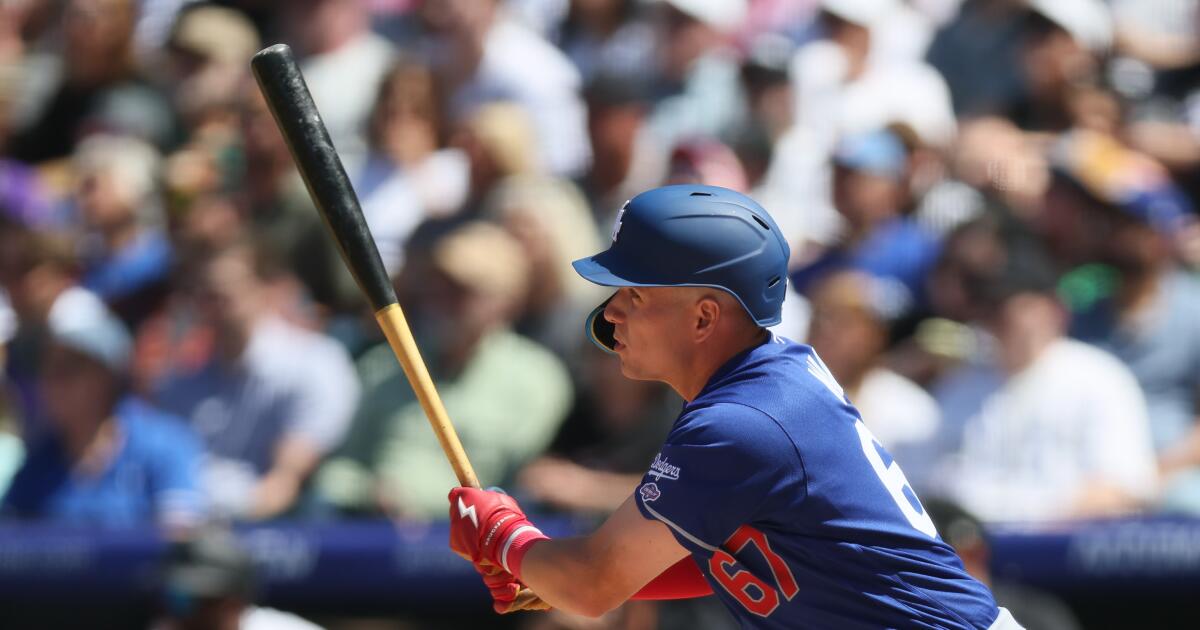
Ryan Ward has a solid debut, but bullpen blows it again as Dodgers lose to Rockies
-

 World49 minutes ago
Schools, shops shut in northern Israel to protest the Lebanon ceasefire
-
 News1 hour ago
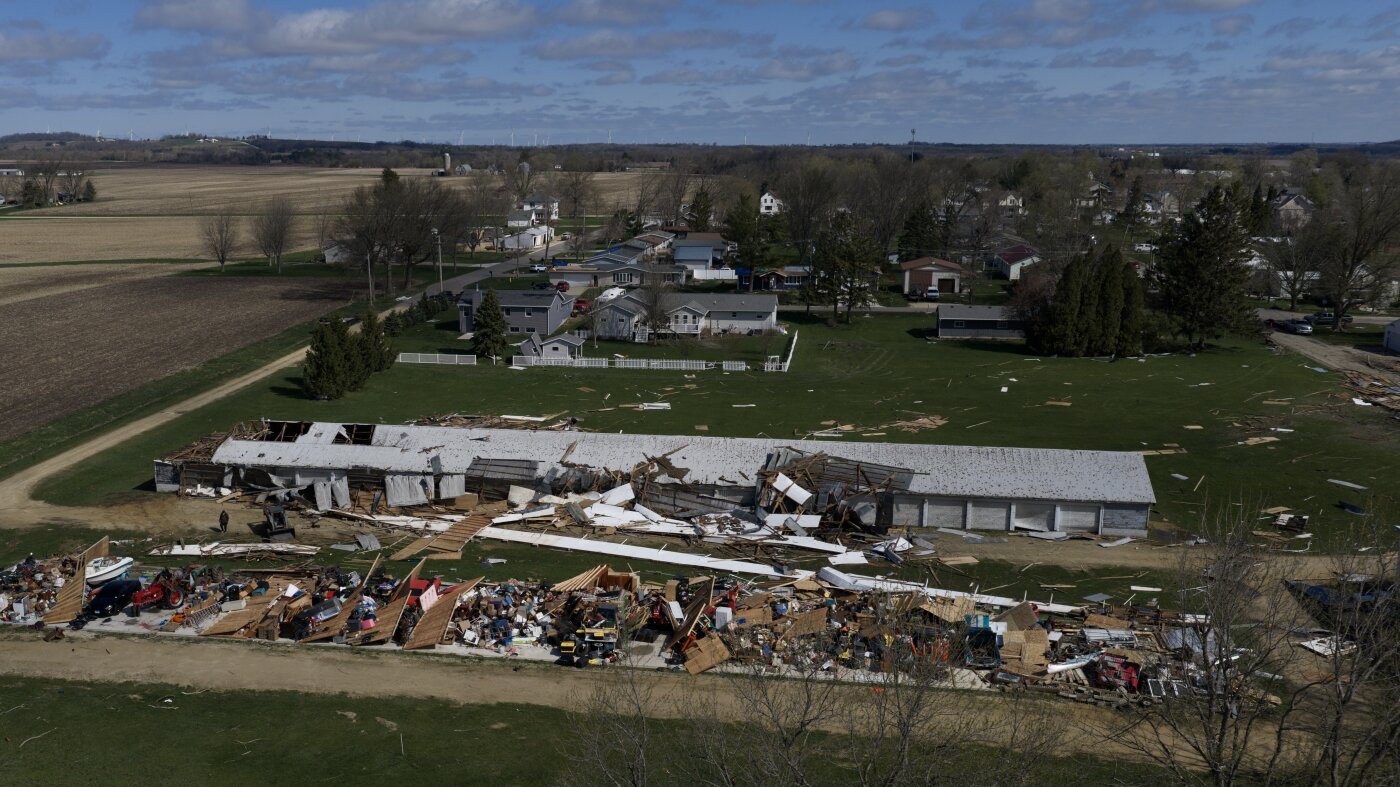
Communities launch cleanup after severe weather and tornadoes churn across Midwest