Montana
The Montana License Plate Loophole, Explained – Hagerty Media


If there’s anything more American than apple pie, it’s our aversion to taxes. We hate ’em, and Americans—especially the wealthy ones—are on an unceasing quest to pay as little in taxes as humanly and (hopefully) legally possible. It’s precisely because of this desire to stick it to the tax man that we so often see Montana license plates—on supercars at Cars and Coffee, high-end classics on the road, or RVs at a state park—even if they’re 2000 miles from Big Sky Country and their owners have never set foot there.
There’s a certain legal loophole from our 41st state. It lets you avoid the taxes, fees, and DMV dealings of registering a vehicle in your own state, saving headaches and potentially tens of thousands of dollars in the process. It seems like a great deal, but there’s more to it than that. Proponents of this loophole will call it tax avoidance, which is perfectly legal. Others might call it tax evasion, which isn’t. As Montana plates have gotten both more popular and more notorious in recent years, some states are cracking down. A case from California grabbed attention this summer, but people with Montana plates have gotten in trouble from coast to coast. So, what is this Montana loophole/scheme/scam/whatever-you-wanna-call-it? How does it work? And what is the current state of things for this collector car life-hack?
How It Works: Haven’t You Always Wanted a Company Car?
If you’ve just purchased a $300,000 Lamborghini, McLaren, or motorhome, and plan to keep and use it in the state where you reside, you’ll need to pay sales tax in that state. In Texas, that can be up to 8.25 percent. In California, it can be over 10, and in Louisiana over 12. There are also registration fees and, depending on where you live, safety inspections and emissions testing. But wait, there are other extras, too. In Massachusetts, for example, there is “motor vehicle excise tax,” an annual bill calculated at $25 per $1000 of your vehicle’s value, determined by the “percentage of the manufacturer’s list price in the year of manufacture.” Georgia has a “Title Ad Valorem Tax” (TAVT), which is a one-time payment at 7 percent of the “fair market value” of the vehicle at time of registration, and California has an annual “Vehicle License Fee” (VLF) based on the vehicle’s value as well.
All of the above are by far the least enjoyable part of a car purchase. The Montana loophole is one way to get around it. It’s much, much cheaper. We’re talking hundreds of dollars instead of potentially tens of thousands. It’s simpler, too. It really can be easier to register a vehicle halfway across the country than it is at your DMV down the street.
Every state has a different tax structure, with some elements more attractive than others. Texas and Florida, for example, have no state income tax. Montana (along with Alaska, Delaware, New Hampshire, and Oregon) has no sales tax. But Montana also doesn’t have state vehicle safety or emissions inspections. There are no use or excise taxes, either. For vehicles 11 years old or older, you can even get a permanent registration there. No renewals necessary. To get a Montana title/registration/plate in your name you’d still need to be a Montana resident, but what you can do instead is form a limited liability company (LLC) that is technically domiciled in Montana, and have that LLC buy and register the vehicle. Then you have your own company car, MT plates and all, to drive around along with thousands of extra bucks in your bank account. The car never needs to turn a wheel in Montana, or even in the same time zone.
Sounds complicated, but it really isn’t. A Montana LLC doesn’t have to sell, make, or even do anything, really. You could form it solely for the purpose of registering a car to save you money. You could even register more cars under that same LLC without having to form a new one. And while there are some complications and paperwork on the Montana side of things, there are plenty of people in that state who are more than happy to help you, for a small fee.
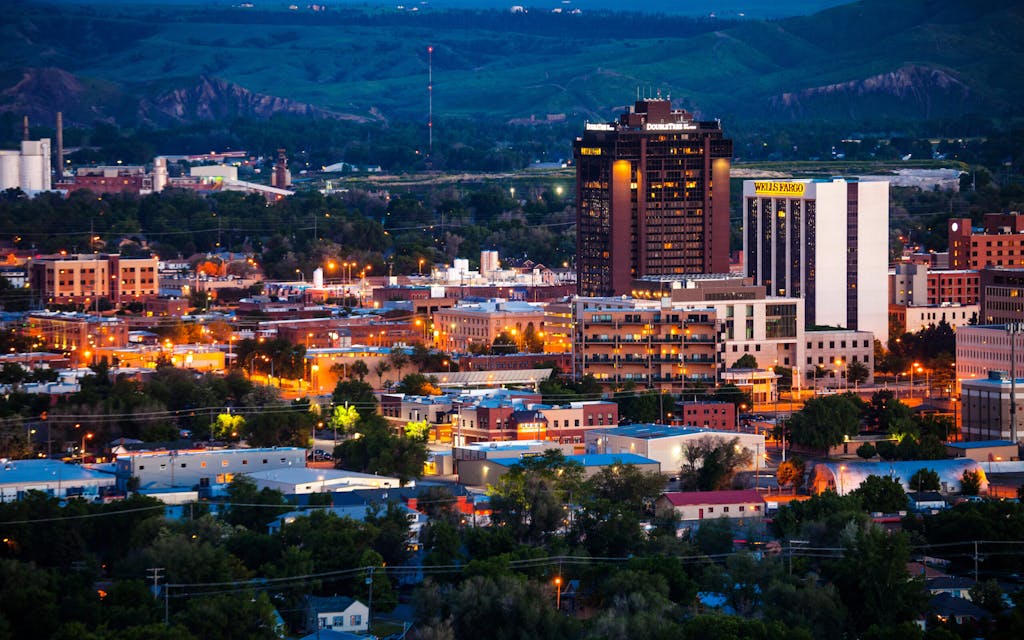
There’s a whole cottage industry of firms in Montana (many are law firms, but not all) that will act as your “resident agent” or “registered agent” and will form the LLC, register the vehicle, and act as the Montana-based agent for your company as required by state law. These firms have catchy names like “$1 Montana,” “All Day $49 Montana,” “Montana Tags” and “LLC TLC,” just to name a few. The websites for such firms promise a smooth and quick process, with one even playing on upper-class aspirations with language like, “it’s time to play with the rules the rich created.”
There’s enough business to go around, apparently. According to reporting by Montana newspaper The Missoulian, 30,000 LLCs were registered there in 2021. To be fair, not all of those were for vehicle registrations, but compare that to Oregon, where fewer than 55,000 LLCs were registered in the same period despite Oregon having quadruple the population.
Problems and Pitfalls
For Montana, the whole non-resident LLC and car registration thing works out great. The state pulls in revenue from vehicle registrations, but they’re from vehicles that never enter the state. They don’t wear down Montana roads. They don’t pollute Montana air. It’s also all perfectly legal from Montana’s point of view. And “The Treasure State” is bringing in a lot of, well, treasure. As of 2023, vehicle registrations were the fourth largest source of tax revenue in Montana for the state general fund.
Not all of that comes from non-residents but, unsurprisingly, Montana has more vehicles registered per capita than any other state, by a long way. Montana has a population of 1.123 million, barely more than itty-bitty Rhode Island, but according to Bureau of Transportation Statistics data, as of 2021 Montana has nearly twice as many vehicles registered as it does human beings. At more than 1.9 vehicle registrations per person, Montana’s rate is well over twice the national average of 0.85 vehicles per person.

The problems with the Montana loophole arise when vehicles registered there run afoul of the laws in the states where those vehicles are actually kept and used. For many states, once a vehicle is within its borders for 30 days, it legally needs to be registered and titled there, fees and all. If you live, buy, and keep a vehicle in a state with sales tax, then sales tax must be paid. If you use a Montana LLC and drive your car on MT plates, then, your state has missed out on tax revenue that could be going to the roads, schools, parks, and other infrastructure that you, a resident, use and enjoy.
On the other hand, using the Montana loophole is more defensible in the world of actively used RVs, where Montana plates are popular because a nice motorhome can cost as much as a house. Their owners may not physically reside or keep the RV in one state full-time, so individual state registration requirements may not apply. Otherwise, a more legally supportable way to use the Montana loophole is if the vehicle is stored in a state other than the owner’s residence, and if it never stays in their resident state long enough for that state’s legal residency requirements kick in. As far as insurance issues go, it’s best to follow the law and, when in doubt, consult with an attorney.
The loophole doesn’t just strain other states. There are actually some pitfalls back in Montana, too. Clerks at smaller counties there have gotten overwhelmed trying to process an influx of non-resident car registrations. “We were getting backlogged, especially during tax season”, a county attorney in Anaconda told The Missoulian last year, and that a local company “would send in a secretary with 100 of these vehicles to be registered. So we ran into a situation where we’re not going to register 100 vehicles while people stack up behind you and normal people wait.”
The company even sued, wanting an order from the district court to handle registrations in an “expeditious manner.” There are also reports that at one time Missoula County had a full-time staff member dedicated to nothing but non-resident vehicle registrations. In 2021, Montana even saw its license plate production disrupted due to an aluminum shortage. Supply chain shakeups from the pandemic got most of the blame, but shipping thousands of new plates out of state can’t have helped matters, either.
Risks and Crackdowns
Several major crackdowns on owners with Montana plates, slapped with major fines and back taxes, have made headlines. Given the small number and seemingly erratic nature of enforcement from the states, it seems like the chances of getting in trouble are pretty low, but John Draneas, attorney and author of the “Legal Files” column at Sports Car Market, feels otherwise: “I think it’s a mistake to say the risk of getting caught is low. If you think about it, any time the DMV or the cops want to, they could go to any big car gathering in Southern California and bust God knows how many people.” Indeed, Draneas feels that the risk of using the Montana loophole is getting higher, as the scheme has become more well-known. “Any kind of special-interest or collector car with a Montana plate, it’s pretty obvious what you’re doing. You’re exposed if you ever take that car out in public,” he says.

And you’re not just exposed if the authorities happen to be around. California Highway Patrol, which points out that the state “loses millions of dollars a year in revenue from California residents who register their vehicles in other states,” has a program in which anyone can report out-of-state plates to the authorities (Colorado and Arizona have similar systems).
Draneas recently covered a case in California, in which an owner had a California state investigator and two sheriff’s deputies show up to his house with a search warrant authorizing them to search his garage (where he kept his Montana-plated sports car) and seize his cell phone. They told him he was violating a California law requiring him to register his car in the state and pay a use tax, and to expect penalties and charges to follow. There are reportedly a number of other California residents under investigation for the same thing, “all by the same state investigator, who is said to have a strong personal interest in combating Montana-licensed cars.” And these are just ones we’ve heard about. Enforcement may be more common than we realize because, as Draneas points out, “people don’t talk about it much when they get caught.”
Other notable crackdowns include one in late 2018, when the Georgia Department of Revenue compiled a list of cars that had a Peach Pass (Georgia’s toll road tag) but also had Montana registrations, then built profiles of where the cars had been and how long they had been in Georgia. The investigation and subsequent crackdown then focused on two individuals who had dozens of cars registered with Montana LLCs, and the lead investigator notes that monitoring the cars’ appearances on social media played a pivotal role in building a case.
Back in 2010, Massachusetts cracked down on Montana-plated RVs. The state’s Office of the Inspector General, Department of Revenue, and Registry of Motor Vehicles (RMV) “investigated a small sample of RVs purchased with Montana LLCs . . . the preliminary investigation has collected nearly $200,000 and led to enforcement action that has billed errant taxpayers for hundreds of thousands of dollars in taxes and fees.” The investigation identified 23 Montana LLCs with 32 vehicles registered to them, and at the time cited that Montana had an LLC for every 19 residents in that state, while Massachusetts only had an LLC for every 83 residents. Two years before that, in Colorado, the Attorney General’s Office and Revenue Department obtained misdemeanor tax evasion convictions against 12 RV-owning residents who had used the Montana loophole to avoid paying Colorado taxes, and the Revenue Department took civil action on more than 100 other residents for a total of $2.7M in unpaid sales taxes, penalties, and interest.

Ten years ago, a court case in Louisiana regarding the Montana loophole, Thomas v. Bridges, made news. Thomas had formed a Montana LLC, solely to avoid sales tax in Louisiana (the nation’s highest) on an RV he purchased in that state for $351,800. By doing that he avoided paying over $30K in taxes and fees to his home state. He also kept the RV at a property he owned in another state, Mississippi. The Louisiana Department of Revenue went after him (but not his LLC, crucially) for unpaid taxes, a total of $46,509.60 including penalties. Thomas eventually brought the matter before a Louisiana district court, which ruled in Thomas’ favor. The case went all the way up the chain to the Louisiana Supreme Court, which also found in Thomas’ favor, as the Department of Revenue’s case was against him personally, and not his LLC, which technically bought and owned the RV. However, two of the justices concluded with calls for legislative action that would address the use of out-of-state LLCs to avoid taxes on purchases made in Louisiana.
Shouldn’t We All Just Pay Our Taxes?
Like the kids say, we live in a society.
Look, nobody likes taxes. Yes, the tax structure in some states can be nonsensical, unfair, and downright infuriating. Yes, having to get your vehicle inspected, and repair something if it fails, is annoying. Yes, saving 10 percent or more on a six-figure purchase has a heck of a lot of appeal. But being frustrated with the tax code and local laws doesn’t make anyone special, and it doesn’t exempt anyone from the laws in their state.
Taxes are necessary. How governments collect and spend those taxes is another conversation and can be addressed, however imperfectly, through voting and legislation. But if enough expensive vehicle owners use some loophole to get out of paying taxes in their state it could, theoretically, result in more taxes on everyone else. Plus, sales taxes are regressive by nature. Yes, Joe-Ferrari-buyer’s $20,000 tax bill is way higher than single-mom-Hyundai-buyer’s $2000 one. But that $20K extra for his occasional weekend toy is less of a burden to him than the extra $2K is to the lady who needs her Sonata to get to and from two jobs. And she’s not riding with Montana plates, is she?
When you make a big luxury purchase, be it a watch or a boat or a supercar, you’re supposed to factor in the cost of ownership (maintenance, storage, insurance, etc.), too. It’s not unreasonable to also expect people to factor in tax and registration fees. Especially in the world of exotic cars, where all those taxes and fees can be less than a tick or two on the options list, or the cost of a major service.
There are instances where it makes sense, and it’s easy to take advantage of, but for the most part the Montana loophole is hard to justify. It also appears to be getting riskier. The scheme is better known than ever. And, as everyone these days has a camera in their pocket and most are eager to post pictures of cool cars to social media, it’s more visible than ever, too. There can be clear benefits to the whole thing, as well as clear risks. As that old Latin saying goes, caveat emptor.


WASHINGTON ― Montana Republican Senate nominee Kurt Alme, who previously served as his state’s U.S. attorney, cut a plea deal in 2020 that allowed a tribal police officer who sexually abused a 6-year-old girl to serve less than a year in prison and avoid being registered as a sex offender.
Alme, who has President Donald Trump’s backing in his bid for Senate, served as Montana’s U.S. attorney in two stints. Trump appointed him both times; Alme served in the role from September 2017 through December 2020, and then again from March 2025 through March 2026.
Alme oversaw the case of Mychal Thomas Damon, who was indicted in June 2019 by a grand jury on one count of abusive sexual contact with an individual under 12, which carries a maximum punishment of a lifetime in prison, a $250,000 fine and no less than five years to a lifetime of supervised release. The average sentence for this crime is less severe, but still significant: 62 months in prison, no fine and 143 months of supervised release, based on an analysis of 2025 data provided by the U.S. Sentencing Commission.
Damon, 28, had admitted he touched the 6-year-old’s genitals. But in February 2020, Alme’s office filed a plea deal in his case that reduced his charge to felony child abuse.
The changes in the plea deal raised the alleged age of the victim from below 12 to below 14, stripped out the language of sexual intent and moved the offense out of the federal sex crime framework, meaning Damon would no longer be required to register as a sex offender. It jointly recommended Damon be sentenced to the time he’d already served of 324 days, and required only a sex offender evaluation. Alme’s name appears on the bottom of the document, along with a signature by his assistant U.S. attorney, Cassady Adams.
In June, Alme filed a sentencing memorandum that described Damon’s conduct, which included details of him touching the child’s vagina with skin-to-skin contact, and the adverse effect it had on her mental health. Local reporting at the time said the victim had told a therapist “Mychal touched me” and hurt her by putting his fingers in her “hoo hoo.”
Ten days later, Alme announced Damon was being sentenced to time served of 324 days and two years of supervised release. As of June 2026, Damon is not listed in the national sex offender registry or in Montana’s Sexual or Violent Offender Registry.
It’s not clear why Alme reduced the charges against Damon as significantly as he did. During part of his tenure as U.S. attorney, his office declined 64% of sexual assault cases. He conceded in a 2019 interview that this “is something that has to be worked on,” and noted that a lot of these cases are declined due to “weak or insufficient evidence.”
Asked what happened in Damon’s case, an Alme campaign spokesman on Thursday lashed out at unnamed Democrats for trying to make him look bad.
“Kurt’s liberal opponents are twisting the facts to manufacture a fake narrative that exploits crimes against women and children,” said Alme’s spokesperson. “Department of Justice policy required defendants to plead to the most serious charge readily provable from the evidence. Kurt strongly supported the Multi-Disciplinary Teams on our Native American reservations, led by his office, to support investigations of crimes against children and to support victims.”
His spokesperson also pushed back on the idea that Alme unreasonably declined a large number of sexual assault cases during his tenure as U.S. attorney.
“Kurt’s office prosecuted every viable sexual abuse felony referred to it and pursued the most serious charge readily provable from the evidence,” the spokesperson said. “Many ‘declined’ cases were to allow more appropriate tribal prosecutions ― they were not dropped. Kurt will bring his years of experience prosecuting criminals and working with the Sexual Assault Response Teams on our Native American reservations to the U.S. Senate to strengthen investigations, support victims, and better protect women and children.”
The campaign pointed HuffPost to a 2010 report by the Government Accountability Office that found the most common reason for U.S. attorney’s offices to decline sexual abuse cases referred in from Indian country was “weak or insufficient admissible evidence.” It also highlighted statements of support for Alme in an October 2025 press release by Sen. Steve Daines (R-Mont.), when he celebrated Alme being confirmed as U.S. attorney.
Alme is currently running for Daines’ Senate seat, and Daines went out of his way to clear the path for him. In a stunning and orchestrated maneuver, the two-term senator in March abruptly withdrew from reelection as Alme filed to run for his seat, minutes before the state’s filing period closed. Daines’ last-minute change-up was an effort to block potential Democrats or any major Republican challenger from jumping into an open Senate race.
Alme is taking on Democrat Alani Bankhead and independent candidate Seth Bodnar in the November election. Bankhead and Bodner have been duking it out for weeks, with each appealing to different factions of the Democratic party and calling on the other to drop out.
Bankhead, a retired Air Force officer, unexpectedly won the Democratic primary earlier this month, boosted by grassroots supporters and more than $2.5 million in outside money from a progressive veterans’ PAC. But Bodnar, a former University of Montana president who did not appear on the primary ballot, has bipartisan endorsements from prominent establishment figures, including former Democratic Sen. Jon Tester and former Republican Gov. Marc Racicot. He’s also significantly outraised Bankhead and Alme.
This Senate seat is rated “solid Republican” by the nonpartisan Cook’s Political Report, meaning Alme is well-positioned to win the general election. But this race would be more competitive if Bodner and Alme were going head to head, without Bankhead in the running.


Where Khloe Kardashian Stands With Ex French Montana More Than 10 Years After Breakup
French Montana is done keeping up with reality TV.
In fact, he only agreed to appear on Keeping Up With The Kardashians and Kourtney & Khloé Take the Hamptons over a decade ago as a favor to then-girlfriend Khloe Kardashian.
“She said to get on the show,” he exclusively told E! News at the BET Awards on June 28. “And I got on the show. Shout out to Khloe.”
The “Ever Since U Left Me” rapper, who split with Kardashian in December 2014 after eight months of dating, said the experience was “fun” because her family kept it real.
“They filmed their real life,” he continued. “And we were part of something together that one time. So it felt great. It didn’t feel like work because they film what they do everyday.”
As for his future in reality TV, the 41-year-old said those days are over, shutting down any prospective offers with a simple, “Negative.”
Although the “Unforgettable” artist—whose real name is Karim Kharbouch—may not be returning to television anytime soon, he has no problem hanging out with his ex-girlfriend these days.
-

 San Diego, CA4 minutes ago
Adobe Falls: The elusive waterfall that briefly returns after San Diego rains
-

 Milwaukee, WI7 minutes ago
Steve Czaban returns with new home in Milwaukee sports-talk radio
-

 Atlanta, GA12 minutes ago
Golestan brings a taste of Persian home cooking to Peachtree Corners – Atlanta Magazine
-

 Minneapolis, MN19 minutes ago
Minneapolis City Council abandons tax hike near George Floyd Square, revises development plan
-

 Indianapolis, IN22 minutes ago
Caitlin Clark not practicing Tuesday, to do individual workout
-

 Pittsburg, PA27 minutes ago
Pittsburgh area’s low jobless rate beats state, U.S. rates
-

 Augusta, GA34 minutes ago
Salvation Army of Augusta collects heat relief supplies
-

 Washington, D.C37 minutes ago
Washington Spirit Announces Midseason Roster Update

