Montana
Q&A: Jon Tester, Democratic Candidate for U.S. Senate

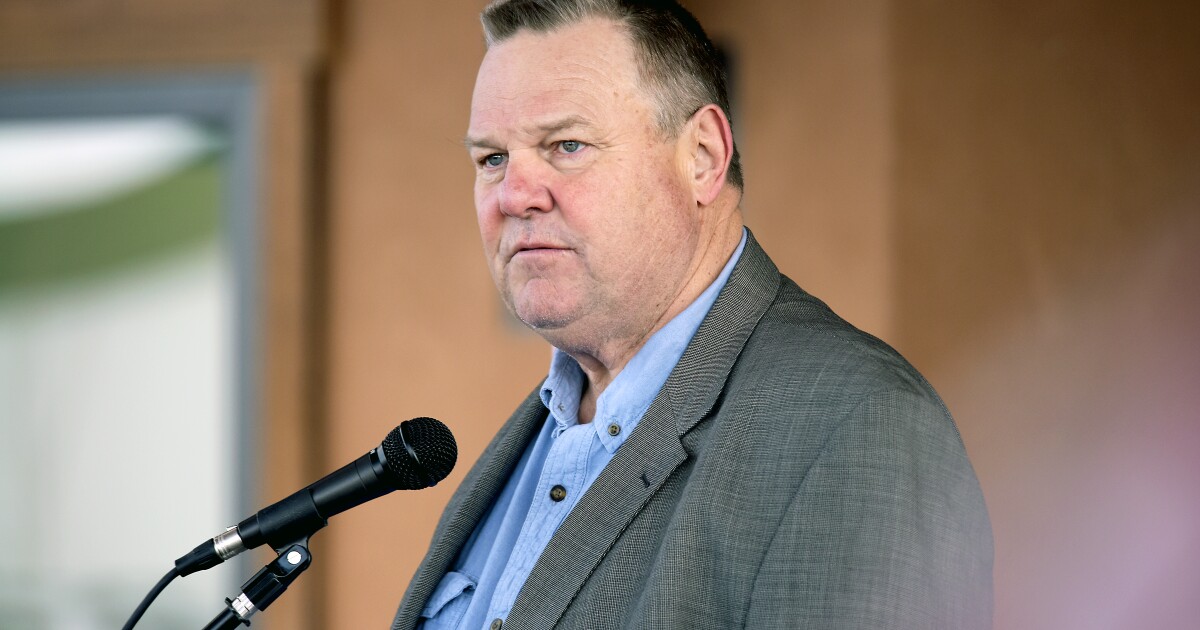
We are gathering information from all statewide candidates as a resource for the 2024 Primary Elections. Responses were limited to 200 words per question. Political attacks may have been removed, but otherwise, the responses are published unedited.
What is your full name as it will appear on ballots?
Jon Tester
What is your age?
67
Where do you live?
Big Sandy, MT
What is your education background?
College of Great Falls, Bachelor of Science in Music
Please list your current and previous occupations.
U.S. Senator, dirt farmer, music teacher for Big Sandy public schools
What motivated you to seek a seat in the U.S Senate?
Simply put, the Montana we know and love is changing. Everything from housing to groceries is more expensive as out-of-state multimillionaires move here and buy up our land, using Montana as their personal playground.
It’s putting a strain on everything – on prices, on our local infrastructure, on our towns and our parks and our public lands. With so much changing, we’ve got to have somebody in the Senate who’s willing to fight for our Montana way of life.
I still farm the land just outside of Big Sandy that my grandparents homesteaded more than 100 years ago. I feel those changes that are going on in Montana right now, every day.
Montana needs somebody back in Washington, DC who understands rural America. Someone who fights for our freedoms and goes to bat for our veterans, our family farms and ranches, our working families, our health care workers and our teachers. I’m running to keep up the fight for those folks, and to make sure our kids and grandkids can grow up in the same Montana we know and love. Montana is the greatest state in the greatest country in the world and it’s damn sure not for sale.
What, if anything, should the Senate do to address the federal deficit?
The deficit is out of control and both parties are to blame. In Montana, we know how to balance a budget and live within our means. That is why I authored a balanced budget proposal. It would protect Social Security and Medicare benefits that our seniors have earned while still forcing the federal government to stop racking up the debt and passing it along to our kids and grandkids. We also need to hold massive corporations accountable and make them pay their fair share.
Yes or no, do you support a federal ban on abortion?
NO.
Montanans of all stripes don’t want the federal government telling them what to do, and they don’t want politicians or judges stripping away their personal freedoms. Just last year, politicians in Montana ignored the voices of the voters and passed abortion bans. I opposed these bans and will always fight to protect Montana women’s freedom to make their own health care decisions.
What, if anything, should the Senate do to address climate change?
There is no question about it, climate change is impacting our economy and our way of life. Sharla and I see these impacts firsthand on our farm, where significant droughts have led to some of the toughest harvests in recent years. Wildfire seasons burn longer and more intensely, and taxpayers are stuck with the bill, paying untold billions of dollars to rebuild after extreme weather events.
We should be developing clean energy technologies to tackle climate change, create good-paying American jobs, and secure our energy independence, and Montana has the opportunity to lead the way. China is actively working to beat America in the clean energy sector in hope of taking over as the world’s strongest economy. We can’t afford to lose this competition. That’s why we should invest directly in Montana companies researching next-generation energy technologies that are affordable and lower costs for consumers. And my Bipartisan Infrastructure Bill secured investments to update our energy grids to prevent and protect against wildfire. Traditional energy sources like oil and gas remain a critical part of how we power our country, so we need to continue to invest in development of technologies like carbon capture and storage to reduce carbon emissions.
What changes, if any, should be made to the way elections and campaigns are funded?
Elected leaders should work for the people, not those who can cut the biggest check. It’s way past time to kick dark money out of politics. We should have done it yesterday.
The Supreme Court’s Citizens United v. FEC decision was disastrous. It flooded our elections with mind-boggling amounts of money and made a mess of our democracy. Since then, I’ve fought to overturn that decision with my “Corporations Are Not People” constitutional amendment, and I urge my colleagues in the Senate to join me in making sure hardworking Montanans, not massive corporations and out-of-state billionaires, get to pick their elected officials.
I will also continue fighting for better transparency in campaign finance, like my Sunlight for Unaccountable Non-profits (SUN) Act, which would take huge strides towards eliminating dark money by requiring the IRS to publicly disclose donors who give over $5,000 to certain tax-exempt groups engaging in political activity.
Hardworking Montanans should be the ones deciding their elections, not out-of-state special interest groups. I will always defend the voices of Montanans and put them first.
What, if anything, should the Senate do to improve the nation’s immigration laws and security at the southern border?
What’s happening on the southern border is unacceptable, and dedicating more manpower and resources is crucial to keeping Montanans safe.
That’s why I’ve called on President Biden to step up and do everything in his power to secure the border, and it’s why I supported a strong bipartisan deal to get our border under control earlier this year. This bipartisan bill would have hired more border patrol agents, cracked down on the fentanyl crisis, and tightened asylum standards – that’s why it received the strong endorsement of the National Border Patrol Council. Unfortunately, many of my colleagues decided to play politics and voted to keep the border open for another year so they could campaign on the issue.
I have been talking with Montanans, sheriffs, and mayors across the state, they all are feeling the consequences of the situation at the southern border, from stretched law enforcement budgets to fentanyl in the communities. I was proud that my bipartisan FEND Off Fentanyl Act passed to place sanctions on countries engaged in international trafficking of illegal fentanyl and give law enforcement the resources they need to battle the fentanyl crisis.
What, if anything, should the Senate do to ensure Social Security and Medicare benefits meet the needs of older adults?
I will never cut Social Security and Medicare. Full stop. For many older Montanans, Social Security is their only source of retirement income, and Medicare is their only way to access affordable life-saving health care. These are essential benefits that Montanans have spent their entire lives paying into, and I will always fight to ensure these benefits are protected – not just for today’s seniors but for all of Montana’s future generations.
There are some politicians who want to end Social Security or cut those benefits. I oppose any plan to do so. I will also stand tough against any plan to privatize Medicare, because our seniors have paid into that their whole lives and should be able to rely on it. I was also proud to pass legislation that allowed Medicare to negotiate prescription drug prices – including capping the price of insulin for seniors at $35/month – and I will fight to ensure that Montana’s nursing homes stay open and fully-staffed. Montana’s seniors can count on me to defend their hard-earned health care benefits.
What should be the top priority when managing public land?
As a lifelong Montanan, I know our public lands are foundational to our way of life and to our state’s economy. You don’t need to be a millionaire to hunt, fish, or hike in these treasured landscapes, because they belong to all of us. Our public lands play a key role for ranchers looking to graze their cattle, or local sawmills in need of timber to harvest. That is why I oppose the call from some politicians who have said they want to transfer our public lands, which would make it easier to sell our wide open spaces off to the highest bidder.
Montana has a long history of local collaboratives working together to improve management of our public lands. I worked with Montanans to protect special places like the Rocky Mountain Front, Glacier National Park, and the Gateway to Yellowstone National Park. I am also incredibly proud to have secured full funding for the Land and Water Conservation Fund, and it’s because of that work that conservation and recreation priorities for Montana’s public lands will be funded for generations to come. And I will continue to fight for bills like the Blackfoot Clearwater Stewardship Act to protect thousands of acres of public lands for future generations.
What, if anything, would you do if elected to build trust in the Senate?
When I first ran for U.S. Senate, I made a promise to Montanans that I would go above and beyond on ethics and transparency and work for them – not special interest groups.
Every day since, I’ve worked tirelessly to uphold that promise. The first thing I did was post my Senate schedule online for all Montanans to see. I was the first Senator to do this and still do it to this day – unfortunately, I’m one of the only U.S. senators who does. So I’ve introduced a bill to make that mandatory for all of my colleagues, because the American people deserve to know who their elected officials are meeting with.
I’m also fighting to crack down on lobbyist influence. I’m working to shut the revolving door by banning members of Congress from becoming lobbyists – ever. And I routinely invite retired Montana judges to conduct a voluntary ethics audits of my office, to ensure my office and I meet the high standards we set for ourselves. I think all of my colleagues should join me.
Like most Montanans, I believe a handshake means something and our word is our bond. That’s how trust in the Senate should be built – by earning it.



The hills of the northern Judean Desert will soon turn yellow and dry. For now, they are covered in green bloom, dotted with bursts of purple and yellow wildflowers, butterflies hovering above them. From a hilltop in the Binyamin region, where Ruthy and Haim Mann run their therapeutic horse ranch, the view opens wide: the Moab Mountains to the east, the Binyamin hills to the north, Wadi Qelt plunging dramatically toward the Jordan Valley and the northern Dead Sea. At moments, when the haze lifts, Herod’s winter palace can be seen in the distance on the other side of the wadi.
Biblical history feels at home here. Philistines and Crusaders, Babylonians and Hasmoneans, Assyrians, Byzantines and Seleucids all passed through. Joshua, Saul and Jonathan fought nearby. David hid in these hills. On one of the mountains opposite us, the Good Samaritan once passed, refusing to ignore a wounded man lying by the roadside and bandaging his injuries.
The desert has seen much. But a band of real-life cowboys from Montana, pointed boots, wide-brimmed hats and oversized belt buckles, is new even for this landscape. But a band of cowboys who wear Tzitzit (fringed ritual garment), bless bread with the Hebrew “hamotzi,” keep Shabbat and study the weekly Torah portion, though they are devout Christians, is new for me as well.
They define themselves as Christian Zionists. Not an official denomination, more a small, independent current on the margins. They have no church of their own. “But it’s growing,” said Zach Strain.
When I ask Yoss, short for Yosef, Strain and Jedidiah Ellis why they wear blue Tzitzit attached to their belts, Yoss quotes the Book of Numbers, Chapter 15, Verse 39. “That’s the longest I’ve heard him speak since they got here,” Haim Mann jokes.
4 View gallery

Ruthy and Haim Mann, the ranch owners
(Photo: Alex Kolomoisky)
On a recent Monday morning, the small group of five men and three women is already at work. Bethany Strain and Lily Plucker haul wheelbarrows of stones, Lily’s three-month-old son, Jethro, strapped to her chest. Her husband, John Plucker, the group’s unofficial leader, builds the wooden ceiling of what will soon become a resilience and support center for soldiers coping with PTSD at the edge of the ranch.
Yoss and Jedidiah work on the stone wall of the riding arena. Promise Strain washes laundry by hand facing the desert view. Eliora Ellis saws a wooden beam. Zach, who stands nearly 6-foot-7, reinforces the stable fence. They work in near silence, focused, as if fulfilling a commandment.
By profession, Zach trains horses and riders for the film industry, primarily for Westerns, and has appeared in some of them himself. He worked on the TV series “Yellowstone.” When I try to draw him into Hollywood gossip about Kevin Costner, but since there is a biblical injunction against gossip, all I can get out of him is that the horses on the series were the finest and most expensive available. They are reserved, almost shy. They speak sparingly. They appear unaccustomed to social company. Montana is about 18 times the size of Israel with roughly one-tenth its population. The nearest neighbor can be miles away. In the photos they show me, each home looks like it could have stepped straight out of the cast of “Little House on the Prairie”, except for one detail: a giant Star of David mounted on the Strain family home.
All of them are related. Zach, Yoss and Promise Strain are siblings (the fourth brother, Ezekiel, left yesterday). Jedidiah and Eliora are married. Yoss is married to Bethany, John Plucker’s sister. Plucker is married to Lily. It is their last day in Israel, and they seem determined, more than anything, to make the most of every remaining moment. This is their last day, though not their first visit. For most of them, it is their fourth or fifth trip, and never a vacation. They come to work.
Ruthy and Haim Mann, the ranch owners, are Israeli cowboys in their own right. Boots, hats and wide brims included. Haim, a lawyer by training, also carries a handgun. They live in the settlement of Alon, part of a cluster of three Jewish communities northeast of Jerusalem, which includes mixed, religious and secular residents living side by side. “It works beautifully,” Haim says. The population is largely middle-class.
Indeed, although several flashpoints of the Israeli-Palestinian conflict, including Khan al-Ahmar, lie not far from here, this specific area, located in Area C of the West Bank, is quiet and calm. Not quite Montana, but they manage with what they have.
4 View gallery
Riding against the backdrop of the new treatment center
(Photo: Alex Kolomoisky)
Both are remarried. Together they have two daughters, along with four children from Haim’s previous marriage and two from Ruthy’s, and they are grandparents to five grandchildren. Thirteen years ago, they founded a small therapeutic horse ranch. (“We’ve always loved horses,” they say). Ruthy handles treatment, working with teens with autism, motor and social challenges and trauma. Haim manages the horses. Five years ago, they were told to evacuate their original site. “We gave service to the whole community and got a punch in the stomach in return,” Ruthy said. With assistance from the Settlement Division, they relocated to the current hilltop. Haim closed his law office, Ruthy left her job at the Biblical Zoo in Jerusalem, and they committed fully to the ranch, which officially opened to the public about six months ago. Five dunams, 13 horses and a sweeping biblical landscape. Beyond routine therapy for local youth, the ranch increasingly served teens who had left the ultra-Orthodox community, including girls who were victims of sexual abuse, “even at ages 12 and 13”, sometimes within their own families.
About two years ago, they began hosting a joint Passover Seder for dozens of such teens. “The at-risk girls,” Ruthy says, “taught us a great deal about treating trauma.” That knowledge, regrettably, soon became urgently necessary. When war broke out after the October 7’s Hamas massacre, activity at the ranch halted. Ruthy began treating evacuees from southern Israel housed in Dead Sea hotels. “Everything there was terrible,” she says. At first, the therapy sessions were held in the hotels, without horses, using smaller animals instead. Over time, families began coming to the ranch to ride. “We started with 20 families. Within a month, 150 were coming,” she said.
Soon after, soldiers began arriving, some physically wounded, others psychologically scarred. “It started with soldiers who rode with us as kids,” Haim said. “They enlisted, went to fight and were injured. They came back to us to rehabilitate, to regain control over their lives.”
The need, they say, is immense while the supply is limited. Many soldiers from the West Bank have been killed or wounded, disproportionately to their share of the population. “But in all of the West Bank,” Ruthy says, “there isn’t a single ranch like this. There is a resilience center in Binyamin, but not everyone is suited to sitting in a closed room talking to a therapist about their feelings. It’s also a community that is less inclined to ask for help. Still, many people need precisely this kind of therapy, with horses, out in nature.”
4 View gallery
Building a wooden ceiling on their last day in Israel
(Photo: Alex Kolomoisky)
Demand is surging. “We feel the shockwaves of the psychological injuries from the war starting to hit with tremendous force,” Ruthy said. “It’s not just ripples. It’s a tsunami.” Everything mental health experts warned about during the war, that once it ended and there was no longer anything to suppress or conserve strength for, a major wave of psychological casualties would follow, is unfolding before the Manns’ eyes. “You feel it everywhere,” Haim adds. “In rising divorce rates, in pent-up violence. We know that what isn’t treated today will worsen tomorrow. The country has to confront this by building more resilience centers, otherwise we’ll be carrying it for years. “And it’s not like the trauma of October 7 is going to disappear anytime soon. We’ll be living with it for years.”
“There are other injuries that aren’t being talked about enough,” Ruthy says. “For instance, girls who were already in very difficult circumstances before October 7 and had just started to rebuild their lives, only for the war to shift attention elsewhere and leave them sidelined.” There are also many patients with older wounds and traumas that resurfaced, but there isn’t enough time, enough therapists or enough resources to reach them.” The sound of a bell rings out to announce lunch. The group gathers in the ranch’s main building for a modest meal of white rice and a tough steak. They recite a blessing over the food and eat in silence.
Word of the group’s arrival reached Haim as well. “I wanted to thank them, in my name and on behalf of the Jewish people. I offered them a day of horseback riding in the area. They came here and fell in love. We fell in love with them, too.” The group stayed at the ranch for three months, building everything by hand. “They were like a miracle for us,” Haim says. “We didn’t have a dime.” This latest visit, about a month long, focused entirely on constructing the new center.
Zach first visited Israel in 2014. This is his fourth trip. “It was very important for me to come help, to build and strengthen Israel,” he said. “Israel is the light of the world, maybe even the foundation of the world. I don’t know how to explain it, but when you’re here, you feel it.”
What does it mean to be a Christian Zionist?
“Some people call us that. Maybe it’s accurate,” he said. “We don’t have definitions.”
How do you define yourself?
“We don’t spend much time defining it. We’re somewhat different. We just go by the Bible. We’re not part of any church. It’s not really a movement. Nobody knows us. It started with our family, and people joined.”
I watch a video of a Shabbat meal at the family home in Montana: Kiddush over wine, Sabbath songs and a reading of the weekly Torah portion. They look a bit like the Amish. “We are not evangelicals”, he insisted. “We’re not trying to convert anyone. And I don’t even understand why I would need to convert anyone.” “We’re not evangelicals,” Bethany says as well, “but we’re fairly close to that.”
Zach, have you noticed a change in Israel compared to your previous visits?
“Since the war, I think people have come to see more clearly how deep and destructive evil can be. In America, it’s created a serious division. Many think Israel shouldn’t exist. That’s what’s being taught in schools today. They don’t know what’s happening here.”
That’s what they’re teaching in schools?
“We didn’t attend public schools,” he says. “Our parents pulled us out because they were teaching us lies.”
Zach also refers to John Plucker as the group’s unofficial leader. “I go where John tells me,” he explains. The fact that Plucker is 12 years younger does not seem to matter. The Strain and Plucker families have known each other for years and are closely connected. Two of the Plucker daughters are married to two of the Strain sons.
“‘Unofficial leader’ is a good definition,” agrees John Plucker, 27.
Are you really a cowboy?
“Yes. That’s how I grew up, on a traditional ranch with horses and cattle and everything. Today I’m an independent contractor and run a construction company. There’s not much money in ranching. It’s more of a lifestyle. I want to work a few more years and buy some land.”
Plucker does not define himself as a Christian Zionist. “I’m just a regular Christian,” he says. “But I see Israel the same way they do, and we believe the same things, so maybe I am a Christian Zionist? I don’t know. Honestly, I don’t really care.”
4 View gallery
The cowboys in Montana fields
(Photo: Courtesy)
So why did you come?
“The Strains have been coming for years, and they convinced me. We all love Israel very much. The first time I was here was after COVID, and it was incredible. HaYovel brought us. They believe God gave this place to the Jewish people. Here I learned a lot about redemption. You can see it happening in real time. It’s powerful. You learn much more here than just by reading the Bible.”
The last time he came was in November 2023. “They brought us to work in Shiloh, harvesting olives. The moment I came to the ranch, I fell in love, even though there was nothing here yet. My background is ranching and horses, so this suited me much more than picking olives, which is a pretty strange job, honestly. We didn’t hesitate to return, even though our baby had just been born.
“I see what they’re doing here with the young men and women who come for therapy. They give them purpose. They turn something negative into positive. It really brings redemption into people’s lives. I’m glad to be part of it. I already want to come back again. Staying in one place for a long time, building relationships, that’s a blessing.”
When I ask about politics, the group responds with puzzled looks, as if they had never even heard of Trump.“We’re simple ranchers,” Plucker said. “These things don’t interest us. We’re aligned with conservative views, but I don’t really understand politics. I’m here for the Jewish people. Politics may be important here, but not for us.”
By midday, the horses are released ahead of the afternoon’s therapy sessions. I meet Aviv, Sinai, Negev, Pele, Pazit, Milky and Moshe, a large black horse. I do not ride, but standing beside them, something shifts. A horse is a wonder. Sinai, a horse, or perhaps a mare, I didn’t check, walks toward me and looks straight into my soul. We share a quiet moment.
What is it about horses?
“A horse is a spiritual animal,” Ruthy said from atop Negev. “Every encounter with a horse exposes the soul. The horse immediately senses your frequency. If you’re tense, it’s tense. If you’re calm, it’s calm.”
“What allowed horses to survive for 80 million years is extreme sensitivity,” Haim said. “They are alert to fear, to anxiety. They feel your heartbeat, your breathing. A horse is a perfect mirror for someone living with PTSD. When a person jumps at the sound of a motorcycle and shifts into survival mode, the horse shifts just as quickly. And when you calm down, the horse calms down with you. It forces you to lead, not with force, but with quiet confidence.”
Ruthy sees symbolism as well. “A horse is an open, unburdened space. The entire archetype of the horse is about strength and success, getting back on the horse, being on top of things. That’s also our therapeutic philosophy: to reconnect with that life force, to climb back into the saddle even after the hardest falls. It restores a sense of control to people who have lost all control over their lives.”

ROUNDUP, Mont. —
The Rehder Creek Fire is burning 16 miles southeast of Roundup has grown to about 5,000 acres, prompting evacuation orders for residents in the Bruner Mountain Area/Subdivision.
The fire started Feb. 26, the cause is unknown and containment was at 0%.
Evacuation orders are in effect for all residents in the Bruner Mountain Area/Subdivision. The Musselshell County Sheriff’s Office is coordinating the evacuation orders, and 911 reverse calls have been sent out to advise people in the area.
A shelter is opening at the Roundup Community Center. Residents were told to contact Musselshell County DES for further information.
Firefighter and public safety remain the top priority. The public is asked to avoid the Fattig Creek and Rehder Road area so emergency personnel can safely and effectively perform their work.
Fire resources assigned to the incident include 40 total personnel, 11 engines, one Type 2 helicopter, three tenders and two dozers.


‘The Fall and Rise of Reggie Dinkins’ falls before it rises — but then it soars

Xiaomi 17 is a small(ish) phone with a big(ish) battery

World leaders split over military action as US-Israel strike Iran in coordinated operation

Iran fires missiles at US bases across Middle East after American strikes on nuclear, IRGC sites

Common nighttime noise exposure may trigger heart problems, study suggests

Florida High School Football Rankings: Top 25 teams – Oct. 21

Cleary's 21 help Le Moyne down Central Connecticut State 69-64 in OT

How old is Bo Nix? What to know about Oregon quarterback ahead of 2024 NFL Draft

99th annual Pony Swim held in Virginia

Indiana Members Credit Union announced as new anchor tenant at Bottleworks District
Iran fires missiles at US bases across Middle East after American strikes on nuclear, IRGC sites

Israel strikes two schools in Iran, killing more than 50 people

Anthropic CEO says he’s sticking to AI “red lines” despite clash with Pentagon

ICE blasts Washington mayor over directive restricting immigration enforcement

Did the EU bypass Hungary’s veto on Ukraine’s €90 billion loan?
-

 World3 days ago
Exclusive: DeepSeek withholds latest AI model from US chipmakers including Nvidia, sources say
-

 Massachusetts3 days ago
Mother and daughter injured in Taunton house explosion
-

 Montana1 week ago
2026 MHSA Montana Wrestling State Championship Brackets And Results – FloWrestling
-

 Louisiana5 days ago
Wildfire near Gum Swamp Road in Livingston Parish now under control; more than 200 acres burned
-

 Denver, CO3 days ago
10 acres charred, 5 injured in Thornton grass fire, evacuation orders lifted
-

 Technology1 week ago
YouTube TV billing scam emails are hitting inboxes
-

 Technology1 week ago
Stellantis is in a crisis of its own making
-

 Politics1 week ago
OpenAI didn’t contact police despite employees flagging mass shooter’s concerning chatbot interactions: REPORT