Montana
I moved to Montana after getting priced out of California. I work in the trades — not all transplants are rich remote workers buying up property.

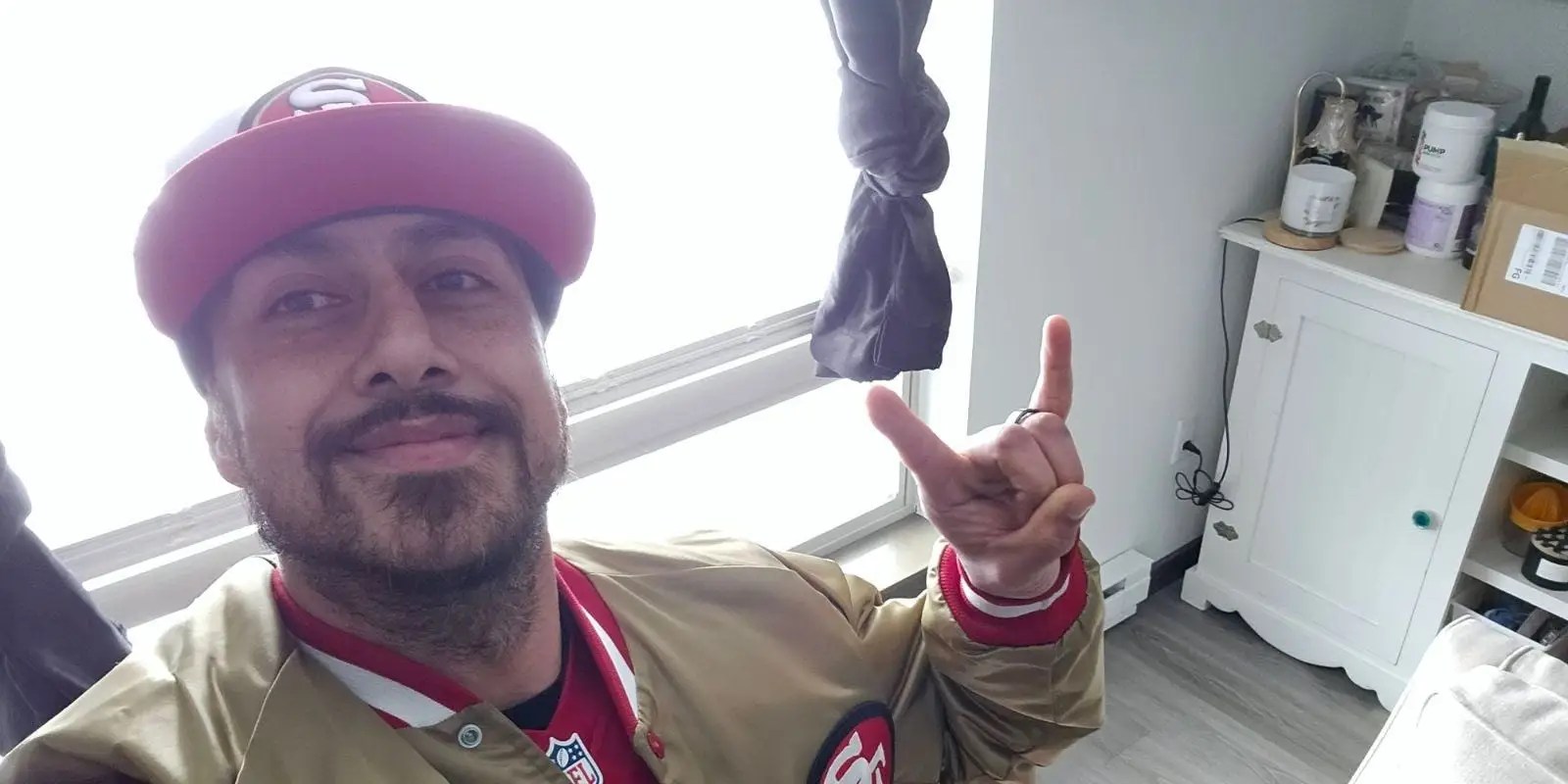
- Ian Baylon moved to Montana in April 2022 after watching “Yellowstone” and visiting the state.
- The 34-year-old said you get more bang for your buck renting in Montana than in the Bay Area.
- Baylon said not all Montana transplants are remote workers buying property and driving up prices.

This is an as-told-to essay based on a conversation with 34-year-old Ian Baylon, a tradesman who moved from California to Montana in April 2022. The essay has been edited for length and clarity.
I was born and raised in the Bay Area, San Francisco. Later as an adult I lived in Crockett, which is a beautiful little coastal Bay Area town. Even in Crockett the housing was expensive.
When my girlfriend, now wife, and I moved in together, the cheapest thing we could find for ourselves was in Vallejo, which is super busy, super violent. But that’s what we could afford, even though I was a manager at a granite shop and my wife was working as an esthetician.
During COVID, we got sucked into “Yellowstone,” watched the whole series, and decided to book a trip to Montana in February 2022 just to see how it is.
We stayed in West Yellowstone and had a blast here. One of the days, I decided to look for a job, just to see who was hiring and what they were willing to pay. I googled a couple of granite spots and a company was hiring in Bozeman. I went in for an interview. They asked me, “What will it take for you to move up here?”
They were willing to pay me my $89,000 a year salary plus moving costs, plus a deposit on the place we rented.
From March to April, within a month, I got the job, we rented the house, and we packed up and moved here.
Jacob Boomsma/Getty Images
The culture shock has mostly been good
Moving up here was a little bit of a culture shock, but more in a good way.
People are a lot nicer up here. I’m Mexican American, my wife is white, and no one says anything racist or out of pocket to us. I was super worried about that. A gentleman the other day opened the door for me at the gas station. He was wearing a MAGA hat.
Montana is not what people think. There’s a huge diversity. I equate Bozeman to Berkeley.
I tell people I’m from California and they say “boo” at first, but it’s more of a tit-for-tat. They make fun of me, I make fun of them, and we still get along.
One not good culture shock has been the younger generation. It’s a college town, and they’re not as friendly as my generation is or the generation before me.
Here in the Gallatin Valley where we live now, which includes Bozeman, the housing market is ridiculous. There’s a huge shortage of housing and everything is really expensive.
We thought we were going to be able to come in here and buy property. Or buy a ranch with some land and have animals. Nope. There’s a reason why they call it Boz Angeles. But renting you do get more bang for your buck up here.
Here in Montana there’s a huge shortage of labor too.
While it was very competitive in California, there’s a lot of demand for the trades up here, but nobody up here really wants to learn the trades. The young kids coming into the trades don’t know jack diddly and they expect everything to be handed to them and not work hard.
Gordon Calhoun/Getty Images
Not all Montana transplants are the same
One thing that native Montanans don’t like is that a lot of people that live here in the Gallatin Valley are from out of state, not only from California, but from Washington, New York, Texas, you name any state, they’re here.
I’ve seen both types of transplants. The ones that got out of California because they couldn’t afford it, and the ones that have that expendable money.
That’s where the problem lies. The people that move in and buy up the properties, drive up the cost for the locals, and who don’t really need to work or contribute to the economy here. A lot work in tech or finance, and there’s no need for them to work locally. They can work from home remotely.
But a lot of people moving up here from California are not your techies or your white collar people. It’s people like me, who work in the trades.
We’re just regular people, just like you guys. We got priced out of our own native place.
You do have your trust fund babies from back east and your techies from the West Coast, but the bulk of us are escaping that chokehold. Just to still chase the American dream.
I think we are more happy here than we would’ve been in California, even though we miss it. We do miss our friends, the diversity, and everything that California has to offer.
But living there 24/7 kind of overwhelmed us. The lifestyle was always hurry up and go. Here we work, but there’s so much natural beauty around you. We’re in the valley surrounded by mountains.
On my way home after an 11-hour day, looking at the beautiful mountains and the meadows and the streams and the rivers and the snow-capped Bridgers, how can you be angry? It’s just so soothing.



LAVINA— Sheep grazing has been helping bee populations thrive at a Lavina sheep and cattle ranch.
Entomologist Hayes Goosey, who works as the Montana State University Extension forage specialist, said grazing reveals dirt patches, where bees can dig nests.
Watch how sheep are part of a bigger picture:
Montana Ag Network: Research finds sheep grazing benefits bees
He studied sheep and cattle grazing effects on the environment at Lehfeldt Land and Livestock in Lavina.
“Most bees are solitary, and they nest in the soil, and they need bare patches of ground to identify nest locations. And so periodic grazing then opens up that canopy of that detritus and gives native bees places to nest,” said Goosey.
Abi Saeed/ MSU Extension
“We found greater numbers of bees associated with areas where cattle grazing was present compared to places where a long-term idling or lack of grazing had been the dominant land management for about a decade,” he added.
Grazing also balances animal populations that have been there for years.
“To maintain historically what the range looked like, it requires grazing at varying levels,” added Goosey.
Vanessa Willardson/Q2

Fifth-generation rancher Ben Lehfeldt, whose property Goosey studied, said taking care of sheep is a lot of work, but it is worth it.
“Sheep, cattle, agriculture, the whole is essential to the whole wildlife picture. Everything works together,” said Lehfeldt.
This week, Lehfeldt is working with a team of five shearers, two wool handlers and his family to shear 2,000 sheep, producing 20,000 pounds of wool.
Vanessa Willardson/Q2

“It just kind of gives them a fresh start for the year to grow that coat,” said Lehfeldt.
Shearing sheep is also an important step before lambs are born because sheared sheep will be more likely to seek shelter during bad weather, meaning lambs will get the shelter they need too.
“If they had a big coat on, they wouldn’t want to go to a shelter if it’s raining. That lamb needs protection. So now… when they feel that rain, they’ll head and take their lamb for protection,” said Lehfeldt.
Vanessa Willardson/Q2

Working hard to maintain sheep populations in Montana, such as the work behind sheep shearing, contributes to a bigger picture.
“Not only does it help with the sheep and the grazing, but it also adds to the environment and the wildlife and the insects as a whole,” added Lehfeldt.

WESTERN MONTANA — Here’s a look at Western Montana’s top news stories for Wednesday.
Thompson falls residents are paying around 110 dollars a month for water and sewer services on vacant lots that aren’t even connected to utilities, an issue that was brought up at Monday night’s city council committee meeting. Now, community members are circulating recall petitions targeting the mayor and several city council members over the billing practice. (Read the full story)
Two Missoula restaurants, Pangea and the Stave & Hoop Speakeasy, announced temporary closures due to unexpected changes on Tuesday. Management said both will return with new concepts and ownership, calling it a “see you soon” rather than goodbye. (Read the full story)
Travelers’ Rest State park is celebrating 25 years as a state park, where both Salish ancestors and Lewis and Clark once camped near Lolo Creek. The historic site now draws about 80,000 visitors annually from around the world to learn about the area’s rich history. (Read the full story)

BILLINGS— Montana Fish, Wildlife and Parks is offering a cash reward up to $1,000 for information regarding blow darts found in ducks in the Billings area.
Dani Theis with Montana FWP said Tuesday that the office has received multiple calls reporting the issue over the past year, specifically in Billings areas such as Shiloh Conservation Area and Rose Park.
Watch the report:
Montana wildlife officials offer reward after blow darts found in ducks
Shooting ducks with blow darts is illegal and shooting them in town and off-season is illegal as well.
“Taking migratory birds, ducks included, these mallards, outside of those seasons really puts their populations at risk,” she said.
The blow darts have not immediately killed the ducks, but Theis said it’s likely painful.
Vanessa Willardson/Q2
“It can’t be good for its quality of life,” she added.
Wildlife officials are also seeking information on a baby fawn deer killed by a blow dart in Roundup on March 23. That incident took place on the 100 block of Fifth Street West.
Theis recommends those with information report it to tipmont.mt.gov.

Milwaukee weekend standoff began as family dispute, search warrant says

Norfolk Southern to lease short segment of Atlanta-area trackage to new short line

Key Minneapolis leaders pitch to keep job, plans to keep costs down

WRTV’s new owner promised more news. It fired the staff. | Opinion

Pittsburgh-area couple charged in death of 15-month-old appear in court for first time

Florida High School Football Rankings: Top 25 teams – Oct. 21

How old is Bo Nix? What to know about Oregon quarterback ahead of 2024 NFL Draft

Cleary's 21 help Le Moyne down Central Connecticut State 69-64 in OT

99th annual Pony Swim held in Virginia

Indiana Members Credit Union announced as new anchor tenant at Bottleworks District

GOP leaders endorse Trump’s shutdown-proof move to end DHS funding lapse

Palestinians in West Bank protest, strike against Israeli death penalty law

Judge delays Luigi Mangione’s federal trial by about a month but won’t push it to next year | CNN

Video: Trump Says U.S. to Leave Iran ‘Very Soon’

April showdowns: 4 key races to watch this month that will test Trump, GOP grip on power
-

 South-Carolina4 days ago
South Carolina vs TCU predictions for Elite Eight game in March Madness
-

 Miami, FL7 days ago
Jannik Sinner’s Girlfriend Laila Hasanovic Stuns in Ab-Revealing Post Amid Miami Open
-

 Culture1 week ago
Do You Know the Comics That Inspired These TV Adventures?
-

 Education1 week ago
Video: Trader Joe’s Dip Head-to-Head Taste Test
-

 Minneapolis, MN7 days ago
Boy who shielded classmate during school shooting receives Medal of Honor
-

 Tennessee1 week ago
Tennessee Police Investigating Alleged Assault Involving ‘Reacher’ Star Alan Ritchson
-

 Culture1 week ago
Wil Wheaton Discusses ‘Stand By Me’ and Narrating ‘The Body’ Audiobook
-

 Vermont4 days ago
Skier dies after fall at Sugarbush Resort