Denver, CO
Golden Triangle apartment complex raises bar for incentives to attract tenants


With so many new apartments hitting the market in recent years, landlords across metro Denver are in an incentives arms race to attract new tenants. A month or two of free rent is almost a given, with more buildings offering three to four months. Fees are being discounted or eliminated, and gift cards for new tenants moving in are a common perk.
But the akin Golden Triangle, a newer 98-unit luxury apartment development at 955 Bannock St. in Denver, has pushed concessions to another level. In a sweepstakes, it recently awarded one tenant a $50,000 cash grand prize and the runner-up a year of free rent.
“We wanted to try something new. What we found, more than we thought we would, is that the sweepstakes brought the residents in these buildings together as a community. Management and staff got to know them,” said Rhys Duggan, president and CEO of Revesco Properties, which developed the building in partnership with Alpine Investments.
Duggan said the Revesco team initially considered providing a $100,000 grand prize, but talked themselves down. The sweepstakes, which started in late October, attracted 364 entries. Compared to heading up to Black Hawk or buying a lotto ticket, the odds of winning were much higher, with no money out of pocket required to enter.
Resident Claire Scobee, winner of the $50,000 grand prize, said she planned to save most of the money — after splurging on a shopping spree with her niece, according to a news release by Revesco.
“Winning was a complete surprise and feels like a once-in-a-lifetime blessing,” Scobee said. “I’m most excited to treat my family, especially my niece, and spend a fun day together making memories.”
The second prize winner, Lisa Cordova, said winning a year’s worth of free rent would allow her to focus on a project she has long wanted to do but couldn’t while working full-time.
“It gives me the momentum to finally follow through on a creative endeavor I’ve been wanting to do for a long time,” Cordova said.
Duggan said the Golden Triangle and River North submarkets have seen a lot of supply come online in a short amount of time, which has made it hard to fill up new apartment buildings.
Revesco Properties and Alpine Investments opened the doors on the akin Tennyson at 4560 N. Tennyson a few months before the akin Golden Triangle in early 2025. The akin Tennyson is nearly 90% full, while the akin Golden Triangle building is closer to 60% full, a reflection of how many new units went up in that neighborhood.
The Apartment Association of Metro Denver, which holds a quarterly media briefing to share the latest statistics, reports that concessions in the fourth quarter averaged 9.5% of total rent, which works out to four to five weeks of free rent. For new developments, free rent offers can average closer to three months.
“This is a great opportunity for a new renter to jump in. It is a renter favorable situation,” Mark Williams, executive vice president of the AAMD, said in January.
Rental concessions are the highest they have been in 19 years of the AAMD survey, but they aren’t expected to stay that way for long as developers pull back and the pipeline of new projects rapidly shrinks.
Revesco has the akin Bonnie Brae under construction at 740 S. University Blvd. on the former site of the Bonnie Brae Tavern near Washington Park. The 46-unit boutique apartment is set to open early next year with up to 9,000 square feet of ground-floor retail. But the company has become much more selective about what it will build in Denver going forward.
Duggan said he can see evidence of the multifamily construction slowdown from Revesco’s office in the LoHi neighborhood. When the apartment boom was at its peak, he could count 16 cranes from his office. Now he can only count two that are active.
“That tells you what is going on right now in the Denver market,” he said.
Get more real estate and business news by signing up for our weekly newsletter, On the Block.



Pedal boats are back at City Park in Denver this week and they come in more shapes than just swans.
On Wednesday, the city of Denver opened its newest so-called Adventure Hub where visitors can rent gear to enjoy on Ferril Lake. That includes pedal boats shaped like swans, dragons, ducks and flamingos, as well as kayaks, canoes and stand-up paddleboards. If you’d rather pedal on land instead of the water, the hub also has beach cruiser bikes and surrey bikes, which hold up to six people, available for rent.
City Park’s Adventure Hub is the second to open this year, following another at Washington Park in early June. Stephanie Figueroa, spokesperson for Denver Parks and Recreation, said rentals were supposed to start sooner at City Park, but that the electricity powering the point-of-sale system needed to be replaced after a fire at the historic bandshell there.
Water sport rentals cost range from $15 per hour for a SUP or single-person kayak to $35 per hour for swan, dragon and duck pedal boats, which fit up to four people. Bikes are similarly priced at $15 per hour for a single-person beach cruiser up to $45 per hour for a surrey “stretch limousine” for six riders. Figueroa noted that it is a flat fee and not a per-person charge.
“For families, as long as you fit, you can go,” she said, adding that gear is available for rent during the City Park Jazz series this summer.
This year marks the first time in at least two decades that Denver officials have managed gear rentals in City Park. The city ended its longtime contract with vendor Wheel Fun Rentals, which previously supplied things like swan pedal boats, in early 2026 after more than 20 years, Figueroa said.
Denver’s decision to take over operations was both more cost-effective and enabled the city to have more control over the experience, she added. Part of the impetus was a recent initiative called the Outdoor Adventure and Alternative Sports Strategic Plan, which sought to identify how Denver could offer more recreation opportunities to residents.
“That gave us the tools and knowledge to bring this in-house,” Figueroa said. “We have historically been amazing at indoor recreation and now we want to bring more of those opportunities outside.”
The Adventure Hub at City Park is open every day from 10 a.m. to 9 p.m., while the one at Washington Park is open every day from 7 a.m. to 9 p.m. They are both closed on city-observed holidays.
Another Adventure Hub, currently under construction at Ruby Hill, is expected to open late this year or early next, Figueroa said.
Subscribe to our weekly newsletter, The Adventurist, to get outdoors news sent straight to your inbox.

Downtown Denver’s 16th Street FreeRide service is a staple. In fact, more than 2 million people hop on every year. Now, the service could be in jeopardy as RTD tries to figure out ways to fix its $200 million budget deficit.
“The demand for the FreeRide is at the highest level it’s been since the pandemic, and it’s the cheapest service that we run in terms of per passenger cost,” RTD board member Chris Nicholson said.
Nicholson was shocked when staff made budget suggestions that would end the FreeRide service, one of the highest ridership lines in the system.
Not to mention, 70% of RTD’s budget comes from sales tax, and downtown Denver is one of the biggest economic engines in the district.
“We are so caught up in the conversation about cuts across the entire region that that opportunity for conversation with the downtown community really didn’t get the chance to happen, and a lot of people were surprised to see that in there,” Nicholson added.
For him, the proposal is personal. Nicholson says he uses the service daily.
“When I need to go up to Union Station, when I need to go to meet somebody for coffee, when I need to get groceries,” Nicholson said.
CBS Colorado took a trip using FreeRide to hear from passengers.
“Gone out drinking, out eating, back and forth from the hotels,” said one passenger visiting downtown for a work conference. “So yeah, it’s been useful for that.”
While some riders use it for leisure, others say they depend on it.
“I use it for transportation to Union Station to get to and from doctor’s appointments to and from work is actually one of the reasons why I chose to live downtown,” downtown resident Jovelle Brown said.
And with millions of riders, the numbers speak for themselves.
“I’ll be at City Hall fighting against the proposal,” Brown added.
“We need to look at this from the perspective of the communities we operate in, and I think that those communities made their voices heard on this one,” Nicholson said.
A spokesperson for Mayor Mike Johnston’s office told CBS Colorado, “We are deeply sympathetic to RTD’s budget situation, but cutting a popular service used hundreds of thousands of times a month and millions of times a year isn’t the answer. As RTD itself noted recently, the 16th Street FreeRide is vital to supporting downtown and fills a crucial need in helping people navigate between Civic Center Station and Union Station at no cost. It’s the kind of thing we need more of if we want people to use public transportation, not less.
“We know RTD shares in our affection for this service as well as our belief that Denverites and visitors alike deserve cost-efficient and safe public transportation, and we look forward to working together as this process unfolds.”

Denver police arrested two boys on suspicion of first-degree murder after detectives said they shot and killed a 33-year-old man in Sunnyside.
Investigators believe Christopher Nabors confronted the boys, who are 12 and 14 years old, after he found them either breaking into or trying to steal his vehicle in the 4300 block of North Pecos Street on June 30.
The boys, who have not been publicly identified because they are juveniles, were arrested by Denver Police Department officers on July 1 after police spotted them in a stolen vehicle and they fled when officers tried to pull them over.
Denver police also accused the 14-year-old of being involved with a shooting about 15 minutes before the Sunnyside shooting, when the teen and two other juveniles shot a fourth juvenile near Park Avenue and East 20th Avenue. The juvenile victim was injured but survived, agency officials said.
Detectives are still investigating a homicide that happened under the same circumstances in the 15000 block of East Olmsted Drive in the early hours of June 24.
Jacob Lopez, 19, was killed in that shooting, according to the Denver Office of the Medical Examiner.
Following the deaths of Nabors and Lopez, Denver police warned the public against confronting would-be car thieves.
“We offer this warning, in no way to shame the victims for their attempts to protect their vehicles, but to bring awareness to this disturbing trend and to encourage everyone to call 911 if they see something suspicious or a crime in progress,” Chief Ron Thomas said in a statement on July 2. “The brazen actions of these suspects go against the fiber of our community, and our investigations teams are working to identify and arrest them.”
Sign up to get crime news sent straight to your inbox each day.
-

 Arizona37 seconds ago
This Arizona city named among top 23 small US towns to visit
-

 Arkansas7 minutes ago
Fayetteville, Arkansas, draws Razorback fans, cyclists, history buffs
-
 California13 minutes ago
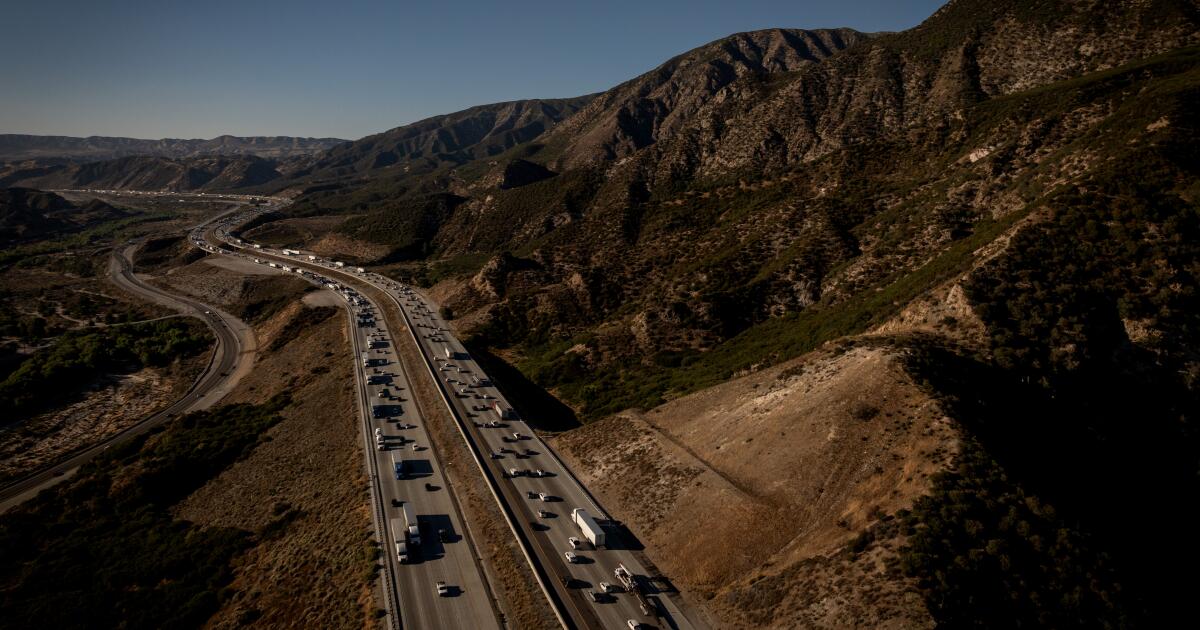
The San Andreas fault has gone ominously silent. Scientists fear when it finally snaps
-

 Colorado19 minutes ago
Three-quarters of Coloradans are worried they can’t afford to live here, poll finds
-

 Connecticut25 minutes ago
Love Food Names the Best Place for Ramen in Connecticut
-

 Delaware31 minutes ago
Family of Kadir Skinner to sue Wilmington over police killing
-

 Florida37 minutes ago
Florida TODAY: Homes get expensive, license to blush, fuzzy invader
-

 Georgia43 minutes ago
Georgia Youth Symphony Orchestra Announces Expanded Artistic Leadership Team for 2026–2027 Season

