Connect with us

West

High-profile Dem jumps into crowded California governor’s race amid past office controversies

Published

on

High-profile Dem jumps into crowded California governor’s race amid past office controversies
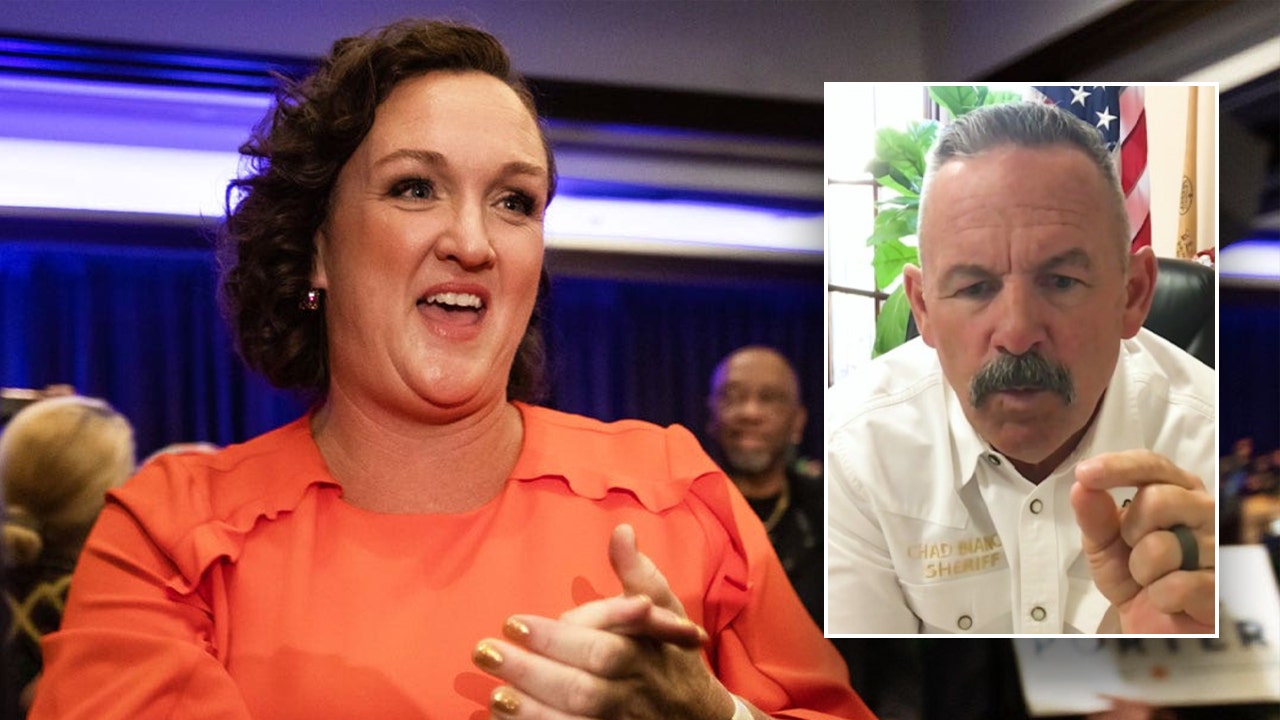
Democratic former Rep. Katie Porter, who was well-known for her colorful – and at-times – controversial congressional career, announced her bid for governor Tuesday via an Instagram video, saying California needs “a little bit of hope and a whole lot of grit, fresh blood and new ideas, [and] leaders with the backbone to fight for what’s right.”

Porter, 51, served three terms in Congress – winning her Orange County seat by upsetting GOP Rep. Mimi Walters in 2018. She ran unsuccessfully for the Senate seat now held by Sen. Adam Schiff, D–Calif., and her district is now represented by Dave Min, a Democrat. 

The former congresswoman was born in Fort Dodge, Iowa, and grew up on a farm before moving to the Pacific coast.

The Los Angeles Times described Porter as a prolific fundraiser, while the former lawmaker’s gregarious nature was projected to make inroads among Californians upset at President Donald Trump’s election.

PORTER DENIES FIRING STAFFER FOR CATCHING COVID-19 AS TEXT MESSAGES SURFACE AND GO VIRAL

Advertisement

Katie Porter and Adam Schiff participate in a senatorial debate. (Getty)

In her announcement, Porter referenced Trump and alleged he would seek to enrich himself and his circle while in the White House.

California has a unique “jungle primary” system where the two top vote-getters, regardless of party, will face off in the general. Sometimes that results in two Democrats competing in November. In Schiff’s case, former MLB star Steve Garvey gained enough Republican support to challenge the Burbank Democrat – only to strike out in the end.

Porter’s entry also brings with it her colorful history in the House of Representatives. 

Sasha Georgiades, a Wounded Warrior fellow who had worked in Porter’s office, alleged she had made rude and racist comments to staff and “ridiculed people for reporting sexual harassment.”

Advertisement

Georgiades also said Porter ridiculed people after they had reported sexual harassment in her office as well as “made fun of individuals whose parents passed away from COVID.”

“Basically told the individual to grow up,” Georgiades said regarding the case of a staffer who had reported sexual harassment in Porter’s office.

KATIE PORTER USED ‘RACIST LANGUAGE’, RIDICULED PEOPLE FOR REPORTING SEXUAL HARASSMENT, EX-STAFFER CLAIMS

Reports also surfaced in late 2022 that Porter “made multiple staffers cry” and that one staffer was allegedly fired after she and the lawmaker caught COVID-19. 

“Sasha – I cannot allow you back in the office, given your failure to follow office policies,” Porter wrote the next day on July 9, in texts shared on a “Dear White Staffers” X page and previously reported by Fox News Digital. 

Advertisement

“Cody will be in touch about having your personal effects shipped or delivered to your home, and will lay out your remote work schedule and responsibilities for your last few weeks.”

Porter reportedly denied the allegations at the time.

Porter also wore a “Batgirl” costume to the House of Representatives while lawmakers were voting on Trump’s first impeachment on Oct. 31, 2019 – Halloween.

Gov. Gavin Newsom is term-limited, though all eyes in California are on whether former Vice President Kamala Harris also jumps into the race.

Porter told the Times that a Harris bid could clear the left flank of those assembled thus far.

Advertisement

“If Vice President Harris were to choose to run, I am certain that that would have a near field-clearing effect on the Democratic side,” Porter said.

Harris is said to be seriously considering a run in Sacramento after losing the 2024 presidential election. A source close to Harris previously told Fox News Digital the ex-veep has told allies she will decide by the end of summer on whether to launch a gubernatorial campaign.

Other top names include Lt. Gov. Eleni Kounalakis, former Los Angeles Mayor Antonio Villaraigosa on the Democratic side and Riverside County Sheriff Chad Bianco as the first major Republican –  amid a dozen or so candidates total.

When reached for comment, the Porter campaign directed Fox News Digital to its previous statements on the matter.

Advertisement

Fox News Digital’s Paul Steinhauser contributed to this report.


Read the full article from Here

Continue Reading
Click to comment

Leave a Reply

Your email address will not be published. Required fields are marked *

This site uses Akismet to reduce spam. Learn how your comment data is processed.

Hawaii

I flew to the ‘least touristy’ island in Hawaii on a 9-passenger plane. I’d only suggest this trip to certain travelers.

Published

on

I flew to the ‘least touristy’ island in Hawaii on a 9-passenger plane. I’d only suggest this trip to certain travelers.


Often described as Hawaii’s “least touristy” island, Molokai hosted around 30,000 visitors in 2024, a minuscule percentage of the millions of tourists who came to our state.

Home to about 7,400 residents, much of the island’s land remains dedicated to agriculture, cultural preservation, and rural areas.

The island has no big-box resorts, not much nightlife, no permanent traffic lights, and limited visitor infrastructure. The tight-knit community has historically resisted large-scale tourism to protect its slower pace of life.

Until 2016, travelers could reach Molokai by ferry from my hometown of Lahaina, but the service was discontinued due to competition from commuter air travel and declining ridership, Maui News reported.

Advertisement

Today, small commuter planes are the only way to access the island.

I paid $190 for my round-trip ticket from Maui, and the turbulent 20-minute flight quickly made it clear to me why this trip isn’t for everyone.


Source link

Advertisement
Continue Reading

Idaho

Local legislator who led trip to D.C. says Idaho’s water supply is priority for our congressional delegates – East Idaho News

Published

on

Local legislator who led trip to D.C. says Idaho’s water supply is priority for our congressional delegates – East Idaho News


IDAHO FALLS – State Sen. Kevin Cook recently led a trip to Washington, D.C., to meet with Idaho’s congressional delegates about water storage projects.

Cook, who represents District 32 in the Idaho Falls area, was one of seven legislators on the trip last month, along with dozens of groundwater and surface water users across the state.

Since June, Cook has been gathering signatures for a petition showing support for water storage projects. During the 2025 Legislative Session, he and Rep. Rod Furniss, R-Rigby, sponsored a non-binding resolution that was adopted in both chambers. Senate Joint Memorial 101 calls on federal and state agencies to study and develop new water storage projects.

The resolution lists six different potential water storage sites that “could be built safely and economically and … provide significant long-term benefits to the State of Idaho.”

Advertisement

RELATED | Local legislator asking you to sign petition in support of water storage projects in Idaho

Cook accompanied legislators on a trip to the nation’s capital earlier this year to bring it to their attention and get some momentum going. Although they expressed support for his resolution, Cook says they doubted voters would approve of it and told him to “make some more noise” before they did anything about it.

The November trip to Washington was a follow-up to the previous visit. Through his petition, he acquired tens of thousands of signatures and brought a slough of people with him to show Idaho’s Congressmen the results.

Cook tells EastIdahoNews.com the trip “went great” and was a positive experience.

“I don’t know if I could’ve asked for or expected better results,” Cook says. “We thought we’d be lucky to get 10 or 15 minutes with them. They gave us between 30 and 45 minutes. They were very engaged and asked questions.”

Advertisement

Sen. Kevin Cook, fourth from left, with U.S. Rep. Russ Fulcher and six other local legislators in Washington, D.C. | Courtesy Kevin Cook

Water storage projects have become a key focus of Cook’s platform over the last year. He says water is one of three issues that are critical to Idaho’s future. (He says the other two are artificial intelligence and nuclear power.)

RELATED | Local legislator proposing bill that creates framework for education about future of AI

Despite the productive conversation with federal delegates, Cook says he isn’t expecting quick results and there’s still a lot of work to do before Congress gets involved in funding a water storage project.

“On some of this stuff, they said, ‘Don’t be afraid to break this up into little pieces,’” Cook says. “People east of the Mississippi don’t understand our need for water. They’ve got all the water they can stand and then some. They suggested we try to form a Western States Coalition to (educate people) about it. We thought that was a great idea.”

Advertisement

He’s hoping to see a major water storage project get underway in the next decade. Beyond that, he’s looking into the distant future for many of these proposals to come to fruition.

Cook’s goal is to have 750,000 acre-feet of water storage by 2100.

Josh Foster, the business manager for Vista Valley Ag, which farms more than 5,000 acres in Bonneville County, was among those who accompanied Cook to D.C. He’s also a director for the Burgess Canal and Irrigation Company in Rigby and a member of the Idaho Farm Bureau Federation’s water committee.

Foster says Cook’s longterm goal is a lofty one, but he agrees that more water is needed and it needs to be managed better.

“Where we haven’t been building dams for 50 years, there’s got to be a lot of federal changes in order for that to happen,” Foster says. “I’m hopeful that it can happen with state and federal partnership.”

Advertisement

Legislators and farmers pose for a photo inside U.S. Senator Jim Risch's office in Washinton, D.C. | Courtesy Kevin Cook
Legislators and farmers, including Josh Foster, and his wife, Georgia, left, pose for a photo inside U.S. Senator Jim Risch’s office in Washinton, D.C. | Courtesy Kevin Cook

Storing water in eastern Idaho

One of the proposals for a potential water storage project in Cook’s resolution is to rebuild the Teton Dam.

“It’s kind of a lightning rod. You bring up the Teton Dam, and people want to talk,” Cook says.

The U.S. Bureau of Reclamation originally built the dam in 1976. It collapsed as the reservoir was being filled for the first time, leading to the historic Teton Dam Flood disaster.

After the disaster, the topic of rebuilding the dam was discussed. It’s unclear why it never happened.

Today, Cook says many people are supportive of its reconstruction. Cook brought letters of support to D.C. from county commissioners and mayors throughout the Snake River Plain who support rebuilding the Teton Dam. Cook says Rexburg Mayor Jerry Merrill and Sugar City Mayor Steve Adams, whose hometowns were in the direct path of the dam, are pushing for it.

Advertisement

“I’ve talked to several engineers that have their fingerprints all over dams in Idaho, and every one of them say we can rebuild it safely,” says Cook. “But we need to do a study. We have 50 years of new technology that can tell us whether or not we should build it.”

Foster says rebuilding the Teton Dam is the most exciting of all the proposals and would have the most impact.

“It passed so much federal regulation to get certified,” says Foster. “We’re closer (to getting a water storage project) with the Teton Dam than anywhere else because we don’t have to start at the ground level with the federal government.”

Foster also notes it would store about 350,000 acre-feet of water — the most capacity of any other project.

“That gets us halfway to our goal right there,” he says.

Advertisement

An aerial picture of the Teton Dam in 2016. It collapsed in 1976, causing a massive flood in eastern Idaho. It's one of six sites identified in a joint resolution as a potential water storage project in Idaho. | EastIdahoNews.com file photo
An aerial picture of the Teton Dam in 2016. It collapsed in 1976, causing a massive flood in eastern Idaho. It’s one of six sites identified in a joint resolution as a potential water storage project in Idaho. | EastIdahoNews.com file photo

Cook made a similar point during a presentation with water stakeholders in August. He cited data that shows rebuilding the Teton Dam is also the most cost-effective option, compared to other projects.

RELATED | Local legislator focused on longterm water storage projects to complement recharge efforts and secure Idaho’s future

Another possible project is expanding the Ririe Dam. The dam, which is managed by the Bureau of Reclamation, sits along Willow Creek about 15 miles northeast of Idaho Falls and about four miles southeast of Ririe. It was built to mitigate flood waters into Idaho Falls.

Throughout its history, Cook says it’s never been used for irrigation and he wants that to change.

“Every fall, we basically empty it instead of holding back water for irrigation,” says Cook. “We’ve asked (our congressional delegates) to support (using it for that purpose).”

Advertisement

This idea was the focus of a board meeting for the Ririe Reservoir on Thursday morning. Foster attended and said they were in phase two of a study to mitigate additional winter water storage for irrigation purposes.

Foster lives in Ririe near the dam, and he’s intrigued with the idea.

“We’re groundwater pumpers on the Ririe bench. We’ve never even touched that water, other than to go boating,” Foster says. “New water rights would have to be created (because it’s never been used for irrigation).”

While Cook is excited about these local projects, he says he’s focused on the entire state and any water storage project is a win for Idaho.

“We’re looking at the whole state of Idaho,” Cook says. “We’re excited about where we’re going.”

Advertisement

Ririe Dam | US Bureau of Reclamation
Ririe Dam | U.S. Bureau of Reclamation

Supporting Idaho’s water future

Since the D.C. trip, Cook says the U.S. Bureau of Reclamation has approved a recommendation from the Idaho Water Resource Board to do a study on surface water storage throughout the Snake River Plain.

Over the next two years, Cook says the bureau will study the entire Snake River Plain from the Milner Dam near Burley all the way to Ashton. It will be the largest study the bureau has ever conducted in Idaho and will help identify viable locations for potential water storage projects.

Once the study is complete, it will report its findings to the IWRB to prioritize future projects.

Cook is planning to introduce legislation in the upcoming session to help advance water conservation on the state and federal level. He appreciates the time, support and feedback from Idaho’s congressional delegates.

“Every person on the trip and every politician that we met with has Idaho water as their top priority,” Foster says. “What they uniformly said was, ‘We are in. Direct us on how to help you in D.C. while you guys are back in Idaho.’ That was exciting for all of us to hear.”

Advertisement

Local legislators and others pose for a photo in U.S. Senator Mike Crapo's office in Washington, D.C. | Courtesy Kevin Cook
Local legislators and others pose for a photo in U.S. Senator Mike Crapo’s office in Washington, D.C. | Courtesy Kevin Cook

Sen. Kevin Cook and his wife, Cheri, with the rest of the group who accompanied him to Washington, D.C. | Courtesy Kevin Cook
Sen. Kevin Cook and his wife, Cheri, front center, with the rest of the group who accompanied him to Washington, D.C. | Courtesy Kevin Cook

=htmlentities(get_the_title())?>%0D%0A%0D%0A=get_permalink()?>%0D%0A%0D%0A=htmlentities(‘For more stories like this one, be sure to visit https://www.eastidahonews.com/ for all of the latest news, community events and more.’)?>&subject=Check%20out%20this%20story%20from%20EastIdahoNews” class=”fa-stack jDialog”>


Source link

Continue Reading

Montana

Montana delegation backs bill to release wilderness study areas

Published

on

Montana delegation backs bill to release wilderness study areas


Laura Lundquist

(Missoula Current) Most of Montana’s Congressional delegation is once again sponsoring a bill to remove three study areas from consideration as designated wilderness.

On Wednesday, Senators Steve Daines and Tim Sheehy and Rep. Troy Downing reintroduced Daines’ “Montana Sportsmen Conservation Act,” which would remove three wilderness study areas from wilderness consideration, releasing them to be managed as regular federal land. Rep. Ryan Zinke was not listed as a sponsor.

Two areas – the 11,580-acre Wales Creek and the 11,380-acre Hoodoo wilderness study areas managed by the U.S. Bureau of Land Management – are 40 to 50 miles east of Missoula in the Garnet Range north of Interstate 90. The third area, the much larger Middle Fork Judith wilderness study area, is around 81,000 acres managed by the U.S. Forest Service in the Little Belt Mountains southeast of Great Falls.

Advertisement

Daines previously introduced the Montana Sportsmen Conservation Act in 2023, but it was never heard in committee. Now, he’s bringing it forward again, and he explained his strangely titled bill in a press release Wednesday.

“As a lifelong sportsman, increasing access to Montana’s great outdoors is one of my top priorities. The ‘Montana Sportsmen Conservation Act’ promotes our outdoor way of life by returning restrictive WSA’s to general public land management, which will improve wildlife habitat restoration, reduce the risk of catastrophic wildfires, and unlock better access to public land,” Daines said in the release.

It should be noted that neither hunting nor fishing are prohibited in wilderness study areas. In the past, sportsmen’s organizations have opposed the wholesale elimination of wilderness study areas. However, some have indicated they are considering the Wales Creek and Hoodoo areas could serve as political sacrifices to save other areas.

The wildfire risk in the Hoodoo area was significantly reduced this summer after the Windy Rock Fire burned a majority of the area.

Daines first proposed a similar bill – the Protect Public Use of Public Lands Act – in 2018 to release five Forest Service wilderness study areas, including the Middle Fork Judith. Former Rep. Greg Gianforte joined him but increased the number of wilderness study areas on the chopping block to 29, including those under BLM management. Both politicians had based their legislation off feedback from a select group of conservative counties and user groups, including the Montana Stockgrowers Association and the Montana Snowmobile Association. Other organizations protested the bills and the lack of transparency during the process.

Advertisement

This most recent bill is supported by the Montana Logging Association, Montana Snowmobiles Association, Montana Outfitters and Guides Association, Montana Farm Bureau Federation, Great Falls Bicycle Club and the Judith Basin and Powell county commissioners.

In 1976, the BLM established 38 wilderness study areas in Montana, including the Wales Creek and Hoodoo areas. In 1977, the Montana Wilderness Study Act set nine Forest Service study areas aside for wilderness consideration, including the Middle Fork Judith. Federal evaluations of the areas conducted during the 1980s concluded some areas, including the three being considered in the bill, weren’t suitable for wilderness designation.

This year’s bill cites the 2020 BLM Missoula Office Resource Management Plan as justification for eliminating the Wales Creek and Hoodoo wilderness study areas. The plan said the two areas were unsuitable for wilderness designation.

However, the plan was not developed during “a 5-year collaborative process,” as the bill claims, but under the direction of the first Trump administration, which ignored a lot of public comments made during scoping. The three resource management plans for Missoula, Lewistown and Miles City were scheduled to be released to the public in late 2018, but they were delayed when the three offices were required to send the drafts to Washington, D.C., for review and revision. When they were returned and published in May 2019, all three draft plans heavily emphasized natural resources extraction.

A Pew Charitable Trust review of six BLM resource management plans drafted in 2019 found all “would fail to conserve lands that the agency’s own research has deemed worthy of protection; cut decades-old safeguards; minimally protect a fraction of 1% of the areas found to contain wilderness characteristics; and open vast swaths of public lands to energy and mineral development.”

Advertisement

Several Montana conservation organizations protested the Montana plans, including Wild Montana and Backcountry Hunters and Anglers. When the draft plans were finalized in early 2020, some changes had been made to cater to sportsmen, but resource extraction still dominated. The Missoula Office’s new objective was to “produce the greatest quantities of forest products from vegetation restoration activities.”

The 2020 plans created a new designation – backcountry conservation area – that allows resource extraction but prioritizes the long-term maintenance of big game populations for hunting. The Missoula plan proposes to manage its three wilderness study areas as wilderness unless Congress releases them. Then, if Daines’ bill passes, portions of the wilderness study areas would become backcountry conservation areas: a 6,100-acre Hoodoos BCA and a 2,365-acre Wales BCA, according to the plan. The remainder of each area is open to any and all uses.

During the 2025 Legislature, the Senate Energy, Technology, and Federal Relations Committee voted 9-4 against a resolution calling on Congress to remove protection from Montana’s wilderness study areas. More than 3,300 Montanans signed a petition opposing the bill and supporting local solutions for study area management.

Some anticipate that more roads will invade wilderness study areas once they’re no longer protected. Zach Angstead, Wild Montana federal policy director, said Daines has countered those claims by saying the areas will still be protected under the Roadless Rule. But now, the Trump administration is on the verge of repealing the Roadless Rule, so that level of protection could disappear. And Daines strongly supports repeal of the Roadless Rule, according to a Dec. 5 email from a Daines spokesperson to the Flathead Beacon.

“Sen. Daines’ push to remove (wilderness study area) protections and roll back the Roadless Rule show that this isn’t about better local management – it’s about opening Montana’s public lands up to large-scale development to benefit corporations, not Montanans,” Angstead said in a statement. “Managing (wilderness study areas) properly requires local collaborative solutions developed by the people who know these places best. The people and the legislature have made it clear that Daines needs to give up this unpopular crusade to undermine and dismantle public lands and start taking his cues from real people who have been working to shape the future of (wilderness study areas).”

Advertisement

Contact reporter Laura Lundquist at lundquist@missoulacurrent.com.


Source link

Continue Reading
Advertisement

Trending
