Hawaii
Red Mass: ‘Negativity’ hampers efforts to solve Hawaii’s problems


Red Mass speaker: Eva Andrade
By Patrick Downes
Hawaii Catholic Herald
“Many pressing issues challenge our state,” Eva Andrade told Hawaii lawmakers and other public servants at the Red Mass celebrated by Bishop Larry Silva Jan. 16 at the Cathedral Basilica of Our Lady of Peace, however an unrelenting climate of “negativity” is smothering efforts working toward the common good.
Andrade, director of the Hawaii Catholic Conference, the public policy arm of the Diocese of Honolulu, was the featured speaker at the diocese’s annual prayer to the Holy Spirit for courage and wisdom for Hawaii’s public servants.
She praised the civic leaders for their commitment to making people’s lives better.
“Homelessness, a lack of living wages, high vacancies in our state government that cripple our ability to provide needed services, families leaving our islands to find affordable living elsewhere, a rise in suicides, recovery from the devasting fire in Lahaina,” are serious challenges facing Island leaders, she said, but making them worse is “a relentless stream of critics.”
“Negativity has grown to the point of crisis,” said Andrade, who is also president of Hawaii Family Forum. “Over the past several years, I have witnessed more, and more vicious, verbal attacks against people in leadership positions including the governor, our state legislators, police officers, military personnel, judges, church leaders and just about everyone else.”
She said that participation in the legislative process is a right that should be encouraged, however, “personal attacks via emails, phone calls, text messages and rallies have turned into harassment.”
“This verbal abuse must cease,” she said.
“This does not align with the spirit of the Aloha State,” she said. “We are all created in the image of God, deserving respect and consideration.”
“For all of us, courage becomes the trait that propels us to action. The outcome of our efforts, whether we ‘win’ or ‘lose’ an issue, pales in comparison to the transformative power that unfolds in the aftermath. It is in the post-battle moments that our character is truly shaped and defined. Building good moral character is how we can best shape politics in Hawaii,” Andrade said.
“We work together because we love Hawaii and its people. We all do what we do because we want to make a difference. Whether we are the governor, the bishop, or a stay-at-home mom, we matter. Our values matter. Our decisions matter. Our lives matter,” she said.
Andrade used St. Marianne of Molokai as an example of a successful collaboration between state and church in the service of Hawaii’s people.
“I gained a profound understanding of the compassionate spirit embodied by a woman from Syracuse who journeyed to Hawaii at the desperate request of King Kalakaua to care for his citizens afflicted by Hansen’s disease,” she said.
“When it came to serving the people of Hawaii, Mother Marianne seamlessly bridged the gap between church and state,” Andrade said. “She set a positive example of what can be achieved.”
The Mass began with a Hawaiian chant by Ikaika Maliikapu Bantolina. State senators Brandon Elefante and Mike Gabbard read the two readings.
In his homily, Bishop Silva thanked God “for all of you public officials who are here with us today to join in prayer and worship. You are hereby affirming what our ancestors knew very well must be the basis of all our common living, acknowledging before all that God is our maker.”
Clerics raise their hands in blessing over the public servants at the annual diocesan Red Mass Jan. 16 at the Cathedral Basilica of Our Lady of Peace. (HCH photo | Jennifer Rector)
Divine law as foundation
The bishop told the lawmakers that secular law should have divine law as its foundation.
“We can only thrive in liberty and justice when we conform ourselves with the inner law that God has placed in every human heart,” he said.
“How scary it is when others go their own way without any reference to the ultimate one, whose laws are our freedom,” the bishop said. “How blessed it is when we discern carefully so that the laws of our land will all correspond to the law of the God who made us, sustains us, and loves us always.”
The Mass, celebrated during the week of the opening of the state legislature, was sparsely attended this year, with only six priests and eight deacons, and about a third of the general public’s pews empty. Royal Hawaiian orders, who attend yearly, were well represented with about two dozen men and women dressed in black and wearing red and yellow capes and feather lei.

Members of royal Hawaiian societies attend the Diocese of Honolulu’s annual Red Mass, Jan. 16 at the Cathedral Basilica of Our Lady of Peace. (HCH photo | Jennifer Rector)
Also in attendance were members of the Equestrian Order of the Most Holy Sepulchre of Jerusalem and the Knights of Columbus.
The civic leaders who attended included Gov. Josh Green and Lt. Gov. Sylvia Luke; state representatives Henry Aquino, Lauren Matsumoto and David Tarnas; state senators Brandon Elefante and Mike Gabbard; and Honolulu city councilman Calvin Say.
Also present were Anton Krucky from the Department of Community Services, Office of Hawaiian Affairs trustee Keoni Souza, circuit court Judge Catherine Remigio and former state representative Marcus Oshiro.
Gov. Green, who was attending the Red Mass for the first time as governor, said he has been to the Red Mass “many times.”
“I try to come every year,” he told the Hawaii Catholic Herald. “I have just a lot of dear friends that are in the Christian Church, including my mother. And in spite of the fact that I’m Jewish it is very fortifying to kind of show that we’re together.”
“And for me, it helps guide me as I govern, because then I get people’s perspectives who I care about.”
At the end of the Mass, Bishop Silva invited the civic leaders to stand for a blessing from himself, the priests, deacons and Protestant ministers. With palms extended, he prayed that the Holy Spirit descend on them and give them the grace “to discharge your duties with honesty and ability.”



A statewide Flood Watch is in effect across Hawaii from Wednesday morning, April 8, through Friday afternoon, April 10, as a developing low-pressure system northwest of the islands, described by the National Weather Service (NWS) public guidance as a kona low, is forecast to bring prolonged heavy rainfall and elevated flood risk.
The NWS office in Honolulu reports that the system will draw deep tropical moisture northward across the state, creating conditions favorable for widespread showers and thunderstorms. Excessive rainfall may lead to flash flooding in urban areas, low-lying locations, and regions with poor drainage, while steep terrain remains susceptible to landslides.
All major islands, including Kauai, Oahu, Maui, Molokai, Lanai, Kahoolawe, and the Big Island, are included in the Flood Watch. Forecasters note that antecedent wet conditions from recent rainfall events have left soils saturated, increasing runoff efficiency and the likelihood of rapid stream rises under heavier rainfall rates.
Multiple kona low systems affected the islands between March 10 and March 22, producing extreme rainfall totals, including more than 330 mm (13 inches) in about 12 hours on Oʻahu’s North Shore and multi-day accumulations reaching approximately 1 170 mm (46 inches) on Maui.
The events triggered widespread flooding, landslides, evacuations, and infrastructure stress, including emergency warnings tied to Wahiawā Dam and power outages affecting more than 130 000 customers statewide.
Despite several days of drier trade wind conditions, soil moisture remains elevated, allowing new rainfall to convert more efficiently into surface runoff, increasing the likelihood of rapid stream rises and flash flooding under the current forecast system.
The heaviest rainfall associated with the new system is forecast to develop during the midweek period, with conditions deteriorating from Wednesday into Thursday as the low-pressure system strengthens west of the state. Forecast guidance indicates that the western islands may experience the initial phase of heavier rainfall before activity gradually shifts eastward later in the event.
In addition to heavy rain, the system is expected to generate strong southerly winds, with gusts of 64–80 km/h (40–50 mph) possible across many areas and locally stronger gusts exceeding 93 km/h (58 mph) in exposed locations or near convective activity. A Wind Advisory may be issued as conditions develop.
Winter weather conditions are also possible at higher elevations on the Big Island, resulting in a Winter Storm Watch in effect for summits above 3 810 m (12 500 feet), where a combination of snow and freezing rain is forecast during the same period.
Heavy rainfall is likely to persist into Thursday and Friday, with the flash-flood threat remaining elevated into the weekend, but periods of heavy rain may continue beyond the initial peak as moisture remains in place around the system.
The setup reflects a kona low pattern, characterized by a low-pressure system northwest of the islands producing southerly flow and transporting deep tropical moisture into the region over multiple days.
References:
1 Area Forecast Discussion for Hawaii – NWS Honolulu – April 7, 2026
2 Flood Watch – NWS Honolulu – April 7, 2026

HONOLULU (HawaiiNewsNow) – Oahu residents aren’t taking any chances with emergency preparedness ahead of the latest round of severe weather.
City Mill has been working to keep shelves stocked with supplies.
“We’ve been selling a lot of sand and sandbags. We have a product called Quick Dam, and we have sold out at a couple stores. We’re trying to move them around so that everybody has something,” City Mill Merchant Iris Wilhelm-Norseth said.
Tape, batteries and flashlights have also been moving quickly among customers, along with pumps and rain boots.
City Mill and other officials are stressing emergency preparedness as recent storms have shown flooding can happen anywhere at any time.
“The little flash flood in Manoa kind of flipped people out too. That came out of nowhere. So people are very concerned,” she added.
Hawaiian Electric said it is also ready, following emergency preparedness procedures to ensure communities aren’t left without power for prolonged periods.
“It doesn’t take a named storm to really cause significant damage to the public infrastructure, whether it’s roads or other types of infrastructure, or the electrical, grid. We know that these heavy rains and very strong winds can have significant impacts,” HECO spokesperson Darren Pai said.
If the Public Safety Power Shutoff program is implemented, the utility said it would be a coordinated decision with emergency responders in the interest of keeping communities safe.
The Board of Water Supply is also asking customers to store water in case service is interrupted for an extended time.
And for storm supplies that don’t get put to use this time around, officials say not to toss them too quickly.
“This is also a great opportunity for people if they don’t use it to hold on to it because we are going into hurricane season starting in May again,” Wilhelm-Norseth added.
Copyright 2026 Hawaii News Now. All rights reserved.

Anyone who’s grown up in the Islands has either given, received or marveled at a piece of Hawaiian heirloom jewelry, the highly ornate, hand-engraved bracelets and pendants emblazoned with Hawaiian names or initials in an Old English-style font.
But where did this jewelry and its unique style come from?
Turns out the first Hawaiian bracelet was made in 1862 for the young Lydia Park, who later became Queen Liliʻuokalani, the last sovereign monarch of the Hawaiian Kingdom. The bracelet, which is now at ʻIolani Palace on Oʻahu, is inscribed with the words, “Hoomanao Mau,” which translates to “a lasting remembrance.” It was handcrafted by Honolulu-based jeweler Christian Eckart and emulated English Victorian designs popular at the time.
Photo: Aaron K. Yoshino
Since then, the Hawaiian bracelet has evolved to include tropical flower designs, raised lettering and scalloped edges. Today—more than a century and a half later—Hawaiian heirloom jewelry is still a symbol of love and friendship.
This story was originally published in our SPRING 2023 Issue. Buy a copy here. Better yet, subscribe and get HAWAIʻI Magazine delivered to right to your mailbox.
Catherine Toth Fox is the former editor of HAWAIʻI Magazine and continues to contribute to the website and print publication.

Flood Watch issued across Hawaii as kona low system brings risk of heavy rain and flood
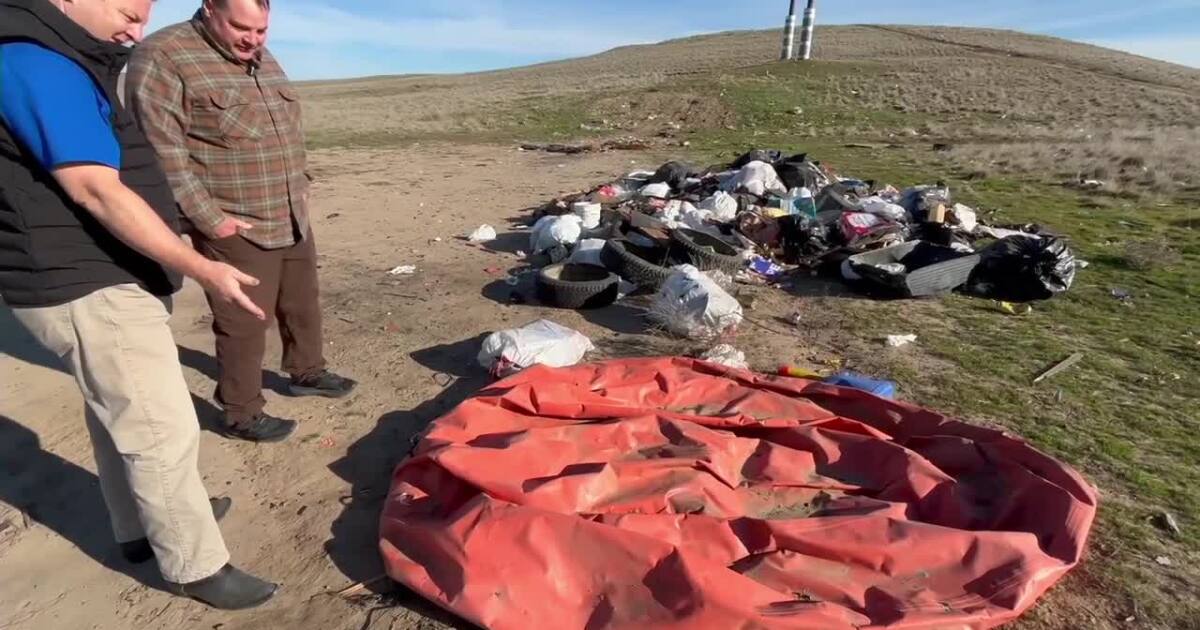
Volunteer organizes massive cleanup effort to remove huge piles of garbage from the Idaho high desert

Kinston woman arrested in months-long fraud investigation in Illinois

Galveston Town Marshal placed on administrative leave

Inside Iowa Politics: Candidate Jim Carlin doesn’t want American troops on the ground in Iran

Florida High School Football Rankings: Top 25 teams – Oct. 21

How old is Bo Nix? What to know about Oregon quarterback ahead of 2024 NFL Draft

Cleary's 21 help Le Moyne down Central Connecticut State 69-64 in OT

99th annual Pony Swim held in Virginia

Indiana Members Credit Union announced as new anchor tenant at Bottleworks District

Ilhan Omar calls Trump an ‘unhinged lunatic,’ urges booting him out of office
Between Budapest and Brussels: Péter Magyar’s political tightrope

Michigan muscles its way to program’s 2nd NCAA basketball title, beating UConn

Map: Minor Earthquake Strikes Near San Diego

Trump claims he’d win as the president of Venezuela — just needs to ‘quickly’ learn Spanish
-

 Atlanta, GA2 days ago
1 teenage girl killed, another injured in shooting at Piedmont Park, police say
-

 South-Carolina1 week ago
South Carolina vs TCU predictions for Elite Eight game in March Madness
-

 Movie Reviews5 days ago
Vaazha 2 first half review: Hashir anchors a lively, chaos-filled teen tale
-

 Vermont1 week ago
Skier dies after fall at Sugarbush Resort
-

 Politics1 week ago
Trump’s Ballroom Design Has Barely Been Scrutinized
-

 Politics1 week ago
JD Vance says he was ‘obsessed’ with UFOs, believes aliens are actually ‘demons’
-

 Politics1 week ago
Jeffries declines to break with indicted Democrat after ethics panel’s guilty verdict
-
 Entertainment5 days ago
Inside Ye’s first comeback show at SoFi Stadium