Lifestyle
For David Byrne, Talking Heads was about making emotional sense — not literal sense


TERRY GROSS, HOST:
This is FRESH AIR. I’m Terry Gross. Today we’re featuring the interview I recorded with David Byrne last fall.
(SOUNDBITE OF ARCHIVED NPR BROADCAST)
GROSS: He’s a founding member of the band Talking Heads, one of the seminal bands of the punk-new wave period of the ’70s. They weren’t exactly punk, but they weren’t like any band that came before them. They recorded eight albums between 1977 and 1988, when they stopped playing together. When we spoke last fall, the 40th anniversary restored edition of their concert film “Stop Making Sense” had just been released with a remastered soundtrack. Many music critics and fans consider it among the best concert films ever made.
DAVID BYRNE: It is a long way to go. Who would have thought?
GROSS: So who would have thought? David Byrne, welcome to FRESH AIR. Welcome back.
BYRNE: Thank you. Good to be back.
GROSS: Great to have you on the show.
BYRNE: It’s been a really long time.
GROSS: Yes. So let’s start with “Psycho Killer,” the first song Talking Heads wrote, which is on their first album, “Talking Heads: 77.” And it also starts off “Stop Making Sense.” So you walk on stage with a boom box. You put down the boom box. It plays the rhythm track. You play along on your guitar and start singing.
(SOUNDBITE OF FILM, “STOP MAKING SENSE”)
BYRNE: (Singing) Can’t seem to face up to the facts. I’m tense and nervous, can’t relax. Can’t sleep, bed’s on fire. Don’t touch me. I’m a real live wire. Psycho killer, qu’est-ce que c’est? Fa-fa-fa-fa-fa-fa-fa-fa-fa-fa (ph), better run, run, run run, run away. (Vocalizing).
GROSS: So, David Byrne, “Psycho Killer” was the first song that you wrote with drummer Chris Frantz and bass player Tina Weymouth. What was the germ of the idea? Was it your idea to write a song about a serial killer? Do you think of him as a serial killer or just a kind of really bad date?
BYRNE: Yes. Well, I don’t know if he’s a serial killer. But, yes, somebody who’s kind of deranged and is a killer. And it was an experiment to see if I could write a song. Chris and I had a band, and we played, you know, other people’s songs at school dances and things like that. And I thought, oh, let me see if I can write a song. I tried years ago when I was in high school and failed miserably. I said, let me try again. So I thought I would try and write something that was maybe a cross between Alice Cooper and Randy Newman.
GROSS: Were you fans of each of them?
BYRNE: Oh, yeah.
GROSS: ‘Cause they’re kind of on opposite extremes.
BYRNE: Kind of on opposite extremes. So I thought I’d have the dramatic subject that Alice Cooper might use but then look at an interior monologue the way Randy Newman might do it. And so I thought, let’s see if we can get inside this guy’s head. So we’re not going to talk about the violence or anything like that. But we’ll just get inside this guy’s kind of muddled up, slightly twisted thoughts. I imagine that he would imagine himself as very erudite and sophisticated. And so he would speak sometimes in French. And so I went…
GROSS: Oh, so that’s why.
BYRNE: I went to Tina, who had grown up some of the time in Brittany, and her mother’s French. I said, oh, can you help me? We want him to say something pretty grand here – better say it in French so that – as if he’s going to tell us what kind of ambitions and how he sees himself. So…
GROSS: What does he say in French? I don’t – I’ve never – it’s like…
BYRNE: Oh. It’s like, I realized my destiny. It’s very kind of old-fashioned. I think Tina said, this is very Napoleonic kind of French. It’s very kind of, I realize my destiny. I must do what I must do – things like that.
GROSS: I love that song so much. Now, you also sing the fa-fa-fa in there.
BYRNE: Oh, yeah. That was a little reference to Otis Redding.
GROSS: Otis Redding.
BYRNE: Yeah.
GROSS: OK. I was wondering about that.
BYRNE: Yes, absolutely it was.
GROSS: …’Cause he had – “Sad Song” has – it’s also called the “Fa-Fa-Fa.”
BYRNE: Yes. So that was a little…
GROSS: It’s a parentheses song.
BYRNE: Yeah, a little parentheses, a little thing where I reference an Otis Redding song in there. I’m not sure exactly why.
GROSS: You do the deranged version of it.
BYRNE: (Laughter) Yes. But, you know, well, that’s the subject. That’s the voice of the guy who’s singing.
GROSS: Yes, no, exactly – a character song like Randy Newman.
BYRNE: Yes. So – but that was – to me, that song was unique in everything that we did in that once we did it and we started playing it around the schools in Providence, people liked it. They said, we want to hear you play that song. And I realized, Oh, OK, now I realize I can write a song. So now let me write some that are a little more what I want to say and how I want to say it. Now to experiment with the song format and the way the songs are constructed. So, yeah, that song to me seemed like a unique early experiment.
GROSS: So Talking Heads started by stripping everything away and then later adding things in. So I’m going to quote you from your book “How Music Works” in terms of what you stripped away. You wrote you wanted no rock moves or poses, no pomp or drama, no rock hair, no rock lights, no rehearsed stage patter, definitely no noodling guitar solos. So why did you want to remove all of that? And is there anything you left out in that sentence that you wanted to remove?
BYRNE: I think that covered a lot of it right there.
GROSS: OK.
BYRNE: The idea was I was aware that other contemporary acts, people around us – some of them were adopting poses or clothes or guitar styles or whatever that seemed to be from a previous era, from a previous generation. And I thought to myself, well, those were invented or created by other people, and they belong to them, and they express something about their generation. But how do I do something that belongs to us, that speaks to our generation, that speaks to our concerns? And I thought, well, then I have to jettison everything that went before and be very careful not to adopt any of that stuff.
GROSS: But then you started adding things in, and it wasn’t the things that you wanted to take out. But it was things like, you know, more – an expanded rhythm section, a more theatrical presentation, as we see in “Stop Making Sense.” And what you’re doing on stage during that concert in “Stop Making Sense” is – for a lot of the film, you’re basically jogging in place very rhythmically and very energetically. And I don’t know how you managed to do that and sing at the same time. Then the backup singers end up doing that, too. So, like, you’re not doing fancy dance moves, but it’s so kinetic, and your – I don’t know. Your body – even when you’re not doing the jogging thing, your body just seems to be pulsing with the rhythm. Like, your chest is pulsing. Your head is pulsing. So that’s the choreography for you.
BYRNE: Yeah. I mean, there’s other things that are a little more elaborate, but, yes, a lot of it is really kind of just moving with the rhythm of the songs. When we expanded the lineup – the performing lineup and added more musicians, our recent records became more kind of rhythmically oriented, although we were always very kind of a rhythmic band.
GROSS: It was maybe more of a twitchy rhythm, but it was rhythm.
BYRNE: Yeah. It was more twitchy, and then now it became more funky and more sensuous in a way. And I thought, oh, this makes me want to move in a different way. And I can’t stop. I can’t resist moving.
GROSS: So I just want to ask you about the big suit that you wear for a little bit of the performance in “Stop Making Sense.” And in the credits, it says the suit was built by. It doesn’t say costume designer or designed by. It says built by as if it were, like, architecture.
BYRNE: That’s true. It is. And it’s also true that I didn’t go to someone and say, I just want a big suit. I had a little drawing of what I wanted the end product to look like – very sketchy. It was just a little line drawing. Now – but it was basically a rectangle with feet sticking out the bottom and a little tiny head on top. And so I went to a kind of small clothing manufacturer designer in downtown New York, Gale Blacker, and I said, how can we do this? I want to kind of – I’m influenced by kind of Japanese theater, the noh costume where it’s wide. It’s rectangular, but when you turn sideways, it’s not fat. So it’s not really a fat suit. It’s…
GROSS: More like a box.
BYRNE: It’s more like a box, a flat box that’s facing the audience. And it’s meant to face forwards. So we had to realize I had to wear a kind of girdle underneath and put the pants on. The pants attached to this padded girdle thing. And so the pants kind of just hung down. They barely touched my legs and same with the jacket. The jacket had a big shoulder armature, and the jacket just kind of hung down from that and barely touched my chest.
GROSS: The suit has become iconic, but what was it like to inhabit it? How did it change you as a performer onstage?
BYRNE: When I started wearing the big suit, I realized that it had a life of its own because it kind of just draped down like curtains from my hips and shoulders. I could wiggle a little bit, and it would ripple like curtains or sheets or whatever. So you could do all these things with it. If I wiggled side to side, it would kind of shimmy around. I could do all these things with it that I couldn’t do just by myself. It had its own properties that you could kind of activate that way. I thought it was kind of odd, kind of slightly surreal. It meant something. I don’t – wasn’t sure what it meant. And…
GROSS: I didn’t matter. It sure made an impression.
BYRNE: Yeah. Yes. People have interpreted it as meaning, like, oh, this is the archetypical businessman kind of imprisoned in his suit, imprisoned in his whole situation.
GROSS: That’s not what it was.
BYRNE: Well, it might have been. That might be unintentional, but it might be there, but I don’t deny it. But it wasn’t my intention to kind of – oh, I want to kind of make fun of businessmen.
GROSS: Right. My guest is David Byrne. The restored version of the Talking Heads concert film “Stop Making Sense” is streaming. We’ll be right back. This is FRESH AIR.
(SOUNDBITE OF TALKING HEADS SONG, “THE BIG COUNTRY”)
GROSS: This is FRESH AIR. Let’s get back to my interview with David Byrne, a founding member of the band Talking Heads. A restored and remastered 40th anniversary edition of the band’s concert film, “Stop Making Sense,” is streaming. After Talking Heads, Byrne went on to start his own record label, collaborate on experimental theater pieces, win an Oscar and be nominated for another and create Broadway shows, including “American Utopia” and “Here Lies Love.”
GROSS: So let’s hear another song from the film, “Stop Making Sense.” And I want to play “Burning Down The House,” which is one of your best-known songs. And it holds up so well so many years later. So now it’s sometimes interpreted about being about global warming, climate change, you know, burning down the house, fight fire with fire. What were you really thinking of when you wrote it?
BYRNE: The phrase burning down the house I’d heard being used as a chant at a Parliament Funkadelic concert that I’d seen. They didn’t have it in a song. It was just a kind of chant that they started chanting, and the audience joined in. It meant, like, we’re going to blow the roof off the sucker. We’re going to set this place on fire. It’s going to be – you know, we’re going to have a really amazing time here. Yeah. It didn’t mean literally, let’s set fire to our houses, or anything else.
GROSS: Or the world is burning.
BYRNE: Yes.
GROSS: Yeah.
BYRNE: And the rest of it – I thought, let me see if I can make a song that is basically a lot of non sequiturs that have a kind of – some kind of emotional impact. They have some kind of emotional resonance, but literally they don’t make any sense.
GROSS: I’m so glad you said that because, you know, I’ve never understood exactly, what is this song about?
BYRNE: (Laughter).
GROSS: I love it, and I love the individual lines. But, yeah, I can never find, like, what is the narrative here?
BYRNE: Yes. So, like the film title, it doesn’t make literal sense, but it makes emotional sense.
GROSS: Sure, yes, and rhythmic sense.
BYRNE: Yes.
GROSS: Yeah. All right. Let’s hear it. This is the version from the concert film “Stop Making Sense.”
(SOUNDBITE OF DOCUMENTARY, “STOP MAKING SENSE”)
TALKING HEADS: (Singing) Watch out. You might get what you’re after. Cool babies – strange but not a stranger. I’m an ordinary guy burning down the house. Hold tight. Wait till the party’s over. Hold tight. We’re in for nasty weather. There has got to be a way – burning down the house. Here’s your ticket. Pack your bags. Time for jumping overboard. Transportation is here. Close enough but not too far – maybe you know where you are. Fighting fire with fire. All wet – hey; you might need a raincoat. Shakedown – dreams walking in broad daylight. Three hundred sixty-five degrees – burning down the house. It was once upon a place. Sometimes I listen to myself, going to come in first place. People on their way to work said, baby, what did you expect? Going to burst into flames – go ahead.
GROSS: That’s Talking Heads from the 40th anniversary restored edition of “Stop Making Sense,” the Talking Heads concert film. So I’m going to quote you again from – this is from your book “How Music Works.” And you’re talking about dancing, and you say, (reading) a nerdy, white guy trying to be smooth and Black is a terrible thing to behold.
(LAUGHTER)
GROSS: (Reading) I let my body discover little by little its own grammar of movement, often jerky, spastic and strangely formal.
How did you come up with who you were onstage moving in space and not doing, you know, either, like, Temptations moves or hip-hop moves?
BYRNE: Wow. Yes. I had to resist kind of adopting moves that I loved that I’d seen other people do. And so I think – yeah. By that time, I’d worked with Twyla Tharp. She did a evening-length dance piece called “The Catherine Wheel.”
GROSS: Yeah, and I’m going to interrupt you right there for a second because one of the things you do in addition to jogging in place is you kind of stagger or stumble around stage – around the stage very intentionally. You know, and it looks like you’re almost going to fall, but you don’t. And I thought, like, that is so Twyla Tharp because she – her choreography is, like, normal movements elevated to dance. And, like, stumbling, staggering – that’s one of those normal movements that I’ve seen her use.
BYRNE: Yes. So I was around when they were rehearsing things and doing a lot of that kind of movement – not that I lifted any directly. But I thought, oh, there’s – oh, this is the vocabulary of what’s available. What you can do is really wide.
GROSS: So you were inspired by her approach to movement.
BYRNE: I was inspired by her and the stuff that she was doing. I was inspired by a lot of folk dance or dance that I’d seen on kind of ethnographic films of rituals, stumbling and the stuff on “Once In A Lifetime” by kind of the Baptist church, people going into trance, whether it was in Baptist church or in Santeria or whatever. I thought, oh, this is – they might not think of it this way, but it’s a kind of dance. It may not be choreographed in the same kind of way, but it is a kind of dance. It’s definitely movement, and it’s definitely connected with music. So I thought, OK, I’m not going to copy that, but that direction is some place I can go as well.
GROSS: My guest is David Byrne. The new restored version of the Talking Heads concert film “Stop Making Sense” is streaming. Let’s listen to the concert film version of the Talking Heads song “Life During Wartime.” We’ll hear more of my interview with David Byrne after a break. I’m Terry Gross, and this is FRESH AIR.
(SOUNDBITE OF SONG, “LIFE DURING WARTIME (LIVE)”)
TALKING HEADS: (Singing) Heard of a van that is loaded with weapons, packed up and ready to go. Heard of some gravesites out by the highway, a place where nobody knows. The sound of gunfire off in the distance – I’m getting used to it now. Lived in a brownstone. I lived in a ghetto. I’ve lived all over this town. This ain’t no party. This ain’t no disco. This ain’t no fooling around. No time for dancing or lovey-dovey – I ain’t got time for that now. Transmit the message through the receiver. Hope for an answer someday. I got three passports, couple of visas – don’t even know my real name. High on a hillside, the trucks are loading. Everything’s ready to roll. I sleep in the daytime. I work in the night time. I might not ever get home. This ain’t no party. This ain’t no disco. This ain’t no fooling around. This ain’t no Mudd Club or CBGB. I ain’t got time for that now.
GROSS: This is FRESH AIR. I’m Terry Gross. Let’s get back to my interview with David Byrne, a founding member of the band Talking Heads. A restored and remastered 40th anniversary edition of the band’s concert film “Stop Making Sense” is streaming. Byrne has since gone on to start his own record label, Luaka Bop, collaborate on experimental theater pieces, win an Oscar and be nominated for another and create Broadway shows, including “American Utopia” and “Here Lies Love.”
Let’s talk about the early music in your life. Was guitar the first instrument that you got?
BYRNE: No, it was a violin. First I had a hand-me-down violin.
GROSS: How’d you like it?
BYRNE: It’s a very difficult instrument to get it to sound nice. It’s not like you can – once you can play some notes, that they sound good. You can play notes, but they sound bad for a long time. So it’s not a very satisfying instrument in that way for a young person to learn to me. But I persisted. I kept playing it. I ended up with a friend playing it on the street sometime, you know, busking for money, that sort of thing.
GROSS: The guitar became more comfortable for you.
BYRNE: Oh, yeah, yeah. And it was just – it was the iconic instrument for kind of…
GROSS: Yeah, absolutely.
BYRNE: …Rock music.
GROSS: Yes. Good and bad musicians all played guitar (laughter). Was rhythm the first thing that really captured you in music?
BYRNE: No, I think it was texture. I think that one of the first things I heard was on a little transistor radio – was The Byrds’ version of “Mr. Tambourine Man.” And I’d never heard any sound like that, the kind of – this jangly guitar and these really kind of lush harmonies mixed with that. And I thought, that’s a sound that I’ve never heard before. I’ve never heard it on any of – on my parents’ “Sound Of Music” record.
GROSS: (Laughter).
BYRNE: It doesn’t sound like that.
GROSS: No, it doesn’t.
(LAUGHTER)
BYRNE: I thought, there’s another world out there.
GROSS: Is that what your parents had – is mostly Broadway?
BYRNE: No. They had some. They also had Scottish folk music and Mozart.
GROSS: OK. Yeah, so The Byrds would definitely be different.
BYRNE: And so that said, There’s a whole another world out there. This is just – you’re getting a peek at it.
GROSS: What were the first songs you learned to play?
BYRNE: I decided to teach myself. So I think I went and got a Bob Dylan songbook and probably a folk songbook that had, you know, the chords written in, maybe a Beatles songbook, maybe some other kinds of things, maybe Smokey Robinson songs. You could buy these songbooks of the songs that were in the radio, and I thought, let me just learn the easy ones – so start with the easy ones and see if I can do that. And to me, that was immensely satisfying. Of course, I’m just doing this in my bedroom.
And I realized that for learning something like this, I thought what’s really important is that you get this positive, satisfying feedback as fast as possible. That was the problem with the violin. It took a long time before you got the positive. I thought, no. This way, you get – you’re singing a song within, you know, hours or a day or something like that, a song that you love. And I thought, that’s a great way to learn.
GROSS: So what did you think of your singing voice then?
BYRNE: Oh, I didn’t think much of it. I thought it was – of course, it sounded better to me in my head than what I heard on recordings. But I thought, I’m doing this because I’m writing the material, so I’m going to – it looks like I’m going to be singing it, too. And later on, I realized how very peculiar my singing at that time was.
GROSS: Well, apparently the choir teacher in your junior high or high school felt the same way. What I read is – tell me if this is true – that you were rejected from choir because you were off-key and – what? – too self-conscious or uncomfortable.
BYRNE: Yeah, definitely off-key. Yes, yes. I was asked to leave the school choir. Yeah.
GROSS: So did that make you think, OK, give up? Like, this – you’re bad. No one wants to hear you. You should stop singing for anyone. Give up.
BYRNE: Why is it that people don’t give up? That’s a real puzzle to me. I didn’t…
GROSS: Yeah. When somebody tells you you’re not even fit for high school choir…
BYRNE: Yes, or they tell you your paintings are ugly, or, this idea you have of doing this project or company or whatever – it’s a stupid idea. And sometimes people persist, and they’re – sometimes they’re right. It’s kind of – it’s really puzzling. What makes them persist? I mean, I don’t remember thinking to myself, I’m right. They’re wrong. I just thought, no, I love this. I’m going to keep doing it myself. I’ll just do it in my bedroom or to a smaller group and do that. I didn’t think, oh, that stupid choir leader. You know, what does he know? I just thought, no, I’ll do it myself and keep – because I enjoy it. Yeah. So I kept going and started singing again and eventually started singing in local – they called them coffee shops around town. They were, like – the local university had one, and there were some others. And they usually had folk singers in. And at that time, folk singers only sang kind of songs within a prescribed repertoire. So I went in kind of as a folk singer, but I sang what I felt were very literate rock and pop songs. And they’d never heard them before. They would say, who wrote that song?
GROSS: The songs…
BYRNE: You know, songs by The Who or The Kinks or different people like that.
GROSS: Let’s take a short break here, and then we’ll be back with more of my interview with David Byrne. This is FRESH AIR.
TALKING HEADS: Hey.
GROSS: This is FRESH AIR. Let’s get back to my interview with David Byrne, who is, among other things, a founding member of the band Talking Heads. A 40th anniversary restored and remastered edition of the band’s concert film “Stop Making Sense” is streaming.
I want to go back to the early days of Talking Heads. I want you to describe your first night at CBGB on a double bill with the Ramones. You opened for them. CBGB was, like, the most famous of the New York punk-new wave clubs in the 70s. Did you already know the Ramones when you opened for them?
BYRNE: We opened for the Ramones. I think probably the first time, we didn’t know them that well personally. We’d maybe said hello.
GROSS: But musically…
BYRNE: But musically, yes, we’d seen them play a couple of times there. And we knew what we were dealing with. We knew that…
GROSS: What were you dealing with?
BYRNE: We knew that they did kind of hilarious pop songs, but musically, it was like this roar. It was like standing next to a jet engine or something. And so – and we often got called, you know, an art rock band. But I think we also thought that the Ramones were very much an art rock band. It was very conceptual, what they did and how they did it and how they looked, and it was all very considered. So we really liked it. We didn’t want to sound like them. That wasn’t what we were doing. But we liked it. But we realized, wow, I don’t think we can play after them. The audience will be kind stunned and maybe slightly deaf. But – so we’ll go before. It was a wonderful time when the audiences were just curious about what was this new kind of pop music that was emerging downtown and in different places in London and elsewhere. They didn’t know much about any of it. So they were just curious, and they would go, oh, this band sounds like a jet engine playing pop music, and this one is kind of this twitchy, kind of angsty songs as well. They accepted all of it.
GROSS: So you were considered part of the punk-new wave scene in New York. When I interviewed Seymour Stein, the co-founder of Sire Records, the label that signed Talking Heads, he told me that he came up with the expression new wave because the promotion people for Sire were describing Talking Heads as punk. But Stein thought you were, quote, “the furthest thing from punk.” Did you feel like the furthest thing from punk?
BYRNE: We felt that, yes, musically, we sounded very, very different. And visually, we felt very, very different than what was then considered punk rock. But this kind of DIY, the do-it-yourself idea that was prevalent amongst the punk rockers and us – we felt we have that in common. We have in common the fact that we can do it, and we can do it with the means that we have available. And we can speak to the concerns of our generation and our contemporaries. And they felt the same way.
GROSS: You’ve often been described as not the most social person. I read one description that, at a party, you’d be the person sitting alone in the corner. So as somebody who, I assume, is something of a loner socially – I don’t know. I’m just…
BYRNE: Less so now. Yes, there was definitely a time when that was the case.
GROSS: So…
BYRNE: I have to make clear that it didn’t mean I was unhappy.
GROSS: No, no, right, right.
BYRNE: Yeah.
GROSS: Right. But being somebody who was more of a loner than, you know, a group person, what was it like for you to be or at least be perceived as part of a scene?
BYRNE: (Laughter) At first, I found it really annoying because I thought of myself and what we were doing as being very unique and being part of a whole kind of scene or style or name or whatever it might be. I thought, no. It’s – no, just listen to us for what we are. But then later on, I realized, oh, having a kind of handle like this has been very handy for the press to say, OK, we’re going to write an article about punk rock. And we’d get included in that, which was for us, not a bad thing. And I realized, oh, oh, we kind of – we benefited by writing on the coattails of that. And then eventually, people got to know us for what we were.
GROSS: You’ve described yourself as being on the autism spectrum, although you’ve never been officially diagnosed. Can I ask what makes you think you’re on the spectrum?
BYRNE: A friend told me. This was – what year was it? – early 2000s, late ’90s, maybe. A friend of mine picked up a book about the autism spectrum, which was kind of a – it’s an old idea, but it’s an old idea that had come back into vogue at that point. And she read aloud to me the various aspects of people who are on the spectrum. And then she said, David, this sounds like you. And I couldn’t disagree, at least on the mild end of the spectrum.
GROSS: So what sounded like you, what characteristics?
BYRNE: Kind of the ability to kind of intensely focus on something that interested you, to kind of exclude other things and really kind of be intensely focused, maybe being somewhat socially awkward, socially uncomfortable a little bit, taking things sometimes very literally. I still do that a bit (laughter). Like, when – sometimes having a conversation with someone, they’ll say something. And by the tone of their voice or their look or whatever, they’ll understand that they’re telling me no. But I’ll hear them say yes, the word, you know, yes or whatever. And so I’ll go, but you said yes. What? I don’t understand. So, yeah, there’s a little confusion there sometimes. But most – those were the main symptoms that I can remember.
GROSS: What about, like, repeating things over and over, whether it’s, like, listening to something over and over again or seeing something over and over again or doing a gesture or a movement over and over again?
BYRNE: Wow. I hadn’t even thought of that. I think you might be right. I mean, some of that is what dancing is.
GROSS: Especially when you’re doing the same movement over and over.
BYRNE: Yes. That – sometimes there’s a kind – yeah. There’s an attachment to that kind repetition that it actually has a – when something is repeated, it has a different meaning than when it’s done just once.
GROSS: Do you find it soothing?
BYRNE: Yes. Yes.
GROSS: So when your friends had suggested that maybe you’re on the autism spectrum and you thought, yeah, yeah, maybe. Why didn’t you bother to get an official diagnosis?
BYRNE: Probably because I thought, this is just me. I’m not unhappy. I might be a little bit different than some other people, but I’m not unhappy. This is the way I experience the world. But I’m doing fine. I really enjoy writing the songs and performing and the other things that we do. So why act like I have something wrong that needs to be treated?
GROSS: My guest is David Byrne. We’ll be back after a short break. This is FRESH AIR.
(SOUNDBITE OF TALKING HEADS SONG, “THIS MUST BE THE PLACE”)
GROSS: This is FRESH AIR. Let’s get back to my interview with David Byrne, who is a founding member of the band Talking Heads. A 40th anniversary restored and remastered edition of the band’s concert film “Stop Making Sense” is streaming.
I don’t think Talking Heads was ever famous for, like, love ballads and that – you know, those kind of songs. But you’ve recorded them. And I wanted to play one. I don’t think this is one of your best-known songs, but it’s from your 1997 album “Feelings,” which was your fifth studio album, and it’s a song called “A Soft Seduction.” I think it’s a really good song, and it’s just really interesting to hear you singing a ballad like that. Can you say a little bit about it?
BYRNE: That – I was – thank you. I really like that song, too. I realized as life went on that I could write really beautiful, moving melodies occasionally.
GROSS: When did you realize that?
BYRNE: Oh, little by little. It was a very gradual process. I also was listening to other people, other musicians, whether it was, you know, like, Paul McCartney or Caetano Veloso or others, who could write these beautiful melodies and had, you know, amazing voices. And I realized, oh, how do they do that? How do they do that? – and, little by little, learn, oh, oh, I can do a little bit of that.
GROSS: Well, let’s hear it. This is David Byrne singing his song “A Soft Seduction.”
(SOUNDBITE OF SONG, “A SOFT SEDUCTION”)
BYRNE: (Singing) The words of love are not enough, though sweet as wine, as thick as blood. Passionless moments and we are homeless, out on the street. But life is cool, and things aren’t bad – got what he wants, lost what he had. He soon adjusted and got accustomed to these new ways. Blame God. How can you lose singing such sweet rhythm and blues? Strange days, she said to me. Being in love don’t mean you’re free. But night reveals what daytime hides.
GROSS: So that was David Byrne from his 1997 album “Feelings,” and the song was called “A Soft Seduction.” It’s a song he wrote. You know, when I think of “Feelings,” I think of that song, “Feelings.” Were you concerned that people would think that that was one of the songs that you did on it?
BYRNE: I thought that would be very funny if they thought that I was doing that song, and I thought it was also funny that myself – it was intentional that…
GROSS: Really?
BYRNE: I was often portrayed as being a little bit cold and analytical in my songwriting and performing. So I thought it might be funny to call a record “Feelings,” especially coming from me. And I also put a picture of me as a kind of Ken doll on the…
GROSS: How timely now.
BYRNE: Yes.
(LAUGHTER)
GROSS: That would be back in fashion. One of the things you do in some of your songs is a kind of speak-singing that reminds me of, like, a cross between some Kurt Weill songs and Lou Reed. And I’m wondering if either of them have been inspirations to you in that style that you have.
BYRNE: Both of them have been inspirations to me. I was a big fan of Velvet Underground when I was younger, and I had never heard anything like that – not the kind of music they did but also the kind of subjects they were singing about. I thought, wow. This is the – this is not peace and love here. But it was also – but that’s part of the world as well. They’re acknowledging a different part of the world.
And, yes, Kurt Weill and Brecht – those songs where they had sometimes these beautiful melodies interspersed with kind of talking, talk-singing parts. I’d also heard things like preachers, whether it was on the radio or in a church, where the sermon would start and the energy would get higher and higher and higher. And then it would cross over a line, and it became like singing. It became like an incantation, a rhythmic incantation that then kind of the band or organist or whoever is playing along – and it was crossing over a line and becoming music. It started, and it kind of gradually transformed from one thing into another.
GROSS: I want to get back to something that you said earlier. You know, you said that you’ve changed in terms of being social, that you think you’re more social than you used to be more comfortable around people. What changed? Like, how did that change evolve?
BYRNE: That’s a really good question. I think it changed – music helped me socially that – as you can see in “Stop Making Sense” – and “Stop Making Sense,” this concert and film, is kind of a model of what happened to me. You see this person in the beginning who’s kind of angsty and twitchy and stumbling around and well singing about “Psycho Killer.” And then by the end, he’s surrendered to the music and is fairly joyful, as much as he could be at that point. And he’s found a kind of community. This happens in the “American Utopia” show as well. He finds a community that’s diverse, that’s made of all sorts of different people that are very different from him, but they’re all making music together. And the music together is something that none of them could make by – just by themselves. It’s a very collective enterprise.
GROSS: It seems like that’s a great way of having a community without having to have – without necessarily having to have, like, heart-to-heart, personal, emotional discussions because it’s…
BYRNE: (Laughter).
GROSS: You know, seriously. Like, you’re relating through music, and you’re with each other, like, onstage. You have this, like, totally engaged, like, loving audience, but you don’t have to interact with them. You know, like, you’re separated from them. You’re onstage. They’re in the audience. So it’s kind of both at the same time, the sense of connection with people but also being a part.
BYRNE: I think you’re right. There’s a real kind of safety net there (laughter). There wasn’t this feeling of danger of falling into total social engagement. But there was enough that kind of it opened the door.
GROSS: I just want to say it has been so much fun to talk with you. Thank you so much.
BYRNE: Thank you. Thank you. It’s been too long.
GROSS: Yes, you were on our show in 1992…
BYRNE: (Laughter).
GROSS: …A long time ago.
BYRNE: Yeah.
GROSS: Yeah. It’s great to talk again.
BYRNE: You, too. Thank you very much.
GROSS: David Byrne co-founded Talking Heads. His record label is called Luaka Bop. The 40th anniversary restored and remastered edition of the Talking Heads concert film “Stop Making Sense” is streaming. We’ll close with a song from the film, the band’s cover of Al Green’s “Take Me To The River.”
(SOUNDBITE OF SONG, “TAKE ME TO THE RIVER (LIVE)”)
TALKING HEADS: (Singing) Take me to the river. Drop me in the water. Take me to the river. Drop me in the water, water. Don’t know why I love her like I do, all the trouble you put me through. Take my money, my cigarettes. I haven’t seen the worst of it yet. I want to know. Can you tell me? Am I in love to stay? Oh, take me to the river. Take me to the river. Drop me in the water. Drop me in the water. Dip me in the river. Take me to the river. Drop me in the water. Drop me in the water, water.
GROSS: To keep up with what’s on the show and get highlights of our interviews, follow us on Instagram at @NPRFreshAir. Monday on FRESH AIR, our guest will be Taffy Brodesser-Akner, author of the novel “Fleishman Is In Trouble,” which she adapted into a Hulu series. She’ll talk about her new novel, “Long Island Compromise,” which is about the kidnapping of a rich businessman and its impact on his children who discover their wealth will only go so far to save them. I hope you’ll join us.
FRESH AIR’s executive producer is Danny Miller. Our technical director and engineer is Audrey Bentham, with additional engineering support by Joyce Lieberman, Julian Herzfeld and Al Banks. Our interviews and reviews are produced and edited by Amy Salit, Phyllis Myers, Ann Marie Baldonado, Sam Briger, Lauren Krenzel, Therese Madden, Thea Chaloner, Susan Nyakundi and Joel Wolfram. Our digital media producer is Molly Seavy-Nesper. Our co-host is Tonya Mosley. I’m Terry Gross.
(SOUNDBITE OF SONG, “TAKE ME TO THE RIVER (LIVE)”)
TALKING HEADS: (Singing) Love me. Tease me till I can’t till I can’t, I can’t take no more. Take me to the river. Drop me in the water. Drop me in the water. Dip me in the river. Take me to the river. Push me in the water. Drop me in the water, water. Get down, Bernie. Get down, Jerry. Listen, y’all. Y’all ready? Are you ready, LA? Come on. Let’s go.
Copyright © 2024 NPR. All rights reserved. Visit our website terms of use and permissions pages at www.npr.org for further information.
NPR transcripts are created on a rush deadline by an NPR contractor. This text may not be in its final form and may be updated or revised in the future. Accuracy and availability may vary. The authoritative record of NPR’s programming is the audio record.

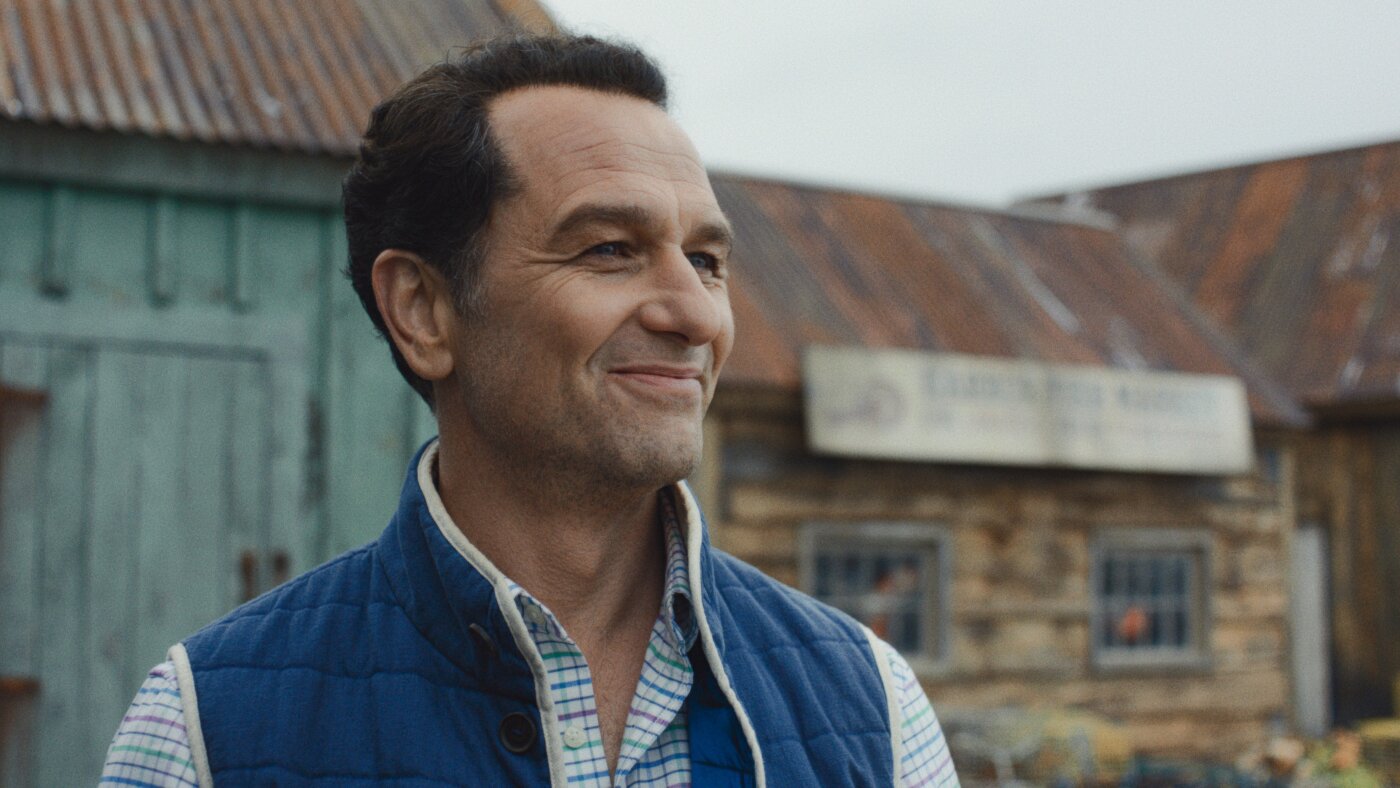
Matthew Rhys was nominated for his role in Widow’s Bay.
Apple TV
hide caption
toggle caption
Apple TV
The 2026 Emmy nominations are here. We’re unpacking the record-breaking nominations for Hacks, plus a big day for Widow’s Bay, The Pitt, and The Bear. We’ll also talk about the snubs and make some early predictions of who will win.
Connect with Pop Culture Happy Hour:
Letterboxd / Facebook
Our weekly newsletter
Support Pop Culture Happy Hour+


Can you say no to a friend’s wedding?
Getty Images/Getty images
hide caption
toggle caption
Getty Images/Getty images
Are we spending too much on other people’s weddings?
Going to a friend’s weddings can be so fun and meaningful… but it can also really hurt your wallet. A survey by LendingTree found that 31% of people who had been to a wedding in the past five years had accrued debt to attend. So what’s driving up the cost of weddings for guests? And what makes it so hard to say no to these expenses?
Brittany breaks it down with Allyson Rees, senior analyst at trend forecasting firm WGSN, and Annie Joy Williams, assistant editor at The Atlantic.
This episode was produced by Liam McBain, with additional support from Corey Antonio Rose. It was edited by Neena Pathak. Our Supervising Producer is Cher Vincent. Our Executive Producer is Barton Girdwood. Our VP of Programming is Yolanda Sangweni.
-

 Los Angeles, Ca33 minutes ago
Loved ones search for missing 34-year-old Southern California woman
-

 Detroit, MI53 minutes ago
Chickens, geese found at vacant home after nonprofit reports them stolen
-

 San Francisco, CA1 hour ago
What’s next for San Francisco Giants as MLB trade deadline approaches?
-
 Dallas, TX1 hour ago
Dallas millionaire files lawsuit against groundwater district
-

 Miami, FL1 hour ago
7 more women arrested at southwest Miami-Dade massage parlors, accused of prostitution in undercover sting
-

 Boston, MA1 hour ago
‘They’re my buddies’: 96-year-old Back Bay woman befriends French soccer team
-

 Denver, CO1 hour ago
Denver officers cited for separate incidents, 1 fired
-

 Seattle, WA2 hours ago
Study finds dangerous chemicals in the breast milk of Seattle moms

