Hawaii
Hawaii Lawmakers Move To Cut Income Tax But HECO Bill Is In Limbo


Lawmakers gave preliminary approval to what is being billed as the biggest tax cut for Hawaii workers in state history on Friday afternoon as the Legislature raced toward a scheduled adjournment next week.
They also approved funding to combat the proliferation of invasive species, and to help put more Native Hawaiians in homes on Hawaiian homelands.
But one major unfinished piece of business remained: What to do about a hotly debated bill to allow Hawaiian Electric Co. to charge a fee to ratepayers so the utility can pay for wildfire mitigation plans.
On Thursday, in a decision that surprised many at the Hawaii State Capitol, Senate Commerce and Consumer Protection Committee Chair Jarrett Keohokalole deferred the so-called securitization measure, Senate Bill 2922, indefinitely. That prompted Gov. Josh Green to intervene directly in the hope of saving a bill he sees as vital to the entire state.

Late Friday the governor’s office confirmed that House and Senate leaders will work through the weekend with the administration to hash out a compromise draft of SB 2922.
Green “believes this is an important issue and has committed to working until the end of session, or even after if needed, to find a solution that could provide stability to ratepayers,” the administration said in a written statement.
But Keohokalole does not appear to be backing down. Lawmakers held multiple hearings on the issue and discussed it at length, he said, adding that HECO had the opportunity to present its case to lawmakers during an hourslong informational briefing last week.
“The conclusion I and several of my colleagues came to was we were being asked to approve an unknown allocation of money for an undefined purpose to be paid for by an undetermined fee that our grandchildren will likely still be paying for with no assurance that HECO will remain locally controlled and operated and no protections provided for the local workers at HECO,” Keohokalole said.
Other senators also expressed worry about the HECO employees who belong to the International Brotherhood of Electrical Workers Local 1260.
“Personally, I support the chair’s decision — that is his committee,” said Sen. Lorraine Inouye, referring to Keohokalole. “But I am concerned about the IBEW workers and how their pensions might be impacted, because they are going to be impacted. And I am also concerned that we have already been having rolling blackouts on Oahu and the Big Island, and things could get worse.”
What might happen next is unclear. One possible scenario is that House and Senate leaders call the Legislature back into conference committee on Monday, which is a recess day.
Less likely is that the Senate and House would pull the bill out of committee and to the floor for a vote. Or they could choose to extend the session beyond its scheduled end on May 3.
And there is the possibility that the governor could order the Legislature back into session. But it’s not clear that there is majority support in either chamber for SB 2922, which if passed as currently written would impose a fee of up to 5% on customers’ monthly bills to finance bonds and raise money in a process known as securitization.
Unsaid but understood by nearly everyone is the fact that the primary election is barely three months away. Running for reelection while appearing to bail out a monopoly company may not be palatable to voters who already have among the highest electric bills in the nation.
Help For The Lowest Earners
There were only a few details available Friday on the new income tax cut proposal in House Bill 2404, which was made public by House Finance Committee Chairman Kyle Yamashita shortly after 4 p.m. Friday.
Yamashita told his colleagues the measure eliminates an entire income tax bracket for the lowest-paid state residents and also adjusts the remaining income tax brackets upward in response to the recent increase in the state minimum wage.


Hawaii’s minimum wage increased to $14 per hour on Jan. 1, and Yamashita said lawmakers are concerned that additional income will cause low-income residents to pay a larger share of their earnings in state taxes.
“If we don’t adjust the brackets, the people that are earning minimum wage will be pretty much paying middle-income taxes, so we have to keep adjusting these brackets,” Yamashita said. “We’re keeping money in the pockets of people that need to keep the money, so that’s the idea.”
Yamashita said the latest version of the bill would also double the standard state income tax deduction for all Hawaii taxpayers for this year, which will translate into savings when it is time for residents to pay their income taxes next spring.
The standard deduction will then be further increased in a series of steps in 2026, 2028, 2030 and 2031, he said. Yamashita did not say how large those future increases in the standard deduction will be for each of those years, and he was unavailable for comment Friday night.
At the committee hearing, however, he said the new bill would also eliminate the lowest income tax bracket in 2025, and then increase the remaining brackets in a series of steps in 2025, 2027, 2029 and 2031.
“Ultimately, by the time we hit 2031, it will be the biggest tax cut to the working people of the state of Hawaii in state history,” he said.

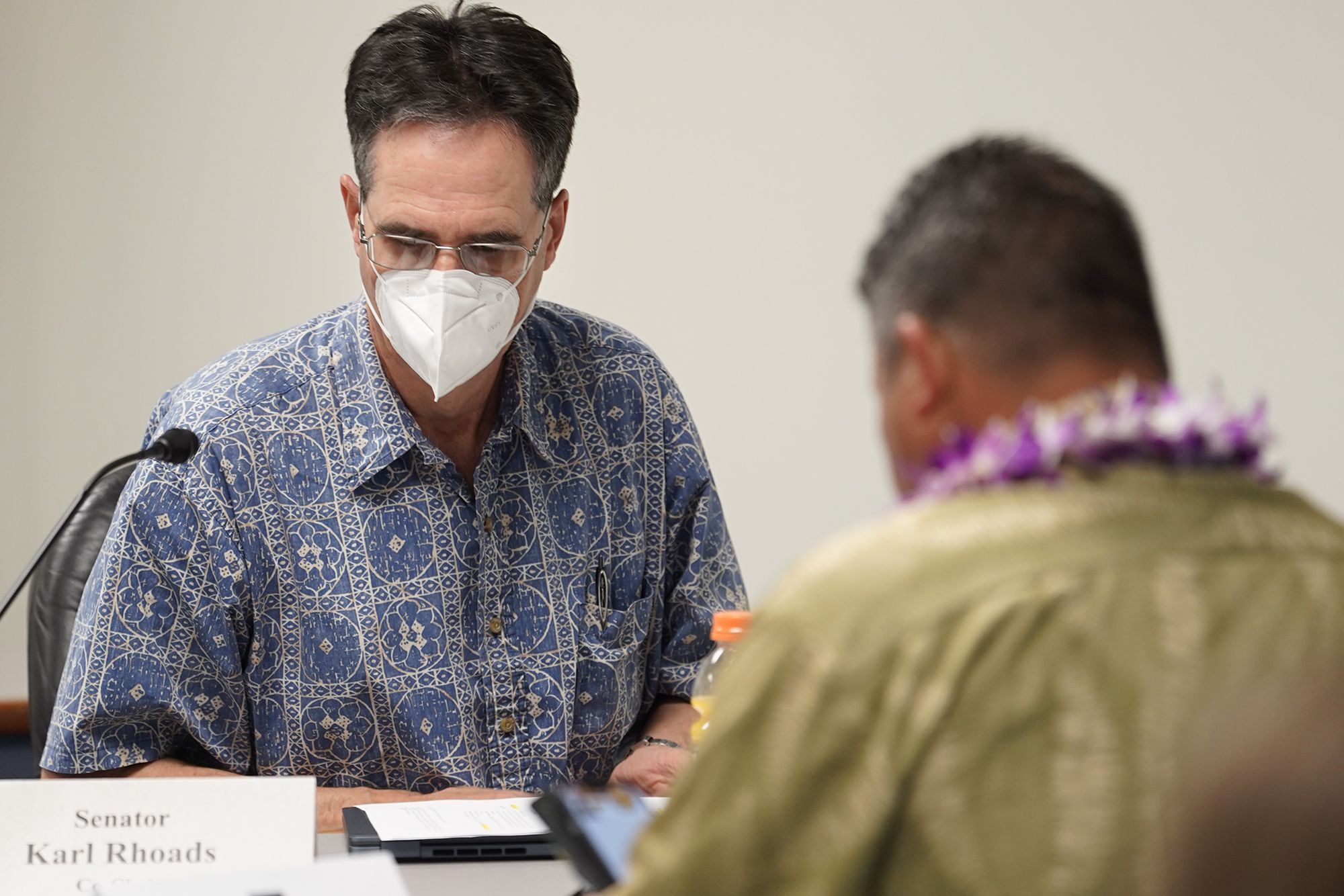
That comment drew a whoop from someone in the hearing room, and Yamashita continued: “I think this is something very big, and both House and Senate have worked hard on this to come up with a compromise.”
House Speaker Scott Saiki has described HB 2404 as “probably the most significant tax bill” of the session.
Meanwhile, Senate Bill 3289 — a much more controversial measure dealing with Hawaii’s estate tax — quietly died for the year.
That measure would have exempted more people from Hawaii’s estate tax. But critics said the measure would only benefit the wealthiest 0.2% of Hawaii residents, and lawmakers rejected it.
DHHL Gets More Time To Spend Funds
Among the many measures that were moved to the last day of conference committee — the final major deadline ahead of session’s end — was Senate Bill 3109, which extends the deadline for the Department of Hawaiian Home Lands to use $600 million in funding approved by lawmakers two years ago.
While the department has encumbered much of the money, it was at risk of losing tens of millions of dollars by June 30. Under SB 3109, though, DHHL will now be allowed to lapse $129 million, which will be placed into a special fund.
“I know the Department of Hawaiian Home Lands has been doing a very good job in encumbering these funds going forward,” said Rep. David Tarnas, the lead House negotiator on SB 3109. “And this will enable them to have the flexibility to carry out our desires to get more Hawaiians on Hawaiian homelands.”


Lawmakers also reached agreement on a bill that will give the University of Hawaii’s chief financial officer procurement authority over construction and related professional services.
That authority had long been with the UH president, but in 2013 state senators shifted it to the Hawaii State Procurement Office. Senate Bill 2499 initially sought to permanently reinstate that power with the UH president.
But Sens. Donna Kim and Donovan Dela Cruz changed the bill earlier this month to instead give the procurement power to Brennon Morioka, the dean of the UH College of Engineering. No rationale was provided, and it came after the public comment period on bills had passed.
On Friday, Rep. Scot Matayoshi said that the agreed-upon draft designates the university’s chief financial officer as its chief procurement officer effective June 28 and inserts a four-year sunset date, meaning it will again be revisited in 2028 — an amendment supported by Kim.
The Demise Of A Water Bill
UH will also get $1 million to set up a two-year program to develop a statewide wildfire forecast system using artificial intelligence.
UH supported Senate Bill 2284 and testified that the UH Manoa College of Engineering’s research capabilities in AI would be a key part of the program.
Not making the cut Friday afternoon, however, was a major water bill that was supported by the Office of Hawaiian Affairs, the Board of Water Supply, the grassroots group Lahaina Strong and the Sierra Club but was opposed by the Attorney General’s Office and the Department of Land and Natural Resources.
House Bill 2690 called for setting up a water policy coordinator and other positions within the Commission on Water Resource Management to coordinate the Red Hill Water Alliance Initiative, or Red Hill WAI.


CWRM, as the commission is known, would still be administratively attached to the DLNR but have greater independence. It would also create a Red Hill special fund for the remediation of pollution and appropriate money for it.
The bill was inspired by both the recent Red Hill Bulk Fuel Storage Facility fuel spillage and the Lahaina fires.
Inouye, chair of the Senate Water and Land Committee, said she was “greatly disappointed” that the House would not support the Senate amendments but said the issue would be introduced again next year.
She said there was agreement by both chambers that the bill was “urgently needed and very important — not just for Red Hill, but also for Lahaina,” noting the issue of water rights is all the more important now because of the giant task of rebuilding the West Maui town.
Tax Dollars At Work
One of the final bills to be approved early Friday evening was House Bill 2340, the annual claims-against-the-state bill. Civil Beat reported on several of those claims this year including a $750,000 settlement of a lawsuit over the death of a 3-year-old boy in state foster custody in 2017 on the Big Island.
The claims bill is introduced at the beginning of session in January but lawmakers do not approve the payments until the Attorney General’s Office has finalized them. The bill, which passed easily, contains 41 claims that total $18.8 million.
Since the bill was last amended, two new claims were settled for an additional $71,500.
The claims require the state to pay the Sierra Club $35,000 for attorney fees and costs in a 2022 case involving the Board of Land and Natural Resources regarding stream water diversion, and for the state to pay $35,000 in settlement with a deputy sheriff who was involved in an accidental gun discharge incident in 2020.
And there is a lot of money going toward ridding the state of invasive species. Lawmakers approved Senate Bill 2401, which helps counties pay for feral chicken control programs. Money will also go to the Department of Health for a campaign to educate the public about the importance of not feeding feral animals.
The funding is secured through a measure that passed Thursday that appropriates almost $20 million to help control and eradicate little fire ants, coconut rhinoceros beetles, coqui frogs, rose-ringed parakeets, two-lined spittlebugs and brown tree snakes.
“A major focus this year has been invasive species, and of course, feral chickens are a part of that issue,” said Rep. Cedric Gates, adding that lawmakers are hoping the omnibus bill will help “really get a grip on the invasive species issues that we see statewide.”

Sign up for our FREE morning newsletter and face each day more informed.


(BIVN) – 10,000 rubber duckies will “race” across the lake at the Kings’ Shops in Waikoloa this Fourth of July.
The 34th annual Great Waikoloa Rubber Duckie Race will be on the Saturday, July 4th, held in support of the United Cerebral Palsy Association of Hawaiʻi.
From a news release courtesy the Kings’ Shops and the United Cerebral Palsy Association of Hawaiʻi:
The community fundraiser brings together a July 4 celebration, live entertainment, keiki activities and one of Waikoloa’s most visual traditions to support programs for children and adults with cerebral palsy and other disabilities with similar service needs. The event runs from 10 a.m. to 5 p.m., with scheduled activities beginning at 11 a.m. and the rubber duckie race starting at 3 p.m. at Kings’ Shops.
“Each year, this event gives the community a fun, visible way to support programs for people with disabilities and their families across Hawaii,” said John Nishida, executive director of United Cerebral Palsy Association of Hawaii. “The duckie race has become a Waikoloa tradition because it brings people together for a celebration with a purpose.”
More than $25,000 in prizes will be awarded, including a grand prize trip for two to Japan. Additional prizes include resort stays, golf packages, boat cruises, dolphin experiences, gift baskets, shopping and dining certificates, and more. The first 50 duckies to finish the race, along with the last-place duckie, will win prizes for the people who adopted them.
This year’s Super Quackers theme will bring costumed superheroes throughout the center for photo opportunities and family-friendly fun. Tommy Ching returns as emcee, and the first 250 people to RSVP will receive a commemorative Super Quackers can cooler, while supplies last.
Event highlights include A-Bay’s Watermelon Eating Contest, live music by Kona Soul and Keoni Thompson, the Original Big Island Shave Ice Co. Shave Ice Eating Contest, the Fitness Forever Challenge, a preview of Aloha Theatre’s “Seussical,” and the duck waddling and duck calling contests. Guests will also find a scavenger hunt, free keiki activities, local artisan and food vendors, merchant offers, temporary tattoos by the Hawaii Army National Guard, Keiki ID services by the Hawaii Police Department, and pupus and drinks at Roy’s Waikoloa Bar & Grill.

Duck adoptions are $5 each. Special adoption packages include the $30 Quack Pack, which includes five ducks in the race and a free T-shirt, and the $100 VIP package, which includes 40 ducks in the race and a free T-shirt. T-shirts for Quack Pack and VIP package adoptions will be held for pickup on race day.
Duckies may be adopted online in advance. In-person adoptions will be available at Kings’ Shops on July 2 and 3 from 10 a.m. to 4 p.m., and July 4 from 10 a.m. until sold out.
For more information, contact UCPA of Hawaii at (808) 532-6744 or visit kingsshops.com/events.


Hawaii’s most welcoming countryside towns are rarely the ones that appear on the standard itineraries. Kaunakakai on Moloka’i has no traffic lights and the longest pier in the state. Maunaloa sits above one of Hawaii’s largest white-sand beaches. Naalehu’s most famous landmark is a tree that Mark Twain allegedly planted in 1866. These eight towns, spread across six islands, each have something specific that makes them worth the detour.
Hale’iwa
Next, let’s explore the town of Hale’iwa, a globally renowned destination that draws surfers every year for its winter waves. The town is also renowned for its laid-back charm, local food trucks, and shaved ice. For a day out on the water, try your hand at snorkeling at Shark’s Cove. The cove is a popular destination for snorkeling and scuba diving, surrounded by lava rocks and coral formations, and is bursting with marine wildlife. However, if you are concerned about sharks, then there is no need to worry, as the cove’s name comes from its shark-like shape if you are looking at it from a bird’s-eye view. You can also rent a paddleboard or kayak and travel up the Anahulu River and go under the iconic Hale’iwa Rainbow Bridge. You can also spot green sea turtles basking in the sun on your journey upstream. To satisfy your sweet tooth, you can grab a scoop of flavored ice at Matsumoto Shave Ice, a family-owned dessert spot where its shaved ice is the main attraction. Patrons can choose from a variety of flavors for their shaved ice, like passion fruit, guava, and mango, and top it off with either mochi balls or condensed milk.
Kaunakakai
On the island of Moloka’i, the town of Kaunakakai is famous for its laid-back nature and the charm of “Old Hawaii”. What does “Old Hawaii” mean? It means that there are few traffic lights and no major chain stores. There are, however, some interesting things to see and do in town, including Kaunakakai Harbor, home to the longest pier in Hawaii. It stretches 1,900 feet into the Pacific Ocean and is a popular destination for fishing, sunset watching, and launching boat tours. A legendary spot to visit in Kaunakakai is Kanemitsu’s Bakery. The bakery is known for its “Hot Bread,” which comes in slices filled with any filling you choose, like cream cheese, strawberries, blueberries, or cinnamon. The bakery also serves fresh papaya bread, cheese bread, donuts, and all of the classic pastries that you would find at any bakery. For some retail fun, visit Ala Mālama Avenue. Instead of major chain stores, the avenue is lined from top to bottom with local mom-and-pop stores and boutiques, and it is a hot spot for everyday services. The items the shops offer may make for some interesting souvenirs to take home.
Makawao
One interesting fact about Makawao is that it was known as the heart of paniolo (Hawaiian cowboy) country. That’s right. A long time ago, paniolos inhabited Makawao and made it their home. One way to learn more about them is to attend the town’s annual Makawao Rodeo, which takes place on the weekend of Independence Day. Thousands of spectators flock to the Oskie Rice Arena for bull riding, barrel racing, roping events, and all sorts of other traditional rodeo events. The event also hosts block parties, local food vendors, and live country-western entertainment. For a truly colorful and unique souvenir, visit Hot Island Glass. The shop is a working glassblowing studio where you can watch artists create incredible glass masterpieces, including platters, vases, and island-inspired sculptures such as pineapples and jellyfish. A quick and easy hike to take in Makawao is the Waihou Springs Trail. During the trek, you will be guided through the lush greenery of the forest before being taken to Waihou Spring, where the water drips from a towering fern wall and into the crystal waters. There are also small lava tubes and old irrigation tunnels carved into the volcanic rock to explore on your walk.
Lānaʻi City
As the only major city on the island of Lānaʻi, you can rest assured that there are a lot of things to do in Lānaʻi City upon your arrival. The town is best known for its rich pineapple plantation history, and one way to learn more is to visit Dole Park at the heart of the city. The plantation is the central hub of community events like the annual Pineapple Festival, the Saturday Market, and its “Fifth Friday”, where the community comes alive with free live entertainment and over twenty-five vendors from local restaurants and shops for one of the biggest block parties the citizens have ever seen. If you are an enthusiast of horses or equestrians, then come to the Stables at Koele. At the stables, you will gaze upon the sweeping landscapes via horseback while learning about the ranching history of Lānaʻi and the lifestyle of the paniolo (Hawaiian cowboys) along the way. After a long day of exploring Dole Park and gazing at landscapes via horseback, fill up on pizza, burgers, teriyaki beef, or chicken katsu when you dine at Lanai Bowl. This 1950s-inspired retro diner is also home to an arcade, a soda fountain, a jukebox, and a four-lane bowling alley, where you can not only indulge in Hawaiian and American cuisine, but also have an amazing time while waiting for your food to be served.
Hanapepe
Serving as inspiration for the setting of the 2002 animated feature film Lilo and Stitch, Hanapepe, meaning “crushed bay” in Hawaiian, is renowned for its vibrant art community and deep cultural roots. Speaking of cultural roots, one way to explore Hanapepe’s cultural background is to take a stroll across the Swinging Bridge. The bridge is a 186-foot-long wooden suspension bridge spanning the Hanapepe River. It was built in 1911 to help plantation workers and children cross the water. Since then, it has remained a landmark within the town, offering patrons a fun, bouncy walk across the river. For a tranquil day on the beach, come to Salt Pond Beach Park, a popular, family-friendly beach park that got its name from the town’s traditional Hawaiian salt ponds. At the beach, you can spend the day swimming, snorkeling, camping, and firing up the barbecue on the beach’s own barbecue grills for a picnic lunch. At the Midnight Bear Bakery, you can indulge in organic sourdough loaves, flaky European-style pastries, and the freshest coffee in town. The perfect place to enjoy breakfast or lunch before heading off on your next adventure.
Hāwī
In Hāwī, you will be treated to lush tropical scenery, historic Hawaiian culture, and a laid-back, artsy vibe. To explore the lush tropical scenery of Hāwī, book a horseback riding tour with Paniolo Adventures, an open-range horseback riding experience that gives patrons a chance to become paniolos (Hawaiian cowboys) as they explore the sweeping views of the Pacific Ocean, grazing cattle, and surrounding volcanoes that call Hawaii their home. To satisfy your sweet tooth, you can pay a visit to the Our Founding Farmers Ice Cream Shop. The ice cream shop is a highly rated, farm-to-scoop parlor that specializes in small-batch, handmade ice creams and sorbets that are made with locally sourced Hawaiian ingredients like papaya, dragonfruit, and lychee, organic sugar, and fresh dairy. Every Saturday morning, Hāwī comes alive with the Hāwī Farmers Market. At the market, you will find fresh local produce, handmade artisanal crafts, and prepared, hot meals. All of which are operated under the relaxed, welcoming atmosphere of the rural setting around it.
Maunaloa
At Maunaloa, you can expect to find a town full of laid-back country charm and glorious ocean views. If there was one place to visit in Maunaloa, it is the extremely quirky, world-famous Big Wind Kite Factory. The kite factory is a family-run shop that produces vibrant nylon kites and windsocks for you to purchase and fly across the sky. The shop even offers free kite-making lessons so you can learn how these beautiful, colorful kites are brought to life. Whenever you need essentials during your visit to Maunaloa, take a trip to the Maunaloa General Store, where you will find all of the snacks and groceries you need before heading off on your next Hawaiian adventure. The store also sells cold drinks, local grab-and-go items, and a wide selection of beer and wine. Just a short drive down the hill lies Pāpōhaku Beach, one of the largest white-sand beaches in the state, best known for its isolation and its lower crowd levels compared to other beaches. It also has superb views of Oʻahu, so you can look over the beautiful views as you take scenic walks along the powdery sand, enjoy a picnic lunch, and even camp out overnight at one of their designated campsites.
Naalehu
What was formerly a sugar plantation is now the beautiful town of Naalehu, Hawaii, where you will now find unique, exotic beaches and iconic island landmarks such as Haleokane Lookout. At the lookout, you will overlook panoramic views of Honuapo Bay, rugged sea cliffs, and the sparkling Pacific Ocean below. During the winter months, if you are lucky, you will be able to catch humpback whales frolicking in the ocean waves. At the Punalu’u Bake Shop, you will be able to indulge in their traditional Hawaiian sweet bread and their sugar-coated malasadas (Portuguese fried donuts). Aside from being a bakery, it is also a roadside attraction and visitor center where patrons can come in and sample their delicious goodies while sitting in the lush outdoor patio and garden area. One historic landmark in Naalehu is the Mark Twain Monkey Pod Tree, which, according to legend, is the very tree that author Mark Twain planted in 1866 as a gesture of appreciation for the island’s natural beauty during his visit. It is also known for its enormous, umbrella-shaped canopy, with a diameter of 100 feet, making it the perfect place to catch some shade from the Hawaiian heat.
Visiting Hawaii’s countryside offers an escape from the bustling resort hubs. In the countryside of Hawaii, you will be able to see untouched natural landmarks and ecosystems, immerse yourself in the deep-rooted cultural history, and find local island gems that will have you talking about for years to come. While the bigger cities of Hawaii sound like fun, if you immerse yourself in a slower pace of life, you might find yourself having an even grander time in the Hawaiian countryside.
-

 Indiana17 seconds ago
Top Indiana high school performers at U20 Championships, Nike Outdoor Nationals
-

 Iowa7 minutes ago
Iowa Football Depth Chart: Projecting Hawkeyes’ Week 1 Special Teams
-
Kansas10 minutes ago
Kansas Lottery Powerball, Pick 3 winning numbers for June 22, 2026
-

 Kentucky15 minutes ago
Four Northern Kentuckians named among Leadership Kentucky's 52-member Class of 2026
-

 Louisiana22 minutes ago
Louisiana insurance officials to host storm assistance event in Pointe Coupee Parish
-

 Maine25 minutes ago
Obituary: Craig Joseph Ahlemeyer
-

 Maryland30 minutes ago
On primary Election Day in Maryland, voters are deciding several highly competitive races – WTOP News
-

 Michigan37 minutes ago
Voting to begin in pivotal Michigan primary election

