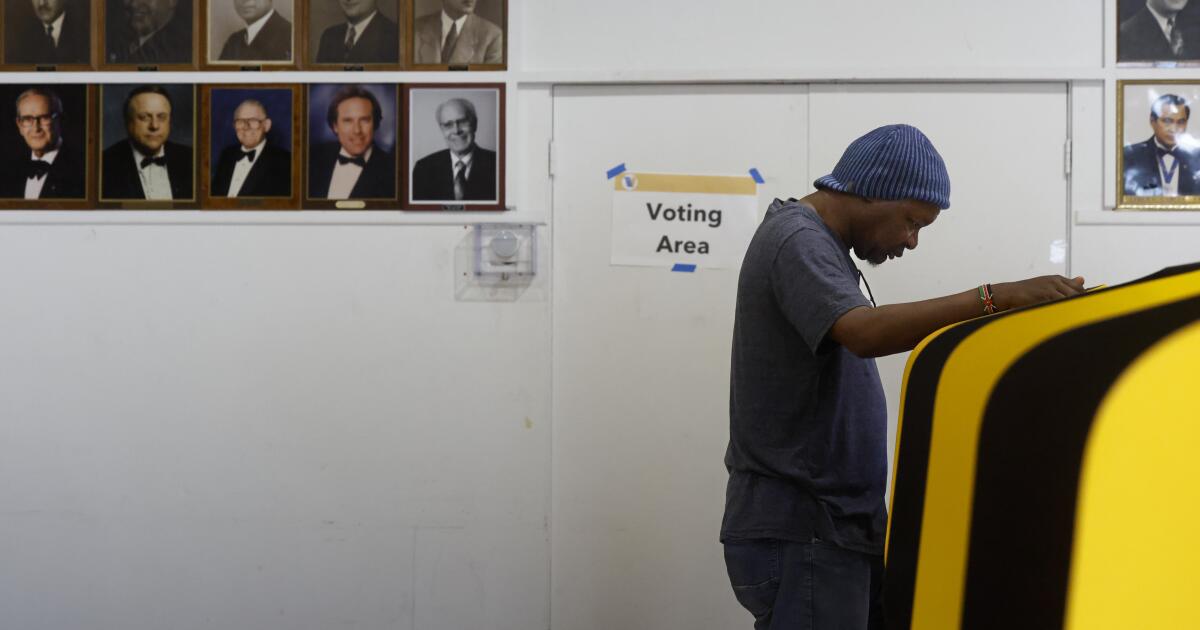
For the second year in a row, Hawaii lawmakers are considering a major election reform bill that proponents say would reduce the influence of wealthy donors in state politics by enhancing the state’s system of public campaign financing.
The bill, called Clean Elections by a coalition backing it, would establish what it calls a “comprehensive” public campaign financing option in the state, meaning it would aim to provide candidates enough money to be competitive without needing additional funds. Supporters of the program say it would encourage a larger candidate field for state and local offices, spur more candidate interactions with voters, and curb the amount of campaign cash coming from industry-connected donors.
But last year, Hawaii good government groups saw a closely similar bill expire behind closed doors in the state Senate Ways and Means Committee. The 2023 bill was killed even as Hawaii’s political leaders were weighing sweeping reforms to strengthen ethics in state government—about a year before, two former state lawmakers pleaded guilty in a bribery scheme.
This year, the Clean Elections bill, numbered SB 2381, has taken a different path in the Hawaii legislature. It was advanced earlier this month by a pair of state Senate committees and passed the Senate unanimously on Feb. 20. The measure was introduced by Senate Judiciary Chair Karl Rhoads—and was recently reported in USA Today to have the support of House Speaker Scott Saiki.
Advertisement
Now, the fate of the bill lies with the Hawaii House of Representatives. No hearings have yet been scheduled for the bill, leaving coalition members to closely watch the legislative schedule in the weeks ahead. If the bill is passed by the House and signed into law by Gov. Josh Green, a Democrat, the public campaign funding program would first be offered in the 2028 election cycle.
Sludge inquired with Saiki’s office as to whether the Clean Elections bill could expect to be scheduled for House hearings this year, and did not receive a response.
Common Cause Hawaii, a nonpartisan good government group, is a leading member of the Clean Elections Hawaiʻi Coalition that has been mobilizing Hawaii residents and policy researchers to submit written testimony to help the measure pass the legislature. Some other members of the coalition include Indivisible Hawaii, the League of Women Voters of Hawaii, and Lāhainā Strong, a group of small business owners affected by the Maui wildfires of 2023.
“It is important for anyone, especially an elected official who says they believe in expanding access to democracy, to support public campaign financing,” said Camron Hurt, program manager of Common Cause Hawaii. “Anything else would just be paying lip service to a critical issue in this state—we have lacked comprehensive anti-corruption reform, even though we’ve been plagued by corruption over the past decades.”
“It is time for our legislators to decide—are they anti-corruption or are they beholden to special interests,” Hurt said.
Advertisement
Instagram post by Clean Elections Hawaii after SB 2381 passed in a state Senate committee
The proposal’s design is similar to state public campaign financing systems in Maine, Arizona, New Mexico and Connecticut that offer campaign funding to candidates who opt-in and demonstrate sufficient voter support. A report on the bill that was prepared last year by political scientist Colin D. Moore of the University of Hawaii at Mānoa found a consensus in scholarship that such programs improve electoral competition and lead to greater diversity among both candidates and donors.
The bill would allow participating candidates who gather a certain amount of $5 donations from voters to qualify for grant funding to run their campaigns. For example, state House candidates could qualify for up to $50,000 in funding by obtaining donations from 125 contributors, and candidates for governor could be eligible for grants worth up to $2.5 million by securing 6,250 qualifying contributions. Office seekers who opt in would need to abide by reporting requirements, be barred from further private fundraising, and observe limits on total spending to ensure that the public funding was comprehensive in fueling their run.
The grant funding proposed in the bill aims to level the playing field between incumbent politicians and newcomers. Incumbents in the Hawaii House spent an average of $57,883 on each election since 1994, while their challengers spent only $16,500 in dollars adjusted for inflation, according to Moore’s report. On average, 90% of incumbents won their re-election bids over the past decade, according to the report’s analysis of the data from the Hawai‘i Campaign Spending Commission.
Hurt says the bill is needed because the current campaign finance laws empower wealthy interests. “In the age of the Citizens United decision, it is important for states to be proactive in how money is allocated in elections,” Hurt told Sludge. “We’re making a commitment to take big money influence out of our elections and truly let them be decided by the people.”
The Clean Elections Hawaiʻi Coalition sent a letter to every Hawaii legislator last fall with a legislative reform agenda. Hurt said that the outpouring of public testimony—leaping from 146 letters last year to 269 letters this year in support of the measure, and with overall testimony running above 500 pages—helped it advance through the Senate.
Advertisement
In his testimony this month, Hurt emphasized that a public funding system would allow elected officials to work on behalf of their constituents, “without being beholden to fundraising.” A July 2022 poll by Data for Progress found that of more than 1,000 Hawaii voters, 74% expressed support for a candidate who would vote to establish a public campaign financing program.
Hawaii Rep. Jeanné Kapela, the first Native Hawaiian to represent her district, told Sludge that public funding for campaigns stands to increase participation in state elections by Native Hawaiians and working-class residents.
“Establishing a clean elections program for Hawai’i is essential to advancing the public’s interest. Too often, big money donors are able to buy influence at the legislature through campaign cash, preventing the voices of working families from being heard,” Kapela said.
Instagram post by Hawaii Rep. Jeanné Kapela after testifying in support of clean elections
“Native Hawaiians and other racial minorities are underrepresented in government, in part because they lack the means to participate in local politics,” Kapela said. “This continues the historic repression of Hawaiian voices within our homeland, while the corporations that have suppressed our communities are able to buy access to power that further entrenches their influence over our land and our livelihoods.”
“Native Hawaiians rank low in most statewide social metrics, including income level, educational attainment, and public health,” Kapela said. “If we want to uplift the well-being of the Hawaiian community, we must empower them with the resources they need to assert themselves in the political process.”
Hawaii voter turnout recently fell to a record low: in the 2022 election, under half of state voters cast ballots in the state’s general election, which included a race for governor. While Hawaii has had a partial public campaign financing system for state elections in place since 1979, its matching funds have been used by only a small number of candidates in recent cycles, Moore’s report found, issuing just $71,878 in the 2022 election.
Advertisement
League of Women Voters of Hawaii
The Clean Elections bill would allocate $30 million each general election year. The total amount disbursed to candidates could be lower—the Clean Elections coalition estimates that even with robust participation the grants might total less than $10 million a year, or under 0.05% of the state budget. Connecticut’s grant system, for comparison, even with a high rate of candidates participation paid out $13.5 million in the 2020 election, according to Moore’s report. A 2020 report by Common Cause evaluating the Connecticut program found that donations from special interest donors, defined as organizations representing private groups, to winning state legislative candidates plummeted by 98% after the clean elections program was implemented.
Political bribery scandals have played out in Hawaii headlines in recent years. In 2022, two former lawmakers—J. Kalani English, the former majority leader of the state Senate, and Ty Culler, the former vice-chair of the House Finance Committee—pled guilty to accepting bribes in a scheme to benefit a wastewater company. An anti-corruption commission formed by Hawaii House Speaker Scott Saiki released a slew of ethics recommendations, including legislative proposals to reduce the power of money in politics.
“A key feature of the Hawai‘i proposal is the ample funding it promises to candidates,” said Moore, an associate professor of political science who recently directed a public policy center at the University of Hawaii. “Past experience shows that the level of financial support is a key determinant of candidate participation. The current Hawai‘i bill offers $33,500 in the primary and $16,500 in the general for a total of $50,000. That’s more than enough money to run a competitive state House race in Hawai‘i, so I suspect that we’d have high rates of participation.
“Effective block grant programs have proven to increase electoral competition. This heightened competition results in stronger voter mobilization and better communication efforts,” Moore said. “For instance, there’s some evidence that Arizona’s public financing program reduced ballot ‘roll off,’ which is the tendency of voters to leave ballots blank for less-visible legislative and municipal races. I have every reason to suspect we might see similar results here in Hawai‘i.
“I’m particularly optimistic that this program would provide candidates with more time to forge more meaningful connections with voters and delve deeply into policy issues,” Moore said. “Past research demonstrates that fully funded candidates spend more time engaging with their constituents and participating in community events. Given Hawai‘i’s small legislative districts and community-oriented style of politics, the impact could be particularly strong here.”
Authorities in Hawaii have charged a 36-year-old man with murder in the killings of three people in a remote community known for its eclectic, communal lifestyle.
Jacob Daniel Baker was charged with counts of first- and second-degree murder Saturday, the Hawaii Police Department said in a news release.
Baker remained jailed without bond Sunday and police said his first court appearance was scheduled for Monday. It was not immediately known if Baker had an attorney who could speak for him.
Advertisement
Charges in the killings came two days after police apprehended Baker following a manhunt on Hawaii’s Big Island, where the three victims were found in the rural Puna community known for its tropical landscape and free-spirited residents.
Robert Shine, 69, was found dead Monday partially submerged in a cement pond, according to police. The second victim, a 79-year-old man, was discovered Tuesday a few hundred feet away. Friends identified him as Chitta Morse.
Police found the third victim, 69-year-old John Carse, late Tuesday at a property 19 miles from where the other two bodies were located.
Police have not given a suspected motive for the killings. Hawaii Police Chief Reed Mahuna has said investigators found no connections among the victims other than that two of them lived near each other.
In addition to the murder charges, Baker also faces counts of burglary, auto theft and criminal damage to property.
Advertisement
The killings left residents on edge in Puna, a community set amid lush jungle and barren lava fields where people seeking to live off-grid commonly trade work for lodging.
Puna resident Stephen Shaffer said that Baker had worked for his ex-wife, climbing coconut trees on land where she grows fruit, in exchange for a place to live. After several months, Shaffer said, his ex-wife sought a restraining order against Baker, saying she felt threatened by him.
Donald Hyatt, a friend of Shaffer’s ex-wife and of two of the men killed, said Baker left the cabin where he had been living months ago. Hyatt said that Baker recently returned claiming “squatter’s rights” and threatened Shaffer’s ex.
Just days before the killings, two women had requested temporary restraining orders against Baker, saying he had threatened and harassed them, according to court records. A judge denied both applications, saying there was not enough proof of harassment.
Court records showed Baker named in 20 other cases in the past two decades, many of them traffic infractions. In most of those cases, Baker had no attorney and represented himself.
Hawaii is home to a wide range of towns that give older adults relaxing ways to enjoy their retirement years. Across the islands, retirees can find communities with easy access to healthcare and outdoor recreation. Coastal towns like Kailua-Kona and Līhuʻe offer ocean views and nearby medical care. Inland communities such as Waimea and Makawao provide cooler weather and an easier rhythm. Retirees may be drawn to smaller places with a strong community feel, while those wanting more services may prefer regional hubs like Hilo. Together, these Hawaiian towns offer a mix of natural beauty and everyday comforts.
Kailua-Kona
Keauhou Bay, Kailua-Kona, Hawaii.
Kailua-Kona is a coastal town on the Big Island of Hawaii with fewer than 25,000 residents. It continues to attract retirees thanks to its warm weather and ocean access. Areas like Kealakehe and Holualoa are still growing, with new subdivisions adding more housing options for people who want to stay long-term.
Most medical care is provided by the nearby Kona Community Hospital, and clinics throughout the Kona district offer additional services. Some of the main landmarks are Kailua Pier, Huliheʻe Palace, Kamakahonu Beach, and Kona Commons Shopping Center. These spots help residents stay active year-round.
Hilo
Overlooking Hilo, Hawaii.
Hilo is a well-known retirement-friendly community on Hawaii Island, known for being easy to walk around. With about 48,000 residents, according to recent Census data, Hilo is a regional center for healthcare, education, and government services, which helps create long-term stability for residents.
Hilo Benioff Medical Center is the main hospital for East Hawaii and provides most of the area’s healthcare. There are also outpatient and senior care services, such as the nearby Life Care Center of Hilo.
Advertisement
People in Hilo often spend time at places like Wailoa River State Recreation Area, Hilo Farmers Market, Liliʻuokalani Gardens, and Rainbow Falls. These spots are close to neighborhoods like Waiākea and Keaukaha.
Waimea
Rolling green pastureland with white fences near Waimea, Hawaii’s Big Island.
Waimea is a small inland town on Hawaii Island with fewer than 10,000 residents. Because it sits at a higher elevation, the weather is cooler, with daytime temperatures usually between 70 and 80°F and nights that feel much cooler.
Residents have access to healthcare through local clinics and services linked to Queen’s North Hawai’i Community Hospital in Waimea, which provides essential care for the area. The town has strong connections to Parker Ranch, one of the country’s largest ranches, as well as nearby ranchlands. Waimea attracts retirees who want a quieter inland setting, strong community organizations, and fewer people.
Līhuʻe
A couple walks along Kalapaki Beach in Lihue, Kaua’i, Hawai’i.
Līhuʻe serves as Kauai’s administrative and service center and has fewer than 10,000 residents. The town plays a central role in healthcare and government operations across the island. It is just 30 minutes from Hanapepe and offers retirees a small-town feel, with natural scenery all around.
Wilcox Medical Center is the largest hospital on the island and provides care for residents throughout Kauai. Notable landmarks include Kalapaki Beach, Nawiliwili Harbor, Kauai Museum, and Kilohana Plantation. Together, these sites support recreation, tourism, and community events across the area.
Kapa’a
Shops in downtown Kapa’a in Hawaii. Image credit bluestork via Shutterstock.com
Kapaʻa sits on the east side of Kauai and has about 11,000 residents. It is easy to get around on foot, with everything you could need close by. The town serves as both a place to live and a hub for businesses in the area.
Residents can access healthcare at local clinics such as The Clinic at Kapaa or at Wilcox Medical Center in Līhuʻe. Some well-known spots in Kapaʻa are Kapaʻa Beach Park, the Sleeping Giant Trail, Coconut Marketplace, and Wailua River State Park. Coconut Marketplace has a Farmer’s Market twice a week, plus live local music. Hula classes and shows are also a local favorite offered at Coconut Marketplace.
Kailua
Overlooking Kailua, Oahu.
Kailua is a residential area on the windward side of Oahu with fewer than 50,000 residents. The town is known for its easy access to beaches and well-established neighborhoods such as Enchanted Lake and Coconut Grove.
Residents have access to healthcare through nearby hospitals in the Honolulu area. Adventist Health Castle, which is located in Kailua, is one of the main options. In addition, Kalapawai Market is a local favorite to grab coffee, ube scones, and other treats.
Advertisement
Kailua is home to many beaches for swimming and watersports, including Kailua Beach Park. Lanikai Beach is a public beach within a residential neighborhood, with no lifeguards, restrooms, or public parking lot. For walking and biking, Kawainui Marsh Wildlife Sanctuary is a popular dog-friendly wildlife sanctuary with a scenic trail.
Haleʻiwa
Aerial view of Haleiwa, Hawaii.
Hale’iwa is known for its slower pace and strong connection to Oahu’s North Shore coastline. This historic North Shore town is said to be the quirkiest and has a population of under 5,000. It maintains a small commercial core while serving nearby rural communities.
Healthcare is available through clinics in Waialua and through The Queen’s Medical Center – Wahiawā in central Oahu.
Notable landmarks in Haleʻiwa include Haleʻiwa Beach Park, a popular spot for fishing and sunset views, and Waimea Bay, known for its large winter surf and summer swimming conditions. The nearby Banzai Pipeline draws surfers from around the world during big-wave season on Oahu’s North Shore. Residents also spend time at Haleʻiwa Aliʻi Beach Park, which has picnic areas and shoreline walking paths.
Wahiawa
Waikele Premium Outlets in Honolulu County, near Wahiawa, Hawaii. Image credit ARTYOORAN via Shutterstock.com
Wahiawa is a central Oahu community with a population of roughly 17,000. It sits between the island’s north and south regions, and provides a quieter inland setting while still allowing access to both Oahu’s north and south coasts.
Healthcare in Wahiawa is available through in-town facilities, such as The Queen’s Medical Center – Wahiawā.
Local landmarks include Lake Wilson, where residents fish and kayak, and the Wahiawa Botanical Garden, known for its large tropical trees and walking paths. Nearby Schofield Barracks remains one of the largest military installations in Hawaii and shapes much of the area’s economy. Residents also rely on Whitmore Village for local businesses, neighborhood services, and access to agricultural areas outside town.
Advertisement
Makawao
The town of Makawao sits on the slope of the Haleakala volcano in Maui.
Makawao is a small town in upcountry Maui with fewer than 10,000 residents. Its higher elevation gives the area cooler temperatures than much of coastal Maui, especially during the evenings.
Makawao maintains a rural atmosphere while still keeping residents close to shopping and healthcare in nearby Kahului and central Maui for routine and specialized care.
Residents enjoy art galleries, and nearby access routes to Haleakalā National Park, which draw both residents and visitors into Maui’s upland landscapes. The community also gathers around Oskie Rice Event Center, which hosts rodeos and local events throughout the year, while Pukalani Country Club provides golf and recreation with views of central Maui.
Pāhoa
Downtown Pahoa, Hawaii. Image credit Chris Allan via Shutterstock
Pāhoa is a small town on Hawaii Island with fewer than 1,000 residents. The community has a slower pace of life and a strong local character shaped by East Hawaii’s volcanic landscape. Residents access healthcare through clinics in nearby Hilo and facilities connected to Hawaiʻi Health Systems Corporation in East Hawaii.
Local landmarks include Lava Tree State Monument, where lava formations surround walking paths through tropical forest, and the historic downtown which still contains several older storefronts and small local businesses such as Tin Shack Bakery. Nearby Pohoiki Black Sand Beach has become a popular coastal gathering area following recent volcanic activity, while the former Ahalanui Park site (destroyed by the Kīlauea lava flow in 2018) remains an important part of the region’s history and shoreline identity.
Honoka’a
Overlooking Honoka’a, Hawaii.
Honokaʻa is a small plantation-era town on the Big Island of Hawaii. With fewer than 3,000 residents, its historic main street reflects its sugar industry past with preserved storefronts and a compact town center that still serves the surrounding Hamakua Coast communities.
Residents access healthcare through Queen’s North Hawai’i Community Hospital in nearby Waimea, which provides essential services for the region.
Along the main corridor, residents frequent shops such as Tex Drive-In, known for its malasadas, and Cafe Il Mondo, a long-running local café. The nearby Kalōpā State Recreation Area offers forest trails and native vegetation, while the Hamakua Coast provides scenic coastal drives with waterfalls and ocean views. Routes toward Akaka Falls connect the town to one of the island’s most visited natural landmarks.
Advertisement
Hawaii Retirement Across the Islands
Retirement spots in Hawaii are found across the islands, each with its own pace of life. Towns like Kailua-Kona and Līhuʻe keep residents close to healthcare, services, and coastal scenery, while places such as Waimea, Makawao, and Honokaʻa offer quieter inland settings with strong local character. Others, including Hilo, Kapaʻa, and Haleʻiwa, balance everyday conveniences with beaches, parks, markets, and community gathering places. As people in Hawaii look for more space, fewer crowds, and reliable access to care, these towns show how varied retirement living can be across the state.
HONOLULU (HawaiiNewsNow) – A new optical illusion is taking shape in Kalihi.
Commissioned by Kamehameha Schools, the mural will feature plants and trees native to the area. The artwork aims to highlight how forestry can exist within urban areas.
Coincidentally, the new artwork sits adjacent to one of Kalihi’s most famous murals: Wave 01/101.
The artist Kai’ili Kaulukukui plays with depth and shadow, creating an optical illusion on the flat face of a building.
Advertisement
“The painting style is called ” trompe-l’œil”, it means ‘trick the eye’,” says Kaulukukui. “It’s been around for 2000 years. They have images of trompe-l’œil style murals at Pompeii, so it’s a very old style.”
Kaulukukui said he’s always been intrigued by the art style, though this is his first time painting it.
“They’re both kind of environmental themed murals,” he said. “This is bringing an image of what a forest could look like in the city. That is like an homage to Pipeline and our beautiful waves that we have here.”
The 55-foot-tall mural is expected to be completed by Sunday, May 31.
After this project, Kaulukukui will start an ocean-themed mural just one street over, bringing a bit more nature into urban Honolulu.
Advertisement
Copyright 2026 Hawaii News Now. All rights reserved.